Introduction
Honoring the Disir and the Divine Feminine
Mother’s Night, or “Modraniht,” marks the beginning of the Yule festivities and offers a time for practitioners to honor the feminine forces that guide and protect. On this sacred evening, the hearth and home are imbued with special significance, becoming the center of warmth, nourishment, and remembrance. Traditionally a night dedicated to the Disir—the protective female spirits and ancestral mothers—this ritual celebrates the power of feminine influence, from the tender guidance of the ancestral spirits to the nurturing energy of the home itself. Through culinary creations and offerings, you connect with the feminine energies that flow through generations, honoring those who came before and the forces that continue to shape your path.

Ritual Basics
Before beginning any ritual, it is important to prepare yourself mentally and physically. You may want to take a cleansing bath, or shower, and meditate or perform some grounding exercises to center yourself. Gather any materials you will need, such as candles, incense, and offerings for the forest spirits.
You can read a more detailed Ritual Preparation guide here.
The Sacred Traditions of Mother’s Night
Mother’s Night is celebrated on the eve before Yule, setting the tone for the winter solstice festivities. Historically, this night acknowledges and venerates the feminine protectors and nurturers—both human and divine. The Disir, in particular, are female spirits or ancestors who are seen as guardians of fate, fertility, and familial well-being. The focus on cooking, the hearth, and the home recognizes the feminine influence in these realms, transforming the space where food is prepared and shared into a sacred altar of connection and remembrance. Through the act of cooking, serving, and honoring, this ritual seeks to build a bridge between the worlds, inviting the spirits of the Disir and other feminine guides into the celebration.
Yule’s Mother’s Night: Culinary Alchemy and Reverence
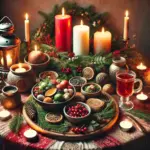
A Yule ritual to honor the Disir and feminine energies through cooking, feasting, and offerings.
- Cooking utensils and cookware (required)
- Candles (required)
- Large plate or serving bowl (required)
- Altar cloth (optional)
- Ingredients for favorite treats (desserts, or meals (required) – Choose dishes loved by female ancestors or the spirits being honored)
- 1 Offering bowl (optional – For pouring a drink offering (mead, wine, or cider are commonly used))
- 1 Small bouquet Fresh herbs (flowers, or sprigs of evergreen (optional) – Symbolizing the blessings of the season)
- 1 Cup Drink offering (mead, cider, or other seasonal beverage)
Step 1: Preparing the Kitchen and Hearth
- Start by setting an intentional space within your kitchen or cooking area. Light a candle or place a small altar on the counter, laying down a cloth in a color resonant with Yule (red, white, green, or gold).
- Arrange symbols of Mother’s Night, such as sprigs of evergreen, winter berries, or representations of the Disir—photos, figurines, or heirlooms of female ancestors. This transforms your cooking area into a sacred space, honoring the nurturing energies of the hearth.
- If you wish, invite the spirits or energies of the Disir to be present, saying:
“Spirits of the Disir, mothers, protectors, and nurturers,
I honor you this night with love and gratitude.
May your blessings fill this space and guide me
As I craft these offerings in your name."
Step 2: Cooking with Intention
- Select the dishes you will prepare in honor of Mother’s Night. These may be traditional family recipes, favorite meals of female ancestors, or foods associated with warmth, love, and abundance.
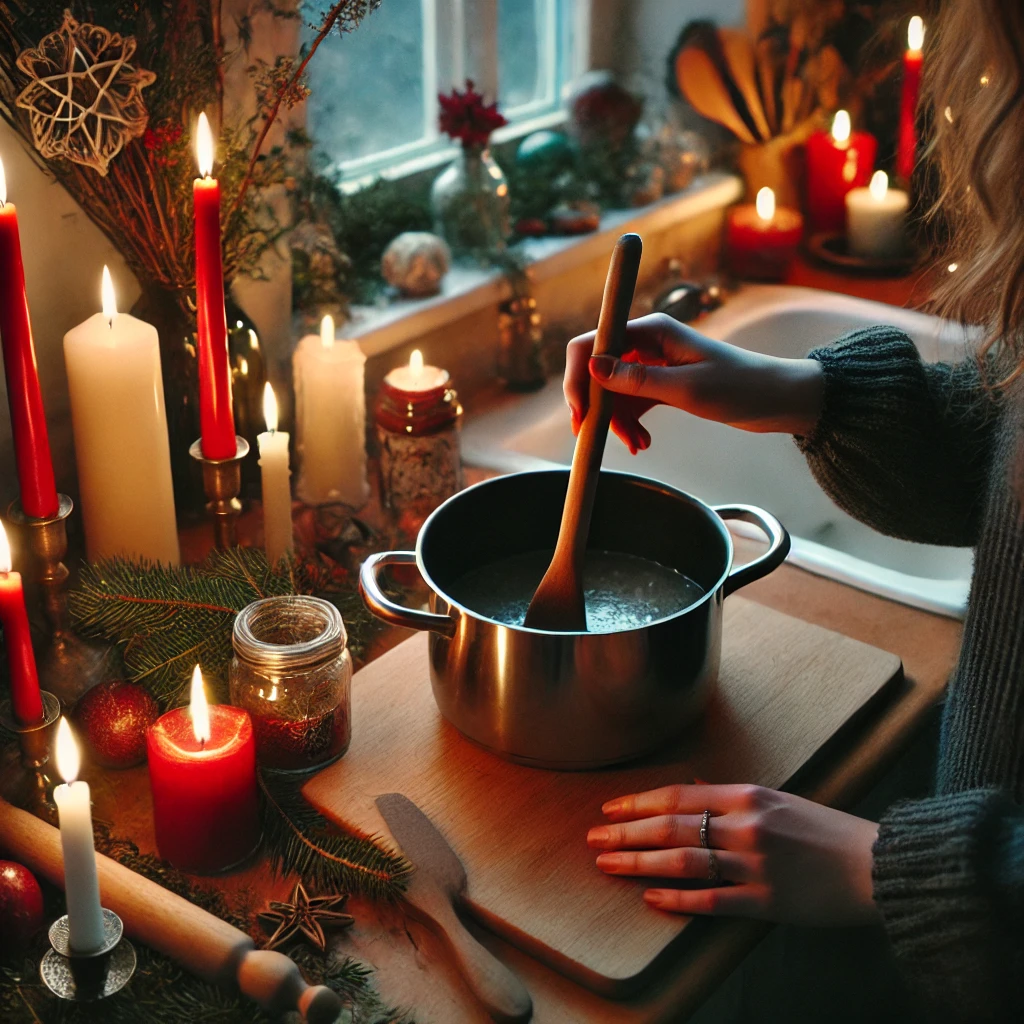
- As you prepare each dish, infuse your actions with intention. Stir with gratitude, chop with love, and season with blessings. Each movement is a prayer and a gesture of connection with the spirits you honor.
- Allow your senses to be fully immersed in the act of creation, feeling the textures, smelling the fragrances, and relishing the alchemy of ingredients coming together. You may choose to play soft music that resonates with the spirit of the night as you cook.
Step 3: Decorating the Altar and Hearth
- Once the meal is ready, arrange the dishes beautifully on a large serving plate or in bowls, ready to be offered. If you have prepared multiple dishes, place each in its own container to honor the diversity of the offerings.
- Move to the altar or hearth, lighting the candles to signify the sacredness of the moment. The warm glow reflects the nurturing energies of the Disir and the feminine.
- Arrange the food offerings on the altar, and if you have a drink offering (such as mead, cider, or wine), pour it into a special cup. Say words of gratitude as you place each item, for example:
“To the Disir, mothers of the past, protectors of the present,
I offer these gifts in love and thanks.
Bless this hearth, bless this home,
And may your presence guide and guard us."
Step 4: Feasting in Celebration
- Gather your family or loved ones to share in the meal prepared for Mother’s Night. As you feast, take time to share stories and memories of female ancestors or spirits you are honoring. If you are alone, reflect quietly on their guidance and influence in your life.
- Invite everyone to speak their gratitude, either aloud or in silence. Each person may offer a toast to the Disir, honoring their presence and blessings. If the atmosphere allows, laughter, storytelling, and joy should fill the room, for the Disir delight in merriment and love shared among family and friends.
Step 5: Sharing with the Disir
- When the feast is complete, set aside a portion of each dish on the altar or offering plate as a formal offering to the Disir. This is a symbolic gesture, sharing the abundance of the meal with the honored spirits.
- You may choose to leave the offerings overnight, placing them outdoors the next morning to return them to nature as a final gesture of respect and connection.
During Mother’s Night, the focus is on gratitude, love, and honoring the feminine spirit. Let the ritual flow naturally, adjusting as needed to fit your own traditions or family customs. Feel free to involve children in preparing the meal, setting the altar, or lighting candles, and share with them the importance of remembering and honoring the spirits of the past. If any family recipes have been passed down through the generations, cooking these dishes can add an additional layer of meaning and connection.
Conclusion
Yule’s Mother’s Night is a celebration of feminine energy, honoring the protectors, nurturers, and guides of our lives. As you cook, feast, and offer your gratitude to the Disir, you weave the strands of your own ancestry into the fabric of this sacred night. By gathering around the hearth, sharing stories, and preparing offerings, you create a space where the past and present meet—a space where blessings, protection, and love flow freely. May the warmth of the hearth and the spirit of the Disir fill your heart and home with light as you welcome Yule’s blessings and the embrace of the nurturing forces that guide you throughout the year.