Posted on Leave a comment

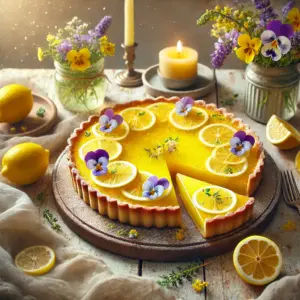
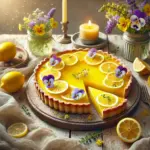
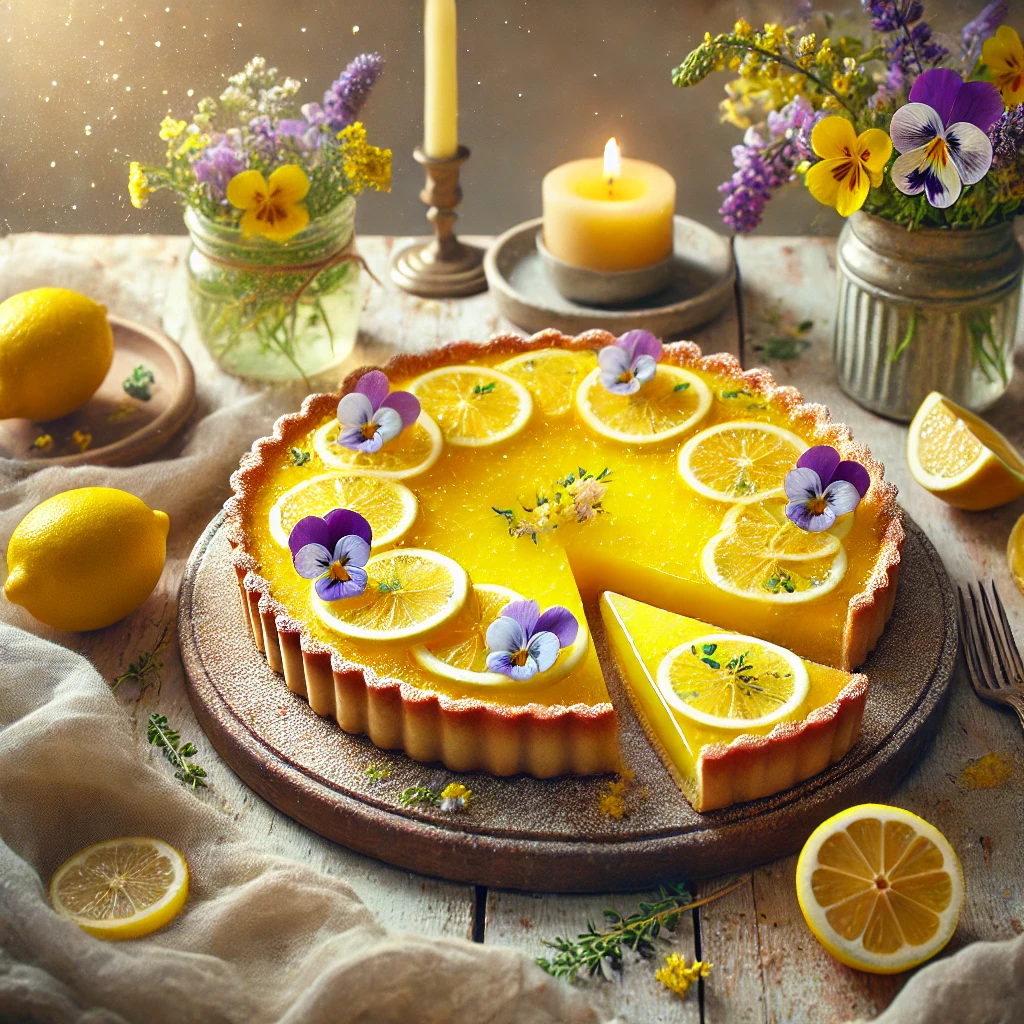
Recipe: Spring Sunshine Lemon Tart

Spring Sunshine Lemon TartReading Time: 3 minutes
Spring Sunshine Lemon Tart

Introduction

A bright, zesty dessert that captures the light and joy of the season.

As spring breathes life into the world, it also awakens our senses. The crisp tang of lemon, the sweetness of early honey, and the delicate floral undertones of spring herbs make this Lemon Tart a true seasonal delight. Light yet decadent, this tart is ideal for Ostara celebrations, spring feasts, or simply welcoming more sunshine into your day. Its golden filling and vibrant flavor embody joy, purification, and clarityโ€”the essence of springtime magic.

The Magic of the Spring Sunshine Lemon Tart

Lemon has long been associated with purification, joy, and renewal. In magical traditions, its bright yellow hue aligns with the sun and the element of fire, representing clarity of thought and energetic cleansing. This tart is made not only with lemon but also with lavender or thyme for a touch of grounding herb magic, and honey, which is sacred to bees and symbolizes prosperity and the sweetness of life. When made and consumed with intention, this tart becomes a celebration of illumination and inner joy.

Spell for Clarity and Light

Purpose: To banish mental fog, invite joy, and promote clarity of purpose.

Ingredients:

  • A slice of lemon tart
  • A yellow candle
  • A small bowl of water with a floating flower (daisy, primrose, or violet)
  • A few sprigs of lavender or thyme

Instructions:

  1. Set your tart before you, light the yellow candle.
  2. Place the bowl of flower water and herb sprigs nearby.
  3. Focus on the flame and say:
    โ€œSunlight sweet and lemon bright,
    Clear my mind and gift me sight.
    With spring’s new bloom and purpose true,
    Let joy arise and light renew.โ€
  4. Take slow bites of the tart, visualizing clarity flooding into your spirit.
  5. Snuff the candle and keep the herb sprigs near your workspace or altar.

Magical Properties of Spring Sunshine Lemon Tart

  • Lemon โ€“ Purification, joy, clarity, cleansing
  • Honey โ€“ Abundance, love, attraction, prosperity
  • Eggs โ€“ Fertility, transformation, new life
  • Butter โ€“ Comfort, nurturing, grounding
  • Flour โ€“ Manifestation, stability
  • Lavender/Thyme โ€“ Calm, healing, mental clarity
Spring Sunshine Lemon Tart
Print Recipe Share on Facebook Pin Recipe
No ratings yet

Recipe: Spring Sunshine Lemon Tart

A luscious lemon tart with floral and herbal undertones to awaken your senses and spirit.
Prep Time20 minutes
Cook Time30 minutes
Chilling Time1 hour
Total Time1 hour 50 minutes
Course: Dessert
Season: Ostara, Spring
Servings: 8
Calories: 290kcal
Author: Theo, Witch

Equipment

  • 1 Tart pan 9-inch, with removable bottom
  • 1 Mixing bowl
  • 1 Whisk
  • 1 Saucepan
  • 1 Zester or Grater

Ingredients

For the Crust

  • 1 1/4 cups all-purpose flour
  • 1/4 cup powdered sugar
  • 1/2 cup unsalted butter cold, cubed
  • 1-2 tbsp cold water as needed

For the filling:

  • 3 large eggs
  • 1/2 cup honey or sugar, if preferred
  • 1/2 cup lemon juice freshly squeezed
  • 2 tbsp lemon zest
  • 1/4 tsp dried lavender or thyme optional
  • 1/4 cup heavy cream

Instructions

Step 1: Make the Crust

  • In a bowl, mix flour and powdered sugar.
  • Cut in butter until mixture resembles coarse crumbs.
  • Add cold water 1 tablespoon at a time until dough forms.
  • Press into tart pan, prick bottom with fork, and chill for 20 minutes.
  • Pre-bake crust at 375ยฐF (190ยฐC) for 10โ€“12 minutes. Cool slightly.

Step 2: Prepare the Filling

  • In a bowl, whisk eggs and honey until smooth.
  • Add lemon juice, zest, lavender/thyme (if using), and cream. Whisk to combine.
  • Pour into pre-baked tart shell.

Step 3: Bake and Chill

  • Bake at 325ยฐF (163ยฐC) for 25โ€“30 minutes or until center is just set.
  • Let cool completely, then refrigerate for at least 1 hour before serving.

Notes

Moon Milk Lavender and CherriesMoon milk is believed to have magical properties that promote relaxation, sleep, and spiritual connection. Lavender is a powerful herb that is often used in spells and rituals to promote tranquility, purification, and harmony. It is said to help calm the mind, soothe anxiety, and facilitate communication with the spiritual realm. Cherries, on the other hand, are associated with abundance, prosperity, and love. By combining these two ingredients in moon milk, we can create a potent brew that promotes restful sleep, deep relaxation, and a profound sense of spiritual connection.
As you sip on your moon milk and gaze up at the moon, take a moment to reflect on the magic and mystery of the universe. Whether you are working with the moon to manifest your desires, to connect with your intuition, or simply to enjoy a peaceful moment of reflection, remember that the power of the moon is always with you, waiting to be harnessed and celebrated.
*Calories Calculated with 2% Dairy Milk, Different bases will change the values.

Spring Sunshine Lemon Tart

Proudly brought to you by

The Equinox Apothecary

© The Equinox Apothecary 2024 – Permission is granted to copy and reproduce this Recipe with attribution

Conclusion

The Spring Sunshine Lemon Tart is a celebration of clarity, joy, and renewal. Made with intention and seasonal ingredients, it nourishes not just the body but the soul. Serve it at your next spring ritual, share it with loved ones, or enjoy it as a sacred act of self-care. As the days grow longer and brighter, let this tart be a sweet reminder of the light returning to your life. Blessed be the brightness within and around you.

Posted on Leave a comment

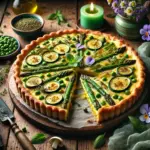
Recipe: Spring Cheesy Vegetable Garden Tart

Spring Cheesy Vegetable Garden TartReading Time: 3 minutes
Spring Cheesy Vegetable Garden Tart

Introduction

A colorful, comforting tart celebrating the blossoming magic and fresh produce of spring.

When spring begins to paint the world with green again, our kitchens call for lighter, fresher, and more colorful fare. This savory tart is packed with spring vegetables and gooey cheese nestled inside a crisp, buttery crust. Whether youโ€™re planning a seasonal gathering, an Ostara brunch, or a quiet moment of celebration, this garden tart brings the energy of new beginnings and the blessings of the land right to your plate.

The Magic of the Spring Cheesy Vegetable Garden Tart

Spring is a sacred time for renewal and rebirth. With every seedling pushing through soil, weโ€™re reminded that growth comes from nourishment and patience. This tart is a reflection of that magic. Each ingredient has been chosen for its seasonal presence and magical alignment with spring. As you prepare and eat this tart, visualize planting seeds of joy, abundance, and creative inspiration. This is more than foodโ€”itโ€™s edible spellwork.

Spell for Renewal and Joyful Growth

Purpose: To welcome creative growth and emotional renewal during the spring season.

Ingredients:

  • A slice of Cheesy Vegetable Garden Tart
  • A green candle
  • A small bowl of flower petals (chamomile, daisy, or violet)
  • A sprig of thyme or basil

Instructions:

  1. Place the tart slice before you. Light the green candle.
  2. Sprinkle flower petals around the plate and place the herb sprig nearby.
  3. Close your eyes, breathe deeply, and say: โ€œFrom earth to plate, from seed to sun,
    I bloom with joy, my growth begun.
    In colors bright and greens anew,
    I rise with spring, refreshed and true.โ€
  4. Eat mindfully and slowly. Let the flavors connect you to the abundance of spring.
  5. After finishing, extinguish the candle and thank the Earth for her gifts.

Magical Properties of Spring Cheesy Vegetable Garden Tart

  • Asparagus โ€“ New beginnings, mental clarity, vitality
  • Zucchini โ€“ Fertility, creativity, grounding
  • Peas โ€“ Prosperity, potential, healing
  • Leeks โ€“ Protection, purification, courage
  • Eggs (in filling) โ€“ Fertility, new life, transformation
  • Cheese โ€“ Nurturing, comfort, abundance
  • Thyme โ€“ Bravery, renewal, purification
  • Basil โ€“ Love, harmony, wealth
Spring Savory Waffles
Print Recipe Share on Facebook Pin Recipe
No ratings yet

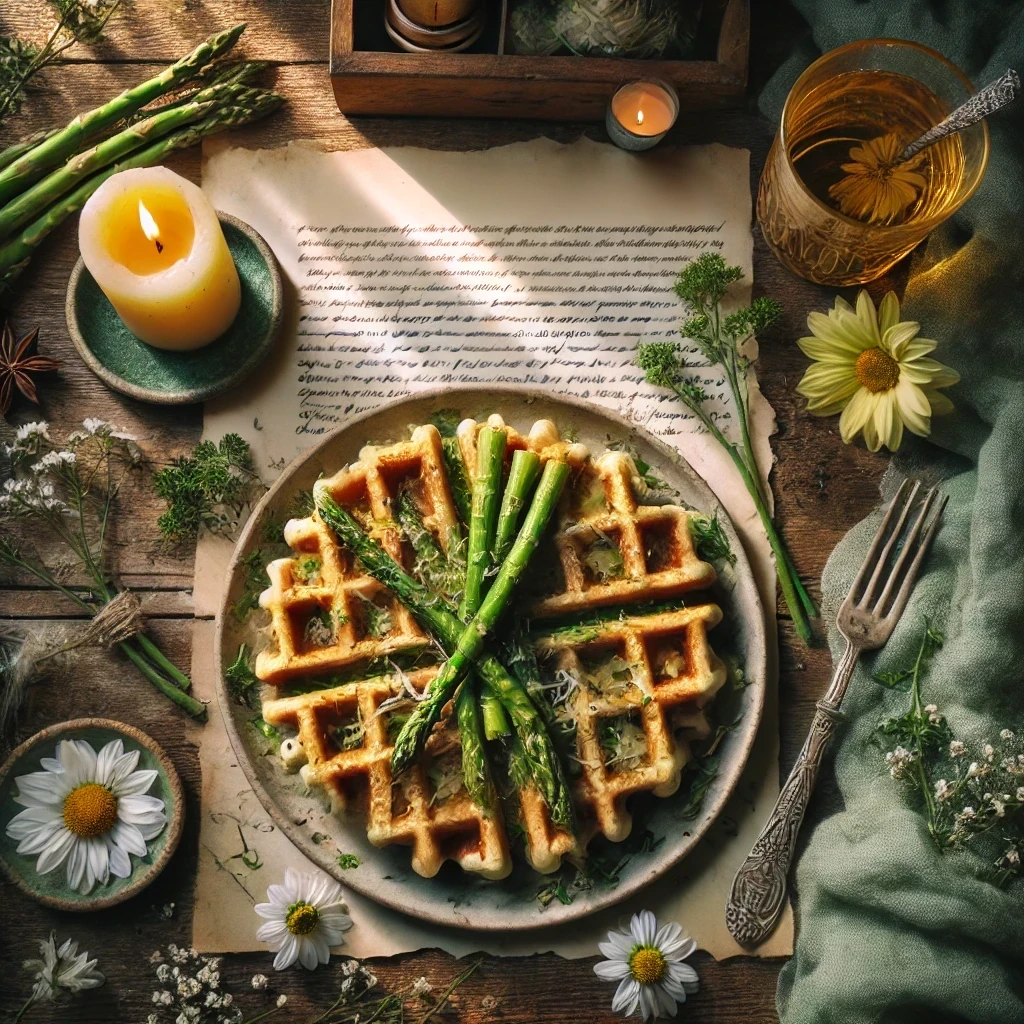
Recipe: Spring Savory Waffles with Asparagus, Gruyรจre, and Onion

Cheesy, crisp-edged waffles that highlight the bounty and energy of spring.
Prep Time15 minutes
Cook Time20 minutes
Total Time35 minutes
Servings: 4
Calories: 350kcal
Author: Theo, Witch

Equipment

  • 1 Waffle Iron
  • 1 Skillet
  • 1 Mixing bowl
  • 1 Whisk

Ingredients

  • 1 cup all-purpose flour
  • 1 tsp baking powder
  • 1/2 tsp salt
  • 2 large eggs
  • 3/4 cup milk
  • 2 tbsp melted butter
  • 1/2 cup cooked asparagus chopped into bite-size pieces
  • 1/2 cup caramelized onion
  • 3/4 cup shredded Gruyรจre cheese
  • 1 tbsp chopped parsley plus extra for garnish

Instructions

Step 1: Prepare the Vegetables

  • Sautรฉ thinly sliced onion in a skillet over medium-low heat until caramelized (about 10-15 minutes).
  • Blanch or lightly steam asparagus until tender (3-5 minutes). Chop into small pieces.

Step 2: Make the Batter

  • In a bowl, whisk together flour, baking powder, and salt.
  • In a separate bowl, beat eggs and add milk and melted butter.
  • Combine wet and dry ingredients. Stir until just combined.

Step 3: Fold and Cook

  • Gently fold in caramelized onion, asparagus, Gruyรจre, and parsley.
  • Preheat your waffle iron and grease if necessary.
  • Pour batter into the waffle iron and cook according to manufacturer instructions (about 4-5 minutes per waffle).

Step 4: Serve and Savor

  • Serve hot, garnished with a sprinkle of fresh parsley or a dollop of sour cream.

Notes

Moon Milk Lavender and CherriesMoon milk is believed to have magical properties that promote relaxation, sleep, and spiritual connection. Lavender is a powerful herb that is often used in spells and rituals to promote tranquility, purification, and harmony. It is said to help calm the mind, soothe anxiety, and facilitate communication with the spiritual realm. Cherries, on the other hand, are associated with abundance, prosperity, and love. By combining these two ingredients in moon milk, we can create a potent brew that promotes restful sleep, deep relaxation, and a profound sense of spiritual connection.
As you sip on your moon milk and gaze up at the moon, take a moment to reflect on the magic and mystery of the universe. Whether you are working with the moon to manifest your desires, to connect with your intuition, or simply to enjoy a peaceful moment of reflection, remember that the power of the moon is always with you, waiting to be harnessed and celebrated.
*Calories Calculated with 2% Dairy Milk, Different bases will change the values.

Spring Savory Waffles with Asparagus, Gruyรจre, and Onion

Proudly brought to you by

The Equinox Apothecary

© The Equinox Apothecary 2024 – Permission is granted to copy and reproduce this Recipe with attribution

Conclusion

The Spring Cheesy Vegetable Garden Tart is a vibrant, versatile recipe steeped in the energy of new life. Perfect for gatherings, spells of growth, or savoring in sacred solitude, this tart helps root your magic in the seasonโ€™s bounty. May each bite nourish your body and spirit. Blessed be the bloom and the bite!

Posted on Leave a comment

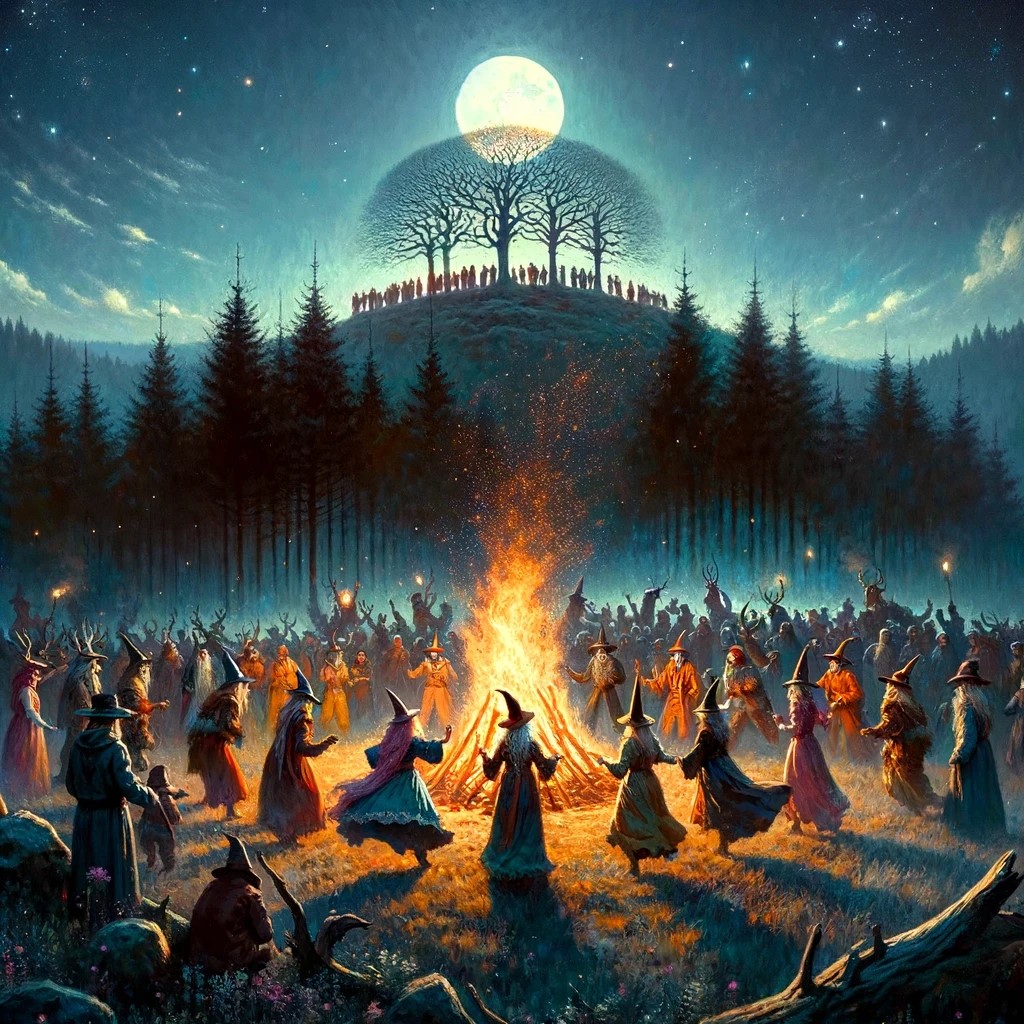
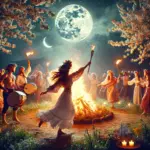
Beltane Fire Dance

Beltane fire danceReading Time: 12 minutes
Beltane fire dance

Introduction

A Spirited Celebration of Flame, Fertility, and Union Under the May Moon

As spring ripens into summer and the earth hums with energy, the ancient fire festival of Beltane bursts into life. Celebrated on the night of April 30th into May 1st in the Northern Hemisphere, Beltane is a liminal momentโ€”a cross-quarter sabbatโ€”that marks the halfway point between the Spring Equinox and the Summer Solstice. It’s a time of fertility, fire, union, and ecstatic celebration, where the veil between worlds grows thin, and the earth itself seems to dance.

And at the heart of many modern and ancient Beltane celebrations lies one of its most potent and captivating traditions: The Beltane Fire Dance. More than just a performance or ritual, this dance is a visceral embodiment of transformation, sensuality, and divine spark. Let us dive into the flames and discover the story and significance of this fiery rite.

The Fire Dance in Beltane History

Beltane, one of the four major fire festivals of the ancient Celts, has long been celebrated as a thresholdโ€”between spring and summer, between the seen and unseen, between ordinary time and sacred time. At its core, Beltane was a festival of fire, honoring the life-giving energy of the sun as it ascended toward its full summer power. Across the Celtic landsโ€”from the lush green hills of Ireland to the misty highlands of Scotland and the wind-swept isles of Wales and the Isle of Manโ€”great bonfires were kindled on hilltops, their smoke spiraling into the sky as a prayer and offering to the divine forces of nature.

These fires werenโ€™t just symbolicโ€”they were sacred tools of purification, protection, and fertility. Cattle, vital to the livelihood of many Celtic tribes, were driven between two fires or through the smoke to cleanse them of illness and misfortune. People would pass through the smoke themselves to receive blessings for health and prosperity. Embers from the communal bonfire were often carried back to the hearth, reigniting the home with sacred flame. The Beltane fires were believed to burn away stagnation, fertilize the spirit, and seal the communityโ€™s pact with the divine natural world.

Though there is no archaeological or textual evidence to suggest that fire dancing in the modern senseโ€”with poi, torches, or choreographed performancesโ€”was practiced by ancient Celts, the ritualistic use of movement, rhythm, and ecstasy was certainly present. People danced in circles, leapt over the flames, and celebrated through song, drumming, and intimate revelry. Dance was not only celebratoryโ€”it was also a prayer in motion, a way to commune with the sacred forces embodied in the earth, the fire, and each other.

The Maypole, often associated with Beltane, became another focal point of communal movement and fertility ritual. Dancersโ€”traditionally young people of marriageable ageโ€”would weave ribbons around the pole in spirals, mimicking the interlacing energies of the masculine and feminine, sun and earth, growth and potential. This spiral motion echoed the rhythms of nature and the sacred geometry of life itself.

In this rich context of rhythmic celebration, sacred fire, and fertility rites, the modern Beltane Fire Dance emergesโ€”not as an exact replication of ancient custom, but as a living ritual inspired by its essence. Todayโ€™s fire dancers, whether spinning flame in the darkness or moving ecstatically around a bonfire, are the inheritors of this ancient fire magic. Their movements, guided by drumbeats and intention, are offerings to the same deities and earth spirits once honored by our ancestors. The fire becomes a stage, a temple, and a portal through which the veil between worlds grows thin, and the primal forces of creation are awakened and celebrated.

Rather than a historical reenactment, the modern fire dance is a personal and collective act of devotionโ€”to the body, to the land, and to the wild and fertile mystery of Beltane. It is a reminder that we are not separate from the cycles of nature, but dancers within themโ€”spinning, stomping, and leaping with joy, as the flames rise and the world blooms anew.

Symbolism of the Fire Dance

The Beltane Fire Dance is more than celebrationโ€”it is ritual in motion, a living prayer that unites body, spirit, and flame under the open sky. In the flicker of firelight and the beat of the drum, dancers become channels of Beltaneโ€™s powerful seasonal energies. Every step, spin, and breath becomes a sacred act, weaving together the ancient and the modern in an embodied offering to the earth, the gods, and one another.

FIRE as Transformation

At the heart of Beltane is the element of fireโ€”not merely a source of heat and light, but a living spirit that burns away what no longer serves. The fire represents transformation, a threshold between what has been and what will be. As dancers move through the light and shadows cast by the flames, they enact the alchemy of release and renewal. The fire consumes old fears, stagnant energy, regrets, and doubts, and in their place ignites passion, purpose, fertility, and courage. It is the crucible where intentions are forged, where the soul is reminded of its innate power to rise and renew.

MOVEMENT as Magic

The Fire Dance is not a performanceโ€”it is ritual magic in motion. Each stomp upon the earth resonates like a heartbeat, each sway or spin like the turn of the seasons. The dance becomes a spell cast through the body, where intention is focused not in words but in motion. Kinetic energy becomes sacred energy, released with every breath and step. It is in this ecstatic movement that dancers shed layers of self-consciousness and inhibition, entering trance states where the veils thin, and divine presence becomes palpable. Here, the body remembers its ancestral languageโ€”the language of rhythm, fire, and freedom.

UNION of Opposites

Beltane honors the sacred union of the God and Goddess, the divine masculine and feminine, the sun and the fertile earth. It is the celebration of lifeโ€™s sacred polarity and the passionate embrace of opposites. Within the Fire Dance, this sacred duality is expressed through interwoven movements, partnered dances, and symbolic gestures of balance and harmony. Two dancers circling each other in fireโ€™s glow might represent the Lord and Lady in their sacred marriage, or the merging of desire and spirit, of the wild and the divine. The fire itself becomes a third presenceโ€”the spark of union, the flame of life birthed from the meeting of opposites.

RELEASE and REBIRTH

The fire circle becomes a space where everything is welcomeโ€”grief, laughter, longing, ecstasy, release. The dance offers catharsis, a channel through which emotions flow freely, unburdened and unhindered. This sacred release prepares the soul for rebirthโ€”for stepping out of the firelight renewed, lightened, and empowered. Like the earth awakening from winter, the dancer emerges reawakened, carrying the vital force of spring into the fertility of summer. It is a resurrection through rhythmโ€”a shedding of the old skin, and the blessing of a new beginning.

What Happens During a Beltane Fire Dance?

Though every Beltane gathering is shaped by its people, land, and lineage, the Beltane Fire Dance often unfolds in a sacred progressionโ€”a weaving of ritual, rhythm, and reverence that stirs the spirit and honors the seasonโ€™s sacred pulse. Each element of the fire dance is a threshold, inviting participants deeper into the mystery, magic, and mythos of Beltane. The ritual becomes a container for transformationโ€”a night where time bends, where body becomes prayer, and where the veil between worlds grows thin.

1. The Lighting of the Fire: Igniting Divine Will

The rite begins with the kindling of the central fire, a moment of profound intention and spiritual alignment. Often lit using friction methods, flint and steel, or a ceremonial spark, the fire is born in silence, symbolizing a sacred birthโ€”the return of the sunโ€™s virility and the earthโ€™s blossoming fertility.

This act is more than practical; it is an invocation. Prayers, blessings, and invocations are spoken or chanted as the flame takes life, calling upon deities such as:

  • Brigid, keeper of flame, creativity, and healing
  • Cernunnos, horned god of fertility, wilderness, and wild instinct
  • The May Queen, radiant goddess of springโ€™s sensuality and grace
  • The Green Man, spirit of the forest and divine masculine in bloom

Participants often stand in quiet reverence or hum low, grounding tones as the fire grows. The first flicker of flame is seen as the awakening of spirit, a signal that the ritual has begun and the threshold has been crossed.

2. Drumming Begins: Awakening the Primal Pulse

Once the fire is lit, the heartbeat of the circle begins. Drums riseโ€”slow and steady at first, echoing the rhythm of the earth, the womb, the breath of all life. As the beat quickens, energy begins to spiral. The drums call the dancers to life, stirring the bodyโ€™s memory of ancient rites and wild joy.

The drumming isn’t just accompanimentโ€”it is the voice of Beltane itself, and each rhythm speaks a different story: desire, union, release, ecstasy, transformation. Other instruments may joinโ€”rattles, flutes, didgeridoos, or even the primal power of human voices lifted in chant.

In many traditions, the drum circle is the spine of the ritual, holding the energy even when chaos or silence arises. It grounds the experience and guides the dancers through altered states of awareness.

3. Enter the Dancers: Vessels of Flame and Spirit

One by one, or all at once, the dancers emerge. They enter the sacred space in silence, procession, or explosive joyโ€”each depending on the group’s intention and energy. Their appearance is often ceremonial and symbolic, blending sensuality, myth, and earth magic:

  • Adornments: Flowing silks, antlers, flower crowns, body paint, bells, feathers, animal skins
  • Fire Implements: Torches, candles, fire poi, staff twirlers, or fire fans
  • Masks and Costumes: Spirits of the forest, archetypal deities, or primal forces embodied

These are not costumes of performance, but sacred vestmentsโ€”each dancer becomes a living spell, embodying desire, transformation, and connection. Some may dance with specific roles, such as representing the May Queen or Green Man, while others arrive as themselves, yet transformed by intention and sacred purpose.

Each dancer holds a personal thread in the tapestry of the ritual: something to be released, something to be invoked, something to be reclaimed. As their bodies move, they weave those threads into the collective ritual energy.

4. The Dance: Ecstatic Spiral of Fire and Flesh

Now the fire blazes and the beat throbs like a second heart. The dance eruptsโ€”wild, sensual, reverent. It is not choreographed but primal, intuitive, electric. Dancers circle the flames, some slowly and deliberately, others in frantic ecstasy.

Common elements in the dance include:

  • Fire Leaping: Participants leap over small flames or fire pits to symbolize courage, love, purification, or fertility. Each jump is a rite of passageโ€”a leap of faith.
  • Spiral Dances: The group moves in and out of spiral formations, mimicking the rhythms of nature and the spiral of creation itself.
  • Partner Dances: Individuals join in playful or symbolic courtship dances, reflecting the dance of polarity and divine union.
  • Solitary Trance: Some find a private space at the fire’s edge, swaying in deep communion with the flame, entering altered states of vision or healing.

The fire dance may last for hours, with waves of energy rising and falling. It is a sacred vortexโ€”where time slows, where emotions flow freely, where the fire becomes the sun, and the dancers, its orbiting stars. It is not uncommon for participants to laugh, cry, howl, or collapse in ecstatic release.

5. Climactic Union and Blessing: Sacred Integration

As the energy crescendos, many rituals include a symbolic unionโ€”the sacred marriage of the Goddess and God, the archetypal lovers, the joining of dualities. This may be enacted through a dance, a kiss, a handfasting, or a ceremonial offering. Sometimes it is witnessed in silence, sometimes cheered with drums and song.

In this moment, the energy of the fire is seeded into the earth and into the hearts of the communityโ€”a blessing for growth, harmony, and fertility.

After the climax, the fire often becomes a space for reflection. Participants may:

  • Approach the fire to make offerings: dried herbs, handwritten intentions, wishes, flowers, or crafted charms
  • Sit in silence, integrating the experience
  • Share blessings or final prayers as a group
  • Walk between twin fires, if present, for personal purification

This final act is about grounding the energy, sealing the magic, and returning from the ritual space transformed. As embers glow, the community may gather in embrace, song, or stillnessโ€”honoring the passage theyโ€™ve just shared.

Hosting Your Own Beltane Fire Dance

You donโ€™t need a vast hillside gathering or a roaring festival fire to experience the transformative magic of the Beltane Fire Dance. Whether you’re dancing solo beneath the stars or gathering with friends in a cozy backyard, the essence of this tradition lies not in grandeur but in intention, energy, and sacred presence.

Here are ways to breathe life into your own Beltane Fire Dance, weaving ritual into personal celebration and embodying the joyful fire of the season.

Create a Sacred Fire: A Living Flame of the Season

Your fire doesnโ€™t need to be enormousโ€”what matters is how you tend it, how you honor it, and how you connect with it. This can be a bonfire, a small fire bowl, a fire-safe cauldron, or even a circle of candles arranged on an altar or in the grass.

  • Consecrate your fire with herbs sacred to Beltane, like rosemary for clarity, mugwort for intuition, lavender for peace, or bay leaves for wishes. Toss them into the flames with prayers or whispered intentions.
  • Speak blessings as you light the flame. Invite the fire to be your teacher, your mirror, your guide.
  • Let the fire be your altarโ€”a place where you offer both your passion and your purification.

Even indoors, a table filled with candles in red, gold, and white can evoke the warmth and spirit of the Beltane flame. Surround it with crystals, flowers, or tokens of spring for added energy.

Dance with Intention: Movement as Spellwork

The dance is the heart of the ritual. It doesnโ€™t need to be choreographed, polished, or public. Let your body move the way Beltane feels to youโ€”wild, sensual, slow, joyous, tearful, bold.

  • Dance barefoot on the earth if you canโ€”let your feet kiss the ground as you awaken its energy.
  • Begin in silence or to the beat of a drum. You can use pre-recorded music, sing chants, or just move to the rhythm of your heartbeat.
  • Move with purposeโ€”maybe you’re dancing to call in fertility, to burn away doubt, to ignite a creative project, or to celebrate your sensuality. Let your movement reflect your intention.
  • Invite others to dance with you, creating a spiral, a circle, or simply sharing the same space with their own unique energy.

This is your spell, your prayer in motion. Whether you sway gently or spin ecstatically, your body becomes a vessel of magic.

Wear Symbols of the Season: Dress as Devotion

Clothing and adornment can help shift you into sacred space. What you wear becomes a ritual garment, helping you feel empowered, connected, and expressed.

  • Flower crowns connect you with the energy of the May Queen and the blossoming of spring. Use wildflowers or make your own with ribbons and herbs.
  • Ribbons in red and white symbolize passion and purity, union and balance. Weave them into your hair, wear them as sashes, or tie them to your clothing.
  • Flowing silks, lace, antlers, bells, beads, or face paint can transform you into a deity, a spirit of the woods, or an elemental force. Choose what makes you feel enchanted.
  • Let your ritual attire be an outward expression of your inner fireโ€”how you show up for the energy of Beltane is as sacred as any invocation.

Invoke the Spirits: Dance With the Divine

Before or during your dance, take time to call in the energies, deities, or spirits you wish to honor or embody.

  • Call upon Brigid for her fire of inspiration and healing.
  • Welcome The Green Man or Cernunnos, who embodies wild masculinity, fertility, and the turning of the wheel.
  • Invoke The May Queen, the blossoming goddess of sensuality, sovereignty, and joy.
  • Ask for blessings from the spirits of the land, the ancestors, or the elementals of fire and earth.

This can be done with simple words: โ€œSpirits of Beltane, I welcome you. Dance with me. Bless this fire and all it touches.โ€ You can also use offerings, chants, or music to open the veil between the worlds and invite their presence into your sacred circle.

Leap the Flames: A Rite of Passion and Purpose

Leaping over fire is an ancient Beltane tradition symbolizing courage, purification, and initiation. If safe and possible, light a small fire or candle-lined path and leap (or step) over it mindfully.

  • As you leap, speak aloud what you are stepping into: โ€œI leap into joy.โ€ โ€œI leap into love.โ€ โ€œI leap into my fullest self.โ€
  • You can also leap to release something: fear, pain, hesitation, or anything you wish to leave behind.
  • If leaping isnโ€™t safe or comfortable, you can symbolically walk between two candles or even use visualizationโ€”imagine yourself jumping through a ring of light, emerging transformed on the other side.

Even this small gesture becomes a powerful threshold crossing, honoring Beltane as the turning point into the bright half of the year.

Your Fire Dance, Your Magic

Above all, your Beltane Fire Dance is yours to shape. Whether itโ€™s silent or song-filled, sensual or spiritual, solitary or shared, it is an act of living devotionโ€”a dance with the sacred, a celebration of life in full bloom.

Make it beautiful. Make it honest. Make it wild.

And when the last embers cool and the dawn kisses the earth, may you carry that fire in your heartโ€”burning bright, blessed, and free.

The Afterglow: Integration and Rest

When the fire dance ends and the final embers fade into the quiet of the night, the energy you’ve raised doesn’t simply vanishโ€”it begins to settle deep into the soil of your soul. This is the sacred space of integration, a moment often overlooked but vital to completing the ritual. The fire has stirred your spirit, released what no longer serves you, and awakened your intentionsโ€”now it’s time to tend to your inner flame.

Start with the basics: hydrate, nourish, and rest. Drink water slowly and intentionally, blessing each sip with gratitude for your bodyโ€™s movement and strength. Sit or lie down on the earth if you can, allowing the pulse of the land to hold you. Feel your heartbeat slowing. Breathe. Let the energy settle like ash returning to soil, rich with unseen seeds waiting to bloom.

Take time to journal your experience. What sensations moved through you? What emotions surfaced? What images or visions did the flames stir in your imagination? Were there any spontaneous messages from spirit, ancestors, or your higher self? Writing it down now ensures you capture the threads before they fade, weaving them into a tapestry you can revisit as Beltane energy unfolds in the weeks ahead.

You might feel elated, tired, peaceful, or rawโ€”all are natural responses. Trust the wisdom of your body and spirit as they recalibrate. The dance may have stirred powerful energies, and like any rite of passage, it deserves stillness in the aftermath.

In the days that follow, pay attention to dreams, synchronicities, or creative inspiration. Many report receiving unexpected insights or artistic bursts after a fire danceโ€”poems, songs, paintings, or ideas that seem to arise from the very spark of the ritual. These are gifts from the fire, messages carried in smoke and returned in silence. Listen closely.

To keep the Beltane flame alive, consider tending a small candle or hearth fire in the days after the ritual. Each time you light it, whisper your intention or reflect on what you felt during the dance. Let it be your sacred reminder that fire, though fleeting, leaves lasting warmth.

Most importantly, be gentle with yourself. Integration is not about doingโ€”it’s about receiving, softening, and being open to the subtle shifts now unfolding. The fire may have burned through old layers, making space for something new to emerge. Give that newness time to root.

The Beltane Fire Dance does not end when the music stopsโ€”it echoes in the heartbeat, in the breath, in the dreams. Let that echo guide you toward summer, carrying the wild, sacred joy of the fire forward into everything you create, feel, and become.

Conclusion: Becoming the Flame

The Beltane Fire Dance is more than movementโ€”it is initiation, invocation, and celebration. It invites us to become the fire, to let ourselves be wild and sacred, fierce and free. Whether in a forest with a hundred others or alone by candlelight, when you dance for Beltane, you echo the footsteps of those who danced beforeโ€”honoring love, life, and the unstoppable force of spring.

So when the flames rise this Beltane, step into the circle. Let your spirit burn bright.

Dance. Burn. Bloom.
Posted on Leave a comment

Carromancy: Reading the Future Through Wax and Water

CarromancyReading Time: 12 minutes
Carromancy

Introduction

An ancient and elemental form of divination where melted wax reveals messages from the unseen.

Have you ever watched a candle burn and felt as though it was whispering secrets through its flickering flame and dripping wax? In the world of divination, those whispers become tangible messages through the ancient practice of Carromancy, also known as Ceromancy. Carromancy is a form of divination that uses melted wax to uncover hidden truths, answer questions, and forecast the future. Most often, this involves dripping or pouring hot wax into cold water, where it rapidly cools and solidifies into mysterious shapes. These wax formations, like tea leaves or clouds, are then interpreted for meaning. In this article, weโ€™ll explore the rich history of Carromancy, its spiritual significance, how to perform your own wax readings, and how to interpret the shapes and symbols that emerge from the wax-water dance.

The History of Carromancy: Flickering Flames and Ancient Rites

Carromancy, or Ceromancy, is one of the oldest and most elemental forms of divination, rooted in the primal forces of fire and water. Its history is woven through centuries of spiritual practice, mysticism, and the sacred observation of the natural world. The practice of interpreting melted wax to gain insight into the future has flickered through time like the flame of a candleโ€”sometimes blazing bright in ritual spaces, other times quietly glowing in folk traditions passed down through generations.

Druidic Origins: Wax and the Otherworld

The earliest known traces of Carromancy can be found among the ancient Celts, particularly within Druidic spiritual practices. Druids, as spiritual leaders and seers of Celtic tribes, were known to conduct vigils by candlelight as part of sacred rites. These vigils often took place near waterโ€”sacred pools, rivers, or wells believed to be liminal spaces between the worlds. Around CE 500, fragments of historical references suggest that the melted remnants of these vigil candles were carefully collected and poured into clear pools of cold water.

The resulting wax forms were interpreted as messages from the Otherworldโ€”a realm inhabited by spirits, ancestors, and deities. The shapes that appeared in the water were read as omens or answers to the Druidโ€™s prayers and questions, revealing glimpses of fate, guidance from beyond, or warnings of future challenges. This sacred act was more than a method of divination; it was a communion with the divine, a ritual bridge between the visible world and the unseen.

Roman Adaptation: Augury and Elemental Signs

As the Roman Empire expanded into Celtic lands, it absorbed and adapted many local mystical practices. The Romans, who already had a rich tradition of augury and divination, welcomed forms of elemental scrying, including those involving wax. Roman priests and seers often read signs in water, smoke, fire, and the entrails of animals. Waxโ€”being malleable, shaped by heat and quickly solidified in waterโ€”offered a new medium for interpreting omens.

Wax shapes were sometimes poured into basins before temples or used in conjunction with other rites, and Roman domestic rituals occasionally included pouring wax into water to gain insight into household matters, romantic prospects, or spiritual questions. Though not as extensively documented as other Roman oracles, Carromancy found a niche within their spiritual tapestry, contributing to the evolution of this humble yet powerful divinatory art.

Medieval and Renaissance Practice: The Witch’s Candle

With the decline of classical antiquity and the rise of medieval Christianity, many pagan practices were forced undergroundโ€”but they did not vanish. Instead, they transformed into folk magic, kept alive by cunning folk, herbalists, and hedge witches who preserved these arts in secret. During this time, Carromancy emerged again, especially during seasonal festivals like Samhain, Imbolc, and Yule, when the veil between worlds was believed to be thin.

Wise women and folk practitioners would use candle wax to read omens of love, fate, and death. A popular custom involved lighting a candle while asking a question, then pouring the wax into water and interpreting the resulting shape. Each twist and fold of the wax was seen as the crystallization of fate from the invisible currents of energy swirling around the question.

By the Renaissance, Carromancy became more formalized in occult circles and ceremonial magic. It was seen not just as superstition, but as an art of interpreting elemental transformationโ€”a sacred act that mirrored alchemical principles. The melting wax symbolized dissolution; the cold water, structure; and the resulting form, the manifestation of spirit into material.

Elemental Alchemy: The Dance of Fire and Water

At the heart of Carromancy lies the sacred union of two primal elements:

  • Fire transforms. It turns the solid into the fluid, the invisible into the seen. It represents intention, spirit, will, and change.
  • Water receives and shapes. It cools, reflects, and gives form. It represents intuition, emotion, the subconscious, and manifestation.

When wax is melted by flame and poured into water, it undergoes an immediate transformation, capturing a moment of alchemical balance. This act becomes a mirror for the soul and a medium for the divine. It is not just about seeing patternsโ€”it is about witnessing the dance of energy shaping reality, revealing what is unseen, and offering symbolic insight in a tangible, sacred form.

Enduring Legacy

From the sacred groves of the Celts to the ceremonial halls of Renaissance occultists, Carromancy has remained a quiet, potent form of divination. Though simple in tools, its power lies in its intimacy and depthโ€”a practice that asks us to slow down, observe, and listen with the heart as much as with the eyes.

Today, as candles flicker on modern altars and wax once again meets water under the watchful gaze of the seeker, Carromancy lives on, a timeless bridge between earth, water, fire, and the spirit that moves through all.

Uses and Importance of Carromancy

More than a method of divination, Carromancy is a transformative ritual of reflection, spiritual dialogue, and elemental magic.

Carromancy is a practice that unites intuition with the visual and tactile world, making it both accessible and deeply personal. While it is often classified strictly as a form of divination, its uses reach far beyond simple fortune-telling. Carromancy invites practitioners into a sacred, meditative process that allows for emotional healing, energetic cleansing, and direct communion with unseen forces. Through the act of melting wax and witnessing its transformation in water, the practitioner participates in an elemental ritual that is both symbolic and profound.

Carromancy as a Tool for Insight and Awareness

The wax shapes that form in water are not randomโ€”they are shaped by intention, energy, and the subtle patterns of the universe. The meanings drawn from these shapes can offer clarity where the mind is clouded and reveal paths that were previously unseen. As such, Carromancy can be used to:

  • Gain Clarity:
    When life presents uncertaintyโ€”whether in career, relationships, health, or purposeโ€”wax symbols act as visual metaphors that help unlock intuitive understanding. What may be difficult to articulate in words can become clear through the symbolic language of form.
  • Seek Spiritual Guidance:
    Carromancy offers a liminal space where messages from spirit guides, deities, ancestors, or the higher self can be more readily received. Many practitioners approach wax divination as a form of channeled insight, using the fluid shapes to tune in to the spiritual frequencies around them.
  • Mark Ritual Moments:
    The process of melting and pouring wax serves as a ritual containerโ€”a space in time when the practitioner is grounded in intention. It is especially potent during seasonal rites, moon rituals, and other spiritually charged occasions. The act of Carromancy itself becomes a symbolic mirror, reflecting not only the question at hand but the energy of the moment.

The Alchemical Symbolism of Transformation

Wax, in Carromancy, is more than a substanceโ€”it is a metaphor for change. As it melts, flows, and solidifies, it mirrors the process of personal and spiritual transformation.

  • Melting symbolizes release: letting go of fixed expectations, identities, or limiting beliefs.
  • Flowing represents transition: the movement between one state of being and another.
  • Cooling and shaping signifies manifestation: the point at which potential becomes visible form.

Because of this, Carromancy is especially powerful when applied to questions about:

  • Major Life Transitions: such as starting a new career, moving, ending a relationship, or embarking on a spiritual path.
  • Emotional Healing: the imagery can surface buried feelings, helping the practitioner process grief, heartbreak, fear, or uncertainty.
  • Spiritual Evolution: it can highlight where you are in your current journeyโ€”what needs releasing, what is emerging, and what energies are supporting you.

Common Contexts and Ritual Timings

Carromancy is not bound to any one time, but certain moments enhance its effectiveness and spiritual resonance. Practitioners often incorporate it into the following:

  • New Moons:
    A time for planting seeds and setting intentions. Carromancy during the new moon can help clarify what you wish to grow and what guidance your spirit allies offer in that process.
  • Full Moons:
    A time of illumination and fruition. Use wax reading to evaluate what has come to light in your life, what must be released, and what cycles are completing.
  • Samhain and Beltane:
    These cross-quarter festivals are ideal for spirit work. Samhain opens the veil to ancestors and departed loved ones, while Beltane invites connection with the land spirits and deities of fertility and passion. Carromancy can be used during these sabbats to receive messages from the unseen.
  • Birthdays and Personal Milestones:
    The turning of personal cyclesโ€”birthdays, anniversaries, even the new yearโ€”are excellent times for Carromancy. They provide a moment to reflect on the past, divine the energies of the future, and re-center your spiritual focus.
  • Decision-Making Moments:
    When you are standing at a crossroads, unsure which direction to take, Carromancy can help draw forth subconscious wisdom and external signs to guide your way.

The Sacredness of the Practice

At its core, Carromancy is not just about predicting the futureโ€”it is about engaging with the mystery of becoming. It slows us down, invites us to observe with both our inner and outer senses, and helps us recognize the sacred within transformation. Each session is a co-creative dialogue with spirit, intention, and the elements themselves.

Carromancy’s importance lies in this sacred fusion: the merging of ancient wisdom with personal insight, the balance of elemental forces, and the beauty of seeing patterns emerge from the unknown. Whether practiced in solitude or as part of a group ritual, it remains a profound and poetic way to find clarity in the ever-shifting waters of life.

Interpreting Wax Symbols and Shapes

The language of Carromancy is visual, symbolic, and intuitiveโ€”formed in fleeting shapes, flowing curves, and the quiet motion of wax meeting water.

The art of interpreting wax in Carromancy lies in a unique blend of personal intuition, ancestral wisdom, and archetypal symbolism. Each pour is an act of divination, and each resulting form holds a mirror up to the seekerโ€™s subconscious, offering messages from spirit, the self, or the unseen energies surrounding a situation. Though no two wax readings are ever the same, certain shapes and movements tend to carry universal meanings.

Combining Intuition with Symbolic Language

At its heart, Carromancy encourages you to trust your first impressions. The emotional resonance you feel when you view a shape is often more telling than a literal interpretation. That said, drawing from symbolic traditions and patterns found in mythology, nature, and folklore can enrich your reading and provide deeper layers of meaning.

To get the most from your wax reading, consider:

  • What was your question or intention?
  • What was the first thing that came to mind when you saw the shape?
  • Do you feel drawn to a particular meaning, even if it seems unrelated?
  • Are there multiple angles from which to view the wax that change your interpretation?

Wax symbols often speak in riddles and metaphorsโ€”let them guide your imagination.

Common Wax Shapes and Their Meanings

These are some of the more frequently encountered shapes in Carromancy, along with their traditional and intuitive meanings:

  • Heart:
    • Symbolizes: Love, emotional healing, intimacy, vulnerability
    • Possible Message: A new relationship may be forming, or there is a need for self-love and emotional nurturing.
  • Circle:
    • Symbolizes: Wholeness, unity, completion, protection
    • Possible Message: A cycle is coming to an end, or something is coming full circle. It’s a sign to honor your current phase or prepare to begin anew.
  • Snake or Spiral:
    • Symbolizes: Rebirth, transformation, shedding old skins, spiritual growth
    • Possible Message: A powerful shift is underway. You may be outgrowing your current state, and changeโ€”though uncomfortableโ€”is vital.
  • Tree or Branches:
    • Symbolizes: Family, growth, ancestry, long-term goals
    • Possible Message: You’re establishing roots or reaching out. This may relate to family matters, support systems, or spiritual lineage.
  • Animal Shapes:
    • Symbolizes: Each animal carries its own archetypal energy
      • Owl = Wisdom, hidden knowledge
      • Fox = Cunning, adaptability
      • Butterfly = Transformation, joy
      • Wolf = Loyalty, instincts, freedom
    • Possible Message: Look at the traits of the animal you seeโ€”how might those traits relate to your current journey or the question you asked?
  • Face or Mask:
    • Symbolizes: Identity, hidden truths, messages from the subconscious
    • Possible Message: It’s time to be honest with yourself or others. A truth may soon be revealed, or a hidden part of yourself wants to emerge.
  • Star:
    • Symbolizes: Hope, destiny, guidance, divine blessing
    • Possible Message: Youโ€™re on the right path. Stay aligned with your highest self, and donโ€™t lose faith during uncertain times.
  • Path or Road:
    • Symbolizes: Lifeโ€™s journey, choices, direction
    • Possible Message: You are at a crossroads. Pay attention to which way you’re leaning, and trust your intuition to guide you.

Fluid Shapes, Movement, and Behavior of the Wax

Wax in water doesnโ€™t only speak through formโ€”it speaks through motion and interaction. Observing how the wax behaves as it enters the water adds another layer of insight. Pay close attention to whether the wax floats, swirls, settles, or breaks apart.

  • Wax That Swirls or Spreads Rapidly:
    • Meaning: Energetic change is in motion. A situation is evolving quicklyโ€”possibly out of your control. Stay adaptable and prepare to move with the flow.
  • Wax That Floats Gently and Settles Quickly:
    • Meaning: Peace and resolution are near. The energy around your question is calm and stable, suggesting that you’re moving into a period of emotional clarity or closure.
  • Wax That Sinks or Separates:
    • Meaning: Something in your life may be out of alignment or in need of grounding. It may signal disconnectionโ€”either from your path, your truth, or someone close to you. Slow down, center yourself, and refocus your energy.
  • Wax That Forms Thin Threads or Webs:
    • Meaning: Connections, communications, or relationships are central to your inquiry. You may be weaving something new, or discovering unseen ties between things.
  • Wax That Forms Sharp, Jagged Shapes:
    • Meaning: Tension or disruption is present. Conflict may need to be addressed or released. These forms often represent the presence of unresolved anger or stress.
  • Wax That Clumps Into Dense Blobs:
    • Meaning: Energy is consolidating. Something is โ€œformingโ€ in your lifeโ€”an idea, relationship, or opportunity. It may not be clear yet, but it is growing beneath the surface.

Putting It All Together

When interpreting your wax reading, donโ€™t rely solely on “what it looks like”โ€”consider:

  • Your emotional response to the shapes and movements
  • Recurring symbols from other forms of divination or dreamwork
  • The timing of your reading (moon phase, sabbat, astrological season)
  • The context of your question and life circumstances

Sometimes the wax will be obvious in its message. Other times, it may take reflection, journaling, or a dream to reveal its meaning fully. Trust that the answers come not only in the form, but in the feeling and flow of the reading.

Carromancy speaks the language of transformation. Through its fluid dance of form and motion, it offers insight not just into what is, but into what wants to become. Let your wax readings be sacred conversationsโ€”between you, the elements, and the deeper mysteries that shape your path.

Modern Applications and Spiritual Reflections

In the ever-evolving world of mystical practice, Carromancy remains a timeless toolโ€”simple in form, yet profound in impact.

Today, Carromancy is enjoying a revival among witches, intuitives, and spiritual seekers who are drawn to tactile, intuitive methods of divination. Its elemental eleganceโ€”uniting fire and water, motion and stillness, form and formlessnessโ€”makes it a practice that is both accessible to beginners and endlessly deep for seasoned practitioners.

The beauty of Carromancy lies in its flexibility. It can be adapted for personal meditation, collective ritual, or spellwork enhancement, offering a moment of quiet magic that bridges intuition and symbolic insight. Letโ€™s explore how modern mystics are weaving this ancient practice into their contemporary craft.

In Solo Practice: A Meditative Mirror for the Subconscious

For solitary witches or those on a personal spiritual journey, Carromancy provides a unique opportunity for deep inner exploration. The act of lighting a candle, setting an intention, and watching wax transform in water creates a sacred pause, a liminal space for messages to surface from the subconscious or spirit realm.

  • Meditation Tool: Many practitioners use Carromancy as part of their new moon or shadow work, when questions about purpose, fear, or healing are most potent. Watching the wax flow becomes a visual metaphor for the internal worldโ€”fluid, symbolic, and revealing.
  • Creative Insight: Artists and writers also use it to unlock creativity, interpreting shapes as narrative seeds, characters, or emotional themes.
  • Emotional Clarity: When overwhelmed or emotionally clouded, pouring wax can act as a somatic grounding practice, helping the practitioner release and interpret subtle emotional truths.

In Group Rituals: Collective Wisdom and Connection

Carromancy is also a beautiful practice for group settings, where the wax becomes a communal oracle. Whether in a coven, a moon circle, or a seasonal celebration, each participant can pour their own wax and share their interpretations, creating a tapestry of shared wisdom.

  • Wax Sharing Circles: Everyone takes turns pouring wax and offering interpretationsโ€”both their own and from the group. This enhances not only personal insight but also communal bonding.
  • Seasonal Ceremonies: Carromancy can be included in Samhain rituals to speak with ancestors, or Imbolc gatherings to gain guidance for the coming spring.
  • Pathworking or Intention Setting: Group rituals centered around a shared goal (such as healing, creativity, or abundance) can incorporate wax readings to divine the group’s collective energy and guidance.

In Spellwork: Reading the Energy of Magic Cast

Wax readings are particularly effective after spellwork as a means of evaluating the spell’s direction, potential challenges, or energetic outcome. After performing a spell, pouring wax can serve as a divinatory “check-in” with the energies you’ve set in motion.

  • Confirmation of Energy Flow: The movement of the wax can indicate whether the spell was received clearly or if blockages are present.
  • Symbolic Affirmation: The shapes may show spirit allies, desired outcomes, or unexpected consequencesโ€”helping the practitioner adjust or reinforce the spell.
  • Integration and Closure: Carromancy at the end of a spell offers a ritual of closure and reflection, allowing the practitioner to release attachment and trust the unfolding process.

Blending Carromancy with Other Spiritual Tools

Modern witches often combine Carromancy with other magical practices to deepen their spiritual experience and gain layered insight:

  • Journaling: Recording the symbols and interpretations after a wax session helps track patterns over time and observe the evolution of recurring messages.
  • Moon Tracking: Tying wax readings to lunar phasesโ€”especially the new moon for intention and the full moon for revelationโ€”adds another layer of energetic context.
  • Altar Work: Incorporate wax readings into altar rituals by placing the bowl on your altar, surrounded by relevant crystals, herbs, or deity images. The resulting wax shape may even be left on the altar as a talisman or focus until the next phase of your journey.

A Practice Rooted in Presence and Transformation

Carromancy reminds us that divination doesnโ€™t have to be elaborate to be effective. A candle, a bowl of water, and a question from the heart are all thatโ€™s needed to step into communion with the mystery. In a world filled with digital noise and fast-paced magic, the slow, sensory act of wax reading anchors us in the present moment, encourages patience, and teaches us to witness the unfolding of form from formlessness.

As modern mystics, we carry the torch of ancient wisdom into new expressions. Whether practiced in a quiet moment of solitude or as part of a vibrant community ritual, Carromancy is a living artโ€”one that continues to offer guidance, wonder, and sacred reflection in every softened edge and swirling curve of wax.

Conclusion: Waxing Wisdom from the Past

Carromancy is a dance between fire and water, intention and intuition, the ancient and the present. With roots that reach back to the mystics of the Celtic world and echoes of Roman augury, it remains a living, breathing art of divination. As molten wax meets cool water, something magical happensโ€”a message takes shape, if only for a moment. Whether seeking clarity, calling on spirit, or simply honoring your inner wisdom, Carromancy offers a quiet yet powerful method to receive answers. The next time you light a candle, pause and ask: What might the wax reveal when it speaks in the language of shape and shadow? Let the flame guide you, the water receive you, and the wax whisper truths only you are meant to hear.

Posted on Leave a comment

Reading the Signs: Understanding Omens in Witchcraft

Reading the SignsReading Time: 12 minutes
Reading the Signs

Introduction

Discover how omens guide, warn, and illuminate your spiritual path.

Have you ever noticed a crow cawing just before bad news arrivesโ€”or seen repeating numbers and felt something was about to shift? These aren’t mere coincidences. They’re omens: natureโ€™s cryptic way of speaking to those who know how to listen. In this article, weโ€™ll explore the ancient and ever-present concept of omens. From flocks of birds and falling leaves to strange dreams and flickering candle flames, omens are all around us, offering warnings, affirmations, or nudges from the unseen. Rooted in folklore and woven into magical traditions around the world, omens serve as mystical signposts along our spiritual journeys. By the end of this article, youโ€™ll understand what omens are, their historical importance, how theyโ€™re used in magical practice, and how to interpret them in your modern witchcraft. Whether you’re new to this concept or already receiving signs, this guide will help you discern, document, and work with the wisdom of omens in your craft.

Ancient Echoes โ€“ The History of Omens

Omens have guided human decision-making for millennia, from the towering altars of ancient temples to the winding paths of rural villages. They reveal a time when the veil between the physical and spiritual worlds was considered thin, and every rustling leaf, streaking star, or sudden gust of wind could be a message from the divine. For our ancestors, the world was alive with signsโ€”subtle indicators from the gods, spirits, ancestors, or the land itselfโ€”and knowing how to read these signs meant survival, wisdom, and favor.

The concept of omens is as old as human curiosity and belief in the unseen. In ancient Mesopotamia, one of the oldest recorded civilizations, priests called baru specialized in the art of extispicyโ€”divining the future by examining the entrails of sacrificial animals, especially the liver. This practice was not considered gruesome but sacred, a means of decoding divine intent. Clay tablets filled with symbols and notes reveal how meticulously these priests recorded each variation, building an early form of omen cataloging.

In ancient Rome and Greece, omen-reading became deeply embedded in political and military life. Roman augurs studied the flight patterns of birds (auspicia) and celestial events, while haruspices examined entrails like their Mesopotamian counterparts. A sudden eclipse, a bolt of lightning, or the appearance of a comet could cause senators to delay votes or generals to postpone battles. The Greeks, likewise, looked to natural signsโ€”interpreting dreams, animal behavior, and chance encounters as messages from the Olympian gods. Oracles, like the Pythia at Delphi, often relayed their prophecies through symbolic or metaphorical language, which followers interpreted as omens.

In the Celtic and Norse traditions, omen-reading took a different, yet equally reverent form. Druids and seers observed animals, weather patterns, dreams, and the behavior of sacred groves. A flock of crows flying eastward at dawn might signal success, while the sudden stillness of the forest might warn of spiritual danger. Norse volvas (seeresses) and runemasters received visions through trance states, dreamwalking, and casting runesโ€”interpreting the signs around them as messages from the gods or wyrd, the woven tapestry of fate. These signs werenโ€™t just future-focused; they were intimately tied to present action, offering clarity on how to proceed wisely.

Importantly, in folk magic and traditional witchcraft, omens were not the exclusive domain of priests or elite seers. The village witch, wise woman, or cunning man observed the natural world closely, using it as a spiritual map. A black cat crossing your path, a storm breaking just after a birth, or the repeated appearance of a certain animal were all read as spiritual feedback. These signs werenโ€™t seen as supernatural interruptions, but rather natural reflections of the spiritual realm.

In these contexts, omens were woven into daily life. There was no clear boundary between the sacred and the mundane; the world itself was enchanted. Every person, whether peasant or priest, had the potential to receive messages through dreams, natural signs, or serendipitous encounters. The ability to read these signs was a skillโ€”a magical literacy passed down through generations.

This ancient reverence for omens has not disappeared. It lingers in our collective consciousnessโ€”in sayings like โ€œknock on wood,โ€ in superstitions about walking under ladders or breaking mirrors, and in the quiet sense of knowing that something feels like a sign. As modern witches and spiritual practitioners, we are not inventing a new language but remembering an old oneโ€”tuning back into the whispering voice of the world, just as our ancestors did.

Related Tips or Insights:

  • Study regional folklore to understand which omens were traditionally considered good or ill in your area.
  • Keep a journal of historical omens and compare them with your modern experiences to deepen your connection to ancestral wisdom.

Portents and Pathways โ€“ The Uses and Importance of Omens

In witchcraft, omens are far more than eerie signs or curious coincidencesโ€”they are potent spiritual tools that bridge the physical and metaphysical, the conscious and subconscious. To the practicing witch, omens are messages encoded in the fabric of the world, offering insight, guidance, and confirmation at crucial junctures. They are not to be feared but embraced, studied, and woven into one’s spiritual practice with reverence and care.

Omens serve a wide range of functions in magical life, often arriving when we need them mostโ€”whether to confirm weโ€™re on the right path or to urge us to pause and reconsider. Like spiritual weather vanes, they point to energetic shifts in our environment and can help us make informed, intuitive decisions in both mundane and mystical matters.

Key Functions of Omens in Spellwork and Magical Living:

  • Validation of Intentions: After casting a spell or making a significant life choice, many witches look for signs to validate their actions. If you light a candle for love and immediately encounter a white feather or a song about deep connection, you might interpret that as an omen confirming your intent has been received and is in motion. These “green lights” from the universe can offer comfort and confidence as your spell unfolds.
  • Warnings and Redirection: Conversely, omens can serve as red flags. A sudden gust of wind extinguishing your candle mid-ritual, an owl hooting at noon, or breaking a glass right before beginning a spellโ€”these could all signal a need to reconsider your timing, your focus, or even your magical ethics. In this way, omens act as guardians, protecting you from unforeseen obstacles or unintended consequences.
  • Divinatory Tools: Many witches incorporate omen-watching into their regular divinatory routines. Unlike structured tools like tarot or runes, omens are often spontaneous and context-based. For example, if you ask your spirit guides for a sign and then immediately see three crows land on your windowsill, that synchronicity becomes a divinatory momentโ€”one rich with archetypal meaning and personal symbolism.
  • Signs from Spirits, Deities, and Guides: Omens are one of the most common methods through which spirits, gods, ancestors, and fae communicate with practitioners. These signs often appear during ritual, meditation, or moments of emotional intensity. A particular animal may appear repeatedly during your devotionals, or a specific flower might show up unexpectedly after asking Brigid for a blessing. These interactions create a personal symbolic language between you and your spiritual allies.

Common Types of Omens in Witchcraft

While omens can take any form, witches often report specific categories that recur in magical practice. Developing awareness of these types can help you interpret the messages more accurately:

  • Animals: Animals are some of the most universally recognized omens. An owl seen during daylight might suggest hidden knowledge or an impending shift. A snake crossing your path can symbolize rebirth or healingโ€”or, depending on your intention, a warning. Repeated sightings of the same animal, especially if unusual, often carry a message unique to the moment or spell youโ€™re working on.
  • Weather Shifts: Sudden changes in weather, especially during ritual or significant life events, are deeply symbolic. A sudden downpour during a burial may signal spiritual cleansing; a rainbow after a healing spell may affirm divine grace. Thunder without lightning, or vice versa, may signify imbalanced energies at play.
  • Objects Breaking: Physical items breaking unexpectedly are often viewed as energetic ruptures. A candle going out on its own could mean your spell needs reworking. A broken piece of jewelry, especially one tied to a specific intention or spirit, may suggest a completed cycle or the need to release attachment.
  • Number Patterns: Seeing repeated number sequencesโ€”such as 111 (manifestation), 333 (divine support), or mirrored numbers like 12:21โ€”can act as encoded affirmations or reminders. These may show up on clocks, receipts, license plates, or anywhere synchronicity can manifest.
  • Dreams: Dreams are a fertile space for omens, particularly when symbols, colors, animals, or specific words recur. Deceased loved ones visiting in dreams, a sudden vision of a burning tree, or flying without wingsโ€”these are all deeply personal and potent signs. Many witches keep dream journals to track such patterns and decode their layered meanings over time.

Working with omens in your magical practice encourages a deeper, more organic connection to your surroundings. It fosters presence, awareness, and trust in your intuitive faculties. It teaches you that magic isnโ€™t confined to the altarโ€”itโ€™s alive in the wind, the birdcall, the flicker of candlelight. In time, the world begins to speak more clearly, and you, as a practitioner, become fluent in its sacred language.

๐ŸŒ™ Common Omens in Witchcraft: Reference Chart ๐Ÿ•ฏ๏ธย 

A guide for interpreting messages from the world around you

OmenGeneral Interpretation
Owl (Seen During the Day)Hidden knowledge coming to light, impending transformation or spiritual awakening
Black Cat Crossing PathProtection or a warning to tread carefully; heightened awareness of magical influences
Snake Crossing PathRebirth, healing, shedding old skins; potential danger or renewal ahead
Crow or Raven (3x in a day)Message from the Otherworld, ancestors, or spirit guides; magical energy building
Deer Appears SuddenlyGentleness and grace needed; a peaceful resolution is coming
Sudden Wind During SpellPresence of spirits or a shift in energy; message to adjust focus or timing
Candle Flame FlickersEnergetic interference; spirits present; lack of clarity in intention
Candle Extinguishes SuddenlySpell blocked or energy misaligned; protection needed or ritual should be rescheduled
Mirror Cracking or BreakingA release of spiritual tension; potential spiritual breachโ€”time for protection and cleansing
Glass ShatteringSudden release of built-up energy; often a warning or ending approaching
Repeated Number (111)Manifestation energy is active; watch thoughts and intentions closely
Repeated Number (222)Partnership, balance, choicesโ€”your path is aligned with harmony
Repeated Number (333)Divine support from ascended masters or ancestors; encouragement to continue your path
Rain Right After SpellEmotional cleansing, blessing, or spirit confirmation of ritual success
Rainbow Appears UnexpectedlyDivine approval, answered prayers, protection, or sign of hope
Dream of FlightLiberation, astral travel, transcendence, or rising above current limitations
Dream of Water OverflowingEmotions running high; messages from the subconscious; spiritual messages surfacing
Hearing Name Called (No One There)Spirit communication; pay attention to surroundings and internal thoughts
Unexplained Chill or WarmthEnergetic presence or spiritual activity; check for other signs or omens

Omens in Modern Spellwork and Daily Practice

While our ancestors turned to omens to anticipate war, famine, or royal succession, todayโ€™s witches read these subtle signs to navigate personal growth, spiritual insight, and energetic alignment. The context may have changed, but the practice of reading omens is as powerful and relevant now as it ever wasโ€”perhaps more so, in a world where stillness and intuition are easily drowned out by constant noise. In modern witchcraft, omens serve as a sacred languageโ€”a symbolic, non-verbal dialect spoken by the universe, spirit allies, and the land itself. They offer guidance in moments of uncertainty, highlight the invisible currents of energy in and around our lives, and deepen our relationship with the unseen. When a practitioner learns to interpret these signs with care, they unlock a personal map of meaning that can guide spells, decisions, and life choices.

Omens no longer need to be dramatic events; theyโ€™re found in the quiet shiftsโ€”the way a crow lingers in a tree during your morning tea, the way your candle crackles as you prepare a charm bag, or how a certain symbol continues to show up in dreams, graffiti, or synchronicities. Many witches incorporate omen-awareness into their daily practice as a means of keeping their intuitive senses sharp and their spiritual path aligned.

Here are some of the most common ways modern witches engage with omens:

Pre-Spell Readings

Before any spellwork, observing your environment can help you assess whether the energy is supportive. Take a moment to step into stillness and pay attention:

  • Are animals behaving strangely?
  • Is there a sudden gust of wind, a power flicker, or an eerie silence?
  • Did you stub your toe or drop your supplies before the spell?

These may all be clues to wait, adjust, or re-center. For example, a sudden interruption just as you’re about to begin a ritual might be a warning to revisit your intention or ensure your protection work is solid.

Walking Meditations

One of the most potent ways to receive omens is through nature walks, especially in liminal spacesโ€”edges where energies meet and mingle, such as:

  • Forest clearings
  • Riverbanks
  • Graveyards
  • Crossroads
  • Thresholds (doorways, gates)

During these walks, remain open and observant. Feathers, stones, animal sightings, and even the direction of the wind can carry messages. Some witches dedicate specific walks to a deity or ancestor and ask for signs as a form of communion.

Dream Journals

Dreams are one of the richest sources of omens, and they often reveal what your waking mind may miss. Recurring symbolsโ€”like snakes, wolves, or keysโ€”may be direct messages from your subconscious or your spirit guides. Even the emotional tone of a dream can be telling.

Keep a notebook or digital log by your bed. Over time, you may notice patterns that connect to magical workings, seasonal cycles, or internal transformations.

Dream-related omens to note:

  • Animals or mythical creatures
  • Strange weather (floods, fire, lightning)
  • Houses with many rooms (often symbolize parts of the self)
  • Repetitive numbers or sigils

Candle Flame Watching (Pyromancy)

In candle magic, the flame is not just a toolโ€”itโ€™s a communicator. Observing its behavior during ritual can reveal much about the energy you’re working with:

  • High, strong flame: Powerful energy, successful connection to intent or spirits.
  • Low, struggling flame: Blockages, resistance, or lack of focus.
  • Flickering flame: Communication from spirits or unstable energy.
  • Sudden extinguishing: A strong signal to stop, cleanse, or change course.

Some witches also read the smoke, wax drips, or the way the flame dances to interpret deeper messages mid-spell.

Daily Awareness Practices

Developing your connection to omens doesnโ€™t require a ritual. Simple daily practices can increase your awareness and intuition:

  • Morning Observation: Note the first sound, smell, or creature you experience upon waking.
  • Random Encounters: Pay attention to overheard conversations, song lyrics, or imagery that repeats.
  • Spontaneous Thoughts: Intuitive flashes or gut feelings that seem to โ€œarrive from nowhereโ€ may carry an omenโ€™s energy.

The more you engage with these signs, the clearer they become. Over time, your personal “symbolic dictionary” will evolve, and omens will take on meanings unique to you and your practice.

By integrating omens into modern spellwork and daily life, witches maintain a sacred dialogue with the world. This ongoing communication deepens not only our magic but also our sense of belongingโ€”to the land, the spirits, the cycles of nature, and ourselves. In this way, every day becomes a kind of living spell, filled with meaning, wonder, and wisdom waiting to be interpreted.

Reader Engagement: Reflect on your own life, have you experienced moments where the world seemed to send you a sign? What did it mean to you then, and how would you interpret it now? Start building your personal symbol lexicon to interpret omens in your unique magical language.

Cultivating Omen Awareness

How to Strengthen Your Connection to the Signs Around You

Reading omens is not about obsessively searching for meaning in every leaf or gust of windโ€”itโ€™s about refining your intuition, learning to sense the extraordinary within the ordinary, and developing a personal relationship with the symbolic language of the world. Cultivating omen awareness is a practice of presence, patience, and observation. As you learn to tune in, what once seemed random begins to reveal intention and connection.

Here are foundational ways to build and sharpen your ability to recognize and interpret omens:

Keep an Omen Journal

Treat your experiences with omens as sacred messages. Keep a dedicated journal to record any unusual encounters, repeating symbols, synchronicities, or moments that feel โ€œcharged.โ€ Over time, this becomes a valuable reference point for understanding your personal symbolism.

In each entry, include:

  • The date and time
  • A description of the event or sign
  • Your physical, emotional, and spiritual state at the time
  • Any recent magical or spiritual work
  • Initial impressions or intuitive hits
  • Events that followed or confirmation received later

As patterns emerge, youโ€™ll begin to understand what certain symbols mean specifically to you. This deepens both your confidence and your magical insight.

Ask for Signs

In times of doubt, transition, or spiritual work, you can actively request an omen. Ask your deities, guides, ancestors, or the universe for a sign to clarify a decision or affirm a path.

Be specific in your request, yet open to how the answer might appear. For example:

  • โ€œIf I should proceed with this working, let me see a hawk before nightfall.โ€
  • โ€œIf my intention is aligned with my highest good, let a red feather cross my path.โ€
  • โ€œIf you are with me, Brigid, show me three crows before tomorrowโ€™s end.โ€

This invites a deeper dialogue with the unseen and cultivates trust in your own intuitive receptivity. Sometimes the sign may be subtle or come in unexpected formsโ€”remain open and discerning.

Use Correspondences

Building your understanding of traditional symbolic meanings adds depth to your interpretation. While personal intuition is always the final authority, familiarizing yourself with common omens gives you a foundation to work from.

Examples of traditional correspondences:

  • Crows: Transformation, prophecy, ancestral messages
  • Owls: Hidden knowledge, the veil lifting, spiritual warnings
  • Snakes: Shedding old patterns, renewal, subconscious power
  • Butterflies: Change, soul evolution, spirit communication
  • Rainbows: Divine blessing, hope, alignment
  • Sudden winds: Spiritual presence, changing tides
  • Cracked mirrors: Breaking illusions, energetic breach, need for reflection

Referencing these associations while considering your personal experiences helps build a rich, layered interpretation of any omen you receive.

Discernment is Key

Not every flickering candle or falling leaf carries a message. True omen awareness requires discernmentโ€”the ability to sense when something holds significance and when it is simply part of lifeโ€™s natural rhythm.

To build discernment, ask yourself:

  • Did the experience evoke a strong emotional or spiritual response?
  • Was the timing aligned with a question, ritual, or decision?
  • Has this symbol appeared before in meaningful ways?
  • Do I feel compelled to pay attention to this, even if I donโ€™t know why?

If a sign feels important, it likely is. But if you find yourself overanalyzing or assigning meaning to everything, take a step back. Omens arrive with clarity, resonance, and often a quiet certainty. If youโ€™re unsure, record it anyway and return to it later. Sometimes the meaning unfolds over days or weeks.

Additional Practices to Deepen Awareness:

  • Daily Tarot or Oracle Card Pulls: Allow the symbolism to set the tone for your day. Watch how it reflects in your environment.
  • Observation Rituals: Begin or end your day by sitting quietly, watching the world unfold without expectation. Make note of anything unusual.
  • Omen Meditations: Focus on a recent experience that felt like an omen. Ask your guides for clarity and pay attention to the thoughts or images that arise.
  • Liminal Space Walks: Visit natural threshold placesโ€”crossroads, shorelines, graveyards, forest edgesโ€”and walk slowly, asking the world to speak to you.

Omens are not just random signsโ€”they are invitations to awareness. By cultivating a relationship with them, you step into deeper rhythm with the world, learning to move with intention, intuition, and reverence. Over time, your connection to these messages will become second nature, and the world will reveal itself as a web of wisdom waiting to be read.

Conclusion

Omens are phenomena believed to foretell change, acting as subtle messages from the world around us. They have deep historical roots in many spiritual traditions and remain vital in modern witchcraft for divination, guidance, and spiritual affirmation. By learning to recognize, record, and interpret omens, witches strengthen their bond with nature, intuition, and the unseen. The next time you feel a shift in the air, see a feather on your path, or dream of a strange animal, donโ€™t dismiss it. Pause. Listen. Reflect. Begin your own omen journal today, and let the symbols of your life speak their truth. Share your most meaningful omens with fellow witches, or create a personal deck of symbols from your observations. โ€œThe world is full of magic things, patiently waiting for our senses to grow sharper.โ€ โ€“ W.B. Yeats
In the rustle of leaves, the cry of a bird, or the flicker of a candle, the universe speaks. Are you listening?


Posted on Leave a comment

Recipe: Spring Savory Waffles with Asparagus, Gruyรจre, and Onion

Spring Savory WafflesReading Time: 3 minutes
Spring Savory Waffles

Introduction

Celebrate the brightness of spring with these herby, cheesy waffles featuring seasonal vegetables and magical intent.

Spring is the season of awakening, renewal, and new beginnings. With the return of green shoots and fragrant blossoms, it invites us to lighten our palates and embrace the vibrant flavors the Earth has to offer. This savory waffle recipe is a deliciously unexpected way to honor the season. Loaded with tender asparagus, caramelized onion, and melted Gruyรจre cheese, these golden waffles are perfect for brunches, picnics, and Ostara feasts.

The Magic of Spring Savory Waffles

These waffles arenโ€™t just foodโ€”they’re springtime spells in disguise. Spring vegetables are brimming with solar energy and growth magic, and cooking with intention turns this dish into a spell for vitality and clarity. Asparagus helps stimulate energy flow and creative expression; onions purify and protect; and Gruyรจre, derived from milk, connects to nurturing, fertility, and abundance. Eating these waffles can help us attune to spring’s vibrant energy and bring forward growth in our own lives.

Spell for Growth and Fresh Insight

Purpose: To welcome fresh beginnings and new perspectives into your life.

Ingredients:

  • One serving of savory spring waffles
  • A fresh flower (daisy, crocus, or dandelion)
  • A yellow or green candle
  • A pinch of fresh parsley (symbolic of clarity)

Instructions:

  1. Place the flower and candle near your plate. Light the candle.
  2. Sprinkle parsley over your waffles and say:
    “As spring returns and roots grow deep,
    From slumbered soul, let wisdom leap.
    With warmth and light and spirit bright,
    I greet the dawn with clearer sight.”
  3. Eat slowly, breathing in the scent of the flower, envisioning the growth and insights you wish to welcome.
  4. Snuff the candle and thank the elements for their blessings.

Magical Properties of Spring Savory Waffles

  • Asparagus โ€“ Vitality, love, and mental clarity
  • Onion โ€“ Protection, purification, truth
  • Gruyรจre Cheese โ€“ Nurturing, fertility, abundance
  • Parsley โ€“ Clarity, communication, banishing negativity
  • Eggs (in batter) โ€“ Fertility, transformation, new beginnings
  • Flour โ€“ Manifestation, structure, grounding
Spring Savory Waffles
Print Recipe Share on Facebook Pin Recipe
No ratings yet

Recipe: Spring Savory Waffles with Asparagus, Gruyรจre, and Onion

Cheesy, crisp-edged waffles that highlight the bounty and energy of spring.
Prep Time15 minutes
Cook Time20 minutes
Total Time35 minutes
Servings: 4
Calories: 350kcal
Author: Theo, Witch

Equipment

  • 1 Waffle Iron
  • 1 Skillet
  • 1 Mixing bowl
  • 1 Whisk

Ingredients

  • 1 cup all-purpose flour
  • 1 tsp baking powder
  • 1/2 tsp salt
  • 2 large eggs
  • 3/4 cup milk
  • 2 tbsp melted butter
  • 1/2 cup cooked asparagus chopped into bite-size pieces
  • 1/2 cup caramelized onion
  • 3/4 cup shredded Gruyรจre cheese
  • 1 tbsp chopped parsley plus extra for garnish

Instructions

Step 1: Prepare the Vegetables

  • Sautรฉ thinly sliced onion in a skillet over medium-low heat until caramelized (about 10-15 minutes).
  • Blanch or lightly steam asparagus until tender (3-5 minutes). Chop into small pieces.

Step 2: Make the Batter

  • In a bowl, whisk together flour, baking powder, and salt.
  • In a separate bowl, beat eggs and add milk and melted butter.
  • Combine wet and dry ingredients. Stir until just combined.

Step 3: Fold and Cook

  • Gently fold in caramelized onion, asparagus, Gruyรจre, and parsley.
  • Preheat your waffle iron and grease if necessary.
  • Pour batter into the waffle iron and cook according to manufacturer instructions (about 4-5 minutes per waffle).

Step 4: Serve and Savor

  • Serve hot, garnished with a sprinkle of fresh parsley or a dollop of sour cream.

Notes

Moon Milk Lavender and CherriesMoon milk is believed to have magical properties that promote relaxation, sleep, and spiritual connection. Lavender is a powerful herb that is often used in spells and rituals to promote tranquility, purification, and harmony. It is said to help calm the mind, soothe anxiety, and facilitate communication with the spiritual realm. Cherries, on the other hand, are associated with abundance, prosperity, and love. By combining these two ingredients in moon milk, we can create a potent brew that promotes restful sleep, deep relaxation, and a profound sense of spiritual connection.
As you sip on your moon milk and gaze up at the moon, take a moment to reflect on the magic and mystery of the universe. Whether you are working with the moon to manifest your desires, to connect with your intuition, or simply to enjoy a peaceful moment of reflection, remember that the power of the moon is always with you, waiting to be harnessed and celebrated.
*Calories Calculated with 2% Dairy Milk, Different bases will change the values.
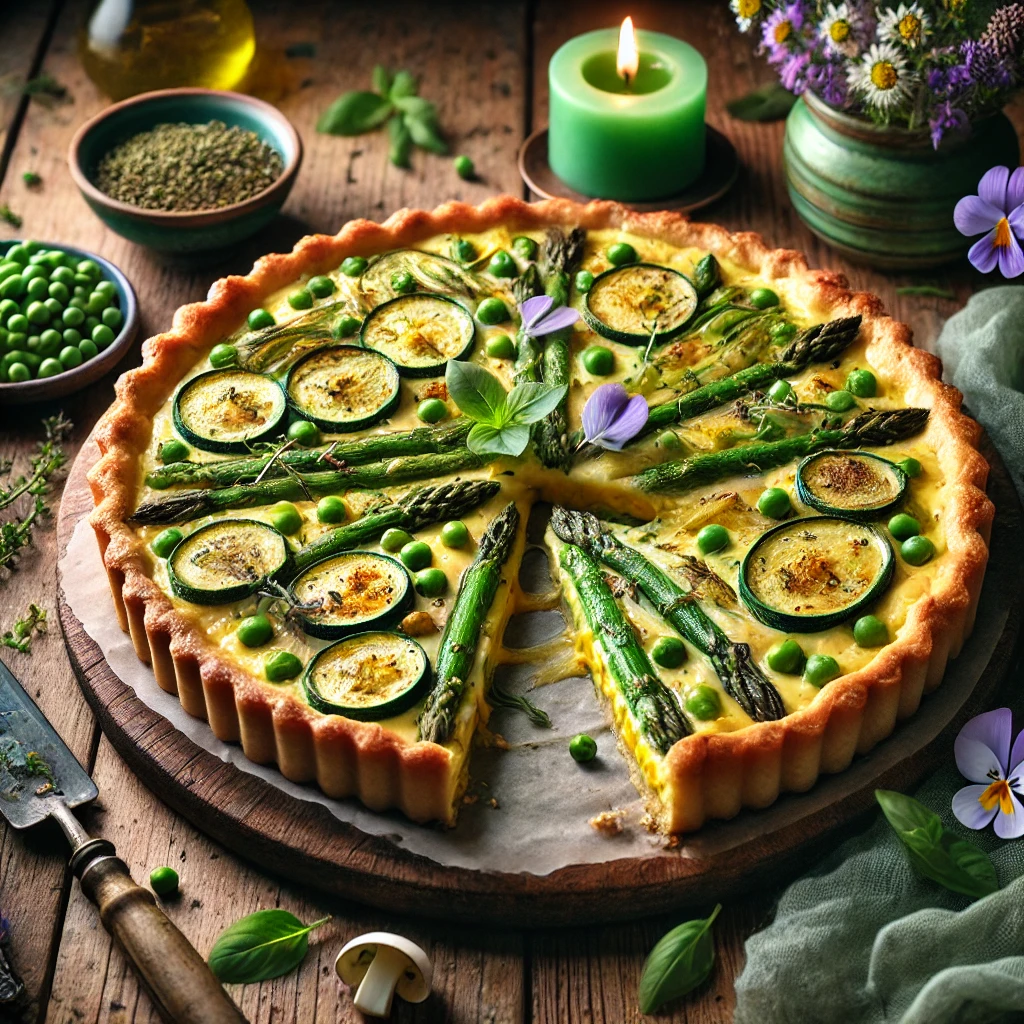
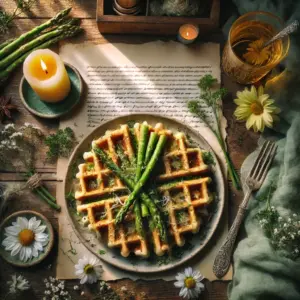
Spring Savory Waffles with Asparagus, Gruyรจre, and Onion

Proudly brought to you by

The Equinox Apothecary

© The Equinox Apothecary 2024 – Permission is granted to copy and reproduce this Recipe with attribution

Conclusion

Spring Savory Waffles are more than a treatโ€”they are nourishment for the spirit, drawing from the garden’s magic and the seasonโ€™s optimism. Whether shared during a spring picnic or made as a personal ritual of renewal, this recipe helps bring clarity, joy, and earthy magic to your day. Blessed be your spring feasting!

Posted on Leave a comment

Walpurgis Night

Walpurgis NightReading Time: 7 minutes
Walpurgis Night

Introduction

Celebrating the Arrival of Spring

Walpurgis Night, affectionately known as Walpurgisnacht, stands as a timeless testament to the resilience of tradition and the vibrant spirit of spring that permeates the cultural fabric of Europe, particularly among the storied Germanic communities. Held annually on the eve of May Day, this captivating festival serves as a cherished bridge between the lingering chill of winter and the promise of rejuvenation embodied by the burgeoning beauty of spring. As we embark on a journey through the annals of time and tradition, we are beckoned to unravel the intricate tapestry of customs, rituals, and folklore that have woven themselves into the very essence of Walpurgis Night. From its ancient roots to its modern-day manifestations, join us in exploring the profound significance and enduring allure of this enchanting celebration across the continent and beyond.

Historical Origins

The historical origins of Walpurgis Night are as rich and layered as the tapestry of time itself, harkening back to ancient pagan customs and rituals deeply intertwined with the rhythms of nature. While the festival bears the name of Saint Walpurga, an eighth-century English missionary canonized on May 1st, its roots delve far deeper into the mists of antiquity.

In the annals of pre-Christian history, this sacred night was revered as a profound fertility rite, a time when communities gathered to honor the earth’s awakening from its wintry slumber and herald the burgeoning of new life in the bosom of nature. It was a time of jubilant rejoicing, as the earth burst forth in a riot of color and vitality, mirroring the fertile energies of the season and the eternal cycle of birth, growth, and renewal.

Saint Walpurga’s association with the arrival of spring in Christianized regions of Europe served to meld existing pagan traditions with Christian beliefs, resulting in the vibrant celebration we know today. Yet, the essence of Walpurgis Night transcends mere Christian influence, echoing the primal rhythms of the natural world that have stirred human hearts since time immemorial.

Over the centuries, Walpurgis Night has evolved into a multifaceted celebration, blending elements of pagan fertility rites, Christian rituals, and folk traditions. Despite the passage of time and the shifting sands of cultural change, the spirit of Walpurgis Night endures as a testament to humanity’s enduring connection to the earth and the cyclical rhythms of life.

At its core, Walpurgis Night embodies the timeless longing for connection with the land and the cycles of life and death that shape our existence. It speaks to our innate yearning to commune with the forces of nature, to honor the earth’s fecundity, and to celebrate the eternal renewal of life.

As the bonfires blaze and the revelers dance beneath the stars, the spirit of Walpurgis Night lives on, reminding us of our deep-seated connection to the earth and the enduring legacy of ancient wisdom passed down through the ages.Top of Form

Pagan History

In the annals of pre-Christian history, Walpurgis Night held profound significance as a pagan fertility rite, steeped in the ancient reverence for the cycles of nature. As winter’s icy grip loosened, communities across Europe gathered to honor the earth’s awakening from its slumber and celebrate the arrival of spring’s bounty. This sacred occasion was a time of jubilant rejoicing, as the land burst forth in a kaleidoscope of colors, echoing the fertile energies of the season and the timeless cycle of birth, growth, and renewal.

During this auspicious night, bonfires blazed brightly, casting their warm glow upon the revelers who danced and frolicked amidst the flames. The air was alive with the sounds of laughter and music, as the community came together to pay homage to the earth’s fecundity and the promise of abundant harvests to come. It was believed that the smoke from the fires possessed purifying and protective properties, warding off malevolent spirits and ensuring a prosperous growing season ahead.

In addition to the bonfires, various rituals and customs were observed to invoke the blessings of the gods and goddesses of fertility. Maypoles, adorned with ribbons and flowers, were erected as symbols of the sacred union between the masculine and feminine forces of nature. Dance and song filled the air as participants joyously circled the maypole, weaving intricate patterns that mirrored the interconnectedness of all living things.

Offerings of food and drink were made to the spirits of the land, expressing gratitude for the abundance of the earth, and seeking their favor for a fruitful year ahead. It was believed that by honoring the spirits in this way, the community ensured the continued prosperity of their crops and livestock.

As the night wore on, the revelry reached its zenith, with feasting, merrymaking, and love rites carried out under the watchful gaze of the stars. For the ancient pagans, Walpurgis Night was a sacred time of communion with the natural world, a celebration of life’s vitality and the eternal cycle of renewal that sustains us all. Though the Christianization of Europe would later overlay the festival with new meanings and traditions, the pagan roots of Walpurgis Night continue to echo through the ages, reminding us of our deep connection to the earth and the enduring power of spring’s awakening.

When and where is Walpurgis Night Celebrated?

Walpurgis Night is primarily celebrated in German-speaking countries such as Germany, Austria, and Switzerland, as well as in Scandinavia, particularly in Sweden, Finland, and Norway. The festival takes place on the night of April 30th, which is also known as May Eve or May Day Eve.

In these countries, Walpurgis Night is a widely recognized public holiday, with festivities and celebrations taking place in towns and villages across the region. The largest and most elaborate celebrations are often held in rural areas, where communities come together to light bonfires, dance, and revel late into the night.

In Germany, Walpurgis Night is especially popular in regions such as the Harz Mountains, where ancient pagan traditions have been preserved and passed down through generations. Here, locals and visitors alike gather atop hills and mountains to light towering bonfires, a symbol of driving away the last remnants of winter and welcoming the warmth and light of spring.

Similarly, in Sweden and other Scandinavian countries, Walpurgis Night is celebrated with gusto, often marked by singing traditional songs, dancing around maypoles adorned with flowers and ribbons, and indulging in feasts of seasonal delicacies.

Regardless of the specific region, Walpurgis Night is a time of joyous celebration and communal bonding, as people come together to embrace the arrival of spring and revel in the beauty of nature’s awakening.

Traditions and Customs

One of the central traditions of Walpurgis Night is the lighting of bonfires, which symbolize the banishment of winter and the welcoming of the warmer months ahead. In many communities, large bonfires are lit in public squares or on hilltops, around which people gather to sing, dance, and socialize. These bonfires have deep roots in ancient pagan rituals, where fire was believed to possess purifying and protective qualities, driving away malevolent spirits, and ensuring the fertility of the land.

Another common tradition associated with Walpurgis Night is the practice of dressing up in costumes and masks. This tradition harkens back to ancient pagan beliefs about warding off evil spirits and ensuring a bountiful harvest in the coming months. Today, people of all ages don costumes and masks, often resembling witches, demons, or other mythical creatures, and take to the streets to participate in parades and processions. This act of masquerading serves not only as a form of entertainment but also as a means of connecting with ancestral traditions and embracing the magical essence of the night.

In addition to bonfires and costume parties, other customs associated with Walpurgis Night include the singing of traditional folk songs, the consumption of special foods and beverages, and the decorating of homes and public spaces with flowers and greenery. Songs and music play a significant role in the festivities, with lively tunes filling the air as people gather to dance and celebrate. Special foods such as roasted meats, hearty soups, and sweet pastries are enjoyed, often accompanied by local beers or traditional mead, adding to the convivial atmosphere of the occasion.

Moreover, homes and public spaces are adorned with flowers, green branches, and Maypoles, symbolizing the vibrancy and fertility of the season. Doorways are often decorated with wreaths of spring flowers, while windowsills are adorned with potted plants and floral arrangements. These decorations not only serve as visual reminders of the season’s bounty but also contribute to the festive ambiance of Walpurgis Night, infusing the surroundings with color, fragrance, and life.

Modern Celebrations

While Walpurgis Night has ancient pagan origins, it has evolved over time to incorporate elements of Christian and secular traditions. Today, the festival is celebrated in a variety of ways, with each region and community putting its own unique spin on the festivities.

In some areas, modern celebrations may include live music performances, street fairs, craft markets, and other cultural events. Families may gather for picnics in parks or gardens, enjoying the blossoming flowers and vibrant greenery while indulging in delicious seasonal foods and treats. The atmosphere is often filled with laughter and joy as children play games and adults catch up with friends and neighbors.

Younger revelers may seek out parties or concerts organized by local clubs or associations, where they can dance the night away to lively music and immerse themselves in the spirit of camaraderie and celebration. These gatherings provide an opportunity for people of all ages to come together, share in the festivities, and create cherished memories that will last a lifetime.

Despite these modern additions, the essence of Walpurgis Night remains rooted in its ancient pagan origins. It is a time when people come together to celebrate the arrival of spring, banish the darkness of winter, and welcome the light and warmth of the new season. Whether through traditional rituals or contemporary festivities, the spirit of renewal and rebirth permeates every aspect of the celebration, uniting communities in a shared sense of joy and gratitude for the wonders of nature.

Conclusion

Walpurgis Night stands as a testament to the enduring power of ancient traditions and the resilience of human spirit in the face of changing times. From its pagan origins to its modern-day celebrations, this springtime festival continues to captivate and inspire people across Europe and beyond. As bonfires blaze and revelers gather to welcome the arrival of spring, Walpurgis Night serves as a reminder of the eternal cycle of life, death, and rebirth that shapes our world. It is a time to honor the past, celebrate the present, and look forward to the promise of a brighter future. So, whether you find yourself dancing around a bonfire or simply enjoying the blossoms of spring, may the spirit of Walpurgis Night fill your heart with warmth, joy, and a deep sense of connection to the rhythms of nature.

Posted on Leave a comment

Recipe: Spring Blossom Moon Milk

Spring time moon milkReading Time: 3 minutes
Spring time moon milk

Introduction

A floral elixir to welcome peace, renewal, and clarity in spring

As the earth awakens from its winter slumber, springtime invites us into a season of lightness, clarity, and growth. Spring Blossom Moon Milk is a gentle, soothing drink inspired by the energies of blooming flowers, warm breezes, and the growing light. This nourishing milk blends botanical flavors like chamomile, rose, and lavender with the grounding sweetness of honey and vanilla, forming a perfect nighttime ritual for rest and rejuvenation.

The Magic of: Spring Blossom Moon Milk

Moon Milk has long been a calming bedtime drink used in various herbal traditions to promote sleep and gentle dreams. This Spring variation aligns with the Vernal Equinox (Ostara) and the waxing moon, when intentions are blossoming and our energy is beginning to expand.

In the season of new beginnings, this floral elixir soothes frayed nerves and encourages clarity, emotional balance, and intention setting. Drinking it under the moon or as the sun sets can become a sacred moment to tune into your path of renewal.

Perfect for witches and pagans seeking a deeper connection to the Earthโ€™s rhythms, this recipe uses spring herbs and flowers known for their calming and heart-opening properties. It invites you to soften, reflect, and bloom.

Spell for Gentle Clarity and Renewal

Intent: To align with the clarity and soft power of spring, inviting peace, beauty, and growth into your life.

To Perform While Stirring Your Moon Milk:

  • Light a pink or green candle.
  • Hold the cup and whisper:
    “Blossoms bloom, so do I,
    Under moon and sky so high.
    Peace within, my path is clear,
    Springtime blessings now draw near.”
  • Sip with intention, letting each taste ground you and prepare you for the night ahead.

Magical Properties of Spring Blossom Moon Milk

  • Chamomile: Promotes calm, intuition, and protection.
  • Lavender: Encourages peace, purification, and restful sleep.
  • Rose petals: Symbolize love, renewal, and heart-opening energy.
  • Honey: Sweetens life, aids in manifestation, and connects to solar energies.
  • Vanilla extract: Brings comfort, love, and warmth.
  • Almond or oat milk: Carries grounding, nurturing, and fertility symbolism.
Spring time moon milk
Print Recipe Share on Facebook Pin Recipe
No ratings yet

Recipe: Spring Blossom Moon Milk

A soothing and enchanting bedtime beverage crafted with floral herbs, milk, and honey to support relaxation and spiritual alignment.
Prep Time5 minutes
Cook Time10 minutes
Total Time15 minutes
Servings: 2 cups
Calories: 110kcal
Author: Theo, Witch

Equipment

  • 1 Small saucepan
  • 1 Fine mesh strainer or tea strainer
  • 1 Whisk
  • 2 Mugs

Ingredients

  • 2 cups Almond milk
  • 1 tsp Dried chamomile flowers
  • 1 tsp Dried rose petals
  • ยฝ tsp Dried lavender buds
  • ยฝ tsp Vanilla extract
  • 2 tsp Honey
  • Pinch Ground nutmeg or cardamom optional

Instructions

Step 1: Infuse the Milk

  • Pour the milk into a small saucepan and place over medium-low heat.
  • Add chamomile, rose petals, and lavender.
  • Stir gently and allow to warm for 7โ€“10 minutes, until small bubbles form around the edges (do not boil).

Step 2: Strain and Flavor

  • Remove from heat and strain the milk through a fine mesh strainer into a bowl or directly into mugs.
  • Add the vanilla extract and honey. Stir until dissolved.
  • Optional: Add a pinch of nutmeg or cardamom and whisk to combine.

Step 3: Serve with Intention

  • Pour into mugs and serve warm.
  • Light a candle or sit in moonlight while sipping. Reflect or journal your intentions for the coming season.

Notes

Moon Milk Lavender and CherriesMoon milk is believed to have magical properties that promote relaxation, sleep, and spiritual connection. Lavender is a powerful herb that is often used in spells and rituals to promote tranquility, purification, and harmony. It is said to help calm the mind, soothe anxiety, and facilitate communication with the spiritual realm. Cherries, on the other hand, are associated with abundance, prosperity, and love. By combining these two ingredients in moon milk, we can create a potent brew that promotes restful sleep, deep relaxation, and a profound sense of spiritual connection.
As you sip on your moon milk and gaze up at the moon, take a moment to reflect on the magic and mystery of the universe. Whether you are working with the moon to manifest your desires, to connect with your intuition, or simply to enjoy a peaceful moment of reflection, remember that the power of the moon is always with you, waiting to be harnessed and celebrated.
*Calories Calculated with 2% Dairy Milk, Different bases will change the values.
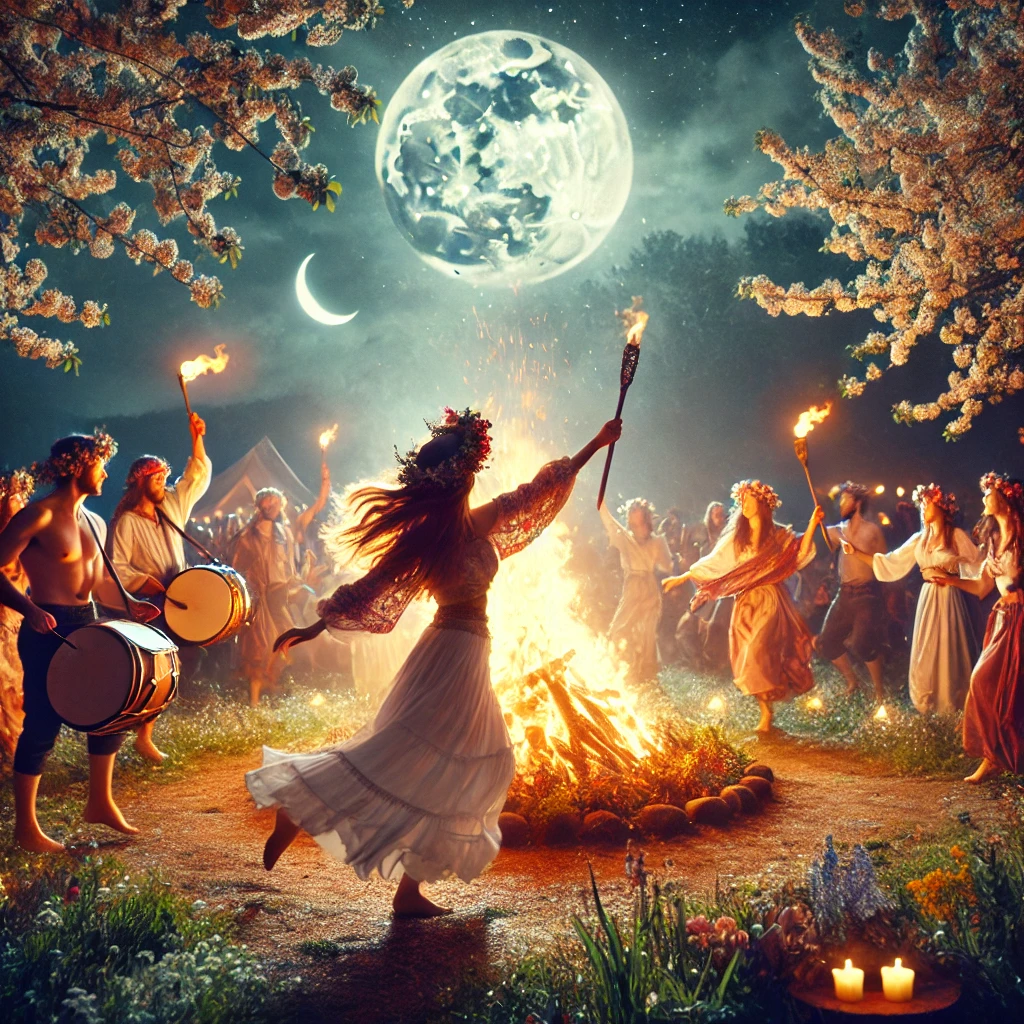
Spring Blossom Moon Milk

Proudly brought to you by

The Equinox Apothecary

© The Equinox Apothecary 2024 – Permission is granted to copy and reproduce this Recipe with attribution

Conclusion

Spring Blossom Moon Milk is more than a comforting nighttime treatโ€”itโ€™s a sacred springtime ritual in a cup. It honors the beauty of growth and renewal, calming the spirit while awakening your intentions. Whether part of your Ostara celebration or simply a daily self-care ritual, may this moon milk carry you gently into the next season of your becoming.

Posted on Leave a comment

Foraging: Cleavers

Cleavers_Galium aparineReading Time: 14 minutes
Cleavers_Galium aparine

Introduction

Nature’s Sticky Secret: Uncovering Cleavers’ Healing Magic

A versatile, scrambling plant with medicinal, culinary, and even coffee-making potential, Cleavers is an easy-to-forage herb that offers an abundance of benefits. Learn how to identify, harvest, and use this remarkable wild edible.

What Are Cleavers?

Cleavers (Galium aparine), also known as Goosegrass, Stickyweed, or Bedstraw, is a straggly, climbing plant known for its distinctive clinging nature. The plant gets its name from the tiny, hooked hairs covering its stems and leaves, which allow it to attach to clothing, fur, and surrounding vegetation as it grows.

This member of the coffee family (Rubiaceae) has been used for centuries as a cleansing herb, prized for its ability to support kidney function, detoxify the body, and soothe irritated skin. Beyond its medicinal applications, Cleavers is also a nutritious wild green that can be enjoyed in soups, stews, and teas. The plantโ€™s seeds, when dried and roasted, can even be used as a coffee substitute.

Cleavers is widely distributed across North America, Europe, and Asia, thriving in a variety of environments. It is an excellent wild plant for foragers due to its abundance, ease of identification, and range of uses.

Variants of Cleavers

While Galium aparine is the most commonly foraged species, other members of the Galium genus share similar characteristics and properties. Some notable variants include:

  • Northern Bedstraw (Galium boreale): Found in North America, this species has non-clinging leaves and produces small white flowers in clusters. It has similar medicinal uses but lacks the sticky quality of Cleavers.
  • Sweet Woodruff (Galium odoratum): A fragrant, low-growing relative that is used to flavor drinks, especially in European May wine traditions. Unlike Cleavers, Sweet Woodruff has a pleasant vanilla-like aroma.
  • Field Madder (Sherardia arvensis): A close relative that is often confused with Cleavers but has tiny pink flowers instead of white. It is not as commonly used medicinally.

While some variants have their own unique properties, Galium aparine remains the most widely used for both foraging and herbal applications.

How to Identify Cleavers

Cleavers is an easily recognizable plant due to its characteristic clinging growth habit. Key identification features include:

  • Stems: Thin, weak, and square-shaped with tiny backward-facing bristles. The stems are often hollow and tend to sprawl or climb over other vegetation.
  • Leaves: Arranged in whorls of 4-8 around the stem, Cleavers leaves are narrow, lance-shaped, and covered in tiny hooked hairs that make them feel rough to the touch.
  • Flowers: Small, white, and star-like, appearing in clusters along the stems in late spring and early summer.
  • Seeds: Tiny, round, and covered in hooked bristles, which help them cling to animals and spread.
  • Scent: Fresh Cleavers has a mild grassy scent when crushed, with a slightly bitter, earthy aroma.
  • Growth Habit: This plant scrambles across the ground or climbs using its tiny hooks to latch onto nearby plants, fences, or other structures.

Cleavers grows prolifically in hedgerows, meadows, forest edges, and disturbed ground, making it a common and easy-to-find wild edible.

Habits of Cleavers

Cleavers is a resilient and opportunistic plant that thrives in temperate climates. It prefers moist, nutrient-rich soils and is commonly found in:

  • Woodland edges
  • Hedgerows and fence lines
  • Stream banks and moist meadows
  • Disturbed soils and roadsides
  • Shaded garden beds and backyards

Cleavers is an annual plant, meaning it completes its life cycle in one growing season. It emerges in early spring, producing sprawling stems and lush green foliage. The plant flowers from late spring to early summer, with small white blooms giving way to seed pods that cling to passing animals and clothing. By midsummer, Cleavers begins to die back, leaving behind seeds that ensure its return the following year.

How to Properly Forage Cleavers

Foraging Cleavers is simple due to its widespread distribution and ease of identification. Follow these steps for a successful and sustainable harvest:

  1. Identify Safely: Ensure the plant has its signature clinging stems, whorled leaves, and small white flowers. If in doubt, check for the sticky texture by gently brushing your hand along the plant.
  2. Harvest Young Shoots: The best time to harvest Cleavers is in early spring when the shoots are tender and vibrant green. Older plants can become tough and fibrous.
  3. Use Scissors or Hands: Cleavers can be easily pulled up by hand, but using scissors to snip the upper portions of the plant allows for regrowth.
  4. Avoid Contaminated Areas: Do not harvest Cleavers near roadsides, industrial sites, or places treated with pesticides or herbicides.
  5. Storage: Store fresh Cleavers in a sealed bag in the refrigerator for up to a week. They can also be dried and stored in an airtight container for later use in teas and tinctures.

Magical Uses of Cleavers

Cleavers has long been associated with purification, binding, and renewal in magical practices:

  • Purification and Cleansing: Often used in purification spells, Cleavers is believed to remove negativity and clear spiritual blockages.
  • Binding and Connection: Because of its clinging nature, Cleavers symbolizes binding energy and can be used in spells related to love, friendship, and loyalty.
  • Healing and Renewal: Its historical use as a cleansing herb translates into magical applications for personal growth and healing rituals.
  • Dream Work: Some traditions believe that placing Cleavers under a pillow can promote insightful dreams and deeper spiritual connections.

Medicinal Uses of Cleavers

Cleavers has been used in traditional medicine for centuries, particularly as a cleansing and detoxifying herb. Some key medicinal benefits include:

  • Kidney and Urinary Health: Cleavers is a natural diuretic, helping to flush toxins from the body and support kidney function. It has been used to alleviate urinary tract infections and kidney stones.
  • Lymphatic Support: Herbalists use Cleavers to stimulate the lymphatic system, promoting detoxification and reducing swollen glands.
  • Skin Health: Cleavers is excellent for treating skin conditions such as eczema, psoriasis, and rashes. A wash or poultice made from the leaves can soothe irritation.
  • Anti-Inflammatory Properties: Traditionally used to reduce inflammation and support the immune system.
  • Digestive Aid: Cleavers has mild laxative properties and can help with sluggish digestion.

It is often consumed as an infusion, tincture, or fresh juice to harness its medicinal effects.

Culinary Uses of Cleavers

Although not as widely used as other wild greens, Cleavers can be incorporated into various dishes:

  • Soups and Stews: The young leaves and stems can be finely chopped and added to broths and vegetable soups.
  • Cooked Greens: Tender shoots can be steamed, boiled, or sautรฉed and served like spinach.
  • Cleavers Coffee: The seeds can be dried, roasted, and ground as a caffeine-free coffee alternative.
  • Herbal Teas and Infusions: Fresh or dried Cleavers can be steeped in hot water to make a refreshing, detoxifying tea.
  • Smoothies: Blend fresh Cleavers into green smoothies for an added nutritional boost.

Due to their sticky texture, raw Cleavers are not commonly eaten in salads, but they can be blended into a pesto or pureed soups.

Northern Bedstraw (Galium boreale)ย 

A Fragrant and Gentle Cousin to Cleavers

Northern Bedstraw_Galium boreale

Northern Bedstraw (Galium boreale) is a graceful perennial herb native to North America, often found in cool temperate regions stretching from Canada into the northern United States. As a member of the Galium genusโ€”like Cleavers (Galium aparine)โ€”Northern Bedstraw shares many botanical and medicinal traits with its stickier relative but is distinguished by a more refined structure, a lack of clinging hairs, and a soft, pleasant scent that has earned it a place in both traditional medicine and folklore.

Identification and Physical Characteristics

Unlike Cleavers, Northern Bedstraw does not cling to clothing or fur, making it easier to handle and more appealing in certain uses, especially those involving dried plant material. Key features of Galium boreale include:

  • Leaves: The leaves are slender, smooth, and arranged in symmetrical whorls of four along the square stem. They are dark green, glossy, and lack the tiny hook-like hairs that make Cleavers sticky. This smoothness is one of the easiest ways to distinguish Northern Bedstraw in the field.
  • Stems: Square in cross-section and generally upright, the stems of Northern Bedstraw are more rigid than Cleavers and do not sprawl or climb. They tend to grow in tidy clumps, forming loose colonies in open meadows and lightly shaded woods.
  • Flowers: In midsummer, Northern Bedstraw blooms with tight clusters of tiny, star-shaped white flowers at the tops of the stems. These flowers are highly fragrant, giving the plant a sweet, honeyed aroma that is especially noticeable in the warmth of the sun.
  • Height and Habit: The plant typically reaches 12 to 24 inches in height and grows upright, unlike the more vine-like Cleavers. It spreads via rhizomes, forming dense but non-invasive colonies in appropriate habitats.

Where It Grows

Northern Bedstraw thrives in a wide range of temperate ecosystems, preferring:

  • Open woodlands and forest edges
  • Prairies and tallgrass meadows
  • Moist, well-drained soils
  • Hillsides, riverbanks, and transitional zones between wet and dry habitats

It is particularly common in the northern United States, the Great Lakes region, and across much of Canada. Due to its adaptability and low maintenance, it is sometimes cultivated in native plant gardens for its ecological value and gentle charm.

Medicinal Uses

Although not as well-known as Cleavers in modern herbal medicine, Northern Bedstraw carries a long history of traditional use among Indigenous peoples and early settlers, especially in the realm of cleansing and detoxification:

  • Lymphatic Support: Like Cleavers, Northern Bedstraw has mild diuretic and lymphatic-cleansing properties. It was traditionally used to support the urinary system and help reduce swelling of the lymph nodes.
  • Skin Conditions: Infusions made from the aerial parts were applied topically or consumed to help clear minor skin ailments such as eczema, acne, and rashes.
  • Mild Sedative Effects: The pleasant aroma and calming energy of the plant have given it a reputation for helping with restlessness and tension. Herbalists sometimes use it in tea blends intended for emotional balance and gentle relaxation.
  • Kidney and Bladder Health: Northern Bedstraw has been used to soothe irritation in the urinary tract and support healthy kidney function, although it is considered milder in effect compared to Galium aparine.

Culinary and Practical Uses

While not commonly used in modern cuisine, Northern Bedstraw does have a few interesting applications:

  • Tea Infusions: The flowering tops can be dried and steeped to create a subtly sweet herbal tea with gentle tonic effects. The tea is often used for general wellness and to support detox during seasonal transitions.
  • Bed Stuffing and Herbal Pillows: True to its name, Bedstraw was once used to stuff mattresses and pillows. The dried plant maintains its fragrance for some time and was believed to ward off pests while providing a soothing aroma conducive to sleep.
  • Craft and Potpourri: Due to its fragrant flowers and tidy growth habit, Northern Bedstraw is sometimes used in natural wreaths, herbal bundles, or potpourri for its aromatic qualities and attractive form.

Magical and Folkloric Associations

Northern Bedstraw holds a quiet but meaningful place in folklore:

  • Love and Protection: Its association with rest, sweetness, and gentle energy lends it well to charm bags or spells for love, home protection, or peaceful sleep.
  • Dream Magic: The fragrant blossoms are sometimes used in herbal dream pillows to encourage restful sleep and pleasant dreams.
  • Fairy Plant Lore: In some traditions, bedstraw plantsโ€”particularly those that bloom in midsummerโ€”are said to attract the attention of forest spirits and fairies, making them a charming addition to ritual or celebration during the summer solstice.

Northern Bedstraw (Galium boreale) may not have the sticky notoriety of Cleavers, but its grace, gentle fragrance, and subtle medicinal powers make it a wonderful plant to know and appreciate. Its upright habit, smooth leaves, and starry white blooms set it apart as both a visual delight and a gentle ally in herbal wellness. Whether dried for tea, tucked into a dream pillow, or admired in a summer meadow, Northern Bedstraw invites us to explore the quieter side of the Galium family with reverence and curiosity.

Sweet Woodruff (Galium odoratum)ย 

 A Fragrant Herb of Folklore, Flavor, and Forest Floors

Sweet Woodruff (Galium odoratum), also known as Wild Babyโ€™s Breath, is a charming, low-growing herb in the Galium genus that has long held a beloved place in European herbal traditions. Known for its delicate whorls of emerald-green leaves, dainty white blossoms, and sweet, hay-like fragrance, Sweet Woodruff is both a visual and olfactory delight. Unlike its cousin Galium aparine (Cleavers), which clings with sticky hooks, Galium odoratum is velvety smooth and soft to the touchโ€”a true woodland gem that enchants the senses.

Sweet Woodruff_Galium odoratum

Identification and Characteristics

Sweet Woodruff is relatively easy to identify, especially when in bloom. It forms dense, carpet-like mats in shaded, moist woodland environments and is often grown as a ground cover in gardens due to its lovely scent and low maintenance needs. Key identifying features include:

  • Leaves: Its narrow, lance-shaped leaves grow in symmetrical whorls of six to eight around the stem. The foliage is soft and smooth, lacking the clinging hairs found on Cleavers. When dried, the leaves develop an even more intense fragrance reminiscent of fresh-cut hay or vanilla.
  • Flowers: In late spring to early summer, Sweet Woodruff produces clusters of tiny, star-shaped white flowers. These blooms are small but numerous, and they give the plant a frothy, ethereal appearance when in full bloom.
  • Growth Habit: Sweet Woodruff is a low-growing, spreading perennial, typically reaching heights of 6โ€“12 inches. It spreads by creeping rhizomes and can quickly form lush, green carpets under trees or in shaded garden beds.
  • Scent: The plantโ€™s signature scent comes from a compound called coumarin, which is released more strongly when the plant is dried. Coumarin gives Sweet Woodruff its unmistakable sweet, vanilla-like aromaโ€”pleasant, soothing, and sometimes used in aromatherapy.

Habitat and Range

Sweet Woodruff is native to Europe, parts of Asia, and northern Africa, but has naturalized in some parts of North America. It thrives in:

  • Deciduous woodlands and shaded forests
  • Moist, rich, well-drained soil
  • Shady garden environments where it spreads easily as ground cover

Because of its preference for shade and dampness, Sweet Woodruff often grows near moss, ferns, and other woodland flora. Itโ€™s a common sight beneath beech, oak, and maple trees in its native habitats.

Culinary Uses and May Wine Traditions

One of Sweet Woodruffโ€™s most famous historical uses is as a flavoring in May wine, a traditional German beverage consumed during Walpurgis Night and May Day celebrations. The plant is steeped in white wineโ€”traditionally a young Rhine wineโ€”along with strawberries and citrus slices, to create a light, floral, celebratory drink meant to welcome spring.

Other Culinary Applications Include:

  • Infused Syrups: Sweet Woodruff can be infused into simple syrup and added to lemonade, cocktails, or desserts for a subtle, floral sweetness.
  • Flavored Jellies and Puddings: The plant has occasionally been used to flavor dairy-based desserts, jellies, and sweet creams, especially in historical European recipes.
  • Herbal Teas (in moderation): When dried, the leaves may be steeped into teas that carry a mild, vanilla-mint flavor. However, because of its coumarin content, it should be used sparingly.

Note: While coumarin is natural and aromatic, high doses are considered toxic to the liver in concentrated or medicinal quantities. In culinary use, especially as an occasional flavoring in drinks or desserts, Sweet Woodruff is generally safeโ€”but always consume in moderation and avoid medicinal use unless guided by an experienced herbalist.

Medicinal and Folk Uses

Traditionally, Sweet Woodruff has been used in folk medicine as a mild sedative and tonic. Though not as commonly used in modern herbal practices, its historic applications included:

  • Nerve Tonic and Mild Sedative: Sweet Woodruff was often used to ease nervous tension, anxiety, and insomnia. A tea from dried leaves was said to promote calm and restful sleep.
  • Liver and Gallbladder Support: Some herbalists used it in tonics for liver detoxification and gallbladder support, although this use is now discouraged due to the coumarin content.
  • Wound Healing and Inflammation: The plant was once applied topically to wounds, bruises, and irritated skin to reduce inflammation and speed healing.

Aromatic and Household Uses

Because of its coumarin content, Sweet Woodruff retains its fragrance long after drying, making it perfect for household uses:

  • Potpourri and Sachets: Dried Sweet Woodruff can be added to potpourri mixes or tucked into linen drawers to impart a pleasant, lingering scent.
  • Natural Moth Repellent: Like lavender, the scent of Sweet Woodruff was historically believed to repel moths and insects, making it a popular addition to stored clothing and bedding.
  • Herbal Pillows: Added to dream or healing pillows, Sweet Woodruff was thought to encourage sweet dreams and promote restful sleep.

Magical and Folkloric Significance

Sweet Woodruff has a strong place in European folklore, especially in connection with spring rites, love, and peace:

  • Celebrations of Renewal: Associated with Beltane and May Day, Sweet Woodruff symbolizes joy, fertility, and the blossoming of new life.
  • Love and Friendship Magic: Worn as a garland or added to charms, it was believed to foster harmony and deepen bonds of affection.
  • Dream and Sleep Magic: Because of its calming energy and association with dreams, it is often used in spells or sachets for restful sleep and peaceful energies in the home.
  • Protection and Blessing: In some traditions, Sweet Woodruff was placed in doorways or windows to protect the home and invite blessings.

Galium odoratum, or Sweet Woodruff, is a delicate woodland plant with a wide array of usesโ€”from springtime libations and fragrant teas to gentle healing and magical charm. Though it must be used mindfully due to its coumarin content, this soft-leaved herb continues to enchant foragers, herbalists, and gardeners alike with its scent, symbolism, and beauty. Whether brewed into May wine, tucked into a sachet, or left to flower beneath the trees, Sweet Woodruff brings the gentle joy of spring wherever it grows.

Field Madder (Sherardia arvensis)ย 

A Dainty Cousin Often Mistaken for Cleavers

Field Madder_Sherardia arvensis

Field Madder (Sherardia arvensis) is a delicate annual herbaceous plant that belongs to the Rubiaceae family, the same family as Cleavers (Galium aparine), Sweet Woodruff (Galium odoratum), and Bedstraw species. Though not technically in the Galium genus, it is closely related and shares a number of visual similaritiesโ€”enough that it is often mistaken for young Cleavers by novice foragers. However, this plant can be distinguished by its soft, sprawling nature and its charming pinkish-lavender flowers.

While Field Madder is not commonly used for food or medicine, it is worth knowing for identification purposes and for its subtle beauty. Its presence can serve as a reminder of the diversity within the bedstraw family and the importance of careful foraging.

Identification and Physical Characteristics

Field Madder is a low-growing, spreading plant that thrives in disturbed soils, making it a frequent sight in gardens, fields, roadsides, and fallow plots. It is considerably smaller and less robust than Cleavers, but its similar leaf arrangement and growth habit often lead to confusion.

Key features include:

  • Leaves: Arranged in whorls of 4 to 6 around the square stems, Field Madderโ€™s leaves are narrow and pointed, similar to Cleavers but much shorter and softer. The plant lacks the tiny hooked hairs found on Cleavers, so it does not cling to clothing or other plants. Its leaf margins are smooth, and the leaves have a somewhat glossier, neater appearance.
  • Stems: Thin, weak, and square in cross-section, the stems of Field Madder are smooth and slightly ridged, growing along the ground or gently sprawling among other plants. They do not have the rough or bristly texture that Cleavers is known for.
  • Flowers: One of the easiest ways to distinguish Field Madder is by its tiny, four-lobed flowers, which are pink to pale lavender in color. These blossoms are only a few millimeters across but often appear in clusters at the tips of the stems or nestled in leaf whorls. Cleavers, by contrast, bears small white flowers with a more star-like shape.
  • Size: Field Madder is much more delicate than Cleavers, typically growing only 4โ€“8 inches tall, forming a fine mat or ground-hugging tangle rather than a clinging or climbing structure.
  • Scent: Unlike Cleavers and other Galium species, Field Madder has little to no scent when crushed.

Habitat and Distribution

Field Madder is native to Europe, western Asia, and parts of North Africa but has become widespread across North America and other temperate regions. It thrives in:

  • Open, sunny spaces with well-drained soil
  • Cultivated fields and gardens
  • Road verges and compacted soils
  • Waste grounds, parks, and urban greenspaces

Its tendency to appear in disturbed or cultivated ground means it often coexists with early spring greens and other wild ediblesโ€”another reason for the common mix-up with Cleavers.

Medicinal and Practical Uses

Unlike its more celebrated cousins in the Galium genus, Field Madder has very limited use in herbal medicine. Historical mentions are sparse, and it has not earned a prominent place in traditional healing practices. That said, some folk uses and minor applications have been recorded:

  • Mild Astringent: Like many members of the Rubiaceae family, Field Madder may possess mild astringent properties, but it is far less potent than Cleavers or Sweet Woodruff.
  • Dye Plant: The roots of Field Madder contain trace amounts of red pigment similar to the related Rubia tinctorum (true madder), which has historically been used as a source of red dye. However, Field Madder is too small and weak to be of significant use in this regard.

Given its limited potency and lack of modern scientific study, Field Madder is not generally harvested for food or medicine and is best appreciated for its ecological presence and role in biodiversity.

Foraging Considerations

Field Madder should not be foraged for consumption, but it is vital for foragers to learn how to distinguish it from similar species, particularly Cleavers:

  • Look for the Flowers: The small pink or lavender flowers are the most reliable visual cue that youโ€™re looking at Field Madder, not Cleavers.
  • Check for Clinging Hairs: If the plant doesnโ€™t stick to your fingers or clothes, itโ€™s likely not Cleavers.
  • Examine the Leaf Texture: Cleaversโ€™ leaves are rough and bristly, while Field Madderโ€™s are smooth and soft.

Because of its resemblance to Cleavers, Field Madder often serves as a natural โ€œdouble-checkโ€ for foragersโ€”helping sharpen identification skills and avoid misidentification of more potent herbs.

Sherardia arvensis, or Field Madder, may not offer the same range of uses as its cousins in the bedstraw family, but itโ€™s still an important plant to recognize. Its dainty flowers and soft leaves distinguish it from Cleavers, and while it lacks strong medicinal or culinary value, it holds a quiet charm in meadows, gardens, and weedy corners of the world. For foragers, learning to identify Field Madder deepens plant knowledge, reinforces safe foraging practices, and highlights the subtle diversity that exists even within a single plant family.

Safety Concerns

Cleavers is generally safe for consumption but should be used with caution in certain situations:

  • Pregnancy and Breastfeeding: Consult a healthcare provider before consuming Cleavers in medicinal amounts.
  • Allergies: Those sensitive to plants in the coffee or bedstraw family should test for allergic reactions before consuming.
  • Diuretic Effects: Because Cleavers supports kidney function, those with kidney disease or on diuretic medications should use it cautiously.

Wrapping Up

Cleavers (Galium aparine) is an underrated wild edible with a wide range of medicinal, culinary, and even magical applications. Its sticky nature makes it easy to recognize, and its cleansing properties make it a valuable plant for detoxification and healing. Whether steeped into a cleansing tea, used as a natural remedy, or transformed into a coffee substitute, Cleavers is a fantastic addition to any foragerโ€™s toolkit. Happy foraging!


Posted on Leave a comment

Ritual: Spring Gratitude Circle

Spring Gratitude CircleReading Time: 3 minutes
Spring Gratitude Circle

Introduction

Honoring Balance and Welcoming the Light of Spring

Ostara, the Spring Equinox, marks a moment of perfect balance between light and dark, a turning point as the days grow longer and the Earth awakens from its winter slumber. This sabbat is a time of renewal, gratitude, and connection. A Spring Gratitude Circle brings your family or group together to reflect on the blessings of the past season and welcome the light of spring with open hearts. Simple yet profound, this ritual fosters togetherness and celebrates the cyclical harmony of nature.

Ritual Basics

Before beginning any ritual, it is important to prepare yourself mentally and physically. You may want to take a cleansing bath, or shower, and meditate or perform some grounding exercises to center yourself. Gather any materials you will need, such as candles, incense, and offerings for the forest spirits.

You can read a more detailed Ritual Preparation guide here.

About the Spring Gratitude Circle

At its core, the Spring Gratitude Circle is a celebration of renewal and abundance. As the Earth transitions into spring, we mirror this transformation within ourselves, acknowledging the light and joy already present in our lives. By gathering in a circle and sharing expressions of gratitude, we honor the balance between what has been and what is to come. Lighting a candle during this ritual symbolizes the growing light, bringing warmth, inspiration, and hope to guide us into the season ahead.

Spring Gratitude Circle
Print Ritual
No ratings yet

Spring Gratitude Circle

A reflective and unifying Ostara tradition to celebrate renewal and growing light
Prep Time10 minutes
Ritual Time30 minutes
Total Time40 minutes
Ritual Type: Ostara, Spring Equinox
Type: Rituals
Author: Theo, Witch
Cost: Minimal

Tools

  • 1 Candle
  • Matches or a lighter
  • A fire-safe holder or dish
  • A small table or surface for the candle and offerings, if desired

Supplies

  • Fresh flowers, seasonal greenery, or small tokens of spring Optional – to decorate the ritual space

Instructions

Step 1: Preparing the Space

  • Choose a quiet location where your family or group can sit in a circle. This can be indoors or outdoors, depending on your preference and the weather.
  • Place the candle at the center of the circle, surrounded by optional seasonal decorations like fresh flowers or greenery.

Step 2: Setting the Intention

  • Begin the ritual by explaining its purpose: to honor the balance of light and dark, express gratitude, and welcome the energy of spring.
  • Take a moment for everyone to center themselves, perhaps with a few deep breaths or a brief meditation.

Step 3: Lighting the Candle

  • Light the candle, inviting its flame to symbolize the growing light of spring.
  • As the candle burns, speak words of gratitude for the seasonโ€™s blessings and the balance it represents.

Step 4: Sharing Gratitude

  • Starting with the leader or host, each participant takes a turn sharing something they are grateful for as the season changes.
  • Encourage thoughtful reflectionโ€”gratitude can be for anything, whether itโ€™s personal growth, family connections, or the simple beauty of nature.

Step 5: Closing the Circle

  • Once everyone has shared, thank each participant for their contribution.
  • Reflect on the shared gratitude and how it strengthens the bonds within the group.
  • Extinguish the candle, offering thanks for the light it provided and the blessings it represents.

Notes

Moon Milk Lavender and CherriesMoon milk is believed to have magical properties that promote relaxation, sleep, and spiritual connection. Lavender is a powerful herb that is often used in spells and rituals to promote tranquility, purification, and harmony. It is said to help calm the mind, soothe anxiety, and facilitate communication with the spiritual realm. Cherries, on the other hand, are associated with abundance, prosperity, and love. By combining these two ingredients in moon milk, we can create a potent brew that promotes restful sleep, deep relaxation, and a profound sense of spiritual connection.
As you sip on your moon milk and gaze up at the moon, take a moment to reflect on the magic and mystery of the universe. Whether you are working with the moon to manifest your desires, to connect with your intuition, or simply to enjoy a peaceful moment of reflection, remember that the power of the moon is always with you, waiting to be harnessed and celebrated.
*Calories Calculated with 2% Dairy Milk, Different bases will change the values.
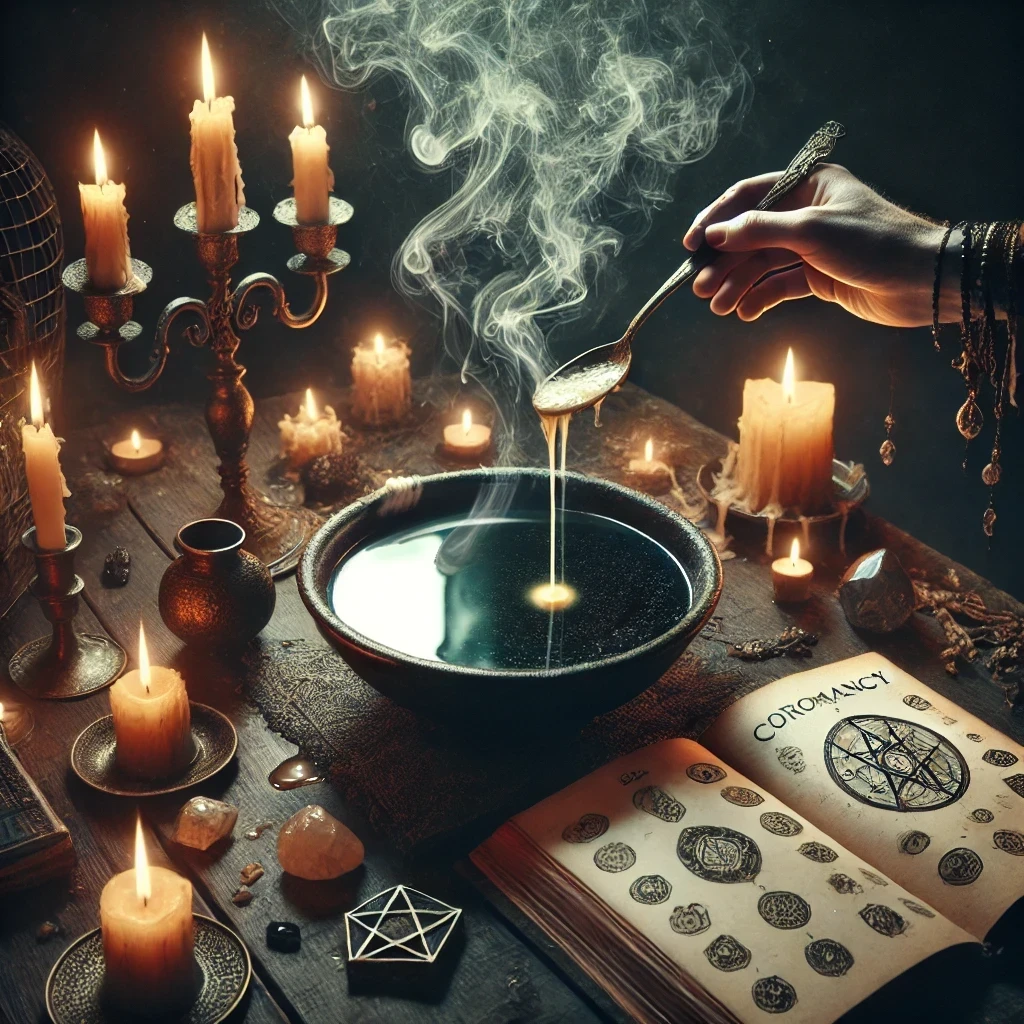
© The Equinox Apothecary 2024 – Permission is granted to copy and reproduce this Ritual with attribution

Conclusion

The Spring Gratitude Circle is a heartfelt way to celebrate Ostaraโ€™s balance and the returning light. By gathering with loved ones and sharing expressions of gratitude, you foster a sense of connection and harmony that echoes the rhythms of nature. This simple yet profound ritual reminds us of the blessings in our lives and the promise of renewal that spring brings. May the warmth of the growing light inspire you and your loved ones throughout the season.