Posted on Leave a comment

Recipe: Moon Milk: Summer’s Brew

Moon Milk
Moon Milk

Introduction

Moon Milk: Summer’s Brew (Lavender and Cherry)

The moon is one of the most powerful symbols of magic and transformation. As it waxes and wanes, the moon exerts a profound influence on our emotions, our intuition, and our connection to the spiritual realm. By harnessing the power of the moon, we can tap into the mysteries of the universe and unlock our own inner magic.

One of the best ways to honor the magic of the moon is by preparing a special brew known as “moon milk.” This creamy, dreamy beverage is infused with herbs and spices that are thought to promote relaxation, sleep, and spiritual connection. Here’s a recipe for moon milk made with lavender and cherry:

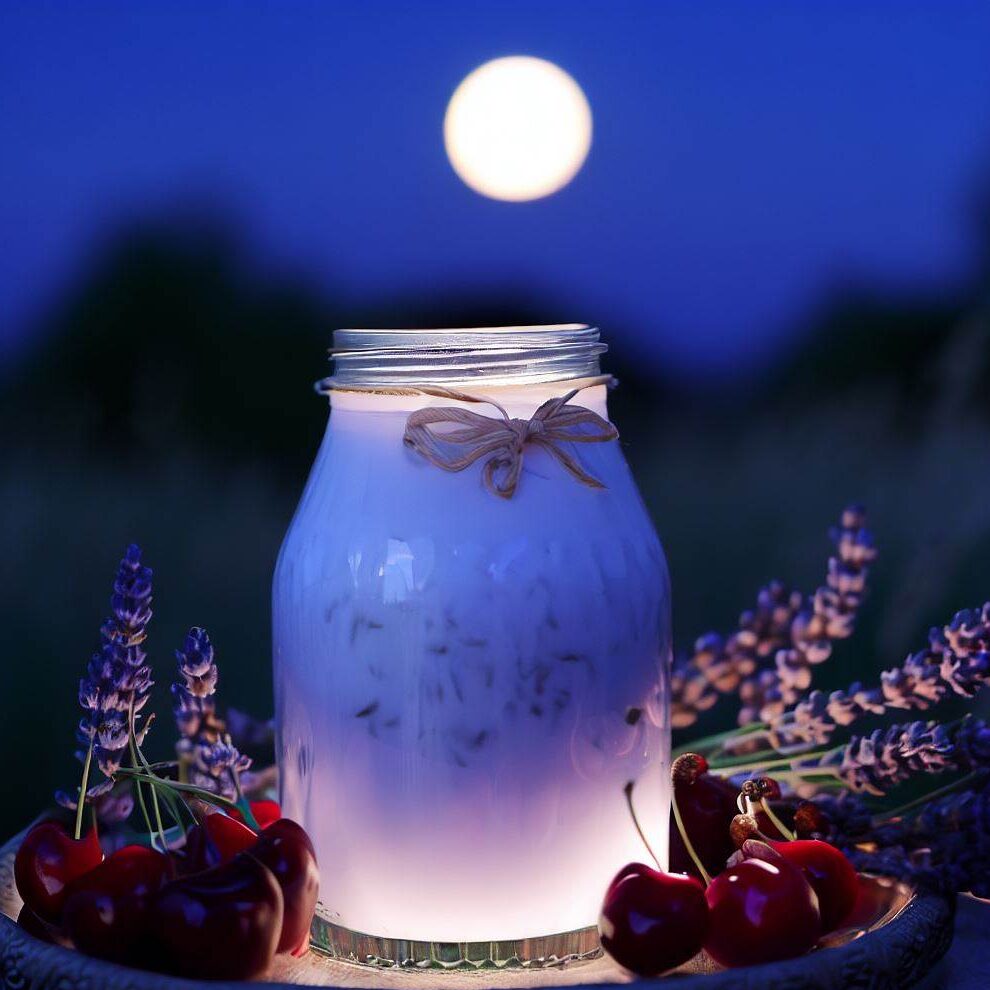
To honor the magic of the summer moon, we have a recipe for a delicious variant of Moon Milk featuring Lavender and Cherry.

Moon Milk

As the night falls and the moon rises I brew a cup of moon milk with care I add some lavender and cherries To soothe my mind and soul with their flair

I whisper a blessing over it To fill it with magic and grace I thank the goddess for her gifts And for watching over this place

I sip the moon milk slowly and savor The sweet and floral taste I feel a wave of calm and favor As I drift into a peaceful state

Moon milk, moon milk, you are my delight You help me sleep well every night

Moon Milk: Summer’s Brew
To honor the magic of the summer moon, we have a recipe for a delicious variant of Moon Milk featuring Lavender and Cherry.

  • Saucepan
  • Blender or Food Proccessor
  • Strainer
  • 2 cups milk (dairy or non-dairy)
  • 1 tablespoon dried lavender buds
  • 1/2 cup fresh or frozen cherries
  • 1 tablespoon honey
  • 1/2 teaspoon vanilla extract
  1. In a small saucepan, heat [wprm-ingredient text=”2 cups milk” uid=”0″] over low heat until warm.

  2. Add [wprm-ingredient text=”1 tablespoon dried lavender buds” uid=”1″] and [wprm-ingredient text=”1/2 cup fresh or frozen cherries” uid=”2″] to the milk and let steep for 10-15 minutes.

  3. Strain the milk into a blender or food processor and discard the lavender and cherry solids.
  4. Add [wprm-ingredient text=”1 tablespoon honey” uid=”3″] and [wprm-ingredient text=”1/2 teaspoon vanilla extract” uid=”4″] to the milk, and blend until smooth and frothy.

  5. Pour the moon milk into a mug and enjoy before bedtime or during meditation.
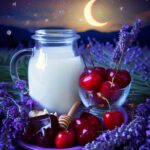
Moon Milk Lavender and CherriesMoon milk is believed to have magical properties that promote relaxation, sleep, and spiritual connection. Lavender is a powerful herb that is often used in spells and rituals to promote tranquility, purification, and harmony. It is said to help calm the mind, soothe anxiety, and facilitate communication with the spiritual realm. Cherries, on the other hand, are associated with abundance, prosperity, and love. By combining these two ingredients in moon milk, we can create a potent brew that promotes restful sleep, deep relaxation, and a profound sense of spiritual connection.

As you sip on your moon milk and gaze up at the moon, take a moment to reflect on the magic and mystery of the universe. Whether you are working with the moon to manifest your desires, to connect with your intuition, or simply to enjoy a peaceful moment of reflection, remember that the power of the moon is always with you, waiting to be harnessed and celebrated.

*Calories Calculated with 2% Dairy Milk, Different bases will change the values.
Drinks
Beltain, Litha
Posted on Leave a comment

Recipe: Summer Strawberry Rhubarb Pies

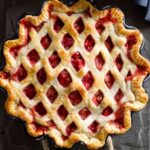
Strawberry Rhubarb Pie

Introduction

Summer Strawberry Rhubarb Pies

The summer months are a time of great magic and celebration. From Beltain, Litha (the solstice) to Lammas, the summer season is filled with rituals, spells, and offerings to the gods and goddesses of the earth. As the warm sun shines down on us and the earth comes alive with the colors of the season, we are reminded of the power of nature and the magic that surrounds us.

One of the best ways to celebrate the magic of summer is by enjoying the delicious fruits of the season. In particular, strawberries and rhubarb are two of the most popular fruits in Wiccan tradition, and they are often used in spells and rituals as symbols of love, fertility, and abundance.

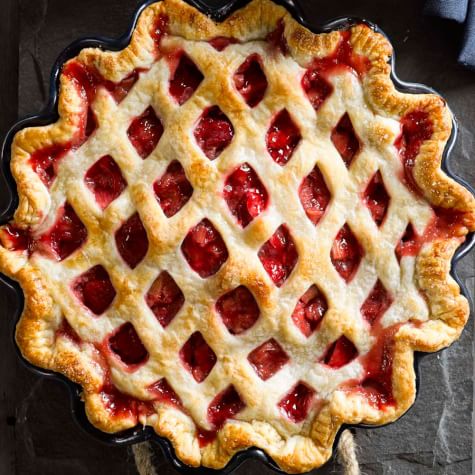
To honor the magic of summer, we have a recipe for a delicious strawberry rhubarb pie that is sure to delight your taste buds and enchant your senses.

The longest day is here
We celebrate the Sun
With joy and gratitude

We gather in a circle
We light the sacred fire
We dance and sing and drum

We feast on fresh and sweet
Strawberry rhubarb pie
We bless the Earth and Sky

Strawberry Rhubarb Pie

To honor the magic of summer, we have a recipe for a delicious strawberry rhubarb pie that is sure to delight your taste buds and enchant your senses.

  • 1 ½ Cups Chopped Rhubarb
  • 1 ½ Cups Chopped Strawberries
  • ½ Cup Sugar
  • 3 tbsp Cornstarch
  • ¼ tsp salt
  • 1 tsp Vanilla Extract
  • 2 tbsp Butter
  • 1 Double Crust Pie Shell
  1. Preheat your oven to 400°F (200°C).

  2. In a large mixing bowl, combine the rhubarb, strawberries, sugar, cornstarch, salt, and vanilla extract. Stir well.

  3. Pour the mixture into the pie shell and dot with butter.

  4. Top with the second crust and crimp the edges to seal.

  5. Cut slits in the top crust to allow steam to escape.

  6. Bake for 35-40 minutes or until the crust is golden brown and the filling is bubbly.

  7. Let the pie cool for a few minutes before serving.

Magical Properties

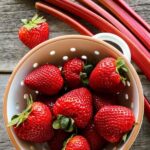
Fresh Strawberries and RhubarbStrawberry rhubarb pie has magical properties that promote love, fertility, and abundance. The sweet strawberries symbolize passion and desire, while the tart rhubarb represents the power of transformation and renewal. When combined in a pie, these two fruits create a powerful magical symbol of balance and harmony, helping to bring these energies into your life.
As you savor each delicious bite of this magical pie, take a moment to reflect on the beauty and power of the summer season. Whether you are celebrating the solstice, honoring the gods and goddesses of the earth, or simply enjoying the fruits of the season, remember that the magic of summer is all around you, waiting to be embraced and celebrated.

Dessert
Beltain, Litha
Posted on Leave a comment

The Sabbats

Introduction

A journey around the Wheel of the Year

The Sabbats celebrate the eternal circle of life – birth, death, and rebirth. These seasonal holidays have been followed for many thousands of years by ancient cultures such as Nordic, Celtic, and Greek. The Sabbats are attuned to the natural rhythms and cycles of nature and the passing seasons. Sabbat is a French word taken from the Hebrew Sabbath, meaning “to rest.” The Sabbats take place eight times in the year, they have spiritual significance. Most witches celebrate the Sabbats.­

Current/Upcoming Sabbat

Sabbats in Brief

The Major Sabbats include the four major agricultural festivals, Samhain, Imbolc, Beltane, and Lughnasadh. The minor Sabbats include the solar festivals of the equinoxes and solstices, Yule, Ostara, Litha, and Mabon.

The midpoint of the four seasons is when the major Sabbats occur. The beginning of each season is when the minor Sabbats occur.

Each spring the day, when the hours between sunrise and sunset are exactly equal to the hours between sunset and sunrise, is called “vernal equinox. “There is also a day each fall when the hours of darkness and the hours of daylight are exactly in harmony, this is the “autumnal equinox.”

Halfway between each equinox, there are two points on the earth’s path which mark the Solstices. Daylight hours are at their longest during the Summer Solstice, the hours of darkness are at their shortest. During the Winter Solstice, we have the shortest day and longest night.

All Sabbat ceremonies begin at sundown on the eve of the dates given and continue to sundown. Each Sabbat is spaced at approximately even intervals throughout the year.

By celebrating the festivals, you attune yourself to the cycles of nature creating an inner calm and oneness with all things.

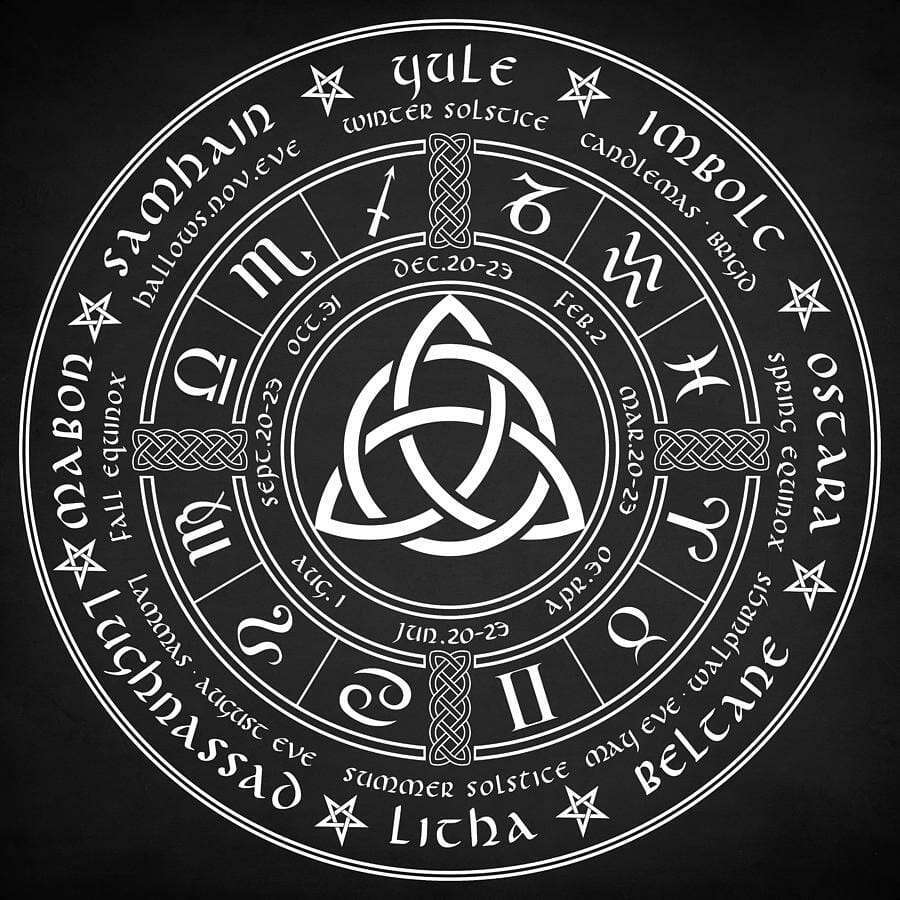
The Wheel of the Year

The Wheel of the Year is of Pagan heritage and is the calendar for the cycle of the seasons. The year is viewed as a wheel that keeps turning, and once it has completed a rotation, the wheel keeps going and turns again and again. Each of the spokes on this wheel represents one of the eight Sabbats.

The Wheel of the Year begins at Samhain, which is better known as Hallowe’en or All Hallows Eve, which is the Celtic New Year, this is when the veil between the worlds of life and death are the finest.

The Four Seasons are known as Solar Festivals because they mark a seasonal change caused by the Sun. The cross-quarter days are marked by Fire Festivals and are usually celebrated as significant agricultural festivals. The Solar Festivals and the Fire Festivals make up the Wheel Of The Year.

Wiccans look at the year as the continuing and repeating story of the life, death, and rebirth of the God and the fertility of the Goddess.

Wheel of the Year Cycle

  • At Yule, which occurs at the time of the winter solstice in December, the Lady gives birth to the Lord and then rests.
  • At Imbolc, in February, the Lord is seen as a young boy, and the Lady recovers from giving birth.
  • Ostara marks the first day of spring and the awakening of the Earth. The Lord is seen as a growing youth at this time.
  • At Beltane, the Lord has grown to manhood and he falls in love with the Lady, the two unite, producing the bounty of Nature. The Lady becomes pregnant by the Lord.
  • The Summer Solstice is the point in midsummer when everything in Nature is at its peak, there is abundance. During this time the Lord and the Lady are at the height of their powers.
  • Lughnasadh is the day in August of the first harvest. The first grains are cut, and the Lord begins to weaken.
  • At Mabon, the second harvest, the Lord is dying. The days grow shorter, and Earth readies for the slumber of winter.
  • At Samhain, in October, the Lord dies only to be reborn of the Lady again at Yule.

All The Sabbats

Posted on Leave a comment

Litha

Litha Main
Litha Main

Introduction

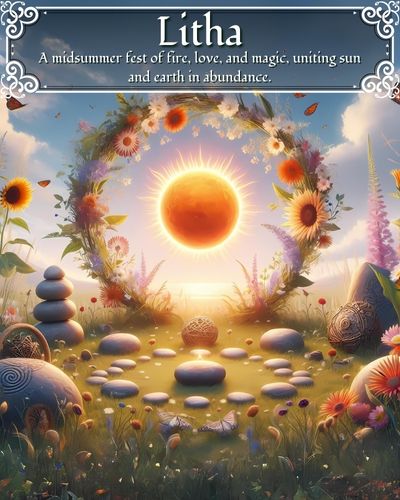
Litha (the Summer Solstice) marks the longest day of the year. During the summer solstice, it is the time of the first harvest and the celebration of this bounty.

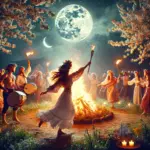
In times gone by this Sabbat was celebrated with large bonfires, they were burned to promote purification, fertility, and love. To leap over the bonfire was to assure a good crop and to encourage these qualities in themselves. This Sabbat glorifies the Sun God and the Sun, fire plays a very prominent role in this festival. The element of Fire is the most easily seen and felt element of transformation.

Litha comes from the Anglo-Saxon phrase Aerra Litha, which means “before Midsummer.” At this time the Goddess is fully pregnant, and the Sun God is at the height of his power. Litha is the traditional time for gathering magical and medicinal plants to dry and store for winter use. In Wales, Midsummer is called Gathering Day. Midsummer Night’s Eve has traditionally been a day to perform love and healing magic. This is also a perfect time to communicate with fairies, forest sprites, and pixies.

June was said to be the luckiest month to be married in and is the time of the mead moon or honeymoon. One tradition was for newlyweds to drink mead daily for a month after their wedding, which is why the post-wedding holiday was named the honeymoon. Even though the days begin to grow shorter after the Summer Solstice, the time of greatest abundance is still to come. The promises of the Goddess and God are still to be fulfilled.

Most cultures of the Northern Hemisphere mark Midsummer in some ritualized manner and people past and present acknowledge the rising of the sun on this day. At Stonehenge, the heel stone marks the midsummer sunrise as seen from the centre of the stone circle.

This is a good time for protection magic, empowerment magic, male rituals, and becoming in tune with nature spirits. It is a time of bravery, strength, and overcoming.

Litha Activities

  • Put a ring of flowers around your cauldron.
  • Hang a bundle of fresh herbs out to dry.
  • Litha is a time for healing of all kinds, and protection rituals.
  • Make a Wicker Man and burn him in your bonfire.
  • Decorate your altar with Rose flowers.
  • Leave out milk and honey as an offering to the Fae folk.
  • Make a charm to hang around your neck with a seashell.
  • Have an outdoor breakfast picnic to welcome the Solstice.
  • Stay up and watch the sun come up on the longest day of the year, or watch the sun come down.
  • Take a picture of the sun at sunrise and sunset.
  • Try a fire divination, stare into the coals of your bonfire as it settles, or look for forms in the leaping flames.
  • Create a ritual to bring healing and love to Mother Earth.
  • Make protection amulets for friends and family, dispose of last year’s Litha bonfire.
  • Light a white candle and place it in front of a mirror. Say your own Litha prayer over it, and then let it burn out.
  • Burn the remnants of your Yule Tree in the bonfire to burn away bad luck.
  • Jump the balefire or cauldron.
  • Hang a bundle of fresh herbs out to dry and use them to spice up a Litha feast of cooked summer vegetables
  • * Offer a gift of lavender to the Gods in a bonfire.
  • Make staffs, dream pillows, or a witches’ ladder.
  • Go bird watching. Take a guidebook, so you will know what you are looking at. The birds may bless you with a feather

Deity’s Portfolio

  • Division: Minor Sabbat
  • Other Names: Summer Solstice, Midsummer, Alban Hefin, Sun Blessing, Gathering Day, Whit Sunday, Feill-Sheathain, Whitsuntide, Vestalia, Thing-tide, St. John’s Day.
  • Southern Hemisphere Date: Dec 20-23
  • Northern Hemisphere Date: June 21
  • Associated Holiday: Feast of John the Baptist
  • Associated Deities: Mother Earth, Father Sun, and the fairy people
  • Associated Herbs: Rose, lavender, St John’s Wort, chamomile
  • Associated Stones: Emerald, Jade, Amethyst, opal, quartz, lapis lazuli, malachite, tiger’s eye, and diamonds.
  • Symbols of Litha: Fire, The Sun, Sunflowers love amulets Blades, Mistletoe, Seashells, Oak Trees, Balefires, Sun Wheels, and Fairies.
  • Foods of Litha: Garden fresh fruits and vegetables such as lemons and oranges.
  • Drinks of Litha: Wine, Lemonade, Meade, Ales, Herbal Teas, and fresh fruit juice of any kind
  • Incense of Litha: Frankincense, myrrh, sandalwood, lemon, pine, jasmine, rose, lotus, or wysteria.
  • Ritual Oils: Heliotrope, Cinnamon, Sandalwood, Lavender, Orange, All Mint Oils, Lemon, Saffron
  • Colors: of Litha: White, red, maize yellow or golden yellow, green, blue, and tan.
  • Taboos: Giving Away Fire, Sleeping Away from Home, Neglecting Animals.
  • Plants: Oak, Mistletoe, Frankincense, Lemon, Sandalwood, Heliotrope, Copal, Saffron, Galangal, Laurel, Ylang-Ylang
  • Element: Fire
  • Activities: All kinds of magic, Create protective amulets, dry herbs
  • Animals: Robin/Wren, Summer Birds, Horses, Cattle
  • Mythical Creatures: Satyrs, fairies, Firebird, Dragon, Thunderbird, Manticore
  • Celebration of: The Goddess is pregnant with the God.

Other Litha Resources

Recipes

Deeper Knowledge

Upcoming Litha Posts

[display-posts post_status=”future” category=”litha” include_date=”true” image_size=”medium” wrapper=”div” wrapper_class=”display-upcoming-posts image-left” order=”ASC” include_link=”false” no_posts_message=”No New posts Scheduled, Check back as we get closer to Litha!”]