Posted on Leave a comment

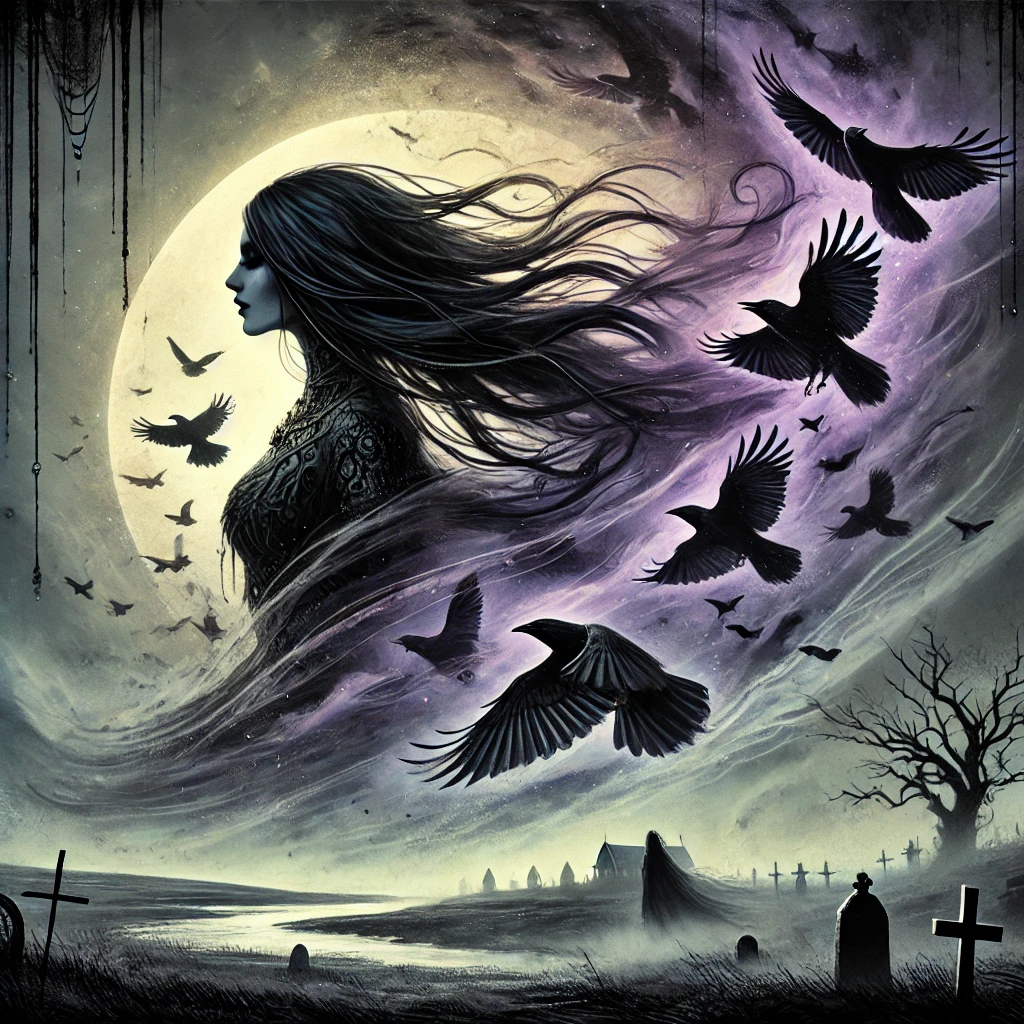
The Day After Samhain

The Day After Samhain

Introduction

Embracing the Witch’s New Year

The day after Samhain, November 1st, is a time of profound spiritual significance for Pagans, Wiccans, and those who follow the Wheel of the Year. Known as the “Witch’s New Year,” this day serves as a bridge between the end of one cycle and the beginning of another, marking a time of reflection, renewal, and setting intentions for the path ahead. While Samhain is the grand finale of the Pagan year, a celebration that honors the thinning veil between the worlds and connects the living with the ancestors, November 1st is the first step into a new year of possibility, growth, and transformation.

In this article, we explore how November 1st is recognized within modern witchcraft and Pagan practices, its deep symbolism as the start of the new spiritual year, and how to honor this sacred time with rituals, reflections, and ceremonies.

The Witch’s New Year: Stepping into a Fresh Cycle

In many modern Pagan traditions, particularly Wicca, Samhain is seen as the final sabbat on the Wheel of the Year, marking the end of an annual cycle of growth, harvest, and spiritual work. Celebrated on October 31st, Samhain is a time for honoring the dead, reflecting on the harvest, and celebrating the final gathering of the year’s crops. However, with the passing of Samhain, the focus shifts from honoring the old to welcoming the new. November 1st is thus seen as the first day of the new cycle, a spiritual rebirth and renewal that is often called the “Witch’s New Year.”

This transition from one cycle to the next mirrors the earth’s own journey. As the northern hemisphere prepares to enter the cold and dark months of winter, the cycles of nature remind practitioners of the need for rest, introspection, and rejuvenation. The earth’s energy is beginning to withdraw into itself, just as leaves fall to nourish the soil and animals prepare for hibernation. Similarly, the Witch’s New Year provides a unique opportunity for people to turn inward, shed old patterns or beliefs that no longer serve their highest good, and plant the seeds for a fresh start that will eventually sprout in the coming spring.

The concept of a “new year” beginning at this point in the seasonal cycle is deeply rooted in the symbolism of Samhain. As the final harvest sabbat, Samhain celebrates the end of the season of light and growth. The day after, November 1st, transitions into the time of darkness and rest—a crucial phase for both the earth and the spirit. It is believed that during this time, the veil between the worlds of the living and the dead remains thin, but the focus begins to shift from active communing with spirits to inner reflection and setting new intentions. This shift in focus is not just about welcoming new possibilities, but also about taking the lessons learned from the past year and allowing them to inform and shape the path ahead.

November 1st is considered a day to “sweep the slate clean.” Practitioners take this time to metaphorically sweep away the debris of the past, letting go of emotional baggage, unhealthy habits, or anything that has proven to be a burden. This is also a time to pay attention to unresolved issues that have emerged throughout the year. Whether through quiet contemplation, journaling, or performing specific release rituals, practitioners aim to process these experiences, seeking closure and wisdom from what has transpired. Once these experiences are integrated and released, they make space for new beginnings, creating fertile soil for future growth.

Just as the earth lies fallow and dormant during the winter to prepare for the rebirth of spring, November 1st is a period of dormancy for the soul—a time to rest, recharge, and quietly nurture the dreams and goals that will eventually come to life. It is a spiritual resting period, one that offers the perfect opportunity for transformation and renewal. Practitioners often set intentions for the coming year on this day, infusing them with hope, excitement, and determination. These intentions are not only personal goals but spiritual commitments, such as self-improvement, deepening relationships with the divine, exploring new spiritual practices, or strengthening the connection to nature.

During the Witch’s New Year, there is a profound sense of “being in between”—neither here nor there, not fully tied to the past nor completely rooted in the future. This liminal quality is what makes November 1st so powerful, as it is a time when all possibilities are open, and anything is possible. The energies of this day are ripe for setting intentions that can blossom over time, especially as they align with the turning of the seasons. The liminality also makes it a particularly potent time for magick, divination, and personal rituals aimed at transformation.

Setting goals on the Witch’s New Year may involve creating vision boards, writing affirmations, and performing meditative journeys that envision a future of abundance, growth, and spiritual enlightenment. Some practitioners may write down their intentions for the new year and place them on their altars, where they remain as a constant reminder of the commitment made to personal and spiritual development. Others may take their intentions to nature, either burying them in the earth as a symbol of planting seeds or casting them into a body of water to flow freely and manifest.

Another aspect of stepping into this fresh cycle is recognizing the cyclical nature of time. November 1st is a time of rebirth, but it is also deeply connected to the death cycle represented by Samhain. The old must die for the new to be born, and this is true in the spiritual world as much as it is in the physical one. This cycle of death and rebirth is honored through rituals that acknowledge the past and its teachings, and it is this acknowledgment that makes the new beginnings of the Witch’s New Year possible. Just as the sun will eventually return to its height at the summer solstice, so will the seeds planted in the dark months emerge into the light, bearing fruit in their season.

In this way, November 1st is not just a day of new beginnings—it is a day of profound connection to the cycles of nature, the rhythms of the earth, and the continual turning of the Wheel of the Year. By honoring the past, releasing what no longer serves, and intentionally setting goals for the future, practitioners step into the fresh cycle with a sense of purpose, hope, and empowerment. This time of transition is sacred and transformative, offering each individual the chance to align their lives with the flow of natural energies and begin anew.

Honoring November 1st: Traditions and Symbolism

The day after Samhain is a day of balance and contemplation. It is a time to pause, integrate the wisdom of the past, and welcome the coming year with open arms. Here are some of the ways that Pagans and Wiccans honor this sacred transition:

Reflection and Self-Assessment

The day after Samhain is an ideal time to reflect on the past year’s journey. What challenges did you face? What victories did you achieve? Take time to acknowledge how much you have grown and how you have navigated life’s challenges. Many practitioners choose to journal their thoughts, reviewing both accomplishments and areas of struggle to gain clarity and set the foundation for growth in the new year. This self-reflection can help identify what lessons have been learned and what goals and intentions can be set for the coming cycle.

Ritual of Release and Renewal

Since November 1st is a day of new beginnings, it is an excellent time for a ritual of release and renewal. This ritual may involve writing down anything that you wish to let go of—negative habits, limiting beliefs, unresolved conflicts—on a piece of paper and then burning it as an act of release. Some may choose to perform this ritual outdoors, connecting with the elements of fire, air, earth, and water to purify their intentions and symbolize letting go of the past. The ashes of the paper may be scattered in nature as a way of returning them to the earth for transformation.

Setting Intentions for the New Year

Just as many cultures create New Year’s resolutions, the Witch’s New Year is a powerful time to set intentions, make wishes, and create vision boards for what you wish to manifest in the upcoming cycle. You can use a fresh journal dedicated to your goals for the new year, or you can write your intentions on parchment and place them on your altar. Spend time meditating on these intentions, visualizing them coming to fruition throughout the year, and invoking the energies that will support your journey.

Candle Lighting for New Beginnings

Lighting candles is a traditional way to honor both the darkness and the light within. On November 1st, many Pagans light white or gold candles to symbolize the birth of the new year and to invoke the energy of hope, growth, and renewal. Some may choose to meditate or perform rituals by the candlelight, focusing on the flame as a representation of their own inner light guiding them forward.

Rebirth and the Season of Darkness

November 1st marks the beginning of the darker half of the year—a season that invites practitioners to journey inward, to explore the depths of their souls, and to lay the groundwork for profound spiritual transformation. With the end of Samhain and the arrival of the Witch’s New Year, the world enters a time when days become shorter, nights grow longer, and the energy of the earth retreats into the stillness of winter. This shift in light and darkness is far more than a physical change; it is deeply symbolic of the inner journey that awaits and the sacred opportunities for growth and renewal that come with embracing the season of darkness.

In many Pagan and Wiccan traditions, the dark half of the year is viewed as a time for introspection and contemplation. Just as nature prepares for a period of rest and renewal, human life mirrors this rhythm. The darkness is not seen as something to fear or avoid; rather, it is honored as a powerful ally in the process of self-discovery and healing. It is within the darkness that the deepest mysteries lie, and by embracing the shadows within and without, practitioners find space to nurture, transform, and rediscover their inner light.

The season of darkness can be likened to the dormant period that seeds undergo when they are nestled deep within the earth. The seeds planted on November 1st, whether they are intentions for the future, spiritual goals, or personal aspirations, are buried within the fertile soil of the practitioner’s consciousness. Much like the unseen roots that begin to spread and grow underground during the winter, these spiritual seeds gestate, developing strength and potential until the time comes for them to break through the surface and reach toward the returning light of spring. This period of dormancy is essential; it allows time for reflection, development, and a deeper understanding of oneself, ultimately leading to a powerful rebirth when the light returns.

During this season, the natural world becomes a source of inspiration and guidance for the spiritual work that unfolds. The long nights and cool air encourage a slowing down, a turning inward, and a deepening of one’s relationship with the self and with the divine. Practitioners often align their activities with the energy of the season, focusing on practices that support self-care, personal transformation, and spiritual exploration. By embracing the stillness and quiet that come with the dark half of the year, they find the space to listen to their inner voice, process emotions, and seek wisdom from the cycles of life and death.

Some of the practices that become central during this time include:

  • Meditation and Contemplation: The season of darkness provides the perfect backdrop for meditative practices that foster inner peace and clarity. With the external world growing quieter, practitioners find it easier to enter deep states of meditation, allowing them to explore their thoughts, desires, and emotions. Whether through silent meditation, guided visualizations, or walking meditations in nature, this practice supports a deeper connection to the self and to the spiritual energies present during the darker months.
  • Shadow Work: Shadow work is a practice that involves exploring the hidden or “shadow” aspects of the self—those parts of the personality that are often repressed, denied, or misunderstood. Engaging in shadow work during the dark half of the year can be particularly powerful, as it aligns with the natural theme of introspection and transformation. By courageously delving into the shadow self, practitioners can confront unresolved issues, heal emotional wounds, and ultimately integrate all aspects of their being into a more balanced whole.
  • Dream Journaling and Exploration: As the nights grow longer, dreams become an important tool for spiritual growth and self-awareness. Many practitioners keep a dream journal during this time, recording their dreams each morning and reflecting on the symbols, themes, and emotions that arise. Because the veil between the worlds remains thin throughout this period, dreams can serve as a conduit for messages from the spirit world, offering guidance, wisdom, and insights that support personal and spiritual growth.
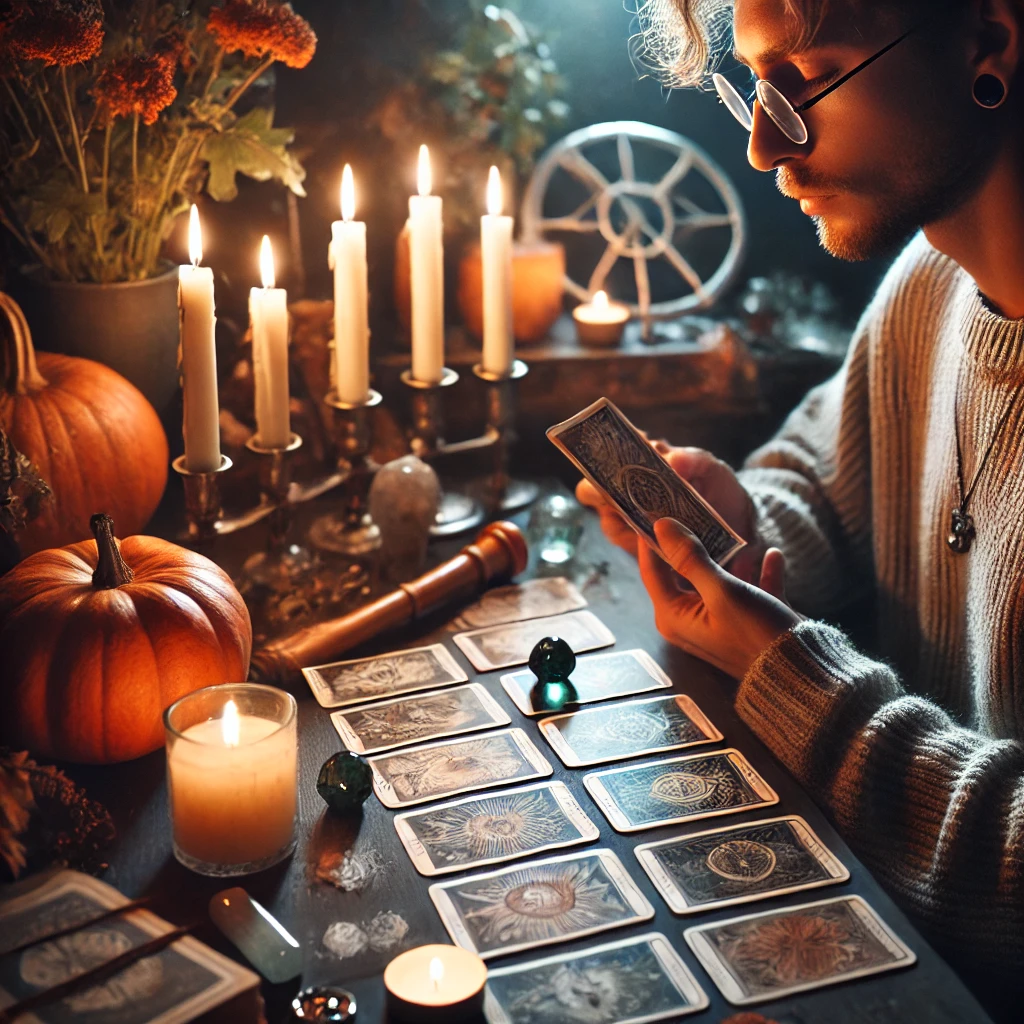
  • Divination and Scrying: The dark half of the year is ideal for divination and other methods of seeking spiritual insight. Whether through tarot cards, runes, pendulums, or scrying with mirrors, water, or crystals, practitioners use these tools to gain clarity on their path, seek direction for the new year, and connect with the wisdom of ancestors and spirit guides. The enhanced spiritual energy during this time can make divination particularly potent, revealing hidden truths and aiding in the process of setting intentions for the future.
  • Connecting with the Spirit World: While the energy of Samhain is most closely associated with communing with spirits, the connection to the spirit world continues throughout the dark half of the year. Practitioners may continue to honor their ancestors by keeping ancestor altars, lighting candles, or offering food and drink to those who have passed on. It is also a time to connect with spirit guides, deities associated with darkness or transformation, and any other spiritual beings that hold significance in one’s practice. This deepened connection to the spirit realm provides comfort, guidance, and support during the season of reflection.
  • Rituals for Releasing and Renewing: Just as the earth releases its leaves in autumn, November 1st and the weeks that follow are a time for letting go of what no longer serves one’s highest good. Practitioners may perform rituals that involve releasing old patterns, toxic habits, or outdated beliefs into a fire, burying them in the earth, or casting them into running water. These rituals are often paired with affirmations, intentions, or blessings for renewal and transformation, ensuring that space is created for the new to emerge.

The season of darkness is a time for honoring the cycles of life, death, and rebirth that flow through both nature and the human experience. It is a reminder that the quiet, restful period of winter is not a period of stagnation but one of preparation and gestation for future growth. Just as seeds cannot bloom until they are first buried and nourished underground, the soul must also find time to rest, release, and transform in order to emerge renewed. Embracing the darkness allows for an authentic experience of self-discovery, offering opportunities to build resilience, deepen one’s spiritual practice, and align with the ever-turning Wheel of the Year.

In recognizing the beauty and necessity of the dark half of the year, practitioners learn to find comfort in the shadows, understanding that it is from the stillness of winter that the vibrant life of spring will eventually be born. November 1st and the following season become a powerful period of transformation—a time to sow spiritual seeds, cultivate inner wisdom, and prepare for the bright, blossoming days ahead.

Connecting with the Ancestors and the Spirit World

While the night of Samhain is traditionally dedicated to communing with the spirits of ancestors and those who have passed beyond the veil, November 1st carries this energy forward, offering a day to continue honoring the departed and to thoughtfully integrate the messages and wisdom received. This day is seen as a continuation and deepening of the connection formed during Samhain, allowing practitioners to maintain their focus on the spirit world while shifting from active celebration to a more reflective and contemplative engagement. For many Pagans, the work of connecting with ancestors doesn’t simply end on Samhain night—it becomes an ongoing practice that sets the tone for the entire Witch’s New Year.

Creating an Ancestor Altar

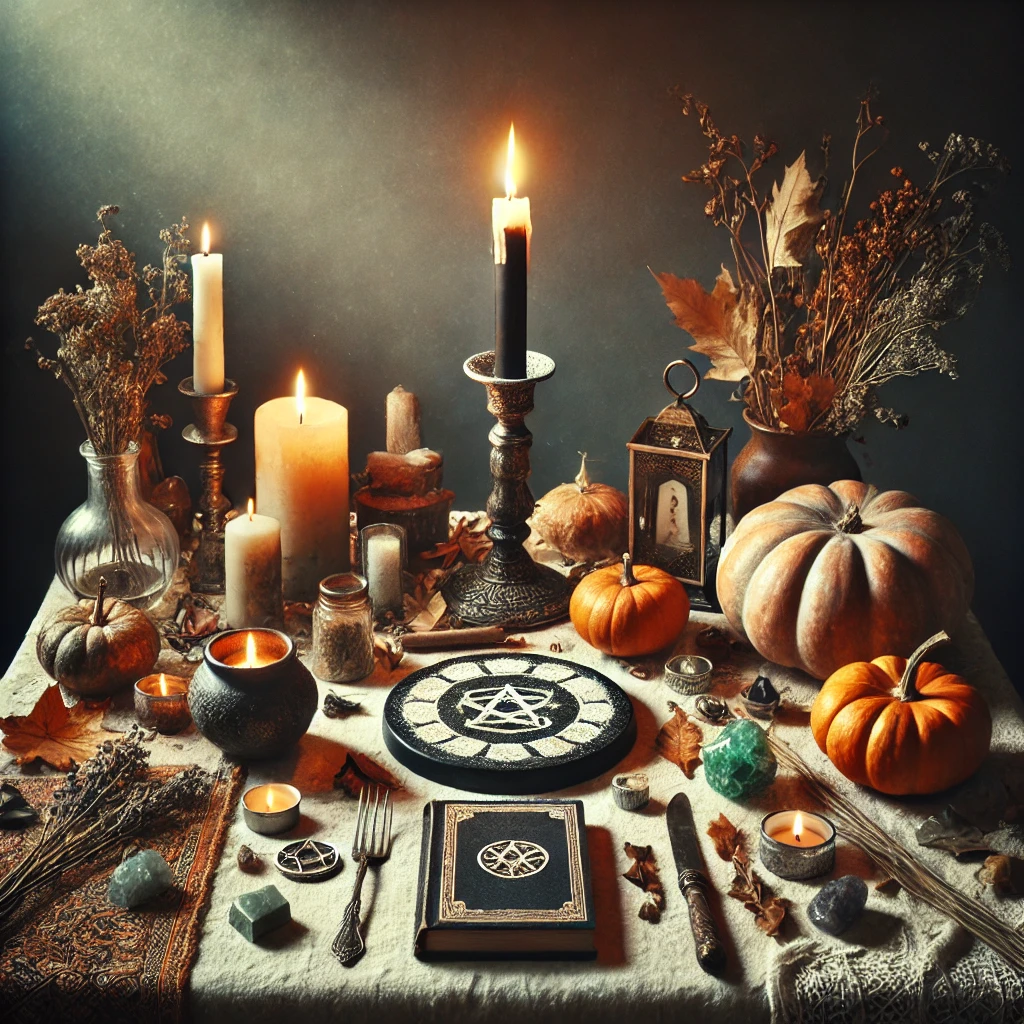
One of the most common practices on November 1st is the creation of a dedicated ancestor altar. This sacred space serves as a focal point for honoring those who have gone before, providing a tangible way to maintain a relationship with them. The altar can be as simple or as elaborate as desired, and it is often adorned with photos of loved ones, heirlooms, mementos, and other items that represent the lives and spirits of those being honored. Seasonal decorations like autumn leaves, pumpkins, dried flowers, and candles may also be added to represent the connection between the living and the dead, as well as the changing cycles of the earth.

Offerings play an important role on this altar. Food and drink are traditional, especially those items that were loved by the ancestors in life—whether it’s a slice of bread, a glass of wine, or a special dish that holds familial significance. Some practitioners choose to pour a small libation of wine or milk, leave a piece of fruit or bread, or even offer herbs like rosemary or lavender for remembrance and peace. It is not uncommon to leave a small candle burning on the altar throughout the day as a symbol of the everlasting light that connects the living to those who have passed.

Creating an ancestor altar provides a daily reminder of the ancestors’ presence and the continued relationship between the worlds. It offers a place of connection, not only for prayers and offerings but also for conversations, storytelling, and meditation. Through this altar, practitioners are able to honor their ancestors in a tangible way, fostering an ongoing relationship that extends beyond the time of Samhain and into the days, weeks, and months that follow.

Reflective Ancestor Work

While Samhain night is often seen as a festive celebration that actively welcomes spirits to join in the revelry, November 1st allows for a more reflective approach to ancestor work. This day is a time to sit in quiet contemplation, honoring the guidance and support received from the ancestors and acknowledging the lessons learned from them. It is an opportunity to offer gratitude for their enduring love and wisdom and to seek their continued blessings as the new year unfolds.

Ancestor work on November 1st may involve personal reflection on the qualities, strengths, and wisdom that have been passed down through familial lines. Practitioners may consider what aspects of their ancestry they wish to carry forward—whether it be resilience, creativity, compassion, or a certain skill or craft. This reflective practice allows one to consciously choose the positive traits they wish to embody while recognizing any patterns or cycles that need healing or transformation.

Some may also choose to write letters to their ancestors, expressing their thoughts, gratitude, and desires for the new year. These letters can be read aloud as part of a personal ritual, left on the ancestor altar as an offering, or burned as a way to symbolically send the messages to the spirit world. This practice creates a deeper sense of connection and allows for an open channel of communication that can continue to be nurtured throughout the coming months.

Prayer and Meditation for Ancestor Blessings

Another way to honor the ancestors on November 1st is through prayer and meditation. In these quiet moments, practitioners can send blessings to their ancestors, offer prayers for their peace and happiness in the spirit realm, and ask for their guidance as the new year begins. Some may choose to sit in meditation before the ancestor altar, visualizing the faces of their loved ones and opening their hearts to any messages or impressions that arise. Others may simply close their eyes and listen, allowing their intuition to guide them in feeling the presence and support of their ancestors.

Meditation on this day can also serve as a time to reflect on the cycle of life, death, and rebirth that Samhain represents. By connecting with the rhythms of the earth and the journey of the soul, practitioners are able to deepen their understanding of their own spiritual path and find a sense of peace in the natural transitions of life.

Divination and Seeking Guidance

The connection with ancestors and the spirit world is often enhanced on November 1st, as the veil between the worlds is still thin, making it an ideal time for divination. Many practitioners use tools like tarot cards, oracle cards, runes, pendulums, or scrying methods (such as crystal balls, water, or mirrors) to seek further guidance from their ancestors or to gain insight into the path that lies ahead in the new year.

Divination at this time may focus on receiving messages of wisdom and support from those who have passed, exploring what spiritual work is needed for personal growth, or seeking clarity on any intentions set during the Witch’s New Year. Some people specifically ask their ancestors to bless their divination practice, inviting their guidance to flow through the chosen tool to provide meaningful insights.

For those who wish to engage in group work, divination can also be done in the company of others who share in the same spiritual path. By drawing cards or casting runes together, the community can support each other in interpreting the messages and collectively honor the wisdom of the ancestors as it comes through.

Honoring the Spirits Beyond the Ancestors

While the focus of November 1st is often on honoring one’s direct lineage, this day also provides an opportunity to honor those spirits who are not related by blood but who have been important guides, mentors, or spiritual teachers in one’s life. This could include honoring cultural or historical figures who have inspired personal growth, spirits of the land or local area, or any spiritual beings that hold significance within one’s practice.

Offerings and rituals can be adapted to honor these non-ancestral spirits, asking for their continued support and guidance as the new year unfolds. By expanding the honoring beyond just one’s familial line, practitioners can recognize the interconnectedness of all beings and celebrate the many ways that spiritual support manifests in their lives.

Integration and Moving Forward

November 1st is ultimately a day of integrating the lessons of Samhain and carrying the wisdom of the ancestors forward into the new year. By maintaining this connection beyond the festival night, practitioners are able to continue working with the energies of transformation, reflection, and renewal. As they light candles, offer prayers, and engage in ancestor work, they cultivate a deeper sense of belonging—both to their familial lineage and to the larger web of life that connects the living, the dead, and all that lies between.

It is through these sacred acts of remembrance and honoring that practitioners create a bridge between the past and the future, recognizing that the journey of life is not only about moving forward but also about remembering where one has come from and embracing the wisdom that flows through every generation.

Celebrating the Turning of the Wheel: Festivals and Traditions

With the dawn of November 1st, the energy shifts from the festive and outward celebration of Samhain night to a more inward and reflective atmosphere. In many traditions, this day is marked by the first celebrations of the “Witch’s New Year,” focusing on gratitude, contemplation, and quiet celebration of the turning of the Wheel of the Year. This transition is often honored through feasts, rituals, and personal traditions that embody the themes of introspection, gratitude, and the gentle welcoming of the new cycle.

A Feast of Gratitude and Contemplation

One of the most common ways to celebrate November 1st is with a small feast. Unlike the lively revelry and gatherings of Samhain, this feast tends to be more subdued and meditative, a meal of thanks for the bounty of the earth and the harvest that has sustained life throughout the year. It’s a time to consciously savor the final fruits of the season and enjoy dishes made from apples, nuts, root vegetables, grains, and freshly baked bread. These foods serve as both nourishment and a symbol of the earth’s generosity, offering a tangible connection to the cyclical nature of growth, harvest, and dormancy.

This feast can be held alone, providing a quiet time for personal reflection, or shared with family and friends in a more intimate setting than the festivities of the previous night. During the meal, each participant might offer a word of thanks, reflect on their experiences of the past year, and speak aloud their intentions or hopes for the new one. Toasts to ancestors, spirit guides, or deities associated with Samhain are common, offering continued reverence for those who came before and whose wisdom and protection are sought as the new cycle begins.

In some traditions, a “dumb supper” is held—a silent meal shared in honor of the dead. This practice encourages mindfulness and reflection, allowing participants to focus on their connection to the spirit world and their relationship with their ancestors. A place may be set at the table for a departed loved one, symbolically inviting them to join in the feast. Alternatively, food and drink may be set aside as an offering, either left on the table or placed on an ancestor altar to honor and nourish the spirits.

Honoring the Final Harvest and the Earth’s Cycles

The foods served during this quiet feast are not only chosen for their seasonal significance but also for their symbolic meanings within the context of the harvest and the turning of the year. Apples are a classic fruit of the season and are often used to represent life, immortality, and the connection between the earthly and spiritual realms. Nuts symbolize the seeds of potential that lie dormant through the winter, ready to sprout when the earth awakens in spring. Root vegetables, such as carrots, beets, and potatoes, are representations of grounding energy and the earth’s ability to sustain life through the darker months.

Bread, a staple of the feast, holds great significance as a symbol of transformation. It represents the journey of grain from seed to loaf, reflecting the cycles of growth, death, and renewal that are honored during Samhain. The act of breaking and sharing bread becomes a sacred ritual in itself, a gesture of community and unity that acknowledges the connections between all beings and the cycles that bind them.

For those who practice a solitary path, the feast may be simplified to a single symbolic dish or a small offering of food and drink shared in honor of the ancestors and spirits. The focus is on mindful appreciation of the earth’s abundance and the opportunity to express gratitude for the blessings of the harvest, the lessons learned throughout the year, and the potential of the new cycle.

All Saints’ Day, All Hallows’ Day, and All Souls’ Day

The significance of November 1st also extends beyond Pagan traditions and into the observances of other cultures, most notably as All Saints’ Day or All Hallows’ Day in the Christian calendar. All Saints’ Day, which follows All Hallows’ Eve (now widely known as Halloween), is a day set aside to honor all saints, known and unknown, who have attained spiritual sanctity. This triad of celebrations, which includes All Souls’ Day on November 2nd, forms a time of remembrance and prayer for the dead, aligning with the Pagan themes of ancestor reverence and the acknowledgment of those who have passed into the spirit world.

In many cultures, All Saints’ Day and All Souls’ Day involve visiting the graves of loved ones, cleaning and decorating them with flowers, and leaving offerings of food, candles, or prayers. These practices reflect a deep reverence for the dead and a desire to maintain a relationship with those who have transitioned to the afterlife. Candles are often lit to guide the souls of the deceased, and family gatherings around gravesites become opportunities to share stories, memories, and reflections on the lives of the departed.

In Mexico and other parts of Latin America, these observances are part of the Día de los Muertos (Day of the Dead) celebrations, which span November 1st and 2nd. Altars (ofrendas) are created in homes and public spaces, filled with marigolds, candles, photos, food, and personal items that represent the lives of the ancestors. It is a joyful time of reunion with the dead, marked by music, feasting, and colorful displays that celebrate the lives and memories of loved ones.

A Time for Personal and Community Rituals

Whether rooted in Pagan, Christian, or other cultural traditions, November 1st is an auspicious time for rituals that honor the past and set intentions for the future. Beyond feasting and prayer, many practitioners engage in personal rituals that align with their spiritual beliefs and cultural customs. These might include:

  • Lighting Candles: Candles are lit to honor the ancestors, to remember those who have passed, and to bring light into the darker half of the year. Each flame is a symbol of memory, connection, and the continuation of the soul’s journey.
  • Creating an Ancestor Journal: Some choose to begin an ancestor journal on November 1st, dedicating a book to recording family stories, messages received in dreams or meditation, and reflections on the guidance provided by those who have passed. This journal becomes a sacred tool for deepening the relationship with the spirit world and documenting spiritual growth throughout the year.
  • Walking in Nature: A mindful walk through nature on this day can help align with the cycles of the earth and bring a sense of grounding. Gathering natural objects like leaves, acorns, pinecones, or stones can be incorporated into rituals, altar spaces, or simply kept as reminders of the connection to the earth’s energy.
  • Crafting Protective Talismans: As the season shifts toward the longer nights of winter, some practitioners craft protective charms or talismans for their homes or themselves. These may be made with herbs, crystals, or symbolic items and charged with intentions for protection, health, and well-being throughout the colder months.
  • Offering Thanks to the Spirits of the Land: As a way to honor the earth and its cycles, offerings may be left outdoors as a gesture of thanks to the spirits of the land. This could include burying food, pouring a libation, or leaving biodegradable tokens of appreciation for the local wildlife or natural elements.

November 1st thus serves as a time of continued connection to the spirit world, a day for grounding oneself in gratitude, and an opportunity to acknowledge the cycle of endings and new beginnings that Samhain represents. It is both a day of quiet reflection and a celebration of the ongoing journey of life, death, and renewal that we all share. By observing this day with reverence and intention, practitioners honor the turning of the Wheel of the Year, stepping forward into the darkness with trust in the light that will come again.

Quiet Reflection and Solitude

For many practitioners, the Witch’s New Year is a deeply personal and introspective time, best honored through quiet reflection and solitude. November 1st offers a sacred pause—a moment to step away from the external world and immerse oneself in a space of stillness, contemplation, and spiritual connection. This day, nestled within the transition from the vibrant celebrations of Samhain, holds the soft silence that allows for a deeper connection to both the self and the rhythms of nature.

Creating Sacred Space for Solitude

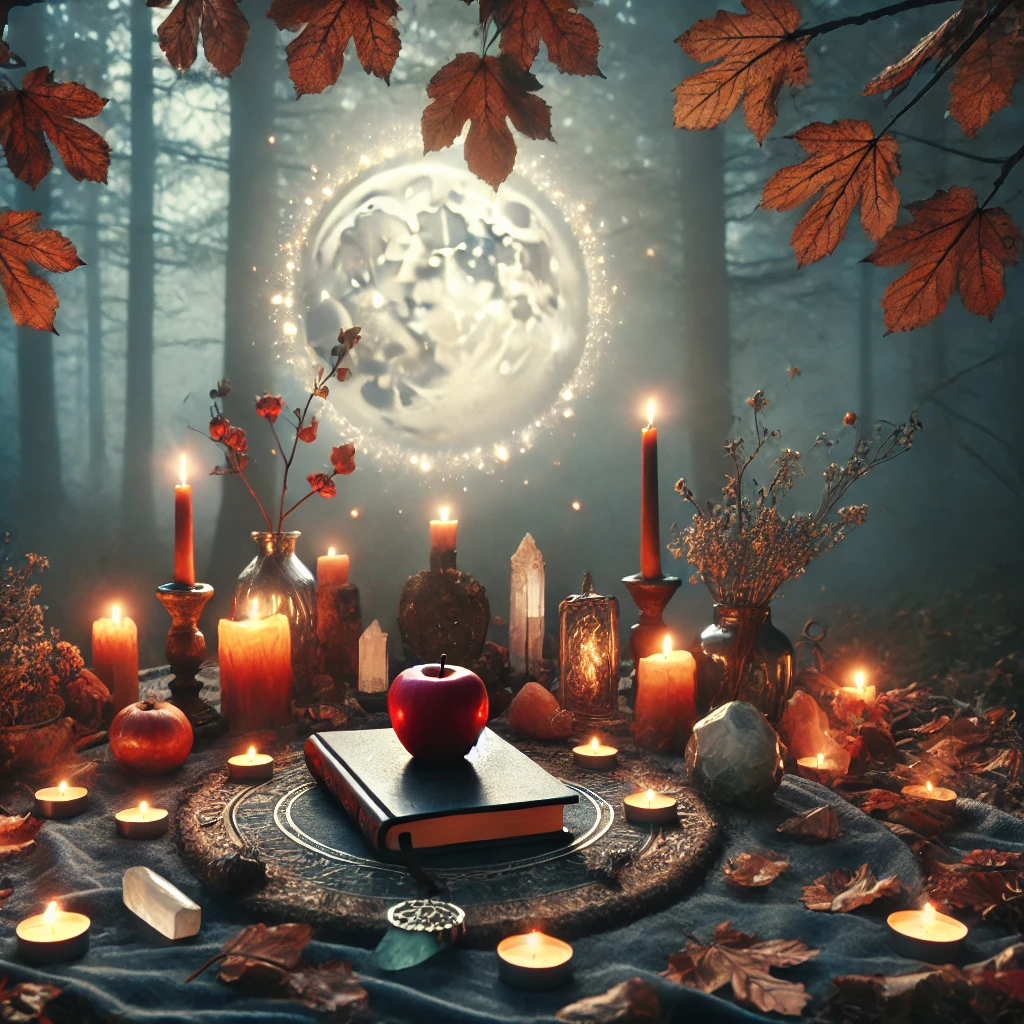
The act of setting aside intentional time for solitude on November 1st is a powerful practice. It is an opportunity to create a sanctuary—whether that be a corner of your home, a garden space, or a secluded spot in the woods—where you can quietly reflect and connect with your inner world. Begin by lighting a candle, burning incense, or surrounding yourself with items that bring you comfort and ground you in your spiritual practice. These may be seasonal items, such as autumn leaves, crystals, or images of ancestors, that help evoke the energies of the season and the intention of renewal.

A simple practice of sitting in stillness, with closed eyes or a soft gaze, can invite a deeper awareness of the energies around and within you. In this stillness, it becomes easier to listen to the whispers of the inner self, to hear what needs to be released, and to gain clarity on what seeds to plant for the year ahead.

Solitary Rituals of Reflection

The reflective energy of November 1st is enhanced by rituals that encourage self-awareness and inner transformation. Practitioners may choose to engage in meditation, journaling, or guided visualization exercises to explore their spiritual journey over the past year. Meditation can be a time to quiet the mind, observe the flow of thoughts and emotions, and connect to the deeper themes of life and death that are present during this time. As you sit in meditation, you might focus on the idea of letting go of what no longer serves you, allowing these thoughts and energies to dissolve like leaves drifting away on the wind.

Journaling is a beautiful way to express and record your reflections. Writing down your experiences, lessons learned, challenges faced, and achievements celebrated over the past year can provide insight into your growth and highlight areas for continued development. Setting aside time to journal on November 1st can be a ritual of its own, allowing you to release what needs to be released, celebrate your progress, and begin envisioning what you wish to cultivate in the coming year.

Another practice is guided visualization or self-led meditation that aligns with the themes of Samhain and the Witch’s New Year. You may imagine yourself walking through a dark forest, finding a clearing where the veil between worlds is thin, and having an opportunity to connect with your spirit guides, ancestors, or higher self. Such visualizations can bring a sense of peace and guidance, offering messages that inspire your spiritual path and help you navigate the season ahead.

Connection with Nature as a Spiritual Ally

Nature provides one of the most profound backdrops for quiet reflection and solitude, and spending time outdoors on November 1st can amplify the energies of the Witch’s New Year. The bare branches of trees, the scent of damp earth, and the cooling air all carry the whisper of transformation and remind us of the cycles of life that unfold without human intervention. Walking in nature—whether through a forest, along a beach, or simply in a quiet park—creates a space to breathe deeply and align with the world around you.

During a nature walk, you might collect items that symbolize the season, such as fallen leaves, acorns, or stones, as tokens to bring back to your altar or sacred space. These natural elements can serve as tangible reminders of your connection to the earth and the quiet wisdom of the seasons. Pay attention to the sounds of the wind, the calls of birds, or the rustling of leaves beneath your feet. Each sound and sensation can ground you more fully into the present moment and attune you to the rhythms of nature, offering a sense of belonging and alignment with the world.

Solitude as a Path to Inner Wisdom

Solitude is not simply about being alone; it is about creating a space to encounter your deepest self without distractions. This encounter can be both challenging and transformative, as it requires an honest look at what lies within—the joys, the sorrows, the hopes, and the fears. November 1st provides the perfect moment to engage with this deeper aspect of self, to listen to the voice of intuition, and to discover the truths that guide your path.

Some practitioners may choose to perform “shadow work” during this time—a practice that involves exploring the hidden or suppressed aspects of the self. Shadow work allows for the integration of all parts of oneself, bringing wholeness and healing. It may involve examining fears, resentments, or unresolved emotions that have lingered throughout the year. As you acknowledge and embrace these shadows, they transform from sources of pain into sources of wisdom and strength, lighting the way forward into the new year.

Solitary rituals of self-reflection also provide an opportunity for inner renewal. By consciously releasing old habits, thought patterns, or emotions that have held you back, you make room for new growth. You may wish to perform a simple ritual of releasing, where you write down what you wish to let go of on a piece of paper and then safely burn it in a candle flame, allowing the ashes to carry away the old energies.

Crafting Personal Intentions for the New Year

The quiet energy of November 1st makes it an ideal time to set intentions for the new cycle of the year. After reflecting on what you wish to release, focus on what you wish to manifest in the months ahead. Write down your intentions, dreams, and goals, and place them on your altar or in a special place where you can revisit them throughout the year. As you do so, visualize these intentions taking root, much like seeds planted in the dark soil, ready to germinate and grow as the light returns.

These intentions can encompass any area of life—spiritual growth, relationships, career, health, or creativity. The act of setting these intentions within the sacred space of the Witch’s New Year adds a layer of magic and empowerment to them, as you align your personal goals with the natural cycles of transformation and renewal.

Finding Stillness and Sacredness in Solitude

Solitude on November 1st is about finding the sacredness in stillness, in allowing yourself to be fully present with your thoughts, feelings, and connection to the earth. The act of sitting in silence, communing with nature, or simply being with your own breath can open up a space for profound inner transformation. It is a time to cherish the quiet moments, to find peace in the present, and to embrace the journey that lies ahead.

The Witch’s New Year invites you to honor the cycle of endings and beginnings, to let go of what has been and to step courageously into what will be. By taking this time for quiet reflection and solitude, you create a foundation of mindfulness and intention that will carry you through the darker months and beyond. As you embrace the silence, the darkness, and the solitude of this day, you allow yourself to become a vessel for transformation, ready to receive the blessings and growth that await in the new cycle.

Conclusion: Embracing the Magic of the Witch’s New Year

The day after Samhain, November 1st, is a sacred time to honor the journey you’ve walked, celebrate the lessons learned, and set intentions for the path ahead. As the Witch’s New Year, it marks a powerful transition into the season of darkness, inviting you to dive deep within and align with the rhythms of the earth and the spirit world. Whether through rituals, reflection, honoring ancestors, or simply lighting a candle to welcome the new year, this day offers an opportunity to embrace the magic of new beginnings, inviting transformation, renewal, and gratitude into your life. May the energy of the Witch’s New Year guide you with wisdom and light as you step into a new chapter of growth and spiritual discovery. Blessed be!
Posted on Leave a comment

Myths & Lore: The Wild Hunt

The Wild Hunt
The Wild Hunt

Introduction

A Procession of Spirits

As the darkness of Samhain envelops the land and the veil between the living and the dead thins, one of the most haunting myths associated with this time emerges—the tale of the Wild Hunt. This spectral procession of spirits, ghosts, and faeries sweeps through the sky during the darkest nights of the year, riding on the winds of the Otherworld. The Wild Hunt, a powerful and ominous force in European folklore, holds a particularly significant place in Celtic mythology, where it is deeply tied to the liminal energies of Samhain, when the boundaries between the mortal and spirit realms are at their most fragile.

A Terrifying Procession of Spirits

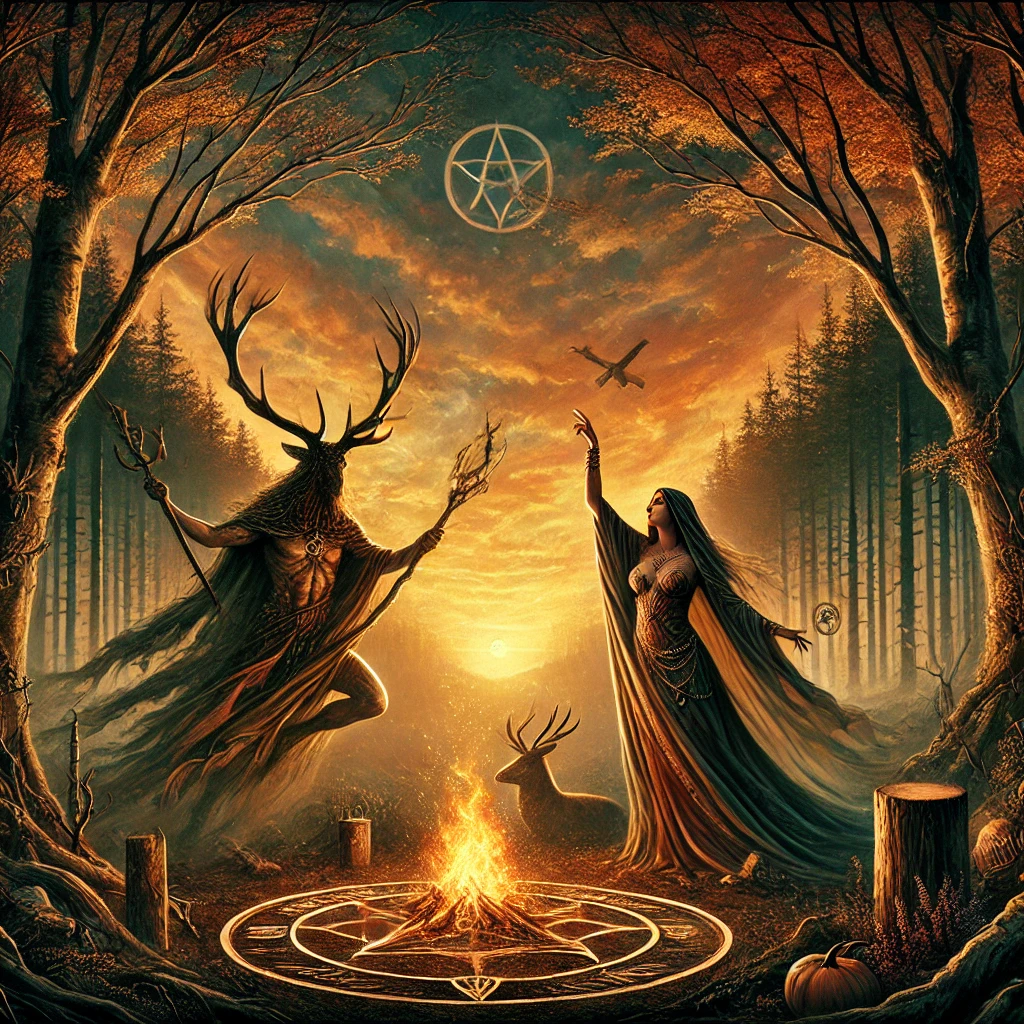
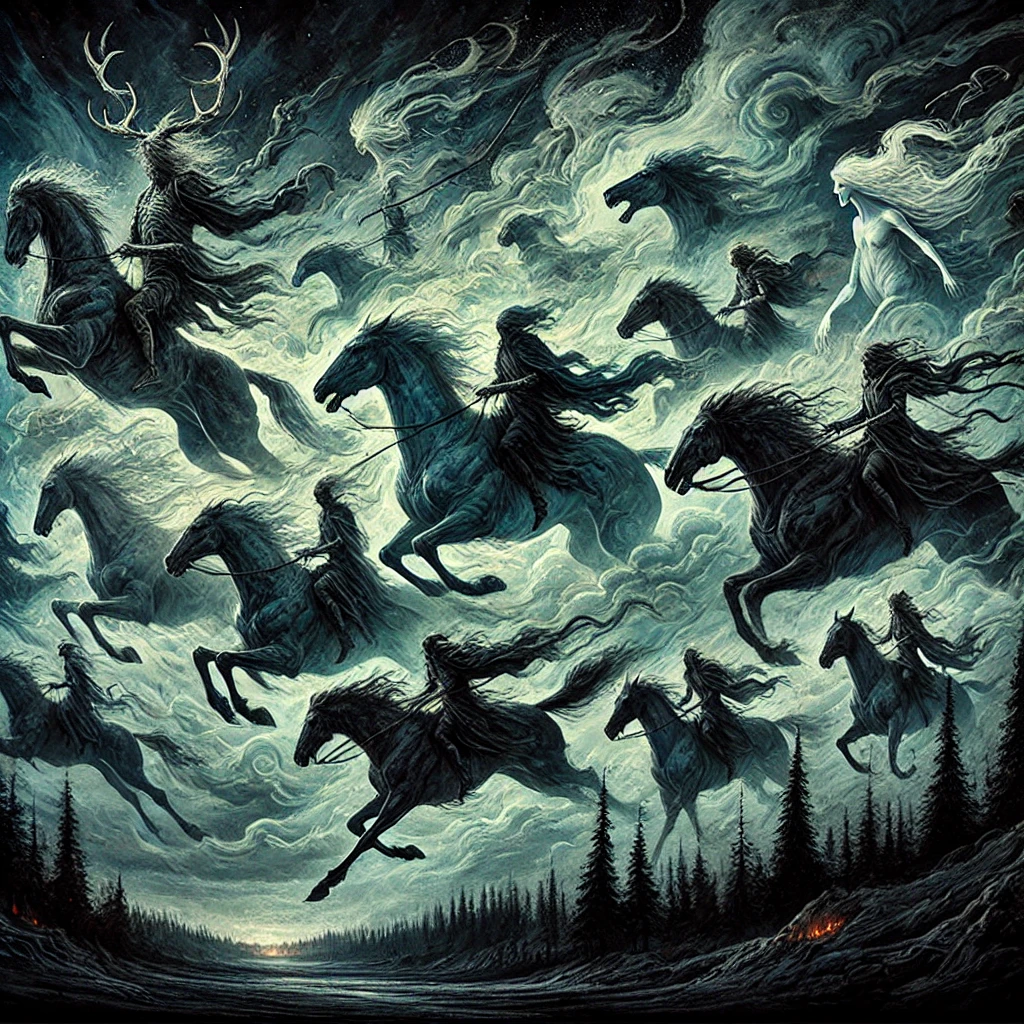
The Wild Hunt is often depicted as a terrifying and supernatural cavalcade, a spectral host of otherworldly riders who sweep through the night sky, led by a powerful deity or spirit. In Celtic mythology, the leaders of the Hunt are sometimes said to be Cernunnos, the Horned God of the Celts, or the King of the Fairies—figures of immense power and command over both the natural and supernatural worlds. These formidable leaders guide the Hunt’s procession of faeries, restless souls, and dark supernatural beings, unleashing their chaotic energies as they traverse the mortal realm during Samhain. This fearsome host moves with wild, untamable power, reflecting the intense and chaotic energy of the season when the veil between the living and the dead is at its thinnest.

In many versions of the myth, the Wild Hunt is composed of the souls of the dead, joining faeries and other dark entities as they ride across the night sky. The spirits, freed from the Otherworld during Samhain, are not benign but driven by wild, uncontrollable forces. Some versions of the tale depict the Hunt as a chaotic storm of spiritual energy, with the sound of galloping hooves and the howling winds carrying the cries of souls and the eerie laughter of faeries. These beings, untethered from the laws of the physical world, traverse the sky with a single, unstoppable purpose: to sweep up anything or anyone unfortunate enough to cross their path.

Witnessing the Wild Hunt is not a passive or trivial experience. It is said that to catch even a fleeting glimpse of this spectral procession can bring severe misfortune, death, or even a curse upon those who dare to gaze upon it. The sight of the Wild Hunt is a harbinger of doom, a dire omen that foretells disaster or death within the community. It is said that those who are caught in the Hunt’s path are at the mercy of these otherworldly riders and may be swept away into the Otherworld, lost forever in the realm of the dead, never to return to the world of the living.

The power and terror of the Wild Hunt instilled a deep fear in communities during Samhain, a time when spirits and other supernatural entities were believed to roam freely across the land. The myth warns that encountering the Wild Hunt can curse entire households or individuals, forever marking them as touched by death. For this reason, people took serious precautions on Samhain night to protect themselves and their loved ones from the malevolent forces that might come with the Hunt. As darkness fell, families would stay indoors, avoid traveling through desolate areas, and light fires in their hearths to keep the spirits at bay. These fires were not only symbols of warmth and light but also potent wards against the otherworldly energies unleashed during Samhain. Offerings of food and drink were often left outside to appease the spirits, ensuring that they would not bring harm to the household.

Prayers were also said to invoke protection from the Wild Hunt and other malevolent forces. These prayers served as invocations to ancestors, gods, or protective spirits, calling upon them to shield the living from the supernatural dangers of the night. In some traditions, people would disguise themselves in costumes or masks, blending in with the spirits and faeries in an attempt to confuse the Wild Hunt and avoid drawing attention to themselves. This act of disguising oneself was more than just a form of defense—it was a symbolic recognition that on Samhain night, the line between the human and the supernatural blurred, and survival depended on finding ways to coexist with these powerful forces.

The myth of the Wild Hunt encapsulates the fear and reverence that ancient cultures held for the unseen forces that govern life and death. The terrifying procession of spirits represents the uncontrollable forces of nature, death, and chaos—forces that, during Samhain, are believed to spill over into the mortal realm. To witness the Wild Hunt is to be confronted with the raw, untamed power of the Otherworld, a reminder that life is fragile and that the unknown is always close, waiting just beyond the edge of the darkness.

The Liminal Power of Samhain

The appearance of the Wild Hunt during Samhain is far from a mere coincidence; it is deeply intertwined with the festival’s profound liminal energies and its significance as a time of death, transformation, and the crossing of boundaries. Samhain, often seen as the Celtic New Year, marks the end of the harvest and the beginning of winter—a time when the natural world shifts from light to darkness, mirroring the cyclical nature of life and death. This seasonal transition is more than just the physical change from autumn to winter; it also symbolizes a metaphysical opening between the worlds of the living and the dead, creating the perfect environment for the spectral Wild Hunt to roam.

At Samhain, the veil between the realms of the living and the dead is said to be at its thinnest, allowing spirits, faeries, and other supernatural beings to cross into the mortal world. This thinning of the veil makes Samhain a potent time for communication with ancestors and the Otherworld, but it also brings with it the risk of encountering darker, more malevolent forces. The Wild Hunt, with its fearsome procession of spirits and souls, embodies this convergence of realms. It serves as a powerful reminder that the boundaries separating life and death are fragile during Samhain, and that the Otherworld is never far away.

The liminal power of Samhain is most clearly expressed through the Wild Hunt’s chaotic and uncontrollable nature. As the Hunt rides through the skies, it carries with it both the terror and beauty of the unknown. The spirits that make up the Hunt reflect the duality of Samhain itself—where death is both feared and honored, and where the passage between worlds is a natural part of the cycle of existence. These spirits, unleashed from the Otherworld, remind the living that death is not a distant concept but an inevitable reality that must be confronted. Much like the changing of the seasons, death is an integral part of life’s cycles, and the Wild Hunt is a vivid representation of this inescapable truth.

In many ways, the Hunt represents the fear of death and the uncertainties that accompany it. Its appearance during Samhain is a stark reminder of mortality, of the finite nature of life, and of the inevitability of change. Yet, the Hunt is not merely a harbinger of doom; it also symbolizes the natural order of things. Just as the seasons change from the warmth of summer to the cold of winter, so too does life move from birth to death and, ultimately, to rebirth. The Wild Hunt embodies this cyclical movement, sweeping up the souls of the dead and signaling the transition from one phase of existence to another.

At its core, Samhain is a time to honor the dead and acknowledge the forces of mortality, but it is also a time of renewal. The Wild Hunt, with all its terrifying grandeur, mirrors this duality. As the spirits ride through the night sky, they carry with them the souls of the dead, reminding the living that death is not an end but a passage into the next stage of existence. Samhain, like the Hunt, marks the close of one cycle and the beginning of another. It is a time of reflection, a moment to confront the darkness within and around us, and an opportunity to embrace the transformative power of the shadowy half of the year.

In this way, the Wild Hunt serves as a potent metaphor for the journey that Samhain represents. It forces the living to confront their fears of death and the unknown, while also reminding them of the importance of transformation and letting go. Much like the winter that follows Samhain, the Hunt brings a sense of closure, but within that closure lies the promise of renewal. As the old year dies and the new year is born, so too do the spirits of the Wild Hunt move through the realms, guiding souls to the Otherworld while heralding the start of a new cycle.

For practitioners of modern Paganism and those who honor Samhain as a spiritual time, the Wild Hunt’s liminal presence during the festival underscores the idea that death and life are part of the same continuum. Just as the Hunt crosses between the worlds of the living and the dead, Samhain provides a sacred space where individuals can reflect on their own cycles of growth and transformation. The Hunt is not simply a terrifying spectacle to be avoided but a reminder of the forces that shape all existence—the cycles of death, rebirth, and the eternal passage between worlds.

In essence, the Wild Hunt’s appearance at Samhain is a powerful symbol of the liminal space between life and death, a space that becomes accessible during this sacred time of year. It reminds us that the Otherworld is always close, waiting just beyond the edges of the visible world, and that we must honor both the light and the dark forces that shape our existence. The Hunt is a reminder that death, like the changing of the seasons, is a necessary part of life, and that through death, new beginnings are always possible. As the Wild Hunt sweeps through the skies, it invites us to embrace the mysteries of Samhain and to honor the cyclical nature of life, death, and transformation.

Protective Rituals and Superstitions

Throughout Celtic history, the Wild Hunt was a fearsome presence, and its potential appearance on Samhain night was taken seriously. People believed that the spectral procession of spirits could bring misfortune, illness, or even death to individuals or entire communities. With its reputation for sweeping up those who crossed its path, spiriting them away to the Otherworld, the Wild Hunt was a force to be respected and avoided. In response, Celtic communities developed a variety of protective rituals and superstitions designed to safeguard themselves and their loved ones from being caught in the Hunt’s terrifying wake. These rituals, performed in the days leading up to and during Samhain, served not only to protect against the Hunt but also to honor the powerful unseen forces that roamed the earth during this liminal time.

One of the most widespread protective rituals was the lighting of fires in homes and hearths. These flames were seen as more than just sources of warmth during the increasingly cold nights; they symbolized light, protection, and life. Fires were believed to ward off spirits and malevolent entities that could otherwise enter homes during Samhain, when the veil between the worlds of the living and the dead was thin. Hearth fires were kept burning throughout the night, and bonfires were sometimes lit in communal spaces to protect entire villages. The light from these fires was thought to create a barrier against the dark, wild forces that roamed the land, including the Wild Hunt itself. In many traditions, the act of lighting these fires was also an invitation for ancestors’ spirits to visit, ensuring that only benevolent forces could cross the threshold into the world of the living.

In addition to the protective power of fire, offerings of food and drink were left outside the home as an act of respect and appeasement for the wandering spirits. These offerings, often placed on doorsteps or windowsills, typically included bread, fruit, and wine or ale. The belief was that by providing sustenance to the spirits, particularly the souls of the dead and faeries, one could ensure their favor and prevent them from entering the house to cause harm. These offerings were simple yet profound, reflecting an acknowledgment of the Otherworld’s presence and a desire to coexist peacefully with the spirits that crossed into the mortal realm during Samhain. This practice was also a way to honor deceased ancestors, inviting them to share in the bounty of the harvest before the long winter set in.

The importance of showing respect to these unseen forces was central to the protective rituals of Samhain. It was understood that spirits, both benevolent and malevolent, could be unpredictable, and by offering them hospitality, communities could protect themselves from their wrath. In some versions of the tradition, food offerings were specifically meant to placate the Wild Hunt itself, ensuring that the riders would pass by without sweeping anyone away. The fear of being caught by the Hunt was pervasive, and these rituals reflected the deep respect people had for the powerful forces at work during Samhain.

Another important protective practice was the wearing of disguises or costumes. This tradition, which has since evolved into the modern Halloween costume, had its roots in the belief that spirits, faeries, and other supernatural beings roamed freely during Samhain, and the living needed to take precautions to avoid being recognized. People would don masks, animal skins, or other costumes to confuse the spirits, effectively blending in with the otherworldly forces. By hiding their true identities, they hoped to protect themselves from being targeted by malevolent entities or swept up by the Wild Hunt. This practice was both a practical form of protection and a symbolic acknowledgment that during Samhain, the lines between the human and spirit worlds were blurred, and the living had to coexist with the dead.

Costuming was also a way of participating in the liminal energy of Samhain, embracing the idea that the living and the dead coexisted during this time. It allowed people to walk among the spirits, becoming part of the supernatural realm for a brief period. This act of transformation, mirroring the shapeshifting nature of spirits and faeries, reflected the deeper themes of death and rebirth that were central to Samhain. In some regions, people would go door-to-door in disguise, collecting food or offerings for the dead, a practice that has clear parallels to modern trick-or-treating.

These protective rituals, rooted in both respect and fear, were more than just superstition—they were integral to the way people navigated the liminal space that Samhain represented. The rituals acknowledged the power and presence of the Otherworld while attempting to maintain a sense of control over the unpredictable forces unleashed during this time. Fires, offerings, and disguises all served as ways to protect the living from the dangers of the Wild Hunt and the spirits that walked the earth during Samhain. They were acts of humility and reverence, recognizing that while the Wild Hunt and other supernatural forces were beyond human control, there were ways to coexist with these forces without falling victim to their wrath.

In the days leading up to Samhain, communities would often engage in communal rituals to ensure collective protection. Bonfires would be lit in central locations, and offerings might be made on behalf of entire villages to appease the spirits and protect everyone from the dangers of the Wild Hunt. These communal acts strengthened the bonds between people and reminded them that, in the face of the unknown, unity and respect for the forces of nature were vital.

Ultimately, the protective rituals and superstitions surrounding the Wild Hunt reflect a deep understanding of the balance between life and death, and the respect for the unseen forces that govern both realms. Samhain was not just a time to fear the dead or the Wild Hunt—it was a time to honor the cyclical nature of existence, to recognize the power of the Otherworld, and to ensure that the living and the dead could coexist in harmony, even if only for one night. Through these rituals, the ancient Celts found a way to protect themselves from the dangers of the Wild Hunt while simultaneously embracing the transformative power of Samhain, when death and life were most closely intertwined.

The Cyclical Nature of the Wild Hunt

Though terrifying in its form, the myth of the Wild Hunt is more than just a tale of danger and spectral riders; it also reflects the deep, cyclical nature of life and death—one of the core themes of Samhain itself. At its heart, the Wild Hunt embodies the natural transitions between birth, death, and rebirth, just as the seasons move from the warmth and light of summer into the darkness and dormancy of winter. This procession of spirits, with its raw and untamed energy, signifies the inevitable shift from life to death, but it also holds within it the promise of renewal and transformation. Much like winter heralds the beginning of a quiet, regenerative period for the earth, the Hunt reminds us that death is not an end, but a phase in the larger cycle of existence.

As the Wild Hunt rides through the night during Samhain, sweeping through the skies and crossing the threshold between worlds, it mirrors the transition from one phase of existence to the next. The spirits and faeries that make up the Hunt are not merely harbingers of death; they are messengers of change, emphasizing that the passage from life into death is a necessary part of the greater cosmic order. Death, in this context, is not something to be feared, but something to be embraced as part of the ongoing rhythm of life—just as the earth must experience the cold barrenness of winter before the rebirth of spring can begin.

This concept is closely aligned with the overall themes of Samhain, which marks the Celtic New Year and symbolizes a period of transformation. At Samhain, the old year dies, the harvest is completed, and nature prepares for the stillness of winter. The Wild Hunt, appearing during this liminal time, embodies this same shift, riding out as the last echo of the old cycle and the first whisper of what is to come. The spirits that accompany the Hunt, whether they are faeries, the restless dead, or otherworldly beings, remind us that death clears the way for renewal and that every ending paves the way for a new beginning. In this way, the Wild Hunt serves as a powerful symbol of both the inescapable nature of death and the promise of rebirth that follows.

In modern Pagan practices, the Wild Hunt is sometimes invoked as a ritual metaphor for this cyclical process of death and rebirth. It serves as a potent symbol for confronting personal fears, releasing what no longer serves, and embracing the unknown as we enter the dark half of the year. Just as the spirits of the Hunt sweep through the skies, practitioners can use this image to help them “sweep away” old habits, negative patterns, or outdated ways of thinking, clearing the path for new growth. The Hunt becomes a symbol of inner transformation, where practitioners face their own inner demons or shadows, allowing these aspects of themselves to be carried away by the wild energy of the Hunt.

In this sense, the Wild Hunt is not only an external force to be feared but also an internal force of reckoning and change. The wild, untamable nature of the Hunt can represent the chaotic yet necessary process of confronting the darker aspects of the self—fears, traumas, and unresolved conflicts that may be holding back personal or spiritual growth. By invoking the Wild Hunt in ritual, practitioners acknowledge that just as death is a natural part of life, so too is the process of shedding the old to make way for the new. In doing so, they tap into the transformative energy of the Hunt, using it as a catalyst for deep personal change.

Some modern Pagans even perform rituals during Samhain in which they visualize the Wild Hunt as a force that sweeps through their lives, taking with it all that needs to be released. These rituals often involve symbolic acts, such as writing down fears, unhealthy behaviors, or emotional burdens on slips of paper and then burning or burying them as an offering to the Wild Hunt. The act of releasing these burdens mirrors the Hunt’s role in cleansing the old cycle, allowing practitioners to move forward unencumbered by the past.

The cyclical nature of the Wild Hunt also speaks to the larger spiritual lesson that death is a necessary part of the journey toward rebirth and renewal. In a world that often shuns or fears death, the Wild Hunt serves as a reminder that endings are as important as beginnings, and that death—whether physical, emotional, or metaphorical—is a crucial part of the natural order. By confronting death and decay through the imagery of the Wild Hunt, practitioners can come to terms with the fact that in order to grow, certain parts of themselves or their lives must “die” and be swept away.

In this way, the Wild Hunt is not just a myth of terror, but a symbol of the transformative power that comes with accepting the cycles of life. The spirits that ride with the Hunt are not merely forces of destruction, but also forces of renewal, clearing the old and preparing the way for what is to come. By invoking the Wild Hunt, whether in rituals of release or as a metaphor for personal change, modern Pagans align themselves with this powerful cycle, embracing the darkness of winter and the unknown it brings, while trusting that this darkness will eventually give birth to light.

Thus, the Wild Hunt stands as a vivid reminder of the cyclical nature of existence. Just as the seasons turn and the natural world shifts from summer’s abundance to winter’s stillness, so too do our lives follow a similar pattern of growth, death, and rebirth. The Wild Hunt, with all its fearsome power, encapsulates this cycle, urging us to let go of what has passed and trust in the transformative power of the unknown. By embracing the Hunt’s message, we are reminded that within every death lies the seed of new beginnings, and within the darkness, there is always the promise of light.

The Wild Hunt in Modern Pagan Rituals

In modern Pagan rituals, the myth of the Wild Hunt has evolved beyond its traditional associations with terror and chaos, taking on new layers of meaning that emphasize personal transformation, release, and spiritual renewal. For many practitioners, the Wild Hunt is not just a spectral procession to fear but a powerful metaphor for the cycles of death and rebirth, as well as the internal journeys we all must undertake. During Samhain, when the veil between the worlds of the living and the dead is at its thinnest, the energy of the Wild Hunt is invoked as a way to confront the past, release what no longer serves, and embrace the unknown future.

One of the key aspects of modern Pagan rituals that invoke the Wild Hunt is the focus on personal transformation. Just as the spirits and faeries in the myth are swept through the night sky, practitioners see the Hunt as a force that can sweep away the emotional, psychological, and spiritual debris that accumulates over time. During Samhain, which marks the transition from the light half of the year to the dark half, individuals are encouraged to let go of old habits, fears, and emotional burdens—those things that prevent growth and renewal. The Wild Hunt, with its raw, untamable power, becomes a symbol of this release, helping practitioners clear the way for new beginnings as winter approaches.

Rituals centered on the Wild Hunt during Samhain often involve meditations, visualizations, or ceremonial offerings to align oneself with the forces of death and rebirth. In meditation, practitioners may visualize the Hunt as a powerful, swirling energy that passes through them, taking with it the remnants of the past—the regrets, anxieties, or old patterns that are no longer needed. This visualization allows individuals to experience a symbolic death of these old aspects of themselves, clearing space for new opportunities and growth. For some, this ritual can be a deeply cathartic experience, a way to confront and release the fears that have held them back.

Ceremonial offerings are also a common component of rituals invoking the Wild Hunt. These offerings are typically left outside, often on doorsteps, windowsills, or near trees, to acknowledge the presence of the spirits of the Hunt and seek their favor. These offerings might include food, drink, or small tokens that represent what the practitioner is willing to let go of. The idea is that by making an offering to the spirits, individuals show respect for the forces of the Wild Hunt and ask for their protection and safe passage through the darker months of the year. In some traditions, the offerings serve as both an act of appeasement and an invitation for the spirits to carry away the old, stagnant energy that no longer serves the practitioner’s highest good.

For others, invoking the Wild Hunt during Samhain is a way to honor their ancestors. Since the Wild Hunt is often seen as a procession of souls and spirits, calling upon its energy allows practitioners to connect with the spirits of their deceased loved ones. By aligning themselves with the Hunt, they seek to honor those who have passed while also accepting the natural cycle of life and death. In this way, the Wild Hunt becomes a symbol of the ancestral lineage, reminding practitioners that they, too, are part of an unbroken cycle that will one day lead them to join the spirits of the dead in the Otherworld.

Additionally, many modern Pagans use the Wild Hunt as a metaphor for the internal battles we all face—the struggle to confront our shadow selves, face our fears, and let go of the patterns that keep us trapped in cycles of suffering. The Wild Hunt, with its ferocity and relentless pursuit, serves as a reminder that these internal struggles cannot be avoided forever. The Hunt represents the forces of change and transformation, which must eventually sweep through our lives, forcing us to confront the aspects of ourselves we often hide from. By embracing the Wild Hunt in ritual, practitioners willingly engage with these internal forces, asking for the strength and clarity to navigate their own personal darkness.

Rituals that focus on confronting the shadow self often involve symbolic acts of release. Practitioners may write down their fears, regrets, or emotional burdens on slips of paper, which are then burned, buried, or left as offerings for the Wild Hunt. This act of releasing what no longer serves is a powerful way of working with the energy of the Hunt, acknowledging that just as the Wild Hunt clears the path between the worlds, we too must clear the path for new growth in our lives. This symbolic shedding of the old is in keeping with the themes of Samhain, which emphasize both the end of one cycle and the beginning of another.

By aligning with the energy of the Wild Hunt, practitioners tap into the transformative power of Samhain itself. The Hunt becomes a tool for personal evolution, allowing individuals to release the past and embrace the promise of renewal that comes with winter’s descent. Just as the Wild Hunt signals the thinning of the veil between life and death, these rituals encourage practitioners to confront the mysteries of their own lives, making space for healing and new possibilities to emerge.

In some cases, practitioners might also ask for the protection of the Wild Hunt as they move through their own transformations. While the Hunt is often associated with destruction and chaos, its power can be harnessed as a protective force, clearing away obstacles and ensuring that the practitioner is able to navigate the darker half of the year with strength and resilience. By invoking the Wild Hunt in this way, individuals not only seek to confront their fears but also ask for the courage to face whatever challenges lie ahead.

Ultimately, the Wild Hunt in modern Pagan rituals serves as a multifaceted symbol of death, transformation, and renewal. Whether used as a metaphor for personal struggles or as a way to honor ancestors and connect with the Otherworld, the Hunt’s presence during Samhain reinforces the idea that life is a continuous cycle of endings and beginnings. By engaging with the energy of the Wild Hunt, practitioners are reminded that through the darkness of winter and the death of the old year, there is always the promise of rebirth and the hope of new life on the horizon.

The Wild Hunt: A Symbol of Samhain’s Power

The myth of the Wild Hunt is an enduring and vital part of Samhain’s lore, embodying the complex energies of death, transformation, and the thinning of the veil between the living and the dead. During Samhain, this spectral procession of spirits, faeries, and otherworldly beings takes on an especially potent role, symbolizing the forces that govern life’s natural cycles. While the Wild Hunt may inspire fear due to its association with death, chaos, and the unknown, it also serves as a profound reminder that these forces are an essential part of the cycle of existence. Through the lens of the Wild Hunt, Samhain is revealed to be more than just a festival of death; it is a time to honor the unseen forces that shape our lives, to release what no longer serves us, and to prepare for the inevitable rebirth that follows death.

Samhain is traditionally the time of year when the boundaries between the worlds of the living and the dead grow thin, allowing spirits and energies from the Otherworld to cross into the mortal realm. The Wild Hunt rides during this liminal time, sweeping through the skies as a force of transition. As a myth, it embodies the idea that the veil between realms is not just a metaphor, but a lived reality during Samhain—a time when death and life intermingle, and the mysteries of the afterlife brush against the mortal world. The Hunt, with its cacophony of spirits, faeries, and spectral riders, symbolizes the chaotic energy of transformation, which can be both terrifying and necessary.

While the Wild Hunt may evoke fear with its wild, untamable power, it also represents the inevitable end of one cycle and the beginning of another. Death, in this context, is not something to be feared or avoided but embraced as a necessary part of life’s rhythm. The Hunt’s journey through the sky reflects the natural process of shedding the old and making way for the new, much like the changing seasons. Just as winter follows autumn, death follows life, but both carry within them the seeds of renewal. The Wild Hunt, with its focus on death, reminds us that every ending is followed by a rebirth—whether in the physical world, the spiritual realm, or within our own lives.

The transformative power of the Wild Hunt is central to its role in Samhain’s mythology. As it rides through the night, sweeping up spirits and souls, it carries with it the energy of transition—a time when the old is cleared away, and space is made for something new. This sweeping away is not just a literal representation of death, but a metaphor for the internal changes we must undergo during Samhain. Just as the spirits of the dead are carried away by the Hunt, we too must let go of old patterns, fears, and emotional burdens that no longer serve us. In this way, the Wild Hunt becomes a powerful symbol of personal transformation, urging us to confront the darker aspects of our lives and embrace the changes needed for growth.

Samhain, as the Celtic New Year, marks the end of the harvest season and the beginning of winter—the dark half of the year. It is a time for reflection, introspection, and the acceptance of the cyclical nature of life. The Wild Hunt, as a mythological force, aligns perfectly with this theme, representing the death of the old year and the preparation for the rebirth of the new. Its presence during Samhain reminds us that the darkness of winter is not a time of stagnation, but a period of gestation and potential. Just as the Wild Hunt clears the way for the spirits of the dead to move into the Otherworld, it also makes room for new life and new beginnings in the spring.

For many modern practitioners of Paganism, the Wild Hunt is more than a mythological curiosity—it is a living symbol of Samhain’s transformative power. Rituals invoking the energy of the Wild Hunt often focus on personal release, transformation, and renewal. Whether through meditation, ceremonial offerings, or symbolic acts of letting go, practitioners align themselves with the energy of the Hunt, asking it to carry away the emotional, spiritual, or psychological baggage that holds them back. In this way, the Wild Hunt serves as a force for deep personal change, clearing the path for new growth and understanding.

Some modern rituals involve visualizing the Wild Hunt as a great sweeping force that moves through one’s life, clearing away the past and making way for the future. Others see the Hunt as a symbolic way of confronting fears, anxieties, or shadow aspects of the self. Just as the Wild Hunt moves through the sky, its chaotic energy can be channeled into breaking through internal blockages, allowing individuals to confront what they fear most and emerge stronger on the other side. By tapping into the energy of the Wild Hunt, practitioners embrace the natural cycles of death and rebirth, recognizing that darkness is not something to be feared, but a necessary stage in the process of growth and renewal.

Despite its fearsome reputation, the Wild Hunt also represents protection. In some traditions, it is believed that the spirits of the Hunt, while chaotic, can be called upon for guidance and protection during the darker months. Just as the Hunt clears away the old, it can also act as a guardian, protecting practitioners as they move through their own transformations. Invoking the Wild Hunt for protection involves recognizing its dual nature—both destructive and regenerative—and aligning oneself with its energy to navigate the challenges of the dark season with strength and resilience.

Ultimately, the Wild Hunt is a symbol of Samhain’s immense power, embodying the festival’s themes of death, transformation, and the thinning of the veil between worlds. Whether viewed as a terrifying omen or a powerful symbol of change, the Hunt serves as a reminder that we are never far from the mysteries of the Otherworld, even in the darkest nights of the year. As the Wild Hunt rides through the sky, it brings with it the promise of endings and new beginnings, urging us to embrace the natural cycles of life and death and to trust that even in the darkness, there is always the potential for light.

In this way, the Wild Hunt stands as a key part of Samhain’s mythology, symbolizing the dual forces of destruction and creation. Its presence during Samhain serves as a powerful reminder that death and darkness are not the end but are part of the eternal cycle of life. By acknowledging and honoring the Wild Hunt, we open ourselves to the transformative power of Samhain, releasing the past, embracing the present, and preparing for the inevitable rebirth that follows.

Conclusion: The Wild Hunt and Samhain’s Transformative Power

The Wild Hunt, with its chaotic energy and spectral riders, is far more than a myth of fear; it is a powerful symbol of Samhain’s transformative essence. As the dark procession sweeps through the sky, it reminds us of the delicate balance between life and death, light and darkness, and the inevitability of change. The Wild Hunt embodies the mysteries of the Otherworld, urging us to confront our deepest fears, let go of the past, and embrace the cycles of death and rebirth that define existence. Whether viewed as a terrifying force or a symbol of inner transformation, the Wild Hunt serves as a key part of Samhain’s mythology, guiding us through the darkness of the season and toward the promise of renewal. In honoring the Wild Hunt, we acknowledge the unseen forces that shape our lives and prepare ourselves for the new beginnings that follow the darkest nights of the year.

Posted on Leave a comment

Ritual: Pumpkin Carving for Wild Animals

Pumpkin Carving for Wild Animals

Introduction

A Samhain Honoring Ritual of Offering and Gratitude

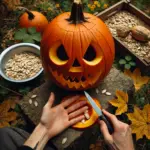
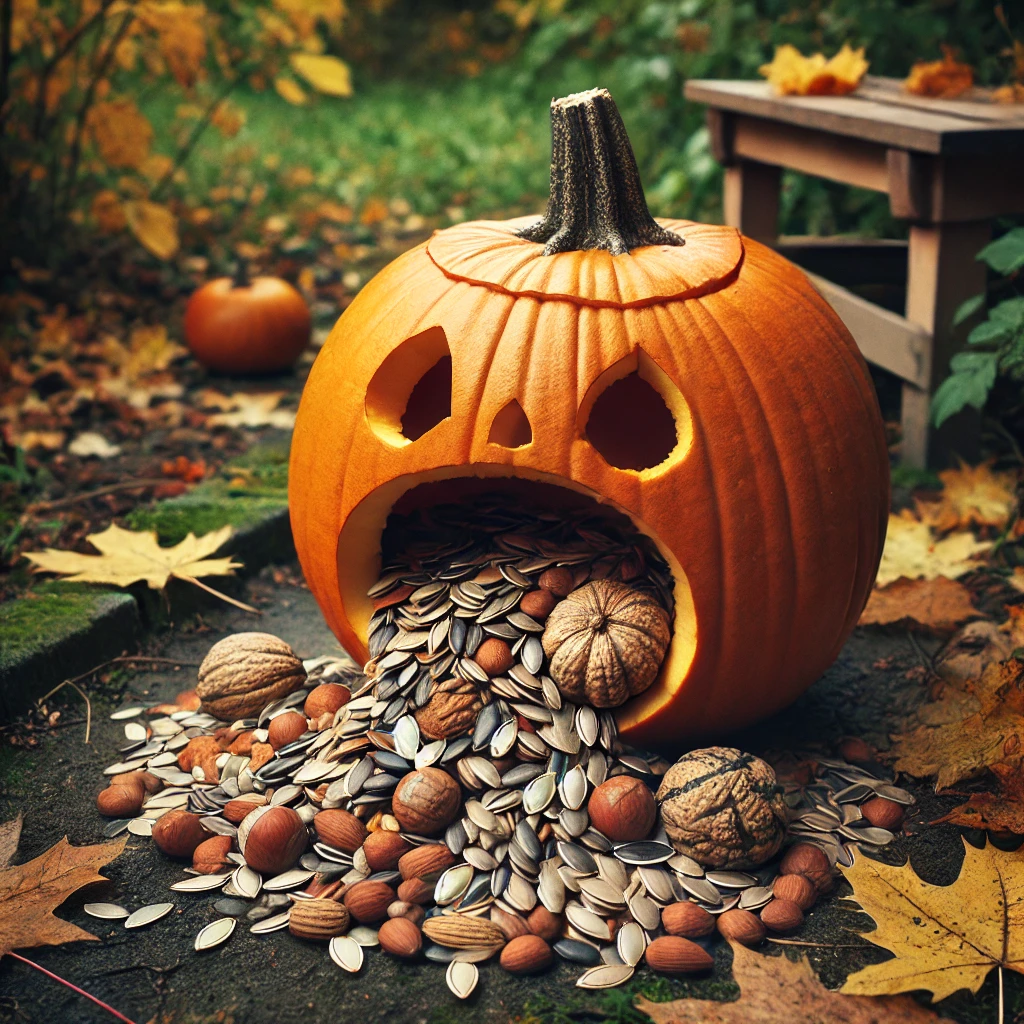
Samhain marks the end of the harvest season and the beginning of the darker half of the year. It is a time when the veil between the physical and spiritual worlds is said to be at its thinnest, offering a sacred moment to honor ancestors, spirits, and the natural world. As we celebrate this turning of the wheel, we can also express gratitude to the earth and its creatures through rituals of offering. One beautiful way to do this is by carving a pumpkin, not for decoration, but as an offering to the wildlife in your area. This Samhain honoring ritual helps us give back to the natural world by providing sustenance to wild animals during the colder months ahead.

Ritual Basics

Before beginning any ritual, it is important to prepare yourself mentally and physically. You may want to take a cleansing bath, or shower, and meditate or perform some grounding exercises to center yourself. Gather any materials you will need, such as candles, incense, and offerings for the forest spirits.

You can read a more detailed Ritual Preparation guide here.

About Pumpkin Carving for Wild Animals

The ritual of carving pumpkins during Samhain traditionally symbolizes protection and honoring the spirits. By carving a pumpkin to feed wild animals, we offer our gratitude to the earth’s creatures, acknowledging the interconnectedness of life. This ritual brings a mindful and sustainable approach to pumpkin carving, transforming it from simple seasonal décor to an act of kindness and reverence for nature. The pumpkin, a symbol of the harvest, becomes not only a gift to the wildlife around us but also a living altar of gratitude and respect.

Offering pumpkins as food is an ancient practice that can be seen as a reflection of the balance between giving and receiving. As we receive the earth’s bounty, we also give back, ensuring that other creatures benefit from the harvest. Carving a pumpkin for wild animals is best done during Samhain or the days leading up to it, as the pumpkins will be ready for the animals to enjoy before the freezing weather fully sets in. This ritual is perfect for solitary practitioners, families, or groups who wish to honor nature and provide a meaningful offering during this sacred time.

Ritual: Carving a Pumpkin for Wild Animals

A Samhain ritual of gratitude and offering, where a carved pumpkin becomes a nourishing gift for wildlife.

  • Carving knife
  • Large spoon
  • Outdoor-friendly bowl
  • Small candle or tealight
  • 1 Large Pumpkin (required The larger the better (to provide more food for wildlife)
  • 1 Handful Seeds or nuts (optional To add inside the pumpkin as extra treats for the animals)
  • 1 Bundle Natural decorations (optional Leaves, twigs, or other natural items to place around the pumpkin for aesthetic or ritualistic purposes)

Step 1: Choosing and Preparing the Pumpkin

  1. Begin by selecting a large, fresh pumpkin. This will act as both the main offering to the animals and the vessel for the ritual.
  2. Clean the pumpkin, if necessary, then gather your carving tools. Sit quietly for a moment, offering a silent intention of gratitude for the harvest and the abundance of nature. Acknowledge the pumpkin as a gift from the earth.
  3. Place the pumpkin in an outdoor space where it will remain undisturbed by humans but accessible to animals. A garden, clearing, or edge of a forest works well.

Step 2: Carving the Pumpkin

  1. Begin carving the pumpkin, creating simple, open designs like large holes or shapes that allow wildlife easy access to the pumpkin’s interior.
  2. As you carve, speak or think of your intentions: to give back to the earth, honor the wild creatures, and express gratitude for the cycle of life and death during Samhain.
  3. Gently scoop out the seeds and pulp, placing them aside in a bowl. If you like, you can scatter them around the area as an additional food offering for birds or small animals. Alternatively, reserve the seeds for composting or roasting for yourself, maintaining the cycle of balance and sustainability.

Step 3: Filling and Blessing the Pumpkin

  1. Once your pumpkin is carved, fill it with a small handful of nuts, seeds, or other foods that are safe for wild animals, if you wish. These may include sunflower seeds, unsalted peanuts, or dried fruit, depending on what local wildlife will enjoy.
  2. Place a small tealight or candle inside the pumpkin, lighting it as a symbol of warmth, protection, and connection to the spirits. Speak a blessing for the animals who will find nourishment from the offering, such as:
  3. "As the wheel turns, I offer this gift to the creatures of the earth,

    In gratitude for the abundance shared with all beings.

    May they find sustenance and shelter in this time of darkness,

    As we honor the balance of life and death,

    Blessed be the wild ones, and blessed be the harvest."

  4. After lighting the candle (optional), take a moment of quiet reflection, connecting to the energies of Samhain, the earth, and the wildlife around you. Feel the presence of the spirits, ancestors, and nature’s creatures as you honor their roles in the cycle of life.
  5. If you used a candle, blow it out and remove it before moving the pumpkin to a new space.

Step 4: Offering and Placement

  1. Once your blessing is complete, place the carved pumpkin in an area where animals can easily access it. Choose a spot that is protected from too much human activity, such as near the edge of a garden, by a wooded path, or at the base of a tree.
  2. Leave the pumpkin as an offering to nature. Over time, animals will come to eat the pumpkin’s flesh and seeds, returning your gift with their presence.
  3. If you are in an area with scavengers or nocturnal animals, check on the pumpkin the next day to see which creatures have enjoyed your offering.

Step 5: Closing the Ritual

  1. When you have finished the ritual, take a final moment to ground yourself and thank the earth for its gifts.
  2. Leave your offering behind, knowing that you have honored both the season and the creatures who share the land with you.

This ritual is a mindful way to celebrate Samhain while providing sustenance for wildlife. Consider choosing foods that are appropriate for the animals in your area. Avoid salted or processed foods, and ensure the pumpkin is placed in a safe, accessible area. If you live in an area with large wildlife (such as bears), use caution when placing offerings that may attract them.

Samhain
Rituals

Conclusion

Carving a pumpkin for wild animals as part of a Samhain honoring ritual allows you to connect deeply with nature and the spirit of the season. By giving back to the earth’s creatures, you acknowledge the cyclical nature of life, death, and rebirth. This simple yet profound act of kindness and reverence serves as both a magical offering and a practical gift to the wildlife that inhabits the natural world. As you offer nourishment to the animals, you become part of the sacred dance of Samhain, honoring the balance between the seen and unseen worlds. Through this ritual, may you cultivate gratitude, connection, and a deeper sense of harmony with the wild.

Posted on Leave a comment

Myths & Lore: The Goddess and the Horned God

The Goddess and the Horned God

Introduction

The Eternal Dance of Death and Rebirth

In Wiccan and neo-Pagan traditions, the festival of Samhain holds profound significance, marking the end of the harvest season and the beginning of winter’s dark descent. It is a time when the veil between the worlds of the living and the dead is at its thinnest, making it an ideal occasion to honor the cycles of life, death, and rebirth. Central to these traditions is the myth of the Goddess and the Horned God—a sacred story that reflects the natural rhythms of the earth and the eternal dance between death and renewal. During Samhain, this myth serves as a powerful reminder that death is not the end but a necessary part of existence, making way for rebirth and new beginnings.

The Death of the Horned God

As the festival of Samhain approaches, the cycle of the year draws to a close, and the Horned God—the embodiment of nature’s life force and wild vitality—prepares for his sacred sacrifice. The Horned God holds a central role in Wiccan and neo-Pagan traditions, where he represents the ever-changing seasons, the wildness of nature, and the energy that drives growth and fertility in the natural world. Throughout the year, in his role as the Green Man and the God of the Harvest, the Horned God has presided over the abundance of the earth, nurturing the fields, forests, and all living beings with his strength and energy. Under his care, the land has flourished, yielding crops, supporting the creatures of the wild, and sustaining the rhythm of life through the spring and summer.

Yet, as the wheel of the year turns toward Samhain, a shift begins. The vibrancy of the natural world fades as the season of harvest draws to a close. The leaves fall from the trees, the crops are gathered, and the animals retreat, storing food and conserving energy to survive the barren winter ahead. The warmth of summer gives way to the cold, and the Horned God, having fulfilled his role as the life-giver, prepares to die. His time as the provider has come to an end, and now he must relinquish his life, allowing the earth to enter its resting phase.

In Wiccan tradition, the death of the Horned God is not a tragedy or a loss to be mourned; rather, it is an act of profound purpose and sacrifice. The Horned God’s death is a necessary part of the cycle of life, death, and rebirth. Just as the crops must be harvested and the fields cleared to prepare for the next growing season, so too must the Horned God offer himself, giving his life force back to the earth so that life can flourish once again in the future. His death is not a final end, but part of the eternal cycle that sustains the natural world. As the God of the Wild and the Harvest, he understands that sacrifice is required to maintain balance, and he willingly offers himself, knowing that from his death will come the promise of renewal.

The Horned God’s death occurs at Samhain, the most liminal time of the year, when the veil between the worlds of the living and the dead is at its thinnest. His descent into the underworld marks the transition into the dark half of the year, when the earth lies dormant, and life slows to a near standstill. Yet, his death also holds the seed of his rebirth. Much like the sun, which sets each night only to rise again in the morning, the Horned God will not remain in the underworld forever. His spirit will rest, gathering strength, and at Yule—the Winter Solstice—he will rise once more. The Winter Solstice marks the rebirth of the sun, when the longest night gives way to the return of light. On this sacred night, the Horned God will be reborn, and his energy will return to the earth, preparing it for the eventual renewal of spring.

The symbolism of the Horned God’s death is central to Samhain rituals, where his sacrifice is honored and celebrated. Often, this is represented through the lighting of fires or candles—flames that symbolize both the extinguishing of life and the spark of new beginnings. As the fires burn, they remind practitioners that death is not an end but a necessary part of the cycle of existence. Through the act of lighting a fire, participants reflect on the transformative power of endings and the importance of sacrifice in making way for the new. The Horned God’s death becomes a metaphor for the changes we all face in our lives—the letting go of what is no longer needed, the acceptance of transition, and the trust that from these endings, something new and vital will emerge.

Samhain is a time to confront the personal sacrifices we have made throughout the year. Practitioners may use this time to reflect on the challenges, losses, or transitions they have experienced, acknowledging the necessity of releasing what no longer serves them. This might include letting go of old habits, emotional burdens, or aspects of their lives that have run their course. The Horned God’s death becomes a powerful symbol of this process, reminding us that while endings can be difficult, they are also the gateway to renewal and transformation.

In many Samhain rituals, practitioners will symbolically honor the Horned God’s sacrifice by offering personal items or written reflections into the fire. These offerings represent what they are willing to release, allowing the flames to carry away the old and make space for the new. Just as the Horned God gives his life to ensure the continued vitality of the earth, participants offer up their own sacrifices, trusting that the cycle of life will bring them new growth and opportunities in time.

This deep connection between the Horned God’s death and the turning of the seasons reflects a profound spiritual truth that resonates throughout Wiccan and Pagan traditions: life, death, and rebirth are not separate events but interwoven stages of an eternal cycle. The Horned God’s journey through death and rebirth serves as a reminder that nothing is ever truly lost. As the earth enters its period of dormancy, we are called to honor the rhythms of nature, trusting that even in the darkest moments, the light of renewal is always on the horizon.

The Goddess as the Crone

As the Horned God descends into the underworld at Samhain, the Goddess shifts into her most ancient and powerful aspect—that of the Crone. In Wiccan tradition, the Goddess is the eternal force that embodies all stages of life: she is the Maiden, symbolizing youth and new beginnings; the Mother, representing fertility, growth, and nurturing; and the Crone, the wise and knowing figure who presides over death, endings, and transformation. At Samhain, the Goddess fully embraces her Crone aspect, embodying the deep wisdom that comes with age and the acceptance of life’s natural cycles.

In her role as the Crone, the Goddess is not diminished or weakened by the passage of time; rather, she is at the height of her spiritual and mystical power. She carries within her the accumulated knowledge of all her past experiences as Maiden and Mother, and she understands the sacred dance of life, death, and rebirth. Samhain is the time when her wisdom is most needed, as it marks the turning point between the seasons of growth and the long, dark descent into winter. As the Crone, the Goddess offers her profound understanding of the cycles of nature, and she helps to guide her followers through the inevitable transitions they must face in their own lives.

At Samhain, the Crone mourns the passing of the Horned God, recognizing the depth of his sacrifice as he relinquishes his life force to the earth. Yet her mourning is not one of grief or despair; rather, it is a quiet, reverent acknowledgment of the necessary role that death plays in the continuation of life. She mourns with wisdom, knowing that the Horned God’s death is part of the sacred cycle that ensures the earth will be reborn in time. Through her connection to the natural world, the Crone sees the broader picture—she knows that death is not the end, but a transition, an essential part of the eternal dance of life. This acceptance of death as part of life is a central theme of Samhain, and the Crone’s wisdom helps practitioners navigate their own understanding of loss, change, and renewal.

As the goddess of both life and death, the Crone oversees this sacred transition, guiding souls through the underworld and preparing the earth for the eventual rebirth that will occur at Yule, when the sun returns and the Horned God is reborn. She is the guardian of those who pass into the next life, holding the mysteries of the afterlife within her, and she helps facilitate the transformation that follows death. This dual role—overseeing both death and rebirth—gives the Crone her power and makes her an essential figure during Samhain. She is the keeper of ancient wisdom, the one who understands that without death, there can be no new life, and that endings always carry the seed of a new beginning.

The Crone’s wisdom is not just theoretical; it is deeply practical and applicable to the lives of those who honor her. She teaches that life is a series of cycles, each with its own rhythm, and that resisting change is to resist the very flow of existence. The Crone’s lessons are about embracing transformation, even when it is difficult or painful. She reminds us that death—whether it be the literal death of a loved one, the end of a relationship, or the closure of a chapter in our lives—is not something to be feared, but something to be faced with courage and acceptance. Her guidance is invaluable as we confront our own personal transformations, helping us to release what no longer serves us and prepare for the rebirth that will inevitably come.

In Samhain rituals, the Goddess as the Crone is honored for her role as the bringer of wisdom and the guardian of the dead. Practitioners may invoke her presence to help them navigate their own personal transitions, asking for her strength as they confront the challenges of letting go. These rituals often involve offerings made to the Crone—small gifts such as food, herbs, or written reflections—placed on altars or left in nature to honor her wisdom and her connection to the cycles of life. Some may also offer prayers or meditations, seeking her guidance in embracing the changes they are facing and finding the wisdom to move forward with grace.

The Crone’s energy during Samhain is particularly powerful for those who are undergoing periods of transformation or who are mourning a loss. She offers the strength to face the darkness, knowing that within that darkness lies the potential for new growth. Her presence reassures practitioners that while endings are inevitable, they are not to be feared, for they are always followed by renewal. She encourages us to trust in the cycle of life and to embrace the changes we must undergo in order to grow.

In Wiccan tradition, the Crone is not merely a symbol of old age or death; she is the embodiment of the deeper wisdom that can only come through experience. She teaches that all things must come to an end, but that each ending is part of a larger, continuous cycle. Her power lies in her ability to hold space for both life and death, for both joy and sorrow, and to help us navigate the spaces in between. As the keeper of secrets and the guide through the mysteries of life and death, the Crone reminds us that nothing in this world is permanent, but that through embracing change, we can find strength, wisdom, and peace.

Through her role at Samhain, the Crone teaches us the most fundamental lessons of life: that death is not to be feared, that endings are natural, and that from the darkness of winter, the light of renewal will always emerge. The Goddess, in her Crone aspect, stands as a reminder that we too are part of this eternal cycle, and that by accepting our place within it, we can find the wisdom to navigate the challenges of life with grace and understanding. Her presence during Samhain encourages us to honor the past, release what no longer serves us, and trust in the promise of rebirth, just as she oversees the passage of the Horned God and the turning of the wheel of the year.

The Eternal Dance of Death and Rebirth

In Wiccan and neo-Pagan traditions, the relationship between the Goddess and the Horned God encapsulates the cyclical nature of existence—the eternal dance of life, death, and rebirth. They are not separate forces but complementary aspects of the same universal process, bound together in an unbreakable unity. Together, they embody the rhythms that govern not only the natural world but also the spiritual journey of every individual. This dance is at the heart of Samhain, when the Horned God dies, only to be reborn at Yule, and the Goddess, in her aspect as the Crone, ensures that this cycle is upheld, guiding the transition with wisdom and reverence.

The Horned God’s death at Samhain is not a final goodbye but rather a passage into the underworld, where his spirit rests and regenerates, gathering strength for his inevitable rebirth at Yule, the Winter Solstice. His journey mirrors the seasonal changes that we witness each year—the earth’s retreat into stillness during winter, only to emerge full of life with the arrival of spring. The Goddess, embodying both life and death, watches over this process, ensuring that the balance between these forces is maintained. As the crone, she knows that death is an essential part of the cycle, a phase that nourishes the ground for new life to take root and flourish.

This eternal dance between the Goddess and the Horned God is reflected everywhere in nature. The seasons follow a predictable yet awe-inspiring cycle of growth, decay, and renewal. The vibrant bloom of summer gives way to autumn’s quiet surrender, as trees shed their leaves and the landscape retreats into itself. The earth, once bursting with life, now rests beneath the cold of winter, seemingly barren. Yet, within this stillness, life is simply waiting, gathering strength in the same way that the Horned God’s spirit regenerates in the underworld. Just as the Horned God will rise again at Yule, so too will the sun return after the longest night of the year, slowly warming the land and awakening new growth. This rhythm reminds us that death is not the end, but a transition—a necessary passage that gives way to new beginnings.

In Wiccan belief, this truth is reflected in every corner of the natural world. The decaying leaves of autumn, which return to the soil, nourish the earth, creating fertile ground for the rebirth of life in the spring. The hibernating animals, who retreat into sleep during the harsh winter months, emerge renewed and energized when the warmer days return. Even the ebb and flow of the tides, the phases of the moon, and the growth cycles of plants follow this same pattern of death and renewal. Nature’s inherent cycles are constant reminders that death is not to be feared but embraced as a part of life’s larger journey.

Samhain, as the festival marking the end of the harvest and the beginning of winter, is the sacred time when this eternal dance is most apparent. It is a moment to honor the death of the Horned God and reflect on the cycles of nature and our own lives. In Samhain rituals, this dance between death and rebirth is often enacted through symbolic acts of release and renewal. Practitioners may write down old habits, relationships, or patterns that no longer serve them and symbolically release them through fire, water, or other ritual acts. This mirrors the Horned God’s sacrifice, allowing the practitioner to let go of what is no longer needed, clearing the way for personal transformation and new growth. These rituals are not merely acts of mourning or loss but are filled with the promise of renewal, just as the Horned God’s death nourishes the earth for the next cycle of life.

In these rituals, the energy of the Horned God’s death is not mournful; it is celebratory, filled with understanding that his passing is necessary for life to continue. The fire that symbolizes his death is also the spark of his eventual return. Practitioners embrace this cycle, recognizing that their own lives reflect the same rhythm. Just as nature must shed what is no longer useful—be it leaves, old growth, or dying energy—so too must we release the things that weigh us down. Whether it is a limiting belief, an outdated way of living, or even a relationship that has run its course, these personal sacrifices are made in the understanding that they pave the way for renewal, growth, and greater clarity in the future.

The Goddess, in her Crone aspect, is an integral part of these rituals. She oversees this period of transformation, guiding the Horned God’s passage into the underworld and tending to the cycles of life and death. Her wisdom reminds us that even in the darkest times, when all seems lost, the potential for new life is always present. She holds the knowledge that from every ending comes a new beginning, and she offers her guidance to those who seek to embrace the changes in their own lives. Practitioners often call upon her to provide the strength and wisdom needed to let go of the past and prepare for the rebirth that is to come.

In this way, the rituals of Samhain are both deeply personal and cosmic. They reflect the individual’s journey through transformation—the release of old patterns, the mourning of losses, and the acceptance of change—but they also mirror the larger, universal cycles of existence. The Horned God and the Goddess show us that life, death, and rebirth are not isolated events but part of a continuous process that sustains the natural world. Through their sacred dance, we are reminded that change is inevitable, that death is not the end, and that every moment of darkness carries within it the seed of new beginnings.

Ultimately, the eternal dance of the Goddess and the Horned God offers a powerful spiritual lesson: that the cycles of life and death are not something to be feared, but to be embraced with reverence and understanding. Their story teaches us that, just as the seasons turn, so too must we let go of the old in order to make room for the new. The Horned God’s death and eventual rebirth at Yule are reflections of the constant renewal that takes place within and around us, and the Goddess, in her infinite wisdom, ensures that this cycle continues unbroken. Through their eternal dance, we learn to trust in the rhythms of life, death, and rebirth, knowing that each ending is simply the beginning of something new.

Embracing the Cycle

The myth of the Goddess and the Horned God offers a profound spiritual lesson that challenges modern society’s often fearful view of death. In many contemporary cultures, death is perceived as the ultimate end—something to be delayed, feared, or avoided. It is shrouded in mystery and grief, with little recognition of the larger cycle it belongs to. However, in Wiccan and neo-Pagan traditions, death is not an ending but a necessary part of life’s continual flow. The death of the Horned God at Samhain serves as a reminder that endings, while inevitable, are not final. They are merely transitions, essential steps within the greater process of rebirth and renewal.

The Horned God’s sacrifice, in which he willingly gives his life for the good of the earth and the continued vitality of the natural world, embodies this spiritual truth. His death is not an act of despair, but of deep purpose and understanding. He knows that by giving himself to the earth, he is nourishing the land, ensuring the return of life in the future. The Goddess, in her Crone aspect, mourns him with reverence, but she does so with the wisdom that this is how the cycle must unfold. The Horned God’s death is not the end of his story—he will rise again at Yule, reborn with the returning light of the sun, just as spring will eventually come to the cold, dark earth. His journey reflects the eternal truth that life and death are intimately connected, two parts of the same natural cycle.

This understanding of death as a gateway to rebirth is central to Wiccan belief and practice. Samhain, as the festival that marks the end of the harvest season and the beginning of winter, provides a time to confront this truth directly. It is a time for honoring those who have passed and reflecting on the sacrifices that have been made—both in the natural world and in our own lives. Just as the Horned God gives his life for the earth, we too experience cycles of letting go, of death in its many forms. Whether it’s the loss of loved ones, the end of relationships, or the closing of personal chapters, Samhain invites us to embrace these endings, knowing that they are part of the process that leads to new beginnings.

In Wiccan rituals, death is honored not as something to be feared, but as something to be understood and accepted. The act of releasing what no longer serves—be it emotional baggage, unhealthy habits, or outdated ways of thinking—mirrors the Horned God’s sacrifice. These acts of release prepare the way for personal transformation, just as his death prepares the earth for its eventual rebirth. Practitioners often use divination, meditation, and ritual to gain insight into the transitions they are facing, seeking guidance from the Goddess and the spirits of the dead. They align themselves with the natural cycles of life, death, and rebirth, trusting in the wisdom of the universe to carry them through periods of darkness and uncertainty.

Divination practices during Samhain, such as scrying, tarot readings, or rune casting, are often used to gain clarity about the path ahead. Just as the veil between the worlds is thin, making it easier to connect with ancestors and spirit guides, this time also allows for deep introspection. Practitioners look to the symbols and messages they receive during Samhain for guidance on how to navigate their own transformations. What do they need to release? What lessons have they learned from the past year, and how can they use that wisdom to move forward? By confronting the truths that arise during Samhain, they prepare for the rebirth that awaits them as the Wheel of the Year turns toward Yule and beyond.

In this way, the Goddess and the Horned God serve as guides through the cycles of life. The Goddess, ever eternal, oversees the transitions between birth, death, and rebirth. She is there in her aspect as the Maiden when new life begins, in her aspect as the Mother when life is nurtured and grown, and in her aspect as the Crone when it is time to let go. At Samhain, the Crone offers her wisdom and protection, helping those who celebrate to navigate their own transformations with grace and understanding. She reminds us that while death is a necessary part of life, it is not the end of the story. The Horned God, even in death, is a symbol of hope, for his rebirth at Yule promises that new life is always on the horizon.

As the Wheel of the Year turns once more, Samhain invites us to reflect on these cycles and what they mean for our own lives. The myth of the Goddess and the Horned God reminds us that life and death are not opposites—they are two sides of the same coin, inseparable from one another. The same energy that drives the vitality of life also governs the process of death and renewal. Every ending carries within it the seed of a new beginning, and every death is part of the cycle that brings about rebirth.

This eternal dance between life, death, and rebirth is not limited to the natural world; it is a metaphor for our own experiences as well. We too go through periods of growth, decay, and renewal, shedding old identities and ways of being so that new ones can take their place. Samhain is the perfect time to honor these personal transitions, to reflect on the cycles we have moved through and prepare for the ones that lie ahead. It is a time to release what no longer serves, to mourn what has passed, and to trust that, like the Horned God, we will rise again with renewed strength and clarity.

Ultimately, the myth of the Goddess and the Horned God offers a timeless message: that death is not an ending, but a transition. It is part of the greater cycle of life, a necessary step in the process of rebirth. By embracing this cycle, we free ourselves from the fear of loss and change. Instead, we learn to see death as a gateway, a passage through which new life emerges. As we honor the Goddess and the Horned God at Samhain, we align ourselves with the natural rhythms of the earth, trusting in the eternal cycle of life, death, and rebirth that governs all existence.

Conclusion: The Eternal Wisdom of the Goddess and the Horned God

The myth of the Goddess and the Horned God offers a powerful reflection on the cycles of life, death, and rebirth that govern not only the natural world but our personal journeys as well. In Wiccan and neo-Pagan traditions, Samhain stands as a sacred moment to confront these cycles, honoring the Horned God’s willing sacrifice and the Goddess’s eternal wisdom. Their story reminds us that death is not to be feared—it is a passage, a necessary end that gives rise to new beginnings. As the Horned God dies at Samhain and the Goddess takes on her Crone aspect, we are invited to release what no longer serves us, to let go of the old, and to trust in the rebirth that awaits at Yule.

In this eternal dance, the Goddess and the Horned God reveal that life’s transitions are not solitary events but part of a greater cosmic rhythm. The darkness of winter is not an end but a time of rest and regeneration, preparing the way for spring’s renewal. As the Wheel of the Year turns, we are reminded that endings are never truly final, for within every death lies the seed of rebirth. This profound truth offers not only comfort but empowerment, helping us embrace change with grace, knowing that the Goddess will always guide us through, and the Horned God will rise again.

Through their sacred myth, we are reminded that life and death, creation and destruction, are not opposing forces but are interwoven aspects of the same divine cycle. By honoring their story at Samhain, we align ourselves with the ancient rhythms of the universe, trusting in the balance of life and the promise of renewal that follows every dark night. In the end, the Goddess and the Horned God teach us that the cycle of existence is eternal, and within that cycle, we can always find hope, transformation, and rebirth.

Posted on Leave a comment

Recipe: Samhain Stuffed Butternut Squash

Making Stuffed Butternut Squash

Introduction

A Hearty Dish for the Dumb Supper Feast

Samhain, the time when the veil between the worlds is at its thinnest, invites us to honor our ancestors and connect with the unseen realms. The Dumb Supper, a silent feast traditionally held to honor those who have passed, is a significant part of this sacred night. Samhain Stuffed Butternut Squash is a perfect main dish for this feast. This hearty and wholesome recipe, filled with wild rice, dried cranberries, nuts, and seasonal spices, not only nourishes the body but also honors the harvest and our ancestors’ spirits. Let this dish be a connection between the living and the dead, full of warmth and reverence.

The Magic of Samhain Stuffed Butternut Squash

The Dumb Supper is held in silence, allowing participants to communicate with the spirits of the departed. Samhain Stuffed Butternut Squash, filled with the bounty of the autumn harvest, symbolizes gratitude for the earth’s gifts and the cycles of life, death, and rebirth. Butternut squash represents abundance, while the wild rice, cranberries, and nuts bring grounding, vitality, and transformation to the dish. This dish is not only a nourishing meal but also a way to honor those who came before us and the cycles they experienced.

Samhain is the Witch’s New Year, a time of reflection, letting go, and honoring our ancestors. Preparing this meal with intention allows us to bridge the gap between the living and the dead, celebrating the harvest while remembering those who have passed on.

Spell for Ancestral Connection and Gratitude

As you prepare this dish, perform this simple spell to strengthen your connection with the spirits of your ancestors and invite their guidance and blessings.

  1. Light a black candle to symbolize the thinning of the veil and your connection to the spirit world.
  2. As you prepare the ingredients, whisper words of gratitude for the harvest and for the lives of those who came before you.
  3. As you fill the squash with the wild rice mixture, chant:

“Earth’s rich bounty, harvest’s might,
Ancestors guide us through the night.
With each bite, their wisdom flows,
In silence, love and light still grows.”

Serve the dish with reverence, eating in silence and reflecting on your connection to those who have passed.

Magical Properties of Samhain Stuffed Butternut Squash

This dish is filled with ingredients that carry magical significance for Samhain:

Maple Syrup: Represents sweetness and the blessings of the harvest, invoking a sense of gratitude and warmth.

Butternut Squash: Represents abundance, nourishment, and grounding. Its round shape and golden hue remind us of the cycles of life and the sun’s energy.

Wild Rice: Symbolizes stability, grounding, and strength. It connects us to the earth and the spirits of those who walked it before us.

Cranberries: Bring protection and healing. Their vibrant red color aligns with the life force and offers both vitality and remembrance.

Walnuts: Represent wisdom, clarity, and prosperity. They are often used in rituals for clarity and deep connection to ancestral knowledge.

Sage: Known for its protective and purifying properties, sage also promotes clarity and connection to the spiritual realm.

Recipe: Samhain Stuffed Butternut Squash

A rich and hearty dish of roasted butternut squash stuffed with a savory wild rice, cranberry, and walnut mixture, perfect for a Dumb Supper feast

  • Baking sheet
  • Large skillet
  • Knife
  • Spoon
  • Mixing bowl

For the Squash:

  • 2 large butternut squash (halved and seeds removed)
  • 2 tbsp olive oil
  • Salt and pepper to taste

For the Stuffing:

  • 1 cup wild rice (cooked)
  • ½ cup dried cranberries
  • ¼ cup chopped walnuts
  • 1 small onion (diced)
  • 2 cloves garlic (minced)
  • 1 tsp dried sage
  • 1 tsp thyme
  • ¼ cup vegetable broth
  • 2 tbsp maple syrup
  • Salt and pepper to taste

Prepare the Squash:

  1. Preheat the oven to 400°F (200°C).
  2. Cut the butternut squash in half lengthwise and remove the seeds.
  3. Brush the cut sides with olive oil and season with salt and pepper.
  4. Place the squash halves cut-side down on a baking sheet and roast for 40-45 minutes, or until the flesh is tender and easily pierced with a fork.

Prepare the Stuffing:

  1. While the squash is roasting, heat olive oil in a large skillet over medium heat.
  2. Add the diced onion and garlic and sauté until softened, about 5 minutes.
  3. Stir in the cooked wild rice, dried cranberries, walnuts, sage, and thyme.
  4. Add the vegetable broth and maple syrup, stirring to combine. Cook for an additional 5 minutes, allowing the flavors to meld. Season with salt and pepper to taste.

Stuff the Squash:

  1. Once the squash is done roasting, remove it from the oven and turn the halves cut-side up.
  2. Spoon the wild rice mixture into the cavity of each squash half, pressing it down gently to fill.
  3. Return the stuffed squash to the oven and bake for an additional 10-15 minutes to heat through.

Serve:

  1. Allow the stuffed squash to rest for a few minutes before serving.
  2. Serve warm, allowing participants to reflect in silence and connect with the spirits during the Dumb Supper.

For added flavor, sprinkle crumbled feta cheese or a drizzle of balsamic glaze over the stuffed squash before serving. This dish can also be prepared in advance and reheated just before the Dumb Supper, allowing you to focus on the ritual’s spiritual aspect.


Main Course
Autumn, Samhain
Recipe

Conclusion

Samhain Stuffed Butternut Squash is the perfect main dish for your Dumb Supper, combining the richness of the autumn harvest with the sacred energies of Samhain. As you prepare and eat this meal in silence, let the flavors of the season ground and connect you to the cycles of life and the wisdom of your ancestors. May this dish bring warmth, abundance, and reverence to your Samhain celebrations.

Posted on Leave a comment

Recipe: Roasted Garlic and Rosemary Potatoes

Roasted Garlic and Rosemary Potatoes

Introduction

A Savory Side for the Dumb Supper Feast

Samhain, the final harvest and the night when the veil between worlds is thin, is a time for reflection, remembrance, and honoring those who have passed. The Dumb Supper, a traditional silent feast, invites the living and the dead to dine together in harmony. Roasted Garlic and Rosemary Potatoes are a perfect side dish for this solemn occasion. Grounded in earthy flavors, this recipe symbolizes nourishment, protection, and connection to the ancestral roots. With the robust flavors of garlic and rosemary, this dish brings a comforting warmth to the feast table while invoking the energy of the harvest season.

The Magic of Roasted Garlic and Rosemary Potatoes

Potatoes, long revered as a grounding food, are often associated with stability, protection, and connection to the earth. During Samhain, when the boundary between worlds is at its most permeable, root vegetables like potatoes help us feel grounded while we connect with the spirits of the past. The garlic in this dish represents protection and banishment of negative energies, ensuring the meal and ritual are safeguarded. Rosemary, a powerful herb for remembrance and clarity, is an offering to the spirits, inviting them to the feast and encouraging wisdom to pass between realms.

This dish serves as a symbol of the grounding energy required for spiritual work and reflection during Samhain. The warmth and heartiness of roasted potatoes, combined with the protective properties of garlic and rosemary, make this side dish perfect for the Dumb Supper feast.

Spell for Grounding and Protection

As you prepare this dish, use this simple spell to protect and ground yourself while connecting to the energy of your ancestors.

  1. Light a brown or white candle to symbolize grounding and protection.
  2. As you chop the potatoes and garlic, visualize any negativity being peeled away from your life, leaving only strength and stability.
  3. While tossing the potatoes with the rosemary and garlic, chant:

“Roots of Earth, so strong and deep,
In silence, ancestors we keep.
Garlic for protection, rosemary for peace,
As we gather, may troubles cease.”

Serve the dish with reverence, focusing on the warmth and protection it provides for you and those sharing the meal.filling and meditate on the balance and harmony you wish to cultivate in your life.

Magical Properties of Roasted Garlic and Rosemary Potatoes

This dish incorporates ingredients imbued with magical significance for Samhain:

Olive Oil: Symbolizes peace and longevity, offering a smooth, protective layer that enhances the other ingredients’ energies

Potatoes: Symbolize grounding, stability, and protection. They connect us to the Earth and offer a sense of security during spiritual reflection.

Garlic: Represents protection, purification, and the banishment of negative energies. It is commonly used in rituals to safeguard the space and participants.

Rosemary: Invokes memory, clarity, and remembrance. Rosemary is often used to honor ancestors and to ensure clear communication between the living and the dead.

Recipe: Roasted Garlic and Rosemary Potatoes

Crispy roasted potatoes infused with garlic and rosemary, perfect for grounding energy and protection during the Samhain Dumb Supper.

  • Baking sheet
  • Large mixing bowl
  • Knife For chopping
  • Cutting board
  • 1 ½ lbs baby potatoes (or red or gold potatoes, halved or quartered)
  • 4 – cloves garlic (minced)
  • 2 tbsp olive oil
  • 1 tbsp fresh rosemary (chopped (or 1 tsp dried rosemary))
  • Salt and pepper (to taste)
  • 1 tbsp fresh parsley (chopped (optional for garnish))

Prepare the Potatoes:

  1. Preheat the oven to 400°F (200°C).
  2. Wash the potatoes and cut them into halves or quarters, depending on their size, ensuring even pieces for consistent cooking.

Season the Potatoes:

  1. In a large mixing bowl, toss the potatoes with olive oil, minced garlic, chopped rosemary, salt, and pepper. Ensure all the potatoes are evenly coated with oil and seasoning.

Roast the Potatoes:

  1. Spread the seasoned potatoes in a single layer on a baking sheet.
  2. Roast in the preheated oven for 35-40 minutes, stirring halfway through to ensure they cook evenly. The potatoes should be golden brown and crispy on the outside while tender on the inside.

Serve:

  1. Once roasted, remove the potatoes from the oven and allow them to cool for a few minutes.
  2. Garnish with fresh parsley if desired and serve warm as a grounding side dish for your Dumb Supper.

Roasted Garlic and Rosemary Potatoes can be paired with other seasonal vegetables or served as a complement to the main dish during your Samhain feast. For added flavor, consider sprinkling a touch of grated Parmesan or a drizzle of balsamic vinegar before serving. This dish is best enjoyed in silence during the Dumb Supper, allowing its grounding energy to guide your reflection.

Side Dish
Autumn, Dumb Supper, Samhain
Recipe

Conclusion

Roasted Garlic and Rosemary Potatoes offer more than just nourishment—they provide grounding and protective energy, making them an ideal side dish for the Samhain Dumb Supper. As you prepare and eat this dish in silence, feel the warmth and stability of the earth beneath your feet, connecting you to your roots and your ancestors. May this recipe bring protection, clarity, and grounding energy to your Samhain rituals and celebrations.

Posted on Leave a comment

Recipe: Braised Beef with Red Wine and Rosemary

Braised Beef with Red Wine and Rosemary

Introduction

A Hearty Main Dish for the Dumb Supper Feast

Samhain, the night when the veil between the worlds is at its thinnest, invites us to honor our ancestors and reflect on the cycles of life, death, and rebirth. The Dumb Supper, a silent feast traditionally held to commune with the spirits of loved ones who have passed, is a time to gather around a table filled with rich and meaningful foods. Braised Beef with Red Wine and Rosemary is a perfect main dish for this occasion. This dish, slow-cooked to tender perfection, combines the depth of red wine with the grounding and protective qualities of rosemary and garlic. It’s a comforting meal that honors the season’s harvest and the ancestors who came before us.

The Magic of Braised Beef with Red Wine and Rosemary

Samhain is the time of year when the earth prepares for winter, and the harvest comes to an end. In many traditions, this is the Witch’s New Year, a time to reflect on the past, honor the dead, and prepare for the rebirth of spring. Braised Beef with Red Wine and Rosemary is an ideal dish for a Samhain feast, as it combines deeply rooted ingredients that are rich in flavor and symbolism.

Beef represents strength and vitality, grounding us in the physical world as we connect with the spirits. Red wine is a symbol of the bloodline and sacrifice, reminding us of our ancestors’ lives and the cycles of death and rebirth. Rosemary, traditionally used for remembrance and protection, enhances the spiritual significance of this dish. Cooking this meal with intention infuses it with ancestral wisdom, making it a powerful offering during the Dumb Supper.

Spell for Honoring Ancestors and Protection

Use this spell to call upon your ancestors for wisdom and guidance while preparing Braised Beef with Red Wine and Rosemary.

  1. Light a black or red candle to symbolize protection and connection to the ancestral realm.
  2. As you season the meat, visualize your ancestors gathering around, offering their wisdom and protection.
  3. While adding the red wine and rosemary to the pot, chant:

“Blood of the vine, meat of the earth,
Guide me in wisdom, honor, and worth.
Rosemary for memory, garlic for might,
Protect me and bless me on Samhain night.”

Serve the dish with reverence, reflecting in silence on the lessons and guidance passed down through the ages.ing and meditate on the balance and harmony you wish to cultivate in your life.

Magical Properties of Braised Beef with Red Wine and Rosemary

This dish is filled with ingredients that carry significant magical properties:

Onions: Associated with protection and clarity, onions help create a sacred barrier between the living and the dead.

Beef: Represents strength, vitality, and grounding. As a symbol of nourishment, it connects us to the physical realm and the power of survival.

Red Wine: Symbolizes the bloodline, sacrifice, and the cycles of life and death. Wine is often used in rituals to honor ancestors and the spirit world.

Rosemary: A herb of remembrance and protection, rosemary enhances memory and is used in rituals to honor the dead and protect against negative energies.

Garlic: Known for its protective and purifying properties, garlic acts as a shield, warding off negativity and protecting the space from unwanted energies.

Carrots: Represent clarity and vision, bringing insight during reflection and spiritual work.

Recipe: Braised Beef with Red Wine and Rosemary

Tender braised beef slow-cooked with red wine, rosemary, garlic, and seasonal vegetables, perfect for a Samhain Dumb Supper feast.

  • Dutch oven or a large pot
  • Large skillet
  • Wooden spoon
  • Cutting board
  • Knife
  • 3 lbs beef chuck roast (cut into large chunks)
  • 2 tbsp olive oil
  • 1 large onion (diced)
  • 3 cloves garlic (minced)
  • 3 large carrots (peeled and chopped)
  • 2 cups red wine (such as Cabernet Sauvignon or Merlot)
  • 1 cup beef broth
  • 2 sprigs fresh rosemary (or 1 tsp dried rosemary)
  • 2 bay leaves
  • 1 tbsp tomato paste
  • Salt and pepper ( to taste)

Brown the Beef:

  1. Heat the olive oil in a large skillet over medium-high heat.

  2. Season the beef chunks generously with salt and pepper.

  3. Sear the beef in batches until browned on all sides, about 4-5 minutes per side. Remove the beef and set aside.

Sauté the Vegetables:

  1. In the same skillet, add the diced onion, carrots, and garlic. Sauté until softened, about 5 minutes.

Combine Ingredients for Braising:

  1. Transfer the sautéed vegetables to a large Dutch oven or pot.

  2. Add the beef chunks back into the pot, along with the red wine, beef broth, tomato paste, rosemary, and bay leaves.

  3. Stir to combine, ensuring the meat is mostly submerged in liquid.

Slow Cook the Beef:

  1. Bring the mixture to a simmer, then cover the pot and reduce the heat to low. Let it simmer for 3 hours, or until the beef is tender and falling apart. (Alternatively, cook in a slow cooker on low for 6-8 hours.)

Rest and Serve:

  1. Once the beef is done, remove the rosemary sprigs and bay leaves.

  2. Allow the beef to rest for 10 minutes before serving.

  3. Serve with the rich sauce, and garnish with extra fresh rosemary if desired.

Braised Beef with Red Wine and Rosemary can be served alongside roasted root vegetables or mashed potatoes to complete the Samhain Dumb Supper. This dish can be made in advance and gently reheated to save time during ritual preparation. The longer it simmers, the more flavorful it becomes, making it ideal for slow-cooking methods.


Main Course
Ancestral Ritual Feasts, Autumn, Dumb Supper, Samhain
Recipe

Conclusion

Braised Beef with Red Wine and Rosemary is more than just a hearty dish; it is a powerful offering for your Samhain Dumb Supper. With ingredients that symbolize strength, protection, and remembrance, this meal grounds and nourishes you while honoring the ancestors. As you enjoy this savory meal in silence, reflect on the wisdom and guidance that the spirits of those who came before can provide. May this dish bring warmth, strength, and connection to your Samhain celebration

Posted on Leave a comment

Ritual: Divination for Samhain

Ritual Samhain Divination

Introduction

Unveiling the Mysteries: Connecting with Ancestors and Spirits Through Divination

Samhain, the sacred time when the veil between the living and the spirit world is at its thinnest, is an ideal occasion for divination. This ancient practice allows us to gain insights, receive guidance, and connect with ancestors and spirits. Whether using tarot cards, runes, pendulums, or scrying, divination during Samhain offers a profound way to tap into the spiritual realm and uncover hidden truths. In this article, we will explore various methods of divination, their meanings, and how they can enhance your connection to the otherworldly during this mystical season.

Ritual Basics

Before beginning any ritual, it is important to prepare yourself mentally and physically. You may want to take a cleansing bath, or shower, and meditate or perform some grounding exercises to center yourself. Gather any materials you will need, such as candles, incense, and offerings for the forest spirits.

You can read a more detailed Ritual Preparation guide here.

Understanding Samhain Divination

Divination during Samhain carries special significance due to the thinning of the veil between the worlds of the living and the dead. Traditionally, this festival marks a time of reflection, honoring those who have passed, and seeking guidance for the future. Many believe that Samhain provides easier access to the spirit world, allowing for deeper communication with ancestors and more accurate readings. Whether you’re asking about the future, seeking wisdom from the past, or looking for answers in the present, divination tools such as tarot cards, runes, pendulums, and scrying mirrors can illuminate the path ahead. The choice of tool often depends on personal preference and which method resonates most with the practitioner.

Ritual: Divination for Samhain

During Samhain, use divination tools to seek guidance from ancestors, spirits, and the unseen realms. These tools provide insights into the mysteries of life, death, and the spirit world.

  • Table or surface (required)
  • Candle or incense (optional)
  • 1 Deck – Tarot or oracle cards (required)
  • 1 Set of runes (optional)
  • 1 Pendulum (optional)
  • 1 Scrying mirror or crystal ball (optional)
  • 1 Journal or notebook (optional – to record insights)

Preparing the Space:

  1. Start by selecting a quiet, sacred space where you won’t be disturbed. Light candles or incense to create a peaceful atmosphere. You may also wish to place meaningful objects, such as crystals, on your altar or workspace to enhance the spiritual energy. Take a few moments to center yourself and focus on your intention for the reading.

Cartomancy (Tarot or Oracle Cards):

  1. Tarot and oracle cards are among the most popular forms of divination, especially during Samhain. Shuffle your deck while focusing on your question or intention. When ready, lay out the cards in a spread that resonates with you, such as the Celtic Cross or Three Card Spread (past, present, and future).
  2. Example Layouts:
  3. o Celtic Cross Spread: Provides insight into current situations, challenges, and possible outcomes.
  4. o Three Card Spread: Offers a simple yet profound look at past influences, present circumstances, and future possibilities.
  5. As you interpret the cards, allow your intuition to guide you. Pay attention to recurring symbols, colors, or images that stand out, as these can hold deeper meaning during Samhain.

Rune Casting:

  1. For those attuned to Norse or Germanic traditions, rune casting can be an incredibly powerful divination tool during Samhain. Begin by holding the runes in your hands and focusing on a question or intention. Cast the runes or pull them individually and lay them out in a pattern such as the three-rune reading (past, present, future) or the nine-rune grid for more detailed insights.
  2. Runes offer guidance through their ancient symbols, each of which carries profound meanings related to life’s journey, cycles, and mysteries. Their messages can help you navigate transitions, obstacles, or upcoming changes in your life.

Pendulum Divination:

  1. Pendulums are excellent tools for receiving clear yes/no answers from the spirit realm. Hold the pendulum by the chain or string, and ask your questions aloud or silently. Allow the pendulum to swing naturally—forward and backward may indicate “yes,” while side-to-side could mean “no.”
  2. For more detailed insights, consider using a pendulum board or chart to ask more complex questions. Pendulums are believed to be particularly attuned to the energy of Samhain, when spirit communication is heightened.

Scrying:

  1. Scrying, or gazing into reflective surfaces, has been used for centuries to peer into the unknown. Popular scrying tools include crystal balls, black mirrors, or even a bowl of water. In a dimly lit space, focus your gaze softly on the surface, allowing your mind to relax. The purpose is not to see physical images but to let symbolic shapes, colors, or impressions emerge from your subconscious or the spirit realm.
  2. As the veil between worlds is thin during Samhain, scrying can be particularly effective for receiving messages from ancestors or glimpses into the future. Trust your intuition as you interpret what you see.

• Divination during Samhain is not just about predicting the future but about connecting with the wisdom of the past and receiving guidance for the present.
• Ensure that you take the time to journal or reflect on the messages and insights you receive. Keeping a record allows you to revisit these lessons and track how they unfold over time.
• Be open to receiving guidance in many forms, whether through cards, runes, a pendulum, or a scrying surface. Samhain’s energy enhances all methods of divination, making it a powerful time to seek spiritual insights.

Samhain
Rituals

Conclusion

Divination during Samhain offers an unparalleled opportunity to connect with the mysteries of life and death, the wisdom of ancestors, and the guidance of the spirit world. Whether using tarot cards, runes, pendulums, or scrying, this sacred practice provides profound insights into our lives and the paths we are walking. As the veil between worlds thins, remember that these tools serve as a bridge to wisdom beyond our realm. Approach each reading with reverence, an open heart, and gratitude for the messages received. May your divination rituals during Samhain bring clarity, guidance, and a deeper understanding of the cycles that shape our existence. Blessed be.

Posted on Leave a comment

Ritual: Psychopomp Ritual for Samhain

Samhain Psycho pomp
Samhain Psycho pomp

Introduction

Guiding Lost Souls: A Sacred Ritual for Samhain

Samhain, the festival when the veil between the living and the dead is at its thinnest, offers a powerful opportunity for spiritual work, particularly for assisting lost or wandering spirits in crossing over to the afterlife. The term “psychopomp” refers to a spiritual guide or escort whose role is to lead souls to their final resting place. Performing a psychopomp ritual during Samhain honors the ancient traditions of guiding spirits to the afterlife while connecting deeply with ancestral wisdom. This sacred practice has roots in numerous spiritual traditions and should always be approached with great respect, caution, and humility.

Ritual Basics

Before beginning any ritual, it is important to prepare yourself mentally and physically. You may want to take a cleansing bath, or shower, and meditate or perform some grounding exercises to center yourself. Gather any materials you will need, such as candles, incense, and offerings for the forest spirits.

You can read a more detailed Ritual Preparation guide here.

Understanding the Role of the Psychopomp

In various cultures, psychopomps were revered as spiritual guides tasked with leading souls through the transition from life to death. In Greek mythology, Hermes served as a psychopomp, leading souls to the underworld. The ancient Egyptians called upon Anubis, the god of death, to perform this sacred duty, while the Celts believed their Druids could serve as spiritual escorts. The role of the psychopomp is one of deep compassion and reverence, as it involves helping lost or restless spirits find peace and guiding them to their next phase of existence. Performing this ritual at Samhain aligns with the energies of the season, as it marks the end of the harvest and the symbolic death of the natural world before its rebirth.

Ritual: Psychopomp Ritual for Samhain

A sacred practice to assist lost or restless spirits in crossing over to the afterlife, performed during the thin veil of Samhain.

  • Altar or sacred surface (required)
  • Candle (white or black)
  • Rattle, drum, or bell (optional)
  • 1 Bundle Sage (mugwort, or incense (required) – For cleansing and setting sacred space)
  • 1 Offering Food (drink, or symbolic items (required) – For ancestral spirits or spirit guides)
  • 1 Crystal – Black tourmaline or clear quartz (optional – For protection and spiritual clarity)
  • 1 Photograph or personal object of the lost soul (optional – To connect with the spirit)

Preparing the Sacred Space

  1. To begin, clear and cleanse the space where the ritual will take place. This can be an altar indoors or a spot outdoors beneath the night sky. Use sage, mugwort, or incense to purify the area, walking in a sunwise direction to invite protective energies. Place meaningful items on your altar, such as crystals, photographs of the ancestors, or sacred symbols of your spiritual practice.

Altar Setup:

  1. Light a candle, preferably black or white, symbolizing the guiding light for the lost soul.
  2. Place offerings of food, drink, or symbolic items (such as bread, wine, or flowers) as an act of gratitude and honor to your guides and ancestors.
  3. If you have a photograph or object that belonged to the lost spirit, place it on the altar to help you connect with the energy of the soul.

Invocation and Calling the Guides

  1. Once the space is prepared, sit quietly and center yourself. Call upon your ancestors, spirit guides, or deities associated with death and transition, such as Hecate, Anubis, or the Morrigan. With humility and respect, ask for their assistance in guiding the lost soul toward peace and the afterlife.
  2. Invocation Example:

    "Ancestors, guides, and spirits of the beyond, I humbly call upon you. I seek your help in guiding this lost soul to its rightful place in the afterlife. May your wisdom light the way, and may this spirit find peace and rest."

  3. Feel their presence surround you and the space, offering protection and assistance as you begin the work of the psychopomp.

The Ritual of Guiding

  1. Pick up your drum, rattle, or bell and begin a gentle rhythm. The sound can help open the spiritual channels and signal your intent to the lost soul. If you prefer to chant or use guided words, speak softly to the spirit, encouraging it to trust the process and follow the light into the next phase of its journey.

  2. Example Chant:

    "Spirit, you are not alone. There is a light ahead that will guide you home. Follow it now, with love and grace, and find your rest in the sacred place."

  3. Feel the connection deepening with the spirit. Envision a bright light growing in the distance, and see the lost soul moving toward it. You may sense the spirit’s emotions or receive impressions of its story. Be compassionate and listen with an open heart.

Divination for Insight

  1. To assist in understanding the nature of the lost soul or to gain further clarity, use divination tools such as tarot cards, runes, or a pendulum. Draw a card or cast a rune to see what the spirit needs to communicate or to ensure that it is ready to cross over.

Releasing the Spirit

  1. When the time feels right, invite the spirit to leave. Speak words of release, offering the spirit comfort and assurance as it transitions to the afterlife.
  2. Example Words of Release:

    "Go now in peace, lost soul. The time of wandering is over. May the ancestors welcome you, and may you find rest and renewal in the arms of the afterlife."

  3. Blow out the candle, symbolizing the spirit’s successful crossing, and give thanks to your guides and ancestors for their help. Offer any remaining food or drink from the altar to nature as a final act of gratitude.

• Psychopomp rituals should be approached with reverence, humility, and respect for the spirits involved. If you are new to this practice, consider working with an experienced spiritual guide or medium to assist you.
• It’s important to protect yourself and the space during the ritual. Create a circle of protection using salt, crystals, or other protective elements, and set clear intentions to avoid any interference from negative entities.
• After the ritual, take time to ground yourself by eating a small meal, drinking water, or spending time outdoors. This will help you reintegrate after the spiritual work.

Samhain
Rituals

Conclusion

Performing a psychopomp ritual during Samhain is a sacred and transformative act of compassion. By assisting lost or wandering souls in their journey to the afterlife, you honor the cycles of life and death, bridging the gap between the seen and unseen worlds. Whether calling upon your ancestors or spiritual guides, this ritual invites you to serve as a channel for peace, guidance, and healing. As you conclude the ritual, give thanks to the spirits who assisted you, and take comfort in knowing that your efforts have helped a soul find its rest. May your work as a psychopomp during Samhain be blessed with wisdom, protection, and reverence.

Posted on Leave a comment

Myths & Lore: The Morrigan

The Morrigan
The Morrigan

Introduction

Goddess of War, Death, and Fate in Samhain’s Mystical Realm

As the ancient festival of Samhain draws near, the veil between the living and the dead thins, allowing spirits and energies from the Otherworld to intermingle with our own. One of the most powerful mythological figures who presides over this liminal time is The Morrigan, the Irish goddess of war, death, and fate. Known for her fearsome presence on the battlefield, The Morrigan also reigns over transformation and the cycles of life and death, making her deeply connected to the themes of Samhain.

The Morrigan’s Role as a Shapeshifter and Death Goddess

The Morrigan, one of the most formidable deities in Irish mythology, is often portrayed as a shapeshifter, with her most common form being that of a crow or raven. These dark, foreboding birds have long been associated with death and battle, and in The Morrigan’s case, they serve as manifestations of her presence on the battlefield. As these ominous creatures circle overhead, they represent The Morrigan’s omnipotent gaze, surveying the fates of warriors as she decides who will live and who will perish. The sight of crows or ravens above a battlefield was not just a common occurrence but a symbolic reminder of The Morrigan’s influence over the cycle of life, death, and fate.

The Morrigan’s ability to shapeshift underscores her fluid, ever-changing nature, much like the cyclical forces of life, death, and rebirth that she governs. Her form is not static; she moves effortlessly between worlds, adopting the shape most suited to her purpose—whether to guide souls, deliver warnings, or sow fear in the hearts of mortals. This ability to transform highlights her dominion over the liminal spaces where the boundaries between the known and the unknown, the living and the dead, become blurred. The Morrigan’s fluidity reflects the essence of transformation itself, where endings give way to new beginnings and where the veil between worlds thins.

As a goddess of death and transformation, The Morrigan represents the dark, mysterious energies that come into play during Samhain. This sacred festival marks the time of year when the boundary between the living and the dead is at its most permeable, allowing for a deeper connection with spirits and the Otherworld. The Morrigan’s presence during Samhain is a powerful reminder that death is not the final end but a necessary transition—a passage into the unknown that is crucial to the cycle of existence. In her role as a goddess of death, she ensures that death is treated as an essential phase of life, not as something to be feared but as something to be embraced as part of nature’s order.

Just as Samhain signals the end of the harvest and the quiet onset of winter’s descent, The Morrigan stands as a guardian at the threshold of change, guiding souls into the Otherworld. Her role is not one of destruction for its own sake but of transformation. She leads the dead through the process of dying, ensuring that this journey into the afterlife is not chaotic but part of a cosmic rhythm. In this way, she mirrors the natural cycles of death and rebirth, showing that life continually renews itself even in the midst of endings.

Through her shapeshifting, The Morrigan embodies the unpredictability and inevitability of change, emphasizing that just as life moves through stages, so too does the soul move through different states of existence. Her ability to cross between forms—raven, wolf, maiden, or crone—illustrates her mastery over transformation and her intimate connection with the mysteries of life and death. Each form she takes serves a purpose in fulfilling her role as both a destroyer and a creator, reminding us that transformation often requires the death of old ways before new growth can occur.

Her appearance during Samhain is particularly potent because this time of year is associated with endings, whether the literal end of the harvest season or the metaphorical end of the old self. The Morrigan’s energy during Samhain offers a path forward for those willing to confront the darker aspects of life and embrace the transformative power that comes with facing death, both in the physical sense and in the sense of letting go of old patterns, fears, or identities. She shows that within every death—whether of the body, the ego, or an outdated way of thinking—there is a promise of renewal and rebirth, echoing the cycles of the earth itself.

In this way, The Morrigan serves not only as a goddess of war and death but also as a guide through the darker, transitional periods in life. She leads the souls of the dead into the Otherworld while simultaneously helping those still living to navigate their own transformations. Just as the world grows quieter with the onset of winter, The Morrigan’s influence during Samhain teaches us that it is within this stillness, this liminal space between the old and the new, where true change occurs.

The Morrigan’s role as a shapeshifter and goddess of death underscores her profound connection to the mysteries of transformation, making her one of the most potent and revered figures during Samhain. As the cycle of life continues to turn, The Morrigan stands at the threshold of change, guiding souls through death and transformation and ensuring that the seeds of renewal are planted even in the darkest times. Her presence reminds us that no matter how final death may seem, it is always the precursor to something new, a reminder that endings are not the cessation of life but the foundation upon which new growth emerges.

The Morrigan’s Connection to Samhain

The Morrigan’s connection to Samhain is both profound and symbolic, embodying the dark, transformative energy that defines this ancient festival. Samhain, which marks the end of the harvest and the beginning of winter, is a time when the veil between the living and the dead is at its thinnest, allowing for the communion between both realms. As a festival that honors death, transformation, and the cycle of life, Samhain is the time of year when The Morrigan’s presence is most keenly felt in rituals and mythological narratives. As a goddess of death, fate, and transformation, The Morrigan holds a powerful role during this sacred time, guiding practitioners through the mysteries of life, death, and rebirth.

Often depicted as presiding over death, The Morrigan is more than a bringer of physical death. Her role encompasses the death of old ways, outdated habits, and aspects of the self that must be shed for personal growth and renewal. This symbolic aspect of her connection to death is crucial during Samhain, as the festival is not just a time to honor those who have passed into the Otherworld, but also a moment to reflect on one’s own internal cycles of transformation. The Morrigan, in this way, becomes an essential figure for those seeking personal evolution, helping them let go of the past and embrace the potential for rebirth that lies beyond.

During Samhain, The Morrigan’s presence in rituals reminds practitioners that death, in all its forms, is a natural and necessary part of life’s cycle. The death she oversees is not an end, but rather a gateway to transformation. Her energy guides individuals through the darkness of endings, helping them confront their fears, release what no longer serves them, and prepare for the new possibilities that will emerge. Just as the leaves fall and the earth grows quiet in winter’s approach, The Morrigan’s influence at Samhain encourages a deep introspection, urging individuals to examine the parts of their lives that must be surrendered to allow new growth to take root.

The Morrigan’s association with Samhain reflects the deeper truths woven into the fabric of the festival: that life and death are intimately connected, and that within every ending lies the potential for new beginnings. The Morrigan stands as a guardian of these cycles, reminding us that transformation is often born out of darkness and that the decay of one phase of life is necessary to fertilize the soil for the next. Her role in Samhain rituals encourages practitioners to embrace this natural flow and to trust in the regenerative power of letting go.

In many mythological narratives, The Morrigan’s power over fate and transformation is intricately tied to Samhain’s themes. She is often depicted overseeing the transition between life and death, whether through her presence on battlefields or her role in guiding souls into the Otherworld. This symbolism becomes even more potent during Samhain, when the dead are honored, and the mysteries of mortality are faced with reverence. The Morrigan, as both a warrior goddess and a guide through the unknown, embodies the courage needed to face death—whether it is the death of the physical body or the metaphorical death of the self.

For those practicing modern witchcraft or Pagan traditions, The Morrigan’s energy during Samhain becomes an anchor for personal rituals centered on transformation. Whether through meditation, divination, or ceremonial offerings, practitioners invoke her power to aid in releasing old patterns, inviting renewal, and deepening their understanding of life’s cyclical nature. She encourages those who call upon her to confront their fears of death and change and to recognize that what is feared often holds the key to greater strength and wisdom.

The Morrigan’s shapeshifting abilities further align her with the transformative power of Samhain. As a figure who can move between forms, shifting from maiden to crone, from woman to crow, she embodies the fluidity and changeability inherent in the cycles of life and death. Her transformations remind us that just as she can shift between states, so too can we transform ourselves. This makes her an especially potent deity to invoke when seeking to release old identities and embrace new possibilities during the liminal time of Samhain.

At its core, Samhain is a time of surrender and reflection—a moment to pause before the winter’s descent, to honor the ancestors, and to confront the mysteries of the Otherworld. The Morrigan’s connection to this sacred festival serves as a reminder that death is not an ending to be feared, but a transformation to be embraced. Her presence during Samhain rituals provides a sense of comfort for those seeking to confront their own mortality and the changes they must undergo to grow.

Ultimately, The Morrigan’s deep ties to Samhain mirror the festival’s themes of death, transformation, and renewal. She stands as a guide through the darkness, a powerful figure who shows that within the mysteries of death lies the potential for new life. By embodying the energies of endings and rebirth, The Morrigan reminds us that within the darkest moments of the year, there is always the seed of something new waiting to grow. Her energy, at its most potent during Samhain, helps practitioners move through the cycles of their own lives, accepting death as a natural part of existence and preparing for the inevitable renewal that follows.

The Morrigan and the Legend of Cúchulainn

One of the most captivating and well-known tales involving The Morrigan is her complex relationship with the legendary Irish hero, Cúchulainn. In this myth, The Morrigan’s role as a goddess of fate, death, and transformation is powerfully illustrated through her interactions with the great warrior, revealing both her fierce nature and her undeniable influence over the cycles of life and death.

As the story unfolds, The Morrigan appears to Cúchulainn just before his final, fateful battle. In this critical moment, she offers him her favor in the form of seduction, a gesture that could be interpreted as both a test of his character and a symbolic offering of protection. By aligning herself with the hero, The Morrigan offers Cúchulainn a chance to alter the course of his fate, potentially securing victory and survival in battle. However, Cúchulainn, fiercely independent and determined to rely on his own strength, rejects her advances. This rejection is not merely a dismissal of The Morrigan’s offer—it is a refusal to accept her role in his destiny. In rejecting the goddess, Cúchulainn also defies the forces of fate that she embodies.

Angered by Cúchulainn’s rejection, The Morrigan curses him, setting the stage for his ultimate downfall. Her curse is not simply an act of vengeance but a powerful reminder that no mortal, no matter how strong or heroic, can escape the grasp of fate. The Morrigan, as the weaver of destiny, ensures that Cúchulainn’s defiance comes with consequences. Her curse foreshadows his doom, signaling that his final battle will end not in triumph, but in death.

The story of Cúchulainn and The Morrigan reaches its tragic climax as the battle unfolds. True to her prophetic curse, Cúchulainn meets his fate on the battlefield, struck down in his final moments. As he lies dying, The Morrigan appears once more, this time in the form of a crow—one of her most iconic shapeshifted forms. Perched on his shoulder, she watches over him as he takes his last breath, a silent yet powerful witness to his demise.

The image of The Morrigan as a crow watching over Cúchulainn’s death is steeped in symbolism. Crows and ravens, often associated with death and the battlefield, are The Morrigan’s favored forms, and their presence serves as a reminder of her dominion over both life and death. By taking the shape of a crow, The Morrigan asserts her authority over the cycle of mortality and reinforces the idea that death, like fate, is inescapable. No matter how heroic or mighty a warrior may be, they cannot evade their destiny.

The legend of Cúchulainn and The Morrigan is a powerful illustration of the goddess’s control over fate and her connection to the inevitable end that awaits all mortals. In her rejection and curse of Cúchulainn, The Morrigan demonstrates that fate is not something that can be negotiated or avoided—it is an inescapable force that governs the lives of both heroes and ordinary mortals alike. Cúchulainn’s attempt to defy The Morrigan, and by extension fate, is ultimately futile, as he learns that even the greatest warriors cannot escape their destined end.

Furthermore, The Morrigan’s presence at Cúchulainn’s death, in the form of the crow, highlights her role as a guide through the transition from life to death. She is not merely a distant observer of death, but an active participant in the process of crossing from the mortal world into the Otherworld. In her role as a death goddess, The Morrigan is both a harbinger of death and a guardian who oversees the passage of souls into the afterlife. Her appearance at the moment of Cúchulainn’s death underscores her dominion over the cycles of existence, ensuring that death, while inevitable, is part of the natural order that she oversees.

The myth of The Morrigan and Cúchulainn also speaks to a deeper understanding of fate and mortality in Celtic mythology. The Morrigan’s role is not one of cruelty or vengeance, but of enforcing the natural balance between life and death. In rejecting her, Cúchulainn rejects the acceptance of this balance, but The Morrigan ensures that he ultimately meets his fate, as all mortals must. Her curse is a reminder that while mortals may strive for greatness, they are still bound by the inescapable cycles of life and death, which The Morrigan herself governs.

By appearing in her crow form to witness Cúchulainn’s death, The Morrigan further reinforces her role as a deity who oversees not only the physical deaths of mortals but also the spiritual passage into the afterlife. Her presence signifies that death is not merely an ending, but a transition—a crossing over into a new realm, guided by the hands of a goddess who understands both the darkness of death and the potential for rebirth that lies within it.

In this tale, The Morrigan serves as a powerful figure, embodying the themes of fate, mortality, and transformation that are central to her identity as a goddess. The legend of Cúchulainn reminds us that, while we may strive to control our own destinies, there are forces beyond our understanding that ultimately shape our lives and determine our fates. The Morrigan stands as the embodiment of these forces, a goddess who, through her interactions with Cúchulainn, asserts her dominion over life and death, reminding us that fate is a force we cannot escape, and that within every death, there is the potential for transformation and rebirth.

The Morrigan’s Invocation in Samhain Rituals

During Samhain, a time when the veil between the living and the dead is at its thinnest, The Morrigan’s dark and transformative energies are invoked in powerful rituals that focus on themes of personal transformation, release, and the mysteries of death. As the goddess of war, fate, and death, The Morrigan embodies the liminal space between life and the afterlife, guiding individuals through both physical and spiritual transitions. Her presence in Samhain rituals allows practitioners to confront the darker aspects of life, encouraging them to embrace the necessary process of letting go and shedding what no longer serves them, while preparing for the renewal that lies ahead.

Samhain is a festival intimately connected to death, not just in the literal sense, but also symbolically—the end of the harvest, the waning of the year, and the natural conclusion of cycles. It is a time for deep introspection, and The Morrigan’s energy is perfectly suited to help guide individuals through this process. Rituals invoking her often center on personal growth and the release of old habits, fears, and patterns, which mirrors the death of the old self in preparation for transformation and rebirth.

Rituals of Letting Go and Personal Transformation

One of the key themes in Samhain rituals invoking The Morrigan is the act of letting go. Just as The Morrigan watches over the battlefield, deciding the fates of warriors, she stands at the threshold of our own personal battles, helping us confront the aspects of our lives that must be relinquished. These rituals often involve symbolic acts of release—such as writing down fears, regrets, or old patterns on slips of paper and burning them as an offering to the goddess. By releasing these symbols of the past, practitioners honor The Morrigan’s transformative power and create space for new growth.

In addition to acts of release, The Morrigan is often invoked to guide individuals through the process of confronting personal fears and uncertainties about death and change. This can be done through meditation, where practitioners visualize The Morrigan’s presence, perhaps in the form of a crow, guiding them through the darkness of their inner landscape. During this introspective practice, The Morrigan’s energy helps them face what they may have been avoiding—whether that is emotional wounds, unresolved conflicts, or fears of the unknown.

Ceremonial Offerings and Connection with The Morrigan

Ceremonial offerings play a vital role in connecting with The Morrigan during Samhain. Practitioners may leave offerings such as black feathers, stones, wine, or food at an altar dedicated to the goddess, often outdoors where the natural elements can carry the offering to her. Crows and ravens are frequently viewed as messengers of The Morrigan, so leaving food for these birds as part of the ritual can be a direct offering to her, inviting her presence and guidance.

In return, practitioners seek The Morrigan’s wisdom, asking her to guide them through transitions, whether they are dealing with literal death or metaphorical endings in their lives. Her presence is invoked as a protector and a source of strength, as she helps them navigate the unknown and face the challenges that come with transformation. These offerings serve not only to honor the goddess but also to invite her into the practitioner’s life, allowing her transformative power to work on both the internal and external aspects of their existence.

Embracing Darkness and the Promise of Rebirth

The Morrigan’s role in Samhain rituals also highlights the importance of embracing the darkness rather than fearing it. In these rituals, darkness is not seen as something to be avoided but as a source of wisdom and growth. The Morrigan, who reigns over the battlefield and guides souls into the Otherworld, teaches that within darkness lies the potential for healing and rebirth. She encourages practitioners to move through the dark night of the soul, knowing that this journey is necessary for personal evolution.

As a guide through these transitions, The Morrigan helps practitioners recognize that every ending is a precursor to a new beginning. Just as the earth enters a period of dormancy during winter, awaiting the rebirth of spring, so too does The Morrigan guide us through the personal “winters” in our lives, reminding us that even in the darkest moments, there is always the promise of renewal. Her presence ensures that within the process of letting go, there is wisdom to be gained, and within every ending, the seeds of something new are already beginning to grow.

Facing the Mysteries of Death with The Morrigan

One of the most profound aspects of The Morrigan’s role in Samhain rituals is her guidance in confronting the mysteries of death. In many traditions, Samhain is a time to honor the dead, and The Morrigan, as a goddess deeply connected to death and the Otherworld, is often invoked to help facilitate this connection. Through rituals, practitioners may seek her guidance in communicating with ancestors or honoring the dead, trusting in her ability to navigate the liminal space between life and death.

In confronting the mysteries of death, The Morrigan offers reassurance that death is not an ending but a transformation. This understanding of death as part of the larger cycle of life is central to her energy. As practitioners invoke her during Samhain, they are reminded that death—whether it is the death of a loved one, a phase of life, or an aspect of the self—is a natural part of the greater cycle, and that there is always potential for growth and rebirth on the other side.

Her role as a psychopomp, guiding souls through death and beyond, adds to her significance during Samhain. Whether the practitioner is dealing with personal grief or existential fears of mortality, The Morrigan offers her strength and wisdom, helping them understand that death is a transition to be embraced rather than feared. By invoking The Morrigan, practitioners align themselves with the natural cycles of life and death, acknowledging that even in the face of great change, there is always a path forward.

The Morrigan as a Guide for Personal Growth

Ultimately, The Morrigan’s invocation during Samhain is about embracing transformation in all its forms. Whether through rituals of release, offerings, or meditative introspection, practitioners call upon The Morrigan to help them shed the past and prepare for what lies ahead. She stands as both a witness to their personal struggles and a guide through the process of change, offering her fierce strength as they navigate the darkness.

In invoking The Morrigan, practitioners accept the cyclical nature of life and the inevitability of endings, but also the infinite potential for rebirth that follows. Just as she watches over the battlefield, determining the fates of warriors, she watches over the personal battles we all face, offering her wisdom and protection as we move through our own transitions. Her energy, dark and transformative, reminds us that within every challenge, there is the possibility for growth, and within every ending, there is the promise of new life.

The Morrigan: A Goddess of Transformation and Power

The Morrigan, the formidable Irish goddess of war, death, and fate, holds a profound connection to the festival of Samhain—one as deep as the mysteries of death itself. As the goddess who oversees the passage from life to death, she stands as a guardian of transformation, guiding souls into the Otherworld and helping those who remain confront their own fears of change. Her presence during Samhain serves as a powerful reminder that endings are not something to fear but rather to embrace, for they are an integral part of the great cycles of existence that govern both the spiritual and physical realms.

Samhain, marking the end of the harvest and the approach of winter, is a liminal time—a threshold where the boundaries between the worlds of the living and the dead grow thin. In this moment of transition, The Morrigan’s energy is especially potent, reminding practitioners of the inevitability of change and the importance of embracing it. As the goddess of death and transformation, she oversees not only physical death but also the metaphorical deaths we experience throughout life—the end of relationships, phases, beliefs, and identities. Her presence at Samhain emphasizes that these endings are necessary steps in the journey of growth and renewal, just as death is a necessary part of the eternal cycle of life.

Through the invocation of The Morrigan during Samhain, practitioners tap into the ancient and potent energy of fate, death, and transformation. The Morrigan embodies the very essence of change, acting as both a catalyst and a guide through life’s most challenging transitions. Her ability to shapeshift, often taking the form of a crow or raven, mirrors the constant changes that individuals must endure throughout life—whether these changes are external or internal. Her symbolism as a shapeshifter underscores the fluidity of existence, reminding us that we, too, must be adaptable and open to transformation.

The Morrigan’s role as a goddess of battle further emphasizes her connection to personal transformation. Battles, whether fought on physical battlefields or within the confines of the self, are moments of intense challenge and change. They force us to confront what we fear and what we are attached to, often leading to profound transformation. In this sense, The Morrigan is not just a goddess who oversees war in the literal sense, but also a deity who guides individuals through the inner battles that accompany growth and change. Through her influence, we are encouraged to face our personal struggles with courage, knowing that these battles are a necessary part of the transformative process.

In the context of Samhain, The Morrigan’s dark, transformative power becomes even more significant. Samhain is a time to honor the dead, and The Morrigan, as the goddess who guides souls to the Otherworld, plays a crucial role in this process. Her presence helps practitioners come to terms with death, not as an ending, but as a transition into a new state of being. She reminds us that death, whether literal or metaphorical, is a doorway to new possibilities. Within every ending, there is the seed of a new beginning waiting to be awakened.

For those seeking guidance on matters of life and death during Samhain, The Morrigan offers her wisdom and protection. Her power is not only in her ability to oversee the passage into death but also in her role as a catalyst for inner transformation. Whether practitioners are honoring ancestors, releasing old patterns, or seeking clarity about their own future, The Morrigan stands as a timeless figure who holds the wisdom of life’s cycles. She helps individuals confront their fears of change and mortality, illuminating the path forward even in the darkest of times.

The Morrigan’s presence during Samhain also serves as a reminder that transformation is rarely comfortable or easy. As the goddess of war, she represents the chaos and upheaval that often accompany significant change. However, her energy teaches that through this chaos, there is the potential for growth, healing, and renewal. Just as the earth enters a period of rest and renewal during winter, so too must we embrace periods of stillness and darkness in our own lives, trusting that these moments of quiet transformation will eventually give way to new life.

In many ways, The Morrigan embodies the spirit of Samhain itself. This festival, which honors both the living and the dead, is a time when the veil between worlds is thin and the mysteries of life and death are most accessible. Through The Morrigan, we are reminded that death is not an end, but a transformation—one that is essential for the continuation of the cycles of existence. Her dark, transformative power teaches us that within the stillness of death, there is potential for new life, and within every ending, there is a seed of rebirth waiting to be awakened.

By invoking The Morrigan during Samhain, practitioners align themselves with the natural cycles of life and death, embracing the inevitability of change. The goddess stands as a guide through these transitions, offering her strength and wisdom to those who seek it. Her energy is a reminder that transformation is a necessary part of life’s journey, and that even in the face of darkness, there is always the promise of new beginnings.

Ultimately, The Morrigan’s connection to Samhain is a powerful symbol of the cycles of death and rebirth that govern all existence. She stands at the threshold of these cycles, guiding both the living and the dead through the transitions that define life. Her presence reminds us that within the darkest moments of the year, there is always the potential for transformation, and that within every ending, the seeds of renewal and rebirth are already beginning to take root.

Conclusion: The Morrigan, Guardian of Transformation and Fate

In the mystical embrace of Samhain, The Morrigan emerges as a formidable force, embodying the cycles of life, death, and rebirth. Her presence as a goddess of war, death, and fate serves as both a guide and a reminder that transformation is an inescapable part of existence. As the veil between worlds thins during Samhain, The Morrigan leads the way through the darkness, urging us to confront our fears, release what no longer serves us, and embrace the changes that lie ahead.

Her shapeshifting nature reflects the constant ebb and flow of life’s challenges and transformations, while her role as a guardian of death teaches that endings are not final—they are the fertile ground from which new beginnings emerge. Whether overseeing the battlefields of warriors or the inner struggles of individuals, The Morrigan holds the power to guide us through the most profound transitions, reminding us that even in moments of chaos and loss, there is always the potential for healing, renewal, and rebirth.

As a goddess deeply connected to Samhain, The Morrigan’s energy invites practitioners to align with the natural cycles of death and transformation, offering her wisdom to those willing to face the unknown. In invoking her during Samhain, we honor not only the dead but also the continual process of transformation that shapes our lives. Through The Morrigan, we are reminded that within every ending lies the seed of a new beginning, waiting for the darkness to give way to light.