Posted on Leave a comment

Crowning the May Queen

Crowning the May QueenReading Time: 7 minutes
Crowning the May Queen

Introduction

An Emblem of Beauty and Fertility

In the rich and colorful tapestry of May Day celebrations, a few rituals captivate the imagination and stir the heart quite like the venerable tradition of crowning the May Queen. This cherished custom, steeped in antiquity, and infused with symbolism, serves as a poignant tribute to the splendor of springtime. With roots that stretch back through the annals of time, the crowning of the May Queen embodies the essence of beauty, fertility, and the inexorable renewal of life that permeates the natural world. As petals unfurl and blossoms bloom, this timeless ritual pays homage to the boundless vitality of the season, weaving together threads of tradition, symbolism, and communal reverence in a tapestry of celebration and joy.

Embodying the Spirit of Spring

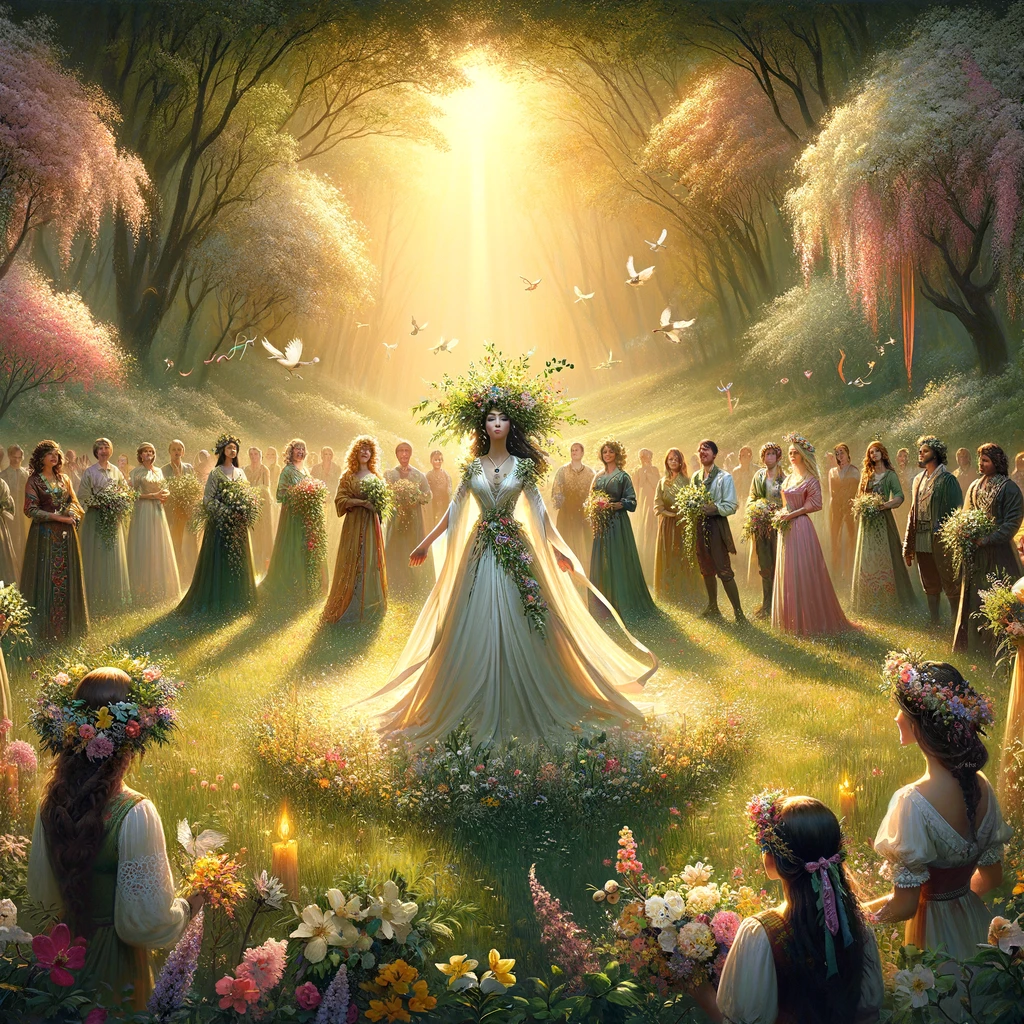
The May Queen, carefully selected for her grace, charisma, and embodiment of spring’s essence, assumes a sacred role as she steps into the spotlight of the festivities. Adorned with a wreath of freshly gathered flowers, meticulously woven into a crown that gleams with nature’s hues, she becomes a living embodiment of beauty and fertility. Every petal, every bloom adorning her crown, is a testament to the abundance and vitality of the season, infusing her presence with an aura of joy and enchantment. With each step she takes, the May Queen breathes life into the ancient symbols she wears, embodying the spirit of spring with grace and dignity.

The embodiment of spring’s essence encompasses a multitude of qualities that resonate with the vibrant energy of the season. It reflects the awakening of nature from its winter slumber, characterized by the blossoming of flowers, the greening of the landscape, and the return of warmth and light. The May Queen personifies this renewal and growth, exuding qualities of vitality, joy, and optimism. Her grace and charisma mirror the beauty of blooming flowers, while her infectious laughter and lively demeanor embody the spirit of rejuvenation and abundance that defines springtime. In her presence, there is a palpable sense of hope and possibility, as she symbolizes the promise of new beginnings and the endless cycle of life’s renewal.

The Ceremony of Crowning

The ceremony of crowning the May Queen is a deeply symbolic and ceremonious affair, steeped in tradition and imbued with the magic of the season. As the community gathers around, there is a palpable sense of anticipation and reverence in the air. All eyes are on the chosen May Queen, whose presence commands attention and admiration. With grace and poise, she stands at the center of the gathering, ready to be adorned with her floral crown, a symbol of her status as the embodiment of spring’s blessings.

The act of crowning the May Queen is a sacred ritual, marking the transition from the cold, dormant days of winter to the vibrant, life-filled days of spring. With each delicate flower carefully chosen and arranged, the floral crown is a masterpiece of natural beauty, a reflection of the abundance and vitality that surrounds the community. As the crown is placed upon the May Queen’s head, it serves as a visual representation of her role as a beacon of hope and renewal, guiding the community through the changing seasons with grace and dignity.

For the May Queen, the crowning ceremony is a moment of profound significance, marking her as a symbol of beauty, fertility, and the eternal cycle of life. With the weight of tradition upon her shoulders, she accepts her role with humility and grace, embracing the responsibilities that come with her title. As the floral crown adorns her head, she is transformed into a living embodiment of spring’s blessings, radiating joy, warmth, and vitality to all who behold her.

As the ceremony concludes, the May Queen takes her place at the forefront of the festivities, leading the community in songs, dances, and other celebratory rituals. Her presence infuses the gathering with a sense of joy and unity, inspiring all who participate to embrace the spirit of the season and to revel in the beauty and abundance of nature. In this way, the ceremony of crowning the May Queen serves not only as a celebration of an individual but also as a reminder of the timeless rhythms of the natural world and the profound interconnectedness of all living things.

Symbolism and Significance

The crowning of the May Queen is imbued with layers of symbolism and profound significance, each element of the ceremony reflecting the ancient wisdom and timeless rhythms of the natural world. At its core, the ritual represents the renewal of life and the fertility of the earth, heralding the arrival of spring and the promise of new beginnings.

Central to the ceremony is the floral crown worn by the May Queen, a potent symbol of the blooming of flowers, the greening of fields, and the abundance of nature’s bounty. Each delicate blossom woven into the crown carries with it the essence of spring, infusing the ceremony with a sense of vitality and renewal. As the crown is placed upon the May Queen’s head, she becomes a living embodiment of this fertility, a vessel through which the life-giving energies of the season flow.

But the symbolism of the May Queen extends beyond mere fertility; she is also a representation of the enduring cycle of life and death, growth and decay. Just as the earth awakens from its winter slumber to burst forth in a riot of color and fragrance, so too does the May Queen embody the spirit of rejuvenation and transformation. In her, the community sees not only the beauty of spring but also the resilience of the human spirit and the eternal cycle of renewal.

Moreover, the crowning of the May Queen serves as a powerful reminder of the interconnectedness of all living things. Just as the flowers in her crown are interconnected, so too are the members of the community bound together by a shared sense of purpose and belonging. Through the May Queen, this unity is made manifest, as she becomes a focal point for the community’s hopes, dreams, and aspirations for the future.

In this way, the crowning of the May Queen is more than just a ceremonial tradition; it is a profound expression of humanity’s relationship with the natural world and a celebration of the enduring cycle of life. As the May Queen takes her place at the center of the festivities, she embodies the spirit of spring in all its glory, reminding us of the beauty and wonder of the world around us, and inspiring us to embrace the joy and abundance that the season brings.

Leading the Celebration

Elevated to the esteemed role of the May Queen, she assumes a leadership position within the community, tasked with guiding and uplifting her fellow celebrants as they partake in the joyous festivities. With grace and poise, she becomes the focal point of the celebration, her presence radiating an aura of reverence and delight.

As the May Queen, she leads the community in a spirited procession, her floral crown glistening in the sunlight as she moves gracefully through the gathering throngs. With each step, she exudes an air of majesty and charm, captivating the hearts of all who behold her. Her infectious energy ignites a sense of excitement and anticipation, infusing the festivities with an undeniable sense of magic and wonder.

At the heart of the celebration, the May Queen leads the revelers in dances that echo the rhythms of nature and the cycles of the seasons. With fluid movements and joyful expressions, she encourages all to join in the merriment, inviting them to lose themselves in the beauty of the moment. Together, they weave a tapestry of movement and music, their laughter and applause echoing through the air like a chorus of jubilation.

But the May Queen’s role extends beyond mere entertainment; she is also a source of inspiration and guidance for her community. With wisdom and compassion, she imparts words of encouragement and wisdom, reminding her fellow celebrants of the importance of unity, resilience, and hope in the face of life’s challenges. Her words resonate deeply with all who hear them, serving as a beacon of light in times of darkness and uncertainty.

In leading the celebration, the May Queen embodies the spirit of spring in all its glory, her presence serving as a reminder of the beauty and vitality that abound in the natural world. Through her leadership, she inspires her community to embrace the joy and abundance of the season, fostering a sense of unity, purpose, and belonging that will endure long after the festivities have ended.

Honoring Nature’s Gifts

In her embodiment of beauty and fertility, the May Queen becomes a living testament to the abundant blessings bestowed upon humanity by the natural world. As she dons her floral crown and stands before her community, she serves as a poignant reminder of the intricate web of life that sustains us all. With each delicate blossom adorning her head, she honors the gifts of the earth – the fragrant blooms, the lush foliage, and the fertile soil that nourishes all living beings.

In honoring the May Queen, the community is called to reflect upon their own relationship with nature and the profound interconnectedness that binds them to the earth. Through her example, they are reminded of the importance of stewardship and reverence for the environment, inspiring them to tread lightly upon the land and to protect its delicate balance for future generations.

As she leads the celebration, the May Queen invites her fellow revelers to join her in honoring nature’s gifts through song, dance, and ritual. Together, they offer gratitude to the sun, the rain, and the fertile earth, acknowledging the vital role they play in sustaining life. With each step and gesture, they express their deep appreciation for the abundance that surrounds them, vowing to cherish and protect it for the benefit of all.

In honoring nature’s gifts, the May Queen and her community affirm their commitment to living in harmony with the earth, recognizing that their well-being is intrinsically linked to the health and vitality of the natural world. Through their collective reverence and gratitude, they seek to cultivate a deeper connection to the land and its inhabitants, fostering a sense of stewardship and responsibility that will endure long after the festivities have ended.

Conclusion

Crowning the May Queen transcends mere ritual; it is a profound celebration that encapsulates the very essence of life, love, and the eternal cycle of renewal. As she stands adorned with flowers and crowned with grace, the May Queen becomes a living embodiment of the vibrant spirit of spring, a beacon of hope and vitality for all who gather to honor her. In her presence, we are reminded of the inexorable rhythm of nature, the ever-turning wheel of the seasons, and the boundless beauty that surrounds us.

Through the ritual of crowning the May Queen, we pay homage to the inherent magic and wonder of the natural world, rejoicing in its abundant blessings and reveling in its transformative power. As we weave her floral crown and bestow upon her the honor she deserves, we are reminded of the interconnectedness of all life and the profound gifts that the earth bestows upon us each day.

In honoring the May Queen, we celebrate not only the beauty and abundance of the natural world but also the resilience and vitality of the human spirit. We are reminded of our capacity to grow, to flourish, and to bloom anew with each passing season, mirroring the cycles of nature that govern our lives. And as we join in celebration, dancing and singing in her honor, we reaffirm our commitment to living in harmony with the earth, cherishing its treasures and safeguarding its future for generations to come.

So let us crown the May Queen with joy and reverence, embracing the spirit of spring and the promise of renewal that she represents. For in her presence, we find inspiration, hope, and the timeless beauty of nature’s embrace.

Posted on Leave a comment

Eostre

Goddess EostreReading Time: 9 minutes
Goddess Eostre

Introduction

Unveiling the Tapestry of the Goddess of Spring’s Renewal

In the tapestry of ancient folklore and the ever-turning wheel of the seasons, the figure of Eostre emerges as a captivating symbol of spring’s renewal and the celebration of life’s cyclical journey. Rooted in Germanic traditions and honored in various forms across cultures, Eostre weaves a narrative that intertwines the themes of fertility, rebirth, and the vibrant emergence of life after the dormancy of winter. In this article we explore the Origins, Symbols, Modern Celebration, and many more aspects of the goddess Eostre.

Origins of Eostre

In the intricate tapestry of ancient Germanic paganism, Eostre emerges as a goddess shrouded in the mists of dawn, her origins weaving a narrative of celestial luminosity and the promise of a fertile earth. The roots of Eostre’s existence delve deep into the spiritual landscape of Germanic traditions, where she is revered as a deity intimately connected with the dawning light and the blossoming vitality that accompanies the arrival of spring.

As we navigate the corridors of time, our understanding of Eostre is illuminated by the remnants of historical writings and linguistic studies. Within the annals of ancient texts and the etymological echoes of her name, we catch glimpses of a figure whose influence is most profoundly felt during the veneration of the spring equinox. It is in this celebration that Eostre’s essence intertwines with the cyclical rhythms of the seasons, bringing forth a tapestry of renewal, growth, and the triumphant emergence of life from the hibernation of winter.

Eostre’s presence, though often veiled in the mystery of ages, is believed to have permeated the hearts and rituals of ancient Germanic communities. Her association with dawn signifies not only the literal break of day but also the metaphorical awakening of the natural world from its wintry slumber. In the soft glow of the early morning light, Eostre is said to have ushered in the promise of warmer days, heralding the return of life to the once-dormant earth.

The burgeoning fertility attributed to Eostre aligns her with the earth’s transformative journey from barrenness to abundance. She becomes a guardian of the burgeoning life force, a deity who oversees the sprouting of seeds, the blossoming of flowers, and the renewal of the land. The very essence of Eostre mirrors the profound interconnectedness between the divine and the earthly, as communities celebrated her influence during the season of burgeoning life and burgeoning light.

While the specifics of Eostre’s myths may have been lost to the passage of time, her presence resonates through the echoes of ancient rituals and the subtle shifts in language that carry fragments of her name. In the realm of Germanic paganism, Eostre stands as a symbol of hope, a beacon guiding communities through the ever-changing dance of seasons, and a testament to the enduring human connection with the cycles of nature.

Eostre’s Dance with Light and Darkness

In the celestial ballet that unfolds across the skies, the spring equinox emerges as a pivotal moment, marking the delicate balance between day and night. Celebrated with reverence and joy around March 20th or 21st in the Northern Hemisphere, this astronomical phenomenon becomes the stage upon which Eostre, the goddess of dawn and fertility, casts her enchanting influence.

As the earth begins its gradual tilt towards the sun, the vernal equinox serves as the herald of a transformative season. Day and night, stand in equipoise, sharing the cosmic canvas in equal measure. It is within this harmonious equilibrium that Eostre’s connection with the celestial event comes to light, resonating with the essence of balance, renewal, and the perpetual dance of light and darkness.

The arrival of the spring equinox serves as a celestial proclamation, announcing the end of winter’s hibernation and the awakening of nature from its slumber. Eostre, synonymous with dawn and the burgeoning fertility of the earth, aligns herself with the rejuvenating forces that come to life during this celestial spectacle. The sun’s ascent to prominence bathes the world in a gentle warmth, coaxing the emergence of delicate buds, the first blossoms, and the vibrant hues of a world reborn.

Eostre’s association with the spring equinox becomes a symbolic tapestry woven with threads of hope and renewal. As daylight extends its embrace, overcoming the lingering shadows of winter’s chill, the goddess stands as a beacon of light, symbolizing the triumph of vitality over dormancy. Her influence mirrors the inherent promise of the season — a promise of growth, of life unfurling, and of the earth awakening to the symphony of renewal.

In the mythic realms of ancient traditions, the alignment of Eostre with the spring equinox represents a cosmic acknowledgment of the cyclical journey of life. Her presence during this celestial event becomes a testament to the perpetual cycle of birth, growth, and eventual rest, mirrored in the dance of day and night that unfolds above.

As communities gather to celebrate the spring equinox, they do so with an awareness of the intricate choreography of the cosmos. The equinox becomes a sacred moment when Eostre’s influence is palpable, guiding the world towards the flourishing abundance of spring and weaving her narrative into the very fabric of the changing seasons.

Eostre’s Enigmatic Symbols

Unveiling the Hare and the Egg

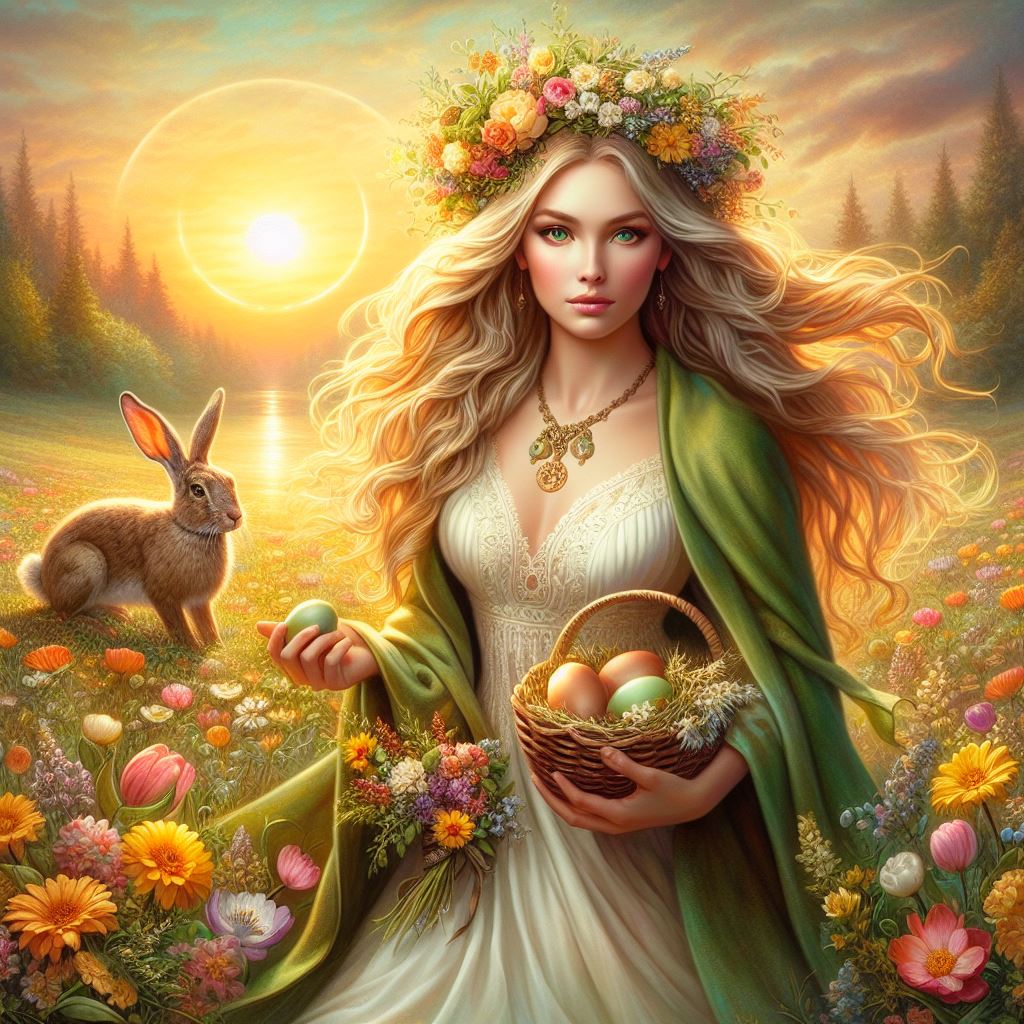
In the symbolic lexicon of Eostre, the goddess of dawn and fertility, two enigmatic icons emerge — the hare and the egg. These potent symbols, woven into the tapestry of Eostre’s lore, carry profound significance, acting as conduits for the essence of fertility, rebirth, and the eternal dance of life’s cycles.

The hare, with its graceful leaps and associations with the moon, stands as a powerful emblem of fecundity and the rhythmic pulse of nature’s vitality. Revered for its prolific breeding, the hare intertwines its destiny with the mysteries of fertility. In the soft glow of moonlight, the hare’s nocturnal activities align it with the lunar cycles, further emphasizing the interconnectedness of Eostre’s influence with the celestial rhythms that govern life’s perpetual flow.

As a symbol in the tapestry of Eostre’s narrative, the hare embodies the spirit of nature awakening from its wintry slumber. Its swift movements and moonlit activities become a testament to the goddess’s role in ushering in the burgeoning life force that transforms the dormant earth into a vibrant canvas of growth and renewal.

Complementing the hare in Eostre’s symbolic repertoire is the egg — a universal emblem of new life, growth, and the infinite potential that lies within the womb of existence. The egg, with its protective shell cradling the promise of life, mirrors the cyclical nature of birth, death, and rebirth. In the hands of Eostre, the egg becomes a vessel of transformation, encapsulating the essence of the season as it heralds the return of warmth and vitality.

Eostre’s association with the egg is a poignant reminder of the ever-present potential for renewal that resides within the natural world. As the earth awakens from its winter slumber, the egg becomes a symbol of the latent possibilities waiting to hatch and unfurl into the tapestry of life. The goddess, with her symbols of the hare and the egg, invites devotees to contemplate the cyclical nature of existence, where every ending paves the way for a new beginning.

In the tapestry of Eostre’s symbols, the hare and the egg intertwine to create a visual narrative that encapsulates the essence of the season she governs. As communities gather to celebrate the goddess during the spring equinox, these symbols become potent reminders of nature’s perpetual dance — a dance that mirrors the eternal cycle of life, death, and the promise of rebirth.

Eostre’s Mythic Whispers

In the ethereal realms of mythology, Eostre, the goddess of dawn and fertility, graces the narratives with her elusive presence. While the specifics of her mythology remain shrouded in the mists of time, a tapestry of interconnected tales emerges, weaving together the changing seasons, the eternal dance of life and death, and the promise of rejuvenation that accompanies the cycle of rebirth.

Eostre’s mythology, though not extensively documented, becomes an enchanting narrative interwoven with the ephemerality of the natural world. As the earth, in its winter slumber, dreams of the awakening spring, the goddess’s influence is said to stir the dormant energies, coaxing forth the blossoming of flowers and the vibrant greenery that transforms landscapes.

In the tapestry of Eostre’s mythology, her footsteps are traced in the delicate blooms that emerge, heralding the end of winter’s icy grip. The goddess’s touch becomes the catalyst for the return of vitality to the natural world, orchestrating a symphony of life as flora unfurls its petals, reaching toward the sun in joyful celebration of the impending warmth.

Linked to the eternal cycle of life, death, and rebirth, Eostre’s mythology becomes a cosmic dance that mirrors the ever-turning wheel of existence. Her influence is felt in the rhythmic cadence of the seasons, where each phase seamlessly transitions into the next, echoing the profound interconnectedness of all living things.

As communities gather to celebrate the spring equinox, Eostre’s mythology echoes through rituals and ceremonies, becoming a whispered enchantment that resonates with the promise of renewal. The goddess’s ephemeral presence is felt in the gentle breezes that carry the scent of blooming flowers and in the tender embrace of sunlight that graces the rejuvenated earth.

While the details of her stories may remain veiled, Eostre’s mythology invites seekers to immerse themselves in the essence of the changing seasons. Her mythic whispers beckon devotees to partake in the dance of life, to embrace the cyclical nature of existence, and to find solace in the eternal promise of rebirth that she, as the goddess of dawn, brings to the world.

Modern Celebrations of Eostre

Ostara

In the tapestry of modern Pagan and Heathen traditions, the celebration of Eostre during the spring equinox unfolds as a vibrant expression of reverence for the goddess of dawn, fertility, and the burgeoning earth. As the natural world begins to stir from its winter slumber, practitioners of contemporary traditions weave together rituals, ceremonies, and festivities that harmonize with the essence of Eostre’s themes.

The sabbat of Ostara, the spring equinox, marked around March 20th or 21st in the Northern Hemisphere, stands as a pivotal moment when day and night find equilibrium, signaling the awakening of warmer days and the blossoming of the landscape. Eostre’s connection to this celestial event aligns her with the rejuvenating forces of spring, symbolizing the triumph of light over darkness and the promise of new beginnings.

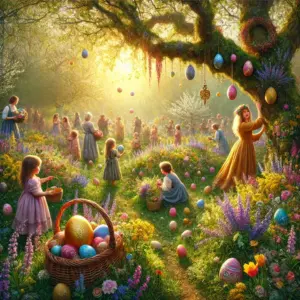
In contemporary celebrations, altars and sacred spaces are adorned with offerings that encapsulate the spirit of Eostre’s mythology. Colored eggs, representing the potential for new life and growth, take center stage, their vibrant hues mirroring the blossoming flowers that dot the landscape. Fresh blooms, symbols of nature’s reawakening, infuse the rituals with the delicate fragrances of renewal and vitality.

Hares, revered as potent symbols of fertility and rebirth, also find their place in modern Eostre celebrations. Whether depicted in artwork, sculptures, or as part of ceremonial decorations, the hare becomes a living emblem of the fecundity that Eostre’s influence bestows upon the earth. Its presence adds a touch of enchantment, embodying the natural rhythms of the seasons and the perpetual dance of life.

Rituals during Eostre celebrations may include invocations to the goddess, acknowledging her role in the cyclical nature of existence. Devotees may engage in activities that mirror the themes of fertility and rebirth, such as planting seeds, tending to gardens, or crafting nature-inspired art. The act of communing with the earth becomes a sacred gesture, aligning with Eostre’s essence and fostering a deeper connection to the cycles of nature.

As practitioners join to celebrate Eostre in contemporary times, the festivities become a harmonious blend of ancient reverence and modern interpretations. The goddess’s presence is invoked not only through traditional symbols but also through the shared intention to embrace the burgeoning life that unfolds with the arrival of spring. In these celebrations, Eostre’s mythology continues to weave its enchanting threads into the evolving tapestry of spiritual traditions, reminding all who partake that, like the changing seasons, life is an eternal dance of renewal and growth.

Eostre’s Linguistic Legacy

From Spring Festivities to Easter Traditions

The intriguing connection between Eostre and the Christian holiday of Easter forms a fascinating tapestry of linguistic evolution and cultural amalgamation. Rooted in the linguistic musings of Bede, an English monk and historian from the 8th century, the name Eostre became etched into the annals of time, finding an unexpected echo in the Christian celebration of the resurrection of Jesus.

Bede’s writings, notably in his work “De temporum ratione” (On the Reckoning of Time), casually mention Eostre in the context of the month of April. While scant details about Eostre’s mythology were provided, Bede’s association of her name with the spring month left an indelible mark on linguistic history. The term “Eosturmonath” (Old English for April) found its place in Bede’s narrative, etching the goddess’s name into the fabric of the English language.

Fast forward through the corridors of time, and the linguistic connection between Eostre and Easter becomes apparent. As Christianity spread and assimilated various cultural practices, the celebration of Jesus’s resurrection merged with pre-existing pagan festivities tied to the arrival of spring. This fusion created a syncretic celebration that incorporated both Christian and pagan elements, giving rise to the Easter traditions that many recognize today.

Easter eggs, a prominent symbol in both pagan and Christian traditions, found their way into the Easter narrative. The egg, a universal symbol of new life and rebirth, seamlessly blended with the themes of resurrection and renewal inherent in the Christian story. The egg’s association with Eostre’s symbols of fertility and the potential for growth further solidified its place in the Easter festivities.

Hares, too, hopped across the cultural divide, transitioning from their role as symbols of fertility in pagan traditions to becoming occasional companions of the Easter Bunny. This playful embodiment of fertility became a whimsical addition to Easter celebrations, charming children, and adults alike.

As Eostre’s name echoes through the corridors of linguistic history, her legacy persists in the shared traditions of spring celebrations. The linguistic bridge between Eostre and Easter serves as a testament to the dynamic interplay between cultures, where ancient pagan echoes continue to resonate in the modern rituals that mark the arrival of spring and the promise of new life.

Eostre’s Enduring Legacy

In the timeless dance of nature’s cycles, Eostre’s legacy stands as an enduring emblem of hope, growth, and the perpetual rhythm of life’s eternal cycle. Through the eons, she has woven herself into the very fabric of cultural celebrations, from ancient pagan rituals heralding the spring equinox to the modern festivities that echo the promise of new beginnings. Eostre’s influence transcends the boundaries of time, inviting all who seek to connect with the profound magic of seasonal rebirth. As we embrace the vibrant tapestry of nature’s rhythms, Eostre remains a guiding light, a symbol that speaks to the heart of humanity’s deep-seated yearning for renewal and the ever-renewing spirit of the Earth.