Posted on Leave a comment

Crowning the May Queen

Crowning the May Queen

Introduction

An Emblem of Beauty and Fertility

In the rich and colorful tapestry of May Day celebrations, a few rituals captivate the imagination and stir the heart quite like the venerable tradition of crowning the May Queen. This cherished custom, steeped in antiquity, and infused with symbolism, serves as a poignant tribute to the splendor of springtime. With roots that stretch back through the annals of time, the crowning of the May Queen embodies the essence of beauty, fertility, and the inexorable renewal of life that permeates the natural world. As petals unfurl and blossoms bloom, this timeless ritual pays homage to the boundless vitality of the season, weaving together threads of tradition, symbolism, and communal reverence in a tapestry of celebration and joy.

Embodying the Spirit of Spring

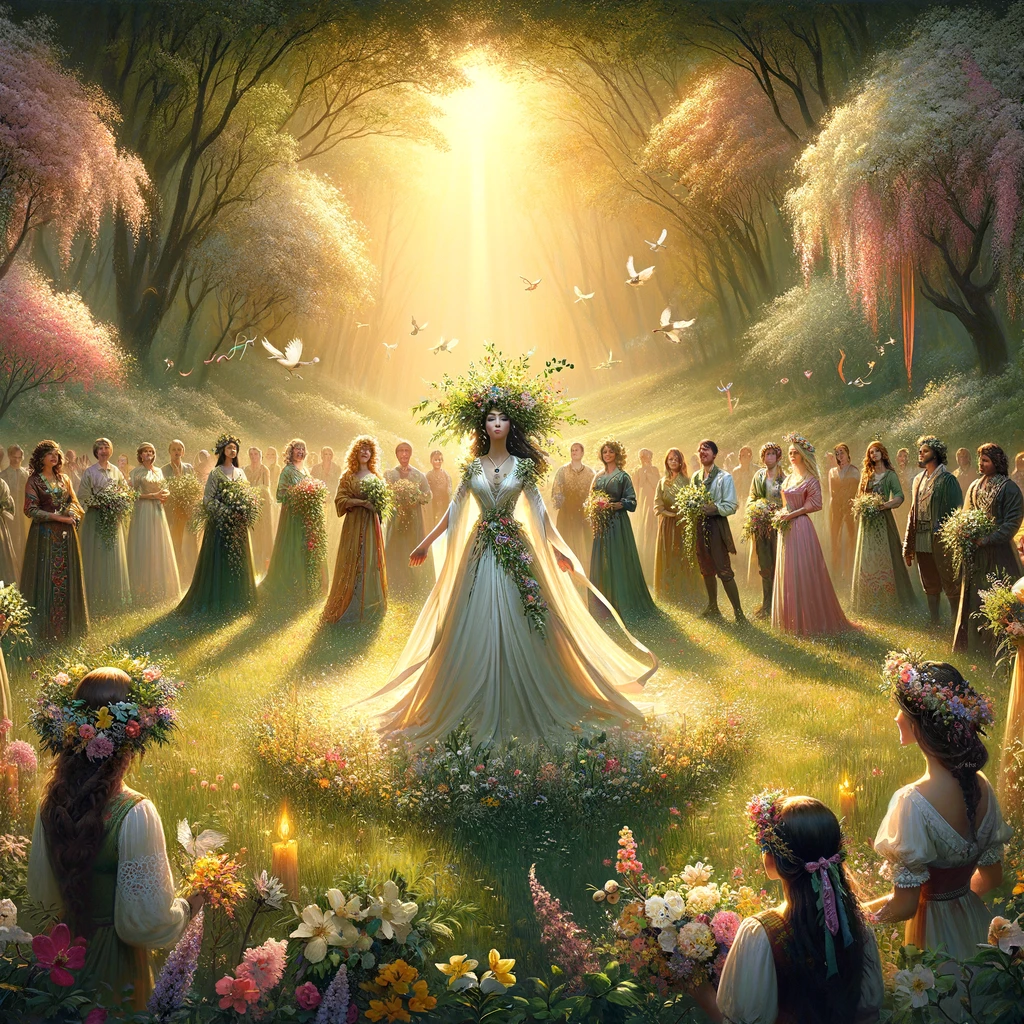
The May Queen, carefully selected for her grace, charisma, and embodiment of spring’s essence, assumes a sacred role as she steps into the spotlight of the festivities. Adorned with a wreath of freshly gathered flowers, meticulously woven into a crown that gleams with nature’s hues, she becomes a living embodiment of beauty and fertility. Every petal, every bloom adorning her crown, is a testament to the abundance and vitality of the season, infusing her presence with an aura of joy and enchantment. With each step she takes, the May Queen breathes life into the ancient symbols she wears, embodying the spirit of spring with grace and dignity.

The embodiment of spring’s essence encompasses a multitude of qualities that resonate with the vibrant energy of the season. It reflects the awakening of nature from its winter slumber, characterized by the blossoming of flowers, the greening of the landscape, and the return of warmth and light. The May Queen personifies this renewal and growth, exuding qualities of vitality, joy, and optimism. Her grace and charisma mirror the beauty of blooming flowers, while her infectious laughter and lively demeanor embody the spirit of rejuvenation and abundance that defines springtime. In her presence, there is a palpable sense of hope and possibility, as she symbolizes the promise of new beginnings and the endless cycle of life’s renewal.

The Ceremony of Crowning

The ceremony of crowning the May Queen is a deeply symbolic and ceremonious affair, steeped in tradition and imbued with the magic of the season. As the community gathers around, there is a palpable sense of anticipation and reverence in the air. All eyes are on the chosen May Queen, whose presence commands attention and admiration. With grace and poise, she stands at the center of the gathering, ready to be adorned with her floral crown, a symbol of her status as the embodiment of spring’s blessings.

The act of crowning the May Queen is a sacred ritual, marking the transition from the cold, dormant days of winter to the vibrant, life-filled days of spring. With each delicate flower carefully chosen and arranged, the floral crown is a masterpiece of natural beauty, a reflection of the abundance and vitality that surrounds the community. As the crown is placed upon the May Queen’s head, it serves as a visual representation of her role as a beacon of hope and renewal, guiding the community through the changing seasons with grace and dignity.

For the May Queen, the crowning ceremony is a moment of profound significance, marking her as a symbol of beauty, fertility, and the eternal cycle of life. With the weight of tradition upon her shoulders, she accepts her role with humility and grace, embracing the responsibilities that come with her title. As the floral crown adorns her head, she is transformed into a living embodiment of spring’s blessings, radiating joy, warmth, and vitality to all who behold her.

As the ceremony concludes, the May Queen takes her place at the forefront of the festivities, leading the community in songs, dances, and other celebratory rituals. Her presence infuses the gathering with a sense of joy and unity, inspiring all who participate to embrace the spirit of the season and to revel in the beauty and abundance of nature. In this way, the ceremony of crowning the May Queen serves not only as a celebration of an individual but also as a reminder of the timeless rhythms of the natural world and the profound interconnectedness of all living things.

Symbolism and Significance

The crowning of the May Queen is imbued with layers of symbolism and profound significance, each element of the ceremony reflecting the ancient wisdom and timeless rhythms of the natural world. At its core, the ritual represents the renewal of life and the fertility of the earth, heralding the arrival of spring and the promise of new beginnings.

Central to the ceremony is the floral crown worn by the May Queen, a potent symbol of the blooming of flowers, the greening of fields, and the abundance of nature’s bounty. Each delicate blossom woven into the crown carries with it the essence of spring, infusing the ceremony with a sense of vitality and renewal. As the crown is placed upon the May Queen’s head, she becomes a living embodiment of this fertility, a vessel through which the life-giving energies of the season flow.

But the symbolism of the May Queen extends beyond mere fertility; she is also a representation of the enduring cycle of life and death, growth and decay. Just as the earth awakens from its winter slumber to burst forth in a riot of color and fragrance, so too does the May Queen embody the spirit of rejuvenation and transformation. In her, the community sees not only the beauty of spring but also the resilience of the human spirit and the eternal cycle of renewal.

Moreover, the crowning of the May Queen serves as a powerful reminder of the interconnectedness of all living things. Just as the flowers in her crown are interconnected, so too are the members of the community bound together by a shared sense of purpose and belonging. Through the May Queen, this unity is made manifest, as she becomes a focal point for the community’s hopes, dreams, and aspirations for the future.

In this way, the crowning of the May Queen is more than just a ceremonial tradition; it is a profound expression of humanity’s relationship with the natural world and a celebration of the enduring cycle of life. As the May Queen takes her place at the center of the festivities, she embodies the spirit of spring in all its glory, reminding us of the beauty and wonder of the world around us, and inspiring us to embrace the joy and abundance that the season brings.

Leading the Celebration

Elevated to the esteemed role of the May Queen, she assumes a leadership position within the community, tasked with guiding and uplifting her fellow celebrants as they partake in the joyous festivities. With grace and poise, she becomes the focal point of the celebration, her presence radiating an aura of reverence and delight.

As the May Queen, she leads the community in a spirited procession, her floral crown glistening in the sunlight as she moves gracefully through the gathering throngs. With each step, she exudes an air of majesty and charm, captivating the hearts of all who behold her. Her infectious energy ignites a sense of excitement and anticipation, infusing the festivities with an undeniable sense of magic and wonder.

At the heart of the celebration, the May Queen leads the revelers in dances that echo the rhythms of nature and the cycles of the seasons. With fluid movements and joyful expressions, she encourages all to join in the merriment, inviting them to lose themselves in the beauty of the moment. Together, they weave a tapestry of movement and music, their laughter and applause echoing through the air like a chorus of jubilation.

But the May Queen’s role extends beyond mere entertainment; she is also a source of inspiration and guidance for her community. With wisdom and compassion, she imparts words of encouragement and wisdom, reminding her fellow celebrants of the importance of unity, resilience, and hope in the face of life’s challenges. Her words resonate deeply with all who hear them, serving as a beacon of light in times of darkness and uncertainty.

In leading the celebration, the May Queen embodies the spirit of spring in all its glory, her presence serving as a reminder of the beauty and vitality that abound in the natural world. Through her leadership, she inspires her community to embrace the joy and abundance of the season, fostering a sense of unity, purpose, and belonging that will endure long after the festivities have ended.

Honoring Nature’s Gifts

In her embodiment of beauty and fertility, the May Queen becomes a living testament to the abundant blessings bestowed upon humanity by the natural world. As she dons her floral crown and stands before her community, she serves as a poignant reminder of the intricate web of life that sustains us all. With each delicate blossom adorning her head, she honors the gifts of the earth – the fragrant blooms, the lush foliage, and the fertile soil that nourishes all living beings.

In honoring the May Queen, the community is called to reflect upon their own relationship with nature and the profound interconnectedness that binds them to the earth. Through her example, they are reminded of the importance of stewardship and reverence for the environment, inspiring them to tread lightly upon the land and to protect its delicate balance for future generations.

As she leads the celebration, the May Queen invites her fellow revelers to join her in honoring nature’s gifts through song, dance, and ritual. Together, they offer gratitude to the sun, the rain, and the fertile earth, acknowledging the vital role they play in sustaining life. With each step and gesture, they express their deep appreciation for the abundance that surrounds them, vowing to cherish and protect it for the benefit of all.

In honoring nature’s gifts, the May Queen and her community affirm their commitment to living in harmony with the earth, recognizing that their well-being is intrinsically linked to the health and vitality of the natural world. Through their collective reverence and gratitude, they seek to cultivate a deeper connection to the land and its inhabitants, fostering a sense of stewardship and responsibility that will endure long after the festivities have ended.

Conclusion

Crowning the May Queen transcends mere ritual; it is a profound celebration that encapsulates the very essence of life, love, and the eternal cycle of renewal. As she stands adorned with flowers and crowned with grace, the May Queen becomes a living embodiment of the vibrant spirit of spring, a beacon of hope and vitality for all who gather to honor her. In her presence, we are reminded of the inexorable rhythm of nature, the ever-turning wheel of the seasons, and the boundless beauty that surrounds us.

Through the ritual of crowning the May Queen, we pay homage to the inherent magic and wonder of the natural world, rejoicing in its abundant blessings and reveling in its transformative power. As we weave her floral crown and bestow upon her the honor she deserves, we are reminded of the interconnectedness of all life and the profound gifts that the earth bestows upon us each day.

In honoring the May Queen, we celebrate not only the beauty and abundance of the natural world but also the resilience and vitality of the human spirit. We are reminded of our capacity to grow, to flourish, and to bloom anew with each passing season, mirroring the cycles of nature that govern our lives. And as we join in celebration, dancing and singing in her honor, we reaffirm our commitment to living in harmony with the earth, cherishing its treasures and safeguarding its future for generations to come.

So let us crown the May Queen with joy and reverence, embracing the spirit of spring and the promise of renewal that she represents. For in her presence, we find inspiration, hope, and the timeless beauty of nature’s embrace.
Posted on Leave a comment

Embracing Ostara

Horned God & Goddess

Introduction

The Rebirth of the Horned God and the Sacred Union with the Goddess

As the earth awakens from its wintry slumber, Ostara emerges as a time of profound significance in the Wiccan and Pagan traditions. Celebrated around the vernal equinox, usually falling between March 20th and 23rd, Ostara marks the triumphant return of light, life, and fertility to the land. Central to the essence of this Sabbat is the rebirth of the Horned God and the symbolic union with the Goddess, a sacred marriage that heralds the renewal of the natural world and the eternal cycle of life.

The Rebirth of the Horned God

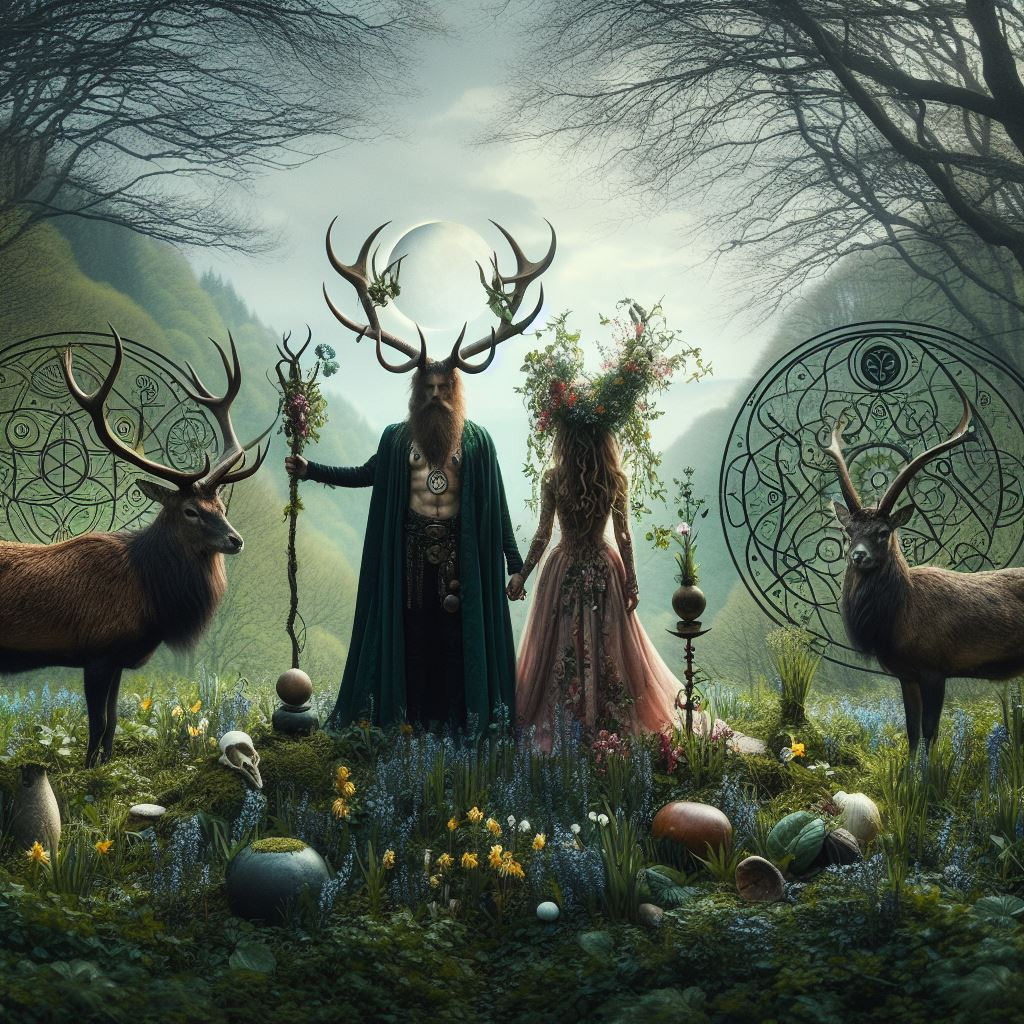
In Wiccan cosmology, the Horned God is a central figure symbolizing the masculine divine energy, often depicted as a powerful and virile entity adorned with antlers or horns. As the earth awakens from its wintry slumber and begins to stir with the promise of spring, the Horned God emerges from the depths of the underworld, rejuvenated, and renewed. His resurrection marks the triumphant return of light, warmth, and life, symbolizing the victory of vitality over stagnation, and growth over dormancy.

The rebirth of the Horned God is deeply intertwined with the natural cycles of the seasons. As the days lengthen and the sun’s rays grow stronger, his strength and vitality begin to surge, infusing the land with renewed energy and vitality. Each passing day brings an increase in his power, as he emerges from the darkness of the underworld to reign over the burgeoning life of the earth.

Symbolically, the rebirth of the Horned God represents the triumph of light over darkness, warmth over cold, and life over death. His emergence from the depths of the earth mirrors the return of the sun’s warmth and light, heralding the onset of spring and the promise of renewal and regeneration. With each step he takes, the land awakens from its slumber, bursting forth with new life, growth, and vitality.

As the Horned God walks the land once more, his presence infuses the earth with energy and vitality, reviving dormant seeds and stirring new growth. His resurgent power is felt in the blooming of flowers, the sprouting of leaves, and the emergence of wildlife from their winter shelters. With each passing day, his influence grows, heralding the arrival of spring and the promise of abundance, fertility, and vitality for all living beings.

In essence, the rebirth of the Horned God is a celebration of the eternal cycle of life, death, and rebirth that animates the natural world. As he emerges from the darkness of the underworld to reign once more over the land, his presence brings hope, renewal, and vitality to all who dwell upon the earth. With each passing day, his strength grows, infusing the land with the energy and vitality of spring, and guiding the way towards the promise of a new beginning.

The Sacred Union with the Goddess

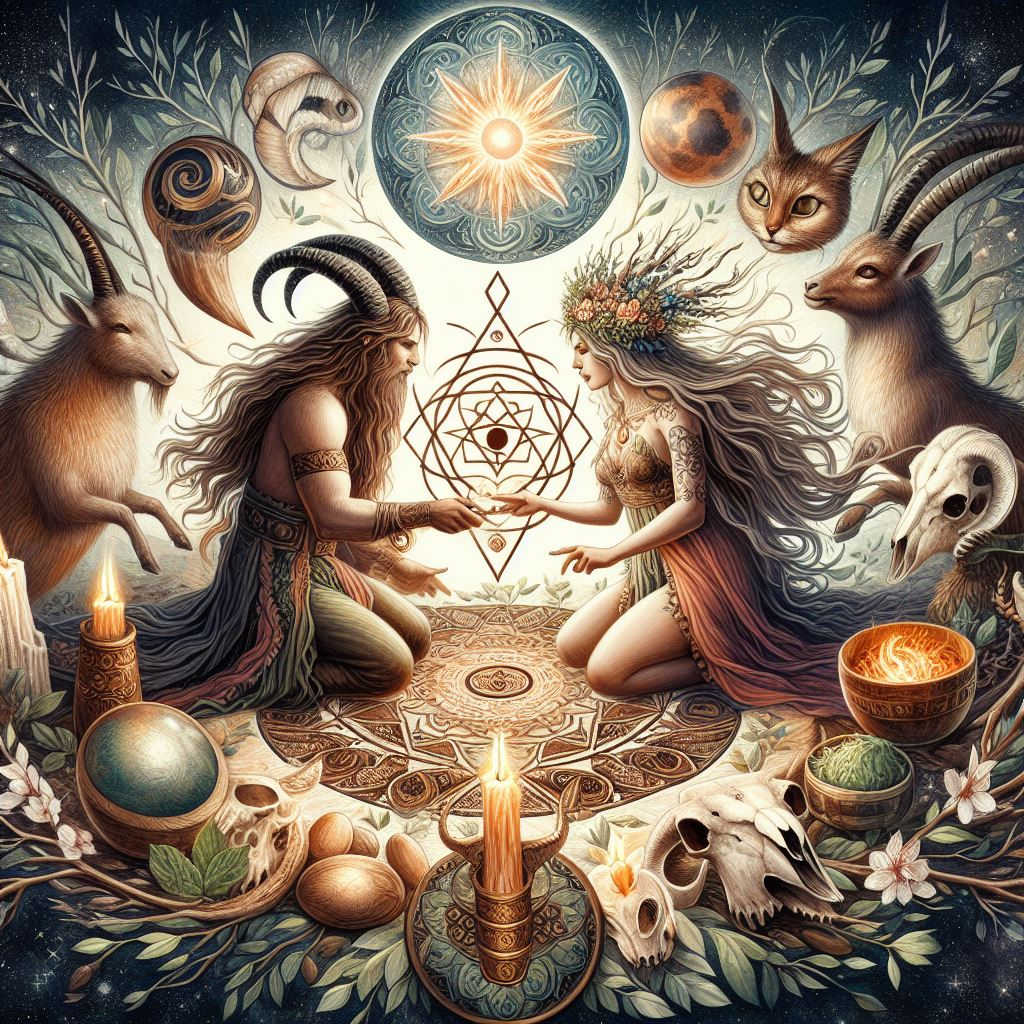
At Ostara, the rebirth of the Horned God is not merely a solitary event but a deeply symbolic union with the Goddess, representing the sacred marriage or hieros gamos. As the embodiment of feminine divine energy, the Goddess eagerly anticipates the return of her consort, welcoming him with open arms as he emerges from the depths of the underworld.

Horned God & Goddess Union

The sacred union between the Horned God and the Goddess is a profound and mystical dance of cosmic harmony and balance. It reflects the eternal interplay between masculine and feminine energies, symbolizing the dynamic interconnection and interdependence of all things in the universe.

In this sacred union, the Horned God and the Goddess come together in perfect balance, each complementing the other in a harmonious embrace. Their union is a celebration of the divine partnership that sustains and nourishes all of creation, mirroring the union of the earth and sky, the sun and the moon, and the masculine and feminine principles within everyone.

As the Horned God emerges from the darkness of the underworld, the Goddess receives him with love and reverence, embodying the nurturing and life-giving aspects of the divine feminine. Together, they unite in a dance of creation and renewal, infusing the world with their combined energies and blessings.

The sacred marriage between the Horned God and the Goddess is a reminder of the interconnectedness of all things and the cyclical nature of existence. It is a potent symbol of fertility, abundance, and regeneration, embodying the promise of new beginnings and the eternal cycle of life, death, and rebirth.

As the Horned God and the Goddess come together in divine union, their love and power radiate throughout the cosmos, blessing the earth with the gifts of spring and ushering in a season of growth, renewal, and abundance for all beings.

Rituals and Ceremonies

Ostara, with its vibrant energy and themes of renewal, inspires a variety of rituals and ceremonies that honor the rebirth of the Horned God and celebrate the sacred union with the Goddess. These rituals often take place outdoors, allowing participants to connect with the natural world and harness the energies of the season.

One common Ostara ritual is the planting of seeds, symbolizing the fertility and growth that accompanies the arrival of spring. Participants may gather in gardens or other outdoor spaces to ceremonially sow seeds, infusing them with intentions for personal or collective renewal and abundance.

Another popular Ostara practice is the decoration of eggs, a tradition that dates back centuries and symbolizes fertility, rebirth, and the emergence of new life. Participants may gather to dye and decorate eggs with vibrant colors and intricate patterns, infusing each egg with their hopes and wishes for the coming season.

Fire plays a significant role in many Ostara rituals, symbolizing the returning warmth and light of the sun. Participants may light bonfires or small candles to honor the increasing daylight hours and to invoke the transformative power of fire for personal and collective renewal.

Altars are often central to Ostara rituals, serving as focal points for ceremonial observances and offerings. Altars may be adorned with symbols of fertility and rebirth, such as flowers, antlers, eggs, and representations of the sun and moon. These symbols help to evoke the energies of Ostara and create a sacred space for ritual and reflection.

Through these rituals and ceremonies, participants honor the rebirth of the Horned God and celebrate the sacred union with the Goddess, connecting with the cycles of nature and tapping into the abundant energy of the spring season. Each ritual act serves as a powerful reminder of the eternal cycle of life, death, and rebirth, and the endless potential for growth and transformation that accompanies the turning of the wheel of the year.

The Symbolism of the Horned God and the Goddess

In Wiccan cosmology, the Horned God and the Goddess symbolize the duality and interconnectedness of the divine, embodying complementary aspects of nature and life.

The Horned God, often depicted with antlers or horns, represents the masculine divine energy, and is associated with the wild, the hunt, and the greenwood. His presence evokes the vitality and strength of the natural world, symbolizing the cycle of life, death, and rebirth. As the protector of the forests and wildlife, the Horned God embodies the untamed and primal forces of nature, ensuring the balance and harmony of the natural world.

Conversely, the Goddess represents feminine divine energy and embodies the nurturing and creative energies of the earth. Often depicted as the mother of all living beings, the Goddess guides the cycles of birth, growth, and rebirth, nurturing life in all its forms. She is associated with fertility, abundance, and the changing seasons, her presence infusing the world with vitality and renewal.

Together, the Horned God and the Goddess form a sacred union that mirrors the balance and harmony found in nature. Their partnership represents the interconnectedness of all life and the cyclical rhythms of the natural world, reminding practitioners of the eternal cycle of life, death, and rebirth that permeates the universe. As symbols of divine balance and harmony, the Horned God and the Goddess inspire reverence and respect for the interconnected web of life, encouraging practitioners to cultivate a deep connection with the natural world and to honor the sacredness of all living beings.

The Power of Romantic Pacts and Family Building at Ostara

Ostara, the celebration of spring’s arrival and the rebirth of nature, holds a potent energy for forging connections and deepening bonds, both romantic and familial. As the earth bursts forth with new life and vitality, it’s a time ripe with potential for making romantic pacts and strengthening the foundations of family.

Romantic Pacts: Celebrating Love’s Renewal

As the earth awakens from its winter slumber, Ostara breathes new life into romantic relationships, infusing them with the promise of renewal and growth. Couples, inspired by the vibrant energy of the season, may feel compelled to deepen their connection through meaningful gestures and heartfelt commitments.

During Ostara, partners often choose to make romantic pacts, symbolic promises that honor their love and dedication to each other. These pacts serve as affirmations of their bond and intentions for the future, reflecting the shared dreams and aspirations that unite them as a couple.

In the spirit of Ostara, these romantic pacts carry a special significance, infused with the vitality and fertility of the season. They represent not only a commitment to each other but also a celebration of love’s eternal renewal, mirroring the cycles of nature unfolding around them.

Whether it’s a vow of love and fidelity, a pledge to support each other’s growth and aspirations, or a promise to navigate life’s challenges together, these romantic pacts hold the power to strengthen the foundation of the relationship and foster deeper intimacy and connection.

As couples exchange vows of love and devotion under the watchful gaze of the spring sun, they embrace the transformative energy of Ostara, ushering in a season of love, growth, and boundless possibilities for their shared journey ahead.

Family Building: Cultivating Bonds of Kinship

Ostara, with its vibrant energy of renewal and growth, offers a sacred space for families to come together and strengthen the bonds of kinship. As the earth awakens from its winter slumber, families embrace the opportunity to celebrate the interconnectedness of their lives and the abundance of love that flows between them.

During Ostara, families engage in a variety of activities that nurture their sense of unity and togetherness. One such tradition is the planting of seeds, a symbolic gesture that mirrors the fertile energy of the season and the potential for growth and abundance in the months ahead. By working together to tend to their gardens or nurture new life, families cultivate a shared sense of purpose and accomplishment, deepening their connection to each other and to the natural world.

In addition to gardening, families may partake in other rituals and traditions that honor the spirit of Ostara. This could include crafting colorful eggs, decorating the home with spring flowers, or gathering around a bonfire to welcome the return of the sun’s warmth and light. Through these shared experiences, families create lasting memories and traditions that bind them together across generations.

Moreover, Ostara serves as a time for reflection and gratitude, as families express appreciation for the love and support that sustains them throughout the year. Whether through heartfelt conversations, shared meals, or acts of kindness and generosity, families reaffirm their commitment to each other and the values that unite them as a family.

As the wheel of the year turns and the seasons change, Ostara reminds us of the importance of family and the enduring bonds that sustain us through life’s joys and challenges. By coming together in celebration and solidarity, families honor the sacredness of their connections and lay the foundation for a future filled with love, harmony, and abundance.

The Transformative Power of Connection: Embracing Love and Unity

Ostara, with its vibrant energy of renewal and growth, serves as a potent reminder of the transformative power of connection. During this sacred time, we are invited to deepen our bonds with our loved ones and cultivate a sense of unity and belonging that nourishes our spirits and fuels our aspirations.

At the heart of Ostara lies the opportunity to forge romantic pacts, pledging our love and commitment to our partners and setting intentions for our shared future. These romantic gestures, infused with the energy of the season, hold the potential to ignite passion, strengthen bonds, and create a foundation of trust and mutual support. Whether it’s a promise of fidelity, devotion, or shared dreams and aspirations, these pacts serve as a testament to the enduring power of love to transform and uplift our lives.

Moreover, Ostara beckons us to engage in family-building activities that foster a sense of connection and togetherness among our loved ones. As we plant seeds, tend to gardens, or gather around the hearth, we create moments of shared joy and laughter that strengthen the ties that bind us as a family. Through these rituals and traditions, we reaffirm our commitment to each other and create a legacy of love and unity that transcends time and space.

In embracing the power of connection during Ostara, we align ourselves with the natural rhythms of the earth and harness the transformative energies of the season. As we come together in love and unity, we sow the seeds of our collective dreams and aspirations, nurturing them with care and intention until they blossom into fruition. May our connections with our loved one’s blossom and flourish like the flowers of spring, filling our lives with beauty, joy, and abundance.

Embracing the Eternal Dance of Renewal

As we stand in reverence of Ostara and the sacred union of the Horned God and the Goddess, we are drawn into the eternal dance of life, death, and rebirth that permeates the natural world. In their divine embrace, we witness the timeless cycle of creation and destruction, knowing that with each passing season, the promise of renewal is ever-present.

In the union of the Horned God and the Goddess, we find not only inspiration but also guidance and solace. Their sacred dance mirrors the intricate interplay of light and darkness, masculine and feminine energies, reminding us of the inherent balance that sustains all existence. As we honor their union, we align ourselves with the rhythms of the earth, tapping into the boundless reservoir of creative potential that flows through the cosmos.

With each blossom that unfurls and each seed that takes root, we celebrate the abundant fertility that springs forth from their divine union. Through their blessing, we are granted the gift of abundance, fertility, and joy, infusing our lives with vitality and purpose. As the earth awakens to the vibrant pulse of spring, may we carry the blessings of the Horned God and the Goddess within our hearts, spreading their light and love to all beings and all realms.

In the sacred union of Ostara, we are reminded of the eternal truth that life, in all its myriad forms, is a sacred dance of love and unity. As we honor the divine masculine and feminine energies that flow through us and all of creation, may we find ourselves evermore attuned to the rhythms of the earth and the harmonies of the cosmos. Blessed be.

Posted on Leave a comment

Celebrating Ostara by Planting Seeds

Planting Seeds
Planting Seeds

Introduction

Nurturing New Beginings

As the days lengthen and the earth begins to awaken from its winter slumber, the arrival of Ostara heralds a time of profound significance in the natural world. This ancient festival, celebrated by many cultures around the globe, marks the vernal equinox and the transition from the darkness of winter to the light of spring. It is a season of renewal, growth, and fertility, as the earth bursts forth with new life and the promise of abundance. One of the most sacred rituals associated with Ostara is the act of planting seeds, a tangible expression of our connection to the cycles of nature and the eternal dance of life. In this article, we will explore the timeless tradition of planting seeds during Ostara and the profound symbolism it holds for nurturing the cycle of growth and renewal in both the natural world and our own lives.

Nurturing the Cycle of Growth and Renewal

As the Earth gradually sheds its winter coat and basks in the gentle caress of the returning sun, the arrival of Ostara heralds a season of profound transformation and renewal. This ancient festival, rooted in the rhythms of the natural world, invites us to partake in the awakening of the Earth and to reconnect with the cyclical patterns of growth and rebirth that define this time of year. At the heart of Ostara lies a celebration of life’s eternal cycle, where death gives way to new beginnings and darkness yields to the burgeoning light.

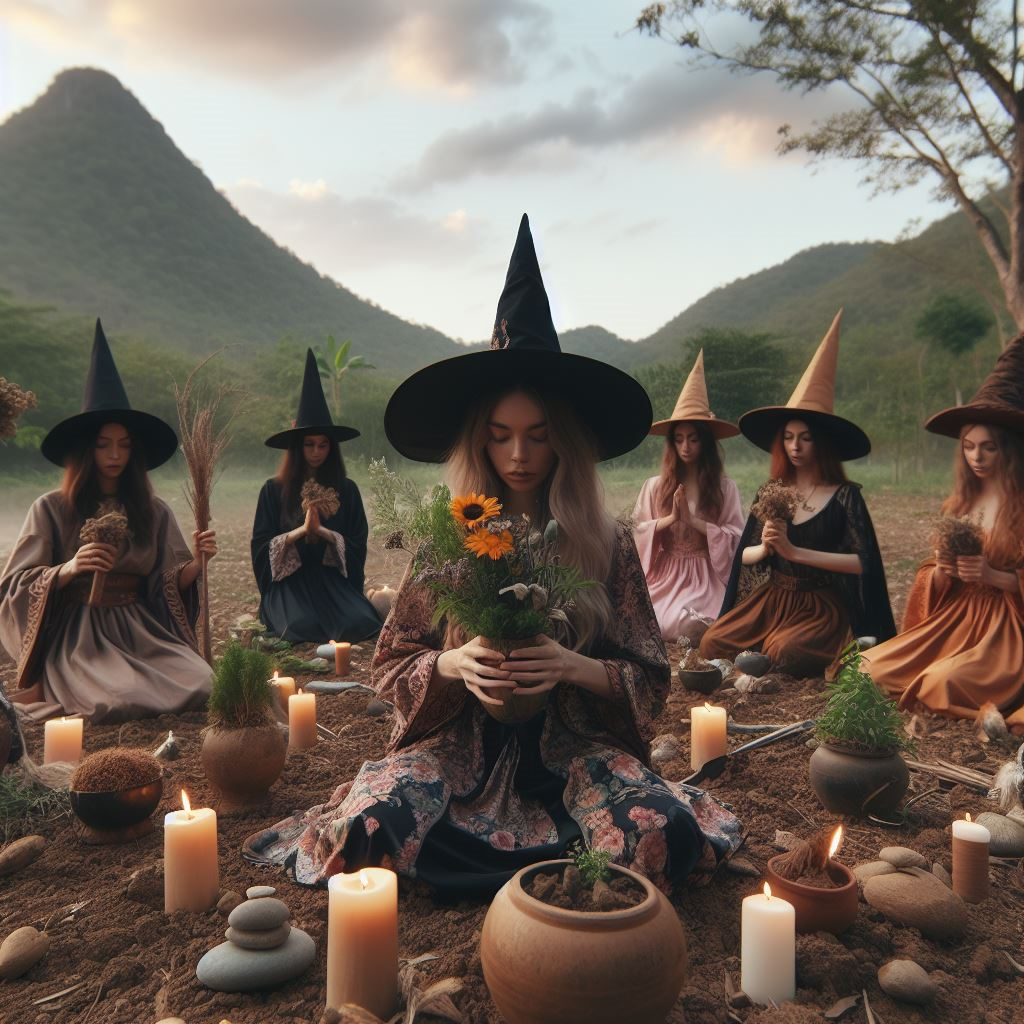
Amidst this backdrop of burgeoning vitality, one of the most poignant and symbolic activities that embody the essence of Ostara is the act of planting seeds. Whether you find yourself tending to a sprawling backyard garden or nurturing delicate shoots in the coziness of your home, the simple act of sowing seeds serves as a poignant reminder of the inherent magic and resilience of nature. As we gently press each tiny seed into the waiting embrace of the soil, we become co-creators in the unfolding drama of springtime, our hands serving as conduits for the divine energy of growth and transformation.

Indeed, there is something profoundly intimate and sacred about the act of planting seeds during Ostara. It is a tangible expression of our connection to the Earth and a poignant reminder of our place within the intricate web of life. As we tenderly water our seeds and watch with bated breath as they begin to unfurl their delicate tendrils towards the warming sun, we are reminded of the miraculous power of renewal that lies dormant within each tiny kernel of life.

Moreover, the act of planting seeds serves as a powerful metaphor for the personal growth and transformation that we too undergo during this season of renewal. Just as the seeds we plant take root and unfurl their tender shoots towards the sky, so too do we have the opportunity to shed the constraints of the past and embrace the boundless potential of the future. In this way, planting seeds becomes not only a celebration of nature’s eternal cycle but also a deeply personal and transformative journey towards self-discovery and renewal.

In essence, the act of planting seeds during Ostara serves as a poignant reminder of the profound interconnectedness of all life and our innate capacity to embrace the transformative power of growth and renewal. Whether we find ourselves tending to a bustling garden or nurturing a single potted plant on our windowsill, the simple act of sowing seeds becomes a sacred ritual through which we can honor the beauty, resilience, and inherent magic of the natural world. So let us embrace this season of renewal with open hearts and hands, as we plant the seeds of hope, love, and transformation that will blossom and flourish in the days and weeks to come.

Connecting with Nature’s Cycle

Planting seeds during Ostara is not merely an act of gardening; it is a sacred communion with the rhythms of the natural world, a dance of co-creation between humanity and the Earth itself. As we tenderly cradle each seed in our palms and gently nestle it into the waiting soil, we become active participants in the timeless cycle of growth and renewal that unfolds with each turn of the seasons. With each scoop of earth and each drop of water, we sow the seeds of hope and possibility, aligning ourselves with the ancient rhythms that have guided life’s unfolding since time immemorial.

In this sacred act of planting, we are reminded of the profound interconnectedness of all living things and our role as stewards of the Earth’s precious resources. As we nurture our seeds with water and sunlight, we bear witness to the miracle of life as it unfurls before our eyes. The Earth, in her infinite wisdom, responds to our care and attention, coaxing forth new life from the depths of the soil and inviting us to participate in the ongoing dance of creation and renewal.

Just as the Earth bursts forth with new life in the spring, so too do our seeds sprout and grow, reaching eagerly towards the warmth of the sun. In the tender green shoots that emerge from the soil, we see reflections of our own journey of growth and transformation. Like the seeds we plant, we too carry within us the potential for renewal and rebirth, waiting patiently for the nurturing touch of sunlight and water to awaken our dormant potential.

As we tend to our seeds with care and attention, we are reminded of the cyclical nature of existence, the eternal dance of birth, growth, death, and rebirth that defines the natural world. In this sacred act of planting, we honor the interconnected web of life that sustains us all, reaffirming our commitment to stewardship and reverence for the Earth and all her inhabitants.

Planting seeds during Ostara is a sacred act of co-creation, a tangible expression of our connection to the rhythms of the natural world. As we participate in the cycle of growth and renewal, we are reminded of the infinite potential that lies dormant within each seed, waiting to be awakened by the nurturing touch of human hands and the gentle embrace of the Earth herself.

Educational and Empowering

For children, the act of planting seeds transcends mere gardening; it becomes a transformative and deeply educational journey that instills invaluable lessons about life, nature, and responsibility. As they eagerly scatter seeds into the waiting soil and tenderly water them, children are not just participants in a gardening activity; they are active agents in the miracle of life itself. With each passing day, they witness the remarkable transformation as their seeds germinate, sending forth delicate green shoots that reach eagerly towards the warming sun.

This firsthand experience of witnessing the magic of growth and renewal fosters a profound sense of awe and wonder in children. They marvel at the resilience of nature and the intricate dance of life that unfolds before their eyes. Through this hands-on activity, children gain a deeper understanding of the interconnectedness of all living things and develop a newfound appreciation for the natural world.

Moreover, planting seeds provides children with a tangible connection to the food they eat and the journey it takes from seed to plate. As they watch their plants grow and mature, children learn about the importance of healthy eating and the vital role that plants play in nourishing our bodies and sustaining our planet. This awareness fosters a sense of responsibility for caring for the Earth and its precious resources, instilling in children a lifelong commitment to environmental stewardship.

Furthermore, the act of nurturing plants teaches children important life skills such as patience, perseverance, and empathy. They learn the value of tending to living-things with care and compassion, and the rewards of patience and dedication as they witness the fruits of their labor blossom before their eyes. These invaluable lessons extend far beyond the garden, shaping the way children approach challenges and relationships in their daily lives.

In essence, planting seeds is not just a gardening activity; it is a transformative educational experience that fosters a deeper connection to nature, instills valuable life skills, and cultivates a sense of responsibility for the Earth and its inhabitants. As children watch their seeds sprout and grow, they are not just cultivating plants; they are nurturing the seeds of curiosity, compassion, and stewardship that will blossom and flourish in the years to come.

Fostering Connection and Community

Planting seeds transcends mere gardening; it becomes a sacred ritual of togetherness and unity, an opportunity for families to forge deeper connections with one another and with the Earth itself. Whether gathered in a sprawling backyard garden, on a cozy balcony, or around pots on a sunlit windowsill, the act of gardening becomes a sacred space where love, laughter, and memories flourish alongside the tender green shoots of new life.

As families come together to plant seeds, they embark on a journey of shared discovery and exploration. Side by side, they dig their hands into the rich earth, feeling the cool soil beneath their fingertips and the promise of new beginnings that lies dormant within each tiny seed. With each scoop of earth and each drop of water, they participate in the timeless dance of growth and renewal, forging bonds that transcend the boundaries of time and space.

In the shared act of gardening, families find solace and joy in each other’s company, basking in the warmth of the sun and the gentle caress of the breeze. As they tend to their plants with care and attention, they learn valuable lessons about patience, perseverance, and the interconnectedness of all living things. Through triumphs and setbacks alike, they support one another with unwavering love and encouragement, celebrating each new leaf and bud as a testament to the power of unity and cooperation.

Moreover, the act of gardening becomes a catalyst for meaningful conversations and shared experiences. As families work together to nurture their plants, they share stories, dreams, and aspirations, weaving a tapestry of shared memories that will be treasured for generations to come. From planting the first seeds to harvesting the fruits of their labor, each step of the journey becomes a cherished moment of connection and togetherness, reaffirming the bonds that unite them as a family.

Planting seeds is not just an act of gardening; it is a sacred rite of passage that strengthens the bonds of family and deepens our connection to the Earth. As families come together to plant, nurture, and grow, they embark on a journey of shared discovery and transformation, creating lasting memories and forging connections that will endure long after the last seed has been sown.

Honoring the Spirit of Ostara

In many cultures and spiritual traditions, Ostara is revered as a time of profound significance, symbolizing the emergence of spring and the renewal of life after the long winter slumber. It is a season steeped in symbolism, with themes of fertility, growth, and new beginnings woven into its very fabric. By engaging in the act of planting seeds during Ostara, we not only honor the spirit of this sacred time but also align ourselves with the natural rhythms of the Earth, tapping into the boundless energy of renewal that courses through the soil and the air.

As we carefully sow our seeds into the waiting earth, we become active participants in the ancient dance of creation and renewal that defines the spring season. Each seed planted is a symbol of hope and potential, a tiny beacon of light that heralds the arrival of warmer days and brighter skies. With each stroke of the soil and each drop of water, we imbue our seeds with the energy of intention, calling forth the magic of growth and transformation that lies dormant within them.

As our seeds take root and begin to grow, we bear witness to the miracle of life unfolding before our eyes. In the tender green shoots that emerge from the soil, we see reflections of our own journey of growth and evolution. We are reminded that just as the Earth awakens from its winter slumber, so too do we have the power to awaken to new possibilities and potentialities in our own lives.

Moreover, planting seeds during Ostara is a deeply symbolic act of reverence and gratitude for the Earth and all its bountiful gifts. It is a way of honoring the cycles of nature and acknowledging our interconnectedness with all living things. As we nurture our seeds with care and attention, we celebrate the abundant blessings that springtime brings, from the vibrant colors of the flowers to the sweet melodies of the birdsong.

Planting seeds during Ostara is a sacred act of co-creation, a tangible expression of our connection to the Earth and the cyclical nature of existence. It is a way of honoring the spirit of renewal that permeates the season and celebrating the promise of a new life that awaits us all. Through this simple yet profound ritual, we are reminded of the infinite possibilities that lie within us and the boundless potential of the world around us.

Planting Seeds

As Ostara approaches and the earth awakens from its winter slumber, many individuals are drawn to the ancient practice of planting seeds as a symbolic gesture of renewal and growth. This time-honored tradition allows us to connect with the rhythms of nature and harness the magical energies of the season to manifest our intentions for the coming months. In this how-to article, we will explore the steps for planting seeds for Ostara, including selecting the right seeds, understanding their meanings and magical properties, and nurturing them to fruition.

Step 1: Choose Your Seeds

The first step in planting seeds for Ostara is to choose the right seeds for your intentions and magical workings. Consider selecting seeds that align with the themes of the season, such as fertility, growth, and renewal. Some popular choices include:

  • Flower Seeds: Flowers are symbols of beauty, joy, and new beginnings. Choose seeds for flowers that bloom in spring, such as daffodils, tulips, and crocuses.
  • Herb Seeds: Herbs are not only useful for culinary and medicinal purposes but also carry potent magical properties. Consider planting seeds for herbs like lavender (for peace and relaxation), basil (for prosperity and abundance), and chamomile (for healing and purification).
  • Vegetable Seeds: Planting vegetable seeds is a practical way to connect with the earth and promote sustainability. Choose seeds for vegetables that thrive in the springtime, such as lettuce, spinach, and radishes.
  • Fruit Seeds: If you have space for fruit-bearing plants, consider planting seeds for fruits like strawberries, blueberries, and raspberries. These seeds symbolize abundance, sweetness, and nourishment.

Step 2: Understand the Meanings and Magical Properties

Before planting your seeds, take some time to research the meanings and magical properties associated with each type of seed. Understanding the symbolism behind the seeds you plant can enhance the intention-setting process and imbue your garden with powerful energy. Here are some examples:

  • Daffodil Seeds: Daffodils symbolize rebirth, new beginnings, and the arrival of spring. Planting daffodil seeds can help you let go of the past and embrace the fresh start that Ostara represents.
  • Lavender Seeds: Lavender is associated with peace, tranquility, and relaxation. Planting lavender seeds can create a serene and harmonious atmosphere in your garden, perfect for meditation and spiritual practices.
  • Lettuce Seeds: Lettuce is a symbol of abundance and prosperity. Planting lettuce seeds can attract wealth and abundance into your life, both in the garden and beyond.
  • Strawberry Seeds: Strawberries are a symbol of love, passion, and sweetness. Planting strawberry seeds can enhance romance and foster deeper connections in relationships.

Step 3: Plant Your Seeds with Intention

Once you have chosen your seeds and learned about their meanings and magical properties, it’s time to plant them with intention. Find a suitable location for your garden, whether it’s a backyard plot, a balcony container, or a sunny windowsill. Prepare the soil by loosening it with a garden fork or trowel and adding compost or organic fertilizer to provide nutrients for your seeds.

As you plant each seed, visualize your intentions clearly in your mind and imbue the seeds with your energy and intention. You may wish to say a prayer or recite an incantation as you plant, calling upon the energies of Ostara and the natural world to bless your garden and help your seeds grow strong and healthy.

Step 4: Care for Your Seeds

After planting your seeds, it’s essential to care for them properly to ensure their success. Water your seeds regularly, keeping the soil moist but not waterlogged. Place your garden in a sunny location where your seeds will receive plenty of sunlight throughout the day. As your seeds begin to sprout and grow, continue to nurture them with love and care, pruning away any dead or damaged foliage and providing support for tall or sprawling plants.

Step 5: Harvest and Enjoy the Fruits of Your Labor

Finally, as your seeds grow and mature, celebrate the fruits of your labor and the blessings of Ostara. Take time to enjoy the beauty and abundance of your garden, whether through admiring the colorful blooms of your flowers, harvesting fresh herbs and vegetables for cooking, or indulging in the sweet taste of homegrown fruits. As you reap the rewards of your gardening efforts, remember to express gratitude to the Earth and the energies of Ostara for their guidance and support along the way.

By planting seeds for Ostara with intention and mindfulness, you can harness the powerful energies of the season to manifest your desires and cultivate a deeper connection with the natural world. May your garden flourish and thrive, and may the blessings of Ostara bring renewal, growth, and abundance into your life.

Conclusion

Planting seeds during Ostara is not merely a seasonal activity; it is a sacred ritual that anchors us in the rhythm of the Earth’s heartbeat and the eternal cycle of life. As we gently sow our seeds into the waiting soil, we are reminded of the profound interconnectedness of all living things and our role as stewards of the Earth’s precious resources. This hands-on experience fosters a deep sense of connection with nature, allowing us to witness firsthand the miracle of growth and renewal that unfolds with each turn of the seasons.

Whether tending to a backyard garden or nurturing indoor plants, the act of planting seeds provides invaluable educational opportunities for children and adults alike. Through observation and experimentation, we gain a deeper understanding of the natural world and our place within it. As children eagerly watch their seeds sprout into green shoots and mature into plants, they learn valuable lessons about patience, perseverance, and the interconnectedness of all living things.

Moreover, planting seeds is a communal activity that strengthens bonds within families and communities. As we come together to work the soil, water our plants, and share stories and laughter, we forge connections that transcend the boundaries of age, culture, and background. In the shared act of gardening, we find solace and joy in each other’s company, creating memories that will be cherished for years to come.

As we celebrate the arrival of spring and the promise of new beginnings, let us embrace the magic of planting seeds as a sacred ritual of renewal and growth. May each seed we sow be a testament to our commitment to stewardship and reverence for the Earth and may the vibrant green shoots that emerge from the soil remind us of the infinite possibilities that lie within each of us. Through the simple act of planting seeds, we reaffirm our connection to the natural world and our role as custodians of its beauty and bounty.