Honoring Idunn and Bragi: Songs, Cheer, and Baking
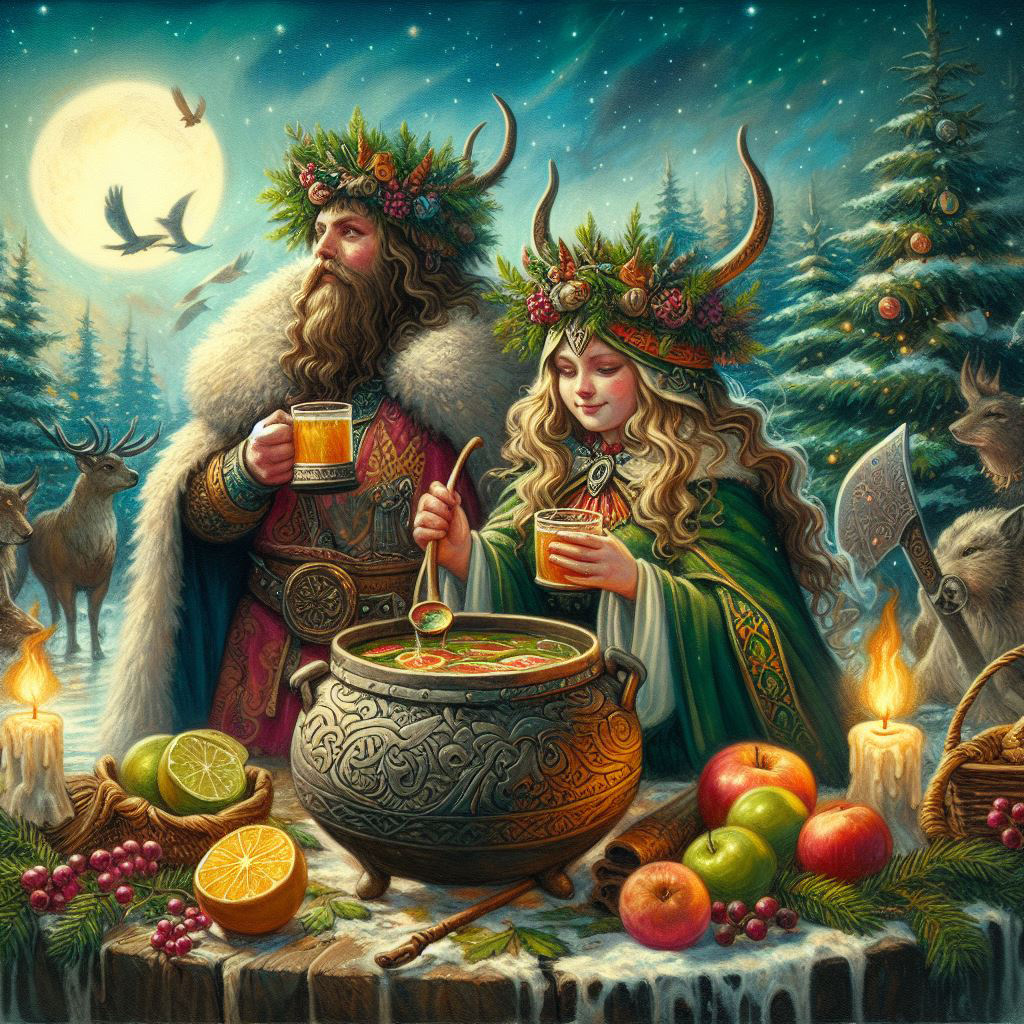
The celebration of Idunn and Bragi is a festive affair, filled with songs, cheer, and the comforting aromas of baking. Musical instruments echo through the halls, as the skald’s artistry and the laughter of merriment resonate in harmony. Idunn is pleased by the offerings of apples or apple-infused creations, embodying the essence of her sacred fruit. Meanwhile, Bragi delights in the melodic tunes and the heartfelt stories shared in his honor.
Honoring Idunn: Embracing the Essence of the Sacred Apple
In the luminous tapestry of Yule, paying homage to Idunn, the gentle guardian of the magic apples of immortality, becomes a poignant act of celebration. The essence of this nurturing goddess is intimately tied to the crisp sweetness of apples, symbolizing not just the fruit itself but the promise of renewal, vitality, and eternal youth.
- Apples: Tokens of Renewal Idunn’s delight is kindled by the humble apple. Whether real or transformed into culinary creations, these fruits symbolize the promise of spring, the cycle of rebirth, and the eternal renewal of life. Presenting apples on the altar is a gesture that transcends the physical fruit; it embodies the cyclical nature of existence and the unending potential for rejuvenation that Idunn brings to the realms of gods and mortals alike.
- Apple-Infused Creations: Culinary Offerings To elevate the act of honoring Idunn, crafting apple-infused creations becomes a delightful expression of devotion. From pies and tarts to spiced cider and apple-scented candles, these culinary offerings mirror the essence of the sacred fruit. Each bite or sip becomes a communion with the divine, a recognition of the interconnectedness between the tangible and the symbolic.
- Floral Tributes: Blooms of Spring’s Anticipation In addition to apples, Idunn’s altar welcomes floral tributes. Potted plants, blossoms, and gardening tools become symbols of the vibrant life that stirs beneath the surface during the winter months. These offerings extend beyond the immediate beauty of the flowers; they signify the anticipation of the coming spring, echoing Idunn’s role as the herald of renewal.
As the fragrance of apples mingles with the freshness of blooms, the act of honoring Idunn during Yule transforms into a celebration of life’s perpetual cycle. In these offerings, we echo the ageless dance of seasons, expressing gratitude for the promise of spring that resides in the heart of winter.
Honoring Bragi: An Ode to Melody and Narrative
In the radiant embrace of Yule, paying homage to Bragi, the god of poetry, unfolds as a harmonious celebration of music, literature, and the art of storytelling. Bragi, revered by skalds and musicians, finds joy in the rhythmic cadence of poetic verses and the enchanting melodies that dance through the air.
- Musical Instruments: Instruments of Praise Bragi’s altar comes alive with the presence of musical instruments. Whether it be the lilting notes of a lyre, the soul-stirring tones of a flute, or the resonant chords of a harp, these instruments become vessels for the expression of devotion. Playing a tune for Bragi becomes a sacred act, an offering of the melodic language that speaks directly to the soul.
- Well-Written Books: Homage to Literature The written word holds a special place on Bragi’s altar. Well-written books, filled with impassioned prose, poetry, and tales, are tokens of admiration for the god of poetry. Each carefully chosen volume is a testament to the enduring power of narratives and the written art form that Bragi so ardently cherishes.
- Words of Poetry and Song: Spun with Passion On the eleventh day of Yule, the air becomes a canvas for the spoken and sung word. Words of poetry, spoken with passion, and songs that echo with emotion become offerings to Bragi. In the flickering glow of Yule lights, the stories told and the verses recited become a symphony of appreciation for the god of leisure and entertainment.
As we honor Bragi, we weave a tapestry of melody and narrative, inviting the spirit of poetic inspiration into our homes. In the rustling pages of well-loved books and the resonant chords of musical instruments, we find a communion with the divine, expressing gratitude for the enduring magic of words and music that transcend the boundaries of time.
Wassailing: A Joyful Tradition of Blessings
As the eleventh day of Yule unfolds, a time-honored tradition takes center stage—Wassailing, an enchanting practice deeply rooted in the tapestry of Anglo-Saxon culture. Wassail, a hot and spiced mulled drink, becomes the elixir of goodwill, symbolizing the collective hope for a bountiful apple harvest and an auspicious year ahead.
Wassailing involves a delightful ritual of encircling a fruit tree, forming a harmonious circle that mirrors the interconnectedness of nature and the community. As participants join hands, their collective energy resonates with the life force of the tree, fostering a sense of unity with the orchard and the land. This communal act becomes a dance of celebration, a joyful acknowledgment of the cyclical nature of life.
With the circle formed, voices rise in song, echoing through the winter air with melodies that speak of joy, hope, and gratitude. The songs, crafted with love and shared in unity, become offerings to the spirits of the orchard, awakening the dormant energies of the trees and inviting blessings for a fruitful harvest. In this shared chorus, the essence of Wassailing transcends the mere act of singing—it becomes a heartfelt conversation with nature.
In a gesture of communal generosity, pieces of toast soaked in Wassail are placed in the branches of the fruit tree. This offering is not just for the enjoyment of our avian friends but serves as a symbolic act of gratitude to the spirits that watch over the orchard. The toast, drenched in the warmth of Wassail, becomes a token of appreciation for the interconnected web of life, where humans, nature, and the divine coexist.
As the sweet aroma of Wassail fills the air and the songs of celebration linger in the winter breeze, Wassailing becomes a bridge between the human realm and the spirit of the orchard. It is a tradition that transcends time, weaving together the threads of the past, present, and future—a joyful celebration of nature’s abundance and a fervent prayer for prosperity in the cycles yet to unfold.
Inviting Prosperity: Symbols of Luck in the New Year
In the intricate dance between tradition and belief, the eleventh day of Yule heralds the arrival of symbols believed to usher in prosperity, positivity, and good fortune as the new year beckons. Across cultures and traditions, various tokens and charms are embraced, each carrying its unique resonance of luck and positive energy.
- Elephants: Guardians of Prosperity Tiny elephant ornaments, with their trunks raised in a gesture of triumph, find their place as guardians of prosperity. Symbolizing strength, wisdom, and loyalty, these small pachyderms become silent sentinels, positioned strategically to invite good luck and ward off negative energies. Their presence within the home creates a harmonious atmosphere, promising a year filled with understanding, protection, and enduring fortune.
- Fish in Aquariums: A Watery Symphony of Prosperity Within the fluid realms of aquariums, fish become more than aquatic companions—they transform into symbols of good health, prosperity, happiness, wealth, and power. As the eleventh day of Yule unfolds, tending to these underwater realms takes on a special significance. Cleaning the aquarium, changing out plants, and infusing the water with fresh energy become rituals that ensure the flow of positive vibes into the upcoming year.
- Crystals: Jewels of Positive Vibrations The eleventh day of Yule also welcomes the radiant energy of crystals into homes. Each crystal, with its unique properties, becomes a jewel of positive vibrations. Rose quartz, known for its association with love and happiness, weaves a tender embrace of affection. Turquoise, with its calming influence, promises tranquility and balance. These crystals, strategically placed, form a sparkling network of positivity, creating an ambiance of serenity and well-being.
- Nature’s Charms: Leaves, Clovers, and Aloe Vera Embracing the wisdom of nature, homes welcome symbols that echo peace, balance, and good fortune. Plants with rounded leaves, strategically positioned near entrances, become silent guardians of harmony. Four-leaf clovers, renowned for their rarity, are cherished as tokens of luck. Aloe Vera, with its enduring vitality, finds its place as a harbinger of positive energy, symbolizing longevity and the promise of a thriving new year.
In this symphony of symbols, the eleventh day of Yule transforms into a canvas adorned with representations of luck and positive vibrations. As each element finds its place within the home, it contributes to the creation of an environment steeped in the promise of prosperity, balance, and the enduring magic of the coming year.
Harmony, Joy, and the Magic of Renewal: A Closing Ode to the Eleventh Day of Yule
In the waning moments of the eleventh day of Yule, as Wassailing songs fade into the crisp night air and the laughter of festive cheer lingers, we stand at the threshold of renewal. Today’s activities, from honoring Idunn and Bragi to the joyous tradition of Wassailing, become more than mere rituals—they are symbolic acts of decluttering, a shedding of the old to make way for the new.
In this symphony of celebration, we have woven the blessings of Idunn and Bragi into the fabric of our homes. The promise of rejuvenation, the gentle embrace of spring’s essence, and the poetic inspiration embodied by Bragi linger in the air, infusing our spaces with timeless magic.
As we bid farewell to the eleventh day of Yule, may our homes resonate with the harmony of nature’s bounty, the joyous melodies of music, and the enduring magic of this sacred season. In the quiet moments that follow, let us carry forward the promises of luck, positivity, and renewal, ready to welcome the coming year with open hearts and the echoes of Yule’s timeless enchantment.