Posted on Leave a comment

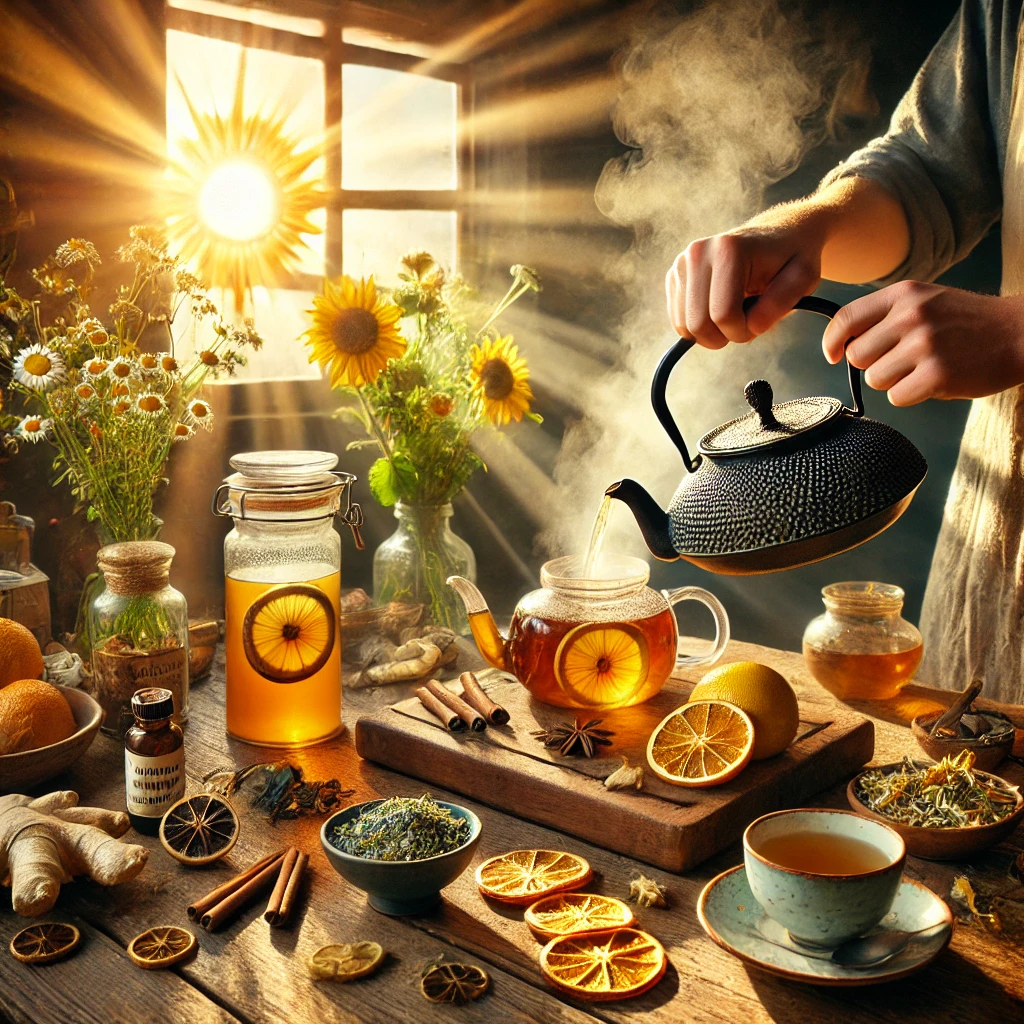
Recipe: Sun-Dazzled Brews – Tea for Sunna

Sun-Dazzled Brews – Tea for Sunna

Introduction

A Warming and Zesty Herbal Tea to Honor Sunna and Embrace Her Vibrant Energy

As the golden rays of the Sun illuminate the frosty mornings of Yule, “Sun-Dazzled Brews” pays homage to Sunna, the radiant solar goddess who brings life, warmth, and vitality to the Earth. This ritual tea blends citrus, warming spices, and soothing herbs, creating a sensory celebration of Sunna’s light and energy. Each sip invites renewal, joy, and connection to the solar forces that guide us through the darkest days of winter.

The Magic of Sun-Dazzled Brews

This tea is more than a simple beverage—it is a radiant tribute to Sunna. The citrus represents her light and warmth, cinnamon and ginger evoke her fiery vitality, and chamomile brings balance and harmony. This blend becomes a ritual of connection, best prepared during Yule mornings or anytime you seek Sunna’s invigorating energy.

Through this ritual tea, we honor Sunna’s essential role in the cosmos, inviting her guidance and inspiration to brighten our days. It is a moment of reflection, renewal, and gratitude for the light she brings, even in winter’s chill.

ASpell for Embracing Vitality

Intent: To connect with Sunna’s energy, inviting vitality, warmth, and inspiration into your life.

Ingredients for the Spell:

  • 1 cup of prepared Sun-Dazzled Brews tea.
  • 1 gold or yellow candle (symbolizing the Sun).
  • A small offering dish.

Spell Instructions:

  1. Light the candle, placing it near a window or on an altar bathed in sunlight.
  2. Pour a small amount of tea into the offering dish.
  3. Speak the invocation:

“Sunna, radiant and bold,
Keeper of warmth and light of gold.
I sip this brew, bright and true,
Honoring your glow, my spirit renewed.”

  1. Reflect on Sunna’s gifts as you sip the tea, feeling her energy infuse your being.

Magical Properties of Sun-Dazzled Brews

Honey or Agave: Sweetens the brew, symbolizing the Sun’s nurturing warmth.

Orange Peel: Represents light, energy, and joy, aligning with Sunna’s solar essence.

Ginger Root: Evokes warmth and vitality, symbolizing the Sun’s fire.

Cinnamon: Adds sweetness and renewal, amplifying the solar energy.

Chamomile: Brings harmony and calm, balancing Sunna’s brilliance.

Sun-Dazzled Brews – Tea for Sunna

A warming, citrus-infused herbal tea to honor Sunna and her life-giving energy.

  • Kettle
  • Teapot or heat-safe container
  • Strainer
  • Mug or teacup
  • 1 tsp dried orange peel (required: Symbolizing Sunna’s energy.)
  • 1 tsp dried chamomile flowers (optional: For harmony and calm.)
  • 1 tsp fresh ginger root (sliced (required): For vitality and warmth.)
  • 1 stick cinnamon (required: For sweetness and renewal.)
  • 2 cups boiling water (required: To infuse the ingredients.)
  • 1 tsp honey or agave (optional: To sweeten and represent nurturing warmth.)

Preparing the Ingredients

  1. Gather all ingredients and ensure their freshness.
  2. Slice the ginger root thinly to release its vibrant flavors.

Brewing the Tea

  1. Boil 2 cups of water in the kettle.
  2. Place the orange peel, ginger slices, cinnamon stick, and chamomile (if using) into the teapot or container.
  3. Pour boiling water over the ingredients.
  4. Cover and steep for 5–10 minutes, adjusting for flavor strength.

Preparing the Offering and Serving

  1. Strain the tea into a mug or teacup.
  2. Add honey or agave if desired, stirring gently.
  3. Pour a small portion into the offering dish. Place it on an altar or windowsill bathed in sunlight.

Honoring Sunna and Savoring the Tea

  1. Sit comfortably in a sunny space, holding the mug to feel its warmth.
  2. Reflect on Sunna’s gifts as you sip, expressing gratitude for her light and vitality.
  3. Allow the tea’s flavors to invigorate your spirit, connecting you to the solar energy.

• Enhance the tea by adding solar herbs like calendula or lemon balm.
• The offering to Sunna can be returned to the Earth, symbolizing gratitude and renewal.
• This caffeine-free blend is perfect for uplifting mornings or reflective afternoons.

Tea
Seasonal Solar Magic, Winter Solstice, Yule
Recipe

Conclusion

“Sun-Dazzled Brews – Tea for Sunna” is a radiant homage to the solar goddess, capturing her vitality and warmth in every sip. As you prepare and enjoy this tea, you connect with Sunna’s life-giving energy, inviting her light to brighten your days and inspire your spirit. Let this brew be a reminder of the Sun’s timeless brilliance and the renewal that Yule promises.

Posted on Leave a comment

Recipe: Moonlit Elixirs – Tea for Mani

Moonlit Elixirs – Tea for Mani

Introduction

A Soothing Blend to Honor the Guardian of the Night

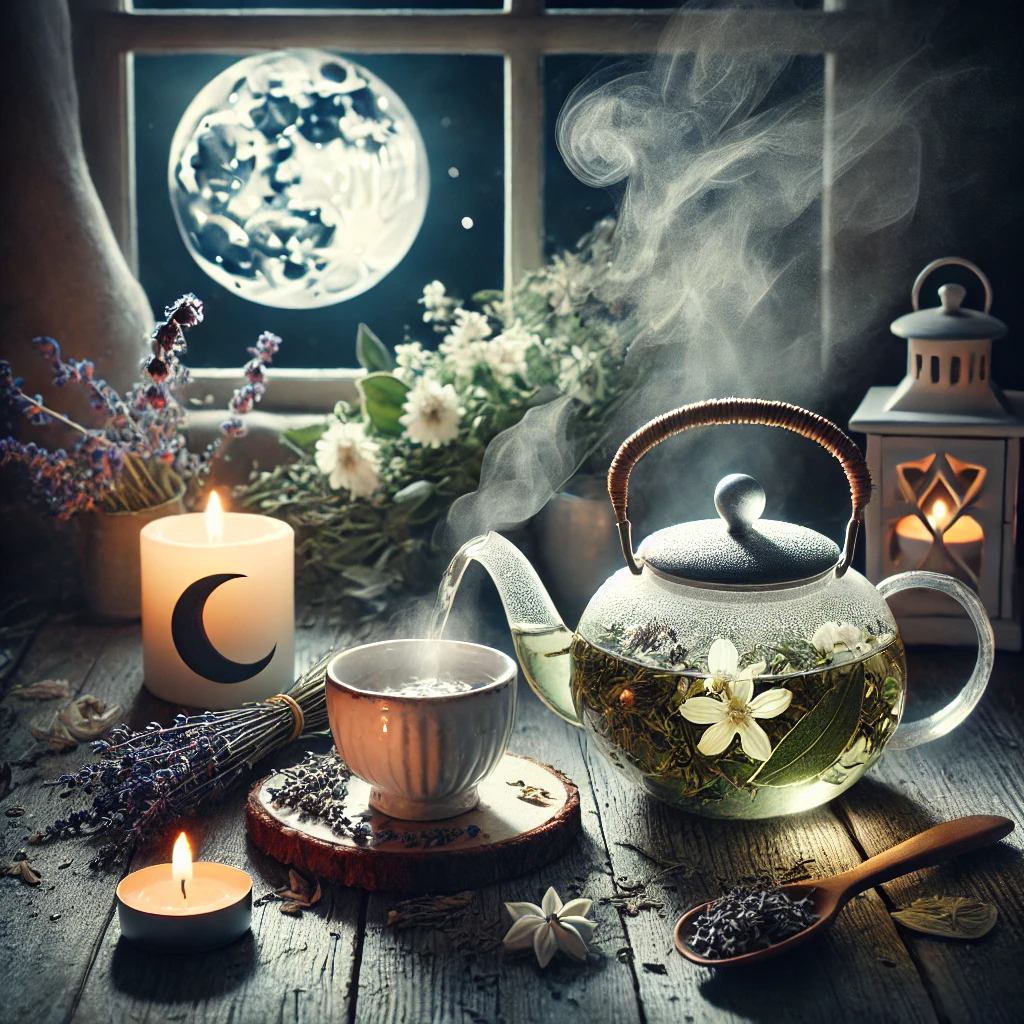
Under the silvery glow of the moon and the vast expanse of the starlit sky, Moonlit Elixirs invites you to craft a celestial tea to honor Mani, the luminous keeper of the night. This ritual tea combines jasmine, sage, and lavender, creating a calming infusion that reflects the mysteries and serenity of the moonlit hours. Each sip becomes an act of reverence, connecting us to Mani’s quiet wisdom and the tranquil energies of the night.

The Magic of Moonlit Elixirs

This tea transcends its role as a simple beverage, transforming into a sacred offering to Mani. Jasmine embodies love and divinity, filling the air with its floral aroma, while sage imparts clarity and ancient wisdom. Lavender balances the blend with its soothing properties, fostering serenity and harmony.

Traditionally prepared during Yule or under the full moon, this tea becomes a reflective ritual. It is a bridge to the celestial realm, inviting calm and gratitude while connecting with the cycles of the moon and the sacred energies of the night sky.

ASpell for Honoring Mani

Intent: To honor Mani and invite his wisdom and tranquility into your life.

Ingredients for the Spell:

  • 1 cup of prepared Moonlit Elixirs tea.
  • 1 lit candle (white or silver, symbolizing Mani).
  • A small offering dish.

Spell Instructions:

  1. Place the lit candle and offering dish on a windowsill or altar under the moonlight.
  2. Pour a small amount of the tea into the offering dish.
  3. Speak the invocation:

“Mani, guardian of the night,
Keeper of the moon’s soft light.
I offer this brew, calm and true,
A gift of thanks and dreams anew.”

  1. Sit quietly, sipping the tea, and meditate on Mani’s presence.

Magical Properties of Moonlit Elixirs

This tea combines herbs with magical energies that align with Mani’s serene and guiding presence:

Lavender: Evokes serenity and peace, fostering a calm state of mind.

Jasmine: Represents love and divinity, connecting to Mani’s celestial grace.

Sage: Symbolizes wisdom and clarity, enhancing reflective meditation.

Moonlit Elixirs – Tea for Mani

A calming herbal tea crafted to honor Mani, the lunar deity.

  • Kettle
  • Teapot or large heat-safe container
  • Strainer
  • Mug or teacup
  • 1 tsp Dried jasmine flowers (required – Calming and romantic, representing love and divinity.)
  • 1 tsp Dried sage leaves (required – For wisdom and clarity, evoking the mysteries of the night.)
  • 1 tsp Dried lavender flowers (required – To add serenity and relaxation.)
  • 2 cups Boiling water (required – The medium for the infusion.)
  • 1 tsp Honey or agave (optional – For sweetness, symbolizing the moon’s gentle glow.)

Preparing the Space

  1. Choose a quiet location where you can prepare and sip your tea under the moon or near a window with a view of the night sky.
  2. Arrange your tools and ingredients on a table, perhaps adding a lit candle or lunar-themed decorations for ambiance.

Brewing the Tea

  1. Boil 2 cups of water in the kettle.
  2. In the teapot or heat-safe container, combine the dried jasmine flowers, sage leaves, and lavender flowers.
  3. Pour the boiling water over the herbs, allowing their aromas to unfurl into the air.
  4. Cover the teapot and let the tea steep for 5–10 minutes, depending on your preferred strength.

Preparing the Offering and Serving

  1. Strain the tea into a mug or teacup, leaving the herbs behind.
  2. Add honey or agave if desired, stirring gently to blend the sweetness.
  3. Pour a small portion of the tea into a separate dish or cup as an offering to Mani. Place this offering on a windowsill or altar dedicated to the moon.

Reflecting and Sipping

  1. Sit comfortably with your tea, gazing at the moon or simply closing your eyes to focus on its energy.
  2. With each sip, meditate on Mani’s gentle guidance and the blessings of the night. Reflect on the balance between light and shadow and the cycles of life illuminated by the moon’s glow.
  3. Allow the tea to calm your mind and connect you with the celestial rhythms of the night.

Jasmine, sage, and lavender are calming herbs. Adjust quantities based on personal taste and tolerance. The offering can be returned to the earth after the ritual, symbolizing your connection to the cycles of nature. This tea is caffeine-free, making it a perfect nighttime companion for reflection and meditation.

Tea
Lunar Magic, Winter Solstice, Yule
Recipe

Conclusion

“Moonlit Elixirs – Tea for Mani” is a tranquil ritual in a cup, honoring the lunar deity and inviting serenity into your life. With each sip, you connect to Mani’s gentle guidance and the celestial rhythms of the night. This tea, crafted with intention and reverence, becomes a soothing companion during Yule’s long nights and a reminder of the moon’s timeless watch over the world.

Posted on Leave a comment

Ritual: Sunna’s Awakening: A Morning Offering

Sunna's Awakening A Morning Offering

Introduction

Honoring the Radiance of the Rising Sun

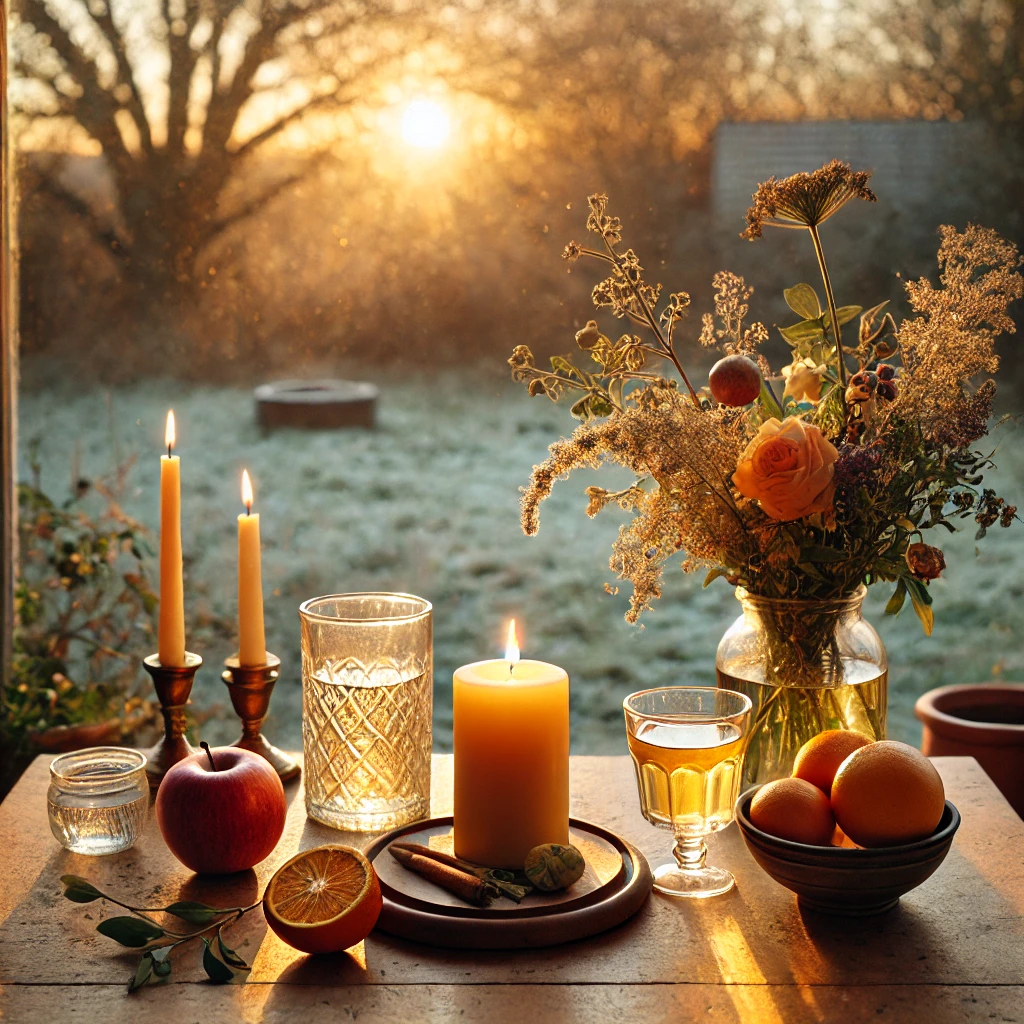
At the heart of Yule, the season of the Sun’s return, we honor Sunna, the radiant goddess of the Sun, who graces the morning sky with light and vitality. As dawn unfolds, this ritual invites practitioners to commune with Sunna, offering gratitude and symbolic gifts to celebrate her life-giving energy. “Sunna’s Awakening” is a deeply meditative and reverent practice, a moment to align with the rhythms of nature and begin the day bathed in her glow.

Ritual Basics

Before beginning any ritual, it is important to prepare yourself mentally and physically. You may want to take a cleansing bath, or shower, and meditate or perform some grounding exercises to center yourself. Gather any materials you will need, such as candles, incense, and offerings for the forest spirits.

You can read a more detailed Ritual Preparation guide here.

Sunna’s Awakening: A Morning Offering

A dawn ritual to honor Sunna and the light she bestows, marking a fresh start and invoking the Sun’s warmth and vitality.

  • Candle
  • Small fireproof dish or altar
  • Matches or lighter
  • 1 Glass Cider (required – Symbolizing vitality and simple joys.)
  • 1 Glass Mead or Goldschlager (optional – Representing sweetness and brilliance.)
  • 1 Apple (required – A symbol of abundance and health.)
  • 1 Orange (required – Representing freshness and the Sun’s energy.)
  • 1 Bouquet Flowers (required – Fragrant and symbolic of beauty and gratitude.)
  • 1 Bowl Water or dew (optional – To connect with the morning’s natural purity.)

Preparing Your Sacred Space

  1. Select a serene location where you can observe the morning light, such as an outdoor spot or a window facing east.
  2. Place your candle at the center of a small altar or table. Surround it with the offerings—cider, mead, fruit, flowers, and water.
  3. Ensure the space is peaceful and free from distractions. If outdoors, embrace the crisp morning air and the sounds of nature.

Centering and Setting Intentions

  1. Sit or stand before your altar, taking a few deep breaths to ground yourself in the moment.
  2. Quiet your mind and focus on the anticipation of dawn. Set an intention for the ritual—whether it’s gratitude, renewal, or connection with Sunna’s energy.

Lighting the Candle

  1. As the first light of day begins to touch the horizon, light the candle.
  2. Say:

    “Sunna, radiant goddess of the morning sky,

    I honor your ascent and the warmth you bring.

    As your light grows, so too does life and hope.

    Bless this day with your vitality and wisdom.

    May your brilliance guide and sustain me."

Presenting the Offerings

  1. One by one, present each offering to Sunna with gratitude:
  2. – Cider: “I offer this cider, a toast to your joy and vibrancy.”
  3. – Mead or Goldschlager: “I offer this mead, a tribute to your sweetness and brilliance.”
  4. – Apple: “I offer this apple, a symbol of abundance and life.”
  5. – Orange: “I offer this orange, embodying your energy and light.”
  6. – Flowers: “I offer these flowers, tokens of my appreciation for your beauty and grace.”
  7. Place each item deliberately on the altar or in front of the candle, imagining Sunna’s golden light bathing them in blessing.

Communing with Sunna

  1. Sit quietly, gazing at the flickering flame and the light of the rising Sun.
  2. Reflect on the Sun’s symbolism—rebirth, vitality, and the unending cycle of life.
  3. If you feel moved, speak words of gratitude or meditate on your connection to the divine energy Sunna represents.

Closing the Ritual

  1. After a moment of silence or meditation, extinguish the candle if the Sun has fully risen, or allow it to burn out safely.
  2. Say:

    “Sunna, I thank you for your light,

    Your warmth sustains all life.

    As you rise today, I honor your journey

    And carry your brilliance within."

  3. Dispose of the offerings respectfully—by placing flowers or fruit in nature or sharing the cider with loved ones.
  • This ritual can be adapted for any morning of personal significance, not just during Yule. 
  • The offerings are symbolic, and substitutions can be made based on availability or personal preference.
  • If you cannot perform the ritual outdoors, a window with a view of the sunrise serves as an excellent alternative.
Winter Solstice, Yule
Rituals

Conclusion

“Sunna’s Awakening: A Morning Offering” is a ritual of renewal and gratitude, connecting us with the life-giving energy of the Sun. Through this simple yet profound act, we honor Sunna’s radiant ascent and align ourselves with the rhythms of light and life. As her golden light bathes the world, may we find inspiration, strength, and joy in her warmth, carrying her blessings into the day and the season of Yule.

Posted on Leave a comment

Ritual: Music Ritual for the Longest Night

Music Ritual for the Longest Night

Introduction

A Celebration of Sound to Honor the Solstice and Welcome the Sun

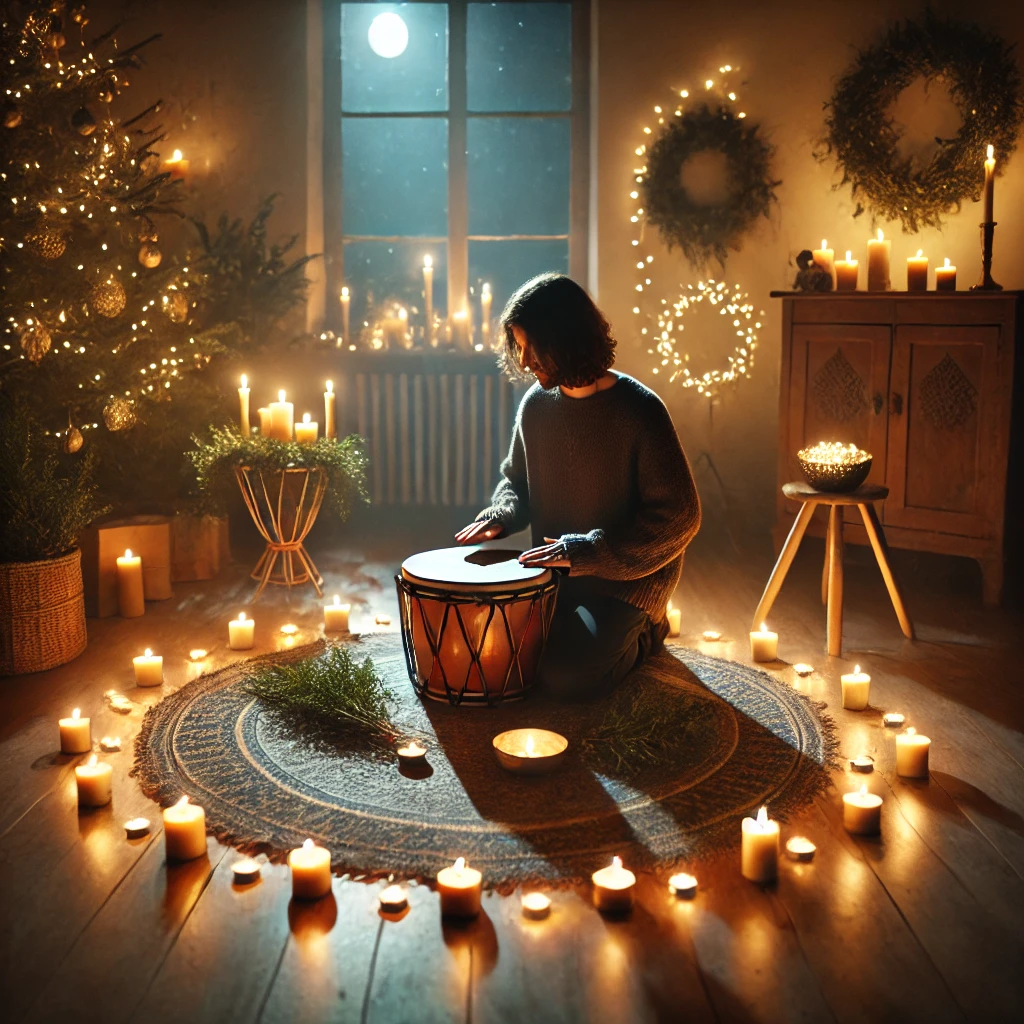
The Winter Solstice, marking the longest night of the year, offers a profound opportunity to connect with the cycles of nature through music. A Music Ritual for the Longest Night honors the stillness of the darkness and celebrates the promise of the sun’s return with melodies that echo the rhythm of the season. Through song, drumming, and instrumental harmony, this ritual creates a sacred space to reflect, release, and invite light into our lives.

Ritual Basics

Before beginning any ritual, it is important to prepare yourself mentally and physically. You may want to take a cleansing bath, or shower, and meditate or perform some grounding exercises to center yourself. Gather any materials you will need, such as candles, incense, and offerings for the forest spirits.

You can read a more detailed Ritual Preparation guide here.

About the Music Ritual for the Longest Night

Music has long been a powerful tool for spiritual connection, celebration, and transformation. Across cultures and traditions, songs and sounds have marked the turning points of the seasons, including Yule. This ritual harnesses the power of music to honor the solstice’s dual themes of darkness and light. Whether performed alone or with a group, the music ritual allows participants to weave intention and emotion into harmonious expressions of hope and renewal.

This ritual is best performed on Yule night, as the world holds its breath for the dawn, or at any moment during the winter season when connection and inspiration are needed.

Music Ritual for the Longest Night

A ritual of sound, song, and rhythm to honor the solstice and call back the light.

  • Drum or percussion instrument
  • Singing bowl or bell
  • Bluetooth speaker or playlist device
  • Journal and pen
  • 1 Bundle Candles (required – Representing the returning light, ideally in warm colors like gold, red, or white.)
  • 1 Piece Evergreen sprig (optional – Symbolizing resilience and the cyclical nature of life.)
  • 1 Offering of choice (optional – Such as incense, flowers, or a token of gratitude for the Earth.)

Creating the Musical Space

  1. Choose a quiet and comfortable location where you can safely play music or sing.
  2. Arrange your space with candles to represent the light’s return, placing them in a circle or along your altar. Light them as you set your intention.
  3. Add any meaningful seasonal decorations, such as evergreens, to align with the energy of Yule.

Invoking the Energy of Sound

  1. Begin with a singing bowl, bell, or any resonant sound to create a sense of sacredness. Let the vibrations ripple through the space, clearing away lingering energy.
  2. As the sound fades, take a moment to ground yourself, breathing deeply and focusing on the intention of your ritual.

The Rhythm of Darkness

  1. Start with slow, reflective rhythms or tones. Use a drum, hum softly, or play a meditative song.
  2. If in a group, encourage participants to join in, layering their sounds or voices to create a collective rhythm that honors the stillness of the longest night.
  3. Reflect on the lessons and gifts of the darkness, allowing the music to carry your thoughts and emotions.

Welcoming the Light Through Song

  1. Gradually shift the music’s tone to something uplifting and vibrant. If using your voice, sing a chant or carol that celebrates the returning sun, such as:

    “The light returns, the sun will rise,

    Warming the earth, filling the skies.”

  2. Clap, drum, or dance to accompany the music, symbolizing the joyful energy of rebirth and hope.
  3. If alone, focus on the physical sensations of creating music; if in a group, celebrate the harmony created together.

Closing with Gratitude

  1. Conclude the ritual with a final note, beat, or song that feels complete and meaningful.
  2. Express gratitude for the light, the darkness, and the transformative power of music.
  3. Blow out the candles slowly, visualizing the light carrying your intentions into the new cycle.
  • Personalize the ritual by incorporating songs or sounds that resonate deeply with you or your group.
  • If you lack instruments, clapping, stomping, or even tapping on surfaces can create meaningful rhythms.
  • This ritual can be extended by creating a collaborative song or recording the music created as a keepsake.
Sound Magic, Yule
Rituals

Conclusion

A Music Ritual for the Longest Night transforms Yule into an immersive experience of sound and spirit. By channeling the energies of the season through music, you embrace the cycles of darkness and light, weaving gratitude and hope into every note. As the solstice passes and the days grow longer, the melodies created during this sacred time will echo in your heart, reminding you of the enduring dance of renewal and the transformative power of the Winter Solstice.

Posted on Leave a comment

Ritual: Mani’s Nighttime Embrace: A Twilight Serenade

Mani's Nighttime Embrace

Introduction

Honoring the Moon’s Gentle Glow and Nocturnal Magic

As twilight falls and the day surrenders to the mysteries of the night, we turn our gaze to Mani, the lunar deity who graces the evening skies with a soft, silver glow. In this ritual, we embrace the serenity of the moonlit hours, weaving together offerings, scents, and intention to honor Mani’s celestial presence. “Mani’s Nighttime Embrace: A Twilight Serenade” invites us to align with the lunar energies, offering reverence and basking in the calm, mystical beauty of the night.

Ritual Basics

Before beginning any ritual, it is important to prepare yourself mentally and physically. You may want to take a cleansing bath, or shower, and meditate or perform some grounding exercises to center yourself. Gather any materials you will need, such as candles, incense, and offerings for the forest spirits.

You can read a more detailed Ritual Preparation guide here.

About the Ritual

Mani, the Norse god of the moon and the brother of Sunna, is a symbol of the night’s quiet majesty and the keeper of time’s gentle cycles. This ritual is best performed on moonlit nights during Yule or any time you seek to deepen your connection with lunar energies. By engaging in this twilight serenade, we honor Mani’s watchful journey across the sky and invite his calm, reflective energy into our lives.

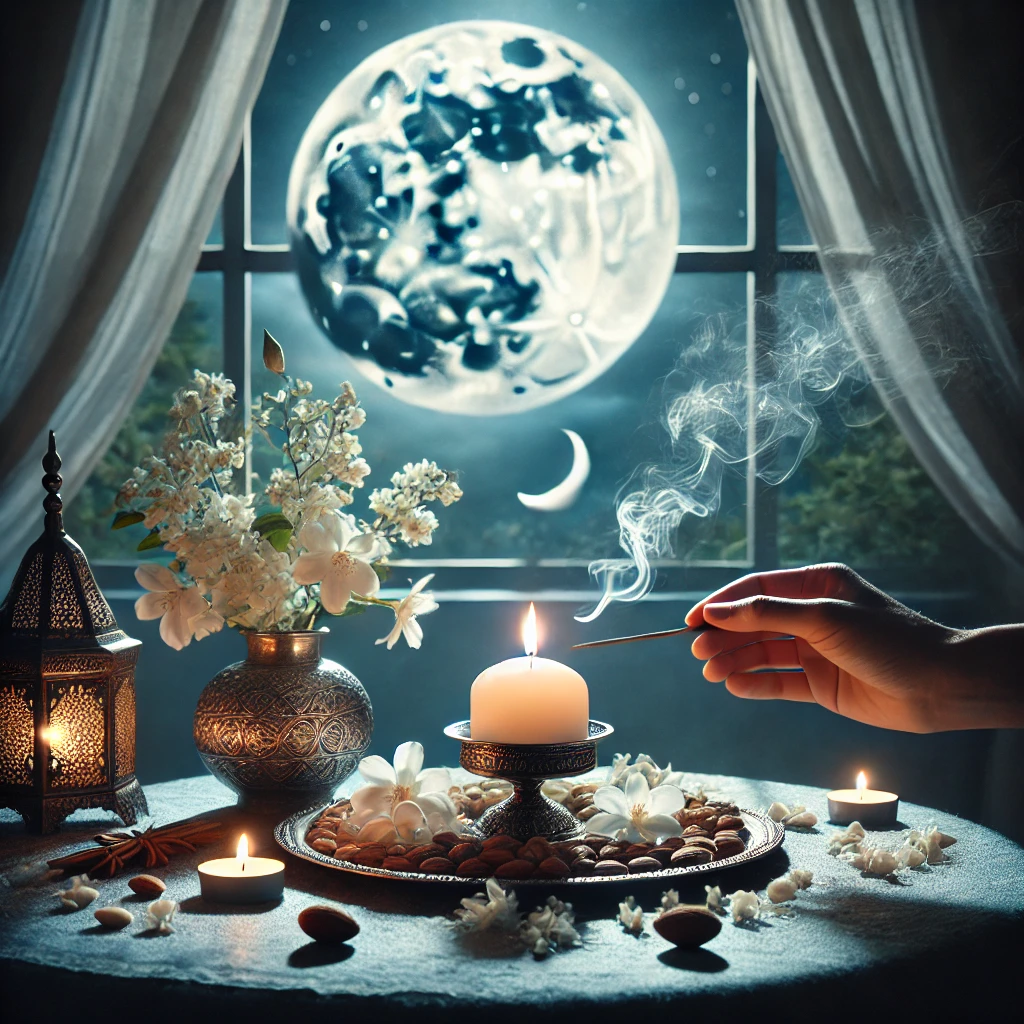
Through the offerings of fragrant jasmine, symbolic lotus, and nourishing almonds, we create a sensory experience that bridges the earthly and celestial realms. These elements are carefully chosen for their sacred properties, weaving together themes of love, enlightenment, and grounding, in alignment with Mani’s serene essence.

Mani’s Nighttime Embrace: A Twilight Serenade

A reflective lunar ritual to honor Mani’s gentle light and celestial guidance.

  • Candle
  • Incense holder
  • Altar cloth
  • 1 Bundle Jasmine incense or fresh jasmine flowers (required – Represents love and divinity.)
  • 1 Lotus flower or lotus incense (optional – Symbol of purity and enlightenment.)
  • 1 Bowl Almonds (required – Offers grounding and nourishment.)
  • 1 Glass Milk or white wine (optional – A libation to Mani, symbolizing purity and offering sustenance.)

Preparing the Sacred Space

  1. Select a quiet, moonlit space for the ritual. Outdoors under the open sky is ideal, but a window with a view of the moon also works.
  2. Lay the altar cloth on a small table or flat surface, arranging the candle, incense, flowers, and almonds.
  3. Ensure the space feels calm and inviting, free from distractions, and infused with peaceful energy.

Centering and Invocation

  1. Sit comfortably before your altar. Take a few deep breaths, allowing your body and mind to relax.
  2. Light the candle and incense, and say:

    “Mani, guardian of the twilight sky,

    Gentle light of the moon, I call to you.

    Your silver glow guides us through the night,

    Your presence brings peace and reflection.

    I honor your journey and offer my reverence."

Presenting the Offerings

  1. One by one, present each offering to Mani:
  2. – Jasmine or jasmine incense: “With this jasmine, I offer love and divinity.”

  3. – Lotus or lotus incense: “With this lotus, I honor purity and enlightenment.”

  4. – Almonds: “With these almonds, I ground this ritual in earthly connection.”

  5. – Milk or white wine (optional): “With this libation, I offer gratitude for your guiding light.”

  6. Arrange the offerings thoughtfully on the altar, envisioning their energies intertwining with Mani’s gentle light.

Reflection and Connection

  1. Spend a few moments gazing at the moon or the candle’s flame, allowing your thoughts to settle.
  2. Reflect on Mani’s symbolism—his role as a guide through darkness and a reminder of the cycles of life.
  3. Meditate on what the moon represents in your life—calm, intuition, or the embrace of change.

Closing the Ritual

  1. When you feel ready, offer words of gratitude:

    “Mani, silver light of the night,

    Thank you for your gentle guidance.

    May your wisdom illuminate my path,

    And may your peace reside in my heart."

  2. Extinguish the candle and incense with reverence, signaling the ritual’s end.
  • This ritual can be adapted to suit your personal practice or combined with other lunar observances.
  • If using food offerings, consider sharing them with others or returning them to the earth after the ritual.
  • Keep a journal nearby to note any reflections or insights that arise during your meditative connection with Mani.
Lunar Magic, Yule
Rituals

Conclusion

Mani’s Nighttime Embrace is a serene ritual of reflection and connection, honoring the moon’s quiet power and the divine cycles of light and darkness. Through offerings and meditative reverence, we align ourselves with Mani’s celestial energy, drawing his calm and intuitive essence into our lives. As the moon graces the night sky, may we find peace, inspiration, and guidance under Mani’s watchful gaze.

Posted on Leave a comment

Ritual: Crafting the Yule Log – Burning

Yule log ritual
Yule log ritual

Introduction

Honoring the Sun and Embracing the Magic of Yule

On the second day of Yule, a timeless ritual unfolds—the crafting of the Yule log, a symbolic blaze of renewal and protection. Rooted in ancient tradition, the Yule log connects us to the enduring fire of the Sun and the cycles of life, death, and rebirth. Traditionally made from oak, the Yule log becomes an altar for hopes and blessings, adorned with nature’s symbols and prepared to carry your intentions into the flame. As the log burns, its light strengthens the Sun’s return, casting away darkness and ushering in renewal for the coming year.

Ritual Basics

Before beginning any ritual, it is important to prepare yourself mentally and physically. You may want to take a cleansing bath, or shower, and meditate or perform some grounding exercises to center yourself. Gather any materials you will need, such as candles, incense, and offerings for the forest spirits.

You can read a more detailed Ritual Preparation guide here.

The Yule Log: A Symbol of Light and Renewal

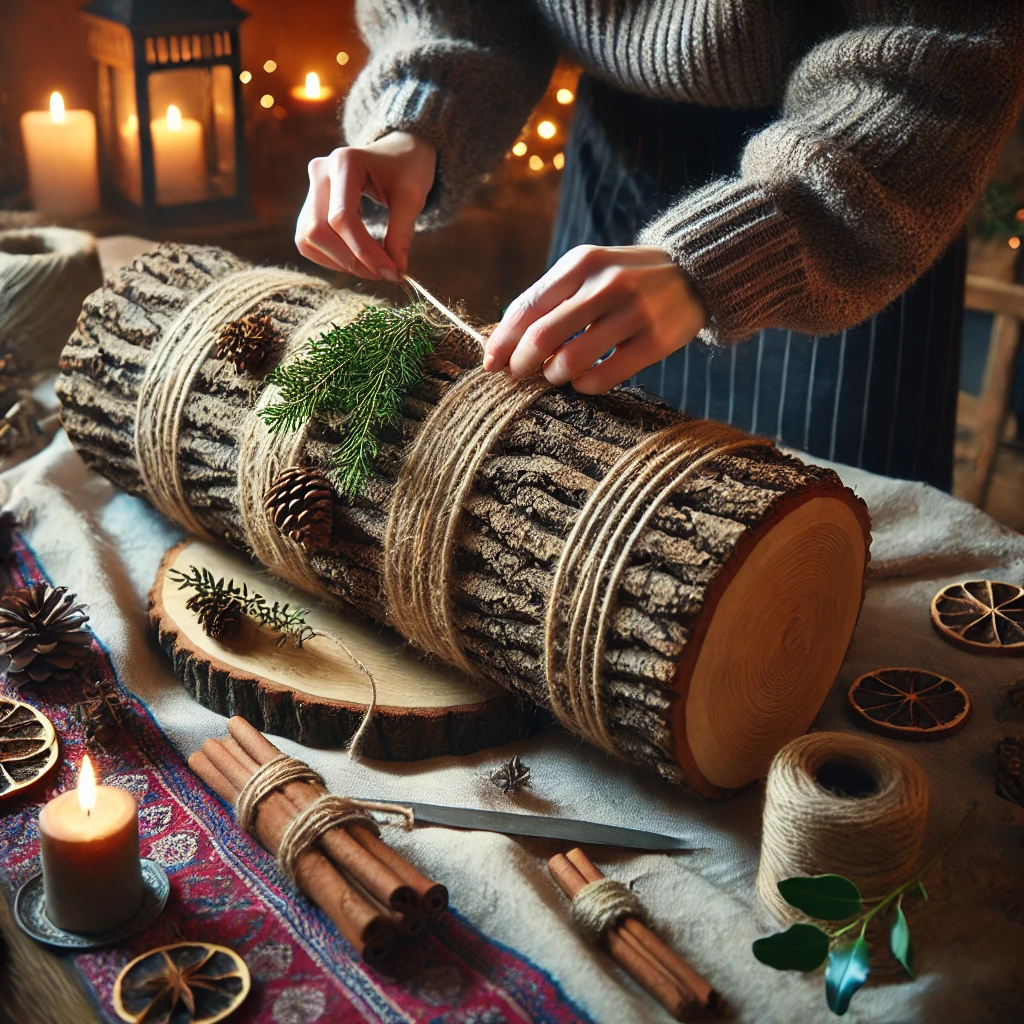
The tradition of the Yule log, deeply embedded in the history of Yule, celebrates the life-giving energy of the Sun. By adorning the log with sacred herbs, pinecones, and flowers, practitioners honor nature’s abundance and the promise of rebirth. The act of burning the Yule log is not just a celebration; it’s a ritual to fortify the Sun’s strength during the darkest days of the year. This simple, yet profound ritual invites the flame of the Yule log to carry away stagnant energies, clear your path, and ignite the magic of renewal within your heart and home.

Crafting the Yule Log – For Burning

A ritual for crafting and burning a Yule log, symbolizing the Sun’s return, rebirth, and the turning of the wheel.

  • Heat-safe surface or fire pit
  • 1 Log Oak or other suitable wood (required – Oak is preferred for its connection to strength, protection, and longevity.)
  • 3 Pinecones (optional – Symbolizes life and rebirth.)
  • 1 Bundle Pine branches (optional – Represents longevity and prosperity.)
  • 3 Dried flowers (optional – Choose flowers that represent love, gratitude, and hope (such as lavender, rosemary, or holly).)
  • 1 Sprig Mistletoe or Holly (optional – Represents protection and blessing.)
  • 1 Pinch Cinnamon or other seasonal spices (optional – For abundance and warmth.)
  • 1 Bundle Dried herbs (optional – Choose herbs such as rosemary, bay leaves, or sage for purification and protection.)
  • Twine or ribbon ((optional) – For binding symbolic items to the log.)

Step 1: Selecting and Preparing the Yule Log

  1. Choose your log—traditionally oak, but any sturdy wood can be used. The log should be large enough to burn for several hours if possible.
  2. If you are gathering the log yourself, ensure it is dry and free from rot or decay. If buying from a store or woodpile, cleanse it with intention (using smoke from incense or salt) to purify the energy.

Step 2: Decorating the Yule Log

  1. Gather your natural adornments—pinecones, branches, flowers, herbs, or other seasonal items.
  2. Begin adorning your log with these items. You can attach them using twine or ribbon, wrapping them around the log to secure. Each piece added carries symbolic meaning:
  3. – Pinecones: Represent rebirth and fertility.

  4. – Flowers: Symbolize beauty, love, and hope.

  5. – Herbs: Offer protection, purification, and abundance.

  6. – Mistletoe or Holly: Offers protection and good fortune.

  7. – Cinnamon: Adds warmth and blessings to your home.

  8. As you decorate, speak aloud your intentions for the new year—whether it’s personal growth, prosperity, protection, or simply honoring the Sun’s return.

Step 3: Creating Sacred Space

  1. Find your space—whether it be indoors at a hearth, or outdoors in a fire pit or similar setup.
  2. Arrange the log and your space with care, adding candles or lanterns around the area to set the tone.
  3. Take a moment to ground and center yourself. Call upon the Sun and the energies of Yule by lighting a candle to honor the Solstice.

Step 4: Invoking Blessings and Lighting the Yule Log

  1. Once your space is prepared, offer a blessing over the Yule log, saying something like:

    “I call upon the ancient fire,

    Light of the Sun, and the warmth I desire.

    In this log, I place my hope and my call,

    For renewal, for love, for the good of us all.

    May this flame bring light to the dark,

    And with it, a new year shall spark.”

  2. Light the Yule log (if indoors, be sure to burn in a safe, controlled environment). Watch as the flames dance, knowing that each spark represents the return of the Sun’s strength and the promise of renewal.

Step 5: Reflecting and Watching the Flame

  1. As the Yule log burns, sit quietly and reflect on the magic of Yule. Meditate on the warmth and light, feeling it fill your space and your spirit.
  2. If celebrating with others, invite them to share their blessings, intentions, or thoughts for the coming year.
  3. Let the fire burn for as long as possible. If it must be extinguished, do so with gratitude and reverence. Save a portion of the ash to scatter in your garden or keep for future blessings.

This Yule log ritual can be adapted to suit your space and needs. If you do not have a place for an outdoor fire, consider using a smaller log that can be placed in an indoor hearth or even a symbolic log for display with candles. The important part is the intention behind the ritual and the connection to the energies of the season. The Yule log symbolizes hope, rebirth, and the eternal cycle of life, death, and renewal, making it a perfect centerpiece for any Yule celebration.

Winter Solstice, Yule
Rituals

Conclusion

Crafting a Yule log is more than a simple act of creation; it is a sacred and symbolic gesture of inviting light into the darkest part of the year. Through the act of decorating and burning the Yule log, you connect to the ancient tradition of honoring the Sun and welcoming renewal into your life. As the flames flicker and illuminate your space, feel the magic of Yule enveloping you, carrying your blessings, intentions, and hopes forward into the new year. Let the warmth of the Yule log fill your heart and home, bringing light, love, and renewal for the season ahead.

Posted on Leave a comment

Ritual: Crafting a Yule Log with Candles

the Yule log candle
the Yule log candle

Introduction

A Symbol of Light, Hope, and Yule Magic

During Yule, the return of the Sun is celebrated with warmth, light, and rituals that honor the turning of the wheel of the year. One of the most beloved symbols of this season is the Yule log. In this ritual, instead of burning the Yule log, we will craft a decorative Yule log with tapered candles, creating a beautiful centerpiece that embodies the light of the season. This Yule log, adorned with natural elements and illuminated by candlelight, serves as a symbol of renewal, hope, and the magic of Yule.

Ritual Basics

Before beginning any ritual, it is important to prepare yourself mentally and physically. You may want to take a cleansing bath, or shower, and meditate or perform some grounding exercises to center yourself. Gather any materials you will need, such as candles, incense, and offerings for the forest spirits.

You can read a more detailed Ritual Preparation guide here.

The Decorative Yule Log: A Candlelit Celebration of Light

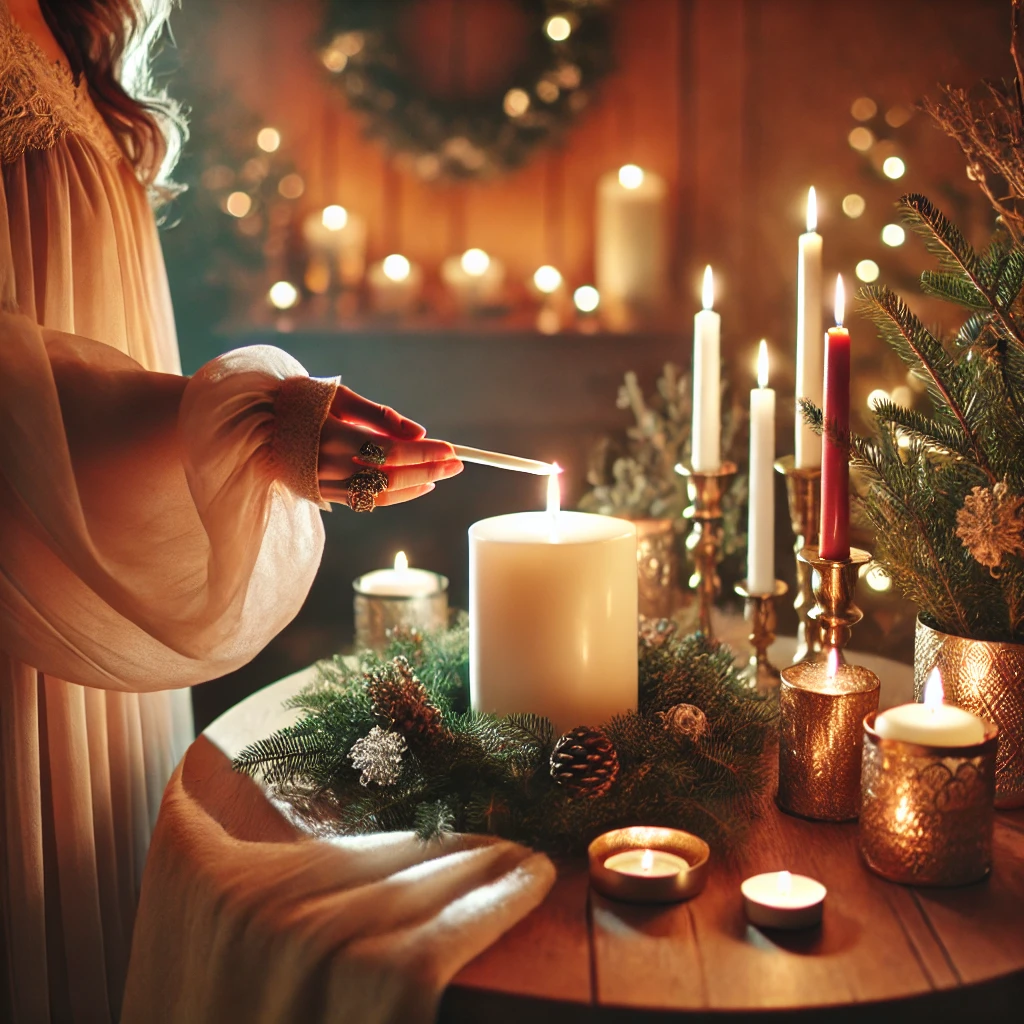
Rather than burning the Yule log, this version is decorated and used as a focal point of your Yule celebrations. Candles are placed in the log, representing the light of the Sun returning after the longest night. Each candle can be charged with an intention or blessing, infusing the log with personal meaning and purpose. As the candles burn, they symbolize the light driving away the darkness, carrying your wishes into the universe.

Crafting a Decorative Yule Log with Candles

A Yule log decorated with natural elements and used as a candle holder to symbolize the return of the Sun.

  • Drill with a bit large enough for tapered candles
  • Hand saw or sandpaper
  • Twine or ribbon
  • 1 Log (required – A log approximately 12-18 inches long, made from oak, pine, or another sturdy wood, with flat bottom so it doesn’t roll.)
  • 3-5 Tapered candles (required – Symbolize the light of the Sun; choose candles in colors like red, green, gold, or white.)
  • 1 Bundle Pine branches or greenery (optional – For decoration and to symbolize longevity and prosperity.)
  • 3 Pinecones (optional – Symbolize life and rebirth.)
  • 1 Sprig Holly or mistletoe (optional – Represents protection and blessing.)
  • Dried flowers or herbs (optional – Choose flowers or herbs such as lavender, rosemary, or cinnamon sticks for protection and abundance.)
  • 1 Bag Glue or small nails (optional – For securing decorations if needed.)

Step 1: Preparing the Log

  1. Select your log—oak, pine, or another wood traditionally associated with strength and protection is ideal. Make sure it is stable and will sit flat on a surface without rolling.
  2. Using a drill, create 3-5 evenly spaced holes along the top of the log, deep and wide enough to securely hold your tapered candles. Be careful not to drill too deep; the candles should sit securely but should not be flush with the log.

Step 2: Decorating the Yule Log

  1. Once your log is drilled, it’s time to decorate! Gather pine branches, holly, pinecones, and flowers.
  2. Attach the greenery and pinecones to the log using twine to secure them in place, or use glue or small nails if needed. The greenery symbolizes renewal, longevity, and prosperity during the winter months.
  3. Adorn the log with herbs and flowers that represent your intentions for the season—lavender for peace, rosemary for protection, or cinnamon sticks for warmth and abundance.
  4. Optional: Wrap twine or ribbon around the log for an added decorative touch, creating a sense of harmony and balance.

Step 3: Setting the Candles

  1. Choose your candles based on the intentions or energies you wish to welcome into your home during Yule.
  2. – Red for vitality and courage.

  3. – Green for abundance and prosperity.

  4. – Gold for success and light.

  5. – White for peace and protection.

  6. Insert the candles into the drilled holes. As you place each candle into the log, take a moment to reflect on the light it will bring into your life and home as the wheel of the year turns toward longer days.

Step 4: Charging the Yule Log with Intentions

  1. Once your Yule log is decorated and candles placed, take a moment to hold your hands over the log, focusing on your intentions for the season.
  2. Say aloud:

    "I bless this Yule log with light and life,

    To carry forth the Sun's return,

    May it warm our hearts, protect our home,

    And bring renewal in the year to come."

  3. Visualize the warmth of the Sun filling the log with glowing energy, infusing your space with blessings and protection.

Step 5: Lighting the Candles

  1. On Yule or the Winter Solstice, gather around the Yule log with your loved ones or in quiet meditation.
  2. Light the candles, one by one, focusing on the warmth and light each flame brings. As each candle is lit, speak your intentions or blessings for the coming year.
  3. Let the candles burn during your celebrations, filling the room with light and warmth.

Step 6: Reflecting and Honoring the Season

  1. As the candles burn, reflect on the magic of Yule and the returning Sun. This is a time to honor the cycles of nature and the promise of renewal.
  2. Share stories, intentions, or blessings with those around you, or simply enjoy the peaceful atmosphere the Yule log creates.

The decorative Yule log can be reused year after year as part of your Yule celebrations. After the candles have burned down, carefully remove the stubs, and refresh the decorations with new greenery, herbs, and flowers. Each year, this log will continue to be a symbol of light, hope, and the magic of the Winter Solstice.

Winter Solstice, Yule
Rituals

Conclusion

Crafting a Yule log with candles is a beautiful way to celebrate Yule, bringing the light and warmth of the Sun into your home as the darkest days of winter pass. The decorated Yule log, adorned with nature’s gifts and illuminated by candlelight, serves as a reminder of the cycles of life, death, and rebirth, and the magic of the season. Let this symbolic centerpiece be a source of joy and inspiration throughout the Yule season, offering hope, renewal, and the promise of new beginnings.

Posted on Leave a comment

Ritual: A Ritual of Light and Hope

A Ritual of Light and Hope

Introduction

Embracing the Sun’s Return and the Promise of Longer Days

As the Winter Solstice unfolds, the longest night of the year carries the promise of light’s return. This celestial event, marking the rebirth of the sun, invites us to pause, reflect, and celebrate the cyclical dance of darkness and light. Through this ritual of light and hope, we honor the lessons of the shadow and welcome the vitality of the returning sun.

Ritual Basics

Before beginning any ritual, it is important to prepare yourself mentally and physically. You may want to take a cleansing bath, or shower, and meditate or perform some grounding exercises to center yourself. Gather any materials you will need, such as candles, incense, and offerings for the forest spirits.

You can read a more detailed Ritual Preparation guide here.

About A Ritual of Light and Hope

Yule, the Winter Solstice, has been celebrated for centuries as a moment of renewal and transformation. The sun, reborn after its longest absence, symbolizes the gradual triumph of light over darkness. This ritual connects us to ancient traditions that honor the balance of the seasons, using symbols such as evergreens and candles to inspire resilience, hope, and warmth. Ideal for both solitary practice and communal celebration, this ritual embraces gratitude for the lessons of winter while setting intentions for the growing light.

A Ritual of Light and Hope

A ritual celebrating the rebirth of the sun and setting intentions for the returning light.

  • Space to practice safely with candles
  • Lighter or matches
  • Journal and pen
  • Vase or base for evergreen branches
  • 1 Bundle Evergreen branches (required – Represents resilience and eternal life.)
  • Multiple Candles (required – In gold, white, and red hues to symbolize light and vitality.)
  • 1 White candle (required – For the intention-setting ritual.)
  • Assortment – Foods (optional – For the feast of light (citrus fruits, golden vegetables, spiced dishes).)

Step 1: Preparing the Sacred Space

  1. Adorn your space with evergreen branches, placing them in vases or creating a wreath. Let their vibrant energy symbolize life’s endurance through winter.
  2. Arrange an array of candles around your space in hues of gold, white, and red to represent the returning light. Ensure the candles are safely placed and easy to access.

Step 2: Welcoming the Returning Sun

  1. Stand facing east, the direction of the sunrise. Extend your arms upward in a welcoming gesture, embracing the returning sun’s energy.
  2. Say aloud or silently:

    “I welcome the light, the warmth, and the vitality of the sun. With gratitude, I embrace the promise of brighter days and the dispelling of darkness.”

  3. Reflect on the darkness of winter, expressing gratitude for the lessons, rest, and introspection it has brought.

Step 3: Setting Intentions for the Coming Light

  1. Sit comfortably in your sacred space. With your journal or in quiet reflection, consider the aspects of your life you wish to illuminate and nurture in the coming months.
  2. Hold a white candle in your hands. Close your eyes and focus on your intentions, visualizing them as seeds of light ready to grow.
  3. Say aloud:

    “As the sun returns, so shall my intentions grow. I ignite this flame as a symbol of hope, renewal, and transformation.”

  4. Light the candle, visualizing your aspirations being infused with the sun’s radiant energy.

Step 4: Closing the Ritual

  1. Gently extinguish the white candle or let it burn safely as you conclude the ritual.
  2. Prepare a feast of light using foods that symbolize the sun’s warmth, such as citrus fruits, golden vegetables, and spiced dishes.
  3. Share this meal with loved ones or enjoy it in reflective solitude, celebrating the sun’s rebirth and the promise of brighter days.
  • If practicing with a group, consider assigning roles such as decorating, reading blessings, or preparing the feast to enhance communal connection.
  • Offer leftover food or natural decorations to the Earth as a gesture of gratitude.
Seasonal Solar Magic, Yule
Rituals

Conclusion

A Ritual of Light and Hope offers a moment of profound connection to the cycles of nature and the light within ourselves. As we honor the longest night and the sun’s rebirth, we embrace the promise of renewal and transformation. This Yule, may the flickering flames of your candles inspire hope and illuminate the path ahead, guiding you toward a season filled with warmth, abundance, and joy.

Posted on Leave a comment

The 2nd Day of Yule – Winter Solstice

Winter Solstice
Winter Solstice

Introduction

Embracing the Longest Night

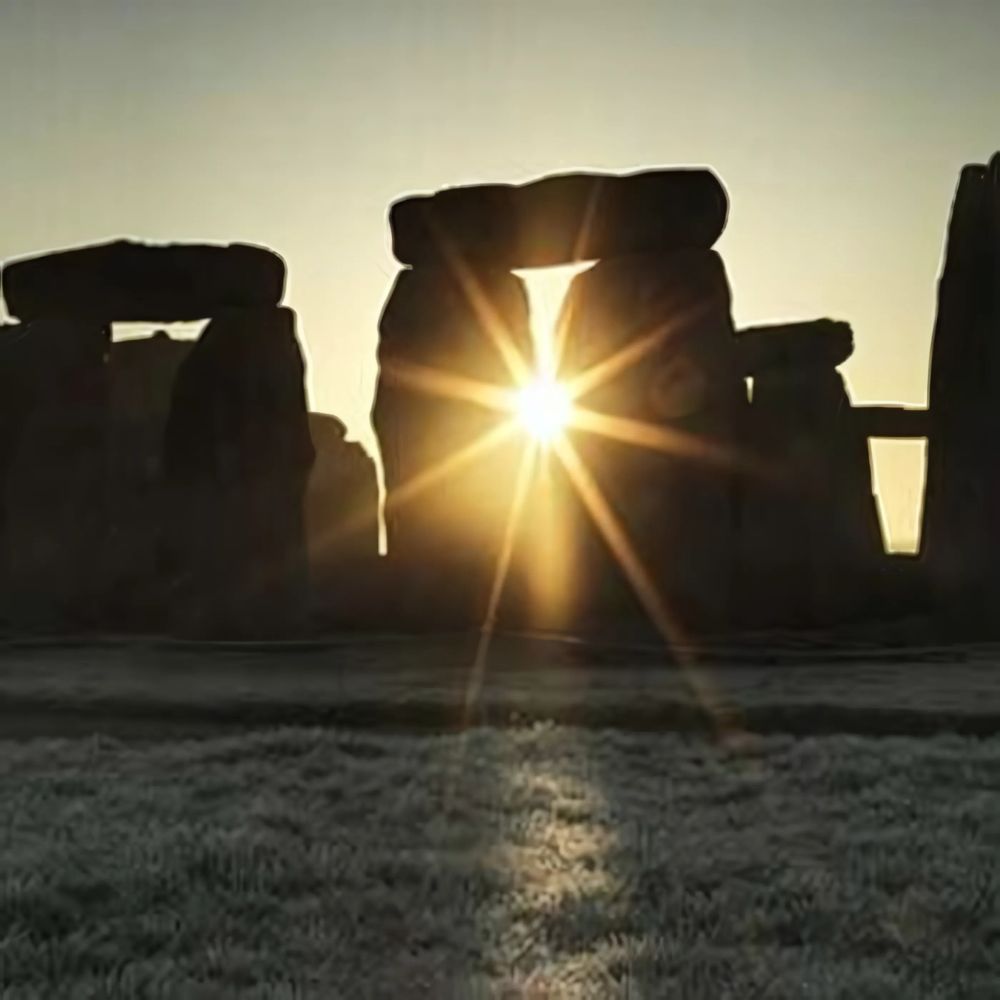
On December 21st, the second day of Yule, the world hails the Winter Solstice, a celestial spectacle marking both the lengthening of days and the return of the sun. As practitioners, we stand on the threshold of death and rebirth, witnessing the Old Sun bid farewell at dusk and the New Year’s Sun emerge at dawn, framing the longest night of the year. It’s a time of cosmic renewal, echoed in the age-old tale of Sunna and Mani, siblings born of gods and transformed into the Sun and Moon. The eternal chase between brother and sister, with the pups of Fenrir joining the cosmic pursuit, becomes the dance that shapes the length of our days and nights.

The Cosmic Ballet: Sunna and Mani

In the realm where divine and mortal threads intertwine, there emerged two celestial siblings, born of gods and destined for an eternal dance across the canvas of the heavens. Sunna, the radiant sister, and Mani, the gentle brother, embarked on a cosmic ballet that would weave through the tapestry of day and night, light and darkness.

In the primordial embrace of cosmic energies, a union between divine forces and mortal essence gave rise to the birth of Sunna and Mani. Their origins were shrouded in mystery, a divine secret whispered across the astral realms.

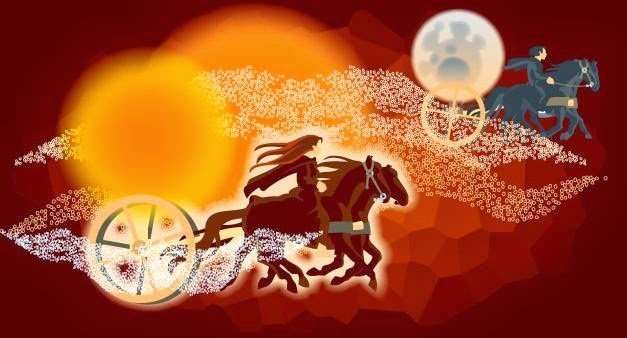
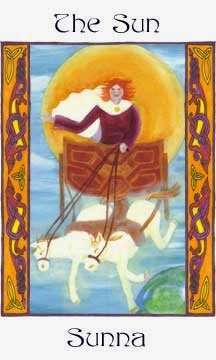
As the siblings matured, they assumed celestial roles that would shape the very fabric of the universe. Sunna, with her golden chariot ablaze with the fire of creation, became the harbinger of daylight. Mounted upon a celestial steed, she rode across the sky, casting her benevolent light upon the realms below.

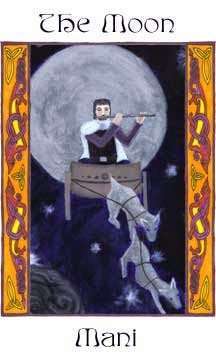
Mani, the tender brother, was entrusted with the silvery chariot of the moon. In the gentle glow of moonlight, he journeyed through the night, providing solace and guiding nocturnal wanderers. The moonlit trails he left painted the firmament with a soft luminescence, marking the passage of time.

Yet, it was not a solitary journey across the cosmic expanse for Sunna and Mani. Bound by an eternal bond and a celestial decree, the siblings engaged in a perpetual chase. Mani, enchanted by his sister’s radiance, pursued her chariot, creating the dance of day turning into night and night into day.

Adding to the cosmic drama were the playful pups of Fenrir, the mighty wolf of Norse lore. These celestial wolves joined the chase, their exuberance causing the siblings to quicken and slow their pace, influencing the length of days and nights.

Thus, the celestial siblings orchestrated a majestic dance, a ballet where Sunna’s brilliance heralded the day’s awakening, and Mani’s gentle glow soothed the world to rest at night. The dance of day and night became a cosmic symphony, echoing through the cosmos and influencing the ebb and flow of time.

On the eve of the Winter Solstice, a moment of profound significance, Sunna completed her celestial journey for the year, bidding adieu as her chariot dipped below the horizon. It marked the death of the Old Sun, promising the birth of the Sun of the New Year at dawn.

In this eternal ballet, Sunna and Mani, guided by the forces of fate and the whimsy of Fenrir’s pups, continue their cosmic journey. The celestial siblings, with their radiant chariots and moonlit trails, remind us of the intricate dance that shapes the cycles of our world—a dance that began in the embrace of divine origins and unfolds eternally across the cosmic stage.

Read More about Sunna and Mani

Honoring Sunna and Mani: A Celestial Ballet

As the dawn unveils the second day of Yule, we engage in a celestial ballet, an intimate ritual of honoring Sunna and Mani. This dance with the radiant siblings unfolds as a symphony of light and shadow, a harmonious interplay of day and night.

Sunna’s Awakening: A Morning Offering

In the serene embrace of the pre-dawn, as the world lies hushed in anticipation, we embark on a ritual that transcends the ordinary—a homage to Sunna’s radiant ascent. The sacred act begins before the first light graces the horizon, as we stand poised to witness the unveiling of the day. A single candle, its flame dancing in the quietude, becomes our beacon, a symbol of strength offered to the celestial sister, Sunna.

In the stillness of this sacred moment, we acknowledge the Sun’s profound symbolism—a cosmic metaphor for rebirth, vitality, and the relentless cycle of life. Our hearts brimming with gratitude, we present offerings that mirror the very essence of Sunna’s warmth. Cider, a libation of simple yet profound joy, symbolizes the effervescence of her rays. Mead, the nectar of ancient traditions, embodies the sweetness of the morning Sun. The golden sparkle of Goldschlager becomes a shimmering tribute to the brilliance of Sunna’s light.

As we offer crisp apples, their freshness reminiscent of the morning dew, and the sweet tang of oranges, we connect with the bountiful energy of the Sun. Fragrant flowers, delicate and ethereal, are laid as tokens of our appreciation, their subtle perfume mingling with the dawn breeze.

Each offering, carefully chosen and tenderly presented, becomes a thread woven into the fabric of our cosmic connection. In this sacred ballet of light and shadow, we stand as witnesses and participants, honoring Sunna’s journey across the sky and the life-giving energy she bestows upon the world. As the candle’s flame flickers in acknowledgment, we commune with the divine, marking the beginning of a new day bathed in the resplendent glow of Sunna’s radiant embrace.

Mani’s Nighttime Embrace: A Twilight Serenade

As the day gracefully yields to the nocturnal enchantment, our focus shifts to Mani, the gentle guardian of the night sky. Under the silvery glow of the moon, we partake in a celestial ballet that continues beyond the fading hues of sunset. The rituals of this twilight serenade are woven with intention and reverence, as we offer our homage to the celestial sibling of Sunna.

In the tranquil hush of the night, we embark on a sensory journey to honor Mani. Jasmine, with its intoxicating scent, takes center stage in this twilight offering. Symbolic of love and divinity, jasmine becomes the fragrant conduit through which our reverence flows. Lotus, revered for its purity and association with enlightenment, adds its ethereal essence to the nocturnal ritual. Almonds, with their earthy richness, join the celestial chorus, grounding the ritual in the earthly embrace.

Crafting Moonlit Elixirs – Tea for Mani:

Under the expansive canvas of stars, we venture into the art of crafting a celestial elixir—a tea infused with the essence of the night. This carefully concocted blend, marrying jasmine, sage, and lavender, becomes a libation for Mani. Jasmine, with its calming and romantic notes, intertwines with the wisdom of sage, evoking the ancient mysteries of the night. Lavender, with its soothing fragrance, adds a touch of serenity to the elixir, creating a potion that mirrors the quietude of moonlit nights.

As the moonlight bathes the world in its silvery glow, we sip this moonlit tea in quiet communion with the celestial realms. Each sip becomes a contemplative journey, a moment of connection with the guardian of the night. The rhythmic symphony of the night sky becomes our backdrop, and in this serene space, we acknowledge the profound influence of Mani on the tapestry of our lives. In this twilight serenade, we embrace the magic of the night, offering our gratitude to Mani, who guides us through the shadows and illuminates the darkness with the gentle radiance of the moon.

Becoming One with the Cosmic Rhythm:

In this celestial ballet, we transcend the boundaries of the earthly realm. With each offering, each flicker of the candle, each sip of the moonlit elixir, we become part of the intricate rhythm of the heavens. The dance with Sunna and Mani is not merely an observance; it is a participation in the cosmic symphony, a harmonious blend of day and night, light and shadow. As we stand at the intersection of dawn and dusk, we find ourselves embraced by the timeless dance of the celestial siblings, a dance that echoes through the vast expanse of the cosmos.

Crafting the Yule Log: A Symbolic Blaze of Renewal

In the tapestry of Yule’s second day, a profound ritual unfolds — the crafting of the Yule log, a symbolic blaze that heralds the enduring fire of the Sun. Rooted in tradition, this log, traditionally hewn from the sturdy embrace of oak, transforms into a vessel of magic and renewal.

Traditional Embrace: Oak and Symbolic Adornments

The Yule log, a manifestation of ancient reverence, finds its form in the stout bark of the oak. A wood with ancestral ties, oak carries echoes of the old ways, connecting us to the sacred groves of our forebears. Adorned with flowers that whisper tales of life’s cyclical nature, pine, a symbol of longevity, and auspicious herbs whose fragrances speak of blessings, the Yule log becomes an altar, a convergence of earthly elements charged with mystical significance.

As twilight settles and the Yule log takes its place, a sacred flame is kindled. In the crackling embers, we find a metaphor for the Sun’s enduring fire. As the flames dance and the log transforms to ash, it is believed that the Sun’s radiance is fortified, hastening her return. This act, both symbolic and potent, aligns our earthly energies with the cosmic dance, becoming a conduit for the magic inherent in the turning of the celestial wheel.

Modern Alchemy: The Yule Log Cake

In the alchemy of modern times, where hearths may differ from those of our ancestors, a new tradition emerges — the Yule log transformed into a culinary creation. Enter the Yule Log Cake, a delectable confection crafted from Swiss roll cake, rich buttercream, and adorned with symbols of the season — holly, leaves, and mushrooms. This culinary metamorphosis preserves the essence of the Yule log in a form that transcends the crackling flames of a hearth, bringing the spirit of renewal to contemporary celebrations.

As slices of the Yule Log Cake are shared, the symbolism embedded in its creation becomes a feast for the soul. Each bite carries the legacy of the Yule log’s enduring fire, a reminder that, even in the darkest of nights, the promise of light and renewal persists. The Yule log, whether ablaze in flames or gracing a festive table as a cake, becomes a timeless emblem, inviting us to partake in the eternal dance of cosmic energies and earthly magic.

A Timeless Tradition: From Celestial Myths to Hearth Delights

In this timeless celebration, we bridge the ancient myths of celestial siblings with the modern joy of Yule Log Cakes. As the Yule log crackles in hearths and the cake graces tables, we weave a tapestry of tradition that spans the ages. From the cosmic dance of Sunna and Mani to the crackling flames of the Yule log, we find ourselves connected to the enduring cycles of the universe. As we revel in the warmth of the fire and the sweetness of the cake, we honor the celestial ballet that heralds the return of the Sun, both in the heavens and in our hearts.

Celebrating the Winter Solstice: A Ritual of Light and Hope

As the world tilts towards the longest night, the Winter Solstice beckons us to partake in a ritual of light and hope. This celestial event, marking the rebirth of the sun, invites us to create a sacred space where the dance of darkness and light becomes a profound and intentional experience.

Preparing the Sacred Space:

Evergreen Adornments – Begin by adorning your sacred space with evergreen branches. Evergreens, symbolizing life and resilience, serve as potent reminders of the cyclical nature of existence. Arrange them in vases or create wreaths to infuse your space with the vibrant energy of nature.

Candlelit Ambiance – Illuminate the sacred space with an array of candles. The soft, flickering light not only symbolizes the returning sun but also serves as a beacon of hope during the winter darkness. Choose candles in hues of gold, white, and red to represent the sun’s vitality.

Welcoming the Returning Sun:

Sun Salutation – Begin your ritual with a sun salutation. Stand facing east, the direction of the sunrise, and extend your arms upward, welcoming the returning sun. Express gratitude for the promise of longer days and the gradual dispelling of darkness.

Gratitude for the Darkness – In this moment of transition, take time to express gratitude for the darkness. Acknowledge the lessons learned in the quiet embrace of winter nights and the inner reflections that have unfolded during this season of stillness.

Setting Intentions for the Coming Light:

Reflective Contemplation – Find a quiet moment for reflective contemplation. Consider the intentions you wish to set for the coming light. What aspects of your life do you want to illuminate? What goals and aspirations will you nurture as the days lengthen?

Candle Charging Ritual – Take a white candle and imbue it with your intentions. Hold the candle in your hands, focus on your aspirations, and visualize them manifesting as the sun’s energy grows. Light the candle, symbolizing the ignition of your intentions.

Closing the Ritual:

Feast of Light – Conclude your ritual with a feast of light. Prepare a meal with foods symbolizing the sun’s warmth—citrus fruits, golden vegetables, and dishes rich in spices. Share this feast with loved ones, celebrating the return of the light.

Communal Connection – If possible, gather with a community or loved ones to share in the energy of the Winter Solstice. Exchange stories, reflections, and hopes for the coming year. The communal connection enhances the potency of the ritual.

As you celebrate the Winter Solstice, let the ritual be a tapestry weaving together the threads of gratitude, reflection, and hope. Embrace the return of the sun as a metaphor for your own inner illumination, and step into the coming days with renewed light and purpose.

Conclusion

As night falls on this enchanting day, whether by the flicker of a hearth’s flames or the soft glow of candles on a Yule log, we are reminded that even in the deepest darkness, there is the promise of light and renewal. The Winter Solstice is an invitation to honor the cosmic dance of celestial siblings, embrace the transformative symbolism of the Yule log, and savor the sweet joy of a Yule Log Cake. It’s a timeless celebration that bridges the ancient myths of the cosmos with the modern delight of hearth and home, connecting us to the enduring cycles of the universe.

Posted on Leave a comment

Sunna and Mani

Introduction

SUNNA & MANI

The story of Sunna and Mani is one of siblings born of the gods to mortals. Sister Sunna and brother Mani become the Sun and Moon, riding chariots across the sky. Mani forever chasing his sister, Sunna. The pups of Fenrir and his mate end up chasing the chariots when the passing of the Sun makes the day too hot to play, and the passing of the Moon makes the night impossible to hunt. The wolves cause the siblings to speed up and slow down as the chase continues forever, creating our length of days and nights.

Once upon a time in a small village there lived a mother and father who had two beautiful children.  A girl who was blonde of hair with golden curls that looked like rays of sunshine.  A boy with raven black hair and silvery eyes who seemed to prefer the night, the girl was always pleasant and kind as was her brother and they played contently as children.

One day they decided to take them to the village elder so that they might find fitting names for them.  They entered the hut of the elder, who after looking at the children thought a few moments and said: “the runes say these two are not just your children, but that of Sol the Goddess of the sun sent to us for a short time”.
The parents just looked at one another and asked the elder, “What shall we do if they are the decedents of the Gods?”

The elder looked grimly at the parents “it will be for them to decide” and with that she sprinkled sacred herbs over the fire and called the name of Frigg and Odin “come great mother and father and tell us what to do”.

Sparks flew from the fire and a voice appeared from now where: “Children of the sun and moon we give you the gift of two names…Sunna of the sun and Mani of the moon, when these two reach their eighteenth birthday they must come to this hut once more and leave their earthly home for a life among the Gods”.

The parents were saddened by this, but they had no choice.  They raised them well and the village revered and love the Goddess children.  Sunna like the ‘sun’ was always kind and generous to her people brining light wherever she went.  Her brother Mani lit the way for the hunters at night illuminating the forest with his silvery eyes.

When they were eighteen, they again entered the hut of the elder.

“You have returned children of the sky”, she said.  This time the fire burned brighter and out of the flames walked Frigg.

“Children it is time”, she said reaching out her hand.  And with that Sunna and Mani were taken to the world of the Gods.  There in the largest hall of the Gods they were brought by Frigg to receive their ‘duties’.

There in the hall they met the Goddess Sol, their mother who looked at the children with pride and love.

Sol smiled and said: “Sunna here is your shield, may it keep the rays of sun from the Earth as you ride.  Take this with your chariot and steed.  For ever after this day shall you ride across the sky and to Mani, here is your shield, may it shine forever across the sky as a reminder to the Earth of the nightly journey in which travels the Moon.  For ever after this day, you shall chase your sister across the sky”.

At this she shed a single tear and held them both saying, “For never shall you see one another again, for as one rises, one sets, as one travels across the sky the other hides in the underworld, never again shall you see each other except for times when the moon and sun rest together in the sky.”

And so, with sadness Mani and Sunna boarded their chariots and rode off in the sky together for a short while until they departed forever.

But this was not the end…. for deep in the dark forests of Ironwood, there among the wolves there sleeps two little cubs whose father was Fenris the great wolf, the bane of Odin.

The wolf cubs woke to a bright light moving across the sky.  “What is that light mother?”, they asked.

“I am unsure my cubs we shall go and ask your father” she replied.

But they could not go outside of the cave for the light was so bright it illuminated their fur, making it hot and uncomfortable to walk.  It was so hot in fact the cubs could barely stand longer than a second in its bright rays and so their mother tucked them back into the cave until nightfall.

However, that changed nothing, that night when the mother wolf went out to hunt, she found the light of the moon shone so brightly she could not hide and thus all in the wood were able to flee from her hungry jaws.

This angered the wolves!  No longer able to walk out in the day to roll in the long grass, no longer able to hunt they were trapped like rats in the cave.

The mother wolf finally decided to do something about this and so one night she stuck her head out of the cave and howled the loudest howl she could manage, so loud it was that several miles away the great father of the cubs Fenris stirred and woke.

Fenris then made the journey despite the heat and the light toward the cave.  Fenris looked at his wife and said” It seems my dear we have need to act, although it angers me to have to do this now, but what choice do we have, this constant light is enough to drive one mad”.

“It is true Fenris we must do something, but what.” she replied.

The cubs came out and looked deep into their father’s eyes.  “Send us father” they said, “for we are strong and no one in the nine worlds has seen us yet, they won’t be looking for us”.

“We shall go” they said, “chase the sun and her brother the moon and catch them in the sky as the move, thus ending the light in the woods and enabling us to sleep once more.”

Fenris and his wife agreed.  The two wolves would be sent into the sky.  The little cubs were kissed and cuddled and leapt strongly into the sky.

As soon as they saw the chariots in the sky, they gave chase.  Sunna rode her chariot faster as the wolves grew closer but still, they ran, still they followed.  No matter how fast she ran they were there nipping at her wheel, they tried to run between her and her brother but the two could not keep up with the chariots and seemed just one tooth away from each chariot.

However occasionally the wolves would catch the sun or the moon, but Sunna and Mani would struggle and pinch them until the set them free and so each time you see the sun black, or the moon red know that the sun and moon are within the jaws of the wolves and thus it is our duty to raise our voices and convince those rogues to release them, so with your loudest voice yell out:

Hail Sunna, Goddess of the Sun!!

Hail, Hail, Hail!

Hail Mani, God of the moon!!