Posted on Leave a comment

Bridging Imbolc and Candlemas

Imbolc and Candlemas

Introduction

Celebrating the Light and Promise of Spring

At the heart of the year’s turning, as the days grow longer and the winter’s grip begins to loosen, two sacred celebrations emerge to honor the promise of light and new beginnings: Imbolc and Candlemas. Though rooted in distinct cultural and religious traditions, these holidays share a profound connection in their themes of renewal, light, and the anticipation of spring. Exploring their similarities and contrasts reveals the universal human yearning to celebrate the return of warmth, hope, and the cycles of life.

Imbolc: Honoring Brigid and the Spark of Life

Imbolc is a Gaelic festival celebrated at the midpoint between the winter solstice and the spring equinox, typically on February 1st or 2nd. It is a sacred time marking the gradual shift from the darkness of winter to the growing light of spring. The name “Imbolc” derives from the Irish word “imbolg”, meaning “in the belly,” a reference to the pregnancy of ewes, symbolizing fertility and the promise of new life. This imagery reflects the earth itself stirring beneath the snow, preparing for the vibrant growth of the coming season.

Traditionally celebrated in Ireland, Scotland, and the Isle of Man, Imbolc was a time to honor the goddess Brigid, a beloved deity of fertility, healing, poetry, and smithcraft. Brigid’s influence extended over both domestic and natural realms, embodying the creative spark needed for renewal and transformation. As winter waned and daylight grew stronger, communities invoked Brigid’s blessings to ensure abundance, vitality, and protection for the land, animals, and households.

Brigid: The Goddess of Renewal and Vitality

Brigid, often considered a triple goddess, represents the union of poetry, creation, and transformation. She is both a deity of the hearth and the forge, symbolizing the spark of life that ignites growth and the fire of creativity that inspires change. Her dominion over fertility connects her deeply to the cycles of the earth, where she is seen as a nurturing force ensuring the land awakens after its long winter rest.

As a goddess of poetry, Brigid inspires words of beauty, song, and expression, embodying the voice of nature as it begins to stir. Her connection to healing extends beyond physical ailments to emotional and spiritual renewal, making Imbolc a time for internal cleansing and restoring vitality. Her role as a smith underscores the transformative power of fire to create, shape, and forge new beginnings, aligning perfectly with the themes of renewal at Imbolc.

Traditional Practices and Key Rituals

Imbolc rituals and celebrations are rich in symbolism, reflecting themes of light, renewal, and preparation. They draw on ancient traditions that honor the earth’s awakening, the blessings of Brigid, and the balance between the dormancy of winter and the vitality of spring.

Lighting Candles and Hearth Fires

The lighting of candles and hearth fires during Imbolc holds profound significance. These flames symbolize the returning warmth and light of the sun, driving away the darkness of winter and illuminating the path toward spring. The hearth, often considered the heart of the home, was rekindled as an act of devotion to Brigid, inviting her presence to bless the household. In modern Imbolc celebrations, candlelit rituals are often performed to honor the goddess and symbolize personal or spiritual illumination.

Offerings to Brigid

Offerings to Brigid were central to traditional Imbolc celebrations. Milk, bread, butter, and mead were placed on altars, windowsills, or by the hearth to honor her nurturing and creative aspects. Milk, in particular, held special importance, symbolizing nourishment, fertility, and the abundance of spring. Some practitioners crafted Brigid’s crosses, woven from rushes or straw, as offerings to protect homes and livestock for the year ahead. These crosses were often hung above doorways or hearths as a symbol of Brigid’s blessings.

Spring Cleaning

Imbolc is a time of cleansing and renewal, both physically and spiritually. Spring cleaning was performed to sweep out the old, clearing away the stagnant energy of winter and preparing for the fresh beginnings of spring. This act was both practical and symbolic, creating a clean slate to welcome Brigid and her blessings into the home. Today, modern practitioners might extend this practice to clearing mental or emotional clutter, setting intentions for the year ahead.

Divination Rituals

As a time of transition, Imbolc was also seen as a moment to seek insight and guidance for the future. Divination practices such as scrying, casting runes, or interpreting natural signs were performed to align with the rhythms of nature and discern what lay ahead. Brigid’s role as a goddess of wisdom and foresight made her a powerful guide during this time.

Preparation of Fields and Gardens

Imbolc reflects the anticipation of planting season, as the earth begins to wake from its winter slumber. Farmers prepared their fields for sowing, and seeds were blessed to ensure a fruitful harvest. This practice symbolizes new beginnings, with seeds representing both literal crops and the intentions and aspirations planted in one’s life. Even for those who do not farm, preparing gardens or setting goals aligns with this theme of readiness for growth.

Modern Imbolc Celebrations

In contemporary practice, Imbolc has become a time for introspection, gratitude, and hope for the future. It invites practitioners to reflect on the cycles of nature and the transitions in their own lives. Common modern-day rituals include:

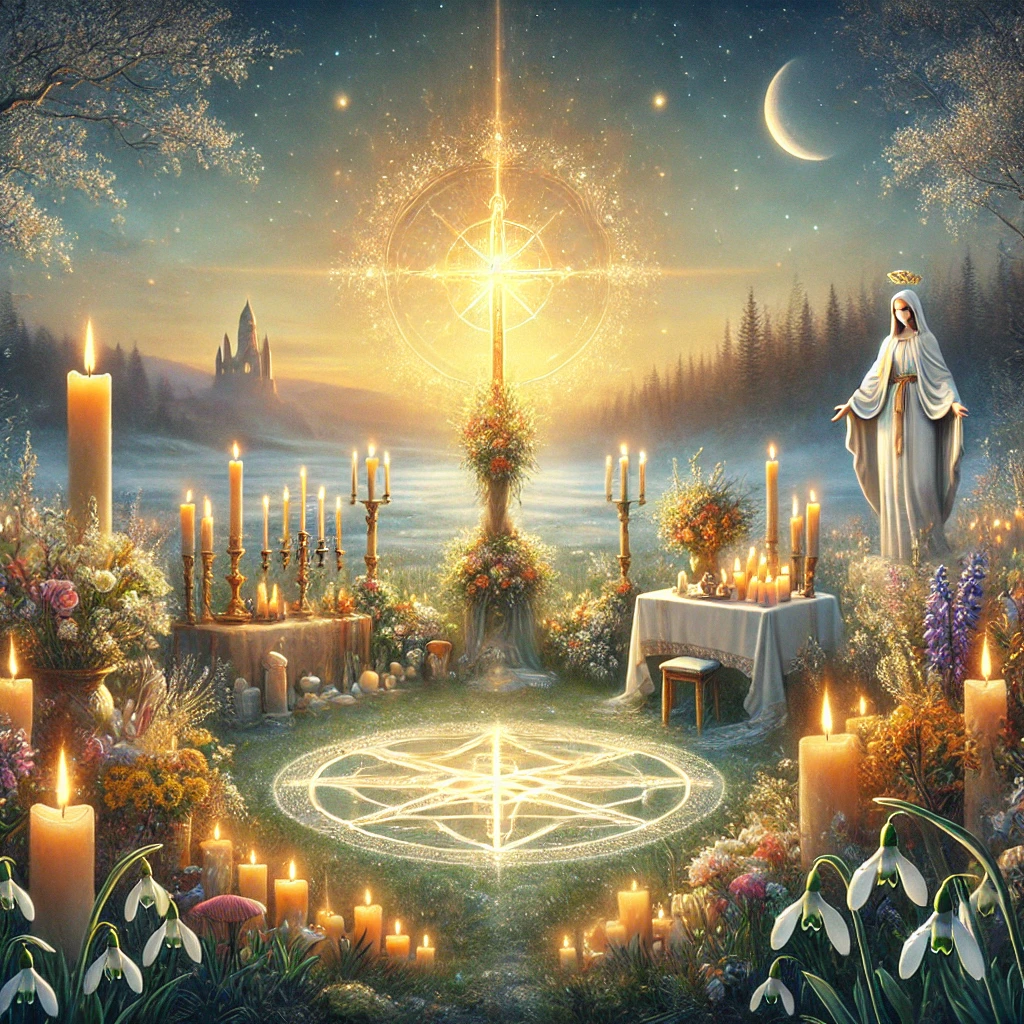
  • Creating altars dedicated to Brigid with candles, flowers, and representations of spring.
  • Making and displaying Brigid’s crosses as symbols of protection and renewal.
  • Baking and sharing seasonal foods, such as breads, dairy-based dishes, or spiced cakes, to honor the goddess.
  • Lighting candles or fires to honor the returning sun and set intentions for growth.
  • Spending time in nature, observing the subtle stirrings of spring, such as the emergence of snowdrops or the songs of returning birds.

A Celebration of Nature’s Quiet Transition

Imbolc is a festival of hope and anticipation, a moment when the stillness of winter begins to yield to the promise of spring. It is a time to honor Brigid’s gifts, from the creative spark of inspiration to the gentle nurturing of life’s cycles. Whether through rituals of light, offerings, or the act of clearing away the old, Imbolc encourages us to align with nature’s quiet transitions and nurture the seeds—both literal and metaphorical—that will grow in the months ahead. In honoring Imbolc, we celebrate the beauty of renewal and our connection to the eternal rhythms of the earth.

Candlemas: A Christian Celebration of Light and Purification

Candlemas, observed annually on February 2nd, is a significant Christian holiday that commemorates two key biblical events: the presentation of Jesus at the Temple and the purification of the Virgin Mary following childbirth, as recounted in the Gospel of Luke (2:22-40). Falling exactly 40 days after Christmas, this holiday reflects the Jewish tradition of purification and dedication, a practice where mothers underwent a ritual cleansing and firstborn sons were presented to God in the temple. Candlemas, rich in symbolism, serves as both a religious observance and a celebration of light’s return to the world.

At its heart, Candlemas emphasizes Christ as the “light of the world”—a spiritual beacon guiding humanity toward salvation. The holiday’s focus on light resonates with both spiritual themes of hope and redemption and the natural cycle of increasing daylight as winter begins to wane. Candlemas is also steeped in themes of renewal, gratitude, and preparation, making it a moment of reflection and celebration as the faithful look toward the promises of brighter days ahead.

The Biblical Roots of Candlemas

Candlemas derives its spiritual significance from two key events recorded in the New Testament:

  1. The Presentation of Jesus at the Temple: In keeping with Jewish law, Mary and Joseph brought the infant Jesus to the temple in Jerusalem to consecrate him to God as the firstborn son. This act symbolized Jesus’s divine role and connection to God’s covenant with humanity. During this presentation, the devout man Simeon recognized Jesus as the Messiah and proclaimed him as a “light for revelation to the Gentiles and for glory to your people Israel” (Luke 2:32). Simeon’s prophecy serves as the foundation for the Candlemas theme of light—a guiding force and symbol of salvation.
  2. The Purification of Mary: Following Jewish customs outlined in Leviticus 12, women who gave birth were considered ritually impure for 40 days after delivering a male child. At the end of this period, they were to present themselves at the temple to undergo a purification rite, signifying a return to religious and communal life. Candlemas marks this event in Mary’s life, emphasizing themes of cleansing, renewal, and the fulfillment of sacred traditions.

Candlemas Rituals and Traditions

Over centuries, Christian communities developed rituals and practices to honor Candlemas, blending biblical significance with cultural and seasonal observances. These traditions center on the themes of light, renewal, and purification, offering a chance to celebrate both the spiritual and natural transitions taking place at this time of year.

Blessing and Procession of Candles

The most distinctive feature of Candlemas is the blessing of candles, which symbolize Christ’s light illuminating the darkness of the world. During church services, priests bless candles brought by parishioners, which are then carried in processions to invoke spiritual protection and the guiding light of faith. These blessed candles are often kept in homes throughout the year and lit during moments of prayer, storms, or significant events, serving as a reminder of Christ’s enduring presence and hope.

The candlelight procession, a centerpiece of Candlemas, is a visual and communal act of devotion. As the faithful walk together, holding their glowing candles, they symbolize their shared journey toward spiritual renewal and their commitment to carrying Christ’s light into the world.

Lighting Candles at Home

Beyond church ceremonies, families incorporate the lighting of candles into their home observances of Candlemas. These flames not only reflect the divine light of Christ but also evoke the comforting warmth of faith and community. In the stillness of winter, lighting candles becomes an intimate ritual, a moment to reflect on hope, guidance, and renewal as the season begins to shift toward spring.

Weather Predictions and Folklore

Candlemas is also entwined with seasonal folklore, emphasizing its role as a bridge between winter and spring. One well-known belief holds that the weather on Candlemas Day predicts the remaining length of winter. The saying goes:
“If Candlemas Day be fair and bright,
Winter will have another flight.
If Candlemas Day brings cloud and rain,
Winter won’t come again.”

This tradition gave rise to Groundhog Day in the United States, where the behavior of a groundhog is said to forecast the arrival of spring. The weather-watching practice underscores Candlemas’s dual significance as both a religious and seasonal celebration, bridging the physical world with the divine.

Themes of Purification and Renewal

Candlemas is a time for personal and spiritual reflection, inspired by the themes of purification and renewal. Just as Mary underwent a ritual cleansing, believers are encouraged to evaluate their own spiritual lives, casting off negativity and embracing hope, clarity, and divine guidance. This symbolic “purification” aligns with the broader seasonal practice of preparing for spring, echoing the need to cleanse, simplify, and make space for new beginnings.

The Symbolism of Candlemas Light

The central theme of Candlemas is light, which holds profound spiritual and symbolic meaning. Light is a universal representation of hope, salvation, and divine presence, and at Candlemas, this light is both metaphorical and literal. In Christian belief, Christ is the light of the world, offering guidance and redemption to a weary and uncertain humanity. The flickering glow of candles represents this unwavering beacon, illuminating the path through life’s challenges.

Beyond its spiritual connotations, light also reflects the natural cycle of the seasons. Candlemas arrives as winter’s grip begins to loosen and the days grow longer. The increased sunlight mirrors the return of warmth and vitality, fostering hope for growth and renewal in the coming months. In this way, Candlemas serves as a celebration of both spiritual illumination and the physical return of the sun’s brightness.

Modern Observances of Candlemas

In contemporary practice, Candlemas continues to hold meaning for both religious and secular communities. While traditional church rituals remain central for many Christians, the holiday’s themes of light, purification, and renewal resonate beyond religious boundaries. Families and individuals celebrate Candlemas in ways that reflect their personal beliefs and cultural heritage.

For some, Candlemas is a time to reflect on their spiritual journey, lighting candles and offering prayers of gratitude and hope. Others embrace its seasonal significance, using the holiday as an opportunity to reconnect with the rhythms of nature and prepare for the arrival of spring. In either case, Candlemas serves as a moment of pause and reflection, offering a chance to embrace transitions with faith, intention, and optimism.

Candlemas as a Bridge Between the Seasons

Candlemas occupies a unique place in the calendar, standing as a bridge between the seasons—both physically and spiritually. It connects the depths of winter with the promise of spring, blending ancient traditions of light and renewal with Christian narratives of salvation and hope. Whether celebrated with blessed candles, shared meals, or quiet moments of reflection, Candlemas invites us to carry the light of faith and warmth into the world, embracing the cycles of life with reverence and gratitude. As the days grow brighter and the earth awakens, Candlemas reminds us of the power of light to dispel darkness, and the enduring promise of renewal in all its forms.

Shared Themes: Light, Renewal, and the Cycles of Life

Despite their different origins—Imbolc rooted in the ancient pagan traditions of the Gaelic world and Candlemas emerging from early Christianity—these two holidays reflect shared human themes that transcend specific religions or cultures. Imbolc and Candlemas both serve as celebrations of light, renewal, and the cycles of life, bridging the physical and spiritual realms during this transitional time of year. They invite participants to reflect on their connection with the natural world, the divine, and the promise of brighter days ahead.

The Return of Light: Hope After Darkness

At the heart of both Imbolc and Candlemas lies the return of light after the long darkness of winter. Imbolc honors the first signs of nature’s awakening, with longer days and the promise of spring’s arrival. The flickering flames of candles, hearth fires, and Brigid’s sacred flame symbolize this burgeoning light and the warmth it brings to a weary winter landscape. Similarly, Candlemas celebrates the light of Christ as a spiritual beacon, guiding the faithful toward hope, redemption, and renewal. The tradition of blessing candles at Candlemas is an act of embracing this light, both physically and spiritually.

Light, in these contexts, transcends its physical presence and becomes a metaphor for guidance, clarity, and the divine promise. For the ancient Celts, Brigid’s flame symbolized creative energy and the spark of life, illuminating the path toward new beginnings. In Christianity, the light of Christ offers a similar promise of salvation and hope, dispelling the darkness of sin and despair. Whether through the gentle glow of candles on an altar or the warmth of a hearth fire, both holidays remind us of the transformative power of light and its ability to dispel fear and uncertainty.

New Beginnings and Fertility: A Season of Renewal

Imbolc and Candlemas also share a focus on new beginnings, embodying the promise of growth, renewal, and the turning of the seasons. Imbolc, derived from the Irish word “imbolg” (meaning “in the belly”), celebrates fertility, both in the land and in life itself. It marks the early stirrings of spring, as pregnant ewes symbolize the promise of future abundance and seeds prepare to germinate beneath the cold earth. This sense of fertility is both literal and symbolic, representing the cultivation of new ideas, goals, and dreams.

Candlemas, while focused on spiritual renewal, echoes these themes of fresh starts and growth. The purification of the Virgin Mary and the presentation of Jesus at the temple signify the completion of a sacred cycle and the beginning of a new chapter. Candlemas invites participants to reflect on their own spiritual “cleansing,” letting go of burdens or negativity to create space for hope, peace, and divine guidance.

Both holidays are inherently tied to the natural cycles of life. Imbolc’s connection to the earth’s fertility mirrors Candlemas’s emphasis on spiritual renewal, linking the physical and spiritual processes of rebirth. Together, they remind us that endings are not finite—they are the seeds of beginnings, and winter’s stillness is a precursor to spring’s vitality.

Rituals with Fire and Candles: Symbols of Life and Divinity

The element of fire plays a central role in both Imbolc and Candlemas, uniting the holidays through the shared symbolism of illumination, warmth, and life. Fire is a powerful symbol in human culture, representing not only physical warmth but also spiritual enlightenment and creative energy. For the Celts, lighting candles and hearth fires during Imbolc honored Brigid’s life-sustaining powers and welcomed the sun’s gradual return to prominence. Fire rituals carried deep cultural significance, serving as both protective acts and ways to align with Brigid’s nurturing energy.

In Candlemas, the practice of blessing and lighting candles is steeped in Christian symbolism. The glowing flames represent Christ’s light, which illuminates the path for humanity and brings salvation. Candlelit processions in churches and homes create a visual representation of the divine radiance that dispels darkness and fosters faith.

Despite the differences in their focus, both holidays highlight the universal human need for symbols of hope during the darkest days of the year. Fire and candles act as tangible reminders of the power of light to overcome shadows, guiding people through transitions and preparing them for the rebirth and vitality of spring.

Modern Celebrations: Honoring Both Traditions

In today’s diverse and interconnected world, many people celebrate Imbolc and Candlemas in ways that draw from both traditions, blending their earth-centered practices and spiritual significance. Modern observances often emphasize shared themes of light, renewal, and gratitude, creating a space for reflection, community, and preparation for the coming season.

The lighting of candles remains a common thread, symbolizing both the growing sunlight in nature and the spiritual illumination that inspires personal and communal growth. In homes and on altars, candlelight bridges the divide between pagan reverence for the sun’s return and Christian celebrations of Christ’s divine radiance. Many practitioners of both traditions also incorporate spring cleaning, a symbolic act of clearing out the old to make room for new energy, both in physical spaces and in personal lives.

Offerings of food and flowers are another shared practice, rooted in the recognition of abundance and gratitude. From fresh-baked bread to vibrant seasonal blooms, these offerings honor the divine, the earth, and the cycles that sustain life. Such acts foster a deep connection to both nature and the spiritual forces that guide and inspire renewal.

Time spent in nature—whether through mindful walks, gardening, or observing seasonal changes—also resonates with the themes of both holidays. Engaging with the quiet transition of the earth toward spring mirrors the personal and spiritual transitions celebrated at this time.

Finally, sharing meals with loved ones reflects the communal spirit of both Imbolc and Candlemas. Gathering around the warmth of food and fire fosters gratitude, connection, and joy, reinforcing the shared themes of light, renewal, and the cyclical nature of life.

Cycles of Life: A Universal Celebration

Imbolc and Candlemas, though rooted in different traditions, offer an opportunity to reflect on the universal cycles of life, light, and renewal. They remind us that, as the wheel of the year turns, we are part of an ever-unfolding dance of endings and beginnings. Whether honoring Brigid’s creative energy or Christ’s guiding light, these holidays invite us to pause, express gratitude, and prepare for the possibilities that lie ahead. In their shared themes, they provide a reminder of our connection to the natural world, to one another, and to the divine forces that guide us through life’s seasons.

A Harmonious Celebration of Hope

Imbolc and Candlemas remind us that, regardless of our cultural or spiritual backgrounds, we are all connected by the rhythms of nature and the cycles of light and dark. As we celebrate these holidays, we honor the hopeful energy of the coming spring and the transformative power of light—whether in the form of Brigid’s flame or Christ’s divine radiance.

By bridging these two traditions, we create a beautiful, shared tapestry that invites us to embrace renewal, nurture creativity, and welcome the blessings of the seasons. This sacred time offers an opportunity to look forward with joy and gratitude, carrying the warmth of the returning light into our homes, hearts, and lives.

Posted on Leave a comment

Ritual: Crafting a Yule Log with Candles

the Yule log candle
the Yule log candle

Introduction

A Symbol of Light, Hope, and Yule Magic

During Yule, the return of the Sun is celebrated with warmth, light, and rituals that honor the turning of the wheel of the year. One of the most beloved symbols of this season is the Yule log. In this ritual, instead of burning the Yule log, we will craft a decorative Yule log with tapered candles, creating a beautiful centerpiece that embodies the light of the season. This Yule log, adorned with natural elements and illuminated by candlelight, serves as a symbol of renewal, hope, and the magic of Yule.

Ritual Basics

Before beginning any ritual, it is important to prepare yourself mentally and physically. You may want to take a cleansing bath, or shower, and meditate or perform some grounding exercises to center yourself. Gather any materials you will need, such as candles, incense, and offerings for the forest spirits.

You can read a more detailed Ritual Preparation guide here.

The Decorative Yule Log: A Candlelit Celebration of Light

Rather than burning the Yule log, this version is decorated and used as a focal point of your Yule celebrations. Candles are placed in the log, representing the light of the Sun returning after the longest night. Each candle can be charged with an intention or blessing, infusing the log with personal meaning and purpose. As the candles burn, they symbolize the light driving away the darkness, carrying your wishes into the universe.

Crafting a Decorative Yule Log with Candles

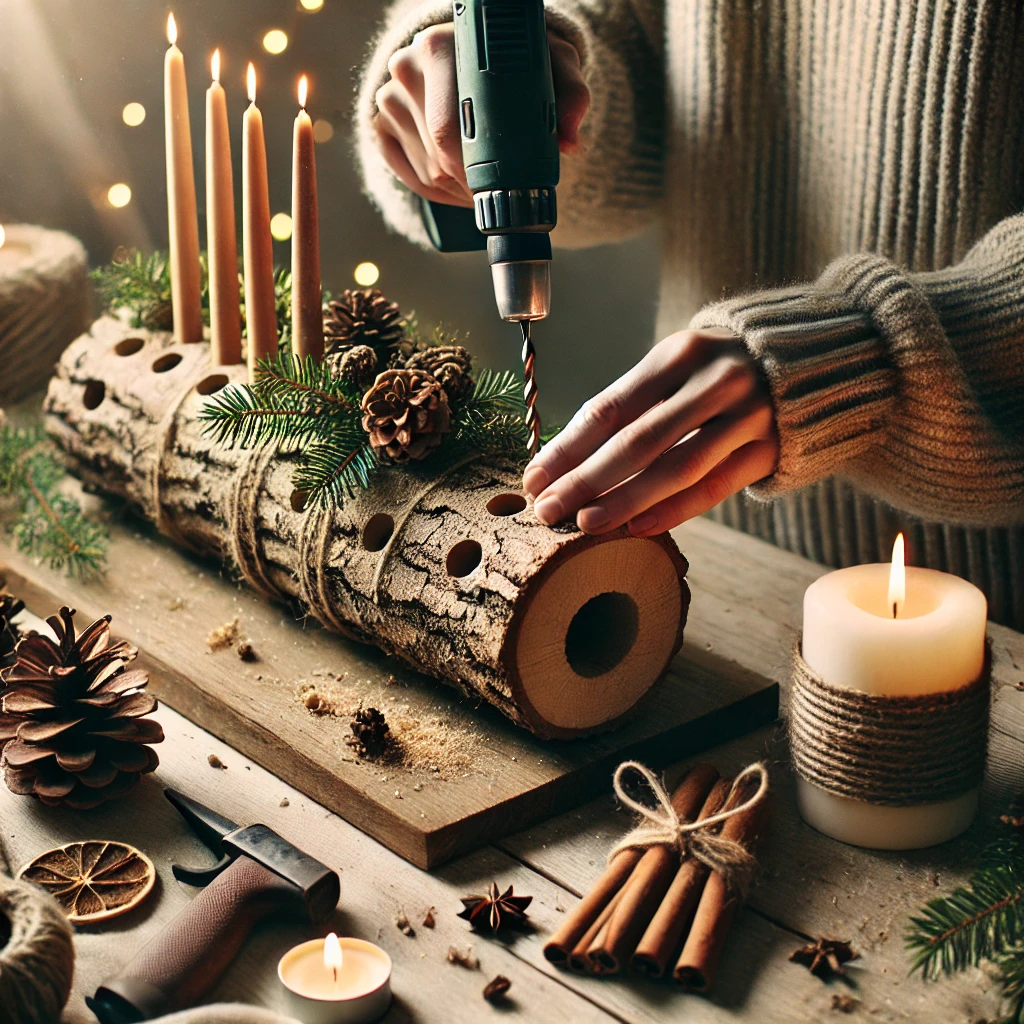
A Yule log decorated with natural elements and used as a candle holder to symbolize the return of the Sun.

  • Drill with a bit large enough for tapered candles
  • Hand saw or sandpaper
  • Twine or ribbon
  • 1 Log (required – A log approximately 12-18 inches long, made from oak, pine, or another sturdy wood, with flat bottom so it doesn’t roll.)
  • 3-5 Tapered candles (required – Symbolize the light of the Sun; choose candles in colors like red, green, gold, or white.)
  • 1 Bundle Pine branches or greenery (optional – For decoration and to symbolize longevity and prosperity.)
  • 3 Pinecones (optional – Symbolize life and rebirth.)
  • 1 Sprig Holly or mistletoe (optional – Represents protection and blessing.)
  • Dried flowers or herbs (optional – Choose flowers or herbs such as lavender, rosemary, or cinnamon sticks for protection and abundance.)
  • 1 Bag Glue or small nails (optional – For securing decorations if needed.)

Step 1: Preparing the Log

  1. Select your log—oak, pine, or another wood traditionally associated with strength and protection is ideal. Make sure it is stable and will sit flat on a surface without rolling.
  2. Using a drill, create 3-5 evenly spaced holes along the top of the log, deep and wide enough to securely hold your tapered candles. Be careful not to drill too deep; the candles should sit securely but should not be flush with the log.

Step 2: Decorating the Yule Log

  1. Once your log is drilled, it’s time to decorate! Gather pine branches, holly, pinecones, and flowers.
  2. Attach the greenery and pinecones to the log using twine to secure them in place, or use glue or small nails if needed. The greenery symbolizes renewal, longevity, and prosperity during the winter months.
  3. Adorn the log with herbs and flowers that represent your intentions for the season—lavender for peace, rosemary for protection, or cinnamon sticks for warmth and abundance.
  4. Optional: Wrap twine or ribbon around the log for an added decorative touch, creating a sense of harmony and balance.

Step 3: Setting the Candles

  1. Choose your candles based on the intentions or energies you wish to welcome into your home during Yule.
  2. – Red for vitality and courage.

  3. – Green for abundance and prosperity.

  4. – Gold for success and light.

  5. – White for peace and protection.

  6. Insert the candles into the drilled holes. As you place each candle into the log, take a moment to reflect on the light it will bring into your life and home as the wheel of the year turns toward longer days.

Step 4: Charging the Yule Log with Intentions

  1. Once your Yule log is decorated and candles placed, take a moment to hold your hands over the log, focusing on your intentions for the season.
  2. Say aloud:

    "I bless this Yule log with light and life,

    To carry forth the Sun's return,

    May it warm our hearts, protect our home,

    And bring renewal in the year to come."

  3. Visualize the warmth of the Sun filling the log with glowing energy, infusing your space with blessings and protection.

Step 5: Lighting the Candles

  1. On Yule or the Winter Solstice, gather around the Yule log with your loved ones or in quiet meditation.
  2. Light the candles, one by one, focusing on the warmth and light each flame brings. As each candle is lit, speak your intentions or blessings for the coming year.
  3. Let the candles burn during your celebrations, filling the room with light and warmth.

Step 6: Reflecting and Honoring the Season

  1. As the candles burn, reflect on the magic of Yule and the returning Sun. This is a time to honor the cycles of nature and the promise of renewal.
  2. Share stories, intentions, or blessings with those around you, or simply enjoy the peaceful atmosphere the Yule log creates.

The decorative Yule log can be reused year after year as part of your Yule celebrations. After the candles have burned down, carefully remove the stubs, and refresh the decorations with new greenery, herbs, and flowers. Each year, this log will continue to be a symbol of light, hope, and the magic of the Winter Solstice.

Winter Solstice, Yule
Rituals

Conclusion

Crafting a Yule log with candles is a beautiful way to celebrate Yule, bringing the light and warmth of the Sun into your home as the darkest days of winter pass. The decorated Yule log, adorned with nature’s gifts and illuminated by candlelight, serves as a reminder of the cycles of life, death, and rebirth, and the magic of the season. Let this symbolic centerpiece be a source of joy and inspiration throughout the Yule season, offering hope, renewal, and the promise of new beginnings.

Posted on 1 Comment

Dec 25th – The 6th Day of Yule

Introduction

Embracing Light and Hope – Yuletide Harmony: Home Protection and Hope with Balder and Nanna

The sixth day of Yule beckons us to cleanse our homes and welcome the resurgence of light. On this day, we pay homage to Balder, Odin’s son of resurrection, and Nanna, his devoted wife. It’s a celebration of the sun’s life force embodied in Balder, who undergoes a symbolic death in winter, only to be reborn with the promise of summer.

Balder & Nanna: Radiant Deities of Joy

In the intricate tapestry of Yule, Balder and Nanna emerge as radiant figures, embodying the essence of the season. Balder, often hailed as the Norse god of goodness and joy, assumes a central role during Yule festivities. His significance lies in representing the life force of the sun, a force that wanes in the winter months only to be reborn with the promise of warmer days.

Balder’s Connection to Yule

Balder’s presence during Yule encapsulates the celebration of all that is good and joyous in the world. His association with positivity makes him a fitting deity to invoke during this season of merriment. As the god linked to the life force of the sun, Balder’s role is particularly poignant during the darkest days of winter. His symbolic death and eventual rebirth mirror the cyclical nature of the seasons, offering hope for renewal.

Nanna’s Role in Yule

Nanna, as Balder’s devoted wife, brings an aura of joy and peace to Yule celebrations. Her presence complements Balder’s radiance, creating a harmonious balance associated with the festive spirit. With ties to the moon, Nanna’s influence during Yule aligns with the celestial rhythms. Her association with the moon adds an ethereal quality to the season, connecting the festivities to the cosmic dance of celestial bodies.

Tragedy and Mistletoe

The tragic tale of Balder’s demise through a mistletoe-tipped dart, manipulated by Loki, adds a layer of depth to Yule. The mistletoe, having eluded the oath to never harm Balder, becomes a poignant symbol of both tragedy and the enduring strength of light. Mistletoe’s solar associations further enhanced its significance during Yule. As a plant with ties to Balder, its presence in rituals and decorations becomes a nod to the enduring solar energy that is integral to the season.

In essence, Balder and Nanna symbolize the duality inherent in Yule – the acknowledgment of the seasonal darkness and the unwavering hope for the return of light. As we honor these radiant deities during the festivities, their stories intertwine with the broader narrative of Yule, infusing it with layers of meaning, joy, and the promise of renewal.

Recipes

Honoring Balder & Nanna: Illuminating Joy and Protection

In the luminous embrace of Yule, honoring Balder and Nanna involves creating a sacred space that reflects their radiant essence. Light holds profound symbolism during Yule, representing the triumph of light over darkness. Dedicate candles to Balder and Nanna, placing them strategically throughout your home. Mistletoe, intimately tied to Balder’s story, becomes a potent symbol of happiness and protection. Bless sprigs of mistletoe with intentions of joy and safeguarding. Strategically hang the mistletoe in key areas of your home, especially near doorways and windows. This placement is not only decorative but also serves as a ward against malevolent energies, ensuring a protective barrier that welcomes only positive forces. Elevate the ritual by decorating the candles dedicated to Balder and Nanna. Consider carving symbols, runes, or images that resonate with these deities onto the candles. This personalized touch deepens the connection and adds a layer of intention to the illumination. Some heartfelt ways to pay homage to these deities during the festive season are candlelit devotion, mistletoe blessings, and candle decorating.

Personalized Expression

Whether you choose ribbons in hues that mirror the glow of candlelight or glitter that sparkles like the promise of dawn, let your heart guide your decorative choices. The mistletoe, now transformed with your creative essence, becomes a personalized talisman, an embodiment of your unique relationship with the divine.

Candlelit Devotion: A Luminous Invocation of Balder & Nanna

Light, as a symbol of transcendence and hope, takes center stage during Yule, a season that venerates the return of light after the deepest darkness. In the essence of Balder and Nanna, the flickering flame becomes more than just illumination; it transforms into a sacred conduit for divine presence and blessings.

Candle Symbolism: Illuminating the Divine

Candles, in their simplicity, embody profound symbolism. As you dedicate these luminous vessels to Balder and Nanna, you are acknowledging the triumph of light over darkness, mirroring the cosmic dance of day and night. Strategically placing these candles throughout your home transforms each one into a beacon—a symbolic representation of the radiant deities’ divine influence.

Invocation Ritual: Words that Illuminate the Soul

The act of lighting candles becomes a ceremonial gateway to connect with the divine energies of Balder and Nanna. In the soft glow, engage in an invocation ritual that transcends the physical realm and resonates with the spiritual. Speak words that echo your intentions, calling upon the deities to bless your space with joy, positivity, and the promise of renewed light.

Sample Invocation:

“Balder, radiant god of goodness and joy,

Nanna, serene goddess of peace and light,

In this sacred dance of flame and shadow,

I invoke your divine presence into my home.

As I light this candle,

may its glow symbolize the triumph of light over darkness,

of joy over sorrow, and of hope over despair.

Infuse this space with your luminous blessings,

filling every corner with warmth and divine grace.

In your sacred names,

I welcome the promise of renewed light and joyous abundance.

May the flickering flames be a testament to the eternal dance of cosmic forces.

So mote it be.”

Sensory Connection: Feeling the Divine Energy

As you utter these words, feel the resonance within. Close your eyes and allow the warmth of the candlelight to wash over you, transcending the physical realm and connecting with the ethereal. Envision the divine energy of Balder and Nanna filling your home, bringing with it an aura of joy, positivity, and the anticipation of brighter days.

In this ritual of candlelit devotion, you are not merely illuminating physical space but creating a sacred sanctuary where the divine and the earthly harmonize—a luminous tapestry woven with the threads of celestial blessings.

Mistletoe Blessings: Anointing Sprigs with Joy and Protection

As mistletoe intertwines with the poignant tale of Balder’s fate, it metamorphoses into a powerful emblem not only of tragedy but also of joy and protective energy. Embrace the sacredness of mistletoe by infusing it with your intentions, turning each sprig into a conduit for happiness and a guardian against malevolent forces.

Sprigs of Happiness

Mistletoe, often associated with the unexpected and tragic demise of Balder, paradoxically holds within its leaves the essence of joy and protection. In this Yuletide ritual, take sprigs of mistletoe and, with focused intent, bless them with the radiant energy of Balder and the serene protection of Nanna. Visualize the mistletoe becoming a beacon of happiness, scattering its protective blessings throughout your home.

Chant of Blessing:

In Balder’s name,

I bless thee, mistletoe,

Infuse joy into every leaf, let it grow.

Nanna’s protection, a shield so divine,

Guard my space, let negativity decline.

Decorative Touches

The act of embellishing mistletoe becomes a creative expression, a personal touch that weaves your energy into the sacred narrative. Adorn the mistletoe with ribbons, glitter, or any embellishments that resonate with you. Each touch becomes a symbol, a visual representation of your connection with Balder and Nanna.

Closing Meditation

Hold the mistletoe gently in your hands, feeling the energy you’ve infused into it. Close your eyes and envision Balder’s radiant smile and Nanna’s calming presence enveloping the mistletoe. Sense the joy and protection emanating from it. As you hang it in your home, know that it stands not just as a symbol but as a living testament to your connection with the divine energies of Yule.

In the dance of mistletoe and magic, you become the weaver of joy and the guardian of your sacred space.


Strategic Placement: Crafting a Shield of Joy and Protection

In the artful dance of Yuletide energies, the strategic placement of mistletoe becomes a ritual of warding and intention, weaving a shield of joy and protection throughout your sacred space.

Warding Ritual

As you embark on this sacred act, envision your home as a sanctuary, a haven of positivity and light. Begin by strategically hanging the mistletoe in key areas, paying special attention to doorways and windows. These entry points, both physical and metaphysical, serve as portals through which energies flow. The mistletoe, adorned with your blessings, transforms into a living ward, repelling malevolent forces and ensuring that only benevolent energies find their way into your abode.

Symbolic Intent

Each placement of mistletoe carries a symbolic weight, a representation of the divine energies invoked through Balder and Nanna. As you pass beneath or near these strategically positioned sprigs, let it be a conscious act—a moment of connection with the joyous essence of Balder and the protective embrace of Nanna. In this symbolic dance, you infuse your surroundings with a sense of security, transforming your home into a sacred space where only positive forces are welcomed.

Visualization Exercise

Stand in the center of your home, mistletoe in hand, and close your eyes. Envision a radiant shield emanating from each mistletoe sprig, forming an interconnected web of protection. See this shield growing in strength with every passing moment, a luminous force that repels negativity and invites joy. As you move through your home, visualize this shield expanding, creating a harmonious and safeguarded environment.

Affirmation:

“Beneath the mistletoe’s blessed embrace,

Joy and protection fill this sacred space.

Balder’s light and Nanna’s grace,

Weave a shield in every corner and place.”

With each strategic placement, you affirm the sacredness of your dwelling, allowing the mistletoe to stand not just as a decoration but as a guardian—a tangible reminder of the divine energies that dance within your home.

Candle Decorating Ritual: Crafting Luminous Symbols of Devotion

In the delicate dance of Yule’s energies, the candle decorating ritual transforms into a canvas for personalized expression, a sacred act that elevates the luminosity dedicated to Balder and Nanna.

Personalized Expression

As you embark on this ritual, let your creativity flow like a gentle stream, infusing each candle with symbols, runes, or images that resonate with the radiant spirits of Balder and Nanna. This personalized touch is more than mere decoration; it becomes a language of devotion, a visual poetry that speaks to the divine, creating a unique tapestry of connection.

Carving Symbols and Runes

Consider the ancient language of symbols and runes, each carrying a nuanced energy that aligns with the essence of Balder and Nanna. Carve these sacred marks onto the candles, allowing the flickering flames to dance with the timeless wisdom embedded in each stroke. As you engage in this act, you’re not just adorning wax; you’re inscribing a story—a narrative of your relationship with these luminous deities.

Images of Radiance

If words fail to capture the depth of your emotions, consider adorning the candles with images that embody the radiance of Balder and the serenity of Nanna. Whether it’s an artistic rendering or a simple depiction, let these images become visual vessels, carrying your intentions and devotion into the luminous dance of Yule.

Visualization Exercise

As you light these adorned candles, close your eyes and envision the symbols coming to life, radiating their energies into the space. See the room bathed in a soft glow, the carved symbols flickering with ancient wisdom. With each passing moment, sense the divine presence of Balder and Nanna growing stronger, their luminous essence intertwining with the flames.

Affirmation

“Symbols carved, a sacred art,

Candles aglow, a brand-new start.

Balder’s joy and Nanna’s grace,

Illuminate this sacred space.”

In this ritual of personalized expression, the candles cease to be mere objects; they become vessels of devotion, carrying the essence of Balder and Nanna into the very fabric of your home. May the dance of symbols and flames weave a tapestry of divine energies, enveloping you in the warmth of Yule’s celestial embrace.

Protecting the Home: A Tapestry of Renewal and Safeguarding

As the sixth day of Yule unfolds, the energies align to weave a tapestry of renewal and safeguarding within the sanctuary of your home. Embark on a journey of crafting protection baubles, enchanting glass, or plastic ornaments with the essence of Yule’s protective elements. Elevate the protection ritual by installing witch bells on pivotal doorways, especially those ushering in and out the energies of your home. Tap into the ancient artistry of runic symbolism with Yule Log Ash. This sacred substance, infused with the essence of Yule’s transformative fires, becomes the ink for inscribing protective runes on your doorways.

Protection Baubles: Crafting a Shield of Positivity

Step into the enchanting realm of Yule craftsmanship as you embark on the creation of Protection Baubles—ethereal guardians that will stand watch over the sacred spaces of your home.

Crafting the Vessels

Begin your journey by selecting glass or plastic ornaments, blank canvases ready to be infused with the essence of Yule’s protective elements. These vessels, waiting to be transformed, symbolize the purity of your intention and the potential to encapsulate the magic of the season.

Infusing Yule’s Essence

In this alchemical process, gather the sacred ingredients that will compose the protective elixir within each bauble. Aromatic cinnamon sticks, redolent with warmth and positive energy, intertwine with fragrant pine, a symbol of resilience and evergreen strength. Slices of dried orange and apple, infused with the essence of the sun and earth, become the final strokes, completing the trinity of protective elements.

Deliberate Hanging

Once the baubles cradle the potent fusion of Yule’s essence, hang them deliberately on the Yule Tree—a central nexus of festive energies. As each bauble finds its place, visualize a network of protection weaving through the boughs, creating a shield that resonates with the harmonious frequencies of the season. The Yule Tree, adorned with these guardians, becomes a focal point, radiating protective energies throughout the home.

Strategic Scattering

Extend the reach of your protective enchantment by strategically scattering the baubles around the house. Each placement is intentional, creating a barrier that transcends physical boundaries. As you position them near doorways, windows, and other points of entry, envision a celestial grid forming—a web of positive energy that repels negativity and welcomes only the benevolent forces of the season.

Animating the Guardians

As the Yule season unfolds, observe how each bauble, suspended from its chosen perch, sways gently in response to the ambient energies. In this dance, the baubles come alive, becoming more than mere decorations—they transform into guardians, sentinels attuned to the festive energies that course through your home. Their subtle movements signal their readiness to stand guard over the sanctity of your space.

In the crafting of Protection Baubles, you partake in a magical act, infusing everyday objects with the extraordinary energies of Yule. These sentinels, guardians of positive vibrations, contribute to the creation of a haven where the festive magic thrives, and the spirit of protection becomes an integral part of the season’s tapestry.

Witch Bells: Harmonizing with Cleansing Chimes

In the orchestration of Yule’s protective rites, the installation of Witch Bells emerges as a harmonious enchantment, weaving a symphony of cleansing chimes throughout the sacred thresholds of your abode.

Choosing Doorways

Begin this bewitching ritual by selecting pivotal doorways—portals through which the energies of your home ebb and flow. Focus on entrances and exits, identifying the points where the outside world meets the sanctity of your dwelling. These doorways, symbolic gateways, will serve as the canvas upon which your protective melody unfolds.

Installing the Bells

Choose witch bells that resonate with the spirit of Yule. These can be simple and elegant or adorned with symbols that hold personal significance. Affix them to the door frame, ensuring they dangle freely, ready to embrace the movements of those who pass through. As the bells find their place, envision them as more than mere ornaments—they are guardians of sound, poised to cleanse and protect.

Melodious Cleansing

With every entry and exit, the melodious chimes of the witch bells create a symphony of cleansing. The sound, delicate yet potent, reverberates through the air, dispelling negativity and forming a protective shield. Picture the chimes as magical incantations, their vibrations resonating with the festive energies of Yule. As each note dances in the air, it becomes a beacon of positivity, transforming your home into an oasis of harmonious vibrations.

Repelling Malevolence

The enchanting sound of the bells becomes a powerful force, repelling malevolent influences that may linger. Like a barrier of sound waves, the harmonizing tones create a protective cocoon around your home. It’s a magical invitation, signaling to benevolent forces that they are welcome, while discouraging anything less than positive from crossing the threshold.

A Shield of Positivity

As the witch bells continue their magical cadence, your home becomes a sanctuary—an enclave of positive vibrations. The symphony of chimes becomes an integral part of the festive tapestry, harmonizing with the energies of Yule. With each gentle ring, the witch bells affirm the protective nature of the season, creating a shield that resonates with the joyous spirit of Yule.

In the delicate dance of sound, Witch Bells become not just protectors but enchanting companions, guiding you through the festive season with a melody that cleanses, shields, and resonates with the magic of Yule.

Yule Log Ash Runes: Inscribing Symbols of Defense

In the sacred dance of Yule’s transformative fires, Yule Log Ash emerges as a canvas for the ancient artistry of runic symbolism. Within its fine particles lies the essence of Yule’s flickering flames, ready to become the ink with which you inscribe symbols of defense upon your doorways.

Gathering Yule Log Ash

Commence this mystical endeavor by collecting the ash from your Yule log. This log, a witness to the dance of Yule’s flames, now offers its essence for a purpose beyond the hearth. The ash, carrying the energy of the season, becomes a sacred substance—a conduit between the earthly and ethereal realms.

Choosing Protective Runes

Dive into the rich tapestry of runic symbolism. Choose runes that resonate with the energy of protection, creating a symbolic language that transcends the mundane. Consider Algiz () for divine protection, Thurisaz (ᚦ) for warding off malevolence, or Eihwaz (ᛇ) for stability and defense. Each rune is a key to a specific aspect of safeguarding.

Inscription Ritual

With Yule Log Ash in hand and runes selected, embark on the ritual of inscription. As you carve each symbol onto your doorways, infuse the act with intention. Visualize the runes not merely as marks on wood but as silent guardians, awakening with each stroke. Envision them coming to life, their energy forming an invisible yet potent shield against negativity.

Symbolic Defense

The runes etched in Yule Log Ash become more than symbols; they are declarations of defense, asserting the sacred nature of your home. As you work, imagine the protective energy of each rune weaving into the fabric of your dwelling, creating an intangible yet powerful barrier. This symbolic defense marks your space as a haven, a place where Yule’s magic lingers long after the flames have subsided.

Warding off Negativity

With every stroke of the inscribing tool, visualize the runes repelling negativity, much like a ward that guards against unwelcome energies. The symbolic language of the runes communicates with the unseen forces, sending a message that your home is a sanctuary protected by the ancient wisdom of Yule.

As you complete the ritual, step back and behold the silent proclamation your doorways now bear—a language of defense written in the sacred ash of Yule. The runes stand as guardians, ready to ward off any energy that does not align with the festive spirit of Yule. In their silent presence, they affirm that your home is a sacred space, embraced and protected by the timeless magic of the season.

Visualization and Intention

As you engage in these protective rituals, let each action be infused with intention. Visualize the baubles radiating a shimmering shield, the witch bells chiming away impurities, and the runic symbols on doorways standing as ancient sentinels. With each gesture, affirm that your home is a haven of positive energy, a sanctuary where the festive magic of Yule thrives, unwavering and resilient.

In this intricate dance of protection, your home transforms into a bastion of harmonious energies. May the crafted baubles, chiming bells, and runic symbols stand as guardians, ensuring that the sanctity of Yule permeates every corner, dispelling darkness and inviting the radiant light of renewal.

Letting in Hope: Illuminating the Darkness

In the heart of winter’s embrace, the sixth day of Yule beckons us to illuminate the darkness, both metaphorically and literally. Candles, those humble vessels of light, become the focal point of this day—a dual celebration in honor of Balder and Nanna and a symbolic gesture of kindling hope during winter’s depths.

Candles as Homage

As you light each candle, envision the flame as a tiny sun, a tribute to Balder, the Norse god associated with the life force of the sun. Feel the warmth and brightness fill your space, echoing the devotion to Balder and Nanna. In the gentle dance of the flames, perceive the promise of longer, brighter days—a testament to the cyclical nature of life and the ever-turning wheel of the seasons.

Take a moment to cherish the flickering flames. Each dance is a poetic ode to the resilience of light in the face of darkness. The flames, like the spirit of Yule, persist despite the longest night, offering a tangible reminder that even in the bleakest moments, there exists a spark of hope waiting to be kindled.

Beyond their illuminating role, candles become symbols of hope. They represent the undying flame within us that refuses to be extinguished, even in the coldest of times. Acknowledge the symbolic journey from the shortest day to the gradual lengthening of sunlight—a journey mirrored in the flickering glow of the candles.

Candle Decorations as Intention

Elevate the act of candle lighting by adding intentional decorations. Safely embellish your candles with herbs, spices, oils, or carefully carved symbols. Each adornment is a whispered intention, infusing the flames with specific qualities—hope, positivity, resilience. Consider the act of decoration as a form of spellwork, where every element contributes to the magical ambiance of your Yuletide celebration.

Experiment with various herbs and spices that carry meanings of hope and warmth. Cinnamon for abundance, bay leaves for protection, or frankincense for spiritual elevation are excellent choices. Anoint the candles with oils that resonate with the energy of Yule, such as cedarwood for grounding or orange for joy.

Carve symbols or words onto the candles, expressing your unique connection with the spirit of hope. Whether it’s ancient runes, meaningful words, or personal symbols, each carving becomes a signature of your intentions. In this act of personal expression, you contribute to the collective energy of hope that permeates the Yuletide season.

As the candles burn and their fragrant smoke mingles with the air, envision a tapestry of hope unfolding in your space. The intentional act of lighting and decorating becomes a magical ritual—a bridge between the mundane and the sacred, a tangible manifestation of the enduring hope that defines the spirit of Yule.

Embracing the Glow of Yule’s Promise

As we adorn our homes with symbols of protection, fill the air with the chiming of bells, and let the warm glow of candles guide us through the winter night, we find ourselves immersed in the profound tapestry of Yule’s magic. In each bauble, in every ring of the bell, and through the dance of candlelight, we pay homage to the resilience of light—a symbol that echoes the promise of renewal that the Yule season unfurls before us. As the protective energies weave around us, may the essence of hope linger in our hearts, creating a haven where the spirit of Yule illuminates even the darkest corners. In this symphony of traditions, we stand united, celebrating the enduring light that transcends the longest night, welcoming the dawn of a new, brighter season.