Posted on Leave a comment

Candle Divination

Candle Divination
Candle Divination

Introduction

Illuminate Your Path with the Wisdom of Flames

Candle divination, an ancient and intuitive practice, invites us to gaze into the dance of a flame for insights into life’s mysteries. Whether you seek guidance, clarity, or spiritual connection, this ritual transforms a simple candle into a conduit of wisdom. Candlemas, a time of light and renewal, offers an especially auspicious occasion to perform candle divination, harnessing the symbolic and energetic power of fire.

Ritual Basics

Before beginning any ritual, it is important to prepare yourself mentally and physically. You may want to take a cleansing bath, or shower, and meditate or perform some grounding exercises to center yourself. Gather any materials you will need, such as candles, incense, and offerings for the forest spirits.

You can read a more detailed Ritual Preparation guide here.

About Candle Divination

The art of candle divination, or ceromancy, is rooted in the elemental energy of fire. Candles have long served as spiritual tools, bridging the seen and unseen realms. Observing a candle’s flame, wax patterns, and behavior allows practitioners to glean messages and connect with the energies surrounding their intentions. This ritual encourages mindfulness and trust in your intuition, fostering a deeper connection with the divine and your inner wisdom.

Candlemas, celebrated as a midpoint between winter and spring, symbolizes the return of light and warmth. Performing candle divination during this sacred time enhances the ritual’s potency, aligning your practice with the seasonal shift toward renewal and clarity.

Candle Divination: Reading the Language of Flame

Gain insight and clarity through the art of candle divination, observing the flame, wax, and energy of a candle as it burns.

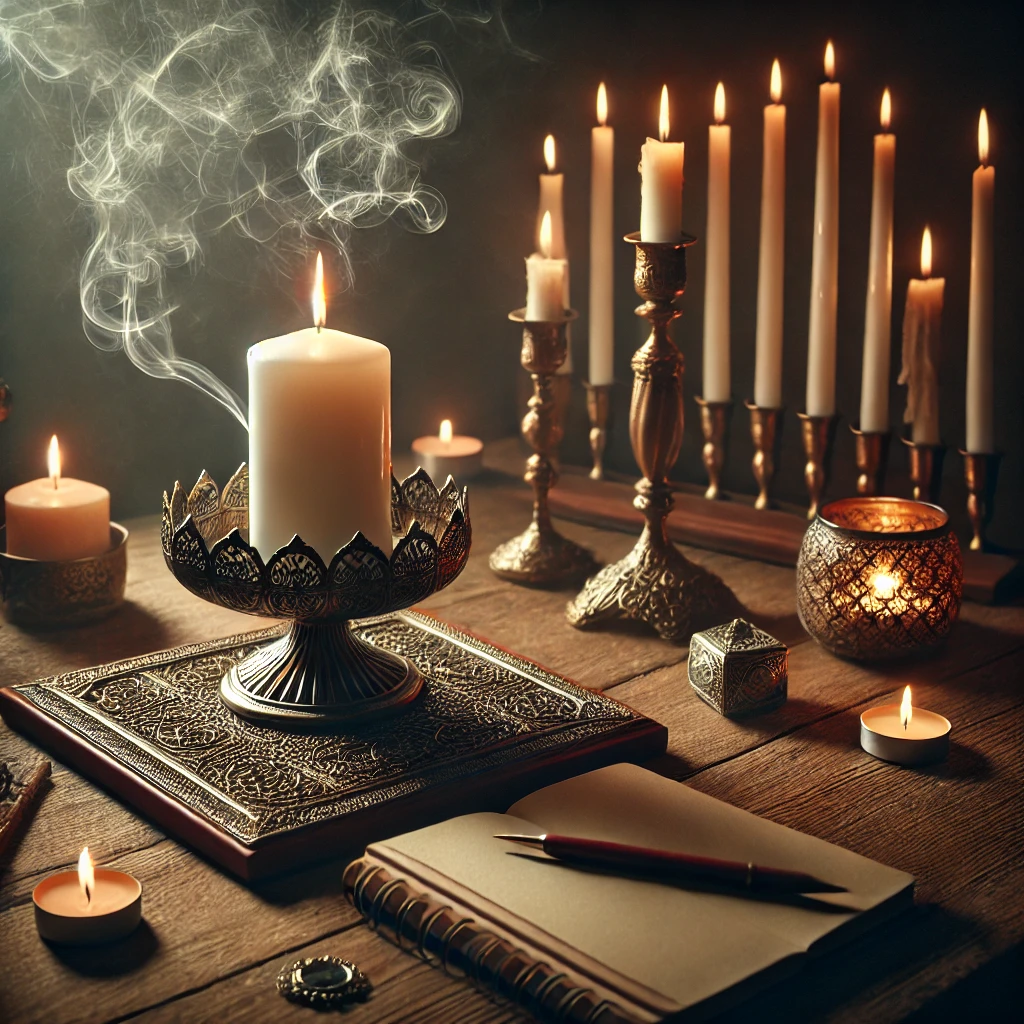
  • Candle holder
  • Heat-resistant plate or tray
  • Notebook and pen
  • 1 Candle (See color symbolism for guidance.)
  • 1 Lighter or matches (For lighting the candle.)

Preparing Your Space

  1. Choose a quiet, dimly lit space where you can focus without interruptions.
  2. Arrange your tools on a flat surface. Place the candle in the holder and, if interpreting wax, position the heat-resistant plate beneath it.
  3. Light additional candles or burn incense to create a sacred atmosphere.

Setting the Intention

  1. Sit comfortably and take a few deep breaths to center yourself.
  2. Focus on your question or intention. Keep it clear and concise, as this will guide your divination.

Observing the Flame

  1. Light the candle and observe the flame’s behavior. Use the interpretations below to guide your reading:
  2. – Steady flame: Stability, positive outcomes, and alignment.

    – Flickering flame: Fluctuating energy, external interference, or unresolved conflict.

    – Smoky or sputtering flame: Obstacles, cleansing needed, or lingering negativity.

Interpreting the Wax

  1. Allow the candle to burn long enough for wax to pool or drip.
  2. Examine the shapes and patterns formed by the wax:
  3. – Circle: Unity, wholeness, or cycles.

    – Line: Movement, travel, or forward momentum.

    – Random shapes: Intuitive or symbolic messages personal to you.

Incorporating Candle Color Symbolism

  1. Select a candle color aligned with your intention:
  2. – White: Clarity, peace, spiritual connection.

    – Black: Protection, banishing negativity, grounding.

    – Green: Growth, prosperity, renewal.

    – Red: Passion, energy, courage.

    – Blue: Intuition, calm, communication.

Reflecting and Concluding

  1. Extinguish the candle with care, thanking the flame for its guidance.
  2. Record your observations in a notebook, noting any patterns, symbols, or insights.
  • Always practice fire safety: Never leave a burning candle unattended and ensure it is placed on a stable, fire-resistant surface.
  • Wax interpretations can be combined with other divination methods, such as tarot or runes, for deeper insights.
  • You can perform this ritual regularly to track patterns over time or during specific lunar phases for additional energy alignment.
Candlemas, Fire Magic
Rituals

Conclusion

Candle divination offers a luminous path to clarity and connection, transforming a humble flame into a source of wisdom. As you practice this art, trust your intuition and let the language of the candle guide your journey. Performed during Candlemas or any sacred moment, this ritual fosters mindfulness, aligns you with the element of fire, and illuminates the mysteries of your path. May the light of the flame guide and inspire you in all that lies ahead.

Posted on Leave a comment

Candlemas

Candlemas
Candlemas

Introduction

Celebration of Light, Divination, and Renewal

As the chill of winter lingers and the promise of spring whispers on the horizon, February 2nd arrives as a day of light, reflection, and ancient wisdom. Candlemas, a celebration with roots in Christian tradition and older pagan practices, invites us to honor the transformative power of light and the shifting seasons.
Overview: Known as the Feast of the Presentation of Jesus Christ or the Feast of the Purification of the Virgin, Candlemas is a Christian holiday that marks the end of the Christmas season and the presentation of Jesus at the temple. Beyond its Christian roots, Candlemas also holds cultural significance as a time of divination, weather lore, and symbolic renewal. This article will delve into the history, traditions, and spiritual meaning of Candlemas, offering insights into its religious, cultural, and magical dimensions.

The History of Candlemas – From Sacred Light to Weather Lore

Candlemas, with its blend of Christian ritual and folkloric tradition, is a holiday that bridges the sacred and the practical, illuminating the ways humans have sought meaning in the cycles of light and darkness. This observance is deeply rooted in history, its origins tracing back to the 4th century when it was established by the Catholic Church. Initially, the focus was on biblical events, but over time, the celebration absorbed older traditions and developed into a day of both spiritual reverence and seasonal significance.

Biblical Origins and the Feast of Purification

Candlemas commemorates the Presentation of Jesus at the Temple, as described in the Gospel of Luke. According to Jewish custom, 40 days after the birth of a male child, the mother would undergo a ritual purification, and the child would be presented at the temple as an offering to God. For Christians, this event signifies Jesus’ dedication to the divine, marking an early moment of acknowledgment of his sacred role. It also honors the Virgin Mary’s adherence to the law of purification, reflecting themes of devotion and humility.

By setting Candlemas on February 2nd, 40 days after Christmas, the Church aligned the date with this scriptural timeline. Over time, it also became recognized as the official conclusion of the Christmas season, a final moment of festivity and reflection before moving into the stillness of late winter.

The Symbolism of Candles

Central to the celebration of Candlemas is the blessing and use of candles, a tradition introduced by the Church to symbolize the light of Christ. The flickering flames of the beeswax candles, blessed by priests and distributed to the faithful, were seen as a physical representation of divine light illuminating the darkness. These candles were not merely ceremonial; they were considered protective talismans, often kept in homes to ward off storms, illness, and evil spirits.

This emphasis on light also carried a metaphorical significance, marking a shift from the dark, introspective period of winter to the hope and renewal promised by longer days. Candlemas encouraged the faithful to see the light of Christ as a guide, both spiritually and practically, through the challenges of life.

Integration of Pre-Christian Traditions

As with many Christian holidays, Candlemas eventually blended with pre-Christian customs, particularly those tied to the cycles of nature. In Celtic traditions, February 1st and 2nd were associated with Imbolc, a festival celebrating the midpoint between the winter solstice and the spring equinox. Imbolc honored the goddess Brigid, a deity of fire, fertility, and healing. Her presence was symbolized by flames and hearths, much like the candles of Candlemas.

The themes of light, purification, and renewal central to Imbolc naturally resonated with Candlemas. The Church, in its efforts to Christianize pagan practices, allowed these traditions to coexist. Thus, Candlemas became a holiday not only of Christian devotion but also of seasonal celebration, carrying forward the ancient acknowledgment of the natural world’s rhythms.

Folklore and Weather Lore

In addition to its religious and symbolic meanings, Candlemas became intertwined with folk beliefs about the changing seasons. In many European cultures, Candlemas Day was a time for weather divination, reflecting humanity’s deep connection to agricultural cycles. One proverb, still quoted today, states:
“If Candlemas Day be fair and bright, winter will have another flight. If Candlemas Day brings cloud and rain, winter won’t come again.”

This weather lore underscored the importance of Candlemas as a turning point in the year, a moment to assess how much longer the harshness of winter might linger. These traditions likely influenced the development of Groundhog Day in North America, where the groundhog’s shadow serves as a modern-day counterpart to the weather predictions of Candlemas.

A Holiday of Sacred Transition

Ultimately, Candlemas emerged as a multifaceted celebration. For Christians, it is a day to reflect on Christ as a guiding light and to honor the Virgin Mary’s faithfulness. For others, it is a marker of the changing seasons, rooted in ancient rhythms of light and darkness. Through its integration of sacred and seasonal significance, Candlemas reminds us of the power of light to guide, protect, and renew as we navigate the cycles of the year.

The Blessing of Candles: Echoes of Pagan Rites

The blessing of candles during Candlemas, while central to Christian tradition, carries deep connections to older pagan practices that revered fire and light as sacred forces. Long before the establishment of Candlemas, ancient cultures celebrated the transformative and protective qualities of fire, incorporating it into rituals that aligned with the cycles of the seasons and the rhythms of nature.

Fire as a Purifying Force

In many pagan traditions, fire was viewed as a symbol of purification and renewal. Flames were believed to burn away negative energies, cleanse the spirit, and prepare the way for new beginnings. Festivals such as Imbolc, celebrated around February 1st or 2nd, centered on fire rituals to honor the goddess Brigid, a deity associated with the hearth, creativity, and healing. The lighting of candles and hearth fires during this time was a way to invoke her blessings, ensuring protection and fertility for the year ahead.

Similarly, the practice of blessing candles during Candlemas reflects this ancient belief in the purifying power of light. In Christian homes, these blessed candles were often burned during storms to ward off danger or placed on altars to bring divine protection. This custom mirrors pagan rites where fire was used to banish harmful spirits and guard against misfortune.

Light as a Symbol of Life and Protection

For pagans, the return of light during the late winter months was a powerful symbol of life’s resilience. Candle lighting ceremonies marked the growing strength of the sun as the days gradually lengthened, offering hope and reassurance during the darkest part of the year. These ceremonies were not merely practical but deeply spiritual, honoring light as a divine force that nurtured the earth and sustained all living beings.

Christianity adopted this reverence for light, weaving it into Candlemas through the symbolism of Christ as the “light of the world.” Just as pagans invoked fire to protect their homes and communities, Christians began blessing candles to invite the protective and guiding presence of Christ into their lives. In this way, the practice of candle blessing during Candlemas became a continuation of humanity’s enduring relationship with light as both a physical and spiritual force.

Bridging Traditions

The blessing of candles during Candlemas serves as a bridge between Christian and pagan traditions, highlighting shared themes of purification, protection, and renewal. For modern practitioners, this dual heritage enriches the ritual’s meaning, allowing it to be celebrated as both a sacred Christian sacrament and a nod to the ancient fire festivals of the past. Whether viewed as an act of faith, a magical ritual, or both, the lighting and blessing of candles remain a testament to the timeless power of fire and light to illuminate, protect, and transform.

Candle Traditions – From Sacred Flames to Divination

The humble candle, with its soft glow and symbolic power, takes center stage during Candlemas as a tool of faith, reflection, and even fortune-telling. Its light serves as a beacon of hope, a protective talisman, and a medium for connecting with the divine and unseen realms. Whether through religious blessings, household rituals, or divination practices, candles are an enduring symbol of the light that guides us through the darkness.

Blessing and Lighting of Candles: Sacred Flames of Hope

One of the most enduring traditions of Candlemas is the blessing and lighting of candles, a ritual rooted in Christian symbolism and spiritual intention. During special church services, priests bless candles brought by members of the congregation, transforming these everyday objects into sacred tools. The blessed candles are then taken home to be used throughout the year, often during times of need—lit to invoke Christ’s divine presence in moments of illness, storms, or spiritual uncertainty.

The light of these candles represents Christ as the “light of the world,” a source of guidance and reassurance during the darker days of winter. In this way, Candlemas serves as a transitional moment, bridging the long nights of the cold season with the anticipation of spring’s renewal.

For many, this practice also carries a protective quality. Families might place a blessed candle in the window to ward off evil or light it during a storm to safeguard the home. The flickering flame becomes both a symbol of faith and a tangible connection to divine protection.

Candle Divination: Seeking Answers in the Flame

Outside of its religious context, Candlemas has long been associated with the magical use of candles for divination. This tradition reflects humanity’s innate desire to seek guidance and clarity during moments of uncertainty. On Candlemas Day, the weather itself is often read as a form of natural divination: clear skies and sunshine predict six more weeks of winter, while overcast conditions herald an early spring. This weather lore, passed down through generations, speaks to the cyclical relationship between humans and nature.

Beyond weather predictions, candles have been used as tools for personal insight. Their flames and the wax they shed hold symbolic meaning, offering clues to those attuned to their messages. The simplicity of a candle makes it an accessible yet profound tool for divination, and Candlemas provides a perfect opportunity to engage with this practice.

How to Perform Candle Divination

Follow this link for a more detailed Ritual Article about Candle Divination[JH1] .

If you’re drawn to using candles for divination, Candlemas offers an auspicious time to explore their symbolic potential. Here are some methods to get started:

  • Observe the Flame:
    The way a candle burns can offer insight into the energies surrounding your question or intention.
    • A steady flame suggests stability, balance, and positive outcomes.
    • A flickering flame may indicate fluctuating energy, external interference, or unresolved conflict.
    • A smoky or sputtering flame can point to obstacles or a need for cleansing.
  • Watch the Wax:
    The shapes and patterns formed as a candle’s wax drips and pools can be interpreted similarly to tea leaf reading.
    • A circle might symbolize unity, wholeness, or cycles.
    • A line could suggest movement or travel.
    • Random shapes often call for personal interpretation—allow your intuition to guide you in uncovering their meaning.
  • Use Intention:
    When performing candle divination, set a clear intention or question. As you light the candle, focus on your query and meditate on the flame. Allow your thoughts to quiet and let the candle’s movement or behavior provide answers.

Symbolism in Candle Colors

Incorporating specific candle colors can enhance your divination or ritual work:

  • White: Clarity, peace, and spiritual connection.
  • Black: Protection, banishing negativity, and grounding.
  • Green: Growth, prosperity, and renewal.
  • Red: Passion, energy, and courage.
  • Blue: Intuition, calm, and communication.

A Bridge Between the Mundane and the Mystical

Candles, whether used in church blessings or as tools of divination, embody a universal language of light and transformation. Their steady glow provides comfort, their flames ignite insight, and their wax carries messages from realms beyond. During Candlemas, this simple yet profound tool reminds us of our connection to the cycles of nature, the divine, and our own inner wisdom. By engaging with the traditions of Candlemas—both sacred and magical—you can find light to guide you through the dark and hope for the renewal that always comes.

Folklore and Love Divination – The Magic of Candlemas

Beyond weather predictions, Candlemas has long been a day imbued with magical foresight, particularly in matters of love and fortune. This period, rich in symbolism and transitional energy, has inspired various cultures to develop traditions aimed at unveiling the secrets of the heart and destiny. The blending of Christian observance with older pagan customs has given rise to a unique tapestry of folklore that continues to enchant and intrigue.

Birds as Omens of Love

One of the most charming Candlemas traditions involves observing birds to divine romantic prospects for the coming year. Unmarried women, in particular, would venture outside on Candlemas Day to watch the skies, believing that the first bird they saw would hold a prophetic message about their future spouse:

  • Robin: Spotting a robin was considered a sign that the woman would marry a sailor or someone who worked at sea. The robin, with its red breast and hearty song even in winter, symbolized steadfastness and adventure.
  • Sparrow: Seeing a sparrow indicated a humble but contented marriage to a poor man. Sparrows, common and unassuming, represented simplicity and the value of love over wealth.
  • Goldfinch: A goldfinch sighting foretold marriage to a wealthy man. With their vibrant plumage and association with abundance, goldfinches were seen as harbingers of prosperity and happiness.

This practice reflects a broader human tendency to seek meaning in the natural world, interpreting the behaviors of animals as messages from the divine or the universe. It also highlights the importance of marriage and partnership in historical societies, where a successful union could significantly impact a person’s social and economic standing.

Candlemas Love Rituals

Beyond bird divination, Candlemas was a time for various love rituals and charms designed to reveal one’s future partner or enhance romantic prospects:

  • Apple Peel Divination: Young women might peel an apple in one continuous strip and throw it over their shoulder. The shape the peel formed on the ground was believed to resemble the initial of their future spouse’s name.
  • Mirror Gazing: At midnight on Candlemas Eve, it was said that gazing into a mirror by candlelight could reveal the face of one’s true love over the shoulder. This practice taps into the scrying tradition, using reflective surfaces to gain insights into the unseen.
  • Dream Pillows: Placing sprigs of rosemary or thyme under one’s pillow on Candlemas Eve was thought to inspire dreams of a future lover. Herbs have long been associated with magical properties, and their scents were believed to open pathways to prophetic visions.

Interpreting Natural Signs

The emphasis on interpreting nature’s signs during Candlemas ties the holiday to a broader tradition of connecting with the divine through observation and intuition. People looked to the environment for guidance, believing that the physical world and the spiritual realm were intertwined. This connection extended beyond love to encompass general fortunes, health, and community well-being.

  • Fire and Smoke Omens: The way candles burned during Candlemas services could indicate fortunes for the year. A bright, steady flame suggested good luck, while a dim or sputtering flame might warn of challenges ahead.
  • Weather Patterns: As with the groundhog tradition, people paid close attention to the weather on Candlemas Day. An old English rhyme states:

“If Candlemas Day be fair and bright,
Winter will have another flight;
If Candlemas Day be cloud and rain,
Winter is gone and will not come again.”

This rhyme underscores the belief that natural phenomena on sacred days held predictive power over future events.

Connection to Imbolc and the Goddess Brigid

Candlemas’s proximity to Imbolc, the Celtic festival celebrated on February 1st, reinforces its association with fertility, renewal, and the coming of spring—a time when new beginnings, both romantic and personal, are honored. Imbolc is dedicated to Brigid, the goddess of fire, poetry, healing, and childbirth. She embodies the potential for growth and the stirring of life beneath the winter soil.

  • Brigid’s Crosses: Woven from reeds or straw, Brigid’s crosses were made during Imbolc and hung in homes for protection and blessings. The creation of these crosses was often a communal activity, symbolizing unity and the weaving together of lives.
  • Purification Rites: Both Imbolc and Candlemas involve themes of purification. Just as Mary underwent purification in the Christian tradition, followers of pagan practices engaged in rituals to cleanse themselves of the old year’s residues, making way for new growth and opportunities—including those related to love and relationships.

Celebrating New Beginnings

The convergence of these traditions during Candlemas underscores a universal human desire to understand and influence the forces that govern our lives, particularly in love and destiny. The holiday’s themes resonate with the natural cycles of death and rebirth, darkness and light, which are especially poignant as winter begins to give way to spring.

  • Community Gatherings: Candlemas was often a time for community feasts and gatherings, providing opportunities for socializing and potentially meeting future partners. Dancing, singing, and sharing food strengthened communal bonds and lifted spirits during the cold months.
  • Setting Intentions: Modern practitioners may use Candlemas as a time to set intentions for personal growth and relationships. Lighting candles while focusing on desires for love, harmony, or healing can be a powerful ritual to align oneself with the energies of renewal.

Enduring Legacy

The magic of Candlemas lies in its rich tapestry of customs that blend religious observance with folkloric practices. Its enduring legacy reflects the human inclination to seek connection—with each other, with nature, and with the mysteries that lie beyond our understanding.

By embracing the traditions of love divination and folklore associated with Candlemas, we participate in a timeless dance of hope and possibility. Whether we look for signs in the flight of birds, the flicker of a candle flame, or the whispers of our own hearts, Candlemas invites us to open ourselves to the magic of new beginnings and the potential that each turning of the season brings.

Candlemas Today – Celebrating Renewal and Transformation

While the rituals of Candlemas have evolved over the centuries, its timeless themes of light, renewal, and reflection remain central to its celebration. Modern observances of Candlemas reflect a rich blend of religious, cultural, and personal practices, allowing individuals from various spiritual paths to honor this sacred time in ways that resonate deeply with their beliefs and intentions.

Christian Observances: Blessings and Light

For Christians, Candlemas continues to be a day of reverence and hope. Many attend church services where candles are blessed in a sacred ritual. These blessed candles are brought home and used throughout the year as symbols of Christ’s light. They are often lit during significant moments—such as family prayers, times of illness, or storms—serving as reminders of divine protection and guidance.

In addition to church ceremonies, some families incorporate Candlemas into their domestic traditions by lighting candles at home. This simple yet profound act invites reflection on the light of Christ dispelling darkness, both literal and spiritual. Some households may also use the day to reflect on Mary’s faithfulness, dedicating prayers to the Virgin and meditating on themes of purity and devotion.

Pagan and Witchcraft Traditions: A Time for Purification and Intention

For pagans and witches, Candlemas is an opportunity to align with the seasonal energies of transition, drawing inspiration from the ancient festival of Imbolc. This Celtic holiday celebrates the halfway point between the winter solstice and the spring equinox, marking the gradual return of longer days and the awakening of life beneath the surface of the earth.

Rituals of Purification:

  • Candlemas is a powerful time for cleansing and renewal, both physically and spiritually. Practitioners may engage in smoke cleansing of their homes, using herbs such as rosemary, sage, or cedar to clear away lingering negativity and invite fresh energy.
  • A symbolic “sweeping” ritual with a besom or broom can be performed to sweep out old energies, starting at the back of the house and moving toward the front door, visualizing stagnant forces being released.

Intention-Setting and Manifestation:

  • Many pagans and witches use Candlemas to set intentions for the year ahead. This might involve lighting candles in sacred space and meditating on personal goals or the qualities they wish to cultivate, such as courage, patience, or creativity.
  • Candle magic is particularly fitting for Candlemas. Practitioners often dress candles with oils and herbs, carving symbols or words into the wax that represent their desires. As the candle burns, it releases the energy of their intentions into the universe.

The Art of Candle-Making: Infusing Light with Meaning

Candle-making has become a popular activity for those celebrating Candlemas, as it combines creativity, mindfulness, and tradition. The act of crafting candles by hand offers a meditative way to honor the holiday’s themes of light and transformation.

Personalizing Your Candles:

  • Choose colors that align with your intentions:
    • White for purification and clarity.
    • Green for growth and prosperity.
    • Yellow or gold for joy and success.
  • Infuse the wax with herbs or oils that correspond to your goals. For example, lavender for peace, cinnamon for abundance, or rose petals for love.
  • Add meaningful symbols or carvings to the surface of the candle, such as runes, sigils, or sacred patterns.

Handcrafted candles can also be used in rituals throughout the year, serving as tangible reminders of the intentions set during Candlemas.

Community and Personal Practices

Candlemas is a time for both communal and solitary observance, depending on one’s preferences and spiritual path.

  • Community Gatherings: For those who celebrate with others, Candlemas can be an opportunity to share meals, exchange blessings, or participate in group rituals. Feasts featuring seasonal foods—such as dairy, root vegetables, and hearty breads—reflect the themes of sustenance and renewal.
  • Meditative Reflection: Solitary practitioners may use the day for quiet meditation, journaling, or divination. Lighting a single candle in a darkened space and focusing on its flame can be a profound way to connect with the deeper energies of the season.

Candlemas as a Time of Transition

At its core, Candlemas is a day that marks the transition from winter’s stillness to spring’s awakening. For this reason, some people use the day as an opportunity for spring cleaning—both literally and metaphorically. Clearing clutter from one’s home, organizing belongings, and discarding what no longer serves are acts that mirror the spiritual themes of purification and preparation for new growth.

In addition to physical cleaning, many celebrate Candlemas as a time for inner work, releasing old habits, thought patterns, or emotional baggage. Writing down what you wish to let go of and safely burning the paper in a candle flame can be a powerful ritual of release.

Blending Old and New

Modern observances of Candlemas often blend traditional elements with contemporary practices, reflecting the diverse ways people find meaning in this sacred day. Some may integrate weather lore—such as the belief that a sunny Candlemas predicts six more weeks of winter—while others focus on aligning with the holiday’s themes through yoga, mindfulness, or creative expression.

Whether through religious services, candle-making, or private reflection, Candlemas today continues to inspire people to honor the light within and around them. It offers a moment to pause, acknowledge the turning of the seasons, and embrace the promise of renewal and transformation.

A Personal Invitation

Candlemas invites us to reconnect with the rhythms of the natural world and the cycles of light and darkness. Whether you celebrate it as a Christian feast, a pagan holiday, or a time of personal reflection, this day is a reminder that even in the heart of winter, the seeds of spring are stirring. Through candles, rituals, and intention-setting, we can honor this sacred transition and prepare ourselves for the brighter days ahead.

Candlemas Weather Lore and Its Connection to Groundhog Day

The weather-related folklore of Candlemas offers a fascinating glimpse into how ancient traditions have shaped modern customs, finding a surprising counterpart in North America’s beloved Groundhog Day. While today’s festivities focus on a groundhog predicting the weather, the roots of this practice trace back to Candlemas and its long-standing role as a day of weather divination.

The Origins of Candlemas Weather Lore

At its core, Candlemas weather lore reflects humanity’s deep connection to seasonal cycles and the need to predict nature’s shifts, especially in agricultural societies where such knowledge was vital for survival. In many European traditions, Candlemas marked a pivotal point in the year—the halfway mark between the winter solstice and the spring equinox. People closely observed the day’s weather, believing it offered insight into how much longer winter’s grip would hold.

An old English rhyme captures the essence of this belief:

“If Candlemas Day be fair and bright,
Winter will have another flight;
If Candlemas Day be cloud and rain,
Winter is gone and will not come again.”

The rhyme underscores the idea that a sunny Candlemas foretells six more weeks of winter, while an overcast day predicts an earlier arrival of spring. This tradition resonated across cultures, with similar sayings in German, French, and Scottish folklore.

The German Influence and the Journey to America

The Candlemas weather lore we know today owes much to German folklore, where it was believed that animals, particularly hedgehogs, played a role in weather prediction. According to tradition, if a hedgehog emerged from its burrow on Candlemas and saw its shadow, winter would persist. If no shadow appeared, spring was on its way. This practice combined practical observation with symbolic storytelling, linking the behavior of animals to the rhythms of nature.

When German immigrants settled in North America, they brought this tradition with them. However, in their new environment, hedgehogs were not native, so the role of the weather-predicting animal was transferred to the groundhog—a creature more commonly found in the United States and Canada. Thus, the Candlemas belief in an animal’s shadow determining the weather evolved into the modern celebration of Groundhog Day.

The Groundhog Day Tradition

Groundhog Day, celebrated annually on February 2nd in Punxsutawney, Pennsylvania, and other locations, has become a festive occasion centered around the groundhog’s weather prediction. The most famous groundhog, Punxsutawney Phil, is ceremonially awakened and observed by a crowd of onlookers. If Phil sees his shadow, tradition holds that winter will last for six more weeks. If not, an early spring is expected.

While Groundhog Day is often viewed as lighthearted fun, its roots in Candlemas weather lore reveal a deeper historical significance. The practice speaks to humanity’s enduring relationship with nature and the desire to find meaning and predictability in the changing seasons.

Symbolism and Connection to Light

Both Candlemas and Groundhog Day revolve around the interplay of light and shadow, highlighting their shared roots in seasonal observance. Candlemas’s focus on the blessing of candles emphasizes light as a spiritual and physical force that dispels darkness. Similarly, Groundhog Day’s shadow lore reflects the way light and its absence are interpreted as signs of the earth’s cycles.

The groundhog’s shadow becomes a playful metaphor for the lingering presence of winter’s cold, while the absence of shadow signals the imminent return of warmth and growth. This symbolism ties directly to the ancient themes of Candlemas, where light is both a literal and figurative harbinger of renewal and transformation.

Candlemas Weather Lore in Modern Practice

For those who celebrate Candlemas, the weather lore of the day remains a meaningful tradition. Observing the weather, interpreting its signs, and reflecting on its connection to the broader cycles of the year can be an act of mindfulness and spiritual attunement. Practitioners might:

  • Incorporate Weather Observation into Rituals: Take note of the day’s weather and meditate on its significance, both practically and symbolically.
  • Tie Weather Divination to Intentions: Use the predictions as a metaphor for personal cycles of growth and transformation. A sunny day might encourage patience during challenging times, while a cloudy one could signify readiness for new beginnings.

From Candlemas to Groundhog Day: A Living Legacy

The transformation of Candlemas weather lore into Groundhog Day showcases the adaptability of traditions as they cross cultures and centuries. What began as an ancient ritual tied to the cycles of light and darkness has evolved into a playful modern celebration, yet its essence—a reflection on nature’s rhythms and the promise of change—remains intact.

Groundhog Day serves as a reminder that even the smallest of shadows can hold echoes of ancient wisdom, connecting us to the enduring magic of the seasons and the stories we tell to understand them. Whether through a groundhog’s shadow or the light of a blessed candle, both traditions invite us to pause, reflect, and honor the cycles that guide our world.

Conclusion

Candlemas is a sacred and versatile celebration that weaves together religious rituals, cultural traditions, and magical practices. From the blessing of candles to divination and weather lore, it invites us to honor the transformative power of light and reflect on the turning of the seasons. Whether you observe Candlemas as a religious feast, a magical holiday, or simply a time of reflection, take a moment to light a candle and meditate on its flame. Let it remind you of the light within and the promise of renewal that lies ahead. As winter begins to loosen its grip and the days grow longer, may the spirit of Candlemas guide you toward clarity, renewal, and the warmth of spring’s embrace.

Posted on Leave a comment

Brigid

Brigid
Brigid

Introduction

Goddess of Healing, Poetry, and the Forge

Brigid, also known as Brighid or Brigit, is a goddess of profound significance in Irish mythology, revered as a deity of healing, poetry, smithing, fertility, and the hearth. Her name, meaning “exalted one,” reflects her elevated status among the gods of pre-Christian Ireland. Brigid embodies a triple goddess, representing the interconnected realms of creativity, protection, and transformation.

Brigid’s influence transcends the boundaries of time and religion. With the spread of Christianity in Ireland, she was syncretized into Saint Brigid, a revered figure in Christian tradition. Her dual legacy as a goddess and saint speaks to her enduring relevance and the adaptability of her worship.

This article delves into the mythology, symbols, and modern practices associated with Brigid, highlighting her role as a guardian of light, transformation, and new beginnings.

Who is Brigid?

Brigid is one of the most revered deities in Irish mythology, celebrated as a triple goddess who embodies healing, poetry, and smithing. Her multifaceted nature makes her a powerful symbol of creativity, transformation, and nurturing energy. As a goddess of fire and inspiration, Brigid governs the creative spark, the warmth of the hearth, and the transformative power of the forge, connecting her to both the domestic and mystical realms.

Brigid’s influence extends to fertility, agriculture, and the cycles of life, reflecting her essential role in Imbolc, the ancient festival marking the arrival of spring. As a bringer of light and renewal, she inspires the growth and transformation that follow winter’s stillness. Her energy embodies the balance between creation and sustenance, making her a guardian of life’s perpetual cycles.

Her deep connection to the hearth and home underscores her protective and nurturing qualities, while her link to fire and the sun symbolizes illumination, purification, and renewal. Through these associations, Brigid serves as a guiding force in both personal and communal transformation.

Epithets and Titles

Brigid’s epithets and titles reflect her divine authority and her varied domains of influence. Each highlights a different facet of her power and significance:

  • The Exalted One:
    This title speaks to her elevated status among the Irish gods, emphasizing her role as a deity of immense power and reverence.
  • Goddess of the Hearth:
    Honoring her role as a protector of homes and families, this title reflects her importance in domestic life, where the hearth serves as a sacred space of warmth, nourishment, and connection.
  • Lady of the Forge:
    Celebrating her dominion over smithing and transformation, this title underscores her role in creation and resilience, where the forge symbolizes both physical and spiritual renewal.
  • Muse of Poets:
    Highlighting her role as an inspiration in creativity and the arts, this title connects her to the power of words, expression, and the divine spark that fuels artistic endeavors.

Iconography

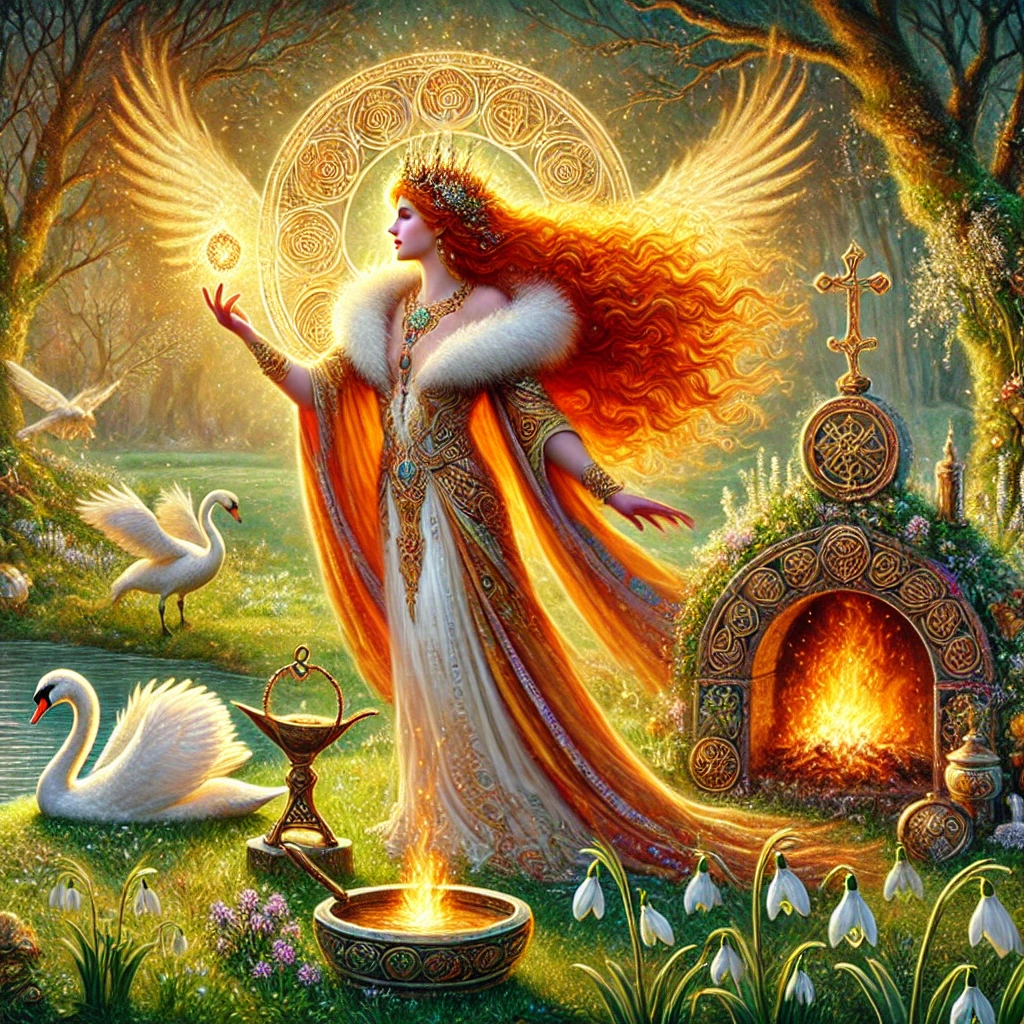
Brigid is frequently depicted as a radiant young woman, embodying the beauty and vitality of fire and spring. Her imagery emphasizes her nurturing and transformative qualities, with symbols that connect her to her various domains:

  • A Brigid’s Cross:
    This woven cross of rushes or straw is one of her most recognizable symbols. It represents protection, blessings, and the cycle of life, and is traditionally placed in homes to safeguard against harm and bring prosperity.
  • Sacred Flames:
    Fire plays a central role in Brigid’s iconography, symbolizing her connection to transformation, illumination, and purification. Eternal flames dedicated to her were historically kept burning by priestesses and are rekindled in her modern worship.
  • Animals:
    Brigid is closely associated with sacred animals that reflect her nurturing and creative nature:
    • Cows: Symbolizing abundance and sustenance, reflecting her role in fertility and agriculture.
    • Swans: Representing purity and transformation, aligning with her connection to inspiration and the cycles of life.
  • Golden or Red Hair and Feathered Cloak:
    Brigid is often depicted with radiant red or golden hair, representing the fire and sun she embodies. Her cloak of feathers symbolizes her connection to nature and the divine realms.
  • The Forge and Smithing Tools:
    Representing her transformative powers, the forge is a metaphor for creation through fire and resilience through adversity.

Brigid’s iconography weaves together her roles as a goddess of fire, renewal, and protection, creating a vivid and inspiring image of her influence in the lives of her devotees. Through her many facets, she continues to guide practitioners in embracing creativity, nurturing growth, and finding strength in transformation.

Mythological Background

Brigid, a cornerstone of Irish mythology, is revered for her role in healing, poetry, and smithing—domains that showcase her as a guardian of creativity, transformation, and resilience. Her mythology weaves themes of renewal, protection, and the balance of life’s cycles, making her an enduring figure in both pagan and Christian traditions.

Key Myths and Stories

Brigid’s myths and legends highlight her triple aspects and her role as a force of creation, transformation, and renewal.

  • Triple Goddess of Creativity and Transformation:
    As a triple goddess, Brigid’s domains of healing, poetry, and smithing encapsulate her ability to oversee life’s transformative forces.
    • Healing: Brigid is a healer, tending to both physical ailments and emotional wounds. Her presence symbolizes the nurturing care needed to restore balance and vitality, whether for an individual, a community, or the earth itself.
    • Poetry: As a muse of poets, Brigid inspires the creative spark that brings words to life, reflecting her connection to the power of expression and the divine. Poetry, in her realm, becomes a tool for healing, teaching, and transformation.
    • Smithing: Her mastery of the forge represents creation through fire, resilience in the face of trials, and the transformative power of adversity. The forge is not only a place of creation but also a symbol of the alchemy of life, where challenges are shaped into strengths.
  • Imbolc and the Return of Light:
    Brigid’s feast day, February 1st, aligns with Imbolc, an ancient Celtic festival marking the first stirrings of spring.
    • During Imbolc, Brigid’s energy is celebrated as a bringer of light and renewal, awakening the earth from winter’s dormancy.
    • Her association with fire and the hearth makes her a symbol of warmth and life, embodying the promise of spring’s return.
    • Imbolc rituals often include lighting candles or fires to honor Brigid’s presence and to invoke her blessings for the coming season.
  • Syncretism into Saint Brigid:
    With the spread of Christianity in Ireland, Brigid’s attributes were absorbed into the figure of Saint Brigid, allowing her worship to persist in a new form.
    • Saint Brigid, much like her goddess counterpart, became known for her miracles, generosity, and protection of women and children.
    • The blending of pagan and Christian traditions allowed Brigid’s essence to remain central to Irish spirituality, symbolizing a bridge between the old ways and the new faith.

Relationships

Brigid’s connections within Irish mythology reflect her roles as a nurturer, creator, and protector.

  • The Dagda:
    Brigid is often described as the daughter of the Dagda, a chief figure in Irish mythology known for his strength and wisdom. This lineage underscores her divine authority and her connection to the creative and protective forces of the earth.
  • Her Sons:
    In some tales, Brigid is the mother of three sons, each associated with one of her triple aspects:
    • Healing: Representing her nurturing and restorative energy.
    • Poetry: Reflecting her inspiration and connection to the arts.
    • Smithing: Symbolizing her transformative and creative power.

These familial ties emphasize her role in guiding and sustaining life’s cycles through her domains.

Role in Mythology

Brigid’s role in Irish mythology transcends simple categorization, as she bridges opposites and extremes:

  • Creation and Destruction:
    Brigid’s mastery of the forge symbolizes her ability to create and transform, even in the face of destruction or hardship. She teaches that new beginnings often arise from endings, much like the cycle of seasons.
  • Pagan and Christian:
    As both a goddess and a saint, Brigid embodies the synthesis of pagan spirituality and Christian faith, uniting communities and preserving her essence across changing cultural landscapes.
  • Light and Dark:
    Her association with fire and spring represents her role as a bringer of light and transformation, guiding mortals and gods alike through the cycles of darkness and renewal.

Brigid’s significance lies in her dynamic energy, her nurturing presence, and her ability to guide her followers through the transformative moments of life. During Yul e and Imbolc, her mythology continues to inspire celebrations of renewal, resilience, and hope, making her a timeless figure in the spiritual world.

Symbols and Associations

Brigid, as a goddess of healing, creativity, and protection, is represented by a rich tapestry of symbols and elements that reflect her multifaceted nature. These associations serve as a guide for understanding her influence and are central to rituals and practices dedicated to her.

Sacred Symbols

  • Brigid’s Cross:
    The Brigid’s Cross, traditionally woven from rushes or straw, is one of the most iconic symbols associated with her.
    • Protection and Blessings: It is placed in homes, particularly above doorways or near the hearth, to ward off harm, invoke her protection, and bring blessings of prosperity and health.
    • Symbolism: The woven design reflects the cyclical nature of life, the interconnection of the spiritual and physical realms, and the transformative power of Brigid’s energy.
    • Imbolc Tradition: Creating a Brigid’s Cross during Imbolc is a popular practice, honoring her as a guardian of the home and a bringer of renewal.
  • Sacred Wells:
    Brigid’s sacred wells, often found in Ireland, are pilgrimage sites that represent her powers of healing and renewal.
    • Healing Waters: These wells are believed to hold sacred, rejuvenating energy, and visitors often leave offerings, such as coins or ribbons, as a way of seeking her blessings.
    • Connection to Nature: The wells symbolize the life-giving force of water, tying her to the cycles of life and fertility.
  • The Hearth:
    The hearth is a central symbol of Brigid’s protective and nurturing energy.
    • Warmth and Safety: It represents the heart of the home, a place where families gather for warmth, nourishment, and connection.
    • Domestic Harmony: As a goddess of the hearth, Brigid safeguards households, fostering harmony, stability, and abundance.
    • Sacred Space: Lighting a fire or candle at the hearth during rituals invokes her presence and honors her as a protector of the home.

Colors and Elements

  • Colors:
    Brigid’s associated colors reflect her diverse domains and spiritual essence:
    • Green: Symbolizing fertility, growth, and renewal, green captures her connection to the cycles of life and the earth’s vitality.
    • Gold: Representing illumination, creativity, and divine inspiration, gold reflects her role as a bringer of light and transformation, particularly during Imbolc.
    • White: Emblematic of purity and healing, white connects to her nurturing energy and her association with sacred wells and water.
  • Elements:
    Brigid’s elements highlight her dual nature as a goddess of fire and water, embodying transformation and renewal:
    • Fire: Representing illumination, creativity, and transformation, fire is central to Brigid’s identity as a goddess of the forge and the hearth. It symbolizes her ability to inspire, protect, and create.
    • Water: Reflecting healing and renewal, water ties her to sacred wells, fertility, and the life-giving forces of nature. The balance between fire and water showcases her role as a unifier of opposites and a guardian of life’s harmony.

Brigid’s symbols and associations serve as a powerful reminder of her nurturing, transformative, and protective energy. Whether through the Brigid’s Cross, sacred wells, or hearth fires, these symbols invite her presence into daily life and connect her devotees to her timeless power of renewal, creativity, and balance.

Worship and Devotion

Brigid’s enduring legacy as a goddess and saint reflects her profound influence on spiritual practices, both in pre-Christian Ireland and in modern traditions. Her worship emphasizes protection, renewal, and creativity, making her a central figure during seasonal celebrations like Imbolc and in everyday acts of devotion.

Historical Practices

In ancient Ireland, Brigid was revered as a goddess of fertility, the hearth, and transformation, and her worship was deeply tied to the rhythms of the agricultural calendar and the seasonal cycles of life.

  • Creating Brigid’s Crosses:
    One of the most iconic traditions, the Brigid’s Cross, was woven from rushes or straw and placed in homes, particularly above doorways or near hearths.
    • Purpose: The cross was believed to protect the household from harm, bring blessings of health and prosperity, and ensure abundance in the coming year.
    • Imbolc Tradition: Creating the cross during Imbolc, Brigid’s feast day, was both a sacred and communal act, symbolizing the renewal of light and life.
  • Lighting Sacred Flames:
    Fire was central to Brigid’s worship, symbolizing her connection to illumination, purification, and inspiration.
    • Rituals: Fires or candles were lit in her honor, often at sacred hearths or communal gatherings, to invoke her presence and blessings.
    • Sacred Flame of Kildare: In Kildare, Ireland, priestesses kept an eternal flame burning in Brigid’s honor, a tradition that persisted for centuries and was later adapted into Christian practices.
  • Offering Milk or Butter:
    Offerings of milk, butter, or other dairy products were made to honor Brigid’s nurturing and agricultural aspects.
    • Symbolism: These offerings reflected her role as a provider of sustenance and fertility, aligning with her connection to livestock and the hearth.
    • Seasonal Context: During Imbolc, a time of new life and renewal, these offerings were particularly significant, celebrating the beginning of the lambing season and the promise of abundance.

These historical practices emphasized Brigid’s nurturing energy, her protection over the home, and her role in ensuring prosperity and renewal.

Modern Practices

Brigid’s worship has been adapted into modern pagan, Wiccan, and Christian traditions, blending ancient rituals with contemporary spirituality. Her role as a goddess and saint allows her to bridge cultural and religious divides, inspiring devotion in diverse ways.

  • Setting Up Altars:
    Altars dedicated to Brigid are a focal point for rituals and meditations, reflecting her domains of creativity, healing, and renewal.
    • Decorations: Common items include Brigid’s Crosses, candles, flowers, and offerings such as milk, honey, or bread.
    • Personal Touch: Practitioners often add items that resonate with Brigid’s energy, such as crafting tools, poetry, or symbols of fire and water.
  • Rituals and Meditations:
    Modern rituals often focus on Brigid’s themes of transformation, protection, and inspiration.
    • Fire Rituals: Lighting candles or small fires during rituals honors her connection to purification and creativity.
    • Meditations: Practitioners meditate on Brigid’s energy to gain clarity, renew their creative spark, or seek emotional and spiritual healing.
    • Healing Work: Invoking Brigid during healing rituals emphasizes her nurturing energy and her role as a protector of physical and emotional well-being.
  • Imbolc Celebrations:
    Brigid remains central to Imbolc, celebrated on February 1st as a festival of light and renewal.
    • Seasonal Feasts: Traditional feasts include dairy-based foods, spiced cakes, and honeyed mead, all offered in her honor.
    • Poetry and Song: Creative expressions such as reciting poetry, singing, or storytelling pay tribute to Brigid as a muse of the arts.
    • Community Gatherings: Group rituals often include fire ceremonies, crafting Brigid’s Crosses, or blessing homes with her protective energy.

Through historical and modern practices, Brigid’s worship continues to inspire a deep connection to creativity, transformation, and the cycles of life. Her ability to adapt across time and traditions makes her a timeless figure of devotion, protection, and renewal.

Attributes and Lessons

Brigid, as a goddess of creativity, protection, and transformation, offers timeless wisdom and guidance to those who seek her. Her energy inspires resilience, growth, and balance, serving as a beacon for navigating life’s challenges and opportunities.

Character Traits

Brigid’s traits reflect her dynamic and multifaceted nature, making her an ideal figure for those in need of both strength and inspiration.

  • Creativity:
    As the Muse of Poets and Lady of the Forge, Brigid embodies the spark of creativity that fuels both artistic expression and transformative action. Her influence encourages individuals to explore their creative potential, whether through writing, crafting, or problem-solving.
  • Protection:
    Brigid’s association with the hearth and home highlights her nurturing yet protective energy. She guards families, communities, and sacred spaces, fostering a sense of safety and harmony. Her presence is both comforting and empowering, reminding her devotees of the strength found in connection and care.
  • Transformation:
    Through her domain over smithing and fire, Brigid symbolizes the alchemy of change—the ability to shape life’s trials into opportunities for renewal and growth. She inspires resilience and adaptability, teaching that even the most challenging circumstances can lead to new beginnings.

Lessons and Themes

Brigid’s mythology and worship offer profound lessons that resonate with modern practitioners, emphasizing balance, growth, and the sacredness of daily life.

  • The Power of Transformation:
    Brigid teaches that challenges are not merely obstacles but opportunities for growth.
    • Smithing as a Metaphor: Just as metal is forged in fire, individuals can shape their experiences—no matter how difficult—into something strong and valuable.
    • Renewal through Creativity: Whether through artistic expression, personal growth, or spiritual practice, Brigid encourages transformation as a pathway to empowerment.
  • Balance of Light and Dark:
    Brigid’s presence during Imbolc, a festival of renewal, reminds us of the importance of embracing both light and shadow.
    • Seasonal Reflection: Imbolc marks the transition from winter’s darkness to the light of spring, symbolizing the cyclical nature of life and the hope found in renewal.
    • Embracing Shadows: Brigid encourages individuals to confront their challenges and inner struggles, finding strength and clarity in the process.
  • The Sacred in the Everyday:
    Through her association with the hearth, Brigid reveals the divine presence in the mundane aspects of life.
    • Domestic Harmony: The hearth, as the heart of the home, represents the power of daily rituals and connections to foster stability and love.
    • Creative Acts: Whether cooking, crafting, or tending to a home, Brigid’s energy elevates these tasks into acts of sacred devotion.

Relevance Today

Brigid’s lessons and themes remain deeply relevant in the modern world, offering inspiration and guidance for a variety of challenges and pursuits:

  • Resilience in Adversity:
    Brigid’s transformative energy encourages individuals to face difficulties with courage and to emerge stronger and wiser. Her presence serves as a reminder that renewal and growth often follow life’s most challenging moments.
  • Celebrating Creativity:
    Brigid inspires her followers to embrace their creative potential, recognizing the power of imagination and artistry in shaping their lives and the world around them.
  • Honoring Balance:
    Through her connection to light and dark, Brigid teaches the importance of finding balance in life’s cycles, whether between work and rest, action and reflection, or challenges and triumphs.
  • Finding the Sacred in Modern Life:
    Brigid’s association with the hearth and home reminds modern practitioners that everyday acts of care and creativity are imbued with spiritual significance. She encourages mindfulness and gratitude for the small but meaningful moments that define life.

By embodying creativity, protection, and transformation, Brigid serves as an enduring guide for navigating life’s complexities, offering her followers the tools to grow, create, and thrive. Her wisdom inspires resilience, hope, and the ability to see the divine in all aspects of existence.

Magical and Spiritual Work

Brigid’s presence in magical and spiritual practices reflects her role as a goddess of transformation, inspiration, and protection. Through rituals, spells, and the creation of sacred spaces, practitioners can connect with her energy to foster healing, creativity, and harmony.

Rituals and Spells

Brigid’s energy is particularly potent in rituals and spellwork that involve healing, creativity, and protection. These practices allow her devotees to align with her domains and harness her transformative power.

  • Healing Spells:
    Brigid’s association with healing waters and sacred flames makes her an ideal guide for spells focused on physical, emotional, or spiritual well-being.
    • Water Rituals: Use water from a sacred well or a natural source, combined with an invocation to Brigid, to cleanse and renew the body and spirit.
    • Fire Spells: Light a candle or small flame, symbolizing her healing warmth, and meditate on its light to release negative energy and restore balance.
    • Offerings: Leave milk, honey, or herbs like chamomile or lavender as part of your healing spell to honor Brigid’s nurturing essence.
  • Creative Inspiration:
    As a muse of poets and artists, Brigid inspires creativity in all forms.
    • Invocation for Creativity: Before beginning a creative project, light a candle and recite a prayer or poem to Brigid, inviting her guidance and inspiration.
    • Poetry and Writing Spells: Use her energy to fuel creative breakthroughs by placing symbols of fire or crafted tools on your workspace.
    • Artistic Offerings: Dedicate a finished piece of art, poetry, or music to Brigid as an act of devotion and gratitude.
  • Home Blessings:
    Brigid’s role as a protector of the hearth and home makes her an ideal figure for rituals that ensure safety, harmony, and warmth in your living space.
    • Candle Rituals: Light a candle at the hearth (or its modern equivalent, such as a stove) while reciting a blessing to invoke her protection.
    • Brigid’s Cross: Craft or place a Brigid’s Cross in your home to ward off harm and invite her blessings.
    • Hearth Offerings: Place offerings like bread, butter, or small tokens near your hearth as a way of honoring her guardianship.

Altars and Sacred Space

Creating a dedicated space for Brigid allows practitioners to focus their devotion and connect deeply with her energy. An altar for Brigid reflects her connection to fire, creativity, and fertility, serving as a spiritual anchor for rituals, meditation, and offerings.

  • Candles:
    Candles are a central element of a Brigid altar, representing her connection to illumination, warmth, and purification. Choose gold, red, or white candles to align with her energy.
  • Milk or Butter:
    As symbols of nourishment, fertility, and domestic harmony, offerings of milk or butter honor Brigid’s nurturing aspect. These can be left on the altar as part of Imbolc rituals or general acts of gratitude.
  • Crafted Items:
    Incorporate handmade Brigid’s Crosses, poetry, or other crafted items to celebrate her role as a goddess of creativity. These items also serve as offerings and a way to align with her creative energy.
  • Sacred Symbols:
    Enhance the altar with representations of Brigid’s domains, such as:
    • Fire: A small cauldron, a brazier, or symbolic flames.
    • Water: A bowl of water or a small fountain to represent sacred wells and healing.
    • Forge Tools: Miniature hammers or anvils to symbolize smithing and transformation.
  • Seasonal Elements:
    During Imbolc or other seasonal celebrations, decorate the altar with spring flowers, greenery, and items symbolic of renewal, like seeds or eggs.

By maintaining a sacred space for Brigid, practitioners create a physical and spiritual connection to her energy, fostering a deeper relationship with this beloved goddess. Through rituals and altars, her guidance, creativity, and protection become tangible elements in the lives of her devotees.

Conclusion: Brigid’s Enduring Legacy

Brigid’s enduring legacy as both a goddess of the old ways and a beloved saint highlights her timeless significance across spiritual traditions. As a goddess of healing, creativity, and transformation, she embodies the profound balance between nurturing and resilience, inspiration and action. Her domains extend beyond mythology to offer practical and spiritual guidance, encouraging her devotees to embrace the cycles of life, find strength in adversity, and honor the sacred in everyday moments.

At Imbolc, Brigid’s energy shines brightest, heralding the return of light and the promise of renewal. Through the creation of Brigid’s Crosses, the lighting of candles, and offerings of milk, honey, or crafted tokens, her devotees connect with her transformative power. These acts of devotion reflect not only her influence over life’s transitions but also her ability to inspire hope and creativity even in the darkest times.

Brigid’s lessons in balance, growth, and perseverance remain as relevant today as they were in ancient times. She teaches us that challenges can be forged into opportunities, that love and light coexist with shadow, and that renewal is a sacred force inherent in all of life’s cycles. Whether through the blazing fires of the hearth, the healing waters of sacred wells, or the creative spark of inspiration, Brigid offers a pathway to connection and transformation.

By celebrating Brigid at Imbolc or through daily acts of reverence, practitioners honor her as a guiding force of light, renewal, and creativity. Her presence serves as a reminder of the divine within and around us, encouraging us to carry her sacred flame forward, illuminating our paths with hope, purpose, and resilience.

Posted on Leave a comment

Ritual: Sunna’s Awakening: A Morning Offering

Sunna's Awakening A Morning Offering

Introduction

Honoring the Radiance of the Rising Sun

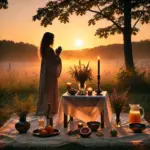
At the heart of Yule, the season of the Sun’s return, we honor Sunna, the radiant goddess of the Sun, who graces the morning sky with light and vitality. As dawn unfolds, this ritual invites practitioners to commune with Sunna, offering gratitude and symbolic gifts to celebrate her life-giving energy. “Sunna’s Awakening” is a deeply meditative and reverent practice, a moment to align with the rhythms of nature and begin the day bathed in her glow.

Ritual Basics

Before beginning any ritual, it is important to prepare yourself mentally and physically. You may want to take a cleansing bath, or shower, and meditate or perform some grounding exercises to center yourself. Gather any materials you will need, such as candles, incense, and offerings for the forest spirits.

You can read a more detailed Ritual Preparation guide here.

Sunna’s Awakening: A Morning Offering

A dawn ritual to honor Sunna and the light she bestows, marking a fresh start and invoking the Sun’s warmth and vitality.

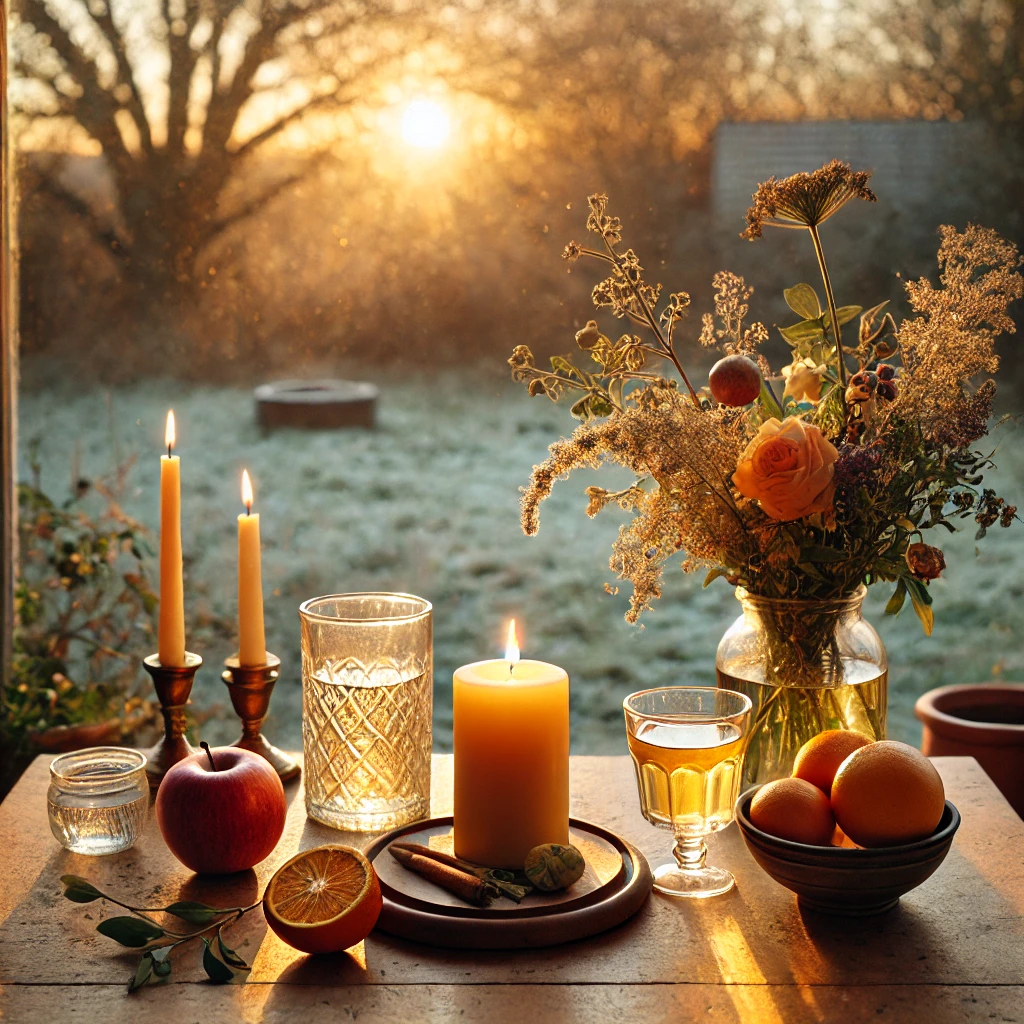
  • Candle
  • Small fireproof dish or altar
  • Matches or lighter
  • 1 Glass Cider (required – Symbolizing vitality and simple joys.)
  • 1 Glass Mead or Goldschlager (optional – Representing sweetness and brilliance.)
  • 1 Apple (required – A symbol of abundance and health.)
  • 1 Orange (required – Representing freshness and the Sun’s energy.)
  • 1 Bouquet Flowers (required – Fragrant and symbolic of beauty and gratitude.)
  • 1 Bowl Water or dew (optional – To connect with the morning’s natural purity.)

Preparing Your Sacred Space

  1. Select a serene location where you can observe the morning light, such as an outdoor spot or a window facing east.
  2. Place your candle at the center of a small altar or table. Surround it with the offerings—cider, mead, fruit, flowers, and water.
  3. Ensure the space is peaceful and free from distractions. If outdoors, embrace the crisp morning air and the sounds of nature.

Centering and Setting Intentions

  1. Sit or stand before your altar, taking a few deep breaths to ground yourself in the moment.
  2. Quiet your mind and focus on the anticipation of dawn. Set an intention for the ritual—whether it’s gratitude, renewal, or connection with Sunna’s energy.

Lighting the Candle

  1. As the first light of day begins to touch the horizon, light the candle.
  2. Say:

    “Sunna, radiant goddess of the morning sky,

    I honor your ascent and the warmth you bring.

    As your light grows, so too does life and hope.

    Bless this day with your vitality and wisdom.

    May your brilliance guide and sustain me."

Presenting the Offerings

  1. One by one, present each offering to Sunna with gratitude:
  2. – Cider: “I offer this cider, a toast to your joy and vibrancy.”
  3. – Mead or Goldschlager: “I offer this mead, a tribute to your sweetness and brilliance.”
  4. – Apple: “I offer this apple, a symbol of abundance and life.”
  5. – Orange: “I offer this orange, embodying your energy and light.”
  6. – Flowers: “I offer these flowers, tokens of my appreciation for your beauty and grace.”
  7. Place each item deliberately on the altar or in front of the candle, imagining Sunna’s golden light bathing them in blessing.

Communing with Sunna

  1. Sit quietly, gazing at the flickering flame and the light of the rising Sun.
  2. Reflect on the Sun’s symbolism—rebirth, vitality, and the unending cycle of life.
  3. If you feel moved, speak words of gratitude or meditate on your connection to the divine energy Sunna represents.

Closing the Ritual

  1. After a moment of silence or meditation, extinguish the candle if the Sun has fully risen, or allow it to burn out safely.
  2. Say:

    “Sunna, I thank you for your light,

    Your warmth sustains all life.

    As you rise today, I honor your journey

    And carry your brilliance within."

  3. Dispose of the offerings respectfully—by placing flowers or fruit in nature or sharing the cider with loved ones.
  • This ritual can be adapted for any morning of personal significance, not just during Yule. 
  • The offerings are symbolic, and substitutions can be made based on availability or personal preference.
  • If you cannot perform the ritual outdoors, a window with a view of the sunrise serves as an excellent alternative.
Winter Solstice, Yule
Rituals

Conclusion

“Sunna’s Awakening: A Morning Offering” is a ritual of renewal and gratitude, connecting us with the life-giving energy of the Sun. Through this simple yet profound act, we honor Sunna’s radiant ascent and align ourselves with the rhythms of light and life. As her golden light bathes the world, may we find inspiration, strength, and joy in her warmth, carrying her blessings into the day and the season of Yule.