Loki and Sigyn: A Mythic Harmony Unveiled
Within the intricate threads of Norse mythology, the enigmatic duo of Loki, the shape-shifting trickster, and his steadfast wife, Sigyn, unfurls a tale of mythic harmony. Before Loki’s mischievous antics took center stage, Sigyn held her own domain, a deity adorned with victories and devotion. Together, they create a dance of contrasts, a balance of chaos and order, laughter and steadfastness, echoing the intricate rhythm of life itself.
Loki’s Mischievous Alchemy
Loki, with his ever-changing forms and clever machinations, brings an alchemy of mischief to the mythic stage. His ability to challenge norms and turn the world upside down adds a dynamic unpredictability to the cosmos. In this, we find not just chaos but the potent seeds of transformation and renewal, a reminder that sometimes it takes a trickster to spark change.
Sigyn’s Steadfast Devotion
On the other side of this cosmic equation stands Sigyn, a beacon of stability and devotion. In the midst of Loki’s capricious escapades, Sigyn remains a symbol of steadfastness, offering a counterpoint to the swirling energies of change. Her devotion becomes a source of strength, a reminder that even in the face of chaos, there exists a steady anchor.
The Dance of Laughter and Victory
Together, Loki and Sigyn engage in a dance that weaves laughter and victory into the very fabric of existence. Loki’s laughter echoes through the mythic realms, challenging conventions and inviting joy into the cosmic tapestry. Meanwhile, Sigyn, with her quiet victories over life’s smaller battles, adds a layer of resilience and purpose to the narrative.
On this auspicious day, we gather to pay homage to the unique partnership of Loki and Sigyn. It’s a celebration that transcends the boundaries of mischief and devotion, embracing the harmonious interplay of contrasting forces. Loki’s chaotic laughter becomes the counterpoint to Sigyn’s steadfast victories, creating a mythic symphony that resonates through the ages.
As we honor Loki and Sigyn, we recognize the inherent balance they bring to the mythic cosmos. Loki’s chaotic dance challenges stagnation, encouraging growth and evolution. Simultaneously, Sigyn’s steadfast presence provides the necessary grounding to navigate the twists and turns of existence. In their mythic harmony, we find not just a story but a reflection of the intricate dance of life itself—a dance that invites us to embrace both the chaos and the stability, the laughter and the victories that define our journey.
Honoring Loki and Sigyn: Silly Feast and Revelry
In the radiant glow of Yule’s fourth day, a whimsical transformation unfolds—a mirthful inversion of social norms known as the Silly Feast. This festive occasion is a celebration where the ordinary gives way to the extraordinary, and the mundane is cast aside for a moment of lighthearted revelry.
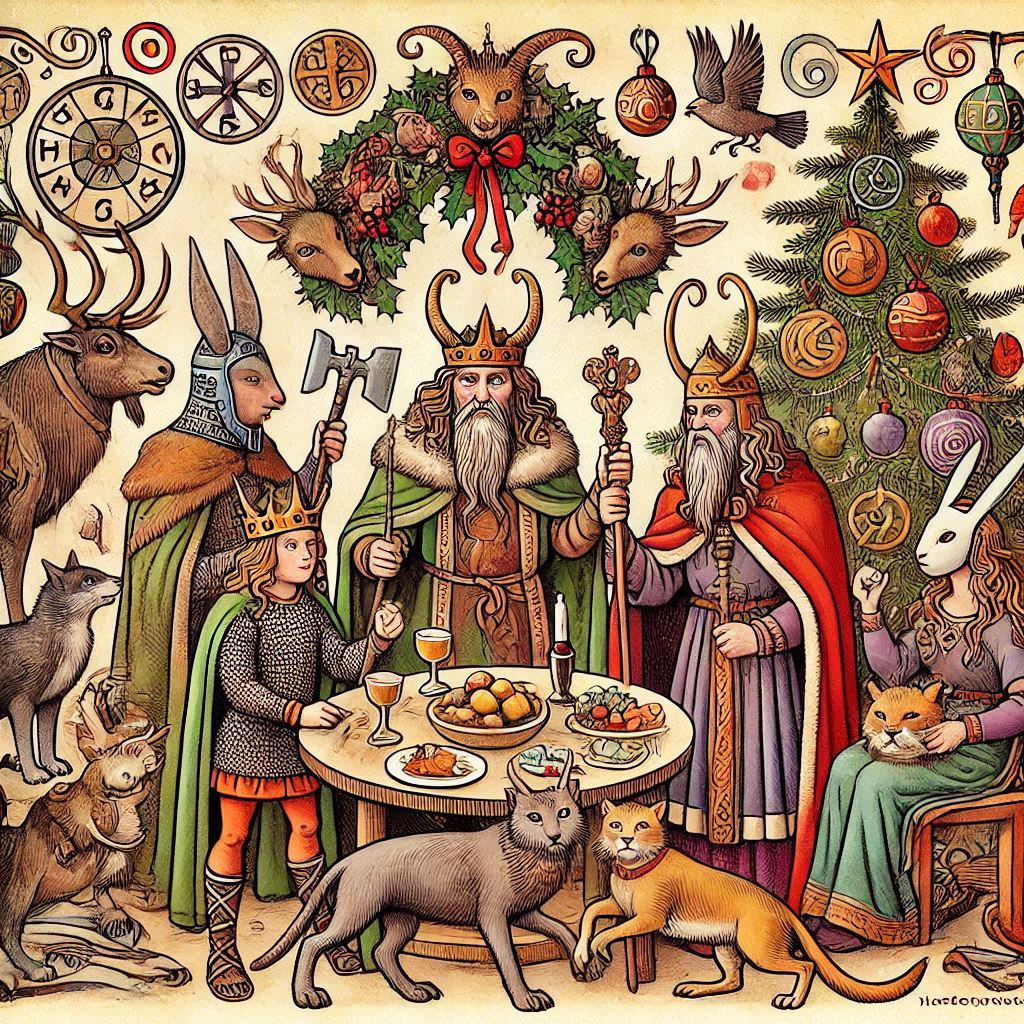
At the heart of the Silly Feast lies a delightful spectacle—the gathering of friends and family bedecked in animal-themed disguises. Laughter cascades through the air as the boundaries between species blur, and the spirit of the animal kingdom mingles with the human realm. It’s a joyous expression of the extraordinary within the ordinary, a celebration where the wild and whimsical converge.
As the Silly Feast ensues, the air becomes tinged with excitement and anticipation. Gifts are exchanged, each one wrapped in the spirit of surprise and delight. Yet, the revelry doesn’t stop there. In a charming twist, two individuals are chosen to embody the roles of the Lord of Misrule and the Loyal Queen. This playful role reversal adds an extra layer of merriment, creating a dynamic where the expected becomes the unexpected, and joy reigns supreme.
Against the backdrop of animal disguises and festive roles, the Silly Feast unfolds with a symphony of laughter. It’s laughter that transcends the ordinary, echoing through the spaces between the disguised revelers. The air is charged with the energy of shared joy and camaraderie, creating an atmosphere where memories are not just made but etched into the collective tapestry of the gathering.
As the Silly Feast draws to a close, what remains are not just the echoes of laughter but cherished moments that will be carried forward into the coming year. The inversion of norms, the joyous disguises, and the playful role reversals become threads woven into the fabric of shared memories. These moments of lighthearted revelry serve as a reminder that, during life’s seriousness, there exists a space for unbridled joy and delightful surprises.
In the Silly Feast, the ordinary becomes extraordinary, and the expected takes a delightful detour into the realm of the unexpected. It’s a celebration that transcends the boundaries of everyday life, inviting all participants to revel in the joyous liberation of laughter, gift-giving, and the whimsical dance of role reversals. As the festivities unfold, the Silly Feast becomes a testament to the transformative power of joy—a joy that lingers, creating a radiant tapestry of memories for the year that lies ahead.
Animal Attributes and Symbolic Masks: A Tapestry of Meaningful Choices
In the vibrant tapestry of the Silly Feast, the creation of animal masks or ornaments becomes a profound and personalized expression of aspirations for the coming year. Each animal is chosen for its symbolic attributes, weaving a narrative of qualities one wishes to cultivate. The choices are not just vast; they are laden with meaning and intention, creating a rich and meaningful tableau:
Bear: Strength, Power, Connection to the Earth
The bear, a symbol of strength and power, embodies a profound connection to the earth. Choosing the bear signifies a quest for inner strength, resilience, and a grounded connection to the world.
Wolf: Fierceness, Loyalty, Collaboration
Wolves, known for their fierce nature and unwavering loyalty to the pack, are chosen to signify a commitment to fearlessness, loyalty in relationships, and collaboration with others.
Fox: Cunning, Trickster, Problem-Solving
The fox, a cunning and clever creature, represents the art of strategic thinking, adaptability, and the ability to navigate challenges with a touch of playful trickery.
Mink: Playfulness, Adaptability, Quick Thinking
Minks, with their playful demeanor and adaptability, symbolize the importance of embracing playfulness, adapting to change, and thinking on one’s feet.
Seal: Mystery, Joy, Feminine Magic
Seals, creatures of mystery and joy, carry the essence of feminine magic. Choosing the seal signifies an embrace of the mysteries of life, finding joy in the unknown, and connecting with feminine energy.
Boar: Power, Wealth, War
The boar, sacred to Freyja and Freyr, represents power, wealth, and the spirit of war. Choosing the boar signifies a desire for personal strength, prosperity, and the courage to face life’s battles.
Horse: Cooperation, Adventure, Support
Horses, known for their cooperative nature and sense of adventure, symbolize a commitment to collaboration, a spirit of adventure, and the importance of providing and receiving support.
Rabbit: Caution, Fertility, Abundance
Rabbits, with their cautious nature and associations with fertility, signify a desire for careful planning, the abundance of life’s blessings, and the fertility of creative endeavors.
Cat: Independence, Silence, Ferocity
Cats, symbols of independence and silent observation, represent a quest for self-reliance, the power of silence, and the ferocity needed to protect what matters.
Snake/Dragon: Transformation, Secret Knowledge
Snakes and dragons, with their transformative symbolism and association with secret knowledge, represent a commitment to personal transformation and the pursuit of hidden wisdom.
Deer: Authority, Self-Sacrifice
Deer, embodying authority, and the spirit of self-sacrifice, signify a dedication to responsible leadership and the willingness to make sacrifices for the greater good.
Raven: Magic, Communication, Perception
Ravens, messengers in mythology, symbolize magic, effective communication, and heightened perception. Choosing the raven signifies a desire for magical moments, clear communication, and keen awareness.
Falcon: Spiritual Messenger, Travel
Falcons, as spiritual messengers and symbols of travel, represent a connection to the spiritual realms and a desire for meaningful journeys, both physical and spiritual.
Goat: Hearty, Persistent, Ambitious, Lusty
Goats, known for their hearty nature, persistence, ambition, and a touch of lustiness, signify a pursuit of robust health, determined ambition, and a zest for passionate living.
In the artistry of selecting and crafting these symbolic masks or ornaments, individuals embark on a personal journey of self-discovery and intentional living, weaving the desires of the heart into the fabric of the year to come. The Silly Feast, adorned with these representations, becomes not just a celebration but a profound expression of individual and collective aspirations.
The Yule Tree: A Living Tapestry of Gratitude
Amidst the merriment of the fourth day of Yule, a cherished tradition takes center stage—the setting up of the Yule Tree. In this festive ritual, the Yule Tree becomes not just a symbol of seasonal cheer but a living tapestry of gratitude, weaving together the threads of blessings and shared moments from the year gone by.
Rooted in ancient Pagan traditions, the Yule Tree has traversed the corridors of time, maintained its significance and evolved into a central emblem of Yuletide celebrations. Once an outdoor live tree adorned with candles, it has now found a place within our homes, bringing nature’s vitality into the heart of our festivities.
As the Yule Tree takes its place of honor, it transcends mere decoration; it becomes the symbolic Tree of Life. Each branch, a testament to the interconnectedness of all things, and each needle, a reminder of the evergreen spirit that persists even in the coldest of winters. It stands as a living metaphor, mirroring the cycles of life, death, and rebirth that dance through the seasons.
The act of decorating the Yule Tree is no mere task; it’s a communal endeavor steeped in meaning. Strings of lights, reminiscent of the celestial bodies that have guided humanity through the ages, replace the traditional candles, ensuring safety while preserving the symbolism. As ornaments are delicately placed, each one becomes a vessel carrying a cherished moment, a blessing, or a shared joy from the passing year.
In the soft glow of Yuletide lights, take a moment to reflect on the blessings that have graced your life. The Yule Tree becomes a mirror reflecting the abundance of moments that have shaped the year. It’s a visual journey through the tapestry of experiences—some grand, others subtle—each contributing to the mosaic of gratitude.
The Yule Tree, now adorned with the collective reflections of those who partake in its decoration, transforms into a visual expression of thanks. It’s not merely a festive ornament but a radiant testament to the richness of shared experiences. As you stand in the presence of this arboreal masterpiece, you stand amidst a forest of memories, each bauble and light a marker of moments that have defined the passage of time.
In the glow of Yuletide, the Yule Tree stands not just as a beacon of festive brilliance but as a living embodiment of gratitude. The blessings of the year, woven into every bough and hanging ornament, create a radiant spectacle—a testament to the enduring spirit of thankfulness that transcends seasons and binds us in the warmth of shared memories.
Counting the Blessings: Wish Ornaments
As the revelry of the fourth day of Yule reaches its zenith, a poignant tradition takes center stage—the crafting of “Wish Ornaments.” Beyond being mere decorative elements, these ornaments crafted from salt dough or other materials carry the profound weight of aspirations, hopes, and dreams for the coming year.
Homemade Artistry
The crafting process is an artistry of its own. Whether shaped from salt dough, sculpted from clay, or fashioned from other materials, each ornament is a testament to the creativity and intention infused into its form. The tactile act of creation becomes a ceremonial expression, setting the stage for the wishes that will soon adorn these small, tangible canvases.
Please see our Wish Ornaments Article, for a salt dough recipe and tips.
Symbols of Hope and Dreams
Upon each ornament, symbols are carefully etched or molded symbols that encapsulate the collective desires of those gathered. These could range from simple yet powerful icons representing hope, resilience, and growth to intricate designs weaving in personal aspirations and shared dreams. Each stroke and curve on these small creations carries the weight of collective intention.
The magic of the Wish Ornaments lies not just in their visual appeal but in the spoken wishes that accompany their creation. As each ornament takes shape, wishes for prosperity, joy, love, and personal growth are spoken aloud, infusing the very essence of the ornaments with the energy of aspirations. These spoken words echo through time, creating a resonance that lingers in the air long after the crafting is complete.
Adorning the Yule Tree
The culmination of this heartfelt crafting process comes as the Wish Ornaments find their place among the branches of the Yule Tree. It’s not a mere act of decoration but a deliberate placement, a conscious integration of hopes into the tapestry of Yuletide celebrations. The Yule Tree, now adorned with these tangible wishes, becomes a living testament to the collective vision of a brighter, more fulfilling future.
As the festivities unfold, and the Yule Tree becomes a beacon of light, the Wish Ornaments stand out as beacons of hope. Each time the soft glow of Yuletide lights catches on the surface of these ornaments, it serves as a gentle reminder of the shared dreams, goals, and aspirations that bind those present. These tangible tokens become more than ornaments; they become symbols of a community’s collective vision for the days and months to come.
The moment of hanging the Wish Ornaments is not just a decorative act but a symbolic unveiling of shared desires. It’s a ceremonial gesture, marking the fusion of individual aspirations into a cohesive narrative of hope. The Yule Tree, now aglow with these tangible representations of dreams, stands as a beacon, radiating the collective energy of a community counting its blessings and looking forward to the promises of the future.
Conclusion
As the Silly Feast draws to a close, and the Yule Tree stands adorned with Wish Ornaments, the fourth day of Yule becomes a testament to the joyous spirit of the season. In honoring Loki and Sigyn, the Lord of Misrule and his Loyal Queen, we partake in a mythic harmony that mirrors the dance of chaos and order. The laughter that echoes in the air during the Silly Feast becomes a symphony, harmonizing with the animal-themed disguises and the joyous exchange of gifts. The Yule Tree, now a symbol of gratitude, stands as a visual expression of collective blessings, each Wish Ornament a tangible representation of shared dreams and aspirations. As we count our blessings and weave them into the fabric of this joyous season, we embrace the promise of a new year, illuminated by the glow of Yuletide lights and the shared hope encapsulated in every crafted ornament. In this tapestry of laughter, dreams, and shared festivities, we find not just the conclusion of a day but the continuation of a timeless celebration that resonates through the hearts of those who gather in the warmth of Yule’s embrace.Top of Form