Posted on Leave a comment

Tyromancy: Divination Through Cheese

TyromancyReading Time: 10 minutes
Tyromancy

Introduction

Discover the ancient art of seeking divine guidance through the textures, shapes, and movements of cheese.

What if the answers to your deepest questions could be found in a simple slice of cheese? Welcome to the world of Tyromancy. Tyromancy, or divination through cheese, is an ancient and curious form of divination that involves interpreting the patterns, shapes, and behaviors of cheese to gain insight into the unknown. From the way cheese curdles to the cracks that form on its surface, Tyromancy reveals messages believed to come from the divine. This article explores the history, uses, and modern interpretations of Tyromancy, offering a unique perspective on how this unconventional practice can be integrated into divination practices today.

The History of Tyromancy: Divination Through the Ages

Tyromancy, the ancient art of divination using cheese, may sound eccentric in today’s world, but its roots run deep in the traditions of civilizations where cheese held both practical and mystical significance. From sacred rituals to everyday superstitions, Tyromancy has a storied past that reveals humanity’s enduring curiosity about the unknown.

Origins in Ancient Greece and Rome

The term “Tyromancy” derives from the Greek words tyros (cheese) and manteia (divination), reflecting its origins in ancient Greek culture. Cheese, a staple food that was revered for its nutritional and symbolic properties, often played a central role in rituals dedicated to the gods. Priests and oracles observed the behavior of cheese curds during the cheesemaking process, believing the way they coagulated, separated, or bubbled carried divine messages.

In Roman times, Tyromancy was similarly embraced, with cheese being used as a medium for seeking guidance on matters of love, harvests, and warfare. During ceremonies, the Romans would sometimes melt cheese and study its patterns, interpreting shapes, lines, or cracks as omens. For both Greeks and Romans, cheese’s ability to transform from liquid milk to solid curd mirrored themes of creation and divine intervention, reinforcing its mystical importance.

Medieval Europe: Superstition and Community Rituals

In medieval Europe, Tyromancy flourished among rural communities where cheesemaking was both a necessity and an art form. Cheese-makers, deeply attuned to the subtleties of their craft, began to attribute mystical significance to the patterns and textures that emerged in their creations. For example:

  • The placement of holes or cracks in a wheel of cheese was often interpreted as omens for weather conditions, predicting whether the coming months would bring bountiful harvests or difficult times.
  • When a wheel cracked in a particularly unusual way, it was believed to hold the name or initials of a future spouse or reveal answers to pressing questions within the community.

Cheese’s transformative journey—from milk to curd to a matured wheel—was seen as a metaphor for the cycles of life and the mysteries of growth and change. This symbolic connection made cheese an accessible and meaningful medium for divination.

Cheese as a Sacred and Mystical Food

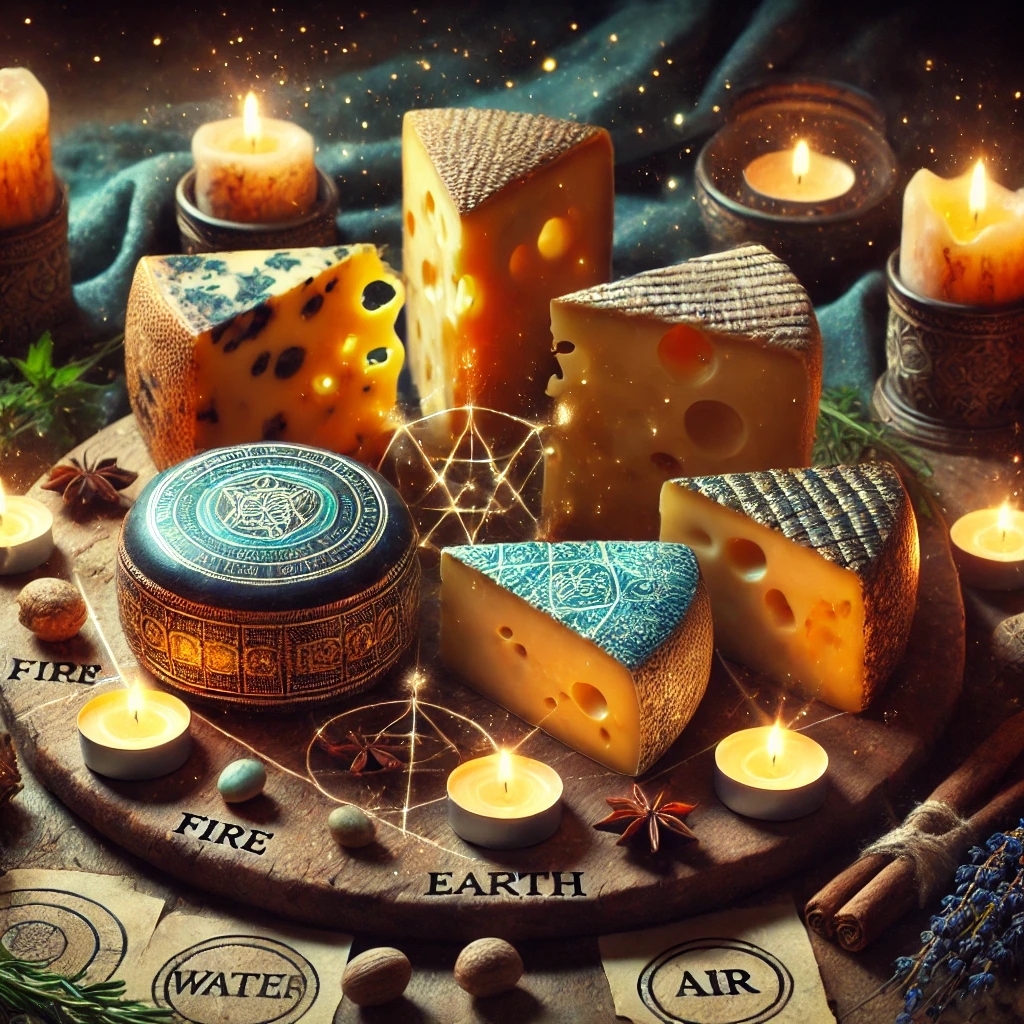
The symbolic power of cheese extended beyond individual readings. In many cultures, cheese was considered a sacred gift from the gods, tied to fertility, abundance, and sustenance. The cheesemaking process itself was often viewed as an alchemical transformation, where raw ingredients were brought together and imbued with life-giving properties. This connection to life’s basic elements—earth (milk as a product of livestock), fire (used in heating), air (during fermentation), and water (present in the liquid state of milk)—further elevated cheese as a mystical tool for connecting with divine energies.

Cross-Cultural Variations of Tyromancy

While Tyromancy is most closely associated with Greek and European traditions, similar practices have been noted in other cultures, albeit with slight variations. In some Middle Eastern communities, goat cheese was used in rituals to seek guidance on matters of travel and trade, while in Nordic regions, dairy farmers observed curds for signs of the gods’ favor or displeasure. Though the specifics varied, the underlying theme of using cheese as a divinatory tool remained constant, showcasing humanity’s universal desire to connect with the unseen through everyday elements.

From Sacred Practice to Superstition

As the world modernized, Tyromancy gradually shifted from a sacred practice to a quaint superstition. In some rural areas of Europe, it persisted into the 19th century as a form of folk divination, often practiced during festivals or communal gatherings. The playful aspect of interpreting cheese patterns added a layer of entertainment, even as it retained its roots in ancient traditions.

The Transformative Symbolism of Cheese

The mystique of Tyromancy lies in its reflection of life’s transformative processes. The journey of milk becoming cheese—a product that nourishes, sustains, and connects people—served as a powerful metaphor for growth, change, and the cyclical nature of existence. This symbolism resonated deeply with ancient societies, making Tyromancy not just a tool for divination, but a celebration of life’s mysteries.

Today, Tyromancy remains a charming and lesser-known divinatory art, inviting modern practitioners to reconnect with the ancient wisdom hidden in the simplest of foods.

The Uses and Importance of Tyromancy: Decoding Life’s Mysteries Through Cheese

Tyromancy, though rooted in a practical substance like cheese, transcends its humble origins to offer a unique symbolic and spiritual connection to life’s profound mysteries. It is not merely a whimsical form of divination but a deeply meaningful practice that intertwines the earthly and the divine.

Practitioners of Tyromancy approach cheese as a conduit for divine guidance, interpreting its shapes, textures, and movements to answer questions about the future, provide clarity, or seek advice. Here are the primary methods and their significance:

  • Observing Curds During Cheesemaking: The process of cheese creation itself becomes a sacred act of divination. Practitioners watch closely as curds form and separate from whey, interpreting the flow, clustering, or patterns as messages from higher powers. For instance, uneven curds might symbolize challenges ahead, while smooth and cohesive curds may predict harmony or success.
  • Examining Cracks and Holes in Hardened Cheese: Once a cheese has set or matured, its surface becomes a canvas for divine messages. Cracks might represent forks in the road, obstacles, or opportunities, while the placement of holes could align with significant dates, names, or events. A cheese with a unique pattern may be seen as a direct response to a specific question asked during its creation.
  • Cheese Tossing: In a more playful yet profound method, a piece of cheese is tossed onto a flat surface. Practitioners study how it lands, the direction it points, or the patterns formed upon impact. This practice is often used for binary questions, such as “yes” or “no” decisions, or for identifying potential paths in uncertain situations.

Cheese’s Connection to the Elements:

Cheese is inherently tied to the natural elements, making it a fitting medium for connecting with divine energies:

  • Water: Milk, the foundational ingredient of cheese, represents emotions, intuition, and the subconscious.
  • Fire: The heat used to curdle milk symbolizes transformation and action.
  • Air: The aging process involves exposure to air, representing growth, patience, and unseen forces at work.
  • Earth: Fermentation, a grounded and organic process, ties cheese to stability, nourishment, and life cycles.

This elemental connection underscores the mystical appeal of Tyromancy, grounding its spiritual insights in the natural world.

Questions Tyromancy Can Address:

  • Will my ventures be successful? The behavior of the cheese may reveal whether your endeavors are aligned with favorable energies.
  • What should I focus on this season? Observing curds or patterns can provide guidance on priorities or potential areas of growth.
  • How can I find balance in my life? The harmony or discord in the cheese’s formation can reflect areas where balance is needed.

Practicing Tyromancy is not just about predicting the future—it is a way to connect deeply with the cycles of life, the energies of the earth, and the rhythms of the universe. The cheese becomes a mirror, reflecting the complexities of human experience and offering insights in a tangible, relatable form.

Whether performed during ritual gatherings or as a personal meditation, Tyromancy’s unique blend of practicality and mysticism makes it an enduring and meaningful practice for those who seek answers in unexpected places.

Modern Uses of Tyromancy: Reviving an Ancient Art

Though Tyromancy originated in ancient traditions, it continues to capture the imagination of modern practitioners. What was once an everyday divination tool for ancient communities has evolved into a charming and innovative practice that blends the mystical with the culinary. Today, Tyromancy serves as both a serious method of divination and a playful exploration of the metaphysical.

Cheesemongers and Mystics Unite

Modern Tyromancy often attracts both cheesemongers and divination enthusiasts who are eager to experiment with the art. Different types of cheese offer varied textures, making them unique mediums for spiritual exploration. For example:

  • Soft Cheeses: Brie and Camembert are popular choices for their smooth, creamy surfaces. Subtle cracks or patterns on their rinds can reveal answers to questions about relationships or emotional matters.
  • Hard Cheeses: Cheddar, gouda, and Parmesan provide intricate patterns and aging characteristics that are ideal for interpreting long-term plans, stability, and challenges.
  • Melted Cheese: Observing the way melted cheese stretches or pools can be used to analyze the flow of energy, uncover hidden obstacles, or provide insights into the direction of a project or relationship.

Incorporating Tyromancy into Rituals

For a modern twist, Tyromancy is often included in group rituals and gatherings, where it becomes a fun yet meaningful way to connect with others. By pairing Tyromancy with complementary elements like wine or bread, practitioners create an immersive experience that feels both grounded and mystical. Group settings can also encourage shared interpretations, deepening the sense of community and enriching the practice.

Here’s how modern practitioners might incorporate Tyromancy into a ritual:

  1. Setting the Scene: Begin by creating an inviting space with candles, soft music, and a selection of cheeses.
  2. Focus on Intentions: Participants write down questions or intentions and place them under their chosen piece of cheese.
  3. Observing Patterns: Each person examines their cheese’s surface, texture, or behavior (if melted) to interpret answers or messages.
  4. Sharing Insights: Group members discuss their findings, offering alternative perspectives or guidance to one another.

Bringing Tyromancy into Daily Life

Even outside of ritual settings, Tyromancy can easily be integrated into everyday life. The next time you’re enjoying a piece of cheese, pause to observe its texture, shape, or even how it crumbles. Ask yourself:

  • Are there any unusual patterns or cracks that stand out?
  • Does the cheese evoke a particular thought or emotion?
  • How does its appearance connect to a question or challenge in your life?

Tyromancy as a Culinary Art

In the modern world, Tyromancy has also found a niche as an artistic and culinary experience. For example, themed events like “Cheese and Divination Nights” have become popular among foodies and mystics alike. These events combine the sensory pleasure of tasting cheese with the intellectual and spiritual intrigue of interpreting it. Pairing cheese with wine, charcuterie, and storytelling creates a unique and memorable occasion.

Personal Growth Through Cheese

For those seeking personal growth, Tyromancy offers a way to reconnect with the natural world and tap into the wisdom of simple, everyday elements. By treating cheese as a medium for reflection and intuition, practitioners can develop their ability to interpret subtle signs, trust their instincts, and view challenges from new perspectives.

An Accessible and Playful Practice

Tyromancy’s modern appeal lies in its accessibility. Unlike more complex forms of divination that require specific tools or extensive training, Tyromancy invites anyone to explore its mysteries with nothing more than an open mind and a piece of cheese. It is both lighthearted and profound, offering a bridge between the mystical and the mundane.

Your Personal Exploration

Whether you’re hosting a gathering or simply enjoying a quiet moment, Tyromancy encourages you to see the potential for divination in the ordinary. The next time you work with cheese, pause to examine its features. What stories might it tell? What messages might it reveal about your current path? Tyromancy is an invitation to slow down, connect with the present, and discover meaning in unexpected places.

Deepening Your Tyromancy Practice

Tyromancy, like any divination method, is steeped in subtlety and relies heavily on the practitioner’s intuition and connection to the medium. While it may seem simple at first glance, effective Tyromancy requires mindfulness, intention, and an ability to interpret the often symbolic and abstract messages conveyed through cheese. Below, we explore some of the nuanced techniques and considerations that can enhance your Tyromancy practice.

The Importance of Mindfulness and Intention

Practicing Tyromancy begins with setting a clear and focused intention. This ensures that the energy you bring to the practice aligns with the questions or guidance you seek. Before starting, take a moment to ground yourself:

  1. Create a Sacred Space: Light a candle, play soft music, or meditate briefly to center your energy.
  2. Set a Clear Question: Think deeply about what you want to know. For example, “What opportunities lie ahead?” or “How can I overcome this challenge?”
  3. Channel Your Energy: Hold the cheese or place your hands over it, focusing on your question or intention. This helps align the energy of the medium with your inquiry.

Key Techniques in Tyromancy

  1. Curd Casting:
    This technique involves observing curds during the cheesemaking process. As the milk curdles and separates, practitioners analyze the movement, clustering, or separation of the curds.
    • Symbolism of Curds: Smooth and even curds may indicate harmony and success, while irregular or chaotic patterns could suggest challenges or external interference.
    • Enhancing Accuracy: Stir the curds gently and watch how they settle. Pay attention to shapes or clusters that resemble symbols, letters, or patterns.
  2. Cheese Tossing:
    One of the more playful methods, cheese tossing involves dropping a piece of cheese onto a flat surface and interpreting its landing position or pattern.
    • How It Works: Ask a specific question before tossing the cheese. Observe its landing orientation, the way it breaks apart, or any symbols it forms.
    • Common Interpretations:
      • A piece that spreads wide might indicate an expansive future or opportunities.
      • Cheese that lands and stays compact could symbolize focus, stability, or containment.
  3. Surface Reading:
    Mature cheeses often develop cracks, bubbles, and lines on their surface during the aging process. These features become a canvas for interpretation.
    • Analyzing Patterns: Look for meaningful shapes, lines that form pathways, or even marks that resemble letters or symbols.
    • Key Questions to Explore: Does the cheese appear balanced or fractured? Are the cracks intricate, suggesting complexity, or minimal, symbolizing simplicity?

The Role of Intuition in Tyromancy

While some patterns or formations may have traditional meanings, Tyromancy largely relies on the practitioner’s intuition. This makes each session unique and deeply personal. To strengthen your intuition:

  • Journal Your Observations: Record the cheese’s patterns and your interpretations after each session. Over time, you may notice recurring symbols or themes that resonate with your life.
  • Practice Visualization: Before beginning a reading, close your eyes and imagine the cheese’s energy connecting with your question. Let intuitive insights flow naturally.
  • Trust Your Instincts: Even if the patterns seem unclear at first, your initial impressions often hold the most truth.

Deepening the Practice Through Ritual

For a more profound Tyromancy experience, consider incorporating ritual elements:

  • Moon Phases: Perform Tyromancy during specific moon phases for added energy. For instance, practice during a full moon for clarity or a new moon for fresh beginnings.
  • Herbal Infusions: If making cheese, infuse the milk with herbs associated with divination (like mugwort or lavender) to enhance the spiritual connection.
  • Seasonal Practices: Align your Tyromancy sessions with seasonal events, such as solstices or equinoxes, to draw on the energy of the natural world.

Interpreting Symbols and Patterns

To develop a deeper understanding of Tyromancy readings, consider the symbolic meanings of the patterns and shapes you observe:

  • Straight Lines: Indicate a clear path or direct action.
  • Circles: Represent unity, cycles, or completion.
  • Cracks or Fractures: Suggest challenges, divisions, or breaking free from constraints.
  • Clusters: Signify togetherness, community, or areas requiring focus.

If symbols remind you of letters or numbers, reflect on their potential significance in relation to your question—these could point to initials, dates, or even directions.

Expanding Your Tyromancy Toolkit

While traditional Tyromancy involves simple techniques, modern practitioners can experiment with additional tools to enrich the practice:

  • Tarot or Oracle Cards: Combine cheese readings with a card pull for added depth and validation.
  • Elemental Connections: Pair your readings with elemental rituals, such as lighting a candle (fire) or using a bowl of water to represent balance and connection.
  • Shared Interpretations: In group settings, invite others to share their insights about the patterns they see. Different perspectives can provide surprising and meaningful interpretations.

The beauty of Tyromancy lies in its simplicity and versatility. Whether you’re tossing cheese for fun or studying the intricate patterns of a maturing wheel, this practice reminds us that divination doesn’t have to be complicated to be meaningful. By approaching Tyromancy with mindfulness, intention, and a touch of creativity, you can unlock profound insights hidden in the everyday.

Conclusion: The Divine in the Mundane

Tyromancy is a unique and meaningful form of divination that bridges ancient traditions with modern curiosity, offering profound insights through the simple yet transformative medium of cheese. Rooted in elemental connections and natural processes, it invites us to embrace mindfulness, intention, and intuition. From observing curds during their formation to interpreting cracks and patterns on aged wheels, Tyromancy transforms the ordinary into a canvas for the extraordinary, revealing life’s mysteries in the most unexpected places. Why not explore Tyromancy yourself? The next time you handle cheese, whether slicing, tossing, or simply savoring, pause to reflect on its textures, shapes, and movements. Set your intention, pose a question, and allow the messages to emerge. As Tyromancy teaches, divination doesn’t require elaborate tools—only an open mind and a willingness to find the divine in life’s simple, everyday moments.
Posted on Leave a comment

The 4th Day of Yule – Loki, Sigyn, and the Silly Feast

4th day of yuleReading Time: 9 minutes
4th day of yule

Introduction

Loki, Sigyn, and the Silly Feast

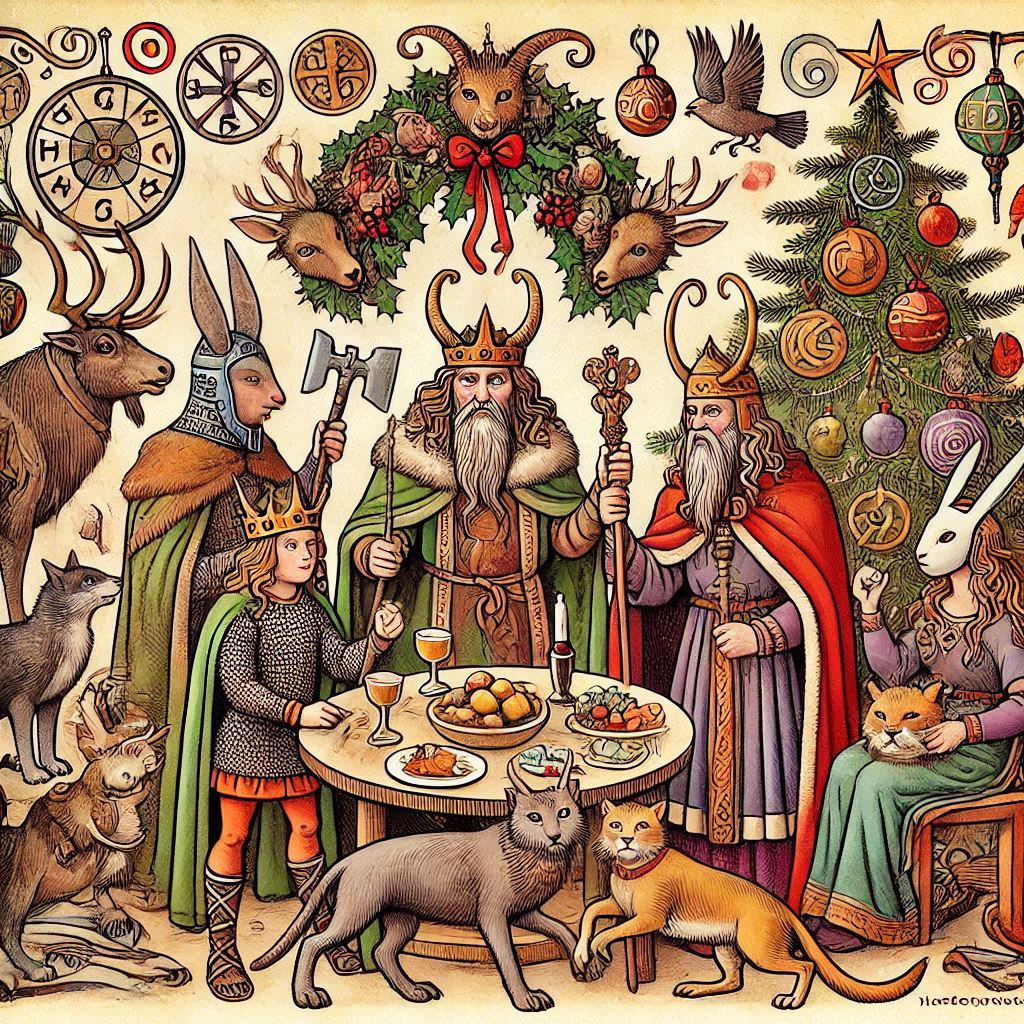
The fourth day of Yule ushers in a celebration of the year’s blessings, an occasion to honor the dynamic duo of Norse mythology—Loki, the mischievous trickster, and his steadfast consort, Sigyn. Together, they bring laughter, adaptability, and victory over life’s battles. In the spirit of revelry, a Silly Feast takes center stage, a merry gathering where participants don animal disguises embodying attributes they seek in the coming year. As the Yule Tree graces the space with its presence, adorned with Wish Ornaments and symbols of gratitude, this day becomes a tapestry woven with joy, reminiscence, and a whimsical nod to the Lord of Misrule and his Loyal Queen.

Loki and Sigyn: A Mythic Harmony Unveiled

Within the intricate threads of Norse mythology, the enigmatic duo of Loki, the shape-shifting trickster, and his steadfast wife, Sigyn, unfurls a tale of mythic harmony. Before Loki’s mischievous antics took center stage, Sigyn held her own domain, a deity adorned with victories and devotion. Together, they create a dance of contrasts, a balance of chaos and order, laughter and steadfastness, echoing the intricate rhythm of life itself.

Loki’s Mischievous Alchemy

Loki, with his ever-changing forms and clever machinations, brings an alchemy of mischief to the mythic stage. His ability to challenge norms and turn the world upside down adds a dynamic unpredictability to the cosmos. In this, we find not just chaos but the potent seeds of transformation and renewal, a reminder that sometimes it takes a trickster to spark change.

Sigyn’s Steadfast Devotion

On the other side of this cosmic equation stands Sigyn, a beacon of stability and devotion. In the midst of Loki’s capricious escapades, Sigyn remains a symbol of steadfastness, offering a counterpoint to the swirling energies of change. Her devotion becomes a source of strength, a reminder that even in the face of chaos, there exists a steady anchor.

The Dance of Laughter and Victory

Together, Loki and Sigyn engage in a dance that weaves laughter and victory into the very fabric of existence. Loki’s laughter echoes through the mythic realms, challenging conventions and inviting joy into the cosmic tapestry. Meanwhile, Sigyn, with her quiet victories over life’s smaller battles, adds a layer of resilience and purpose to the narrative.

On this auspicious day, we gather to pay homage to the unique partnership of Loki and Sigyn. It’s a celebration that transcends the boundaries of mischief and devotion, embracing the harmonious interplay of contrasting forces. Loki’s chaotic laughter becomes the counterpoint to Sigyn’s steadfast victories, creating a mythic symphony that resonates through the ages.

As we honor Loki and Sigyn, we recognize the inherent balance they bring to the mythic cosmos. Loki’s chaotic dance challenges stagnation, encouraging growth and evolution. Simultaneously, Sigyn’s steadfast presence provides the necessary grounding to navigate the twists and turns of existence. In their mythic harmony, we find not just a story but a reflection of the intricate dance of life itself—a dance that invites us to embrace both the chaos and the stability, the laughter and the victories that define our journey.

Honoring Loki and Sigyn: Silly Feast and Revelry

In the radiant glow of Yule’s fourth day, a whimsical transformation unfolds—a mirthful inversion of social norms known as the Silly Feast. This festive occasion is a celebration where the ordinary gives way to the extraordinary, and the mundane is cast aside for a moment of lighthearted revelry.

At the heart of the Silly Feast lies a delightful spectacle—the gathering of friends and family bedecked in animal-themed disguises. Laughter cascades through the air as the boundaries between species blur, and the spirit of the animal kingdom mingles with the human realm. It’s a joyous expression of the extraordinary within the ordinary, a celebration where the wild and whimsical converge.

As the Silly Feast ensues, the air becomes tinged with excitement and anticipation. Gifts are exchanged, each one wrapped in the spirit of surprise and delight. Yet, the revelry doesn’t stop there. In a charming twist, two individuals are chosen to embody the roles of the Lord of Misrule and the Loyal Queen. This playful role reversal adds an extra layer of merriment, creating a dynamic where the expected becomes the unexpected, and joy reigns supreme.

Against the backdrop of animal disguises and festive roles, the Silly Feast unfolds with a symphony of laughter. It’s laughter that transcends the ordinary, echoing through the spaces between the disguised revelers. The air is charged with the energy of shared joy and camaraderie, creating an atmosphere where memories are not just made but etched into the collective tapestry of the gathering.

As the Silly Feast draws to a close, what remains are not just the echoes of laughter but cherished moments that will be carried forward into the coming year. The inversion of norms, the joyous disguises, and the playful role reversals become threads woven into the fabric of shared memories. These moments of lighthearted revelry serve as a reminder that, during life’s seriousness, there exists a space for unbridled joy and delightful surprises.

In the Silly Feast, the ordinary becomes extraordinary, and the expected takes a delightful detour into the realm of the unexpected. It’s a celebration that transcends the boundaries of everyday life, inviting all participants to revel in the joyous liberation of laughter, gift-giving, and the whimsical dance of role reversals. As the festivities unfold, the Silly Feast becomes a testament to the transformative power of joy—a joy that lingers, creating a radiant tapestry of memories for the year that lies ahead.

Animal Attributes and Symbolic Masks: A Tapestry of Meaningful Choices

In the vibrant tapestry of the Silly Feast, the creation of animal masks or ornaments becomes a profound and personalized expression of aspirations for the coming year. Each animal is chosen for its symbolic attributes, weaving a narrative of qualities one wishes to cultivate. The choices are not just vast; they are laden with meaning and intention, creating a rich and meaningful tableau:

Bear: Strength, Power, Connection to the Earth

The bear, a symbol of strength and power, embodies a profound connection to the earth. Choosing the bear signifies a quest for inner strength, resilience, and a grounded connection to the world.

Wolf: Fierceness, Loyalty, Collaboration

Wolves, known for their fierce nature and unwavering loyalty to the pack, are chosen to signify a commitment to fearlessness, loyalty in relationships, and collaboration with others.

Fox: Cunning, Trickster, Problem-Solving

The fox, a cunning and clever creature, represents the art of strategic thinking, adaptability, and the ability to navigate challenges with a touch of playful trickery.

Mink: Playfulness, Adaptability, Quick Thinking

Minks, with their playful demeanor and adaptability, symbolize the importance of embracing playfulness, adapting to change, and thinking on one’s feet.

Seal: Mystery, Joy, Feminine Magic

Seals, creatures of mystery and joy, carry the essence of feminine magic. Choosing the seal signifies an embrace of the mysteries of life, finding joy in the unknown, and connecting with feminine energy.

Boar: Power, Wealth, War

The boar, sacred to Freyja and Freyr, represents power, wealth, and the spirit of war. Choosing the boar signifies a desire for personal strength, prosperity, and the courage to face life’s battles.

Horse: Cooperation, Adventure, Support

Horses, known for their cooperative nature and sense of adventure, symbolize a commitment to collaboration, a spirit of adventure, and the importance of providing and receiving support.

Rabbit: Caution, Fertility, Abundance

Rabbits, with their cautious nature and associations with fertility, signify a desire for careful planning, the abundance of life’s blessings, and the fertility of creative endeavors.

Cat: Independence, Silence, Ferocity

Cats, symbols of independence and silent observation, represent a quest for self-reliance, the power of silence, and the ferocity needed to protect what matters.

Snake/Dragon: Transformation, Secret Knowledge

Snakes and dragons, with their transformative symbolism and association with secret knowledge, represent a commitment to personal transformation and the pursuit of hidden wisdom.

Deer: Authority, Self-Sacrifice

Deer, embodying authority, and the spirit of self-sacrifice, signify a dedication to responsible leadership and the willingness to make sacrifices for the greater good.

Raven: Magic, Communication, Perception

Ravens, messengers in mythology, symbolize magic, effective communication, and heightened perception. Choosing the raven signifies a desire for magical moments, clear communication, and keen awareness.

Falcon: Spiritual Messenger, Travel

Falcons, as spiritual messengers and symbols of travel, represent a connection to the spiritual realms and a desire for meaningful journeys, both physical and spiritual.

Goat: Hearty, Persistent, Ambitious, Lusty

Goats, known for their hearty nature, persistence, ambition, and a touch of lustiness, signify a pursuit of robust health, determined ambition, and a zest for passionate living.

In the artistry of selecting and crafting these symbolic masks or ornaments, individuals embark on a personal journey of self-discovery and intentional living, weaving the desires of the heart into the fabric of the year to come. The Silly Feast, adorned with these representations, becomes not just a celebration but a profound expression of individual and collective aspirations.

The Yule Tree: A Living Tapestry of Gratitude

Amidst the merriment of the fourth day of Yule, a cherished tradition takes center stage—the setting up of the Yule Tree. In this festive ritual, the Yule Tree becomes not just a symbol of seasonal cheer but a living tapestry of gratitude, weaving together the threads of blessings and shared moments from the year gone by.

Rooted in ancient Pagan traditions, the Yule Tree has traversed the corridors of time, maintained its significance and evolved into a central emblem of Yuletide celebrations. Once an outdoor live tree adorned with candles, it has now found a place within our homes, bringing nature’s vitality into the heart of our festivities.

As the Yule Tree takes its place of honor, it transcends mere decoration; it becomes the symbolic Tree of Life. Each branch, a testament to the interconnectedness of all things, and each needle, a reminder of the evergreen spirit that persists even in the coldest of winters. It stands as a living metaphor, mirroring the cycles of life, death, and rebirth that dance through the seasons.

The act of decorating the Yule Tree is no mere task; it’s a communal endeavor steeped in meaning. Strings of lights, reminiscent of the celestial bodies that have guided humanity through the ages, replace the traditional candles, ensuring safety while preserving the symbolism. As ornaments are delicately placed, each one becomes a vessel carrying a cherished moment, a blessing, or a shared joy from the passing year.

In the soft glow of Yuletide lights, take a moment to reflect on the blessings that have graced your life. The Yule Tree becomes a mirror reflecting the abundance of moments that have shaped the year. It’s a visual journey through the tapestry of experiences—some grand, others subtle—each contributing to the mosaic of gratitude.

The Yule Tree, now adorned with the collective reflections of those who partake in its decoration, transforms into a visual expression of thanks. It’s not merely a festive ornament but a radiant testament to the richness of shared experiences. As you stand in the presence of this arboreal masterpiece, you stand amidst a forest of memories, each bauble and light a marker of moments that have defined the passage of time.

In the glow of Yuletide, the Yule Tree stands not just as a beacon of festive brilliance but as a living embodiment of gratitude. The blessings of the year, woven into every bough and hanging ornament, create a radiant spectacle—a testament to the enduring spirit of thankfulness that transcends seasons and binds us in the warmth of shared memories.

Counting the Blessings: Wish Ornaments

As the revelry of the fourth day of Yule reaches its zenith, a poignant tradition takes center stage—the crafting of “Wish Ornaments.” Beyond being mere decorative elements, these ornaments crafted from salt dough or other materials carry the profound weight of aspirations, hopes, and dreams for the coming year.

Homemade Artistry

The crafting process is an artistry of its own. Whether shaped from salt dough, sculpted from clay, or fashioned from other materials, each ornament is a testament to the creativity and intention infused into its form. The tactile act of creation becomes a ceremonial expression, setting the stage for the wishes that will soon adorn these small, tangible canvases.

Please see our Wish Ornaments Article, for a salt dough recipe and tips.

Symbols of Hope and Dreams

Upon each ornament, symbols are carefully etched or molded symbols that encapsulate the collective desires of those gathered. These could range from simple yet powerful icons representing hope, resilience, and growth to intricate designs weaving in personal aspirations and shared dreams. Each stroke and curve on these small creations carries the weight of collective intention.

The magic of the Wish Ornaments lies not just in their visual appeal but in the spoken wishes that accompany their creation. As each ornament takes shape, wishes for prosperity, joy, love, and personal growth are spoken aloud, infusing the very essence of the ornaments with the energy of aspirations. These spoken words echo through time, creating a resonance that lingers in the air long after the crafting is complete.

Adorning the Yule Tree

The culmination of this heartfelt crafting process comes as the Wish Ornaments find their place among the branches of the Yule Tree. It’s not a mere act of decoration but a deliberate placement, a conscious integration of hopes into the tapestry of Yuletide celebrations. The Yule Tree, now adorned with these tangible wishes, becomes a living testament to the collective vision of a brighter, more fulfilling future.

As the festivities unfold, and the Yule Tree becomes a beacon of light, the Wish Ornaments stand out as beacons of hope. Each time the soft glow of Yuletide lights catches on the surface of these ornaments, it serves as a gentle reminder of the shared dreams, goals, and aspirations that bind those present. These tangible tokens become more than ornaments; they become symbols of a community’s collective vision for the days and months to come.

The moment of hanging the Wish Ornaments is not just a decorative act but a symbolic unveiling of shared desires. It’s a ceremonial gesture, marking the fusion of individual aspirations into a cohesive narrative of hope. The Yule Tree, now aglow with these tangible representations of dreams, stands as a beacon, radiating the collective energy of a community counting its blessings and looking forward to the promises of the future.

Conclusion

As the Silly Feast draws to a close, and the Yule Tree stands adorned with Wish Ornaments, the fourth day of Yule becomes a testament to the joyous spirit of the season. In honoring Loki and Sigyn, the Lord of Misrule and his Loyal Queen, we partake in a mythic harmony that mirrors the dance of chaos and order. The laughter that echoes in the air during the Silly Feast becomes a symphony, harmonizing with the animal-themed disguises and the joyous exchange of gifts. The Yule Tree, now a symbol of gratitude, stands as a visual expression of collective blessings, each Wish Ornament a tangible representation of shared dreams and aspirations. As we count our blessings and weave them into the fabric of this joyous season, we embrace the promise of a new year, illuminated by the glow of Yuletide lights and the shared hope encapsulated in every crafted ornament. In this tapestry of laughter, dreams, and shared festivities, we find not just the conclusion of a day but the continuation of a timeless celebration that resonates through the hearts of those who gather in the warmth of Yule’s embrace.Top of Form


Posted on Leave a comment

The 1st Day of Yule – Mother’s Night

Reading Time: 13 minutes

Introduction

Mother’s Night, the Disir, Yule’s Eve, Frigg

As the veil between worlds grows thin and the frost-kissed winds announce the impending arrival of Yule, December 20th takes on a mystical hue. It is a night of significance, heralding the commencement of Yule’s enchantment—Mother’s Night, the eve of Yule itself, where the feminine energies that cradle and empower life are celebrated in a dance with the spirits of fate and fertility.

Yule’s Eve and the Feminine Powers

In the hushed embrace of Yule’s Eve, the world prepares for a dance with enchantment. Known as Mother’s Night, this celestial prelude to Yule is a tapestry woven with threads of reverence for the feminine energies that sculpt and nurture the very fabric of our lives. As the frost-kissed winds whisper ancient tales, preparations unfold for the grandeur of Yule, a crescendo that reaches its zenith with the Winter Solstice on the 21st.

Homage to the Feminine Powers

 Yule’s Eve becomes a sacred canvas upon which practitioners paint their gratitude for the feminine forces that shape existence. It’s a celebration of the nurturing energies, both seen and unseen, that guide the cycles of life, a recognition of the mystical dance between creation and sustenance. The air is infused with a sense of anticipation as altars are adorned, spaces are consecrated, and the veil between the mundane and the magical begins to shimmer.

Commencement of Yule’s Grandeur

This eve is not merely a precursor; it’s the initiation into the grandeur of Yule. As the moon casts its silvery glow, a symphony of rituals and preparations commences. Altars dedicated to the sacred feminine are carefully arranged, each item a testament to the qualities of love, protection, and wisdom embodied by the goddesses and female spirits. Candles flicker, resonating with the flame of divine femininity, and incense weaves a fragrant tapestry in honor of the unseen forces that weave through the cosmos.

The Long Night and Magic of Yule

To fully partake in the joyous days that unfold, a good night’s rest is recommended. The coming day, marked by the Winter Solstice, is a canvas upon which the magic of Yule is painted. The Winter Solstice is a celestial spectacle, a moment when the sun’s journey seems to pause before heralding the return of light. In the longest night, magic stirs, and the practitioners, well-rested and attuned, become custodians of ancient rites.

The long night is not merely a passage of time but a tapestry of moments where the mundane and the magical coalesce. It’s a time when the sacred and the secular converge, and the boundaries between worlds thin. The practitioners, with hearts brimming with reverence, embark on a journey through the night, guided by the luminous threads of Yule’s enchantment.

A Symphony of Feminine Energy

As the world sleeps, Yule’s Eve becomes a symphony of feminine energy, echoing through the realms. It’s an ode to the nurturing spirits and goddesses who, in their unseen presence, cradle the Earth in their eternal embrace. The eve, steeped in tradition and bathed in the glow of candlelight, becomes a sanctuary for communing with the divine feminine, a moment to acknowledge the interconnectedness of all life and the sacred dance of creation.

In the silence of Yule’s Eve, beneath the blanket of stars, practitioners stand as witnesses to the cosmic ballet. The feminine energies, revered and honored, become the guiding lights through the longest night, promising the dawn of a new cycle, a new beginning, and the continuation of the ageless dance of life.

The Disir – Guardians of Fate and Fertility

On the hallowed eve of Yule, the sacred space within homes and upon altars transforms into a haven for the Disir. These ethereal beings, revered as the guardians of fate and fertility, emerge from the veil between worlds to grace the realms of the living. Their presence is a tapestry of protection, woven intricately through the fabric of ancestral lineage.

An Altar Adorned with Essence

As the practitioner prepares for the sacred night, an altar dedicated to the Disir takes shape—a portal where the mundane converges with the mystical. The altar becomes a testament to the essence of these protective female spirits, adorned with symbols and items resonating with their ethereal qualities. In this sacred nexus, herbs such as basil, with their aromatic whispers of love, fennel, embodying the essence of gratitude, lavender, a fragrant ode to devotion, and sage, the wise guardian, find their place.

  • Basil’s Embrace of Love – The sweet scent of basil permeates the air, a fragrant embrace of love that transcends the boundaries of time. It is a reminder of the enduring affection woven into the threads of familial bonds. Basil, with its heart-shaped leaves, symbolizes the love that stretches across generations, connecting the living with the ancestral embrace.
  • Fennel’s Grateful Dance – In the flickering candlelight, fennel leaves sway gracefully, embodying the spirit of gratitude. The Disir, guardians of fate, are honored with the essence of thankfulness. Fennel, with its feathery fronds, becomes a dance of appreciation for the blessings bestowed by the hands of those who walked before. It is a symbol of the cyclical exchange of gratefulness that transcends the boundaries of life and death.
  • Lavender’s Devotion Unveiled – The purple hues of lavender paint the altar with an aura of devotion. The Disir, custodians of lineage, are acknowledged with the essence of unwavering dedication. Lavender, with its calming fragrance, becomes a bridge between the seen and the unseen, a reminder that devotion endures beyond the veils of mortality.
  • Sage’s Wisdom Guarding the Tapestry – The wisps of sage rise, like fragrant tendrils, carrying with them the wisdom of the Disir. Sage, with its purifying properties, stands as a guardian at the threshold between realms. The Disir, in their ethereal wisdom, guides the living with their insights, shaping the destiny woven in the intricate threads of life’s tapestry.

A Nexus of Protection and Love

As the altar takes form, it becomes a nexus where protection, love, and guidance converge. The Disir, honored on this sacred eve, becomes the interweaving threads connecting the present with the past. The altar is not just a physical space; it is a bridge where the living commune with the spirits of the ancestral feminine, acknowledging their eternal presence in the dance of fate and fertility. In this sacred communion, the Disir’s vigil unfolds, embracing the practitioner in the protective and loving embrace of the divine feminine across the tapestry of time.

Honoring Frigg, Goddess of Motherhood

As the night deepens into the embrace of Yule’s Eve, the focus shifts to the sacred figure of Frigg, a beacon of motherhood and divine femininity in the tapestry of Germanic mythology. In the watery halls of Fensalir, where echoes of maternal wisdom reverberate, Frigg takes center stage on this enchanted eve. The practitioner, guided by the flickering candlelight, embarks on a journey of homage to the goddess who embodies the essence of marriage, prophecy, clairvoyance, and, above all, motherhood.

The imagery of Fensalir, the ethereal abode of Frigg, paints a mystical canvas in the practitioner’s mind. The halls, adorned with the soft luminescence of watery reflections, symbolize the fluidity of maternal guidance. Fensalir is not merely a dwelling place; it is a sacred space where the waters of intuition and nurturing love converge.

As the practitioner stands before the altar, images of Frigg unfold in the mind’s eye—her presence, a tapestry of maternal wisdom. Frigg’s gaze, like the reflective surface of tranquil waters, unveils the depths of her insights. She beckons the practitioner to delve into the intuitive realms, to seek answers in the quietude of the heart, and to trust the sacred dance of prophecy and clairvoyance that unfolds within.

Frigg, in her association with marriage, becomes a symbol of the union between the earthly and the divine. The practitioner, in honoring Frigg, acknowledges the sacred bonds woven not only in marital unions but also in the profound connections between generations. The marriage of earth and sky, of the mundane and the divine, finds expression in the rituals of this sacred eve.

The essence of Frigg’s presence is most palpable in the acknowledgment of motherhood. The practitioner, whether a parent or one who looks to the nurturing energies of the divine feminine, pays tribute to the sacred role of mothers. Frigg’s embrace extends beyond biological ties, encompassing all who seek the comforting arms of maternal love and guidance.

On the altar, symbols of Frigg—a representation of her watery realm, perhaps a small bowl filled with water or reflective surfaces—take their place. Offerings of herbs resonant with the energy of motherhood, like chamomile for soothing comfort, rosemary for remembrance, and jasmine for maternal love, become tokens of reverence.

As the night unfolds, the practitioner, guided by Frigg’s grace, engages in a mystical ritual. The names of Frigg’s twelve handmaidens are inscribed on pieces of paper, and each person present draws one. The mystery of the chosen handmaiden becomes a guiding force for the coming year—a practice of devotion to specific qualities represented by each.

In the quiet moments of communion, the practitioner, with heartfelt sincerity, seeks Frigg’s blessing. The goddess of motherhood is invoked not as a distant deity but as a guiding force ever-present in the sacred journey of parenthood and nurturing love. The practitioner, in honoring Frigg on this Yule’s Eve, becomes a participant in the eternal dance of maternal energies, acknowledging their role in the cosmic symphony of life.

Setting Up a Disir Altar

As Yule’s Eve unfolds, a practitioner, attuned to the subtle energies of the sacred, embarks on the sacred task of creating an altar dedicated to the Disir. These protective female spirits, guardians of fate and fertility, are honored on this enchanting eve, and the practitioner, with intention and reverence, crafts a space that resonates with the energies of love, protection, and ancestral guidance.

Elements of the Disir Altar:

  • Candles of Illumination: A soft glow emanates from candles carefully arranged on the altar. The flickering flames symbolize the eternal light of the Disir, a guiding force through the intricate threads of fate. The choice of colors, perhaps gentle hues of white, blue, or silver, reflects the purity and transcendence associated with these ethereal guardians.
  • Offering Bowl or Plate: At the heart of the altar lies an offering bowl or plate, a vessel of abundance and gratitude. This receptacle, chosen with care, becomes a symbol of the practitioner’s willingness to receive the blessings and guidance of the Disir. It is a space where tokens of appreciation and devotion find a tangible form.
  • Subtle Imagery of Celebration: Imagery celebrating the spirits being honored adorns the altar. Photographs of female ancestors, images of nurturing goddesses, or symbolic representations of fate and fertility find their place. These visual cues serve as portals connecting the practitioner with the spiritual realm of the Disir.
  • Feast of Favorite Delights: A feast of favorite treats and delights, carefully chosen to resonate with the tastes and preferences of the honored spirits, graces the altar. The practitioner, with culinary artistry, prepares dishes that evoke memories and stir the energies of love and joy. It is a banquet inviting the Disir to partake in the festivities.

Alter setup notes

For those seeking to establish a distinct space for the Disir, a separate altar becomes a focal point of reverence. Here, the practitioner can channel creativity into arranging a sacred tableau, a visual symphony of elements resonant with feminine energies. The space is consecrated with intention, becoming a nexus where the veil between the earthly and the spiritual is thin.

The act of laying out a feast is not merely a culinary endeavor; it is a gesture of hospitality and invitation. The practitioner, in a moment of quiet communion, invites the Disir to partake in the celebration. It is a symbolic sharing of nourishment, a recognition that the bonds between the seen and the unseen are woven in the fabric of sustenance and joy.

In the creation of the Disir altar, the practitioner engages in a sacred act of weaving a tapestry of love, protection, and ancestral reverence. Each element, from the gentle glow of candles to the offerings laid out with care, contributes to the harmonious dance between the earthly and the divine. The Disir, honored in this crafted space, became companions in the practitioner’s journey through the sacred days of Yule.

Activities on Mother’s Night

In the enchanting embrace of Mother’s Night, the hearth and kitchen, historical domains of feminine influence, awaken with the flickering glow of celebration. This sacred eve beckons practitioners to engage in a tapestry of activities that honor the Disir and the feminine energies that have shaped and guided lives.

  • Culinary Alchemy in the Hearth – The kitchen, a haven where the alchemy of flavors unfolds, becomes a sacred space of creation on Mother’s Night. Practitioners, attuned to the tastes and preferences of the honored females, embark on a culinary journey. Favorite treats, desserts, side dishes, and main meals are crafted with meticulous care, each dish resonating with the essence of love and gratitude.
  • Offerings for the Altar – As pots simmer and ovens whisper tales of warmth, a portion of the culinary delights is reserved, a symbolic gesture of invitation to the honored spirits. The altar, adorned with the feast, becomes a nexus where the seen and unseen commune. The aromas that waft through the kitchen carry not only the promise of gastronomic delights but also the subtle energies of ancestral connection.
  • Activities Beyond the Kitchen – For those honoring living individuals, Mother’s Night extends its arms beyond the kitchen. Activities that mirror the spirits of those being celebrated are encouraged, creating a holistic celebration of connection and appreciation. The celebration is not confined to the culinary arts; it expands to embrace shared activities that weave moments of joy and togetherness.
  • Heartfelt Letters and Expressions – In the glow of candlelight and the warmth of shared spaces, practitioners may choose to express their gratitude through heartfelt letters. The written word, a vessel of emotions, becomes a bridge that spans the realms of the mundane and the sacred. Each word penned is a brushstroke, painting a portrait of appreciation and love.
  • Shared Activities and Quality Time – Mother’s Night becomes a canvas for shared activities that resonate with the spirits being celebrated. Whether it’s a shared craft, a favorite pastime, or a simple moment of shared laughter, these activities transcend the ordinary and become threads woven into the fabric of familial and spiritual bonds.
  • Expressing Gratitude – Simple yet profound, expressions of gratitude take center stage on Mother’s Night. A heartfelt message, a whispered thank you, or a shared moment of reflection becomes a ritual. In these expressions, the practitioner acknowledges the profound impact of feminine energies in their life’s journey.

As Mother’s Night unfolds, the kitchen becomes a cauldron of alchemical magic, and shared activities become rituals of connection. The practitioner, guided by the spirits of those being honored, weaves a tapestry of love, gratitude, and ancestral reverence. Mother’s Night is not merely an eve of culinary delights; it is a celebration of the feminine energies that shape and nurture the intricate threads of life’s journey.

Honoring Frigg’s Handmaidens

As Mother’s Night draws to a close, a profound shift occurs—a transition from feasting on earthly delights to communing with the divine. The sacred space, already laden with the energy of honored females, expands to embrace Frigg and her 12 mysterious handmaidens. This is a moment of divination, a dance with the unknown, as the names of the handmaidens are inscribed on separate pieces of paper, ready to reveal the guiding principles for the year ahead.

Divination Ritual

The culmination of Mother’s Night sets the stage for an intriguing divination ritual. Each person present partakes in the mystery by randomly drawing a piece of paper bearing the name of one of Frigg’s handmaidens. The air is charged with anticipation, and as each participant unveils their chosen handmaiden, a unique connection with a divine guide is established.

These handmaidens, each with their distinct essence, bring forth guiding principles that practitioners are encouraged to embrace in the coming year. The mysteries associated with each handmaiden serve as beacons, illuminating the path of spiritual growth, self-discovery, and manifestation.

Here are examples of the focused areas for each handmaiden:

  • Eir – Healing and Self-Healing: Focus on herbalism and caring for the health of others.
  • Sága – Embracing History and Ancestry: Dive into the realms of history, storytelling, writing, and the study of ancestry.
  • Fulla – Wealth and Abundance: Direct attention to wealth, abundance, and the careful management of resources.
  • Gná – Good Communication and Spiritual Messengership: Practice good communication, listen for messages, and become a messenger for spiritual forces.
  • Lofn – Tolerance, Compassion, and Aid: Cultivate tolerance, compassion, and aid to misunderstood groups or individuals.
  • Syn – Protection and Caution: Engage in protection, both spiritual and physical, and practice caution in endeavors.
  • Vár – Honoring Oaths and Promises: Honor oaths and promises, ensuring they are made and kept with sincerity.
  • Snotra – Gracious Hosting and Diplomacy: Cultivate gracious hosting, hospitality, good etiquette, and diplomacy.
  • Gefjon – Giving and Receiving: Focus on giving and receiving, embodying generosity, gratitude, and acceptance.
  • Sjöfn – Exploring Love and Affection: Delve into the realms of love, affection, appreciation for partners, and opening oneself to love.
  • Hlín – Providing Refuge and Support: Provide refuge, stand up for others, be a safe shoulder to lean on, and know when to seek help.
  • Vör – Foresight and Intuition: Develop foresight, pay attention to omens, practice divination, and trust instincts.

As the mysteries of Frigg’s handmaidens are unveiled, an enchanted year unfolds for each practitioner. These guiding principles, intertwined with divine energies, become the compass that steers them through the cosmic dance of life, fostering growth, wisdom, and a deepened connection with the divine feminine.

A Night of Mystic Communion

In the hushed embrace of Mother’s Night, the veil between the mortal realm and the ethereal worlds thins, inviting us to partake in a night of mystic communion. This sacred eve, serving as the gateway to the grandeur of Yule, transcends the ordinary and unfolds as a luminous tapestry woven with threads of love, gratitude, and the promise of divine guidance from the sacred feminine.

  • Feasts of Love and Connection – The festivities commence with feasts that extend beyond the material nourishment of the body. The kitchen, historically the heart of the home and the realm of the feminine, becomes a cauldron where love is stirred into every dish. As pots simmer and ovens warm, the air is saturated with the aroma of cherished recipes, invoking memories of shared moments and the wisdom passed down through generations.
  • Altars Adorned with Love – Altars, those sacred portals to the divine, become adorned with symbols of love and reverence. The Disir, those guardians of fate and fertility, find their place in this sacred space. Candles flicker, casting a soft glow on images and items that represent the feminine spirits of lineage and love. The altar becomes a nexus, a place where the mortal and the divine meet in a dance of mutual recognition and honor.
  • Divinatory Rituals and Unveiling Mysteries – As the night deepens, divinatory rituals unfold, echoing the age-old practices of seeking guidance from the unseen realms. The mysteries of Frigg and her handmaidens take center stage. Names inscribed on paper become vessels of insight, unlocking the guiding principles for the year ahead. Each draw is a moment of communion with the divine, an exchange of energies that shapes the practitioner’s path.

The tapestry of Mother’s Night is woven with threads of gratitude and love, binding the present to the past and the future. As practitioners honor the feminine energies—those who walk among us and those who have passed into the realms beyond—they embark on a journey of remembrance, celebration, and the acknowledgment of the profound role played by the feminine in the tapestry of life.

The Promise of Divine Guidance

In this enchanted night, the promise of divine guidance unfolds. The feminine energies, embodiments of protection, love, and ancestral wisdom, extend their blessings. As the practitioner’s rest, the whispers of the divine feminine echo in their dreams, offering glimpses of the path ahead and illuminating the cosmic dance in which they are entwined.

As Mother’s Night unfolds, a tapestry of mystic communion is laid out—each thread a connection to the divine, each moment a step on a sacred journey. The promise of guidance, the warmth of shared feasts, and the glow of altars filled with love become the guiding lights that will accompany the practitioners through the 12 days of Yule and beyond, marking the beginning of a new cycle in the dance of life.

Conclusion

A Tapestry of Love and Legacy Unveiled

In the quiet embrace of Mother’s Night, we witness the unveiling of a tapestry woven with love and legacy. As the feasts settle and altars glow with the essence of the divine feminine, we find ourselves standing at the threshold of a sacred journey through the 12 days of Yule. The rituals of this night, from honoring the Disir to divining the mysteries of Frigg’s handmaidens, echo through the corridors of time, connecting us to the ancient wisdom of our lineage. In the warmth of shared meals and the flicker of candlelight, we commune with feminine energies, both present and ancestral. As we drift into dreams, the promise of guidance lingers, a whisper from the divine feminine, guiding us through the cosmic dance of life. Mother’s Night, with its mystical communion, becomes not just a celebration but a testament to the enduring power of love, the legacy of the feminine, and the eternal dance in which we are all participants.

Posted on Leave a comment

Myths & Lore: The Morrigan

The MorriganReading Time: 18 minutes
The Morrigan

Introduction

Goddess of War, Death, and Fate in Samhain’s Mystical Realm

As the ancient festival of Samhain draws near, the veil between the living and the dead thins, allowing spirits and energies from the Otherworld to intermingle with our own. One of the most powerful mythological figures who presides over this liminal time is The Morrigan, the Irish goddess of war, death, and fate. Known for her fearsome presence on the battlefield, The Morrigan also reigns over transformation and the cycles of life and death, making her deeply connected to the themes of Samhain.

The Morrigan’s Role as a Shapeshifter and Death Goddess

The Morrigan, one of the most formidable deities in Irish mythology, is often portrayed as a shapeshifter, with her most common form being that of a crow or raven. These dark, foreboding birds have long been associated with death and battle, and in The Morrigan’s case, they serve as manifestations of her presence on the battlefield. As these ominous creatures circle overhead, they represent The Morrigan’s omnipotent gaze, surveying the fates of warriors as she decides who will live and who will perish. The sight of crows or ravens above a battlefield was not just a common occurrence but a symbolic reminder of The Morrigan’s influence over the cycle of life, death, and fate.

The Morrigan’s ability to shapeshift underscores her fluid, ever-changing nature, much like the cyclical forces of life, death, and rebirth that she governs. Her form is not static; she moves effortlessly between worlds, adopting the shape most suited to her purpose—whether to guide souls, deliver warnings, or sow fear in the hearts of mortals. This ability to transform highlights her dominion over the liminal spaces where the boundaries between the known and the unknown, the living and the dead, become blurred. The Morrigan’s fluidity reflects the essence of transformation itself, where endings give way to new beginnings and where the veil between worlds thins.

As a goddess of death and transformation, The Morrigan represents the dark, mysterious energies that come into play during Samhain. This sacred festival marks the time of year when the boundary between the living and the dead is at its most permeable, allowing for a deeper connection with spirits and the Otherworld. The Morrigan’s presence during Samhain is a powerful reminder that death is not the final end but a necessary transition—a passage into the unknown that is crucial to the cycle of existence. In her role as a goddess of death, she ensures that death is treated as an essential phase of life, not as something to be feared but as something to be embraced as part of nature’s order.

Just as Samhain signals the end of the harvest and the quiet onset of winter’s descent, The Morrigan stands as a guardian at the threshold of change, guiding souls into the Otherworld. Her role is not one of destruction for its own sake but of transformation. She leads the dead through the process of dying, ensuring that this journey into the afterlife is not chaotic but part of a cosmic rhythm. In this way, she mirrors the natural cycles of death and rebirth, showing that life continually renews itself even in the midst of endings.

Through her shapeshifting, The Morrigan embodies the unpredictability and inevitability of change, emphasizing that just as life moves through stages, so too does the soul move through different states of existence. Her ability to cross between forms—raven, wolf, maiden, or crone—illustrates her mastery over transformation and her intimate connection with the mysteries of life and death. Each form she takes serves a purpose in fulfilling her role as both a destroyer and a creator, reminding us that transformation often requires the death of old ways before new growth can occur.

Her appearance during Samhain is particularly potent because this time of year is associated with endings, whether the literal end of the harvest season or the metaphorical end of the old self. The Morrigan’s energy during Samhain offers a path forward for those willing to confront the darker aspects of life and embrace the transformative power that comes with facing death, both in the physical sense and in the sense of letting go of old patterns, fears, or identities. She shows that within every death—whether of the body, the ego, or an outdated way of thinking—there is a promise of renewal and rebirth, echoing the cycles of the earth itself.

In this way, The Morrigan serves not only as a goddess of war and death but also as a guide through the darker, transitional periods in life. She leads the souls of the dead into the Otherworld while simultaneously helping those still living to navigate their own transformations. Just as the world grows quieter with the onset of winter, The Morrigan’s influence during Samhain teaches us that it is within this stillness, this liminal space between the old and the new, where true change occurs.

The Morrigan’s role as a shapeshifter and goddess of death underscores her profound connection to the mysteries of transformation, making her one of the most potent and revered figures during Samhain. As the cycle of life continues to turn, The Morrigan stands at the threshold of change, guiding souls through death and transformation and ensuring that the seeds of renewal are planted even in the darkest times. Her presence reminds us that no matter how final death may seem, it is always the precursor to something new, a reminder that endings are not the cessation of life but the foundation upon which new growth emerges.

The Morrigan’s Connection to Samhain

The Morrigan’s connection to Samhain is both profound and symbolic, embodying the dark, transformative energy that defines this ancient festival. Samhain, which marks the end of the harvest and the beginning of winter, is a time when the veil between the living and the dead is at its thinnest, allowing for the communion between both realms. As a festival that honors death, transformation, and the cycle of life, Samhain is the time of year when The Morrigan’s presence is most keenly felt in rituals and mythological narratives. As a goddess of death, fate, and transformation, The Morrigan holds a powerful role during this sacred time, guiding practitioners through the mysteries of life, death, and rebirth.

Often depicted as presiding over death, The Morrigan is more than a bringer of physical death. Her role encompasses the death of old ways, outdated habits, and aspects of the self that must be shed for personal growth and renewal. This symbolic aspect of her connection to death is crucial during Samhain, as the festival is not just a time to honor those who have passed into the Otherworld, but also a moment to reflect on one’s own internal cycles of transformation. The Morrigan, in this way, becomes an essential figure for those seeking personal evolution, helping them let go of the past and embrace the potential for rebirth that lies beyond.

During Samhain, The Morrigan’s presence in rituals reminds practitioners that death, in all its forms, is a natural and necessary part of life’s cycle. The death she oversees is not an end, but rather a gateway to transformation. Her energy guides individuals through the darkness of endings, helping them confront their fears, release what no longer serves them, and prepare for the new possibilities that will emerge. Just as the leaves fall and the earth grows quiet in winter’s approach, The Morrigan’s influence at Samhain encourages a deep introspection, urging individuals to examine the parts of their lives that must be surrendered to allow new growth to take root.

The Morrigan’s association with Samhain reflects the deeper truths woven into the fabric of the festival: that life and death are intimately connected, and that within every ending lies the potential for new beginnings. The Morrigan stands as a guardian of these cycles, reminding us that transformation is often born out of darkness and that the decay of one phase of life is necessary to fertilize the soil for the next. Her role in Samhain rituals encourages practitioners to embrace this natural flow and to trust in the regenerative power of letting go.

In many mythological narratives, The Morrigan’s power over fate and transformation is intricately tied to Samhain’s themes. She is often depicted overseeing the transition between life and death, whether through her presence on battlefields or her role in guiding souls into the Otherworld. This symbolism becomes even more potent during Samhain, when the dead are honored, and the mysteries of mortality are faced with reverence. The Morrigan, as both a warrior goddess and a guide through the unknown, embodies the courage needed to face death—whether it is the death of the physical body or the metaphorical death of the self.

For those practicing modern witchcraft or Pagan traditions, The Morrigan’s energy during Samhain becomes an anchor for personal rituals centered on transformation. Whether through meditation, divination, or ceremonial offerings, practitioners invoke her power to aid in releasing old patterns, inviting renewal, and deepening their understanding of life’s cyclical nature. She encourages those who call upon her to confront their fears of death and change and to recognize that what is feared often holds the key to greater strength and wisdom.

The Morrigan’s shapeshifting abilities further align her with the transformative power of Samhain. As a figure who can move between forms, shifting from maiden to crone, from woman to crow, she embodies the fluidity and changeability inherent in the cycles of life and death. Her transformations remind us that just as she can shift between states, so too can we transform ourselves. This makes her an especially potent deity to invoke when seeking to release old identities and embrace new possibilities during the liminal time of Samhain.

At its core, Samhain is a time of surrender and reflection—a moment to pause before the winter’s descent, to honor the ancestors, and to confront the mysteries of the Otherworld. The Morrigan’s connection to this sacred festival serves as a reminder that death is not an ending to be feared, but a transformation to be embraced. Her presence during Samhain rituals provides a sense of comfort for those seeking to confront their own mortality and the changes they must undergo to grow.

Ultimately, The Morrigan’s deep ties to Samhain mirror the festival’s themes of death, transformation, and renewal. She stands as a guide through the darkness, a powerful figure who shows that within the mysteries of death lies the potential for new life. By embodying the energies of endings and rebirth, The Morrigan reminds us that within the darkest moments of the year, there is always the seed of something new waiting to grow. Her energy, at its most potent during Samhain, helps practitioners move through the cycles of their own lives, accepting death as a natural part of existence and preparing for the inevitable renewal that follows.

The Morrigan and the Legend of Cúchulainn

One of the most captivating and well-known tales involving The Morrigan is her complex relationship with the legendary Irish hero, Cúchulainn. In this myth, The Morrigan’s role as a goddess of fate, death, and transformation is powerfully illustrated through her interactions with the great warrior, revealing both her fierce nature and her undeniable influence over the cycles of life and death.

As the story unfolds, The Morrigan appears to Cúchulainn just before his final, fateful battle. In this critical moment, she offers him her favor in the form of seduction, a gesture that could be interpreted as both a test of his character and a symbolic offering of protection. By aligning herself with the hero, The Morrigan offers Cúchulainn a chance to alter the course of his fate, potentially securing victory and survival in battle. However, Cúchulainn, fiercely independent and determined to rely on his own strength, rejects her advances. This rejection is not merely a dismissal of The Morrigan’s offer—it is a refusal to accept her role in his destiny. In rejecting the goddess, Cúchulainn also defies the forces of fate that she embodies.

Angered by Cúchulainn’s rejection, The Morrigan curses him, setting the stage for his ultimate downfall. Her curse is not simply an act of vengeance but a powerful reminder that no mortal, no matter how strong or heroic, can escape the grasp of fate. The Morrigan, as the weaver of destiny, ensures that Cúchulainn’s defiance comes with consequences. Her curse foreshadows his doom, signaling that his final battle will end not in triumph, but in death.

The story of Cúchulainn and The Morrigan reaches its tragic climax as the battle unfolds. True to her prophetic curse, Cúchulainn meets his fate on the battlefield, struck down in his final moments. As he lies dying, The Morrigan appears once more, this time in the form of a crow—one of her most iconic shapeshifted forms. Perched on his shoulder, she watches over him as he takes his last breath, a silent yet powerful witness to his demise.

The image of The Morrigan as a crow watching over Cúchulainn’s death is steeped in symbolism. Crows and ravens, often associated with death and the battlefield, are The Morrigan’s favored forms, and their presence serves as a reminder of her dominion over both life and death. By taking the shape of a crow, The Morrigan asserts her authority over the cycle of mortality and reinforces the idea that death, like fate, is inescapable. No matter how heroic or mighty a warrior may be, they cannot evade their destiny.

The legend of Cúchulainn and The Morrigan is a powerful illustration of the goddess’s control over fate and her connection to the inevitable end that awaits all mortals. In her rejection and curse of Cúchulainn, The Morrigan demonstrates that fate is not something that can be negotiated or avoided—it is an inescapable force that governs the lives of both heroes and ordinary mortals alike. Cúchulainn’s attempt to defy The Morrigan, and by extension fate, is ultimately futile, as he learns that even the greatest warriors cannot escape their destined end.

Furthermore, The Morrigan’s presence at Cúchulainn’s death, in the form of the crow, highlights her role as a guide through the transition from life to death. She is not merely a distant observer of death, but an active participant in the process of crossing from the mortal world into the Otherworld. In her role as a death goddess, The Morrigan is both a harbinger of death and a guardian who oversees the passage of souls into the afterlife. Her appearance at the moment of Cúchulainn’s death underscores her dominion over the cycles of existence, ensuring that death, while inevitable, is part of the natural order that she oversees.

The myth of The Morrigan and Cúchulainn also speaks to a deeper understanding of fate and mortality in Celtic mythology. The Morrigan’s role is not one of cruelty or vengeance, but of enforcing the natural balance between life and death. In rejecting her, Cúchulainn rejects the acceptance of this balance, but The Morrigan ensures that he ultimately meets his fate, as all mortals must. Her curse is a reminder that while mortals may strive for greatness, they are still bound by the inescapable cycles of life and death, which The Morrigan herself governs.

By appearing in her crow form to witness Cúchulainn’s death, The Morrigan further reinforces her role as a deity who oversees not only the physical deaths of mortals but also the spiritual passage into the afterlife. Her presence signifies that death is not merely an ending, but a transition—a crossing over into a new realm, guided by the hands of a goddess who understands both the darkness of death and the potential for rebirth that lies within it.

In this tale, The Morrigan serves as a powerful figure, embodying the themes of fate, mortality, and transformation that are central to her identity as a goddess. The legend of Cúchulainn reminds us that, while we may strive to control our own destinies, there are forces beyond our understanding that ultimately shape our lives and determine our fates. The Morrigan stands as the embodiment of these forces, a goddess who, through her interactions with Cúchulainn, asserts her dominion over life and death, reminding us that fate is a force we cannot escape, and that within every death, there is the potential for transformation and rebirth.

The Morrigan’s Invocation in Samhain Rituals

During Samhain, a time when the veil between the living and the dead is at its thinnest, The Morrigan’s dark and transformative energies are invoked in powerful rituals that focus on themes of personal transformation, release, and the mysteries of death. As the goddess of war, fate, and death, The Morrigan embodies the liminal space between life and the afterlife, guiding individuals through both physical and spiritual transitions. Her presence in Samhain rituals allows practitioners to confront the darker aspects of life, encouraging them to embrace the necessary process of letting go and shedding what no longer serves them, while preparing for the renewal that lies ahead.

Samhain is a festival intimately connected to death, not just in the literal sense, but also symbolically—the end of the harvest, the waning of the year, and the natural conclusion of cycles. It is a time for deep introspection, and The Morrigan’s energy is perfectly suited to help guide individuals through this process. Rituals invoking her often center on personal growth and the release of old habits, fears, and patterns, which mirrors the death of the old self in preparation for transformation and rebirth.

Rituals of Letting Go and Personal Transformation

One of the key themes in Samhain rituals invoking The Morrigan is the act of letting go. Just as The Morrigan watches over the battlefield, deciding the fates of warriors, she stands at the threshold of our own personal battles, helping us confront the aspects of our lives that must be relinquished. These rituals often involve symbolic acts of release—such as writing down fears, regrets, or old patterns on slips of paper and burning them as an offering to the goddess. By releasing these symbols of the past, practitioners honor The Morrigan’s transformative power and create space for new growth.

In addition to acts of release, The Morrigan is often invoked to guide individuals through the process of confronting personal fears and uncertainties about death and change. This can be done through meditation, where practitioners visualize The Morrigan’s presence, perhaps in the form of a crow, guiding them through the darkness of their inner landscape. During this introspective practice, The Morrigan’s energy helps them face what they may have been avoiding—whether that is emotional wounds, unresolved conflicts, or fears of the unknown.

Ceremonial Offerings and Connection with The Morrigan

Ceremonial offerings play a vital role in connecting with The Morrigan during Samhain. Practitioners may leave offerings such as black feathers, stones, wine, or food at an altar dedicated to the goddess, often outdoors where the natural elements can carry the offering to her. Crows and ravens are frequently viewed as messengers of The Morrigan, so leaving food for these birds as part of the ritual can be a direct offering to her, inviting her presence and guidance.

In return, practitioners seek The Morrigan’s wisdom, asking her to guide them through transitions, whether they are dealing with literal death or metaphorical endings in their lives. Her presence is invoked as a protector and a source of strength, as she helps them navigate the unknown and face the challenges that come with transformation. These offerings serve not only to honor the goddess but also to invite her into the practitioner’s life, allowing her transformative power to work on both the internal and external aspects of their existence.

Embracing Darkness and the Promise of Rebirth

The Morrigan’s role in Samhain rituals also highlights the importance of embracing the darkness rather than fearing it. In these rituals, darkness is not seen as something to be avoided but as a source of wisdom and growth. The Morrigan, who reigns over the battlefield and guides souls into the Otherworld, teaches that within darkness lies the potential for healing and rebirth. She encourages practitioners to move through the dark night of the soul, knowing that this journey is necessary for personal evolution.

As a guide through these transitions, The Morrigan helps practitioners recognize that every ending is a precursor to a new beginning. Just as the earth enters a period of dormancy during winter, awaiting the rebirth of spring, so too does The Morrigan guide us through the personal “winters” in our lives, reminding us that even in the darkest moments, there is always the promise of renewal. Her presence ensures that within the process of letting go, there is wisdom to be gained, and within every ending, the seeds of something new are already beginning to grow.

Facing the Mysteries of Death with The Morrigan

One of the most profound aspects of The Morrigan’s role in Samhain rituals is her guidance in confronting the mysteries of death. In many traditions, Samhain is a time to honor the dead, and The Morrigan, as a goddess deeply connected to death and the Otherworld, is often invoked to help facilitate this connection. Through rituals, practitioners may seek her guidance in communicating with ancestors or honoring the dead, trusting in her ability to navigate the liminal space between life and death.

In confronting the mysteries of death, The Morrigan offers reassurance that death is not an ending but a transformation. This understanding of death as part of the larger cycle of life is central to her energy. As practitioners invoke her during Samhain, they are reminded that death—whether it is the death of a loved one, a phase of life, or an aspect of the self—is a natural part of the greater cycle, and that there is always potential for growth and rebirth on the other side.

Her role as a psychopomp, guiding souls through death and beyond, adds to her significance during Samhain. Whether the practitioner is dealing with personal grief or existential fears of mortality, The Morrigan offers her strength and wisdom, helping them understand that death is a transition to be embraced rather than feared. By invoking The Morrigan, practitioners align themselves with the natural cycles of life and death, acknowledging that even in the face of great change, there is always a path forward.

The Morrigan as a Guide for Personal Growth

Ultimately, The Morrigan’s invocation during Samhain is about embracing transformation in all its forms. Whether through rituals of release, offerings, or meditative introspection, practitioners call upon The Morrigan to help them shed the past and prepare for what lies ahead. She stands as both a witness to their personal struggles and a guide through the process of change, offering her fierce strength as they navigate the darkness.

In invoking The Morrigan, practitioners accept the cyclical nature of life and the inevitability of endings, but also the infinite potential for rebirth that follows. Just as she watches over the battlefield, determining the fates of warriors, she watches over the personal battles we all face, offering her wisdom and protection as we move through our own transitions. Her energy, dark and transformative, reminds us that within every challenge, there is the possibility for growth, and within every ending, there is the promise of new life.

The Morrigan: A Goddess of Transformation and Power

The Morrigan, the formidable Irish goddess of war, death, and fate, holds a profound connection to the festival of Samhain—one as deep as the mysteries of death itself. As the goddess who oversees the passage from life to death, she stands as a guardian of transformation, guiding souls into the Otherworld and helping those who remain confront their own fears of change. Her presence during Samhain serves as a powerful reminder that endings are not something to fear but rather to embrace, for they are an integral part of the great cycles of existence that govern both the spiritual and physical realms.

Samhain, marking the end of the harvest and the approach of winter, is a liminal time—a threshold where the boundaries between the worlds of the living and the dead grow thin. In this moment of transition, The Morrigan’s energy is especially potent, reminding practitioners of the inevitability of change and the importance of embracing it. As the goddess of death and transformation, she oversees not only physical death but also the metaphorical deaths we experience throughout life—the end of relationships, phases, beliefs, and identities. Her presence at Samhain emphasizes that these endings are necessary steps in the journey of growth and renewal, just as death is a necessary part of the eternal cycle of life.

Through the invocation of The Morrigan during Samhain, practitioners tap into the ancient and potent energy of fate, death, and transformation. The Morrigan embodies the very essence of change, acting as both a catalyst and a guide through life’s most challenging transitions. Her ability to shapeshift, often taking the form of a crow or raven, mirrors the constant changes that individuals must endure throughout life—whether these changes are external or internal. Her symbolism as a shapeshifter underscores the fluidity of existence, reminding us that we, too, must be adaptable and open to transformation.

The Morrigan’s role as a goddess of battle further emphasizes her connection to personal transformation. Battles, whether fought on physical battlefields or within the confines of the self, are moments of intense challenge and change. They force us to confront what we fear and what we are attached to, often leading to profound transformation. In this sense, The Morrigan is not just a goddess who oversees war in the literal sense, but also a deity who guides individuals through the inner battles that accompany growth and change. Through her influence, we are encouraged to face our personal struggles with courage, knowing that these battles are a necessary part of the transformative process.

In the context of Samhain, The Morrigan’s dark, transformative power becomes even more significant. Samhain is a time to honor the dead, and The Morrigan, as the goddess who guides souls to the Otherworld, plays a crucial role in this process. Her presence helps practitioners come to terms with death, not as an ending, but as a transition into a new state of being. She reminds us that death, whether literal or metaphorical, is a doorway to new possibilities. Within every ending, there is the seed of a new beginning waiting to be awakened.

For those seeking guidance on matters of life and death during Samhain, The Morrigan offers her wisdom and protection. Her power is not only in her ability to oversee the passage into death but also in her role as a catalyst for inner transformation. Whether practitioners are honoring ancestors, releasing old patterns, or seeking clarity about their own future, The Morrigan stands as a timeless figure who holds the wisdom of life’s cycles. She helps individuals confront their fears of change and mortality, illuminating the path forward even in the darkest of times.

The Morrigan’s presence during Samhain also serves as a reminder that transformation is rarely comfortable or easy. As the goddess of war, she represents the chaos and upheaval that often accompany significant change. However, her energy teaches that through this chaos, there is the potential for growth, healing, and renewal. Just as the earth enters a period of rest and renewal during winter, so too must we embrace periods of stillness and darkness in our own lives, trusting that these moments of quiet transformation will eventually give way to new life.

In many ways, The Morrigan embodies the spirit of Samhain itself. This festival, which honors both the living and the dead, is a time when the veil between worlds is thin and the mysteries of life and death are most accessible. Through The Morrigan, we are reminded that death is not an end, but a transformation—one that is essential for the continuation of the cycles of existence. Her dark, transformative power teaches us that within the stillness of death, there is potential for new life, and within every ending, there is a seed of rebirth waiting to be awakened.

By invoking The Morrigan during Samhain, practitioners align themselves with the natural cycles of life and death, embracing the inevitability of change. The goddess stands as a guide through these transitions, offering her strength and wisdom to those who seek it. Her energy is a reminder that transformation is a necessary part of life’s journey, and that even in the face of darkness, there is always the promise of new beginnings.

Ultimately, The Morrigan’s connection to Samhain is a powerful symbol of the cycles of death and rebirth that govern all existence. She stands at the threshold of these cycles, guiding both the living and the dead through the transitions that define life. Her presence reminds us that within the darkest moments of the year, there is always the potential for transformation, and that within every ending, the seeds of renewal and rebirth are already beginning to take root.

Conclusion: The Morrigan, Guardian of Transformation and Fate

In the mystical embrace of Samhain, The Morrigan emerges as a formidable force, embodying the cycles of life, death, and rebirth. Her presence as a goddess of war, death, and fate serves as both a guide and a reminder that transformation is an inescapable part of existence. As the veil between worlds thins during Samhain, The Morrigan leads the way through the darkness, urging us to confront our fears, release what no longer serves us, and embrace the changes that lie ahead.

Her shapeshifting nature reflects the constant ebb and flow of life’s challenges and transformations, while her role as a guardian of death teaches that endings are not final—they are the fertile ground from which new beginnings emerge. Whether overseeing the battlefields of warriors or the inner struggles of individuals, The Morrigan holds the power to guide us through the most profound transitions, reminding us that even in moments of chaos and loss, there is always the potential for healing, renewal, and rebirth.

As a goddess deeply connected to Samhain, The Morrigan’s energy invites practitioners to align with the natural cycles of death and transformation, offering her wisdom to those willing to face the unknown. In invoking her during Samhain, we honor not only the dead but also the continual process of transformation that shapes our lives. Through The Morrigan, we are reminded that within every ending lies the seed of a new beginning, waiting for the darkness to give way to light.

Posted on Leave a comment

Recipe: Roasted Root Vegetable Medley

Making Roasted Root Vegetable MedleyReading Time: 3 minutes
Making Roasted Root Vegetable Medley

Introduction

A Mabon Feast of Earthly Delights

As the days grow shorter and the air turns crisp, Mabon, the Autumn Equinox, invites us to celebrate the harvest and the balance of light and dark. Roasted Root Vegetable Medley is an ideal side dish for this sabbat, highlighting the earthy flavors and vibrant colors of autumn’s bounty. This medley of carrots, sweet potatoes, parsnips, and beets is roasted to perfection, offering a hearty and flavorful complement to your Mabon feast. Explore the magical properties of these root vegetables and discover how they enhance your celebration of this seasonal transition.

A Bit About: Roasted Root Vegetable Medley

During Mabon, we honor the balance between light and darkness and give thanks for the abundance of the harvest. Roasted Root Vegetable Medley captures the essence of this sabbat with its rich, earthy flavors and its celebration of the roots that sustain us. Each vegetable in this dish is selected for its symbolic and practical significance, making it a fitting addition to your Mabon table. The roasting process enhances their natural sweetness and provides a warming, comforting side dish that aligns with the energies of the season.

Spell for Roasted Root Vegetable Medley

To bring balance and abundance into your life, perform this spell as you prepare and enjoy this dish.

  1. Light a brown or orange candle to represent the grounding energy of the Earth and the bounty of the harvest.
  2. As you chop and season the vegetables, visualize the balance of light and dark in your life and express gratitude for the abundance you have.
  3. While arranging the vegetables on the baking sheet, chant:

“Roots of Earth, so rich and deep, Balance and abundance, I seek. Harvest’s gifts on this Mabon night, Fill my life with warmth and light.”

When serving the roasted vegetables, meditate on the harmony and prosperity you wish to cultivate in the coming season.

Magical Properties

This dish features some ingredients with significant magical properties:

Beets: Signify strength, courage, and transformation. Their deep color and earthy flavor add depth to the dish and enhance its magical qualities.

Carrots: Symbolize clarity, vision, and vitality. They enhance the dish with their vibrant orange color and promote insight and health.

Sweet Potatoes: Represent abundance, prosperity, and transformation. Their natural sweetness reflects the richness of the harvest and supports personal growth.

Parsnips: Embody grounding, protection, and purification. They offer a hearty texture and help establish stability and safety.

Roasted Root Vegetable Medley
Print Recipe Share on Facebook Pin Recipe
No ratings yet

Recipe: Recipe: Roasted Root Vegetable Medley

Short Description: A hearty and flavorful side dish featuring a mix of roasted carrots, sweet potatoes, parsnips, and beets, perfect for celebrating Mabon and the autumn harvest.
Prep Time15 minutes
Cook Time35 minutes
Cooling10 minutes
Total Time1 hour
Course: Side Dish
Season: Autumn, Mabon
Type: Recipe
Servings: 4 Servings
Calories: 180kcal
Author: Theo, Witch

Equipment

  • 1 Baking sheet For roasting vegetable
  • 1 Large mixing bowl For tossing vegetables with oil and seasoning
  • 1 Knife For chopping vegetables
  • 1 Cutting board For chopping vegetables
  • 1 Spatula For tossing vegetables

Ingredients

  • 2 large carrots peeled and cut into bite-sized pieces
  • 2 medium sweet potatoes peeled and cut into bite-sized pieces
  • 2 parsnips peeled and cut into bite-sized pieces
  • 2 medium beets peeled and cut into bite-sized pieces
  • 3 tablespoons olive oil
  • 1 teaspoon dried thyme
  • 1 teaspoon dried rosemary
  • 1 teaspoon paprika
  • Salt and pepper to taste
  • Fresh parsley for garnish optional

Instructions

Prepare the Vegetables:

  • Preheat the oven to 425°F (220°C).
  • Peel and chop the carrots, sweet potatoes, parsnips, and beets into bite-sized pieces.
  • Place the chopped vegetables in a large mixing bowl.

Season the Vegetables:

  • Drizzle the olive oil over the vegetables and toss to coat evenly.
  • Add the dried thyme, dried rosemary, paprika, salt, and pepper. Toss again to ensure the vegetables are well-seasoned.

Roast the Vegetables:

  • Spread the seasoned vegetables in a single layer on a baking sheet.
  • Roast in the preheated oven for 30-35 minutes, or until the vegetables are tender and golden brown, stirring halfway through to ensure even roasting.

Serve:

  • Allow the roasted vegetables to cool for a few minutes before serving.
  • Garnish with fresh parsley if desired.
  • Enjoy warm as a comforting side dish.

Notes

Moon Milk Lavender and CherriesMoon milk is believed to have magical properties that promote relaxation, sleep, and spiritual connection. Lavender is a powerful herb that is often used in spells and rituals to promote tranquility, purification, and harmony. It is said to help calm the mind, soothe anxiety, and facilitate communication with the spiritual realm. Cherries, on the other hand, are associated with abundance, prosperity, and love. By combining these two ingredients in moon milk, we can create a potent brew that promotes restful sleep, deep relaxation, and a profound sense of spiritual connection.
As you sip on your moon milk and gaze up at the moon, take a moment to reflect on the magic and mystery of the universe. Whether you are working with the moon to manifest your desires, to connect with your intuition, or simply to enjoy a peaceful moment of reflection, remember that the power of the moon is always with you, waiting to be harnessed and celebrated.
*Calories Calculated with 2% Dairy Milk, Different bases will change the values.

Recipe: Roasted Root Vegetable Medley

Proudly brought to you by

The Equinox Apothecary

© The Equinox Apothecary 2024 – Permission is granted to copy and reproduce this Recipe with attribution

Conclusion

Roasted Root Vegetable Medley is a perfect side dish for Mabon, celebrating the richness of the harvest and the balance of the season. This dish brings together the deep, earthy flavors of autumn’s bounty and offers a meaningful way to honor the energies of the Autumn Equinox. As you savor each bite, may the roasted vegetables bring warmth, balance, and gratitude into your life, enhancing your Mabon celebration with the abundance of the harvest.

Posted on Leave a comment

Recipe: Mabon Harvest Stuffed Acorn Squash

Reading Time: 4 minutes

Introduction

A Celebration of Autumn’s Bounty

As the wheel of the year turns to Mabon, the Autumn Equinox, we embrace the season of harvest, balance, and gratitude. Mabon Harvest Stuffed Acorn Squash is a perfect main dish for this sabbat, celebrating the rich flavors of fall and the abundance of the season. This dish combines tender roasted acorn squash with a savory stuffing of wild rice, cranberries, nuts, and spices, creating a harmonious blend that reflects the balance of light and dark. Join us as we explore the magical properties of this seasonal recipe and its significance to the Mabon celebration.

The Magic of Mabon Harvest Stuffed Acorn Squash

Mabon, the Autumn Equinox, is a time to give thanks for the harvest and acknowledge the balance of day and night. Mabon Harvest Stuffed Acorn Squash not only embodies the essence of the season with its vibrant colors and comforting flavors but also serves as a reminder of the abundance we have and the importance of balance in our lives. The ingredients used in this dish are selected to resonate with the energies of gratitude, abundance, and transformation, making it a fitting centerpiece for your Mabon feast.

A Spell for Balance and Gratitude

To invite balance and gratitude into your life, as you prepare this dish, focus on your intentions for harmony and appreciation.

  1. Light a gold or orange candle to represent the energy of abundance and balance.
  2. As you prepare the acorn squash, visualize the balance of light and dark in your life and express gratitude for your blessings.
  3. While mixing the stuffing ingredients, chant:

“Autumn’s bounty, rich and bright, Fill my life with warmth and light. Abundance flows as day meets night, Balance and gratitude take flight.”

When stuffing the acorn squash, place your hands over the filling and meditate on the balance and harmony you wish to cultivate in your life.

Magical Properties

This dish incorporates ingredients with potent magical properties:

Thyme: Symbolizes courage, strength, and healing. Its presence in the dish supports balance and resilience.

Acorn Squash: Symbolizes abundance, nourishment, and transformation. It represents the harvest and the fruits of your labor, connecting you to the Earth’s generosity.

Wild Rice: Represents stability, grounding, and prosperity. It is a sacred grain that supports balance and connects you with the energy of the harvest.

Cranberries: Symbolize gratitude, protection, and healing. Their vibrant color and tart flavor enhance the dish with their protective and uplifting qualities.

Nuts: Embody prosperity, fertility, and abundance. They add texture and richness, contributing to the overall sense of abundance and nourishment.

Sage: Represents wisdom, purification, and protection. It enhances the dish with its aromatic qualities, bringing clarity and harmony.

Stuffed Acorn Squash
Print Recipe Share on Facebook Pin Recipe
No ratings yet

Recipe: Recipe: Mabon Harvest Stuffed Acorn Squash

Short Description: A hearty and flavorful main dish featuring acorn squash filled with a savory mixture of wild rice, cranberries, nuts, and spices, perfect for celebrating the Mabon sabbat.
Prep Time20 minutes
Cook Time50 minutes
Resting10 minutes
Total Time1 hour 20 minutes
Course: Main Course
Season: Autumn, Mabon
Type: Recipe
Servings: 4 Servings
Calories: 250kcal
Author: Theo, Witch

Equipment

  • 1 Baking sheet For roasting the squash
  • 1 Large mixing bowl For preparing the stuffing
  • 1 Knife For cutting the squash and other ingredients
  • 1 Spoon For scooping out the squash
  • 1 Large skillet For cooking the stuffing

Ingredients

For the Acorn Squash:

  • 2 large acorn squash
  • 2 tablespoons olive oil
  • Salt and pepper to taste

For the Stuffing:

  • 1 cup wild rice cooked
  • ½ cup dried cranberries
  • ¼ cup chopped walnuts
  • ¼ cup chopped pecans
  • 1 small onion diced
  • 2 cloves garlic minced
  • 1 teaspoon dried sage
  • 1 teaspoon dried thyme
  • ¼ cup vegetable broth
  • 2 tablespoons maple syrup

Instructions

Prepare the Acorn Squash:

  • Preheat the oven to 400°F (200°C).
  • Cut the acorn squash in half lengthwise and scoop out the seeds.
  • Brush the cut sides with olive oil and season with salt and pepper.
  • Place the squash cut-side down on a baking sheet and roast for 30 minutes.

Prepare the Stuffing:

  • While the squash roasts, heat a skillet over medium heat and add a splash of olive oil.
  • Sauté the diced onion and minced garlic until softened.
  • In a mixing bowl, combine the cooked wild rice, dried cranberries, chopped walnuts, chopped pecans, sautéed onion and garlic, dried sage, and dried thyme.
  • Stir in the vegetable broth and maple syrup, mixing until well combined.

Stuff the Squash:

  • After 30 minutes, remove the squash from the oven and turn them cut-side up.
  • Spoon the stuffing mixture into each squash half, pressing it down gently.
  • Return to the oven and bake for an additional 20 minutes, or until the squash is tender and the stuffing is heated through.

Serve:

  • Allow the stuffed squash to rest for 10 minutes before serving.
  • Enjoy warm, garnished with additional fresh herbs if desired.

Notes

Moon Milk Lavender and CherriesMoon milk is believed to have magical properties that promote relaxation, sleep, and spiritual connection. Lavender is a powerful herb that is often used in spells and rituals to promote tranquility, purification, and harmony. It is said to help calm the mind, soothe anxiety, and facilitate communication with the spiritual realm. Cherries, on the other hand, are associated with abundance, prosperity, and love. By combining these two ingredients in moon milk, we can create a potent brew that promotes restful sleep, deep relaxation, and a profound sense of spiritual connection.
As you sip on your moon milk and gaze up at the moon, take a moment to reflect on the magic and mystery of the universe. Whether you are working with the moon to manifest your desires, to connect with your intuition, or simply to enjoy a peaceful moment of reflection, remember that the power of the moon is always with you, waiting to be harnessed and celebrated.
*Calories Calculated with 2% Dairy Milk, Different bases will change the values.

Recipe: Mabon Harvest Stuffed Acorn Squash

Proudly brought to you by

The Equinox Apothecary

© The Equinox Apothecary 2024 – Permission is granted to copy and reproduce this Recipe with attribution

Conclusion

Mabon Harvest Stuffed Acorn Squash is a festive and nourishing dish that embodies the spirit of the Autumn Equinox. With its rich flavors and vibrant ingredients, it offers a meaningful way to celebrate the season’s abundance and balance. As you enjoy this hearty meal, may it bring harmony, gratitude, and prosperity into your life. Embrace the bounty of the harvest and let this dish be a symbol of the balance and transformation that Mabon represents.

Posted on Leave a comment

Spell: Mabon Release & Renewal

Mabon Release and Renew SpellReading Time: 3 minutes
Mabon Release and Renew Spell

Introduction

Weaving Magic into the Equinox

As the vibrant colors of autumn transform the landscape and the crispness of the air heralds the arrival of fall, the energies of Mabon call us to immerse ourselves in the enchanting rituals and spellwork that resonate with the season’s themes. Mabon, the autumn equinox, is a time of balance, gratitude, and transformation—a moment when we can harness the potent energies of the equinox to bring about positive change in our lives. This article guides you through a powerful spell that captures the essence of Mabon’s magic, inviting you to embrace the equinox with intention and wonder.

Release and Renewal Spell
Print Spell
No ratings yet

Spell: Mabon Release and Renewal

In this sacred time, as the daylight hours and nighttime darkness are held in perfect balance, Mabon presents the ideal moment to engage in spellwork that focuses on releasing what no longer serves you and inviting renewal into your life. The Release and Renewal Spell is a powerful ritual designed to help you let go of negative energies, habits, or situations and replace them with positive, transformative forces.
Prep Time10 minutes
Casting Time30 minutes
Total Time40 minutes
Spell Type: Mabon
Type: Spells
Author: Theo, Witch

Tools

  • 1 heat-safe container

Supplies

  • 1 piece paper (or parchment)
  • 1 piece string or ribbon
  • 1 candle white or black

Instructions

Preparation

  • Begin by finding a quiet, sacred space where you feel safe and at peace.
  • Light your white or black candle, allowing its flickering flame to symbolize the release of negativity and the embrace of positive change. Let the gentle glow of the candlelight illuminate your intentions.

Writing Your Intentions

  • Take your piece of paper and your favorite pen—this paper will serve as your canvas for transformation.
  • On the paper, write down the negative energies, habits, or situations that have been weighing on your spirit. Be honest and specific, allowing your emotions to pour onto the paper as if you’re crafting a powerful potion in your cauldron.

Burning the Paper

  • Hold the paper in your hands, focusing on the negative energies you wish to release. Visualize these energies transferring onto the paper, much like ink soaking into parchment.
  • When you feel ready, ignite the edge of the paper using the candle’s flame, and place it in a heat-safe container as it burns. Watch as the fire consumes your words, turning them into ashes. As the paper is reduced to ashes, imagine the negative energies dissolving and dissipating from your life, like the dispersal of dark clouds after a storm.

Inviting Transformation

  • With the past released, turn your attention to the future. On a new piece of paper, write down the qualities, habits, or changes you wish to welcome into your life. Picture these intentions taking root within you, growing strong and resilient like seeds in fertile soil.

Creating the Talisman

  • Carefully fold the paper containing your intentions, binding it with a piece of string or ribbon. This talisman serves as a tangible reminder of your journey toward positive change, a charm that carries your intentions with you wherever you go.

Sealing the Spell

  • Hold your talisman close, close your eyes, and take a deep breath. Visualize yourself standing at the threshold of transformation, ready to embrace the change you’ve set in motion.
  • As you breathe out, extinguish the candle’s flame, sealing your spell with the knowledge that you have set the wheels of transformation in motion. Feel the energy of renewal coursing through you, like a warm breeze on an autumn day.

Notes

Moon Milk Lavender and CherriesMoon milk is believed to have magical properties that promote relaxation, sleep, and spiritual connection. Lavender is a powerful herb that is often used in spells and rituals to promote tranquility, purification, and harmony. It is said to help calm the mind, soothe anxiety, and facilitate communication with the spiritual realm. Cherries, on the other hand, are associated with abundance, prosperity, and love. By combining these two ingredients in moon milk, we can create a potent brew that promotes restful sleep, deep relaxation, and a profound sense of spiritual connection.
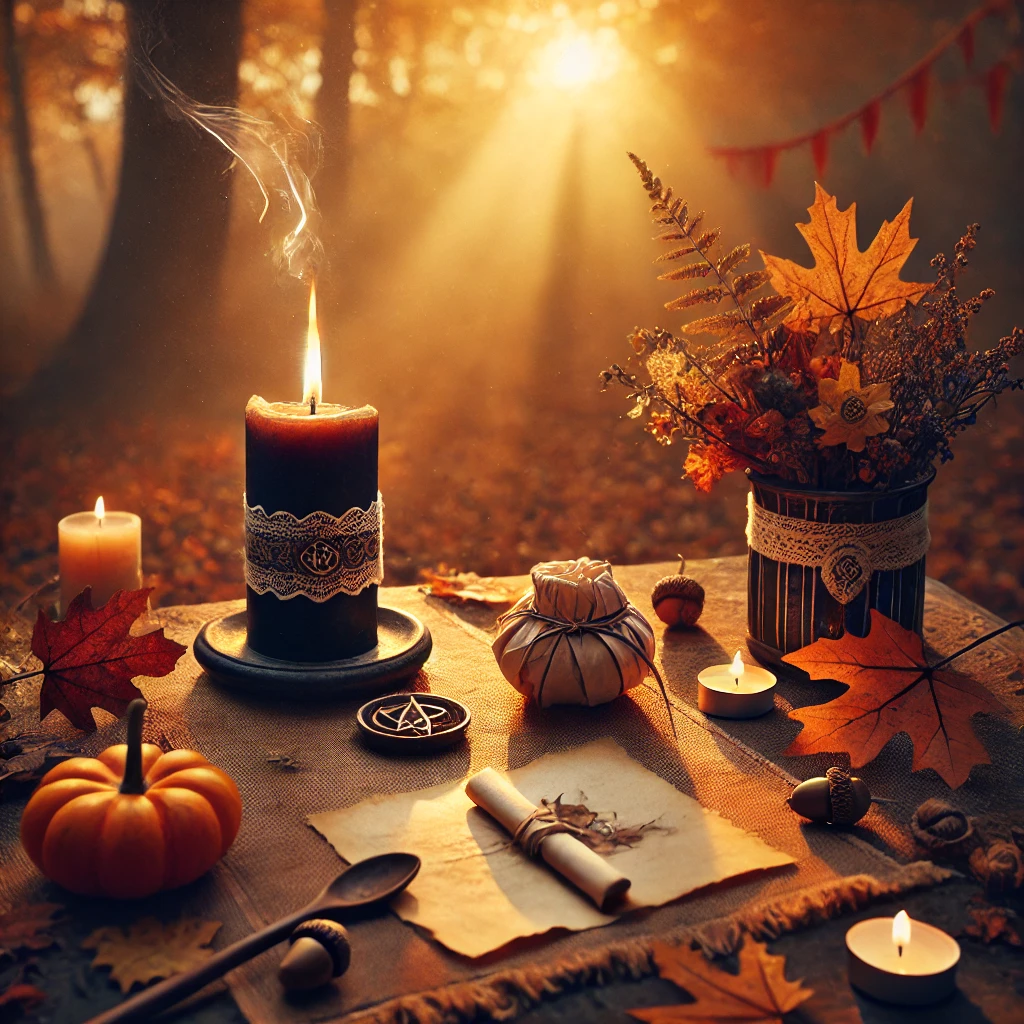
As you sip on your moon milk and gaze up at the moon, take a moment to reflect on the magic and mystery of the universe. Whether you are working with the moon to manifest your desires, to connect with your intuition, or simply to enjoy a peaceful moment of reflection, remember that the power of the moon is always with you, waiting to be harnessed and celebrated.
*Calories Calculated with 2% Dairy Milk, Different bases will change the values.

© The Equinox Apothecary 2024 – Permission is granted to copy and reproduce this Recipe with attribution

Conclusion

Mabon’s magic is an invitation to connect with the energies of the season and use them as catalysts for positive change. Whether you are releasing negativity through the Release and Renewal Spell or crafting other rituals to celebrate the harvest and balance, these practices align with Mabon’s themes of transformation and growth. By embracing these rituals, you infuse the equinox with your own intentions, creating a powerful synergy between your magic and the energies of the season. As you journey through Mabon, may your path be illuminated with the golden light of autumn, guiding you toward renewal, abundance, and inner harmony.

Posted on Leave a comment

Pagan and Wiccan Mabon Observations

Autumn EquinoxReading Time: 6 minutes
Autumn Equinox

Introduction

Embracing Mabon, the Autumn Equinox

As the wheel of the year turns and the sun’s journey across the sky begins to wane, the world transforms into a realm of enchanting beauty, heralding the arrival of the Autumn Equinox. In this ephemeral season, where the days grow shorter and the air becomes crisper, nature paints a tapestry of vibrant hues upon the landscape, a symphony of reds, oranges, and golds that dances in the gentle breeze. This breathtaking spectacle serves as a profound harbinger, signaling the transition from the warmth of summer to the contemplative embrace of autumn. It is during this time that many Pagans and Wiccans joyfully gather to celebrate Mabon, a sacred and time-honored tradition rooted deep in the annals of human history.

Mabon

Mabon, a name that resonates with ancient echoes, is a celebration that pays homage to the wisdom of the past while embracing the evolving tapestry of the present. This sacred time embodies the essence of gratitude, a poignant moment when hearts and spirits unite in thankfulness for the abundant blessings bestowed upon us throughout the year. As the autumnal equinox approaches, it marks a moment of perfect equilibrium, where the radiant light of day balances in harmonious counterpoint with the gentle cloak of night. This balance between light and dark, an intricate dance that plays out in both the cosmos and the deepest corners of our souls, is a central theme of Mabon.

In the heart of this mystical season, Mabon beckons us to connect with the ever-changing tapestry of the natural world. It is a call to embrace the shifting seasons, to feel the heartbeat of the Earth as it transitions from the fecundity of summer to the introspective embrace of autumn’s cool embrace. It is a reminder that, like the cycles of the moon, our lives too are woven into the fabric of these eternal rhythms. In this article, we embark on a journey to explore the profound significance of Mabon and to uncover the diverse and captivating rituals that the Pagan and Wiccan communities have lovingly preserved and practiced during this enchanting time of year.

The Equinox and Mabon: A Cosmic Dance

The Autumn Equinox, a celestial spectacle that typically graces the Northern Hemisphere between September 21st and 23rd, stands as a celestial marvel that captures the essence of equilibrium. During this momentous event, night and day harmoniously share the stage, each basking in its allotted time upon the Earth’s grand theater. This celestial pause, where the eternal cosmic dance momentarily stills, mirrors a profound equilibrium—a balance between light and darkness that extends far beyond the realms of our planet. It’s a balance not only witnessed in the heavens but also an embodiment of the inner equilibrium sought by countless spiritual seekers.

Mabon, a name that resonates with the echoes of Welsh folklore, adds a layer of myth and wonder to the equinox. Bearing the name of the Welsh god of the harvest, Mabon’s association with this sacred time paints a vivid picture of abundance and gratitude. As the steward of the harvest, Mabon’s very essence is intertwined with the themes of fertility and plenty. According to myth, he draws his life force from the Earth Mother, Modron, an intimate bond that designates Mabon as a symbol of rebirth and the cyclical nature of existence.

Mabon’s birth from the Earth Mother, Modron, is itself a testament to the eternal rhythm of life’s renewal. Just as the seeds that are sown in the fertile soil of spring flourish into the bountiful harvests of autumn, so does Mabon’s emergence embody the idea of rebirth. He symbolizes the cyclical nature of life, where endings are but preludes to new beginnings. This interconnectedness between the god of the harvest and the seasonal transitions reinforces the idea that Mabon is more than a deity; he is a living embodiment of the eternal dance of nature. In celebrating Mabon, we not only honor the turning of the seasons but also acknowledge our place within this ever-flowing river of life and the profound lessons it imparts.

Modern Mabon Celebrations

While Mabon’s roots are firmly planted in history, modern Pagans and Wiccans have undertaken a remarkable journey of adaptation and expansion upon these ancient traditions, resulting in the creation of a vibrant and diverse tapestry of contemporary celebrations. In this evolving landscape of spirituality and reverence for the natural world, Mabon has not only survived the passage of time but has thrived, evolving into a celebration that resonates with the complexities of our modern lives while retaining its profound connection to the ancient rhythms of the Earth.

The Resilience of Mabon Traditions

Modern Mabon celebrations are a testament to the resilience and adaptability of these spiritual traditions. They represent a harmonious blend of the old and the new, weaving threads of ancient wisdom into the fabric of our contemporary existence. At their core, these celebrations remain anchored in the fundamental themes of gratitude, balance, and connection to nature that have defined Mabon for generations.

Inclusivity in Modern Mabon Celebrations

One of the most notable aspects of modern Mabon celebrations is their inclusivity. In a world that increasingly values diversity and unity, Mabon has opened its arms to individuals from all walks of life. Modern Pagans and Wiccans have embraced the opportunity to welcome diverse perspectives and belief systems, enriching the tapestry of Mabon celebrations with a wide range of practices and rituals. This inclusivity has allowed Mabon to transcend cultural and geographic boundaries, creating a global community of like-minded individuals who gather to honor the changing of the seasons.

The Role of Technology in Mabon

Technology has also played a role in modern Mabon celebrations. The advent of the internet and social media has allowed practitioners to connect with one another on a scale previously unimaginable. Online forums, virtual gatherings, and digital resources have made it easier than ever for people to share their Mabon experiences, exchange ideas, and learn from one another. This digital interconnectedness has strengthened the sense of community among modern Pagans and Wiccans, fostering a sense of unity that extends far beyond physical boundaries.

Innovative Rituals and Symbolism

Innovative approaches to ritual and symbolism have also emerged in modern Mabon celebrations. While traditional practices, such as offering libations to the land, remain integral, contemporary practitioners have introduced new elements that resonate with the challenges and aspirations of the present day. These may include eco-conscious practices, such as planting trees or participating in environmental cleanup efforts, as a way of honoring the Earth and demonstrating a commitment to its well-being.

Key Aspects of Modern Mabon Observances

Gratitude for Abundance

One of the central themes of Mabon is expressing gratitude for the bounties of the year’s harvest. This often involves communal feasts where friends and family come together to share the abundance of the season. It’s a time to savor the flavors of freshly harvested foods, like apples, pumpkins, and grains. Historically, harvest festivals have been celebrated across cultures, such as the British Harvest Home and the American Thanksgiving. These gatherings not only celebrate the harvest but also foster a sense of community and shared prosperity.

Balance and Equilibrium

Mabon reminds practitioners of the delicate balance between light and dark, both in nature and in our lives. It’s a time for introspection, a moment to acknowledge the dualities within us and in the world. This balance is often symbolized by the equal lengths of day and night during the equinox. In ancient times, the equinox was a significant event, marking the transition between seasons. The concept of balance can also be seen in the yin-yang philosophy of Chinese culture, which emphasizes harmony between opposing forces.

Harvest Rituals

Many Mabon rituals involve honoring the Earth’s bounty through offerings and ceremonies. Participants might create altars adorned with seasonal fruits, vegetables, and grains. These altars serve as focal points for meditation and offerings to deities associated with harvest and abundance. For example, in ancient Greek mythology, Demeter, the goddess of the harvest, was honored with offerings of grain and fruit. Similarly, Native American tribes held ceremonies to give thanks for the harvest and ensure future fertility.

Connecting with Nature

Mabon is an opportunity to immerse oneself in the natural world. Some Pagans and Wiccans choose to go on nature walks, collect fallen leaves, or perform rituals outdoors to strengthen their connection with the Earth. This practice echoes the ancient tradition of nature worship, where people revered natural elements like trees, rivers, and mountains. Modern practitioners might also engage in activities like gardening or bird-watching to deepen their bond with nature.

Lighting Candles

As the nights grow longer, the lighting of candles becomes a significant ritual. Candles symbolize the inner light that can guide us through the approaching darkness of winter. The flickering flames also pay homage to the waning sun. Historically, fire has been a powerful symbol in many cultures, representing life, warmth, and protection. During Mabon, lighting candles can also be a way to honor the sun gods and goddesses, such as the Celtic god Lugh.

Meditation and Contemplation

Mabon is a time for introspection and meditation. Many practitioners take moments of stillness to reflect on the past year, set intentions for the coming season, and embrace personal transformation. This practice is similar to the ancient tradition of retreating to sacred spaces for contemplation and renewal. In modern times, meditation can take many forms, from silent reflection to guided visualizations. The goal is to achieve a sense of inner peace and clarity as we transition into the darker months of the year.

Conclusion

Mabon, the Autumn Equinox, is a profound moment in the Pagan and Wiccan calendar, a time to celebrate the harvest, find balance, and connect with the changing seasons. While rooted in ancient traditions, Mabon has evolved to incorporate a rich tapestry of modern practices. It’s a time for gratitude, reflection, and renewal—a reminder of the eternal dance of light and darkness that weaves through the cosmos and within our souls. Whether through communal feasts, meditative rituals, or simply by enjoying the beauty of nature, Mabon offers a chance to harmonize with the rhythms of the Earth and find magic in the turning of the seasons.

Posted on Leave a comment

Ritual: Mabon – Balanced Meditation

MeditationReading Time: 7 minutes
Meditation

Introduction

Embrace the autumnal equinox

In the tranquil embrace of the autumnal equinox, a mystical celebration known as Mabon emerges, inviting us to explore the delicate balance between light and darkness, both in the world around us and within our own souls. Among the many enchanting rituals that grace this sacred season, Balanced Meditation stands as a beacon of serenity and self-discovery. This ancient practice guides us to a place of profound equilibrium, where the shifting hues of fall foliage mirror the interplay between the active and introspective energies of our lives. Join us on a journey into the heart of Mabon’s Balanced Meditation, where we shall explore the art of harmonizing with the season’s energies, finding stillness amid transformation, and embracing the lessons of balance that this enchanted time bestows.

Ritual Basics

Before beginning any ritual, it is important to prepare yourself mentally and physically. You may want to take a cleansing bath, or shower, and meditate or perform some grounding exercises to center yourself. Gather any materials you will need, such as candles, incense, and offerings for the forest spirits.

You can read a more detailed Ritual Preparation guide here.

Equilibrium: A Ritual for the Balance Meditation

In the waning days of summer, as the sun dips lower on the horizon and the vibrant green of the world takes on the warm, golden hues of autumn, we find ourselves at the threshold of Mabon, the autumn equinox. This season is marked by a profound transformation, as nature herself dons her cloak of change. It’s a time when the leaves begin their graceful descent to the earth, and the air takes on a crisper edge, carrying with it the whispers of coming winter.

During this transformation, we are presented with a profound lesson — the art of embracing change as a pathway to equilibrium. The Balanced Meditation, a sacred ritual of Mabon, beckons us to contemplate this very lesson. It guides us to find solace amid change, much as the trees surrender their leaves, trusting that new growth will come in their own time. This ritual reminds us that life is an eternal dance of balance, a delicate interplay between light and dark, growth and release, and it is through acceptance and understanding of this balance that we find our own equilibrium.

Balanced Meditation
Print Ritual
No ratings yet

Ritual: Mabon – Balanced Meditation

As we embark on the journey of the Balanced Meditation, we immerse ourselves in the beauty of the season, where every falling leaf is a reminder that change is not to be feared but embraced. The ritual encourages us to sit in quiet reflection, much like the trees themselves, as we release our worries, tensions, and attachments to that which no longer serves us. This act of letting go becomes a sacred dance, a harmonious step in the rhythm of the season, as we surrender to the transformative energies of Mabon.
Prep Time5 minutes
Ritual Time1 hour
Total Time1 hour 5 minutes
Ritual Type: Mabon
Type: Rituals
Author: Theo, Witch

Tools

  • A blanket and/or cushion(s).
  • A foci (this can be a crystal, a fall symbol, etc)

Instructions

Preparation

  • Find a cozy nook in your haven, it can be indoors or out. It must be a safe place for you to be.
  • Use your blanket and/or cushion(s) to make the ritual space comfortable for you.
  • Nestle yourself into a comfortable position, either seated or lying down, as if preparing for a restful slumber. Let the tranquility of your chosen space envelop you.
  • Comfortably hold your foci, letting it bring you to peace.
  • Gently close your eyes, letting the quietude and peace settle around you like a soft mist. Inhale deeply, drawing in the hushed serenity of the surrounding woods and waters, and exhale any residual thoughts that may linger.

Visualizing the Equinox

  • As your inner canvas unfurls, paint a picture of yourself standing amidst nature’s embraces. Imagine the landscape shifting, revealing a lush forest glade, a vibrant meadow, or a serene beach along the Pacific coastline.
  • Watch as the foliage morphs, transitioning from one season’s attire to another. Allow the play of sunlight and shadows to paint a symphony of patterns around you, much like the intricate dance of your witchcraft practice.

Focusing on Balance

  • Shift your gaze to the balance teetering between the light and the darkness in your visualized sanctuary. Inhale, imbuing yourself with the radiant energy of the sun, its warmth filling you from within.
  • Exhale, envisioning any concerns, burdens, or worries as mere shadows that disperse and dissolve into the earth beneath you, absorbed by the ground.

Reflecting Within

  • Redirect your focus inward, like a seeker delving into the mysteries of the self. Contemplate the intricate scales of your life—how work finds its counterpoint in rest, joy waltzes with sorrow, and growth finds its partner in release.
  • As you inhale and exhale in rhythm, become a conduit for equilibrium, inviting its essence to flow through you.

Embracing Equilibrium

  • Visualize equilibrium as a gentle stream of radiant light. Imagine it coursing through your veins, each pulse resonating with the harmonious balance you seek.
  • Feel this luminous current enveloping every corner of your being, like the embrace of an old friend who understands the nuances of your journey.

Affirming Balance

  • Utter a mantra, seasoning your experience with affirmation: “I am in harmony with the cycles of life. I embrace both light and darkness, finding equilibrium within.”
  • Let this declaration infuse your being with the essence of balance.

Returning to the Present

  • Allow your awareness to trickle back into the present moment, like water finding its way back to the ocean. Inhale the freshness of the air, as if savoring the scent of newly foraged herbs.
  • With a tender smile, exhale, and as you gently open your eyes, bask in the gentle light of your surroundings, knowing that you’ve brewed an elixir of inner harmony.
  • Carry this sense of balance and mindfulness with you, just as you would carry a vial of your finest potion, allowing it to be a guiding star through the currents of your day.

Notes

Moon Milk Lavender and CherriesMoon milk is believed to have magical properties that promote relaxation, sleep, and spiritual connection. Lavender is a powerful herb that is often used in spells and rituals to promote tranquility, purification, and harmony. It is said to help calm the mind, soothe anxiety, and facilitate communication with the spiritual realm. Cherries, on the other hand, are associated with abundance, prosperity, and love. By combining these two ingredients in moon milk, we can create a potent brew that promotes restful sleep, deep relaxation, and a profound sense of spiritual connection.

As you sip on your moon milk and gaze up at the moon, take a moment to reflect on the magic and mystery of the universe. Whether you are working with the moon to manifest your desires, to connect with your intuition, or simply to enjoy a peaceful moment of reflection, remember that the power of the moon is always with you, waiting to be harnessed and celebrated.
*Calories Calculated with 2% Dairy Milk, Different bases will change the values.

© The Equinox Apothecary 2024 – Permission is granted to copy and reproduce this Ritual with attribution

Conclusion

In the profound teachings of the Balanced Meditation, we unearth a timeless wisdom that transcends the boundaries of seasons and rituals. It is a revelation that true equilibrium is not a static state but a dynamic force that surges through the currents of our existence, much like the ever-flowing stream of time. As we draw this sacred practice to a close, we carry with us the profound understanding that light and darkness, joy and sorrow, growth and release are not adversaries in our journey, but rather intimate companions in the dance of life.

Just as the autumn forest gracefully adapts to the changing seasons, we too can embrace the transformative energies that life offers. We emerge from Balanced Meditation with a serene sense of peace, armed with the knowledge that change is not a disruption of our equilibrium but a pivotal element of it. In our acceptance of change, we find the very essence of balance—the harmonious coexistence of all facets of existence. As we journey forth into the world, we carry with us the wisdom of the autumn equinox, recognizing that equilibrium is not an end goal but a perpetual voyage, and in the embrace of transformation, we discover the true heart of balance.

Posted on Leave a comment

A Guide to the Autumn Equinox

Autumn EquinoxReading Time: 8 minutes
Autumn Equinox

Introduction

Embracing the Equinox

The Autumn Equinox, known by various names such as Mabon, the September Equinox, or the Fall Equinox, is a significant celestial event that marks the transition from summer to fall in the Northern Hemisphere. This equinox occurs when the sun crosses the celestial equator, resulting in nearly equal periods of daylight and darkness. In this article, we will explore the Autumn Equinox, its historical and modern practices, and its importance in both traditional and contemporary cultures.

Understanding the Equinox: Nature’s Balance Beam

The Autumn Equinox typically falls on or around September 21st in the Northern Hemisphere, though the exact date can vary slightly from year to year. It’s a pivotal moment in the astronomical calendar when day and night are in perfect harmony, each lasting approximately the same duration. This equilibrium symbolizes the delicate balance between light and darkness, a theme that resonates deeply in various cultures and traditions.

A Global Perspective on the Autumn Equinox

The Autumn Equinox is a celestial event that holds universal significance, resonating not only in the Northern Hemisphere but also in the Southern Hemisphere, albeit with a reversal of seasons. This equinox typically occurs on or around September 21st in the Northern Hemisphere and around March 21st in the Southern Hemisphere. However, it’s essential to note that the exact date can vary slightly from year to year due to the intricacies of Earth’s orbit.

In the Northern Hemisphere, the Autumn Equinox is a pivotal moment in the astronomical calendar. It marks the juncture when day and night are in perfect equilibrium, each lasting approximately the same duration. This exquisite balance of light and darkness is a testament to the intricate dance between the Earth and the Sun. As the Northern Hemisphere bids farewell to the warmth of summer and welcomes the cool embrace of autumn, this equilibrium symbolizes the delicate transition from one season to another. It is a theme that resonates deeply in various cultures and traditions, reflecting the universal recognition of the significance of balance in our lives and the world around us.

Conversely, in the Southern Hemisphere, the Autumn Equinox ushers in the arrival of spring. As the days grow longer, the world awakens from its winter slumber, and the Earth begins to teem with new life. The Southern Hemisphere’s Autumn Equinox mirrors its counterpart in the Northern Hemisphere, offering a moment of balance and transition between the seasons.

In both hemispheres, the Autumn Equinox serves as a reminder of the cyclical nature of our planet’s journey around the Sun. It underscores the interconnectedness of all life and the ever-shifting rhythms of the natural world. Whether it’s the Northern Hemisphere’s preparation for the harvest or the Southern Hemisphere’s embrace of new beginnings, the Autumn Equinox invites us to contemplate the delicate equilibrium that sustains our planet and to celebrate the beauty of this cosmic choreography that we are all a part of.

The Global Tapestry of Autumn Equinox Celebrations

The Autumn Equinox, a celestial event marking the transition from summer to fall, has left an indelible mark on cultures across the globe for centuries. While the specific customs and traditions vary widely, the common thread that unites these diverse celebrations is a deep reverence for the changing seasons and the symbolism of balance and abundance. Here, we embark on a journey around the world to explore how different cultures have embraced the Autumn Equinox throughout history.

  • China: The Mid-Autumn Festival: In China, the Mid-Autumn Festival, also known as the Moon Festival, is a time for families to come together, much like the American Thanksgiving. Celebrated on the 15th day of the eighth month of the lunar calendar, which usually falls close to the Autumn Equinox, it is a time to give thanks for the harvest and to appreciate the beauty of the full moon. Families gather to share mooncakes, a special pastry filled with sweet or savory fillings, under the glow of the moon.
  • Japan: Tsukimi Festival: Japan has its own version of a moon-viewing festival called Tsukimi, which occurs in September or early October, around the time of the Autumn Equinox. During Tsukimi, people celebrate the beauty of the full moon, traditionally by setting up altars adorned with offerings like rice dumplings and pampas grass. It’s a time for reflection and appreciation of the changing season.
  • Korea: Chuseok: Chuseok, the Korean Thanksgiving Day, coincides with the Autumn Equinox and is one of the most significant holidays in Korea. Families gather to honor their ancestors, share a bountiful feast featuring traditional dishes like songpyeon (rice cakes), and engage in various cultural activities. Chuseok embodies themes of gratitude and unity, much like other harvest festivals around the world.
  • India: Navaratri and Durga Puja: In India, the Autumn Equinox is marked by a multitude of celebrations. Navaratri, a nine-night festival dedicated to the goddess Durga, typically falls around this time. It’s a time of fasting, dancing, and worship, celebrating the triumph of good over evil. Durga Puja, a major Hindu festival, is celebrated with grand processions and the installation of elaborately crafted idols of the goddess.
  • Native American Harvest Festivals: Various Native American tribes across North America have celebrated harvest festivals around the Autumn Equinox for generations. These festivals often involve communal feasting, music, dance, and ceremonies to express gratitude for the earth’s bounty. The Cherokee Nation, for example, celebrates the Great New Moon Ceremony during this time to give thanks for the harvest and pray for a bountiful winter.
  • European Traditions: Michaelmas and Harvest Home: In Europe, the Autumn Equinox is marked by a range of traditions. Michaelmas, celebrated on September 29th, honors the Archangel Michael, and serves as a time to give thanks for the harvest and ask for protection throughout the coming winter. In England, the Harvest Home festival involves decorating churches with harvested fruits and vegetables, and the celebrations often include communal feasts and music.

A Global Tapestry of Gratitude

The Autumn Equinox has woven a rich tapestry of celebrations around the world, each culture adding its unique colors and threads to the fabric of human tradition. While the specifics of these celebrations may differ, they all share a fundamental reverence for the Earth’s bounty and the significance of balance, unity, and gratitude. In this shared appreciation for the changing seasons, we find a reminder of our interconnectedness with nature and with each other, regardless of geographical or cultural boundaries.

Traditional Practices and Significance of the Autumn Equinox

The Autumn Equinox, celebrated around the world under various names and traditions, holds a rich tapestry of traditional practices and deep significance. This celestial event, marked by nearly equal hours of daylight and darkness, symbolizes themes of balance, harvest, and transition. Here, we delve into some of the traditional practices and the profound significance associated with the Autumn Equinox:

  • Harvest Festivals: Across cultures, the Autumn Equinox is synonymous with the harvest season’s culmination. It’s a time when communities come together to reap the rewards of their hard work in the fields. Traditional practices often involve communal feasting, dancing, and the sharing of the year’s bounty. In the United States, Thanksgiving is a prominent example of a harvest festival celebrated around the Autumn Equinox.
  • Mythological Symbolism: Many ancient mythologies incorporate the concept of balance and transition associated with the equinox. For instance, in Greek mythology, the story of Persephone’s descent into the underworld and her return to her mother, Demeter, mirrors the changing seasons. Her return from the underworld in the spring signifies the renewal of life, while her descent into darkness during the fall equates to the earth’s waning vitality.
  • Equinox Alignments: Numerous ancient sites, such as Stonehenge in England and Chichen Itza in Mexico, were constructed with alignments that highlight the equinoxes. At these sites, the rising or setting sun aligns with specific architectural features during the equinoxes, underscoring the importance of these celestial events in ancient cultures’ calendars.
  • Nature-Based Practices: Indigenous cultures often marked the Autumn Equinox with nature-based rituals. These practices could involve observing the changing behaviors of animals and plants, acknowledging the migration of birds, or engaging in ceremonies that honored the earth’s rhythms.
  • Chinese Moon Festival: In China, the Autumn Equinox is celebrated with the Mid-Autumn Festival, also known as the Moon Festival. Families gather to appreciate the full moon’s beauty, share mooncakes, and express gratitude for the harvest. The round shape of mooncakes symbolizes completeness and unity.
  • Japanese Tsukimi Festival: Japan celebrates the Tsukimi Festival, a moon-viewing festival that coincides with the Autumn Equinox. People create altars adorned with offerings like rice dumplings and pampas grass to honor the full moon’s beauty and express gratitude for the harvest.
  • Korean Chuseok: Chuseok, the Korean Thanksgiving Day, aligns with the Autumn Equinox. It’s a time for ancestral worship, communal feasting, and cultural activities that celebrate the harvest’s abundance.
  • Spiritual and Reflective Practices: Many individuals and spiritual groups mark the Autumn Equinox with rituals and ceremonies that encourage reflection, gratitude, and intention setting. These practices often involve meditation, prayer, and connecting with the natural world.

The Autumn Equinox’s significance lies in its role as a bridge between the seasons. It represents a moment of balance in the ever-turning wheel of the year. It’s a time to express gratitude for the earth’s abundance, acknowledge the impermanence of life, and prepare for the colder months ahead. The equinox teaches us the value of balance and reminds us of our connection to the rhythms of nature.

In summary, the Autumn Equinox is a time when traditional practices and cultural significance converge to celebrate the harvest, reflect on the changing seasons, and honor the delicate equilibrium between light and darkness. Whether through communal feasts, mythological stories, or nature-based ceremonies, the Autumn Equinox continues to be a time-honored and cherished event worldwide.

Modern Interpretations and Celebrations of the Autumn Equinox

While the Autumn Equinox has deep-rooted traditional practices, it has also adapted and evolved to suit modern lifestyles and belief systems. In contemporary celebrations, people from diverse backgrounds find innovative ways to connect with the themes of balance, harvest, and transition associated with this celestial event. Here, we explore some of the modern interpretations and celebrations of the Autumn Equinox:

  • Pagan and Wiccan Observations: For many Pagans and Wiccans, the Autumn Equinox is known as Mabon. This celebration remains deeply rooted in ancient traditions but has evolved to include a variety of practices. Modern Pagans often use this time to express gratitude for the year’s blessings, acknowledge the balance between light and dark, and perform rituals that align with the changing seasons. These rituals may involve meditation, lighting candles, and connecting with nature.
  • Secular Celebrations: In secular contexts, the Autumn Equinox is celebrated as a time to embrace the beauty of the changing seasons. Many people take advantage of the pleasant weather to engage in outdoor activities like hiking, picnicking, or simply enjoying the fall foliage. It’s a time for nature walks, appreciating the colors of autumn, and taking a break from the hustle and bustle of daily life.
  • Environmental Awareness: Some modern celebrations of the Autumn Equinox focus on environmental stewardship and sustainability. People participate in activities like tree planting, park clean-ups, and discussions about climate change. These initiatives highlight the importance of preserving the Earth’s balance and resources, aligning with the equinox’s theme of harmony.
  • Artistic Expression: Many individuals channel their creativity during the Autumn Equinox by crafting seasonal decorations, painting, writing, or creating symbolic artworks that capture the essence of the season. This creative expression serves as a way to connect with the equinox’s themes and share them with others.
  • Personal Reflection: In a fast-paced world, the Autumn Equinox offers a moment for personal reflection and intention setting. People engage in meditation, journaling, or simply take a moment to consider their goals and desires for the upcoming season. It’s a time to let go of what no longer serves us and prepare for the winter months ahead.
  • Harvest Festivals: While traditional harvest festivals still exist, many have adapted to modern sensibilities. These festivals often incorporate elements of local culture, music, and cuisine, making them enjoyable events for all members of the community. Farmers’ markets and food festivals that celebrate locally sourced produce are examples of contemporary harvest celebrations.
  • Educational Initiatives: Schools and educational institutions often use the Autumn Equinox as an opportunity to teach students about astronomy, the changing seasons, and the importance of nature conservation. These initiatives foster a deeper understanding of the Earth’s rhythms and encourage environmental responsibility.
  • Family Traditions: Many families create their own unique traditions for the Autumn Equinox. These may include outdoor adventures, crafting seasonal decorations, cooking special meals, or simply spending quality time together. These personal rituals help families bond and create lasting memories.

While the traditional practices associated with the Autumn Equinox remain relevant and cherished, modern celebrations have expanded to accommodate contemporary lifestyles and beliefs. Whether through spiritual rituals, outdoor adventures, environmental initiatives, or personal reflection, people from all walks of life continue to find meaningful ways to connect with the equinox’s themes of balance, harvest, and transition.

The Autumn Equinox: A Time of Balance and Transition

The Autumn Equinox, or Mabon, is a time of profound reflection and celebration, bridging the gap between ancient traditions and modern interpretations. As we honor the delicate balance of light and darkness, we acknowledge the interconnectedness of life and our place within the cycles of nature. Whether through traditional practices rooted in various cultures or through contemporary rituals and personal reflections, the Autumn Equinox invites us to embrace the changing seasons with gratitude and mindfulness. It is a moment to celebrate the harvest, foster a deeper connection with the earth, and prepare for the introspective journey that the approaching winter months bring. In this convergence of old and new, we find a rich tapestry of meaning that continues to resonate across time, reminding us to live in harmony with the rhythms of the natural world.