Posted on Leave a comment

Ritual: Divination for Samhain

Ritual Samhain Divination

Introduction

Unveiling the Mysteries: Connecting with Ancestors and Spirits Through Divination

Samhain, the sacred time when the veil between the living and the spirit world is at its thinnest, is an ideal occasion for divination. This ancient practice allows us to gain insights, receive guidance, and connect with ancestors and spirits. Whether using tarot cards, runes, pendulums, or scrying, divination during Samhain offers a profound way to tap into the spiritual realm and uncover hidden truths. In this article, we will explore various methods of divination, their meanings, and how they can enhance your connection to the otherworldly during this mystical season.

Ritual Basics

Before beginning any ritual, it is important to prepare yourself mentally and physically. You may want to take a cleansing bath, or shower, and meditate or perform some grounding exercises to center yourself. Gather any materials you will need, such as candles, incense, and offerings for the forest spirits.

You can read a more detailed Ritual Preparation guide here.

Understanding Samhain Divination

Divination during Samhain carries special significance due to the thinning of the veil between the worlds of the living and the dead. Traditionally, this festival marks a time of reflection, honoring those who have passed, and seeking guidance for the future. Many believe that Samhain provides easier access to the spirit world, allowing for deeper communication with ancestors and more accurate readings. Whether you’re asking about the future, seeking wisdom from the past, or looking for answers in the present, divination tools such as tarot cards, runes, pendulums, and scrying mirrors can illuminate the path ahead. The choice of tool often depends on personal preference and which method resonates most with the practitioner.

Ritual: Divination for Samhain
During Samhain, use divination tools to seek guidance from ancestors, spirits, and the unseen realms. These tools provide insights into the mysteries of life, death, and the spirit world.

  • Table or surface (required)
  • Candle or incense (optional)
  • 1 Deck – Tarot or oracle cards (required)
  • 1 Set of runes (optional)
  • 1 Pendulum (optional)
  • 1 Scrying mirror or crystal ball (optional)
  • 1 Journal or notebook (optional – to record insights)

Preparing the Space:

  1. Start by selecting a quiet, sacred space where you won’t be disturbed. Light candles or incense to create a peaceful atmosphere. You may also wish to place meaningful objects, such as crystals, on your altar or workspace to enhance the spiritual energy. Take a few moments to center yourself and focus on your intention for the reading.

Cartomancy (Tarot or Oracle Cards):

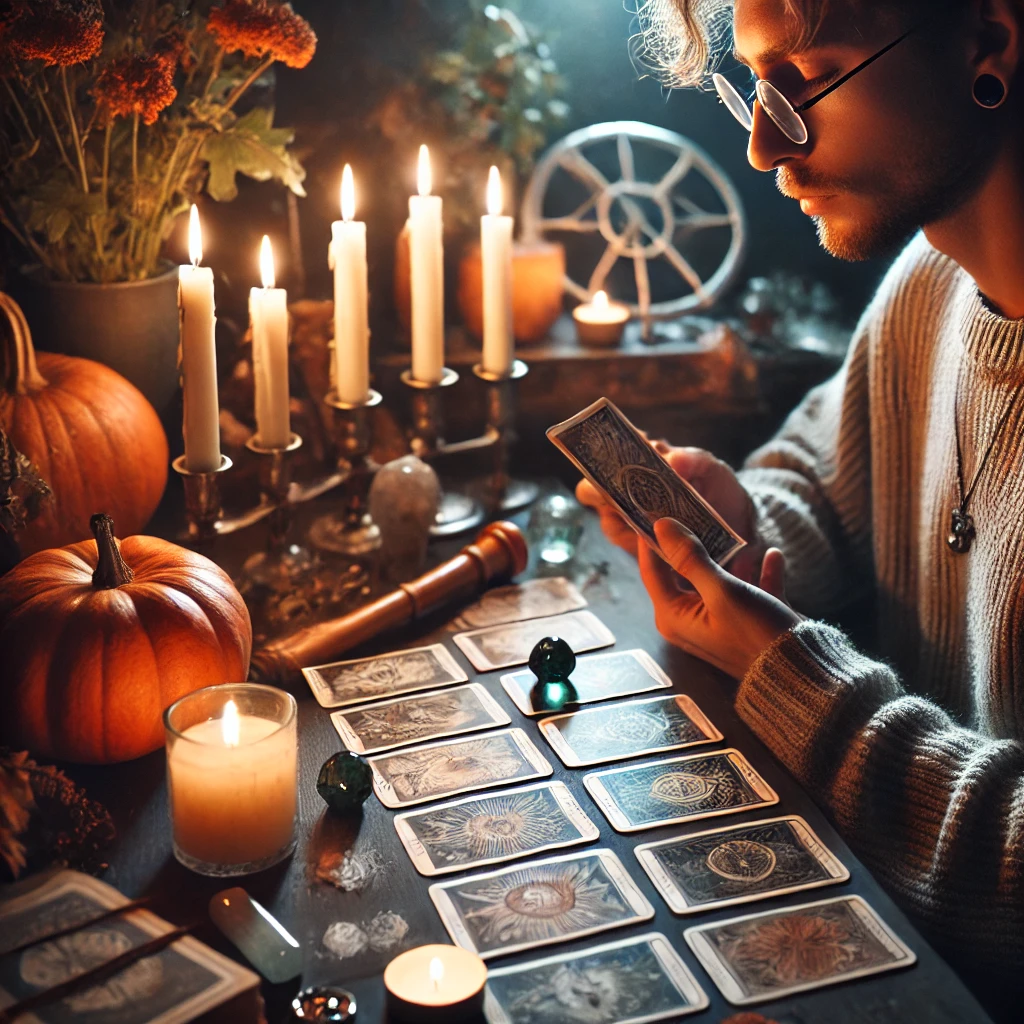
  1. Tarot and oracle cards are among the most popular forms of divination, especially during Samhain. Shuffle your deck while focusing on your question or intention. When ready, lay out the cards in a spread that resonates with you, such as the Celtic Cross or Three Card Spread (past, present, and future).
  2. Example Layouts:
  3. o Celtic Cross Spread: Provides insight into current situations, challenges, and possible outcomes.
  4. o Three Card Spread: Offers a simple yet profound look at past influences, present circumstances, and future possibilities.
  5. As you interpret the cards, allow your intuition to guide you. Pay attention to recurring symbols, colors, or images that stand out, as these can hold deeper meaning during Samhain.

Rune Casting:

  1. For those attuned to Norse or Germanic traditions, rune casting can be an incredibly powerful divination tool during Samhain. Begin by holding the runes in your hands and focusing on a question or intention. Cast the runes or pull them individually and lay them out in a pattern such as the three-rune reading (past, present, future) or the nine-rune grid for more detailed insights.
  2. Runes offer guidance through their ancient symbols, each of which carries profound meanings related to life’s journey, cycles, and mysteries. Their messages can help you navigate transitions, obstacles, or upcoming changes in your life.

Pendulum Divination:

  1. Pendulums are excellent tools for receiving clear yes/no answers from the spirit realm. Hold the pendulum by the chain or string, and ask your questions aloud or silently. Allow the pendulum to swing naturally—forward and backward may indicate “yes,” while side-to-side could mean “no.”
  2. For more detailed insights, consider using a pendulum board or chart to ask more complex questions. Pendulums are believed to be particularly attuned to the energy of Samhain, when spirit communication is heightened.

Scrying:

  1. Scrying, or gazing into reflective surfaces, has been used for centuries to peer into the unknown. Popular scrying tools include crystal balls, black mirrors, or even a bowl of water. In a dimly lit space, focus your gaze softly on the surface, allowing your mind to relax. The purpose is not to see physical images but to let symbolic shapes, colors, or impressions emerge from your subconscious or the spirit realm.
  2. As the veil between worlds is thin during Samhain, scrying can be particularly effective for receiving messages from ancestors or glimpses into the future. Trust your intuition as you interpret what you see.

• Divination during Samhain is not just about predicting the future but about connecting with the wisdom of the past and receiving guidance for the present.
• Ensure that you take the time to journal or reflect on the messages and insights you receive. Keeping a record allows you to revisit these lessons and track how they unfold over time.
• Be open to receiving guidance in many forms, whether through cards, runes, a pendulum, or a scrying surface. Samhain’s energy enhances all methods of divination, making it a powerful time to seek spiritual insights.

Samhain
Rituals

Conclusion

Divination during Samhain offers an unparalleled opportunity to connect with the mysteries of life and death, the wisdom of ancestors, and the guidance of the spirit world. Whether using tarot cards, runes, pendulums, or scrying, this sacred practice provides profound insights into our lives and the paths we are walking. As the veil between worlds thins, remember that these tools serve as a bridge to wisdom beyond our realm. Approach each reading with reverence, an open heart, and gratitude for the messages received. May your divination rituals during Samhain bring clarity, guidance, and a deeper understanding of the cycles that shape our existence. Blessed be.
Posted on Leave a comment

Ritual: Psychopomp Ritual for Samhain

Samhain Psycho pomp
Samhain Psycho pomp

Introduction

Guiding Lost Souls: A Sacred Ritual for Samhain

Samhain, the festival when the veil between the living and the dead is at its thinnest, offers a powerful opportunity for spiritual work, particularly for assisting lost or wandering spirits in crossing over to the afterlife. The term “psychopomp” refers to a spiritual guide or escort whose role is to lead souls to their final resting place. Performing a psychopomp ritual during Samhain honors the ancient traditions of guiding spirits to the afterlife while connecting deeply with ancestral wisdom. This sacred practice has roots in numerous spiritual traditions and should always be approached with great respect, caution, and humility.

Ritual Basics

Before beginning any ritual, it is important to prepare yourself mentally and physically. You may want to take a cleansing bath, or shower, and meditate or perform some grounding exercises to center yourself. Gather any materials you will need, such as candles, incense, and offerings for the forest spirits.

You can read a more detailed Ritual Preparation guide here.

Understanding the Role of the Psychopomp

In various cultures, psychopomps were revered as spiritual guides tasked with leading souls through the transition from life to death. In Greek mythology, Hermes served as a psychopomp, leading souls to the underworld. The ancient Egyptians called upon Anubis, the god of death, to perform this sacred duty, while the Celts believed their Druids could serve as spiritual escorts. The role of the psychopomp is one of deep compassion and reverence, as it involves helping lost or restless spirits find peace and guiding them to their next phase of existence. Performing this ritual at Samhain aligns with the energies of the season, as it marks the end of the harvest and the symbolic death of the natural world before its rebirth.

Ritual: Psychopomp Ritual for Samhain

A sacred practice to assist lost or restless spirits in crossing over to the afterlife, performed during the thin veil of Samhain.

  • Altar or sacred surface (required)
  • Candle (white or black)
  • Rattle, drum, or bell (optional)
  • 1 Bundle Sage (mugwort, or incense (required) – For cleansing and setting sacred space)
  • 1 Offering Food (drink, or symbolic items (required) – For ancestral spirits or spirit guides)
  • 1 Crystal – Black tourmaline or clear quartz (optional – For protection and spiritual clarity)
  • 1 Photograph or personal object of the lost soul (optional – To connect with the spirit)

Preparing the Sacred Space

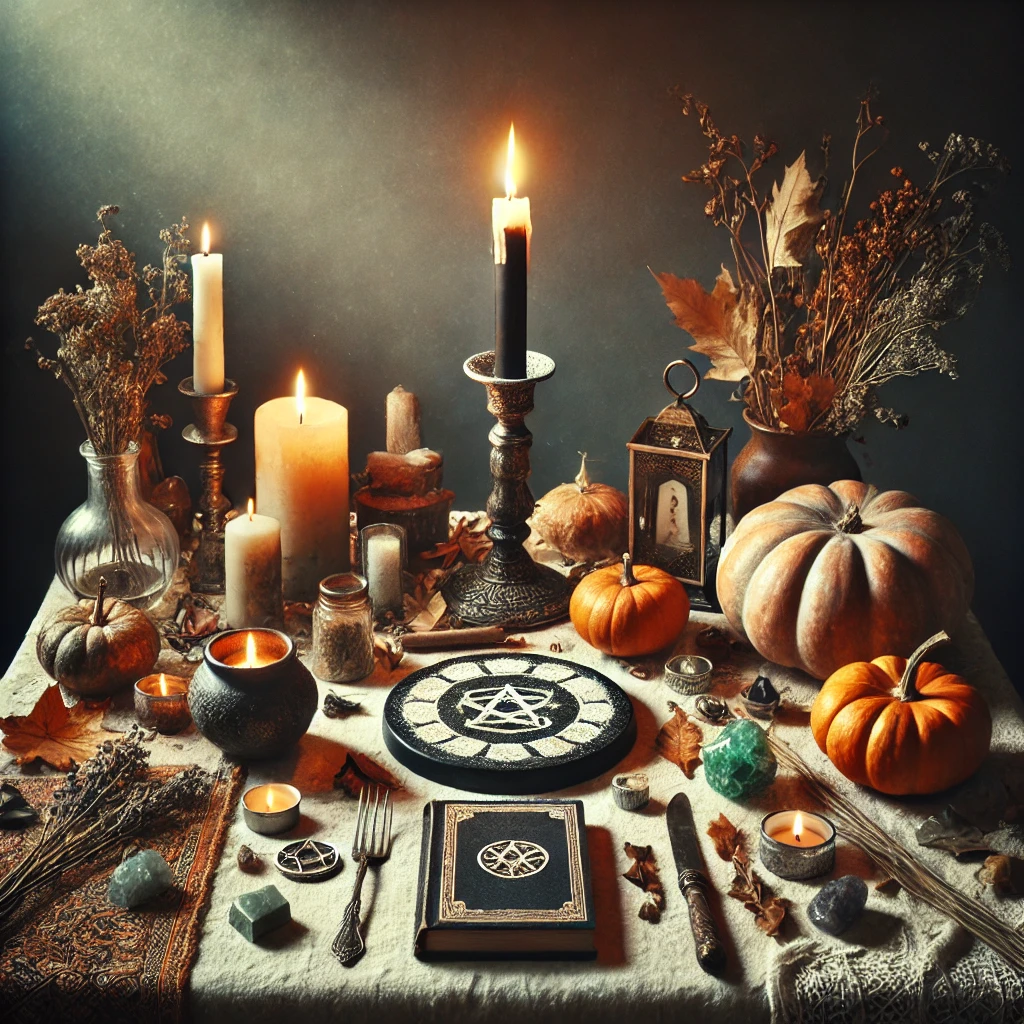
  1. To begin, clear and cleanse the space where the ritual will take place. This can be an altar indoors or a spot outdoors beneath the night sky. Use sage, mugwort, or incense to purify the area, walking in a sunwise direction to invite protective energies. Place meaningful items on your altar, such as crystals, photographs of the ancestors, or sacred symbols of your spiritual practice.

Altar Setup:

  1. Light a candle, preferably black or white, symbolizing the guiding light for the lost soul.
  2. Place offerings of food, drink, or symbolic items (such as bread, wine, or flowers) as an act of gratitude and honor to your guides and ancestors.
  3. If you have a photograph or object that belonged to the lost spirit, place it on the altar to help you connect with the energy of the soul.

Invocation and Calling the Guides

  1. Once the space is prepared, sit quietly and center yourself. Call upon your ancestors, spirit guides, or deities associated with death and transition, such as Hecate, Anubis, or the Morrigan. With humility and respect, ask for their assistance in guiding the lost soul toward peace and the afterlife.
  2. Invocation Example:

    "Ancestors, guides, and spirits of the beyond, I humbly call upon you. I seek your help in guiding this lost soul to its rightful place in the afterlife. May your wisdom light the way, and may this spirit find peace and rest."

  3. Feel their presence surround you and the space, offering protection and assistance as you begin the work of the psychopomp.

The Ritual of Guiding

  1. Pick up your drum, rattle, or bell and begin a gentle rhythm. The sound can help open the spiritual channels and signal your intent to the lost soul. If you prefer to chant or use guided words, speak softly to the spirit, encouraging it to trust the process and follow the light into the next phase of its journey.

  2. Example Chant:

    "Spirit, you are not alone. There is a light ahead that will guide you home. Follow it now, with love and grace, and find your rest in the sacred place."

  3. Feel the connection deepening with the spirit. Envision a bright light growing in the distance, and see the lost soul moving toward it. You may sense the spirit’s emotions or receive impressions of its story. Be compassionate and listen with an open heart.

Divination for Insight

  1. To assist in understanding the nature of the lost soul or to gain further clarity, use divination tools such as tarot cards, runes, or a pendulum. Draw a card or cast a rune to see what the spirit needs to communicate or to ensure that it is ready to cross over.

Releasing the Spirit

  1. When the time feels right, invite the spirit to leave. Speak words of release, offering the spirit comfort and assurance as it transitions to the afterlife.
  2. Example Words of Release:

    "Go now in peace, lost soul. The time of wandering is over. May the ancestors welcome you, and may you find rest and renewal in the arms of the afterlife."

  3. Blow out the candle, symbolizing the spirit’s successful crossing, and give thanks to your guides and ancestors for their help. Offer any remaining food or drink from the altar to nature as a final act of gratitude.

• Psychopomp rituals should be approached with reverence, humility, and respect for the spirits involved. If you are new to this practice, consider working with an experienced spiritual guide or medium to assist you.
• It’s important to protect yourself and the space during the ritual. Create a circle of protection using salt, crystals, or other protective elements, and set clear intentions to avoid any interference from negative entities.
• After the ritual, take time to ground yourself by eating a small meal, drinking water, or spending time outdoors. This will help you reintegrate after the spiritual work.

Samhain
Rituals

Conclusion

Performing a psychopomp ritual during Samhain is a sacred and transformative act of compassion. By assisting lost or wandering souls in their journey to the afterlife, you honor the cycles of life and death, bridging the gap between the seen and unseen worlds. Whether calling upon your ancestors or spiritual guides, this ritual invites you to serve as a channel for peace, guidance, and healing. As you conclude the ritual, give thanks to the spirits who assisted you, and take comfort in knowing that your efforts have helped a soul find its rest. May your work as a psychopomp during Samhain be blessed with wisdom, protection, and reverence.

Posted on Leave a comment

Ritual: Ancestor Altar for Samhain

Ritual Samhain Ancestor Altar

Introduction

Honoring Our Roots: Creating an Ancestor Altar for Samhain

Samhain, often referred to as Halloween or the Witches’ New Year, is a time of powerful connection between the living and the dead. Traditionally celebrated by Pagans and Wiccans, Samhain marks the thinning of the veil between the physical world and the spirit world, making it an ideal time to honor our ancestors and loved ones who have passed on. One of the most cherished rituals of this season is the creation of an ancestor altar, where offerings and memories come together to create a sacred space for reflection, remembrance, and communication with the spirits of those who came before us.

Ritual Basics

Before beginning any ritual, it is important to prepare yourself mentally and physically. You may want to take a cleansing bath, or shower, and meditate or perform some grounding exercises to center yourself. Gather any materials you will need, such as candles, incense, and offerings for the forest spirits.

You can read a more detailed Ritual Preparation guide here.

The Significance of the Ancestor Altar

An ancestor altar is more than a decorative display; it is a symbolic connection to your familial and spiritual roots. At Samhain, this altar serves as a beacon, inviting the spirits of your ancestors to join you in celebration and honoring their legacy. The items placed on the altar hold personal significance, acting as a bridge between the past and present. Whether performed indoors or outdoors, this ritual creates a sacred space for reflection, gratitude, and the honoring of lives lived and memories cherished. Traditionally, Samhain falls on October 31st, but this ritual can be performed anytime during the thinning of the veil, from late October to early November.

Crafting an Ancestor Altar for Samhain

This ritual involves creating an altar dedicated to your ancestors, adorning it with personal and meaningful items, and offering it as a space of respect and gratitude during Samhain.

  • Surface
  • Cloth
  • Candles
  • 1 – Photos or heirlooms of ancestors (to represent those being honored)
  • 1 – Offering dish (for food or drink offerings)
  • 1 – Handful of seasonal flowers or herbs (such as marigolds, rosemary, or chrysanthemums)
  • 1 – Cup Apple cider or wine (symbolizing offerings to your ancestors)
  • 1 – Plate – Small serving of food (such as nuts, fruit, or bread)

Selecting the Altar Surface:

  1. Choose a surface that feels sacred to you, whether it is a table, a shelf, or something connected to nature, like a tree stump or rock. Outdoor altars can provide a direct connection with the Earth, but indoor altars may feel more private. Place this altar in a space that feels quiet, personal, and sacred for you.

Covering the Altar:

  1. Once you have selected the surface, cover it with a cloth. Colors like black or deep purple are traditional for Samhain, symbolizing the connection with the spirit world. However, choose a color that resonates with your intention. Each color holds its own symbolic meaning:
  2. Black or Purple – Associated with Samhain and the spirit realm
  3. White – Symbolizing purity and remembrance
  4. Green – Representing life and growth, perfect for ancestral healing

Arranging the Items:

  1. Now, begin to arrange items that honor your ancestors:
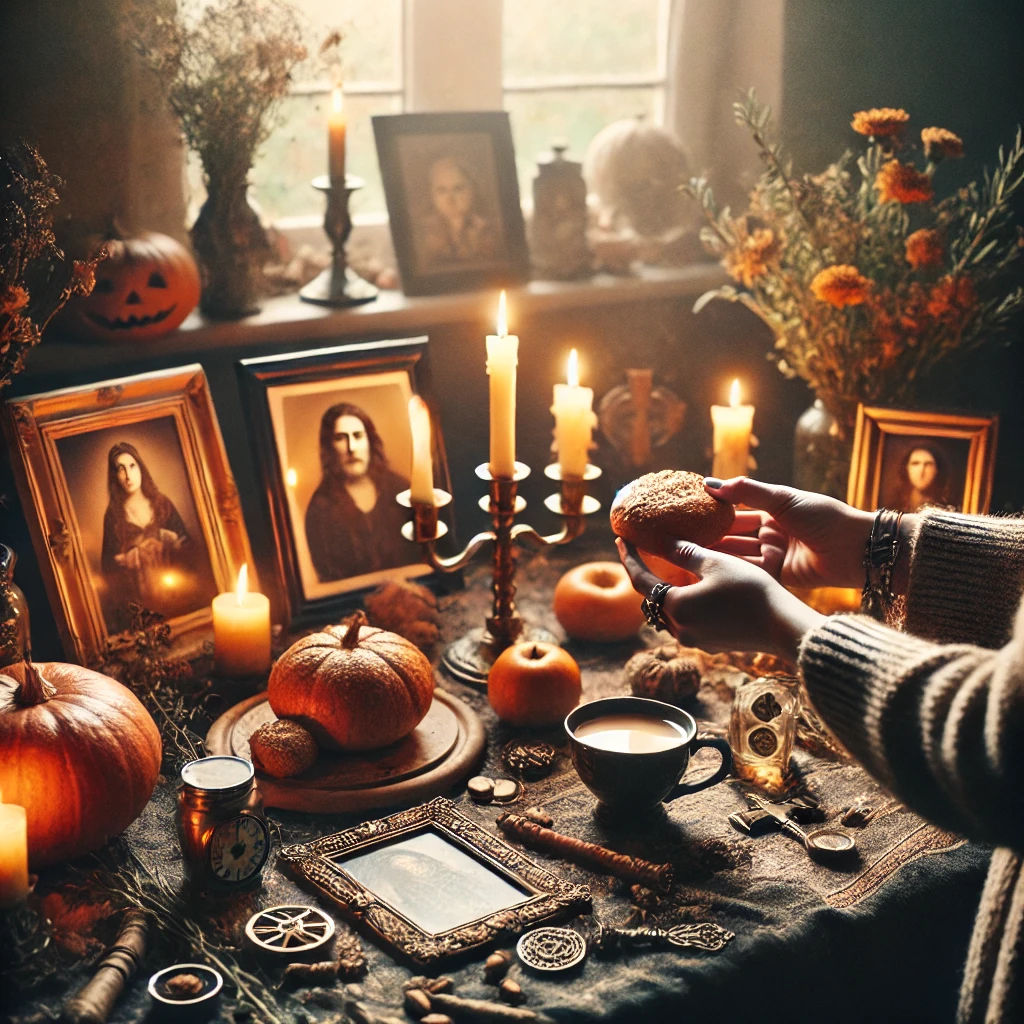
  2. Photographs and Heirlooms: Place photos, mementos, or heirlooms of your ancestors in a prominent position. These items serve as a focal point for the altar.
  3. Candles: Light two candles, one on each side of the altar. White candles are often used to symbolize the spirits of loved ones, while black candles can be used to honor the cycle of life, death, and rebirth.
  4. Offerings: Prepare offerings of seasonal fruits, nuts, or a small plate of bread and place them in front of the photos or heirlooms. Pour a cup of apple cider or wine as a symbolic gesture of gratitude.
  5. Flowers or Herbs: Add fresh flowers or dried herbs to enhance the natural beauty of the altar. Rosemary is traditionally used for remembrance, while marigolds or chrysanthemums symbolize the connection to the spirit world.

Blessing and Invocation:

  1. Once your altar is arranged, take a moment to sit quietly in front of it. Reflect on the lives of your ancestors, what they have passed down to you, and the legacy they left behind. Light the candles and say:
  2. "Spirits of my ancestors, I honor you on this sacred night.

    As the veil between worlds thins, I welcome your presence in my life.

    Through this altar, may you feel my love, respect, and gratitude.

    Guide me with your wisdom, protect me with your love,

    And bless me with the strength of our lineage.

    Blessed be."

Offering to the Ancestors:

  1. Take a small piece of bread or fruit, and lift the offering up, saying:
  2. "I offer this gift to you,

    To nourish your spirit as you have nourished mine.

    With this food and drink, I honor your presence.

    Blessed be."

  3. Leave the offerings on the altar overnight or until the next morning as a sign of respect.

Reflection and Meditation:

  1. After your offering, sit quietly and meditate on the connection with your ancestors. Allow any thoughts, feelings, or memories to surface, and feel the warmth of their presence. Write down any insights or messages that come to you in a journal or notebook.
  • Always ensure candles are safely placed on the altar, away from any flammable materials. If leaving the altar overnight, extinguish candles after your ritual for safety.
  • Children can be involved in the process by helping gather items, arranging them, or even creating drawings of ancestors to place on the altar.
  • The offerings left on the altar can be returned to nature the next day. Pour the drink into the soil and leave food offerings in a garden or forest area as a way of giving back to the Earth.
Samhain
Rituals

Conclusion

Setting up an Ancestor Altar during Samhain is a beautiful way to honor and connect with the spirits of your loved ones. This ritual strengthens the bond between you and your ancestors, offering a space for remembrance, reflection, and gratitude. By dedicating this sacred space, you open a portal for wisdom, love, and guidance from beyond the veil. As the flames flicker and the offerings are made, may your heart be filled with warmth, and may the presence of your ancestors bring peace and blessings to your life. Blessed Be.