Posted on Leave a comment

Ritual: Heartfelt Letters and Expressions

Heartfelt Letters and Expressions

Introduction

Connecting to Ancestral Wisdom through the Power of the Written Word

In the gentle glow of Mother’s Night, the first night of Yule, the warmth of the hearth and the feminine influence of the home beckon practitioners to honor the Disir—the protective female spirits, ancestors, and mothers who have shaped lives throughout generations. The evening becomes a sacred opportunity to honor the feminine, to nurture connections with those who have come before, and to celebrate the love that flows through time and space. One of the most meaningful rituals to mark this night is the act of writing heartfelt letters or expressions of love and gratitude to the Disir and influential women of one’s life, both seen and unseen. The written word becomes a sacred tool of connection, allowing the heart to speak and creating a bridge that weaves between the earthly realm and the spiritual world.

Ritual Basics

Before beginning any ritual, it is important to prepare yourself mentally and physically. You may want to take a cleansing bath, or shower, and meditate or perform some grounding exercises to center yourself. Gather any materials you will need, such as candles, incense, and offerings for the forest spirits.

You can read a more detailed Ritual Preparation guide here.

Honoring the Disir through Words

The Power of Heartfelt Letters on Mother’s Night
Mothers’ Night is a time of deep reflection, honor, and the rekindling of the threads that bind us to the Disir—the guardian spirits, female ancestors, and protectors of fate and fertility. By setting aside time to write heartfelt letters or express gratitude through other creative forms, practitioners are given a chance to cultivate reverence for the loving energies that have watched over and guided them. As the words take shape on the page, they become a tangible expression of emotions, intentions, and love, inviting a deeper sense of communion and understanding. This practice is particularly significant, as it highlights the act of expressing and giving voice to the often unspoken connections between the past, present, and future.

Heartfelt Letters and Expressions: A Writing Ritual for the Disir

A reflective Yule ritual of writing letters to honor the Disir and influential feminine energies in one’s life.

  • Writing Materials (required)
  • Candle (required)
  • Altar or Writing Space (optional)
  • Decorative Box or Pouch (optional)
  • 1 Stick or Bundle Incense (Any Autumn or Winter Scent

    optional – To cleanse the space and invoke the presence of the Disir)

  • 1 Small Offering Herbs or Dried Flowers (optional – Such as rosemary, lavender, or rose petals to offer to the spirits)
  • 1 Token of Appreciation (Symbol of a Loved Ancestor

    optional – Such as a piece of jewelry, photograph, or keepsake to honor the Disir)

Step 1: Preparing the Sacred Writing Space

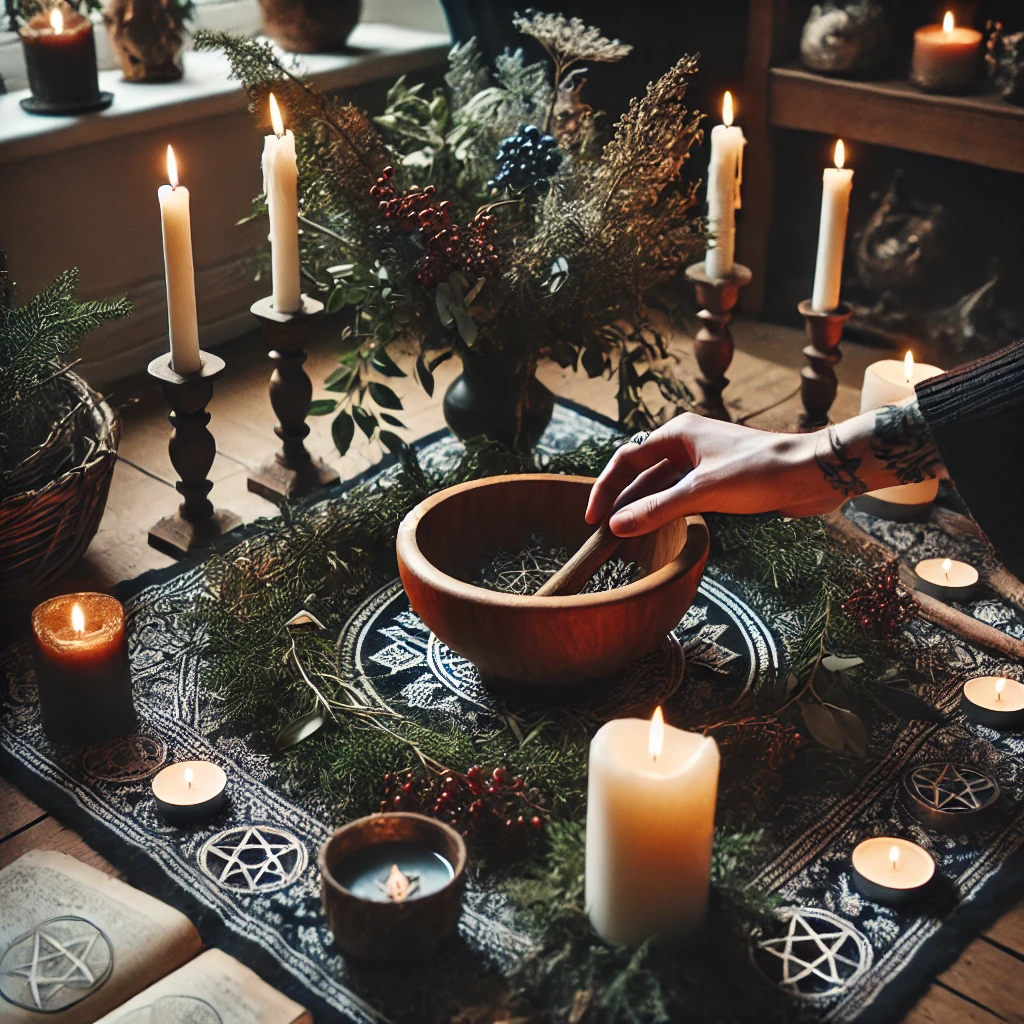
  1. Choose a quiet place where you can sit comfortably and write without distractions. This could be near a hearth, at a kitchen table, or at an altar adorned for Yule.
  2. Light a candle and place it in your writing space, setting the tone of reverence and illumination. The flame represents the presence of the Disir and the guiding light of female ancestors.
  3. If desired, burn incense to cleanse and consecrate the space, welcoming the energies of Mother’s Night to join in your reflections.

Step 2: Setting the Intention for Connection and Gratitude

  1. Before beginning your writing, take a moment of silence to ground yourself and focus on your breath. Inhale deeply, drawing in the warmth of the season, and exhale to release any distractions or concerns.
  2. Visualize your intentions clearly—to honor the Disir, express gratitude for the women in your lineage, and connect with the nurturing energies that have supported you.
  3. With your eyes closed, take a moment to call upon the Disir. You may choose to speak words aloud, inviting them to guide your hand and heart as you write:
  4. “Disir, guardians and protectors, I honor you this night.

    Through my words, may my gratitude be heard,

    And may my love reach across time and space.”

Step 3: Writing Heartfelt Letters or Expressions

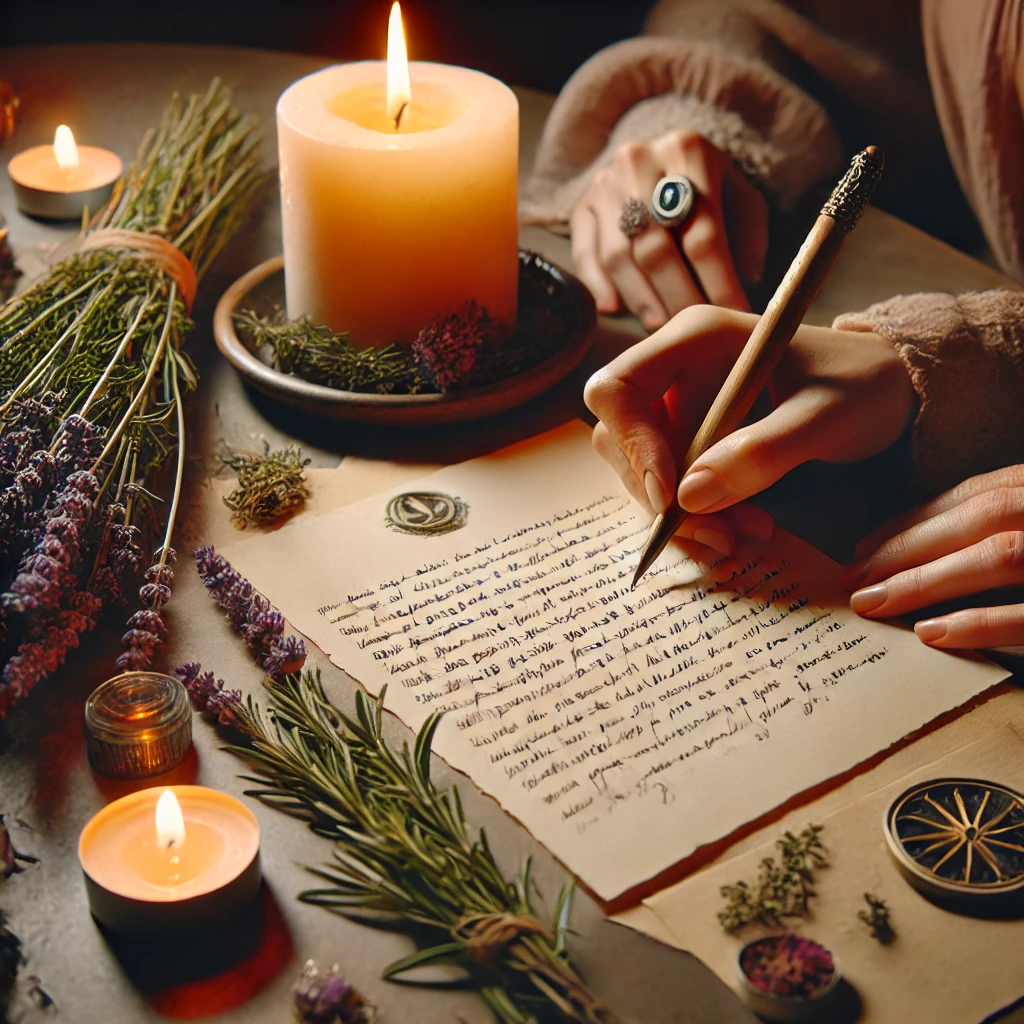
  1. As you sit with your paper or parchment, let the words flow from your heart. Write to a specific female ancestor, the collective Disir, or to the feminine energies that have blessed and guided your life.
  2. Express your gratitude, admiration, and love—you may choose to write about memories, offer thanks for blessings received, or simply speak from the heart. Let the candle’s gentle light guide your thoughts as they find their way onto the page.
  3. If words don’t come easily, you may also choose to draw symbols, create poetry, or compose songs that carry your intention. Each expression is sacred and honored, no matter the form it takes.

Step 4: Presenting the Letters as Offerings

  1. Once your letter or expression is complete, take a moment to read it aloud to the flame of the candle, knowing that the words are carried to the spirits through the light and smoke.
  2. Fold the letter and place it on your altar, within a decorative box, or tucked under a keepsake that holds significance. This act serves as an offering, a gift to the Disir and those who have watched over you.
  3. If you have herbs, dried flowers, or small tokens, you may wish to place them alongside your letters as a gesture of respect and beauty, enriching the offering with nature’s bounty.

Step 5: Closing the Writing Ritual

  1. After presenting your letters, sit quietly and meditate upon the feelings of connection, reverence, and gratitude. Feel the bond between you and the Disir, strengthened by your heartfelt words.
  2. Offer a closing prayer or blessing to the spirits, expressing thanks for their presence and guidance:
  3. “Thank you, Disir, for hearing my words and receiving my love.

    May the bonds of connection be woven strong,

    And may your blessings fill this hearth and home.”

  4. Extinguish the candle, and keep the letters or offerings on your altar or in a sacred place throughout the Yule season, revisiting them whenever you wish to connect with the Disir.

While writing the letters, focus on your genuine emotions and allow the act to be one of love, healing, and reflection. If children or family members are participating, they can write their own letters, draw pictures, or speak words aloud. Encourage each person to connect with their lineage, and to honor both the known and unknown feminine energies in their lives.

Yule
Rituals

Conclusion

The ritual of writing heartfelt letters and expressions on Yule’s Mother’s Night is a profound practice that allows you to connect deeply with the Disir, honoring the feminine wisdom that flows through your lineage and life. As your pen touches the page, your words carry love, gratitude, and intention, building a bridge between you and the guiding spirits that watch over you. Each expression becomes a sacred offering, a gift that transcends the ordinary, inviting the blessings of the Disir into your home and heart. May your letters be filled with the warmth of the hearth, the light of the Yule season, and the enduring love of those who protect and guide you on your path.

Posted on Leave a comment

Ritual: Mothers’ Night Culinary Alchemy and Reverence

Mothers’ Night Culinary Alchemy

Introduction

Honoring the Disir and the Divine Feminine

Mother’s Night, or “Modraniht,” marks the beginning of the Yule festivities and offers a time for practitioners to honor the feminine forces that guide and protect. On this sacred evening, the hearth and home are imbued with special significance, becoming the center of warmth, nourishment, and remembrance. Traditionally a night dedicated to the Disir—the protective female spirits and ancestral mothers—this ritual celebrates the power of feminine influence, from the tender guidance of the ancestral spirits to the nurturing energy of the home itself. Through culinary creations and offerings, you connect with the feminine energies that flow through generations, honoring those who came before and the forces that continue to shape your path.

Ritual Basics

Before beginning any ritual, it is important to prepare yourself mentally and physically. You may want to take a cleansing bath, or shower, and meditate or perform some grounding exercises to center yourself. Gather any materials you will need, such as candles, incense, and offerings for the forest spirits.

You can read a more detailed Ritual Preparation guide here.

The Sacred Traditions of Mother’s Night

Mother’s Night is celebrated on the eve before Yule, setting the tone for the winter solstice festivities. Historically, this night acknowledges and venerates the feminine protectors and nurturers—both human and divine. The Disir, in particular, are female spirits or ancestors who are seen as guardians of fate, fertility, and familial well-being. The focus on cooking, the hearth, and the home recognizes the feminine influence in these realms, transforming the space where food is prepared and shared into a sacred altar of connection and remembrance. Through the act of cooking, serving, and honoring, this ritual seeks to build a bridge between the worlds, inviting the spirits of the Disir and other feminine guides into the celebration.

Yule’s Mother’s Night: Culinary Alchemy and Reverence

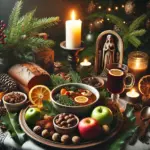
A Yule ritual to honor the Disir and feminine energies through cooking, feasting, and offerings.

  • Cooking utensils and cookware (required)
  • Candles (required)
  • Large plate or serving bowl (required)
  • Altar cloth (optional)
  • Ingredients for favorite treats (desserts, or meals (required) – Choose dishes loved by female ancestors or the spirits being honored)
  • 1 Offering bowl (optional – For pouring a drink offering (mead, wine, or cider are commonly used))
  • 1 Small bouquet Fresh herbs (flowers, or sprigs of evergreen (optional) – Symbolizing the blessings of the season)
  • 1 Cup Drink offering (mead, cider, or other seasonal beverage)

Step 1: Preparing the Kitchen and Hearth

  1. Start by setting an intentional space within your kitchen or cooking area. Light a candle or place a small altar on the counter, laying down a cloth in a color resonant with Yule (red, white, green, or gold).
  2. Arrange symbols of Mother’s Night, such as sprigs of evergreen, winter berries, or representations of the Disir—photos, figurines, or heirlooms of female ancestors. This transforms your cooking area into a sacred space, honoring the nurturing energies of the hearth.
  3. If you wish, invite the spirits or energies of the Disir to be present, saying:
  4. “Spirits of the Disir, mothers, protectors, and nurturers,

    I honor you this night with love and gratitude.

    May your blessings fill this space and guide me

    As I craft these offerings in your name."

Step 2: Cooking with Intention

  1. Select the dishes you will prepare in honor of Mother’s Night. These may be traditional family recipes, favorite meals of female ancestors, or foods associated with warmth, love, and abundance.
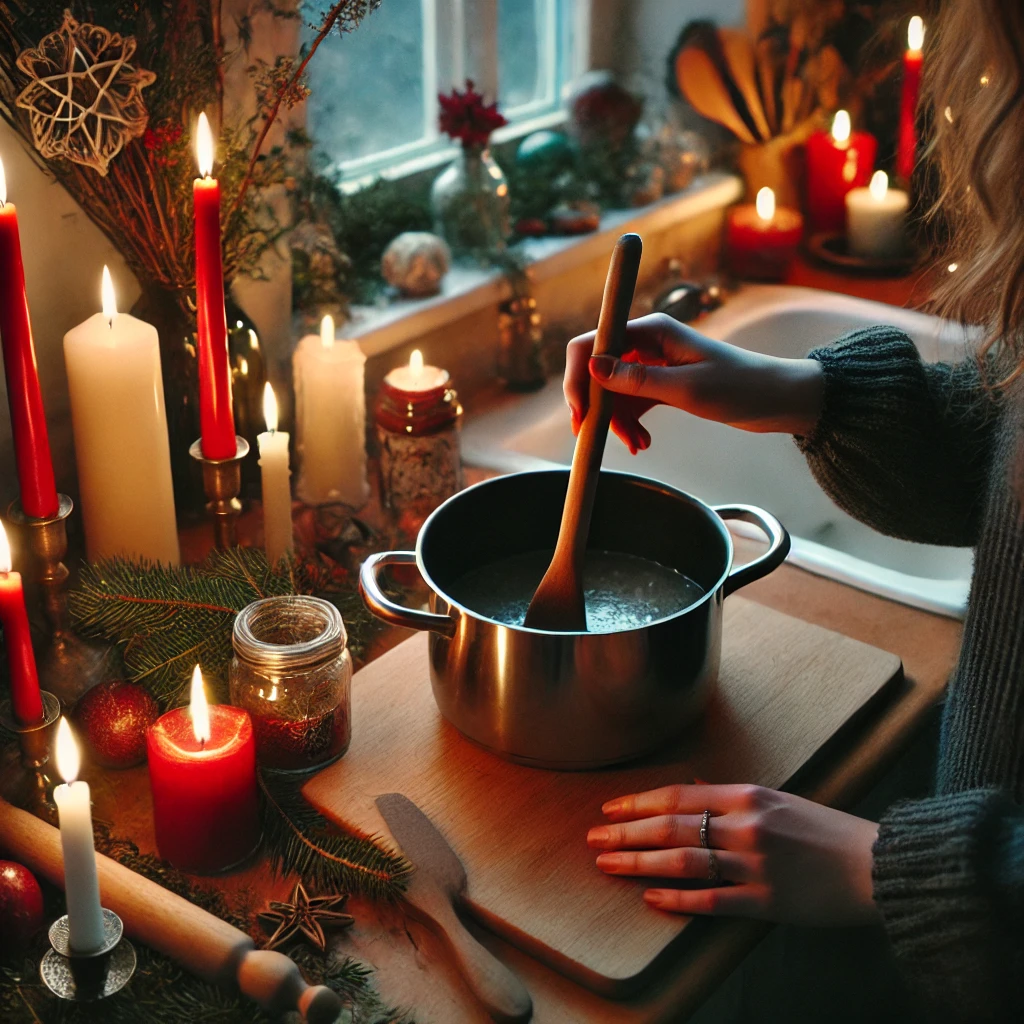
  2. As you prepare each dish, infuse your actions with intention. Stir with gratitude, chop with love, and season with blessings. Each movement is a prayer and a gesture of connection with the spirits you honor.
  3. Allow your senses to be fully immersed in the act of creation, feeling the textures, smelling the fragrances, and relishing the alchemy of ingredients coming together. You may choose to play soft music that resonates with the spirit of the night as you cook.

Step 3: Decorating the Altar and Hearth

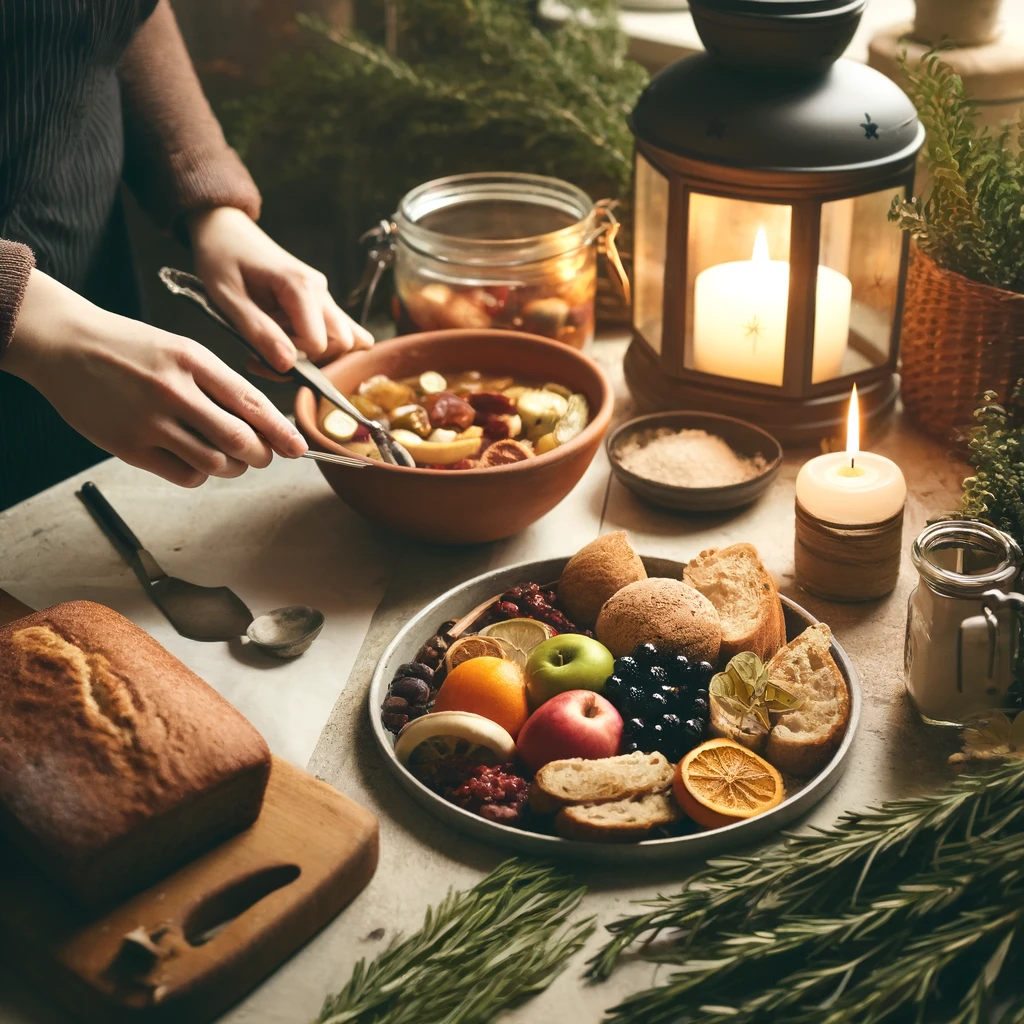
  1. Once the meal is ready, arrange the dishes beautifully on a large serving plate or in bowls, ready to be offered. If you have prepared multiple dishes, place each in its own container to honor the diversity of the offerings.
  2. Move to the altar or hearth, lighting the candles to signify the sacredness of the moment. The warm glow reflects the nurturing energies of the Disir and the feminine.
  3. Arrange the food offerings on the altar, and if you have a drink offering (such as mead, cider, or wine), pour it into a special cup. Say words of gratitude as you place each item, for example:
  4. “To the Disir, mothers of the past, protectors of the present,

    I offer these gifts in love and thanks.

    Bless this hearth, bless this home,

    And may your presence guide and guard us."

Step 4: Feasting in Celebration

  1. Gather your family or loved ones to share in the meal prepared for Mother’s Night. As you feast, take time to share stories and memories of female ancestors or spirits you are honoring. If you are alone, reflect quietly on their guidance and influence in your life.
  2. Invite everyone to speak their gratitude, either aloud or in silence. Each person may offer a toast to the Disir, honoring their presence and blessings. If the atmosphere allows, laughter, storytelling, and joy should fill the room, for the Disir delight in merriment and love shared among family and friends.

Step 5: Sharing with the Disir

  1. When the feast is complete, set aside a portion of each dish on the altar or offering plate as a formal offering to the Disir. This is a symbolic gesture, sharing the abundance of the meal with the honored spirits.
  2. You may choose to leave the offerings overnight, placing them outdoors the next morning to return them to nature as a final gesture of respect and connection.

During Mother’s Night, the focus is on gratitude, love, and honoring the feminine spirit. Let the ritual flow naturally, adjusting as needed to fit your own traditions or family customs. Feel free to involve children in preparing the meal, setting the altar, or lighting candles, and share with them the importance of remembering and honoring the spirits of the past. If any family recipes have been passed down through the generations, cooking these dishes can add an additional layer of meaning and connection.

Yule
Rituals

Conclusion

Yule’s Mother’s Night is a celebration of feminine energy, honoring the protectors, nurturers, and guides of our lives. As you cook, feast, and offer your gratitude to the Disir, you weave the strands of your own ancestry into the fabric of this sacred night. By gathering around the hearth, sharing stories, and preparing offerings, you create a space where the past and present meet—a space where blessings, protection, and love flow freely. May the warmth of the hearth and the spirit of the Disir fill your heart and home with light as you welcome Yule’s blessings and the embrace of the nurturing forces that guide you throughout the year.

Posted on Leave a comment

Ritual: Creating Culinary Offerings

Creating Culinary Offerings

Introduction

Honoring Ancestral Spirits and Feminine Energies through Sacred Cooking

Yule’s Mother’s Night, or Modraniht, marks the beginning of Yule festivities and is a sacred time for honoring the Disir—protective female spirits, ancestors, and guides—and the nurturing feminine energies that influence the hearth and home. The warmth of the hearth and the aroma of food carry a deeper spiritual significance on this night, as the kitchen becomes a sacred space for alchemy and remembrance. Through the preparation of offerings and the intentional adornment of the altar, practitioners honor their ancestors, the Disir, and the generative forces that bring life and protection. This ritual focuses on creating culinary offerings that invite the spirits to the hearth, and in doing so, blend the energies of nourishment, connection, and reverence.

Ritual Basics

Before beginning any ritual, it is important to prepare yourself mentally and physically. You may want to take a cleansing bath, or shower, and meditate or perform some grounding exercises to center yourself. Gather any materials you will need, such as candles, incense, and offerings for the forest spirits.

You can read a more detailed Ritual Preparation guide here.

The Spirit of Yule’s Mothers’ Night

Mother’s Night offers a space for reflection, honoring, and reverence of feminine energies that hold together families, communities, and the cycles of life itself. It is an eve devoted to the Disir, female ancestors, and spirits that provide guidance and blessings. This ritual invites participants to engage in a conscious celebration of their feminine lineage and the nurturing power of food. The feast prepared is more than sustenance; it becomes an offering to those who dwell beyond the veil, expressing gratitude for the paths they have paved and the protection they provide. As you prepare, cook, and present these offerings, you weave intention into every dish, creating a sacred communion between the seen and unseen.

Offerings for the Altar: A Sacred Feast for the Disir

A Yule ritual of cooking and preparing food offerings for the Disir on Mother’s Night.

  • Cookware and Utensils (required)
  • Candle or Lantern (required)
  • Altar cloth (optional)
  • Offering bowl or plate (required)
  • Ingredients for Meal Offerings (required – Select dishes that are meaningful to you or your ancestors, or seasonal Yule foods (breads, meats, fruits, nuts, desserts))
  • 1 Bundle Fresh Herbs (optional – Such as rosemary, thyme, or sage for purification and protection)
  • 1 Cup Drink Offering (optional – Wine, mead, cider, or other favorite beverages to offer)
  • 1 Small Bouquet Winter Greens or Flowers (optional – Holly, pine, ivy, or flowers to honor feminine energies)

Step 1: Creating the Sacred Kitchen and Hearth Space

  1. Prepare your space by clearing and cleaning your kitchen area, setting an intentional mood for sacred cooking.
  2. Light a candle or lantern, symbolizing the guiding light of the Disir. Place it on your stove, counter, or altar area to bring warmth and invite the spirits to join you in the act of cooking.
  3. If you have a dedicated altar space for the Disir, adorn it with the altar cloth, symbols of the season (evergreen, winter fruits), and any images or tokens that represent your female ancestors or protective spirits.

Step 2: Choosing and Preparing the Meal Offerings

  1. Select dishes that have special significance, either to you or to the Disir. Traditional Yule foods include hearty breads, stews, root vegetables, nuts, dried fruits, sweet desserts, and spiced drinks.
  2. As you prepare each dish, work with intention, focusing on the love and nourishment the food will bring, both to those who eat it and to the spirits who receive it. You may speak words of gratitude or silently send loving thoughts to your ancestors and guides as you cook.
  3. Allow your senses to awaken to the textures, aromas, and energy of the ingredients, recognizing that each item holds magic and connection to the earth, the cycle of seasons, and the feminine power that nurtures and sustains.

Step 3: Offering Portions to the Disir

  1. As you finish each dish, take a small portion to set aside for the altar offering. This may include a bit of bread, a spoonful of stew, a piece of dessert, or a cup of mulled cider.
  2. Arrange these offerings on a dedicated plate or bowl, placing it on the altar or hearth. If you have a drink offering (such as wine or mead), pour it into a special cup to present to the spirits.
  3. Speak words of invitation and reverence, welcoming the Disir to partake in the meal. An example invocation may be:
  4. “I offer this feast to the Disir, the honored spirits,

    Protectors, guides, and mothers of old.

    Partake in this meal prepared with love,

    And let your blessings be upon this hearth and home."

Step 4: Honoring the Feast and Family Connection

  1. With your family, friends, or alone, sit down to the meal you have prepared. Let the atmosphere be one of joy, warmth, and storytelling. Share memories of your female ancestors or speak of the nurturing energies you wish to honor.
  2. Take a moment of silence before eating to give thanks for the food, the feminine guidance in your life, and the spirits that protect and guide your journey.
  3. As you enjoy the meal, hold the presence of the Disir and feminine energies in your thoughts. Engage in conversations that evoke love, gratitude, and connection.

Step 5: Closing the Ritual

  1. Once the meal is complete, leave the food offerings on the altar overnight, allowing the Disir to partake in the spirit of the feast.
  2. The next day, you may return the food to nature by placing it outdoors, either burying it in the earth or leaving it for animals. This act acknowledges the cycle of giving and receiving, reflecting the season’s theme of generosity.
  3. Offer a final blessing or words of gratitude to the Disir as you extinguish the candle, knowing their presence has been honored and the connection between you and them strengthened.

While preparing the meal and setting up the altar, be aware that Mother’s Night is a deeply personal and intuitive practice. Feel free to add elements that resonate with you or your family’s traditions. Children can be invited to help with simple tasks like stirring, decorating the altar, or lighting candles (under supervision), which creates a multigenerational bond and respect for the ancestral practice.

Yule
Rituals

Conclusion

Mother’s Night is a celebration of nurturing, connection, and remembrance, dedicated to honoring the Disir and the protective feminine spirits in our lives. Through the sacred act of cooking and offering food, you create a space where the physical and spiritual worlds can meet, and where the warmth of the hearth becomes a bridge to the unseen. May your offerings carry love and gratitude to your ancestors and spirits, and may their blessings of protection, fertility, and joy fill your hearth and home as you honor them on this sacred night of Yule.

Posted on Leave a comment

Ritual: Setting Up a Disir Altar

Setting Up a Disir Altar

Introduction

Honoring the Protective Spirits of Fate and Fertility

As Yule’s Eve unfolds, practitioners prepare to honor the Disir, the protective female spirits who guard over fate, fertility, and the well-being of families. These spirits, often seen as ancestral or divine guardians, are revered during the darkest nights of the year, when the veil between the worlds is thinnest. Setting up a Disir altar is a sacred act of love, protection, and ancestral reverence. This ritual invites the Disir to be present and offers gratitude for their ongoing guidance.

Ritual Basics

Before beginning any ritual, it is important to prepare yourself mentally and physically. You may want to take a cleansing bath, or shower, and meditate or perform some grounding exercises to center yourself. Gather any materials you will need, such as candles, incense, and offerings for the forest spirits.

You can read a more detailed Ritual Preparation guide here.

The Sacred Space of the Disir Altar

Honoring the Disir is a practice rooted in Norse tradition and often performed during Yule. The Disir are protective female spirits, sometimes seen as female ancestors or goddesses, who watch over families and their fate. During Yule, the darkest part of the year, we honor them by creating an altar and sharing a symbolic feast to invite their protection, guidance, and blessings into our lives.

Setting up a Disir altar during Yule invites these spirits to become present, nourishing the connection between the earthly and the spiritual realms. The act of creating this space is steeped in intention, with each element carefully selected to represent the themes of fertility, fate, and protection. The altar becomes a sacred focal point during this time, allowing practitioners to connect deeply with the energies of their ancestors and the protective forces surrounding them. This ritual can be performed on Yule’s Eve, during the twelve nights of Yule, or at any time of year when one seeks the wisdom and guidance of the Disir.

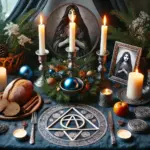
Disir Altar: Honoring the Protective Spirits

A Yule ritual to create a sacred altar honoring the Disir, inviting their protection and guidance for the coming year.

  • Candles (required)
  • Altar cloth (optional)
  • Offering bowl or plate (required)
  • 1 Handful Fresh herbs or flowers (optional – Associated with Yule or protection, such as evergreen, rosemary, or holly)
  • 1 Offering Food or drink (required – Choose items that resonate with you or your ancestors (bread, fruits, wine, etc.))
  • 1 Handful Tokens or similar items (optional – Representing protection, fate, or the Disir (family heirlooms, symbolic images, etc.))

Step 1: Preparing the Altar Space

  1. Select a quiet and sacred space where your Disir altar will reside. This could be a corner of your home or an outdoor area if the weather permits.
  2. Lay a cloth over the surface of your altar, choosing colors such as black, white, or deep blue to represent the veil between the worlds.
  3. Begin by placing your three candles on the altar. The flickering light represents the eternal guidance of the Disir. Arrange them in a triangle or circle to symbolize the balance between fate, fertility, and protection.

Step 2: Decorating the Altar

  1. Gather elements of the season to adorn the altar. Use evergreen branches, holly, or mistletoe to invoke the energy of Yule and the protection of the natural world.
  2. Place the offering bowl or plate at the center of the altar. This is where you will lay your food offerings, a symbol of abundance and gratitude for the Disir’s guidance.
  3. Add photographs, heirlooms, or symbolic images of your female ancestors or goddesses associated with protection and fertility. These images serve as a link between the earthly realm and the spiritual, inviting the Disir’s presence.

Step 3: Offering and Honoring the Disir

  1. Prepare a small feast or offering to lay at the altar. This can include bread, fruits, nuts, or a special dish that you associate with your ancestors or the spirits. You may also offer wine, mead, or another symbolic beverage.
  2. With your offering in hand, light the candles one by one, calling upon the Disir to join you. Speak words of invitation such as:
  3. “I call upon the Disir, the guardians of fate and fertility,

    Those who watch over my family and home,

    Come, I invite you to join this sacred space.

    With this offering, I honor you and seek your protection."

  4. Place your offering in the center of the altar, allowing the light of the candles to illuminate it. Sit quietly in the presence of the Disir, feeling their protective energy surround you.

Step 4: Reflecting and Listening

  1. Take a moment to sit quietly, reflecting on the guidance you seek or the blessings you wish to offer. This is a time to meditate on the cycles of fate, the protection of your loved ones, and the importance of ancestral wisdom.
  2. As you sit in stillness, listen for any messages or insights from the Disir. These could come as intuitive thoughts, sensations, or symbols in your mind’s eye. Allow yourself to receive these messages without judgment.

Step 5: Closing the Ritual

  1. When you feel ready, thank the Disir for their presence and blessings. Extinguish each candle, offering gratitude as you blow out the flame:
  2. “I thank you, Disir, for your guidance and protection.

    May your light continue to watch over me and mine.”

  3. Leave the offerings on the altar overnight or for as long as you feel appropriate. If you are outside, be mindful of animals that may eat or interact with the offerings, as this symbolizes the blessings being accepted by nature.

This ritual is a beautiful way to connect with the feminine energies of protection and fertility during Yule. It’s important to approach the creation of the Disir altar with reverence and intention, as this sacred space serves as a direct link to the spiritual forces that guide and protect. Feel free to personalize the altar with symbols and offerings that resonate with your own ancestral heritage or spiritual path.

Yule
Rituals

Conclusion

Creating a Disir altar during Yule is a powerful and intimate ritual that honors the protective female spirits who guide our fate and ensure the fertility of both our homes and the land. As you light candles, offer food, and sit in the quiet presence of the Disir, you invite their ancient wisdom into your life. This practice not only fosters a deep connection with your ancestors but also with the sacred cycles of protection and nourishment. By honoring the Disir, you cultivate a sacred bond that spans generations, grounding you in the ancient energies of Yule while looking forward to the blessings yet to come. Through this ritual, may you find the protection, guidance, and love of the Disir as you journey through the sacred days of winter.

Posted on Leave a comment

The 1st Day of Yule – Mother’s Night

Introduction

Mother’s Night, the Disir, Yule’s Eve, Frigg

As the veil between worlds grows thin and the frost-kissed winds announce the impending arrival of Yule, December 20th takes on a mystical hue. It is a night of significance, heralding the commencement of Yule’s enchantment—Mother’s Night, the eve of Yule itself, where the feminine energies that cradle and empower life are celebrated in a dance with the spirits of fate and fertility.

Yule’s Eve and the Feminine Powers

In the hushed embrace of Yule’s Eve, the world prepares for a dance with enchantment. Known as Mother’s Night, this celestial prelude to Yule is a tapestry woven with threads of reverence for the feminine energies that sculpt and nurture the very fabric of our lives. As the frost-kissed winds whisper ancient tales, preparations unfold for the grandeur of Yule, a crescendo that reaches its zenith with the Winter Solstice on the 21st.

Homage to the Feminine Powers

 Yule’s Eve becomes a sacred canvas upon which practitioners paint their gratitude for the feminine forces that shape existence. It’s a celebration of the nurturing energies, both seen and unseen, that guide the cycles of life, a recognition of the mystical dance between creation and sustenance. The air is infused with a sense of anticipation as altars are adorned, spaces are consecrated, and the veil between the mundane and the magical begins to shimmer.

Commencement of Yule’s Grandeur

This eve is not merely a precursor; it’s the initiation into the grandeur of Yule. As the moon casts its silvery glow, a symphony of rituals and preparations commences. Altars dedicated to the sacred feminine are carefully arranged, each item a testament to the qualities of love, protection, and wisdom embodied by the goddesses and female spirits. Candles flicker, resonating with the flame of divine femininity, and incense weaves a fragrant tapestry in honor of the unseen forces that weave through the cosmos.

The Long Night and Magic of Yule

To fully partake in the joyous days that unfold, a good night’s rest is recommended. The coming day, marked by the Winter Solstice, is a canvas upon which the magic of Yule is painted. The Winter Solstice is a celestial spectacle, a moment when the sun’s journey seems to pause before heralding the return of light. In the longest night, magic stirs, and the practitioners, well-rested and attuned, become custodians of ancient rites.

The long night is not merely a passage of time but a tapestry of moments where the mundane and the magical coalesce. It’s a time when the sacred and the secular converge, and the boundaries between worlds thin. The practitioners, with hearts brimming with reverence, embark on a journey through the night, guided by the luminous threads of Yule’s enchantment.

A Symphony of Feminine Energy

As the world sleeps, Yule’s Eve becomes a symphony of feminine energy, echoing through the realms. It’s an ode to the nurturing spirits and goddesses who, in their unseen presence, cradle the Earth in their eternal embrace. The eve, steeped in tradition and bathed in the glow of candlelight, becomes a sanctuary for communing with the divine feminine, a moment to acknowledge the interconnectedness of all life and the sacred dance of creation.

In the silence of Yule’s Eve, beneath the blanket of stars, practitioners stand as witnesses to the cosmic ballet. The feminine energies, revered and honored, become the guiding lights through the longest night, promising the dawn of a new cycle, a new beginning, and the continuation of the ageless dance of life.

The Disir – Guardians of Fate and Fertility

On the hallowed eve of Yule, the sacred space within homes and upon altars transforms into a haven for the Disir. These ethereal beings, revered as the guardians of fate and fertility, emerge from the veil between worlds to grace the realms of the living. Their presence is a tapestry of protection, woven intricately through the fabric of ancestral lineage.

An Altar Adorned with Essence

As the practitioner prepares for the sacred night, an altar dedicated to the Disir takes shape—a portal where the mundane converges with the mystical. The altar becomes a testament to the essence of these protective female spirits, adorned with symbols and items resonating with their ethereal qualities. In this sacred nexus, herbs such as basil, with their aromatic whispers of love, fennel, embodying the essence of gratitude, lavender, a fragrant ode to devotion, and sage, the wise guardian, find their place.

  • Basil’s Embrace of Love – The sweet scent of basil permeates the air, a fragrant embrace of love that transcends the boundaries of time. It is a reminder of the enduring affection woven into the threads of familial bonds. Basil, with its heart-shaped leaves, symbolizes the love that stretches across generations, connecting the living with the ancestral embrace.
  • Fennel’s Grateful Dance – In the flickering candlelight, fennel leaves sway gracefully, embodying the spirit of gratitude. The Disir, guardians of fate, are honored with the essence of thankfulness. Fennel, with its feathery fronds, becomes a dance of appreciation for the blessings bestowed by the hands of those who walked before. It is a symbol of the cyclical exchange of gratefulness that transcends the boundaries of life and death.
  • Lavender’s Devotion Unveiled – The purple hues of lavender paint the altar with an aura of devotion. The Disir, custodians of lineage, are acknowledged with the essence of unwavering dedication. Lavender, with its calming fragrance, becomes a bridge between the seen and the unseen, a reminder that devotion endures beyond the veils of mortality.
  • Sage’s Wisdom Guarding the Tapestry – The wisps of sage rise, like fragrant tendrils, carrying with them the wisdom of the Disir. Sage, with its purifying properties, stands as a guardian at the threshold between realms. The Disir, in their ethereal wisdom, guides the living with their insights, shaping the destiny woven in the intricate threads of life’s tapestry.

A Nexus of Protection and Love

As the altar takes form, it becomes a nexus where protection, love, and guidance converge. The Disir, honored on this sacred eve, becomes the interweaving threads connecting the present with the past. The altar is not just a physical space; it is a bridge where the living commune with the spirits of the ancestral feminine, acknowledging their eternal presence in the dance of fate and fertility. In this sacred communion, the Disir’s vigil unfolds, embracing the practitioner in the protective and loving embrace of the divine feminine across the tapestry of time.

Honoring Frigg, Goddess of Motherhood

As the night deepens into the embrace of Yule’s Eve, the focus shifts to the sacred figure of Frigg, a beacon of motherhood and divine femininity in the tapestry of Germanic mythology. In the watery halls of Fensalir, where echoes of maternal wisdom reverberate, Frigg takes center stage on this enchanted eve. The practitioner, guided by the flickering candlelight, embarks on a journey of homage to the goddess who embodies the essence of marriage, prophecy, clairvoyance, and, above all, motherhood.

The imagery of Fensalir, the ethereal abode of Frigg, paints a mystical canvas in the practitioner’s mind. The halls, adorned with the soft luminescence of watery reflections, symbolize the fluidity of maternal guidance. Fensalir is not merely a dwelling place; it is a sacred space where the waters of intuition and nurturing love converge.

As the practitioner stands before the altar, images of Frigg unfold in the mind’s eye—her presence, a tapestry of maternal wisdom. Frigg’s gaze, like the reflective surface of tranquil waters, unveils the depths of her insights. She beckons the practitioner to delve into the intuitive realms, to seek answers in the quietude of the heart, and to trust the sacred dance of prophecy and clairvoyance that unfolds within.

Frigg, in her association with marriage, becomes a symbol of the union between the earthly and the divine. The practitioner, in honoring Frigg, acknowledges the sacred bonds woven not only in marital unions but also in the profound connections between generations. The marriage of earth and sky, of the mundane and the divine, finds expression in the rituals of this sacred eve.

The essence of Frigg’s presence is most palpable in the acknowledgment of motherhood. The practitioner, whether a parent or one who looks to the nurturing energies of the divine feminine, pays tribute to the sacred role of mothers. Frigg’s embrace extends beyond biological ties, encompassing all who seek the comforting arms of maternal love and guidance.

On the altar, symbols of Frigg—a representation of her watery realm, perhaps a small bowl filled with water or reflective surfaces—take their place. Offerings of herbs resonant with the energy of motherhood, like chamomile for soothing comfort, rosemary for remembrance, and jasmine for maternal love, become tokens of reverence.

As the night unfolds, the practitioner, guided by Frigg’s grace, engages in a mystical ritual. The names of Frigg’s twelve handmaidens are inscribed on pieces of paper, and each person present draws one. The mystery of the chosen handmaiden becomes a guiding force for the coming year—a practice of devotion to specific qualities represented by each.

In the quiet moments of communion, the practitioner, with heartfelt sincerity, seeks Frigg’s blessing. The goddess of motherhood is invoked not as a distant deity but as a guiding force ever-present in the sacred journey of parenthood and nurturing love. The practitioner, in honoring Frigg on this Yule’s Eve, becomes a participant in the eternal dance of maternal energies, acknowledging their role in the cosmic symphony of life.

Setting Up a Disir Altar

As Yule’s Eve unfolds, a practitioner, attuned to the subtle energies of the sacred, embarks on the sacred task of creating an altar dedicated to the Disir. These protective female spirits, guardians of fate and fertility, are honored on this enchanting eve, and the practitioner, with intention and reverence, crafts a space that resonates with the energies of love, protection, and ancestral guidance.

Elements of the Disir Altar:

  • Candles of Illumination: A soft glow emanates from candles carefully arranged on the altar. The flickering flames symbolize the eternal light of the Disir, a guiding force through the intricate threads of fate. The choice of colors, perhaps gentle hues of white, blue, or silver, reflects the purity and transcendence associated with these ethereal guardians.
  • Offering Bowl or Plate: At the heart of the altar lies an offering bowl or plate, a vessel of abundance and gratitude. This receptacle, chosen with care, becomes a symbol of the practitioner’s willingness to receive the blessings and guidance of the Disir. It is a space where tokens of appreciation and devotion find a tangible form.
  • Subtle Imagery of Celebration: Imagery celebrating the spirits being honored adorns the altar. Photographs of female ancestors, images of nurturing goddesses, or symbolic representations of fate and fertility find their place. These visual cues serve as portals connecting the practitioner with the spiritual realm of the Disir.
  • Feast of Favorite Delights: A feast of favorite treats and delights, carefully chosen to resonate with the tastes and preferences of the honored spirits, graces the altar. The practitioner, with culinary artistry, prepares dishes that evoke memories and stir the energies of love and joy. It is a banquet inviting the Disir to partake in the festivities.

Alter setup notes

For those seeking to establish a distinct space for the Disir, a separate altar becomes a focal point of reverence. Here, the practitioner can channel creativity into arranging a sacred tableau, a visual symphony of elements resonant with feminine energies. The space is consecrated with intention, becoming a nexus where the veil between the earthly and the spiritual is thin.

The act of laying out a feast is not merely a culinary endeavor; it is a gesture of hospitality and invitation. The practitioner, in a moment of quiet communion, invites the Disir to partake in the celebration. It is a symbolic sharing of nourishment, a recognition that the bonds between the seen and the unseen are woven in the fabric of sustenance and joy.

In the creation of the Disir altar, the practitioner engages in a sacred act of weaving a tapestry of love, protection, and ancestral reverence. Each element, from the gentle glow of candles to the offerings laid out with care, contributes to the harmonious dance between the earthly and the divine. The Disir, honored in this crafted space, became companions in the practitioner’s journey through the sacred days of Yule.

Activities on Mother’s Night

In the enchanting embrace of Mother’s Night, the hearth and kitchen, historical domains of feminine influence, awaken with the flickering glow of celebration. This sacred eve beckons practitioners to engage in a tapestry of activities that honor the Disir and the feminine energies that have shaped and guided lives.

  • Culinary Alchemy in the Hearth – The kitchen, a haven where the alchemy of flavors unfolds, becomes a sacred space of creation on Mother’s Night. Practitioners, attuned to the tastes and preferences of the honored females, embark on a culinary journey. Favorite treats, desserts, side dishes, and main meals are crafted with meticulous care, each dish resonating with the essence of love and gratitude.
  • Offerings for the Altar – As pots simmer and ovens whisper tales of warmth, a portion of the culinary delights is reserved, a symbolic gesture of invitation to the honored spirits. The altar, adorned with the feast, becomes a nexus where the seen and unseen commune. The aromas that waft through the kitchen carry not only the promise of gastronomic delights but also the subtle energies of ancestral connection.
  • Activities Beyond the Kitchen – For those honoring living individuals, Mother’s Night extends its arms beyond the kitchen. Activities that mirror the spirits of those being celebrated are encouraged, creating a holistic celebration of connection and appreciation. The celebration is not confined to the culinary arts; it expands to embrace shared activities that weave moments of joy and togetherness.
  • Heartfelt Letters and Expressions – In the glow of candlelight and the warmth of shared spaces, practitioners may choose to express their gratitude through heartfelt letters. The written word, a vessel of emotions, becomes a bridge that spans the realms of the mundane and the sacred. Each word penned is a brushstroke, painting a portrait of appreciation and love.
  • Shared Activities and Quality Time – Mother’s Night becomes a canvas for shared activities that resonate with the spirits being celebrated. Whether it’s a shared craft, a favorite pastime, or a simple moment of shared laughter, these activities transcend the ordinary and become threads woven into the fabric of familial and spiritual bonds.
  • Expressing Gratitude – Simple yet profound, expressions of gratitude take center stage on Mother’s Night. A heartfelt message, a whispered thank you, or a shared moment of reflection becomes a ritual. In these expressions, the practitioner acknowledges the profound impact of feminine energies in their life’s journey.

As Mother’s Night unfolds, the kitchen becomes a cauldron of alchemical magic, and shared activities become rituals of connection. The practitioner, guided by the spirits of those being honored, weaves a tapestry of love, gratitude, and ancestral reverence. Mother’s Night is not merely an eve of culinary delights; it is a celebration of the feminine energies that shape and nurture the intricate threads of life’s journey.

Honoring Frigg’s Handmaidens

As Mother’s Night draws to a close, a profound shift occurs—a transition from feasting on earthly delights to communing with the divine. The sacred space, already laden with the energy of honored females, expands to embrace Frigg and her 12 mysterious handmaidens. This is a moment of divination, a dance with the unknown, as the names of the handmaidens are inscribed on separate pieces of paper, ready to reveal the guiding principles for the year ahead.

Divination Ritual

The culmination of Mother’s Night sets the stage for an intriguing divination ritual. Each person present partakes in the mystery by randomly drawing a piece of paper bearing the name of one of Frigg’s handmaidens. The air is charged with anticipation, and as each participant unveils their chosen handmaiden, a unique connection with a divine guide is established.

These handmaidens, each with their distinct essence, bring forth guiding principles that practitioners are encouraged to embrace in the coming year. The mysteries associated with each handmaiden serve as beacons, illuminating the path of spiritual growth, self-discovery, and manifestation.

Here are examples of the focused areas for each handmaiden:

  • Eir – Healing and Self-Healing: Focus on herbalism and caring for the health of others.
  • Sága – Embracing History and Ancestry: Dive into the realms of history, storytelling, writing, and the study of ancestry.
  • Fulla – Wealth and Abundance: Direct attention to wealth, abundance, and the careful management of resources.
  • Gná – Good Communication and Spiritual Messengership: Practice good communication, listen for messages, and become a messenger for spiritual forces.
  • Lofn – Tolerance, Compassion, and Aid: Cultivate tolerance, compassion, and aid to misunderstood groups or individuals.
  • Syn – Protection and Caution: Engage in protection, both spiritual and physical, and practice caution in endeavors.
  • Vár – Honoring Oaths and Promises: Honor oaths and promises, ensuring they are made and kept with sincerity.
  • Snotra – Gracious Hosting and Diplomacy: Cultivate gracious hosting, hospitality, good etiquette, and diplomacy.
  • Gefjon – Giving and Receiving: Focus on giving and receiving, embodying generosity, gratitude, and acceptance.
  • Sjöfn – Exploring Love and Affection: Delve into the realms of love, affection, appreciation for partners, and opening oneself to love.
  • Hlín – Providing Refuge and Support: Provide refuge, stand up for others, be a safe shoulder to lean on, and know when to seek help.
  • Vör – Foresight and Intuition: Develop foresight, pay attention to omens, practice divination, and trust instincts.

As the mysteries of Frigg’s handmaidens are unveiled, an enchanted year unfolds for each practitioner. These guiding principles, intertwined with divine energies, become the compass that steers them through the cosmic dance of life, fostering growth, wisdom, and a deepened connection with the divine feminine.

A Night of Mystic Communion

In the hushed embrace of Mother’s Night, the veil between the mortal realm and the ethereal worlds thins, inviting us to partake in a night of mystic communion. This sacred eve, serving as the gateway to the grandeur of Yule, transcends the ordinary and unfolds as a luminous tapestry woven with threads of love, gratitude, and the promise of divine guidance from the sacred feminine.

  • Feasts of Love and Connection – The festivities commence with feasts that extend beyond the material nourishment of the body. The kitchen, historically the heart of the home and the realm of the feminine, becomes a cauldron where love is stirred into every dish. As pots simmer and ovens warm, the air is saturated with the aroma of cherished recipes, invoking memories of shared moments and the wisdom passed down through generations.
  • Altars Adorned with Love – Altars, those sacred portals to the divine, become adorned with symbols of love and reverence. The Disir, those guardians of fate and fertility, find their place in this sacred space. Candles flicker, casting a soft glow on images and items that represent the feminine spirits of lineage and love. The altar becomes a nexus, a place where the mortal and the divine meet in a dance of mutual recognition and honor.
  • Divinatory Rituals and Unveiling Mysteries – As the night deepens, divinatory rituals unfold, echoing the age-old practices of seeking guidance from the unseen realms. The mysteries of Frigg and her handmaidens take center stage. Names inscribed on paper become vessels of insight, unlocking the guiding principles for the year ahead. Each draw is a moment of communion with the divine, an exchange of energies that shapes the practitioner’s path.

The tapestry of Mother’s Night is woven with threads of gratitude and love, binding the present to the past and the future. As practitioners honor the feminine energies—those who walk among us and those who have passed into the realms beyond—they embark on a journey of remembrance, celebration, and the acknowledgment of the profound role played by the feminine in the tapestry of life.

The Promise of Divine Guidance

In this enchanted night, the promise of divine guidance unfolds. The feminine energies, embodiments of protection, love, and ancestral wisdom, extend their blessings. As the practitioner’s rest, the whispers of the divine feminine echo in their dreams, offering glimpses of the path ahead and illuminating the cosmic dance in which they are entwined.

As Mother’s Night unfolds, a tapestry of mystic communion is laid out—each thread a connection to the divine, each moment a step on a sacred journey. The promise of guidance, the warmth of shared feasts, and the glow of altars filled with love become the guiding lights that will accompany the practitioners through the 12 days of Yule and beyond, marking the beginning of a new cycle in the dance of life.

Conclusion

A Tapestry of Love and Legacy Unveiled

In the quiet embrace of Mother’s Night, we witness the unveiling of a tapestry woven with love and legacy. As the feasts settle and altars glow with the essence of the divine feminine, we find ourselves standing at the threshold of a sacred journey through the 12 days of Yule. The rituals of this night, from honoring the Disir to divining the mysteries of Frigg’s handmaidens, echo through the corridors of time, connecting us to the ancient wisdom of our lineage. In the warmth of shared meals and the flicker of candlelight, we commune with feminine energies, both present and ancestral. As we drift into dreams, the promise of guidance lingers, a whisper from the divine feminine, guiding us through the cosmic dance of life. Mother’s Night, with its mystical communion, becomes not just a celebration but a testament to the enduring power of love, the legacy of the feminine, and the eternal dance in which we are all participants.

Posted on Leave a comment

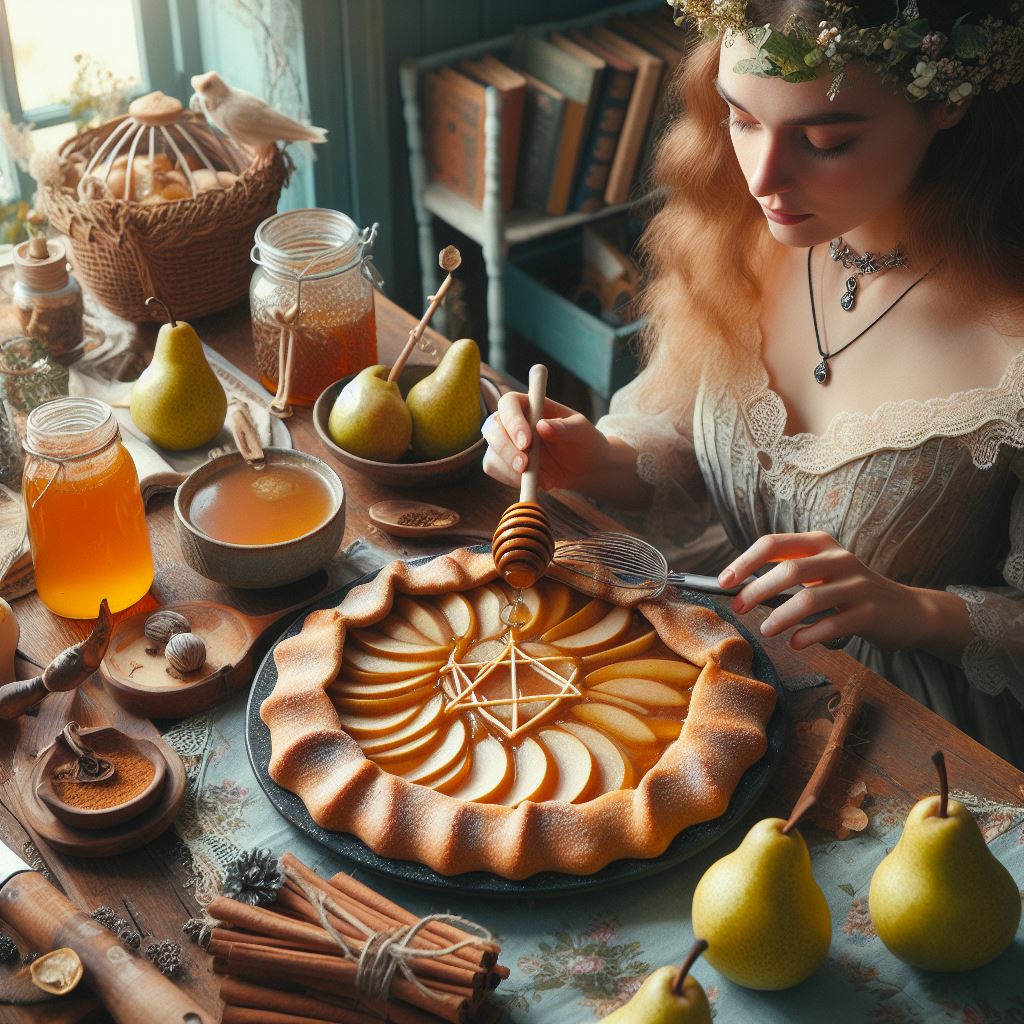
Recipe: Cinnamon Honey Pear Galette

Making Cinnamon Honey Pear Galette

Introduction

Father’s Night Sweet Harmony

Conclude your Father’s Night Feast on December 22nd with a divine Cinnamon Honey Pear Galette, perfectly complementing the Roasted Apple Glazed Pork, Herbed Root Vegetable Medley, and Cranberry Pecan Wild Rice. This dessert not only adds a delightful touch to your celebration but also weaves in the magical properties of Yuletide. In this article, we’ll explore the ingredients and steps to create this delectable galette, understand the magical properties associated with Yuletide, and craft a spell to infuse your feast with sweet intentions.

Yuletide Sweetness Spell

Before indulging in the Cinnamon Honey Pear Galette, gather your loved ones and light a gold or green candle to symbolize the sweetness and unity of Yuletide. As you savor each bite, visualize the magical properties of the ingredients infusing the galette. Recite a spell such as:

“In this galette, sweet and warm,

Yuletide magic, a comforting charm.

Abundance, unity, and joy we find,

In every slice, the season binds.”

May this Cinnamon Honey Pear Galette be the perfect sweet harmony to conclude your Father’s Night Feast, bringing sweetness, transformation, and unity to your Yuletide celebration. Blessed Yuletide!

Magical Properties

Together, these magical properties intertwine to create a Cinnamon Honey Pear Galette that not only delights the taste buds but also resonates with the enchanting energies of Yuletide. The combination of sweetness, unity, warmth, grounding, and comfort transforms this dessert into a magical conclusion to your Father’s Night Feast, bringing blessings of abundance, joy, and transformative energies to your Yuletide celebration. Blessed Yuletide!

Pears: Symbolize Abundance and Sweetness

Pears, with their luscious and sweet nature, symbolize abundance and sweetness. As a fruit associated with fertility and prosperity, pears become a magical conduit for drawing in abundance during Yuletide. Each slice embodies the promise of plenty and the joyous sweetness that this season brings.

Honey: Represents Sweetness and Unity

Honey, the golden nectar of bees, represents sweetness and unity. Adding honey to the Cinnamon Honey Pear Galette infuses the dessert with a rich and golden sweetness, symbolizing the unity and togetherness celebrated during Yuletide. Honey becomes a magical binding agent, weaving a thread of sweetness and harmony into every bite.

Cinnamon: Adds Warmth and Transformation

Cinnamon, with its warm and comforting essence, adds a layer of warmth and transformation to the galette. As a spice associated with the sun, cinnamon brings the comforting energy of warmth to the dish. Its presence signifies transformation, invoking the cozy and transformative energies of Yuletide. With each sprinkle, cinnamon becomes a catalyst for change and renewal.

Brown Sugar: Brings Grounding and Prosperity

Brown sugar, with its rich and grounding sweetness, brings a sense of grounding and prosperity to the galette. As it caramelizes during baking, it infuses the dessert with an earthy richness, aligning with the stable and prosperous aspects of Yuletide. Brown sugar becomes a symbol of the earth’s abundance, connecting the galette to the grounding energies of the season.

Butter: Enhances Flavor and Comfort

Butter, a creamy and comforting element, enhances the flavor and texture of the galette. As a symbol of nurturing and comfort, butter becomes a magical ingredient that envelops the dessert in a comforting embrace. Its presence adds a layer of richness, signifying the comfort and care associated with Yuletide. In each bite, butter becomes a source of culinary comfort and joy.

Cinnamon Honey Pear Galette

Father’s Night Sweet Harmony – Conclude your Father’s Night Feast on December 22nd with a divine Cinnamon Honey Pear Galette, perfectly complementing the Roasted Apple Glazed Pork, Herbed Root Vegetable Medley, and Cranberry Pecan Wild Rice. This dessert not only adds a delightful touch to your celebration but also weaves in the magical properties of Yuletide.

  • 1 sheet of store-bought or homemade pie dough
  • 3 ripe pears (thinly sliced (for abundance and sweetness))
  • 2 tablespoons honey (for sweetness and unity)
  • 1 teaspoon ground cinnamon (for warmth and transformation)
  • 1/4 cup brown sugar (for grounding and prosperity)
  • 1 tablespoon unsalted butter (cut into small pieces)
  • A pinch of salt (for balance)
  • Egg wash (1 egg beaten with a splash of water for brushing)
  1. Preheat your oven to 375°F (190°C). Line a baking sheet with parchment paper.
  2. Roll out the pie dough on a floured surface to form a circle.
  3. Transfer the rolled-out dough to the prepared baking sheet.
  4. In a bowl, toss the thinly sliced pears with honey, ground cinnamon, brown sugar, and a pinch of salt.
  5. Arrange the pear slices in the center of the pie dough, leaving a border around the edges.
  6. Fold the edges of the dough over the pears, creating a rustic galette shape.
  7. Dot the pears with small pieces of unsalted butter.
  8. Brush the edges of the galette with the egg wash for a golden finish.
  9. Bake in the preheated oven for 25-30 minutes or until the crust is golden brown and the pears are tender.
  10. Allow the galette to cool slightly before serving.
Dessert
Winter, Yule
Recipe
Posted on Leave a comment

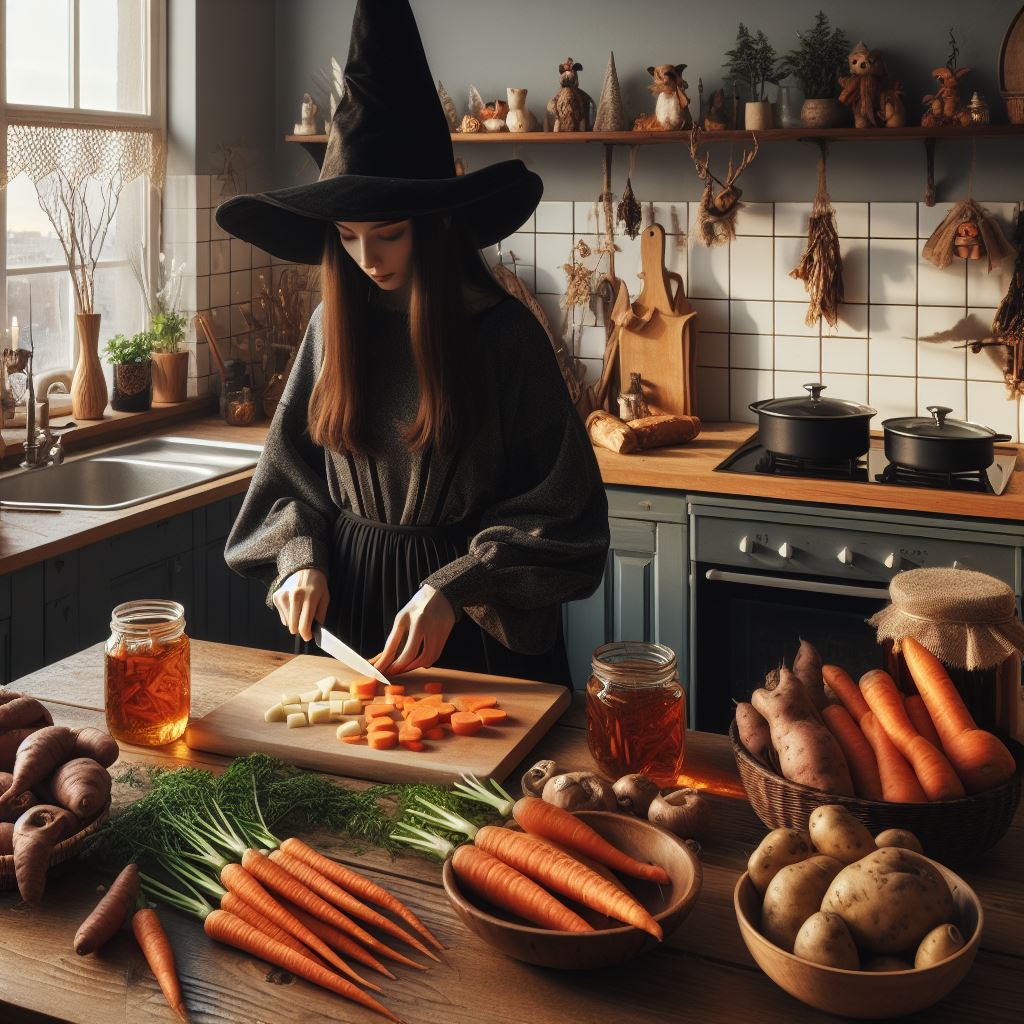
Recipe: Herbed Root Vegetable Medley

Making Herbed Root Vegetable Medley

Introduction

Father’s Night Feast

Celebrate the third day of Yuletide, Father’s Night on December 22nd, with a delectable Herbed Root Vegetable Medley that perfectly complements the Roasted Apple Glazed Pork. This side dish not only adds a burst of flavors and textures to your feast but also harnesses the magical properties of Yuletide. In this article, we’ll embark on a culinary journey, exploring the ingredients and steps to create this delightful dish, understanding the magical properties associated with Yuletide, and crafting a spell to infuse your feast with intention.

Yuletide Harmony Spell

Before serving the Herbed Root Vegetable Medley alongside the Roasted Apple Glazed Pork, light a gold or green candle to symbolize the abundance and vitality of Yuletide. As you savor each bite, visualize the magical properties of the ingredients infusing the feast. Recite a spell such as:

“In this feast of Yuletide cheer,

Roots and herbs, draw energies near.

Protection, strength, and wisdom’s grace,

In every bite, Yuletide embrace.”

May this Herbed Root Vegetable Medley enhance your Father’s Night Feast with its delicious flavors and magical properties, creating a harmonious and enriching celebration. Blessed Yuletide!

Magical Properties

Together, these magical properties infuse the Herbed Root Vegetable Medley with intention, protection, balance, and the abundant energies of Yuletide. Each ingredient becomes a sacred contributor, ensuring that the side dish not only complements the Roasted Apple Glazed Pork but also resonates with the magical essence of Father’s Night.

Mixed Root Vegetables: Represent Grounding and Connection to the Earth

The mixed root vegetables symbolize a grounding force, connecting the feast to the earth’s energy. Carrots, with their vibrant orange hue, embody the sun’s vitality. Parsnips, with their earthy flavor, bring a sense of stability, while sweet potatoes, rich and grounding, offer nourishment. Together, these root vegetables provide a foundation for the magical energies of Yuletide, anchoring the feast in the earthly elements of stability and growth.

Olive Oil: Offers Protection

Olive oil, a sacred liquid with strong protective properties, envelops the vegetables like a shield. As it coats each piece, it creates a barrier against negative energies, ensuring that the Herbed Root Vegetable Medley becomes a sanctuary of positivity. Olive oil’s protective essence aligns with the Yuletide spirit, fostering an environment of safety and well-being.

Fresh Rosemary: Provides Protection and Clarity

Fresh rosemary, an evergreen herb, not only provides protection but also invokes clarity of thought. Its aromatic fragrance serves as a protective cloak, while its needle-like leaves symbolize the evergreen’s resilience. Rosemary safeguards the intentions of the feast, ensuring that each bite is filled with clear and positive energy.

Fresh Thyme: Symbolizes Strength and Resilience

Thyme, with its robust and earthy flavor, symbolizes strength and resilience. As it intertwines with the root vegetables, it infuses the dish with the enduring spirit of Yuletide. Thyme encourages inner fortitude, aligning the Herbed Root Vegetable Medley with the ability to face challenges with courage and unwavering strength.

Fresh Sage: Represents Wisdom and Introspection

Sage, a herb associated with wisdom and introspection, encourages thoughtful contemplation during the festive season. Its aromatic properties promote clarity of mind and the ability to reflect on the past year. Sage’s presence in the medley invites a sense of wisdom to the feast, aligning with the introspective energies of Yuletide.

Salt and Black Pepper: Bring Balance

Salt and black pepper, the quintessential elements of balance in culinary alchemy, harmonize the flavors and energies within the Herbed Root Vegetable Medley. Salt, with its grounding nature, ensures stability, while black pepper adds a touch of fiery energy. Together, they create a well-rounded and balanced culinary experience, mirroring the equilibrium sought during Yuletide.

Maple Syrup: Represents Sweetness and Unity

Maple syrup, a liquid gold symbolizing sweetness and unity, weaves a thread of togetherness and joy into the Herbed Root Vegetable Medley. Its rich, golden essence signifies the shared moments and harmonious connections experienced during Yuletide. Maple syrup becomes a magical conduit, binding the flavors and energies of the dish in a sweet embrace of unity.

Herbed Root Vegetable Medley

Father's Night Feast – Celebrate the third day of Yuletide, Father's Night on December 22nd, with a delectable Herbed Root Vegetable Medley that perfectly complements the Roasted Apple Glazed Pork. This side dish not only adds a burst of flavors and textures to your feast but also harnesses the magical properties of Yuletide.

  • 4 cups mixed root vegetables (carrots, parsnips, and sweet potatoes, peeled and diced)
  • 2 tablespoons olive oil
  • 1 tablespoon chopped fresh rosemary (for protection and clarity)
  • 1 tablespoon chopped fresh thyme (for strength and resilience)
  • 1 tablespoon chopped fresh sage (for wisdom and introspection)
  • Salt and black pepper to taste (for balance)
  • 2 tablespoons maple syrup (for sweetness and unity)
  1. Preheat your oven to 400°F (200°C).
  2. In a large bowl, toss the diced root vegetables with olive oil, fresh rosemary, thyme, sage, salt, and black pepper until evenly coated.
  3. Spread the seasoned vegetables in a single layer on a baking sheet.
  4. Roast in the preheated oven for 25-30 minutes or until the vegetables are golden and tender, stirring halfway through.
  5. Drizzle the maple syrup over the roasted vegetables and toss gently to combine.
  6. Return the baking sheet to the oven for an additional 5-7 minutes until the vegetables are caramelized.
Side Dish
Winter, Yule
Recipe
Posted on Leave a comment

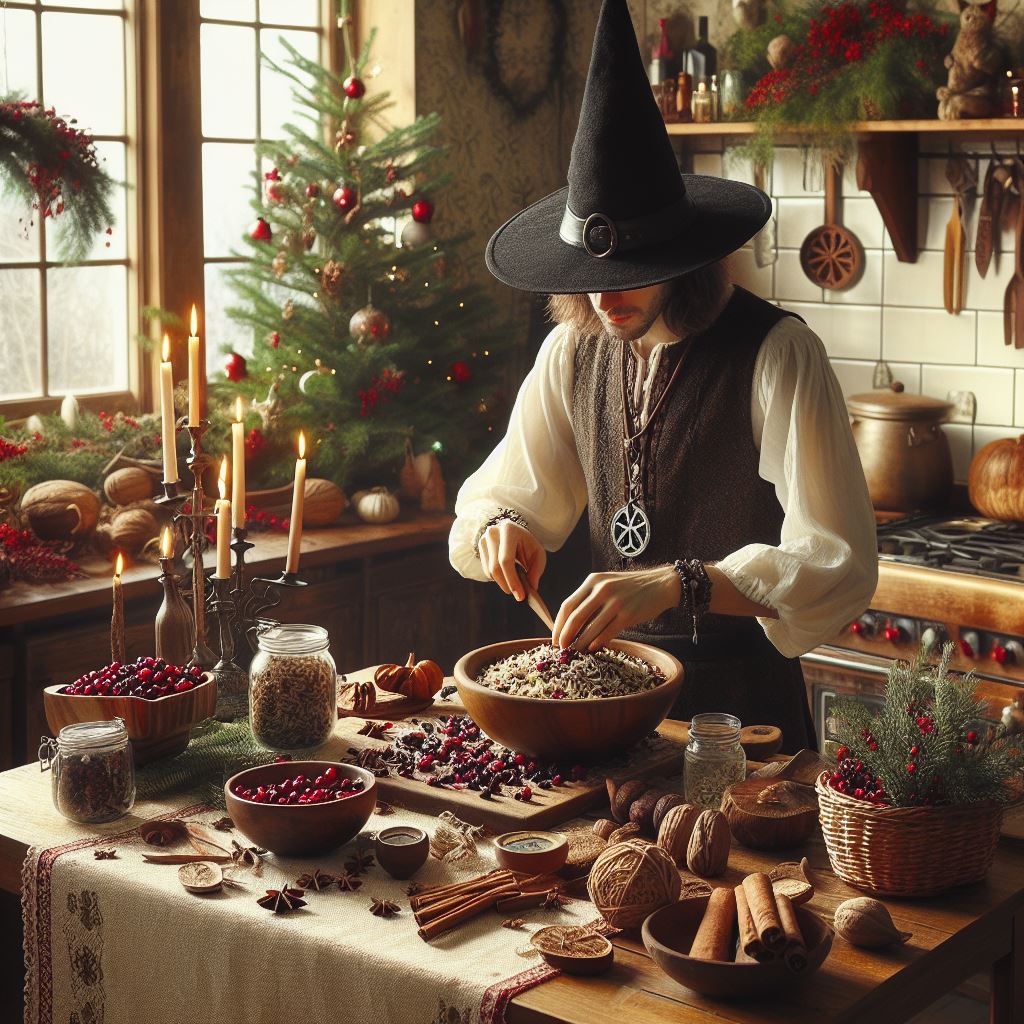
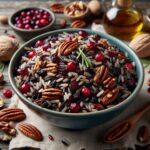
Recipe: Cranberry Pecan Wild Rice

Making Cranberry Pecan Wild Rice

Introduction

Father’s Night Culinary Harmony

Elevate your Father’s Night Feast on December 22nd with a tantalizing Cranberry Pecan Wild Rice side dish, perfectly harmonizing with the Roasted Apple Glazed Pork and Herbed Root Vegetable Medley. This recipe not only adds a burst of flavors and textures but also weaves in the magical properties of Yuletide. In this article, we’ll explore the ingredients and steps to create this delightful dish, understand the magical properties associated with Yuletide, and craft a spell to infuse your feast with intention.

Yuletide Abundance Spell

Before enjoying the feast, gather your loved ones and light a gold or green candle to symbolize the abundance and vitality of Yuletide. As you savor each bite, visualize the magical properties of the ingredients infusing the Cranberry Pecan Wild Rice. Recite a spell such as:

“In this bowl of Yuletide fare,

Cranberry Pecan Wild Rice rare.

Abundance, joy, and grounding too,

In every bite, the season imbue.”

May this Cranberry Pecan Wild Rice add a magical touch to your Father’s Night Feast, bringing abundance, joy, and grounding energies to your celebration. Blessed Yuletide!

Magical Properties

Together, these magical properties infuse the Cranberry Pecan Wild Rice with intention, protection, balance, and the abundant energies of Yuletide. Each ingredient becomes a sacred contributor, ensuring that the side dish not only complements the entire Father’s Night Feast but also resonates with the magical essence of Yuletide celebrations.

Wild Rice: Symbolizes Adaptability and Connection to Nature

Wild rice, a grain native to North America, symbolizes adaptability and a deep connection to nature. As the grain sways with the wind, it embodies the fluidity of Yuletide energies. Consuming wild rice during the celebration enhances one’s ability to adapt to the changing seasons and aligns with the ever-evolving aspects of the festive period.

Dried Cranberries: Signify Abundance and Joy

Dried cranberries, with their rich red color, symbolize abundance and joy. Each berry encapsulates the celebratory spirit of the season, infusing the dish with the vibrant energy of Yuletide festivities. As they burst with flavor, they invite a sense of fullness and prosperity into the feast, creating a harmonious and joyous atmosphere.

Pecans: Grounding and Prosperity

Pecans, the embodiment of grounding energies, bring a sense of earthy richness to the dish. As a symbol of prosperity, pecans add a layer of abundance to the Cranberry Pecan Wild Rice. Their grounding properties connect the feast to the stability of the earth, fostering a sense of security and prosperity during Yuletide celebrations.

Fresh Parsley: Provides Protection and Clarity

Fresh parsley, an evergreen herb, not only provides protection but also invokes clarity of thought. Its vibrant green leaves act as a protective shield, safeguarding the intentions within the dish. Parsley’s essence aligns with the evergreen’s enduring nature, ensuring that the Cranberry Pecan Wild Rice becomes a space of clear intentions and protective energies.

Orange Zest: Adds Vitality and Transformation

Orange zest, derived from the vibrant citrus fruit, adds vitality and transformation to the dish. Its zesty aroma and flavor reflect the dynamic and evolving energies of Yuletide. As a symbol of the sun’s energy, orange zest brings a burst of life to the feast, inviting transformative and revitalizing energies to the celebration.

Salt and Black Pepper: Bring Balance

Salt and black pepper, the elemental duo, work harmoniously to bring balance to the flavors and energies within the Cranberry Pecan Wild Rice. Salt, with its grounding nature, ensures stability, while black pepper adds a touch of fiery energy. Together, they create a well-rounded culinary experience, mirroring the equilibrium sought during Yuletide celebrations.

Olive Oil: Offers Protection

Olive oil, a sacred and protective liquid, offers a shield around the ingredients, infusing them with defensive energies. As it coats each element of the dish, olive oil creates a protective barrier, ensuring that the Cranberry Pecan Wild Rice becomes a sanctuary of positive and guarded energies, aligning with the protective aspects of Yuletide.

Cranberry Pecan Wild Rice

Father’s Night Culinary Harmony – Elevate your Father’s Night Feast on December 22nd with a tantalizing Cranberry Pecan Wild Rice side dish, perfectly harmonizing with the Roasted Apple Glazed Pork and Herbed Root Vegetable Medley. This recipe not only adds a burst of flavors and textures but also weaves in the magical properties of Yuletide.

  • 1 cup wild rice (rinsed)
  • 2 1/2 cups vegetable or chicken broth
  • 1/2 cup dried cranberries (for abundance and joy)
  • 1/2 cup pecans (chopped (for grounding and prosperity))
  • 2 tablespoons fresh parsley (chopped (for protection and clarity))
  • 1 tablespoon orange zest (for vitality and transformation)
  • Salt and black pepper to taste (for balance)
  • 2 tablespoons olive oil
  1. In a medium saucepan, combine the wild rice and broth. Bring to a boil, then reduce heat, cover, and simmer for 40-45 minutes or until the rice is tender and has absorbed the liquid.
  2. Fluff the cooked wild rice with a fork and transfer it to a large mixing bowl.
  3. In a small pan, heat olive oil over medium heat. Add chopped pecans and toast them for 2-3 minutes until fragrant. Remove from heat.
  4. Add dried cranberries, toasted pecans, fresh parsley, and orange zest to the bowl with wild rice. Toss gently to combine.
  5. Season with salt and black pepper to taste.
  6. Serve the Cranberry Pecan Wild Rice alongside the Roasted Apple Glazed Pork and Herbed Root Vegetable Medley.
Side Dish
Winter, Yule
Recipe
Posted on Leave a comment

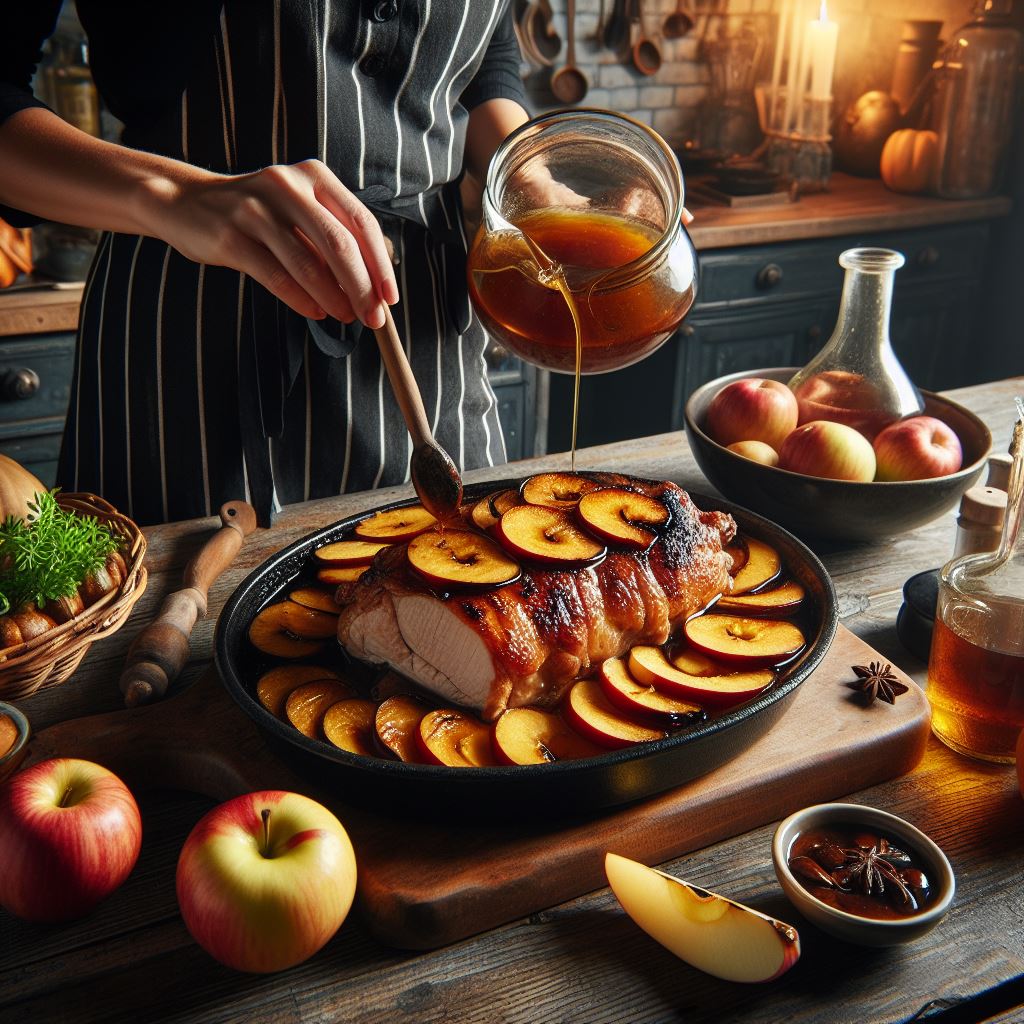
Recipe: Roasted Apple Glazed Pork

Making Glazed Pork
Making Glazed Pork

Introduction

Father’s Night Swine Feast

On the third day of Yuletide, as Father’s Night unfolds on December 22nd, revel in a festive Swine Feast with a mouthwatering Roasted Apple Glazed Pork. This delectable recipe not only honors the spirit of celebration but also channels the magical energies of Yuletide. In this article, we’ll embark on a culinary journey, exploring the ingredients and steps to create this savory masterpiece, understanding the magical properties associated with Yuletide, and crafting a spell to infuse your feast with intention.

Yuletide Celebration Spell

Before indulging in the Swine Feast, gather your loved ones and light a gold or green candle to symbolize the abundance and vitality of Yuletide. As you savor each bite, visualize the magical properties of the ingredients infusing the feast. Recite a spell such as:

“On Father’s Night, in Yuletide’s embrace,

Roasted pork and apples, a feast to grace.

Strength and wisdom, protection near,

Abundance and joy, in each flavor clear.”

May this Roasted Apple Glazed Pork be a delicious embodiment of Yuletide magic, bringing strength, joy, and transformation to your Father’s Night celebration. Blessed Yuletide!

Poem – A Father’s Night Feast

On this Father’s Night, we honor you With a feast of roasted pork and apple A dish that symbolizes strength and joy And the magic of the season

You taught us how to carve and cook With skill and patience and love You showed us how to savor every bite And share our gratitude above

You are our father, our friend, our guide Our protector, our supporter, our pride You are the light that shines in our lives And the warmth that fills our hearts by your side

We thank you for everything you do For your wisdom, your courage, your grace We wish you a happy Father’s Day And a peaceful night filled with love

Magical Properties

Together, these magical properties create a Swine Feast that extends beyond the realm of flavors, infusing the Roasted Apple Glazed Pork with intention, protection, balance, and the abundant energies of Yuletide. Each ingredient becomes a sacred contributor, ensuring that the feast not only delights the senses but also resonates with the magical essence of Father’s Night.

Pork Loin Roast: Symbolizes Strength and Sustenance

The Pork Loin Roast, a centerpiece of the Swine Feast, embodies magical properties of strength and sustenance. As a hearty and substantial meat, it channels energies associated with fortitude and resilience, making it a symbol of nourishment for the body and spirit during the Yuletide celebration.

Olive Oil: Offers Protection

Olive oil, derived from the sacred olive tree, carries protective energies. As it coats the pork and infuses the dish with its essence, it forms a shield against negative influences. Olive oil is revered for its ability to create a barrier of protection, ensuring that the feast is not only delicious but also safeguarded from any unwanted energies.

Salt and Black Pepper: Bring Balance

Salt and black pepper, the timeless duo, serve as agents of balance in the Swine Feast. Salt, with its grounding properties, ensures stability, while black pepper adds a touch of fiery energy. Together, they harmonize the flavors and energies within the dish, creating a balanced culinary experience that resonates with the equilibrium sought during Yuletide.

Dried Sage: Represents Wisdom

Dried sage, an herb associated with wisdom and clarity, imparts its magical essence to the Roasted Apple Glazed Pork. As it infuses the dish with its aromatic flavor, it invites energies of discernment and insight, aligning the feast with the introspective qualities of the Yuletide season.

Dried Thyme: Symbolizes Strength

Dried thyme, with its robust and earthy profile, symbolizes strength and resilience. It infuses the pork with qualities of fortitude, aligning the feast with the enduring spirit of Yuletide. Thyme’s magical properties encourage inner strength and the ability to face challenges with courage.

Garlic Powder: Provides Protection

Garlic powder, known for its protective qualities, adds a layer of defense to the Swine Feast. Its pungent aroma and taste are believed to ward off negative energies, creating a protective aura around the dish. Garlic powder ensures that the feast is not only flavorful but also guarded against any metaphysical intrusions.

Apples: Signify Abundance and Joy

Apples, a symbol of abundance and joy, play a pivotal role in the Roasted Apple Glazed Pork. Their presence invokes energies of prosperity and happiness, aligning the feast with the festive spirit of Yuletide. Apples bring a sweet and joyful essence to the dish, symbolizing the bountiful blessings of the season.

Apple Cider: Symbolizes Vitality and Abundance

Apple cider, a liquid embodiment of the apple’s essence, symbolizes vitality and abundance. Its magical properties infuse the feast with energies of life force and plenty, aligning the Swine Feast with the vibrant and flourishing aspects of Yuletide.

Maple Syrup: Represents Sweetness and Unity

Maple syrup, with its rich sweetness, represents the unity of shared moments and joy. Its magical properties intertwine with the dish, fostering a sense of togetherness and sweetness within the celebration. Maple syrup becomes a symbolic thread, weaving unity into the Swine Feast.

Dijon Mustard: Signifies Strength and Protection

Dijon mustard, with its bold and assertive flavor, signifies strength and protection. As it marries with the other ingredients, it becomes a catalyst for invoking robust energies, enhancing the dish with qualities of resilience, and safeguarding those who partake in the feast.

Apple Cider Vinegar: Brings Clarity and Transformation

Apple cider vinegar, a fermented elixir, brings clarity and transformation to the Swine Feast. Its tangy profile cleanses and refreshes the palate, symbolizing clarity of thought and the transformative nature of Yuletide. Apple cider vinegar is a magical conduit for inviting positive changes and renewed perspectives during the celebration.

Roasted Apple Glazed Pork

On the third day of Yuletide, as Father’s Night unfolds on December 22nd, revel in a festive Swine Feast with a mouthwatering Roasted Apple Glazed Pork. This delectable recipe not only honors the spirit of celebration but also channels the magical energies of Yuletide. In this article, we’ll embark on a culinary journey, exploring the ingredients and steps to create this savory masterpiece, understanding the magical properties associated with Yuletide, and crafting a spell to infuse your feast with intention.

For the Roasted Apple Glazed Pork:

  • 4-5 pounds pork loin roast (for strength and sustenance)
  • 2 tablespoons olive oil (for protection)
  • Salt and black pepper to taste (for balance)
  • 2 teaspoons dried sage (for wisdom)
  • 1 teaspoon dried thyme (for strength)
  • 1 teaspoon garlic powder (for protection)
  • 4-5 apples (cored and sliced (for abundance and joy))

For the Glaze:

  • 1 cup apple cider (for vitality and abundance)
  • 1/2 cup maple syrup (for sweetness and unity)
  • 1 tablespoon Dijon mustard (for strength and protection)
  • 1 tablespoon apple cider vinegar (for clarity and transformation)

Roasted Apple Glazed Pork:

  1. Preheat your oven to 375°F (190°C).
  2. Pat the pork loin roast dry and season it with salt, black pepper, dried sage, dried thyme, and garlic powder.
  3. Heat olive oil in an oven-safe skillet over medium-high heat.
  4. Sear the pork on all sides until golden brown.
  5. Arrange the sliced apples around the pork in the skillet.
  6. Transfer the skillet to the preheated oven and roast for about 25-30 minutes or until the internal temperature reaches 145°F (63°C).

Glaze:

  1. In a saucepan, combine apple cider, maple syrup, Dijon mustard, and apple cider vinegar.
  2. Bring the mixture to a simmer over medium heat, stirring occasionally.
  3. Allow the glaze to simmer until it thickens slightly, about 10-15 minutes.
  4. Assembling the Feast:
  5. Brush the roasted pork with the apple glaze during the last 10 minutes of cooking.
  6. Once cooked, let the pork rest for a few minutes before slicing.
  7. Serve the succulent Roasted Apple Glazed Pork slices with the caramelized apples and drizzle with additional glaze.
Main Course
Winter, Yule
Recipe
Posted on 2 Comments

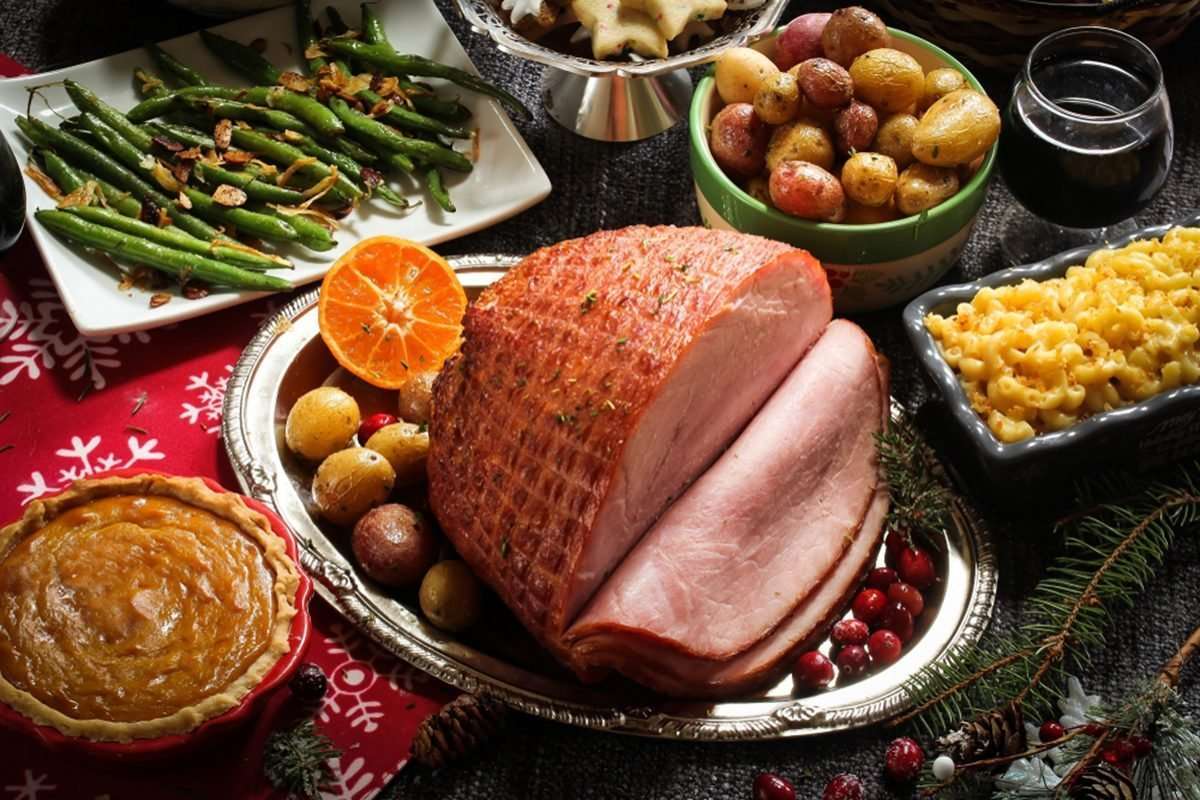
The 3rd Day of Yule – Father’s Night

Introduction

Father’s Night Revelry

The third day of Yule unfolds as Father’s Night, a sacred juncture where the male spirits, both ancestral and divine, are honored with reverence. Embracing the spirit of this day involves paying homage to the Alfar, powerful male ancestors, and nature spirits, as well as venerating Freyr, the Norse god associated with fertility, prosperity, and virility, alongside his loyal boar, Gullinborsti. In this enchanted celebration, we delve into the rich tapestry of Yuletide, where oaths are made and honored, and the cozy embrace of Hygge invites us to rest and revel in the warmth of familial connections amidst the winter landscape.

Father’s Night: A Tribute to Male Guardianship

Father’s Night is a dedicated occasion to honor the male spirits that serve as protectors in our lives. This transcends the conventional definition of fatherhood, encompassing all males who guide, support, and care for us. Much like Mother’s Night, this evening invites us to create altars adorned with pictures of male ancestors and influential figures, forging a connection between the realms of the living and the departed.

In the gentle glow of candlelight, we pay homage to these male guardians, recognizing the diverse roles they play in shaping our journey. The term “father” extends beyond biological ties, embracing mentors, friends, and any male presence that has offered guidance and protection. The ritual of crafting altars becomes a poignant act of remembrance and gratitude, a gesture that bridges the earthly and spiritual realms. Through this sacred space, we acknowledge the continuum of male guardianship, weaving a tapestry of connection that transcends the boundaries of time and mortality.

The Alfar: Ancestral Spirits in Nature’s Embrace

The Alfar, revered as male ancestors and potent nature spirits, find their moment of acknowledgment on Father’s Night. Creating a space on altars for the Alfar or extending the existing altar from Mother’s Night serves as a symbolic bridge between male and female ancestors. This act of remembrance and veneration strengthens the bond with ancestral energies, fostering a connection to the wisdom of the past.

As we arrange tokens of reverence on the altar — perhaps photographs, mementos, or symbols associated with the Alfar — we engage in a ritual that transcends the boundaries of time. The Alfar, as guardians of ancestral wisdom, offer their guidance and protection. The altar becomes a locus where the ethereal and earthly meet, a conduit through which the energies of the Alfar can intertwine with the living. This symbolic bridge not only honors the male ancestors but also reinforces the continuum of spiritual guidance passed down through generations, enriching our connection to the natural world and the unseen forces that shape our existence.

Crafting an Alfar Altar: Bridging Realms of Ancestral Wisdom

Creating an altar dedicated to the Alfar, revered male ancestors and potent nature spirits, is a sacred act that bridges the gap between the living and the departed. Follow this guide to set up an Alfar altar that becomes a focal point for remembrance, connection, and the channeling of ancestral wisdom.

  • Choose a Sacred Space – Select a quiet and undisturbed space for your altar. It could be a corner of a room, a small table, or a shelf. Ensure it’s a space where you can spend moments in reflection and communion.
  • Altar Cloth – Cover the surface of your chosen space with a fabric that holds significance for you. Earthy tones or colors that resonate with ancestral connections, such as deep greens or browns, can enhance the sacred ambiance.
  • Pictures and Mementos – Gather pictures of your male ancestors and influential male figures in your life. Place these on the altar, arranging them in a way that feels harmonious. Add mementos like personal items, jewelry, or tokens that carry the energy of those you wish to honor.
  • Symbols of Nature – As nature spirits, the Alfar are deeply connected to the natural world. Incorporate elements such as pinecones, leaves, or small branches to symbolize this connection. These items not only honor the Alfar but also act as conduits for their potent energy.
  • Candle Magic – Light candles on your altar to symbolize the eternal flame of remembrance. White or green candles are often used to invoke the energies of the Alfar. You may also choose colors that personally resonate with you or have significance in your cultural or spiritual practice.
  • Offering Bowl – Place an offering bowl on your altar. This can be a vessel for offerings such as water, herbs, or grains. As you connect with the Alfar, consider leaving small offerings periodically, expressing your gratitude and reverence.
  • Crystals and Gemstones – Select crystals or gemstones known for their connection to ancestral energies. Common choices include moonstone, labradorite, or clear quartz. Arrange them aesthetically or based on your intuition.
  • Incense and Scents – Infuse the space with the fragrance of incense or essential oils. Frankincense, myrrh, or juniper are choices that resonate with ancestral energies. The aroma serves as a conduit, enhancing your connection with the Alfar.
  • Reflection and Meditation – Designate a space on your altar for reflection and meditation. This can be a small cushion, a meditation stone, or any item that signifies a space for quiet contemplation. Use this area to commune with the energies of the Alfar and receive their guidance.
  • Personalization – Finally, infuse the altar with your personal touch. Add elements that resonate with your heritage, traditions, or specific aspects of the male spirits you are honoring. Trust your intuition and allow the altar to evolve as your connection with the Alfar deepens.
  • Maintenance – Regularly cleanse and energize your altar. This can be done through rituals, such as smudging with sage or using consecrated water. Keep the space free from clutter, and periodically renew the offerings to maintain the vibrancy of the connection.

Remember, your Alfar altar is a living representation of the connection between the realms, a sacred space where you can honor, remember, and receive guidance from the male ancestors and nature spirits who continue to weave their wisdom through the tapestry of your life.

Freyr and Gullinborsti: Guardians of Oaths

In the cosmic tapestry of Father’s Night, Freyr, a deity of Norse mythology, emerges as a central figure, bathed in the glow of veneration. Linked to sacral kingship, fertility, peace, and prosperity, Freyr’s essence permeates the evening, and his presence is amplified by the steadfast companion at his side — Gullinborsti, the sacred boar.

Freyr, master of sworn oaths, presides over a feast of swine, a ritualistic celebration where oaths are made and solemnized under his vigilant observation. The ancient tradition of swearing oaths on the bristles of Gullinborsti weaves a profound connection between the divine and mortal realms. The bristles, symbolic of strength and resilience, serve as the binding force for these sacred promises, echoing through time as a tradition that contributes to the very fabric of New Year’s resolutions.

As the feast unfolds, the air is filled with the sizzling aroma of a ham dinner, a culinary homage to Freyr and his revered companion. Each bite becomes a testament to the interconnectedness of tradition and the divine, a communion with the energies that govern both the celestial and earthly domains. The feast becomes a symphony of flavors, a chorus of gratitude for the protection and prosperity bestowed by Freyr and his celestial kin.

Forging Oaths: A Sacred Bonding Guide

Forming and bonding an oath with Freyr, the Norse god of fertility and prosperity, and his loyal boar Gullinborsti is a profound and sacred undertaking. The following guide offers steps to create a meaningful and lasting oath, strengthening your connection with these divine beings.

  • Preparation – Begin by finding a quiet and sacred space where you won’t be disturbed. Consider performing this ritual during Father’s Night or at a time when you feel spiritually attuned.
  • Setting the Intention – Clarify the purpose and intention of your oath. What commitment are you making to yourself, to others, or to the divine? Be specific and sincere in your intention, as this forms the foundation of your oath.
  • Altar Setup – Create an altar dedicated to Freyr and Gullinborsti. Include symbols associated with Freyr, such as a depiction of the god and representations of a boar. Light candles and use colors like green and gold to invoke the energies of prosperity and fertility.
  • Invocation – Invoke Freyr and Gullinborsti through prayer or meditation. Express your intention and invite their presence into your ritual space. Speak from your heart, acknowledging their attributes and the qualities you seek to embody through the oath.
  • Offering – Present an offering to Freyr and Gullinborsti. This can be mead, cider, or another beverage associated with celebrations. Place the offering on the altar as a gesture of gratitude and as a symbol of the reciprocity inherent in divine connections.
  • Crafting the Oath – Carefully articulate your oath. Be precise in your words and genuine in your commitment. Consider the traditional method of speaking the oath on the bristles of Gullinborsti. If possible, create a representation of the boar’s bristles or use a symbolic item to physically embody the oath.
  • Speaking the Oath – Stand before the altar and, with sincerity and conviction, speak your oath aloud. Address Freyr and Gullinborsti directly, sharing your intentions, promises, and the significance of the oath in your life. Speak clearly and from the depths of your being.
  • Symbolic Act – Perform a symbolic act to seal the oath. This could involve holding the representation of Gullinborsti, lighting a candle, or any action that signifies the initiation of your commitment. Envision the divine energies of Freyr and the boar infusing your oath with their strength and blessings.
  • Closing the Ritual – Express gratitude to Freyr and Gullinborsti for their presence and the sacred exchange. Close the ritual with a heartfelt thanksgiving, knowing that your oath has been heard and acknowledged.
  • Upholding the Oath – An oath is a sacred commitment, and upholding it requires dedication and integrity. Regularly revisit the terms of your oath, assess your progress, and make any necessary adjustments. Consider performing periodic rituals to reaffirm your connection with Freyr and Gullinborsti.

Remember, forming an oath with Freyr and Gullinborsti is a profound spiritual endeavor. Approach it with reverence, sincerity, and a genuine desire to align your actions with the divine energies they represent. May your oath be a source of strength, growth, and blessings on your journey.

Feast of Swine: A Culinary Tribute

As the cloak of night envelops the realms, the Feast of Swine takes center stage on Father’s Night, a ceremonial ode to Freyr and his steadfast companion, Gullinborsti. The focal point of this ritualistic gathering is a ham dinner, a feast that transcends mere sustenance to become a symbolic act of homage to the revered boar upon whose bristle’s oaths were once solemnized.

The dinner table becomes an altar of sorts, adorned with the rich and savory offerings reminiscent of the earthy bonds between the divine and mortal realms. The sizzling aroma of the ham, with its succulent flavors, wafts through the air, carrying with it the essence of tradition and reverence. Each morsel consumed becomes a ritual act, a communion with the energies of protection, prosperity, and the sacred vows that echo through the ages.

Amidst the clinking of glasses and the warmth of shared moments, the Feast of Swine transforms into more than a culinary experience. It becomes a poignant occasion to toast to victories, both past and those yet to unfold. It is a collective raising of glasses, a celebration of achievements, and a sharing of aspirations. As the feast progresses, the bonds of support among those gathered are fortified, weaving a tapestry of camaraderie and shared dreams under the watchful gaze of Freyr and Gullinborsti.

Hygge: Embracing Winter Comfort

After days steeped in reverence and spirited activities, Father’s Night extends an invitation to partake in the art of Hygge, a Danish tradition that elevates the simple joys of coziness and comfort. It’s a time when families gather like a tightly knit embrace, seeking solace in the shared warmth of each other’s company. As the flickering candles cast a soft glow, the ambiance is infused with the essence of familial bonds and the spirit of the season.

In the sanctuary of Hygge, the ordinary transforms into the extraordinary. The air is filled with the harmonious melodies of holiday tunes, creating a symphony that resonates with the festive spirit. The soft glow of twinkling lights adds a touch of enchantment, turning the space into a haven of tranquility.

Amidst the snug blankets and the aroma of seasonal treats, activities abound. Families huddle together to watch heartwarming holiday movies, the screen flickering with tales of joy and celebration. The air is filled with laughter and shared stories, creating a timeless atmosphere of connection.

For those seeking moments of repose, the call of rejuvenating naps becomes irresistible. In the gentle embrace of a cozy blanket, individuals find respite, recharging their spirits for the festivities yet to unfold. As the day unfolds, creative energies are unleashed in the form of crafts, adding a personal touch to the holiday celebrations. And, of course, no Hygge experience is complete without an array of delectable snacks. From homemade treats to seasonal delights, the table is adorned with an assortment of favorites that tickle the taste buds and nourish the soul.

In these moments of shared simplicity, Hygge becomes a ritual—a celebration of the profound beauty found in the ordinary. Father’s Night, wrapped in the embrace of Hygge, becomes a sanctuary where the warmth of familial connections outshines all else, creating lasting memories to be cherished throughout the Yuletide season.

Conclusion

As the third day of Yule unfolds, Father’s Night becomes a tapestry woven with threads of ancestral reverence, divine acknowledgment, culinary homage, and the serene joy of shared comfort—a celebration of the male guardians who shape our spiritual and earthly journeys. As Father’s Night draws to a close, the tapestry of Yule continues to weave its intricate threads, each day a celebration of profound significance. In honoring the male spirits, from revered ancestors to the divine presence of Freyr and his boar, Gullinborsti, we forge connections across realms, embracing the wisdom of the past and the magic of the present. The altars adorned with pictures, the symbolic bridge between male and female ancestors, stand as a testament to the enduring bond that transcends time. The Feast of Swine, with its ritualistic ham dinner, becomes a communal space for toasts, not only to past victories but also to the aspirations that unite us in the journey ahead.

Father’s Night, with its blend of tradition and modernity, culminates in the practice of Hygge—a Danish concept that transforms familial spaces into sanctuaries of coziness and comfort. Amidst the soft glow of lights and the echoes of laughter, families share in the simple joys of holiday movies, festive music, rejuvenating naps, crafts, and the delightful flavors of seasonal snacks. In the sanctuary of Hygge, Yule becomes not just a series of days but a timeless celebration of familial connection and shared warmth. As we embrace these moments of repose and revelry, the spirit of Father’s Night echoes through the corridors of our memories, leaving behind a legacy of love, laughter, and the magic of the Yuletide season.