Introduction
A Druidic Tapestry Through Time
Nestled on the Salisbury Plain in Wiltshire, England, Stonehenge stands as an ancient testament to human ingenuity, celestial reverence, and a profound connection with the cycles of nature. This iconic monument, shrouded in mystery and draped in the mists of time, is not just a collection of stones but a living tapestry of Druidic traditions, astronomical significance, and cultural enigma.

A Monumental Marvel
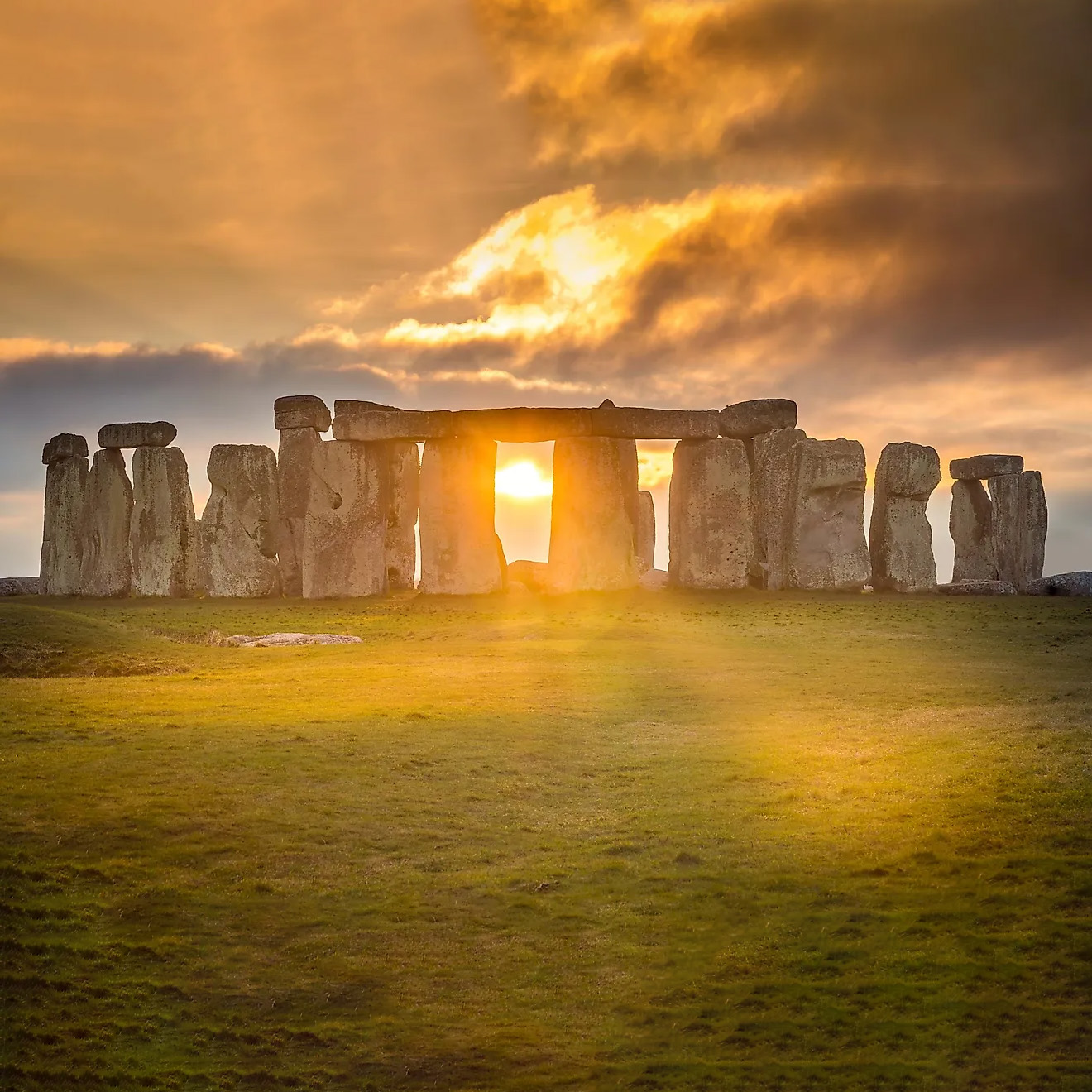
Stonehenge is a prehistoric monument comprised of a ring of standing stones, each around 13 feet high, seven feet wide, and weighing approximately 25 tons. The larger stones, known as sarsens, form the outer ring, while smaller bluestones make up the inner ring. Additionally, there are iconic lintels that connect the stones, creating a captivating architectural ensemble.
Stonehenge, a marvel of prehistoric architecture, is an iconic testament to the ingenuity of ancient civilizations. The monument is composed of a carefully arranged ring of standing stones, each a colossal presence standing at approximately 13 feet in height, seven feet in width, and weighing an astonishing 25 tons. The larger stones, aptly named sarsens, form the imposing outer ring, while the inner sanctum is crafted from smaller yet equally significant bluestones.
What adds to the mesmerizing allure of Stonehenge is the presence of lintels, seamlessly connecting the colossal stones and creating a harmonious architectural ensemble. These lintels, positioned horizontally across the towering vertical stones, not only enhance the structural integrity of the monument but also contribute to its aesthetic grandeur. The arrangement of lintels forms a celestial dance, a silent testimony to the ancient builders’ precision and understanding of both engineering and astronomy.
Beyond its colossal physicality, Stonehenge is celebrated for its precise astronomical alignment. The layout of the stones and lintels suggests a meticulous understanding of celestial events, particularly the solstices and equinoxes. This intentional alignment showcases a deep connection between the monument and the movements of the sun, moon, and stars, underlining the monument’s multifaceted purpose as an astronomical observatory and a sacred space.
The stones themselves bear significance beyond their sheer size and weight. Each stone, carefully selected and transported over considerable distances, is a symbolic representation of the ancient builders’ reverence for the earth and the celestial realm. The choice of stone types, the alignment of the monument, and the careful integration of lintels all contribute to the intricate symbolism woven into the very fabric of Stonehenge.
While scholars and archaeologists have delved into the depths of Stonehenge’s history, much about its purpose and the exact methods employed in its construction remains shrouded in mystery. The monument continues to be a source of fascination and speculation, inviting individuals from across the globe to marvel at its colossal stones and ponder the ancient wisdom embedded in its design.
Stonehenge stands not merely as a collection of stones but as a testament to the brilliance of our ancient ancestors. Its architectural grandeur, astronomical precision, and symbolic significance elevate it to a realm beyond mere construction. As visitors stand in the shadow of these towering stones and trace the lines of lintels against the sky, they embark on a journey through time, where the stones themselves whisper ancient secrets and the lintels hold the key to understanding a celestial dance that has endured for millennia.
A Connection Beyond Time
Stonehenge’s ties to Druidic traditions are deeply rooted. Druids, the ancient priestly class of the Celts, are believed to have used this sacred site for ceremonies, rituals, and celestial observations. The very alignment of the stones with astronomical events suggests an intentional connection to the movements of the sun, moon, and stars.
The intertwining of Stonehenge with Druidic traditions forms a tapestry woven with the threads of ancient wisdom and reverence for the natural world. Druids, the esteemed priestly class of the Celts, were keepers of knowledge, stewards of the sacred, and custodians of the cosmic dance. Stonehenge, with its colossal stones and celestial alignments, emerged as a sacred canvas upon which the Druids painted their rituals, ceremonies, and deep communion with the cosmos.
Stonehenge, with its meticulous astronomical alignment, served as more than just a collection of stones; it was an open-air observatory for the Druids. The intentional arrangement of the stones attests to a sophisticated understanding of celestial events, particularly the solstices and equinoxes. For the Druids, these celestial occurrences weren’t merely astronomical phenomena, but sacred moments woven into the fabric of their spiritual practices.
The stones of Stonehenge bore witness to ceremonies that echoed through the corridors of time. Druidic rituals, deeply rooted in nature worship and cosmic reverence, found a natural stage amidst the towering sarsens and bluestones. The layout of the monument allowed the Druids to mark significant celestial events, aligning their ceremonies with the ebb and flow of the celestial ballet.
For the Druids, Stonehenge wasn’t just a physical structure; it was a bridge connecting the earthly realm to the Otherworld. The veil between the worlds was believed to be thin at this sacred site, especially during celestial junctures. As they stood amidst the stones, the Druids felt the energy of the earth pulsating beneath their feet, connecting them to realms unseen and mysteries profound.
Stonehenge’s association with Druidic practices endured even as the Celtic civilization waned. The monument became a living testament to the enduring legacy of the Celts, their spiritual insights, and their harmonious relationship with the natural world. The echoes of Druidic chants and rituals lingered, imprinting the stones with a resonance that transcended the passage of centuries.
Stonehenge stands as a silent witness to the ancient rites of the Druids, a sacred space where the earthly and the celestial converged. As visitors tread upon the same ground where Druids once stood, they step into a realm where the stones whisper tales of cosmic communion, where the alignment of lintels tells a story of a priestly class deeply attuned to the rhythms of nature. In the heart of Stonehenge, the Druidic connection remains, an eternal flame that illuminates the path to understanding our mystical connection with the cosmos.
Stonehenge’s Multifaceted Significance
Stonehenge holds multifaceted significance. It served as a celestial observatory, allowing ancient observers to mark key events such as solstices and equinoxes. This alignment underscores a deep understanding of the natural world and an intricate knowledge of the cosmos. Additionally, the site is believed to have played a role in rituals related to life, death, and the changing seasons.
At its core, Stonehenge is a celestial symphony, a monument finely tuned to the rhythms of the cosmos. The significance of Stonehenge lies in its meticulous alignment with celestial events, most notably the solstices and equinoxes. Each stone, a sentinel standing in silent reverence, becomes a marker for key astronomical occurrences. The Druidic architects of Stonehenge were not just builders; they were celestial choreographers, attuned to the dance of the heavens.
Stonehenge, with its strategic positioning of stones and lintels, functioned as a sophisticated cosmic observatory. The alignment with the solstices speaks volumes about the ancient inhabitants’ deep understanding of the Earth’s axial tilt and its dance with the Sun. Stonehenge allowed them to mark the passage of time with celestial precision, turning the monument into a living calendar that breathed with the seasons.
Beyond its role as an astronomical observatory, Stonehenge held profound spiritual significance. The belief that the veil between the earthly realm and the Otherworld was thin at this sacred site infused Stonehenge with an aura of mysticism. It became a gateway through which the Druids could commune with the divine, conduct rituals that bridged the realms, and seek guidance from the celestial forces that governed their existence.
Stonehenge’s stones bore witness to the rituals that marked the cycles of life and death. The changing seasons, symbolized by the solstices and equinoxes, were interwoven with ceremonies that celebrated life’s abundance during harvests and acknowledged the inevitability of death as winter approached. Stonehenge, with its carefully calculated alignments, became a sacred space where the earthly and the divine met in a dance of ritualistic expression.
Stonehenge’s enduring significance lies in its role as a symbol of cultural resilience. Despite the passage of millennia, Stonehenge stands as a testament to the intellectual prowess, spiritual depth, and harmonious relationship with nature of the ancient inhabitants. Its legacy echoes through time, reminding us that even in ancient times, humanity possessed a profound connection with the cosmos.
Stonehenge’s significance is layered, like the stones that form its structure. It is a cosmic observatory, a gateway to the divine, and a witness to the rituals that shaped the spiritual landscape of its builders. In the hushed whispers of the wind that sweeps across the Salisbury Plain, Stonehenge’s significance reverberates—a testament to the timeless connection between humanity and the celestial tapestry above.
The Enigmatic Architects of Stonehenge
The exact builders of Stonehenge remain a mystery, but it is generally attributed to ancient cultures spanning different periods. The monument evolved over centuries, with the earliest phase dating back to around 3100 BCE. The construction involved a remarkable feat of engineering, with stones transported from great distances and arranged with precision. Its purpose, though multifaceted, included ceremonial and spiritual practices.
Stonehenge, standing proudly on the Salisbury Plain, is a testament to the ingenuity of ancient hands, though the precise identity of these architects remains veiled in the mists of time. The monument’s creation is attributed to different cultures spanning epochs, and its evolution, like chapters in a cosmic saga, unfolded over millennia.
One prevailing theory links Stonehenge to the Druids, the ancient Celtic priestly class. Though the Druids are often associated with Stonehenge, their role in its construction is a subject of scholarly debate. The alignment of the stones with celestial events suggests a profound connection to Druidic practices, making Stonehenge a potential ceremonial space and astronomical observatory for these enigmatic figures.
The construction of Stonehenge is a testament to ancient engineering prowess. The stones, both the massive sarsens and the smaller bluestones, were quarried and transported from considerable distances. The feat of moving stones weighing up to 25 tons from quarries in Wales to Salisbury Plain boggles the modern mind. This endeavor, requiring meticulous planning and a deep understanding of the landscape, stands as a testament to the mastery of ancient builders.
The arrangement of the stones at Stonehenge is a testament to intentional design. The outer ring of imposing sarsens, capped by lintels, creates a visual spectacle that aligns with celestial events. The inner ring, composed of bluestones, adds an intricate layer to the monument’s composition. It is a symphony in stone, orchestrated with celestial precision, suggesting that Stonehenge was not merely a product of practicality but a carefully crafted space with spiritual and ceremonial significance.
Stonehenge served multifaceted purposes, acting as a ceremonial center and an astronomical observatory. The alignment of its stones with the solstices and equinoxes indicates a keen interest in celestial events. The changing seasons, marked by these astronomical occurrences, likely played a pivotal role in the rituals and ceremonies conducted within the hallowed space of Stonehenge.
Stonehenge’s builders, whether Druids or another ancient community, left behind a legacy etched in stone. The monument’s construction challenges our understanding of ancient capabilities and stands as a symbol of human ingenuity. As we gaze upon the weathered stones that have weathered the ages, we are invited to contemplate the hands that shaped them and the mysteries that still linger within the ancient embrace of Stonehenge.
A Beacon for Modern Celebrations
In the modern era, Stonehenge continues to captivate and inspire. While its original purpose may never be fully unraveled, it has become a focal point for Druidic and Pagan celebrations, particularly during the sabbats. The site is open to the public, and its mystique draws visitors from around the world.
Stonehenge, with its weathered stones echoing with the whispers of ancient rites, has transcended its historical origins to become a modern pilgrimage site. While the exact purpose of this monumental marvel may remain shrouded in mystery, its allure persists through the ages, drawing seekers and curious minds alike.
In the contemporary era, Stonehenge has found new purpose as a sacred space for modern Druidic and Pagan celebrations. The rhythmic dance of the seasons, a theme integral to these spiritual traditions, finds resonance among the standing stones. During significant moments in the Pagan Wheel of the Year, such as the sabbats, Stonehenge becomes a living altar where practitioners gather to honor the changing seasons, much like the ancient Druids might have done in centuries past.
Stonehenge’s alignment with celestial events, particularly the solstices and equinoxes, lends itself to the rhythmic cycle of sabbats. As the sun bathes the stones in its golden hues during these pivotal moments, modern practitioners engage in rituals, ceremonies, and celebrations that echo the ancient energies lingering within the sacred space. The stones, standing as silent witnesses to the passage of time, become a canvas upon which the modern narrative of spiritual connection and reverence is painted.
Today, Stonehenge stands as more than an archaeological site; it is a living symbol of mystical connection. Its enigmatic presence continues to evoke a sense of wonder and reverence, inviting both spiritual pilgrims and curious explorers. The stones, though weathered by time, resonate with the energies of countless rituals, both ancient and modern, creating a tapestry woven with threads of human connection to the cosmos.
Stonehenge’s mystical embrace is not confined to a select few. In a gesture of openness, the site welcomes visitors from around the world. The curious and the contemplative, the spiritual seeker and the history enthusiast—all are invited to tread the sacred ground and witness the dance of light and shadow that plays out among the ancient stones.
Stonehenge, with its ancient stones standing as sentinels in time, continues to be a beacon that bridges the ancient and the modern. In its silent testimony, it invites us to reflect on the enduring quest for connection, the cyclical dance of the seasons, and the timeless allure of the mystical tapestry woven within its sacred circle.
Embracing the Sabbats
Stonehenge’s alignment with celestial events, particularly the solstices, establishes a direct connection to Pagan and Druidic sabbats. During the Winter Solstice, in particular, the rising sun aligns with the central axis of the monument, casting a cascade of light upon the stones. This alignment is thought to have held profound spiritual and symbolic significance for ancient rituals and continues to do so in modern Pagan and Druidic celebrations.
Stonehenge, with its cyclopean stones standing sentinel on the Salisbury Plain, is not merely a relic of the past; it is a living testament to the eternal dance between Earth and cosmos. Among the many celestial ballets it orchestrates, its intimate connection to the sabbats, especially the Winter Solstice, stands as a poignant expression of the mystical tapestry woven within its ancient circle.
As the wheel of the year turns, the Winter Solstice emerges as a pinnacle of celestial alignment at Stonehenge. The rising sun, in a moment of cosmic choreography, aligns perfectly with the central axis of the monument. The first rays extend a golden embrace, casting intricate shadows that dance upon the stones. This alignment, a spectacle of breathtaking beauty, serves as a bridge across ages, connecting the modern practitioner to the ancient rhythms of Pagan and Druidic traditions.
The alignment during the Winter Solstice holds profound symbolic significance. It marks not just an astronomical event but a spiritual communion between Earth and sky. The interplay of light and shadow becomes a language, a silent hymn sung by the stones, echoing the cyclical nature of life, death, and rebirth. In this cosmic theatre, the stones become actors, and the sun, the maestro, conducting a symphony of renewal and hope.
For modern Pagans and Druids, Stonehenge is not a relic frozen in time; it is a sacred stage where the drama of the sabbats unfolds. During the Winter Solstice, practitioners gather amidst the ancient stones to honor the changing seasons, reflect on the mysteries of life, and partake in rituals that echo the ancient energies permeating the site. The alignment becomes a focal point, a conduit for spiritual energy, as contemporary celebrations harmonize with the age-old wisdom embedded in the stones.
Stonehenge’s alignment with the sabbats is not a historical footnote; it is a continuum of spiritual connection that traverses time and tradition. As the sunbathes the stones in its luminous glow, it invites modern practitioners to participate in a timeless dance, where the threads of ancient and contemporary spirituality intertwine. In this sacred circle, the alignment with the Winter Solstice becomes a bridge, allowing the modern seeker to touch the pulse of the cosmos and partake in the cosmic rhythm of the sabbats.
Stonehenge – A Tapestry Woven Through Time and Beyond
In the heart of the Salisbury Plain, Stonehenge stands not just as a collection of stones but as a living tapestry of Druidic traditions, astronomical significance, and cultural enigma. Its colossal stones, meticulously arranged, tell a story of human ingenuity and a profound connection with the cycles of nature that transcend the ages. As we explore the marvel of Stonehenge, we unravel the enigma that shrouds its construction, delve into its multifaceted significance, and witness its enduring role as a beacon for modern celebrations.
Stonehenge’s architectural grandeur, with its colossal standing stones and iconic lintels, showcases not only the physical prowess of ancient civilizations but also their celestial precision. The intentional alignment with astronomical events, particularly the solstices and equinoxes, reveals a deep understanding of the cosmic dance that governs our world. As the stones stand as silent witnesses, the celestial ballet unfolds, connecting the earthly realm with the celestial tapestry above.
The stones themselves, carefully selected and transported over great distances, become more than mere physical entities. Each stone is a symbol, a representation of the ancient builders’ reverence for the earth and the celestial realm. The choice of stone types, the alignment of the monument, and the integration of lintels all contribute to the intricate symbolism woven into the very fabric of Stonehenge. Beyond its colossal physicality, Stonehenge becomes a canvas upon which the ancients painted their rituals, ceremonies, and deep communion with the cosmos.
Despite centuries of scholarly investigation, much about Stonehenge’s purpose and the methods employed in its construction remains shrouded in mystery. The monument continues to be a source of fascination and speculation, inviting individuals from across the globe to marvel at its colossal stones and ponder the ancient wisdom embedded in its design. As visitors stand in the shadow of these towering stones and trace the lines of lintels against the sky, they embark on a journey through time, where the stones themselves whisper ancient secrets and the lintels hold the key to understanding a celestial dance that has endured for millennia.
Stonehenge’s ties to Druidic traditions form a tapestry woven with the threads of ancient wisdom and reverence for the natural world. Druids, the esteemed priestly class of the Celts, are believed to have used this sacred site for ceremonies, rituals, and celestial observations. The very alignment of the stones with astronomical events suggests an intentional connection to the movements of the sun, moon, and stars. Stonehenge becomes not just a physical structure but a bridge connecting the earthly realm to the Otherworld, where the veil between worlds is thin during celestial junctures.
As we gaze upon Stonehenge, we are not merely witnessing an archaeological site but a living symbol of human connection with the cosmos. Its enduring significance lies in its role as a celestial observatory, a gateway to the divine, and a witness to the rituals that marked the cycles of life and death. Stonehenge, with its timeless allure and mystical embrace, invites us to reflect on the enduring quest for connection, the cyclical dance of the seasons, and the timeless beauty of the celestial tapestry woven within its sacred circle.
Wrapping Up
In the hushed whispers of the wind that sweeps across the Salisbury Plain, Stonehenge’s significance reverberates—a testament to the timeless connection between humanity and the celestial tapestry above. As a beacon that bridges the ancient and the modern, Stonehenge invites us to tread its sacred ground, where the stones themselves become storytellers, and the alignment with celestial events becomes a timeless dance between Earth and cosmos. Embracing Stonehenge, we embrace a tapestry woven through time and beyond—a tapestry that continues to captivate, inspire, and connect us to the mysteries of the cosmos.