Posted on Leave a comment

The Magic of a 12-Course Meal

The magical 12-course mealReading Time: 5 minutes
The magical 12-course meal

Introduction

A Witch’s Guide to a Sacred Feast

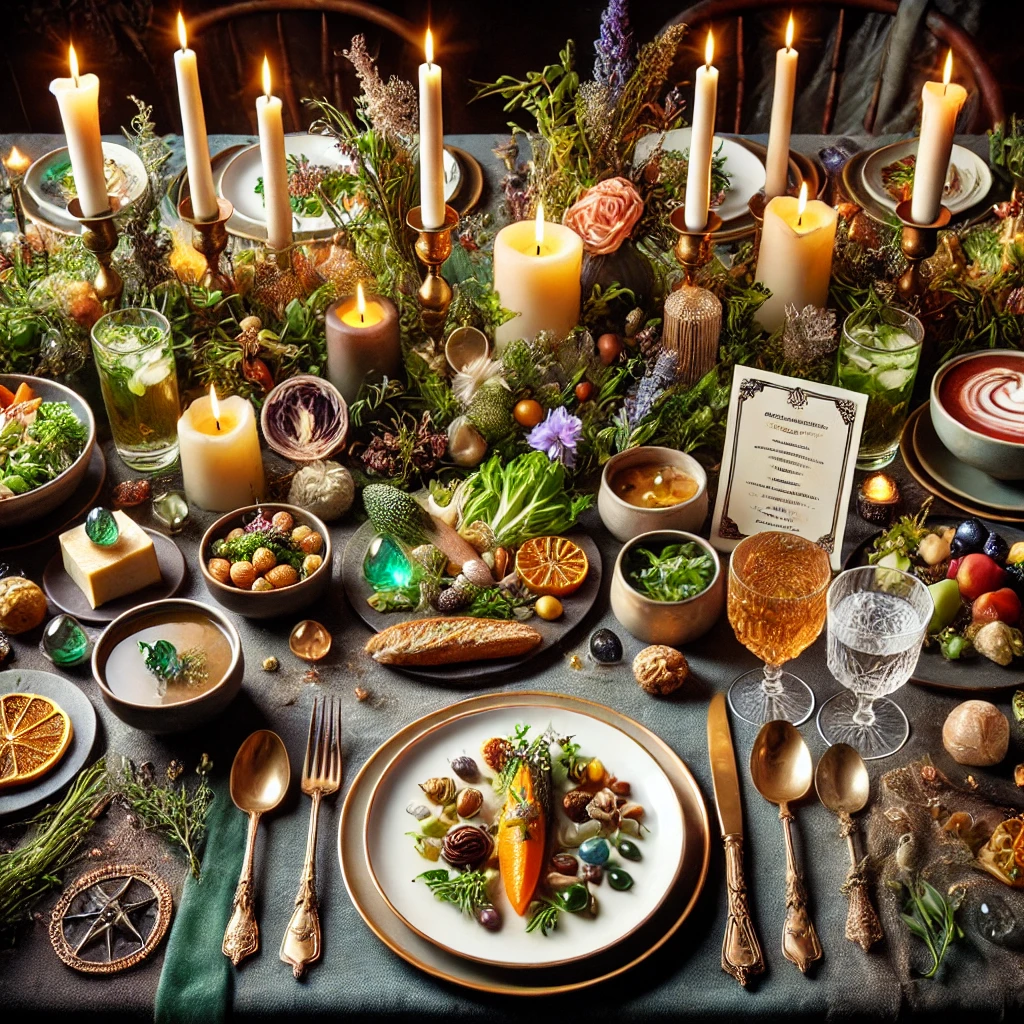
When we think of meals in witchcraft and pagan practices, we often consider the spiritual energy and intent behind the preparation, consumption, and even sharing of food. A 12-course meal, traditionally a decadent and lengthy affair, offers more than just culinary delight; it provides an opportunity to align each course with magical intent and purpose, turning the meal into a ceremonial experience.

This article will take you through the 12 courses, each with its traditional culinary purpose and a touch of magic. You’ll learn how to incorporate elements of the craft, seasonal energies, and witchy symbolism into every stage of the feast.

The Structure of a 12-Course Meal

A 12-course meal follows a progression of dishes, designed to stimulate different senses, palates, and energies. Each course is an opportunity to introduce a magical intention, herb, or flavor profile that resonates with a different aspect of life or energy. Here’s how you can transform each course into a magical experience.

1. Amuse-Bouche (The Opening Spell)

Purpose: A tiny, bite-sized starter, the amuse-bouche awakens the palate and sets the tone for the meal to come.
Magic: Use this first course to open up your guests’ senses and start setting the intentions for the feast. Consider a small morsel infused with herbs for heightened awareness, like rosemary for mental clarity or basil for good luck. This is the first spell you cast on the meal—an opening invocation to the experience.

2. Soup (Cleansing and Protection)

Purpose: Soups are gentle and warm, often broths or purees that continue to prepare the body for the courses ahead.
Magic: Soups are ideal for introducing cleansing and protective energies. Choose ingredients like garlic and onion to ward off negativity, or fennel for purification. Stirring the soup clockwise will add energy and positivity, while counterclockwise stirs can banish and cleanse unwanted energies from the space and participants.

3. Appetizer (Invocation of Elements)

Purpose: A small, flavorful dish that is more substantial than the amuse-bouche and primes the stomach for heavier courses.
Magic: This is a great opportunity to incorporate elemental magic. An appetizer that balances all four elements (earth, water, fire, and air) can help ground your guests and prepare them to receive the rest of the courses with balance. Think of a vegetable tart (earth), drizzled with a sauce (water), a touch of spice or heat (fire), and something light and crisp like puff pastry or whipped cream (air).

4. Salad (Green Magic and Abundance)

Purpose: A refreshing dish that often cleanses the palate with fresh vegetables and light dressings.
Magic: Salads represent earth magic and abundance. Every leaf of lettuce or herb symbolizes prosperity and the grounding energy of nature. Add edible flowers like violets (love and luck) or nasturtiums (creativity and passion) to enhance the energies of the ingredients. Use vinaigrettes or citrus dressings to add a touch of movement and flow, invoking emotions and intentions that will carry forward throughout the meal.

5. Fish Course (Connection to Water and Intuition)

Purpose: A lighter protein course, often focusing on delicate flavors and subtle seasonings.
Magic: Fish naturally connects to the element of water, and this course can be used to open intuition, emotion, and spiritual receptivity. Choose flavors and ingredients that correspond to the moon or water elements, like lemon (clarity), dill (focus), or sea salt (purification). For a vegetarian option, a seaweed salad or dishes containing coastal ingredients like sea beans are equally potent.

6. Main Course (Manifestation and Power)

Purpose: The heaviest and most substantial dish, usually meat or a hearty vegetarian option, which serves as the focal point of the meal.
Magic: The main course symbolizes manifestation and physical power. Here, you can focus on grounding energies and manifestation through hearty ingredients like root vegetables (potatoes, carrots) for stability, or proteins like beef or mushrooms for strength. Season with herbs like thyme (courage), sage (wisdom), or black pepper (banishing negativity).

7. Palate Cleanser (Spiritual Rebirth)

Purpose: A small serving designed to refresh the taste buds, preparing for richer, sweeter courses.
Magic: The palate cleanser is an opportunity for rebirth and renewal. A sorbet infused with herbs like mint (fresh starts) or lemon balm (calm and joy) can help shift energies and prepare for the sweetness to come. Think of it as a symbolic clearing of space, making way for something new and vibrant.

8. Cheese Course (Balance and Duality)

Purpose: Cheese courses offer a variety of flavors and textures, often paired with nuts, fruits, or crackers.
Magic: Cheese represents both indulgence and balance—especially when paired with complementary flavors like sweet fruits or tangy nuts. Incorporate dried figs (fertility and love), honey (attraction), and walnuts (mental clarity) to provide not only a balance of flavors but also a representation of duality in magic. Think of the harmony of opposites—sweet and savory, soft and crunchy.

9. Dessert (Pleasure and Gratitude)

Purpose: The sweet conclusion to the main part of the meal, typically a rich, sweet, and indulgent dish.
Magic: Dessert is all about joy, pleasure, and gratitude. Make this course a celebration of life’s sweetness by using vanilla (love), chocolate (sensuality), or cinnamon (protection and prosperity). Let this course be a physical manifestation of the pleasures of life and the intent to savor every moment. Use decorations like edible gold leaf to symbolize wealth and abundance.

10. Mignardises (Blessings and Sweet Farewells)

Purpose: Tiny sweet treats, like truffles, macarons, or candied nuts, served to end the meal on a sweet note.
Magic: Mignardises are often shared communally, making them an ideal way to bless and send off your guests. Anoint these little bites with blessing oil or dust them with powdered sugar mixed with a pinch of dried herbs like lavender (calm and protection) or rose petals (love and beauty) for added intention.

11. Fruit Course (Renewal and Health)

Purpose: A simple, fresh course of seasonal fruits, offering a light finish to the meal and preparing the body for digestion.
Magic: Fruit is a powerful symbol of renewal, life, and health. Using seasonal and local fruits ties the meal into the natural cycles, reinforcing renewal and grounding. Apples (knowledge and healing), grapes (fertility and prosperity), and pomegranate seeds (abundance and fertility) can all be used to close the meal with a blessing of health and continuation.

12. Digestif (Closure and Grounding)

Purpose: A small after-dinner drink, like liqueurs, brandy, or herbal tea, to aid digestion and conclude the feast.
Magic: The digestif serves as a closing to the ceremony, grounding the energies raised throughout the meal. An herbal liqueur or tea with fennel (healing), chamomile (calm), or peppermint (renewal) will not only aid digestion but also gently guide the energies toward a peaceful conclusion. Toast to the intentions set throughout the feast and give thanks for the experience shared.

Conclusion: Crafting a Magical Meal

Each course of a 12-course meal offers a magical touchpoint, from the setting of intentions at the amuse-bouche to the closing digestif that seals the energies. By weaving magical correspondences into the ingredients, preparation, and consumption of each course, the meal becomes more than just sustenance—it becomes a ritual, a celebration, and a spell in its own right.

Embrace the energies, flavors, and intentions of each course to create a truly magical dining experience that feeds not only the body but also the spirit and soul. Whether you are hosting a grand sabbat feast or an intimate gathering, let each course be a celebration of the magic in food and the power of communal ritual. Blessed be, and bon appétit!
Posted on Leave a comment

Stonehenge

StonehengeReading Time: 12 minutes
Stonehenge

Introduction

A Druidic Tapestry Through Time

Nestled on the Salisbury Plain in Wiltshire, England, Stonehenge stands as an ancient testament to human ingenuity, celestial reverence, and a profound connection with the cycles of nature. This iconic monument, shrouded in mystery and draped in the mists of time, is not just a collection of stones but a living tapestry of Druidic traditions, astronomical significance, and cultural enigma.

A Monumental Marvel

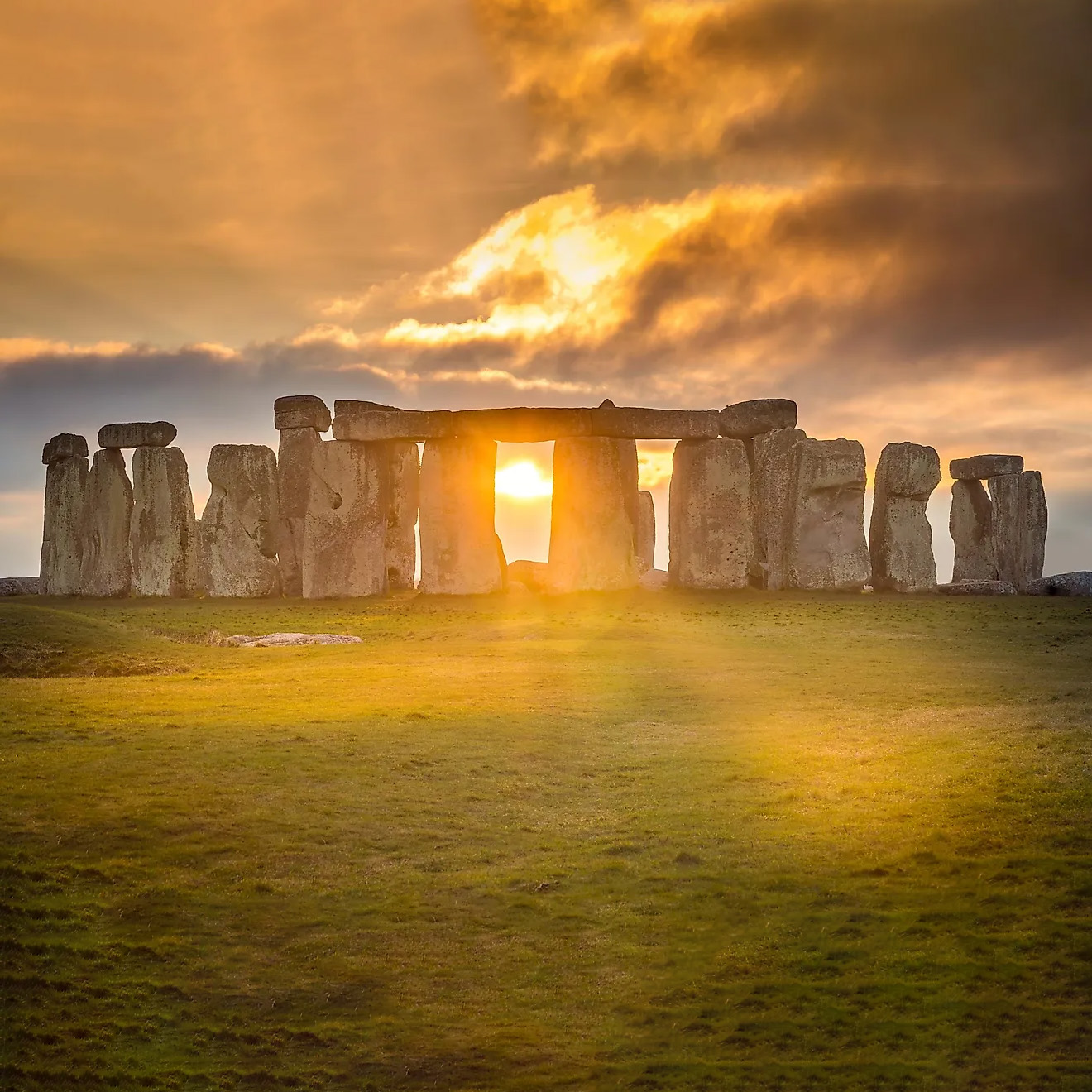
Stonehenge is a prehistoric monument comprised of a ring of standing stones, each around 13 feet high, seven feet wide, and weighing approximately 25 tons. The larger stones, known as sarsens, form the outer ring, while smaller bluestones make up the inner ring. Additionally, there are iconic lintels that connect the stones, creating a captivating architectural ensemble.

Stonehenge, a marvel of prehistoric architecture, is an iconic testament to the ingenuity of ancient civilizations. The monument is composed of a carefully arranged ring of standing stones, each a colossal presence standing at approximately 13 feet in height, seven feet in width, and weighing an astonishing 25 tons. The larger stones, aptly named sarsens, form the imposing outer ring, while the inner sanctum is crafted from smaller yet equally significant bluestones.

What adds to the mesmerizing allure of Stonehenge is the presence of lintels, seamlessly connecting the colossal stones and creating a harmonious architectural ensemble. These lintels, positioned horizontally across the towering vertical stones, not only enhance the structural integrity of the monument but also contribute to its aesthetic grandeur. The arrangement of lintels forms a celestial dance, a silent testimony to the ancient builders’ precision and understanding of both engineering and astronomy.

Beyond its colossal physicality, Stonehenge is celebrated for its precise astronomical alignment. The layout of the stones and lintels suggests a meticulous understanding of celestial events, particularly the solstices and equinoxes. This intentional alignment showcases a deep connection between the monument and the movements of the sun, moon, and stars, underlining the monument’s multifaceted purpose as an astronomical observatory and a sacred space.

The stones themselves bear significance beyond their sheer size and weight. Each stone, carefully selected and transported over considerable distances, is a symbolic representation of the ancient builders’ reverence for the earth and the celestial realm. The choice of stone types, the alignment of the monument, and the careful integration of lintels all contribute to the intricate symbolism woven into the very fabric of Stonehenge.

While scholars and archaeologists have delved into the depths of Stonehenge’s history, much about its purpose and the exact methods employed in its construction remains shrouded in mystery. The monument continues to be a source of fascination and speculation, inviting individuals from across the globe to marvel at its colossal stones and ponder the ancient wisdom embedded in its design.

Stonehenge stands not merely as a collection of stones but as a testament to the brilliance of our ancient ancestors. Its architectural grandeur, astronomical precision, and symbolic significance elevate it to a realm beyond mere construction. As visitors stand in the shadow of these towering stones and trace the lines of lintels against the sky, they embark on a journey through time, where the stones themselves whisper ancient secrets and the lintels hold the key to understanding a celestial dance that has endured for millennia.

A Connection Beyond Time

Stonehenge’s ties to Druidic traditions are deeply rooted. Druids, the ancient priestly class of the Celts, are believed to have used this sacred site for ceremonies, rituals, and celestial observations. The very alignment of the stones with astronomical events suggests an intentional connection to the movements of the sun, moon, and stars.

The intertwining of Stonehenge with Druidic traditions forms a tapestry woven with the threads of ancient wisdom and reverence for the natural world. Druids, the esteemed priestly class of the Celts, were keepers of knowledge, stewards of the sacred, and custodians of the cosmic dance. Stonehenge, with its colossal stones and celestial alignments, emerged as a sacred canvas upon which the Druids painted their rituals, ceremonies, and deep communion with the cosmos.

Stonehenge, with its meticulous astronomical alignment, served as more than just a collection of stones; it was an open-air observatory for the Druids. The intentional arrangement of the stones attests to a sophisticated understanding of celestial events, particularly the solstices and equinoxes. For the Druids, these celestial occurrences weren’t merely astronomical phenomena, but sacred moments woven into the fabric of their spiritual practices.

The stones of Stonehenge bore witness to ceremonies that echoed through the corridors of time. Druidic rituals, deeply rooted in nature worship and cosmic reverence, found a natural stage amidst the towering sarsens and bluestones. The layout of the monument allowed the Druids to mark significant celestial events, aligning their ceremonies with the ebb and flow of the celestial ballet.

For the Druids, Stonehenge wasn’t just a physical structure; it was a bridge connecting the earthly realm to the Otherworld. The veil between the worlds was believed to be thin at this sacred site, especially during celestial junctures. As they stood amidst the stones, the Druids felt the energy of the earth pulsating beneath their feet, connecting them to realms unseen and mysteries profound.

Stonehenge’s association with Druidic practices endured even as the Celtic civilization waned. The monument became a living testament to the enduring legacy of the Celts, their spiritual insights, and their harmonious relationship with the natural world. The echoes of Druidic chants and rituals lingered, imprinting the stones with a resonance that transcended the passage of centuries.

Stonehenge stands as a silent witness to the ancient rites of the Druids, a sacred space where the earthly and the celestial converged. As visitors tread upon the same ground where Druids once stood, they step into a realm where the stones whisper tales of cosmic communion, where the alignment of lintels tells a story of a priestly class deeply attuned to the rhythms of nature. In the heart of Stonehenge, the Druidic connection remains, an eternal flame that illuminates the path to understanding our mystical connection with the cosmos.

Stonehenge’s Multifaceted Significance

Stonehenge holds multifaceted significance. It served as a celestial observatory, allowing ancient observers to mark key events such as solstices and equinoxes. This alignment underscores a deep understanding of the natural world and an intricate knowledge of the cosmos. Additionally, the site is believed to have played a role in rituals related to life, death, and the changing seasons.

At its core, Stonehenge is a celestial symphony, a monument finely tuned to the rhythms of the cosmos. The significance of Stonehenge lies in its meticulous alignment with celestial events, most notably the solstices and equinoxes. Each stone, a sentinel standing in silent reverence, becomes a marker for key astronomical occurrences. The Druidic architects of Stonehenge were not just builders; they were celestial choreographers, attuned to the dance of the heavens.

Stonehenge, with its strategic positioning of stones and lintels, functioned as a sophisticated cosmic observatory. The alignment with the solstices speaks volumes about the ancient inhabitants’ deep understanding of the Earth’s axial tilt and its dance with the Sun. Stonehenge allowed them to mark the passage of time with celestial precision, turning the monument into a living calendar that breathed with the seasons.

Beyond its role as an astronomical observatory, Stonehenge held profound spiritual significance. The belief that the veil between the earthly realm and the Otherworld was thin at this sacred site infused Stonehenge with an aura of mysticism. It became a gateway through which the Druids could commune with the divine, conduct rituals that bridged the realms, and seek guidance from the celestial forces that governed their existence.

Stonehenge’s stones bore witness to the rituals that marked the cycles of life and death. The changing seasons, symbolized by the solstices and equinoxes, were interwoven with ceremonies that celebrated life’s abundance during harvests and acknowledged the inevitability of death as winter approached. Stonehenge, with its carefully calculated alignments, became a sacred space where the earthly and the divine met in a dance of ritualistic expression.

Stonehenge’s enduring significance lies in its role as a symbol of cultural resilience. Despite the passage of millennia, Stonehenge stands as a testament to the intellectual prowess, spiritual depth, and harmonious relationship with nature of the ancient inhabitants. Its legacy echoes through time, reminding us that even in ancient times, humanity possessed a profound connection with the cosmos.

Stonehenge’s significance is layered, like the stones that form its structure. It is a cosmic observatory, a gateway to the divine, and a witness to the rituals that shaped the spiritual landscape of its builders. In the hushed whispers of the wind that sweeps across the Salisbury Plain, Stonehenge’s significance reverberates—a testament to the timeless connection between humanity and the celestial tapestry above.

The Enigmatic Architects of Stonehenge

The exact builders of Stonehenge remain a mystery, but it is generally attributed to ancient cultures spanning different periods. The monument evolved over centuries, with the earliest phase dating back to around 3100 BCE. The construction involved a remarkable feat of engineering, with stones transported from great distances and arranged with precision. Its purpose, though multifaceted, included ceremonial and spiritual practices.

Stonehenge, standing proudly on the Salisbury Plain, is a testament to the ingenuity of ancient hands, though the precise identity of these architects remains veiled in the mists of time. The monument’s creation is attributed to different cultures spanning epochs, and its evolution, like chapters in a cosmic saga, unfolded over millennia.

One prevailing theory links Stonehenge to the Druids, the ancient Celtic priestly class. Though the Druids are often associated with Stonehenge, their role in its construction is a subject of scholarly debate. The alignment of the stones with celestial events suggests a profound connection to Druidic practices, making Stonehenge a potential ceremonial space and astronomical observatory for these enigmatic figures.

The construction of Stonehenge is a testament to ancient engineering prowess. The stones, both the massive sarsens and the smaller bluestones, were quarried and transported from considerable distances. The feat of moving stones weighing up to 25 tons from quarries in Wales to Salisbury Plain boggles the modern mind. This endeavor, requiring meticulous planning and a deep understanding of the landscape, stands as a testament to the mastery of ancient builders.

The arrangement of the stones at Stonehenge is a testament to intentional design. The outer ring of imposing sarsens, capped by lintels, creates a visual spectacle that aligns with celestial events. The inner ring, composed of bluestones, adds an intricate layer to the monument’s composition. It is a symphony in stone, orchestrated with celestial precision, suggesting that Stonehenge was not merely a product of practicality but a carefully crafted space with spiritual and ceremonial significance.

Stonehenge served multifaceted purposes, acting as a ceremonial center and an astronomical observatory. The alignment of its stones with the solstices and equinoxes indicates a keen interest in celestial events. The changing seasons, marked by these astronomical occurrences, likely played a pivotal role in the rituals and ceremonies conducted within the hallowed space of Stonehenge.

Stonehenge’s builders, whether Druids or another ancient community, left behind a legacy etched in stone. The monument’s construction challenges our understanding of ancient capabilities and stands as a symbol of human ingenuity. As we gaze upon the weathered stones that have weathered the ages, we are invited to contemplate the hands that shaped them and the mysteries that still linger within the ancient embrace of Stonehenge.

A Beacon for Modern Celebrations

In the modern era, Stonehenge continues to captivate and inspire. While its original purpose may never be fully unraveled, it has become a focal point for Druidic and Pagan celebrations, particularly during the sabbats. The site is open to the public, and its mystique draws visitors from around the world.

Stonehenge, with its weathered stones echoing with the whispers of ancient rites, has transcended its historical origins to become a modern pilgrimage site. While the exact purpose of this monumental marvel may remain shrouded in mystery, its allure persists through the ages, drawing seekers and curious minds alike.

In the contemporary era, Stonehenge has found new purpose as a sacred space for modern Druidic and Pagan celebrations. The rhythmic dance of the seasons, a theme integral to these spiritual traditions, finds resonance among the standing stones. During significant moments in the Pagan Wheel of the Year, such as the sabbats, Stonehenge becomes a living altar where practitioners gather to honor the changing seasons, much like the ancient Druids might have done in centuries past.

Stonehenge’s alignment with celestial events, particularly the solstices and equinoxes, lends itself to the rhythmic cycle of sabbats. As the sun bathes the stones in its golden hues during these pivotal moments, modern practitioners engage in rituals, ceremonies, and celebrations that echo the ancient energies lingering within the sacred space. The stones, standing as silent witnesses to the passage of time, become a canvas upon which the modern narrative of spiritual connection and reverence is painted.

Today, Stonehenge stands as more than an archaeological site; it is a living symbol of mystical connection. Its enigmatic presence continues to evoke a sense of wonder and reverence, inviting both spiritual pilgrims and curious explorers. The stones, though weathered by time, resonate with the energies of countless rituals, both ancient and modern, creating a tapestry woven with threads of human connection to the cosmos.

Stonehenge’s mystical embrace is not confined to a select few. In a gesture of openness, the site welcomes visitors from around the world. The curious and the contemplative, the spiritual seeker and the history enthusiast—all are invited to tread the sacred ground and witness the dance of light and shadow that plays out among the ancient stones.

Stonehenge, with its ancient stones standing as sentinels in time, continues to be a beacon that bridges the ancient and the modern. In its silent testimony, it invites us to reflect on the enduring quest for connection, the cyclical dance of the seasons, and the timeless allure of the mystical tapestry woven within its sacred circle.

Embracing the Sabbats

Stonehenge’s alignment with celestial events, particularly the solstices, establishes a direct connection to Pagan and Druidic sabbats. During the Winter Solstice, in particular, the rising sun aligns with the central axis of the monument, casting a cascade of light upon the stones. This alignment is thought to have held profound spiritual and symbolic significance for ancient rituals and continues to do so in modern Pagan and Druidic celebrations.

Stonehenge, with its cyclopean stones standing sentinel on the Salisbury Plain, is not merely a relic of the past; it is a living testament to the eternal dance between Earth and cosmos. Among the many celestial ballets it orchestrates, its intimate connection to the sabbats, especially the Winter Solstice, stands as a poignant expression of the mystical tapestry woven within its ancient circle.

As the wheel of the year turns, the Winter Solstice emerges as a pinnacle of celestial alignment at Stonehenge. The rising sun, in a moment of cosmic choreography, aligns perfectly with the central axis of the monument. The first rays extend a golden embrace, casting intricate shadows that dance upon the stones. This alignment, a spectacle of breathtaking beauty, serves as a bridge across ages, connecting the modern practitioner to the ancient rhythms of Pagan and Druidic traditions.

The alignment during the Winter Solstice holds profound symbolic significance. It marks not just an astronomical event but a spiritual communion between Earth and sky. The interplay of light and shadow becomes a language, a silent hymn sung by the stones, echoing the cyclical nature of life, death, and rebirth. In this cosmic theatre, the stones become actors, and the sun, the maestro, conducting a symphony of renewal and hope.

For modern Pagans and Druids, Stonehenge is not a relic frozen in time; it is a sacred stage where the drama of the sabbats unfolds. During the Winter Solstice, practitioners gather amidst the ancient stones to honor the changing seasons, reflect on the mysteries of life, and partake in rituals that echo the ancient energies permeating the site. The alignment becomes a focal point, a conduit for spiritual energy, as contemporary celebrations harmonize with the age-old wisdom embedded in the stones.

Stonehenge’s alignment with the sabbats is not a historical footnote; it is a continuum of spiritual connection that traverses time and tradition. As the sunbathes the stones in its luminous glow, it invites modern practitioners to participate in a timeless dance, where the threads of ancient and contemporary spirituality intertwine. In this sacred circle, the alignment with the Winter Solstice becomes a bridge, allowing the modern seeker to touch the pulse of the cosmos and partake in the cosmic rhythm of the sabbats.

Stonehenge – A Tapestry Woven Through Time and Beyond

In the heart of the Salisbury Plain, Stonehenge stands not just as a collection of stones but as a living tapestry of Druidic traditions, astronomical significance, and cultural enigma. Its colossal stones, meticulously arranged, tell a story of human ingenuity and a profound connection with the cycles of nature that transcend the ages. As we explore the marvel of Stonehenge, we unravel the enigma that shrouds its construction, delve into its multifaceted significance, and witness its enduring role as a beacon for modern celebrations.

Stonehenge’s architectural grandeur, with its colossal standing stones and iconic lintels, showcases not only the physical prowess of ancient civilizations but also their celestial precision. The intentional alignment with astronomical events, particularly the solstices and equinoxes, reveals a deep understanding of the cosmic dance that governs our world. As the stones stand as silent witnesses, the celestial ballet unfolds, connecting the earthly realm with the celestial tapestry above.

The stones themselves, carefully selected and transported over great distances, become more than mere physical entities. Each stone is a symbol, a representation of the ancient builders’ reverence for the earth and the celestial realm. The choice of stone types, the alignment of the monument, and the integration of lintels all contribute to the intricate symbolism woven into the very fabric of Stonehenge. Beyond its colossal physicality, Stonehenge becomes a canvas upon which the ancients painted their rituals, ceremonies, and deep communion with the cosmos.

Despite centuries of scholarly investigation, much about Stonehenge’s purpose and the methods employed in its construction remains shrouded in mystery. The monument continues to be a source of fascination and speculation, inviting individuals from across the globe to marvel at its colossal stones and ponder the ancient wisdom embedded in its design. As visitors stand in the shadow of these towering stones and trace the lines of lintels against the sky, they embark on a journey through time, where the stones themselves whisper ancient secrets and the lintels hold the key to understanding a celestial dance that has endured for millennia.

Stonehenge’s ties to Druidic traditions form a tapestry woven with the threads of ancient wisdom and reverence for the natural world. Druids, the esteemed priestly class of the Celts, are believed to have used this sacred site for ceremonies, rituals, and celestial observations. The very alignment of the stones with astronomical events suggests an intentional connection to the movements of the sun, moon, and stars. Stonehenge becomes not just a physical structure but a bridge connecting the earthly realm to the Otherworld, where the veil between worlds is thin during celestial junctures.

As we gaze upon Stonehenge, we are not merely witnessing an archaeological site but a living symbol of human connection with the cosmos. Its enduring significance lies in its role as a celestial observatory, a gateway to the divine, and a witness to the rituals that marked the cycles of life and death. Stonehenge, with its timeless allure and mystical embrace, invites us to reflect on the enduring quest for connection, the cyclical dance of the seasons, and the timeless beauty of the celestial tapestry woven within its sacred circle.

Wrapping Up

In the hushed whispers of the wind that sweeps across the Salisbury Plain, Stonehenge’s significance reverberates—a testament to the timeless connection between humanity and the celestial tapestry above. As a beacon that bridges the ancient and the modern, Stonehenge invites us to tread its sacred ground, where the stones themselves become storytellers, and the alignment with celestial events becomes a timeless dance between Earth and cosmos. Embracing Stonehenge, we embrace a tapestry woven through time and beyond—a tapestry that continues to captivate, inspire, and connect us to the mysteries of the cosmos.

Posted on Leave a comment

Comparing Witch Archetypes

Reading Time: 10 minutes

Introduction

Exploring the Tapestry of Witchcraft, Wicca, and Paganism

Unraveling the Threads of Mystical Practices

In the enchanting realms of magic and mysticism, terms like “witch,” “Wiccan,” and “Pagan” are often used interchangeably, leading to confusion among those traversing the diverse landscapes of the occult. Let’s embark on a journey to unravel the distinct threads that weave together these fascinating practices, shedding light on the rich tapestry of witchcraft, Wicca, and Paganism.

Witchcraft, the Ancient Dance with Energy

The Art of the Craft Witchcraft, often considered the oldest spiritual practice, is a magical art rooted in the manipulation of energy to bring about change. Witches harness the natural forces of the universe to manifest their intentions, utilizing spells, rituals, and the power of the elements. While witchcraft itself is a broad term encompassing various traditions and belief systems, it serves as the umbrella under which both Wicca and Paganism find their place.

At the very core of the mystical realms, witchcraft stands as a timeless practice, often regarded as the oldest spiritual art known to humanity. It is a captivating dance with energy, a profound connection with the natural forces that weave through the fabric of existence. Rooted in ancient wisdom, witchcraft is an art that spans cultures, continents, and centuries, providing a conduit for individuals to commune with the unseen energies that shape reality.

The essence of witchcraft lies in the manipulation of energy, an ethereal force that flows through everything in the universe. Witches, as practitioners of this ancient craft, understand the delicate interplay between intention and energy. They become weavers, shaping the threads of reality through the careful manipulation of these mystical energies.

In the practice of witchcraft, spells become the language through which intentions are articulated. These incantations, often spoken with reverence and purpose, serve as the keys to unlock the doors between the mundane and the magical. Witches infuse their spells with intention, directing the energy towards their desires, whether for healing, protection, or manifestation.

Rituals form an integral part of the witch’s journey, creating sacred spaces where the veil between worlds thins, allowing a harmonious exchange of energies. Circles, often cast with precision and intention, become arenas where the witch can commune with the divine, the elemental, and the spiritual. The power of the elements—earth, air, fire, and water—becomes a tool in the hands of the adept, amplifying the potency of their magical workings.

Witchcraft, as a term, serves as a vast umbrella encompassing a myriad of traditions, each with its own unique practices, symbols, and rituals. From the cunning folk of Europe to the wise women of ancient civilizations, the diverse expressions of witchcraft reveal the adaptability and resilience of this mystical art. It is within this expansive realm that both Wicca and Paganism find their niche, drawing inspiration from the ancient roots of witchcraft while evolving into distinct paths of their own.

As contemporary witches navigate the intricate tapestry of magic, they stand on the shoulders of their mystical ancestors, inheritors of a legacy that transcends time and space. Witchcraft, with its rich history and ever-evolving practices, remains a beacon for those who seek to explore the depths of the unseen, to dance with the energies that flow through the veins of the universe, and to wield the ancient art of the craft.

Wicca – The Tapestry of Modern Paganism

A Modern Pagan Path Wicca, a modern Pagan religion, emerged in the mid-20th century, largely popularized by figures like Gerald Gardner and Doreen Valiente. Wiccans follow a structured system of beliefs and practices, often centered around the worship of a dual deity—The God and The Goddess. Rituals, Sabbats, and Esbats mark the Wiccan calendar, emphasizing the cycles of nature and the harmonious balance of polarities. Wiccans hold the Wiccan Rede (“An’ it harm none, do what ye will”) as a guiding ethical principle, promoting a responsible and positive use of magic.

In the mid-20th century, against the backdrop of societal shifts and a rekindled interest in the mystical, Wicca emerged as a modern Pagan religion, forever altering the landscape of contemporary spirituality. The architects of this transformative movement, figures like Gerald Gardner and Doreen Valiente, wove together threads of ancient wisdom, folklore, and ceremonial magic to craft a spiritual path that resonates with seekers around the world.

At its heart, Wicca embraces the label of a modern Pagan religion, acknowledging its roots in ancient practices while adapting to the needs of the contemporary seeker. Wiccans find inspiration in the cyclical rhythms of nature, aligning their beliefs and practices with the ever-turning wheel of the seasons. The worship of a dual deity—the God and the Goddess—takes center stage in Wiccan cosmology, symbolizing the divine polarity inherent in the natural world.

Rituals form the cornerstone of Wiccan practice, serving as conduits for spiritual connection and transformation. The Wiccan calendar is marked by Sabbats and Esbats, sacred moments that align with the cycles of the moon and the changing seasons. Sabbats celebrate the major turning points of the solar year, such as the equinoxes and solstices, while Esbats are lunar rituals that honor the phases of the moon, emphasizing the ebb and flow of magical energies.

Central to the Wiccan ethos is the Wiccan Rede, a succinct ethical principle that guides practitioners in their magical endeavors: “An’ it harm none, do what ye will.” This guiding light underscores the responsibility and accountability inherent in wielding magical forces. Wiccans strive for a harmonious balance in their actions, ensuring that their use of magic is aligned with benevolence and respect for all living things.

The harmonious interplay of polarities is a recurring theme in Wicca, reflecting the understanding that life is a delicate dance between light and dark, masculine, and feminine, creation and destruction. Wiccan rituals often embody this duality, seeking to find equilibrium and unity amid these cosmic forces.

As Wicca continues to evolve and adapt to the ever-changing tapestry of spiritual exploration, it remains a beacon for those who seek a structured yet flexible path, one that honors the ancient roots of Paganism while embracing the unique journey of each practitioner. In the sacred circle of Wicca, modern seekers find a space where the divine is celebrated, magic is woven, and the dance of life unfolds in harmony with the rhythms of the natural world.

Paganism – The Eclectic Symphony of Nature’s Spirituality

Embracing the Divine in Nature Paganism, a diverse umbrella term encompassing a multitude of spiritual practices, celebrates a connection with nature and the divine forces within it. Pagans may follow various pantheons, honoring gods and goddesses associated with natural elements, seasons, and aspects of life. Unlike Wicca, Paganism lacks a centralized dogma, allowing practitioners to explore a wide range of beliefs and practices. The reverence for the Earth, cycles of nature, and a deep connection to the spiritual realm are common threads among Pagans.

Within the vast and varied landscape of spiritual exploration, Paganism stands as an eclectic symphony, weaving together the diverse threads of ancient wisdom, cultural traditions, and a profound reverence for the natural world. As an umbrella term encompassing a multitude of spiritual practices, Paganism invites practitioners to embark on a deeply personal journey, celebrating the sacred tapestry of life and embracing the divine forces that resonate within the realms of nature.

Central to Paganism is the celebration of a connection with nature that goes beyond mere admiration—it is a sacred communion. Pagans find spiritual significance in the rustle of leaves, the flowing waters, the vibrant blooms, and the changing seasons. The Earth, in all its majesty, is not merely a backdrop but a living, breathing manifestation of the divine. Pagan rituals often take place outdoors, under the open sky or within the embrace of ancient groves, fostering a direct and tangible link to the natural forces that permeate existence.

Unlike more structured paths like Wicca, Paganism lacks a centralized dogma or set of prescribed beliefs. This absence of rigid doctrine provides Pagans with the freedom to explore and define their spirituality based on personal experiences, cultural influences, and individual interpretations. This diversity within Paganism results in a rich tapestry of beliefs, rituals, and practices, as practitioners may choose to follow various pantheons, honor specific deities associated with natural elements, or forge their own unique path.

Within the realm of Paganism, gods and goddesses are revered as embodiments of the natural world’s energies. Pantheons from different cultures, whether Greek, Norse, Celtic, or others, offer a myriad of divine archetypes representing the forces of creation, fertility, wisdom, and more. Pagans may choose to work with specific deities that resonate with their spiritual journey, forging personal relationships through rituals, offerings, and meditative practices.

A unifying thread among Pagans is the deep respect for the Earth and its cycles. The turning of the wheel of the year, marked by festivals like Beltane, Samhain, and Imbolc, reflects the cyclical nature of life, death, and rebirth. These celebrations serve not only as rituals but as moments of reflection, aligning practitioners with the natural ebb and flow of existence.

In the heart of Paganism lies a profound connection to the spiritual realm. Practices such as divination, meditation, and energy work are embraced to deepen this connection, allowing practitioners to tap into the unseen forces that interweave with the material world.

As the spiritual journey unfolds within the realm of Paganism, practitioners find themselves immersed in a tapestry of diverse beliefs, united by a shared reverence for the Earth, an appreciation for the cycles of nature, and a commitment to exploring the boundless possibilities of the spiritual realm. In the dance of Paganism, individuals discover a path that resonates deeply with their souls, embracing the beauty and complexity of nature’s divine symphony.

Divergent Paths – Unraveling the Key Differences

Within the enchanting tapestry of mystical practices, the paths of Wicca, witchcraft, and Paganism diverge, each offering a unique journey for those who seek to explore the realms of magic and spirituality. Let’s delve deeper into the key differences that distinguish these paths, unraveling the nuances that shape the experiences of practitioners.

Structure and Dogma:

In the labyrinth of spiritual exploration, the question of structure and dogma emerges as a defining characteristic. Wicca, with its roots in ceremonial magic and occultism, follows a structured system that includes rituals, ceremonies, and specific beliefs. This structured framework provides a roadmap for practitioners, offering a sense of continuity and a shared ritualistic language. In contrast, both witchcraft and Paganism embrace a more eclectic approach. Witchcraft, as a broad term encompassing various traditions, allows practitioners the freedom to choose or create their own path. Similarly, Paganism, lacking a centralized dogma, invites individuals to explore a wide range of beliefs and practices, fostering a diverse and dynamic spiritual landscape.

Deities:

The pantheon of gods and goddesses serves as a focal point in understanding the spiritual landscape of these paths. Wicca, with its roots in ancient fertility religions, often involves the worship of specific deities—the God and the Goddess. These divine counterparts embody the dual aspects of nature and the cosmic forces. In contrast, Paganism paints with a broader brush, allowing practitioners to honor a diverse array of gods and goddesses associated with natural elements, seasons, and aspects of life. The eclectic nature of Paganism opens the door to a rich tapestry of cultural pantheons, enabling practitioners to forge connections with deities that resonate personally.

Ethics:

Ethics form the moral compass that guides practitioners on their spiritual journey. Wiccans adhere to the Wiccan Rede, a succinct ethical principle that emphasizes harmlessness: “An’ it harm none, do what ye will.” This principle underscores the responsibility and accountability inherent in the use of magical forces, promoting a positive and considerate approach to spellcraft. On the other hand, ethical guidelines in witchcraft and Paganism may vary based on individual beliefs. The absence of a centralized ethical code allows for a more fluid interpretation of what is considered morally sound, with practitioners drawing from personal experiences, cultural influences, and spiritual insights to shape their ethical compass.

In traversing the diverse landscapes of Wicca, witchcraft, and Paganism, practitioners find themselves on distinct yet interconnected paths. These key differences not only contribute to the richness of each tradition but also provide seekers with the freedom to choose a spiritual journey that resonates most profoundly with their individual beliefs, experiences, and aspirations.

Exploring the Shared Ground of Witches, Wiccans, and Pagans

Despite the distinct paths that witches, Wiccans, and Pagans tread, there exists a profound interconnectedness, weaving a tapestry of shared beliefs, practices, and spiritual values. Let’s delve into the harmonious threads that bind these mystical practitioners together, creating a sense of unity within the diverse realms of witchcraft, Wicca, and Paganism.

Connection with Nature

At the core of these mystical traditions lies a deep reverence for nature—the sacred and ever-changing canvas upon which their spiritual journeys unfold. Whether casting spells in the moonlit groves, celebrating Sabbats under the open sky, or communing with the elements, witches, Wiccans, and Pagans share a common understanding of the divine forces that permeate the natural world. The cycles of the moon, the changing seasons, and the energies embodied by earth, air, fire, and water serve as pillars of connection, grounding practitioners in the timeless rhythms of the Earth.

Energy Manipulation and Magic

The art of harnessing and manipulating energy is a skill honed by all three paths. Whether through spellwork, rituals, or other magical practices, witches, Wiccans, and Pagans engage in the conscious shaping of energies to bring about change. The shared belief in the efficacy of intention, symbolism, and the unseen forces that permeate the cosmos unites these practitioners in their magical endeavors. The very essence of their craft lies in the understanding that the practitioner is an active participant in the co-creation of their reality.

Embrace of Mysticism

Mysticism, the pursuit of a direct and personal experience of the divine, is a common theme that unites witches, Wiccans, and Pagans. The desire to transcend the mundane, to explore the realms of the unseen, and to forge a deep connection with the spiritual dimensions fuels their mystical pursuits. Whether through meditation, divination, or ecstatic rituals, practitioners from these paths seek to pierce the veil separating the material and spiritual worlds, delving into the mysteries that lie beyond ordinary perception.

Respect for Individual Paths

While each path has its unique characteristics, there exists a shared respect for the diversity of individual spiritual journeys. The recognition that spirituality is a deeply personal and subjective experience fosters an environment of acceptance and inclusivity. Whether one follows a specific tradition within witchcraft, adheres to the structured rituals of Wicca, or explores the eclectic landscape of Paganism, the emphasis on personal exploration and the celebration of diverse beliefs creates a sense of unity within the broader community.

Ethical Considerations

Despite variations in specific ethical codes, a common thread among witches, Wiccans, and Pagans is the acknowledgment of the responsibility that comes with magical practice. Whether guided by the Wiccan Rede or individual moral compasses, practitioners share a commitment to the ethical use of magic, promoting harmony, respect for others, and a mindful approach to their craft.

In recognizing these shared elements, practitioners of witchcraft, Wicca, and Paganism find a common ground—a space where the beauty of diversity coexists with the unifying principles of nature, magic, mysticism, and ethical consideration. It is within this shared realm that the practitioners of these paths discover the richness and depth of their interconnected spiritual journeys.

Conclusion

In the ever-evolving tapestry of witchcraft, Wicca, and Paganism, each distinctive thread intertwines to form a dynamic and vibrant mosaic of mystical practices. As practitioners navigate their individual journeys, understanding the unique aspects within these traditions becomes a guiding compass through the labyrinth of spiritual exploration. Within the enchanting realms of these paths, practitioners find not only diversity but also unity—a shared resonance with the forces that shape our world. It is within this nuanced understanding that practitioners uncover the profound interconnectedness that transcends the surface differences, revealing the underlying harmony that binds the practitioners of witchcraft, Wicca, and Paganism. The tapestry becomes a living testament to the rich and kaleidoscopic nature of spiritual exploration, inviting practitioners to not only embrace their own unique paths but also celebrate the myriad ways in which others traverse the realms of magic. In the end, it is the collective wisdom, the shared reverence for nature, and the universal pursuit of mystical insights that define the essence of these practices. With clarity as their guide, practitioners find themselves not only immersed in the depth of their own spiritual journey but also contributing to the ever-expanding and interconnected narrative of witchcraft, Wicca, and Paganism—a celebration of the multifaceted beauty that emerges when diverse threads come together to form a tapestry that reflects the magic inherent in the very fabric of existence.

Posted on Leave a comment

The Mystical World of Auras

AurasReading Time: 16 minutes
Auras

Introduction

Seeing, Feeling, and Interpreting the Energy Fields

Auras have fascinated spiritual seekers, healers, and metaphysical enthusiasts for centuries. These elusive energy fields surrounding living beings are believed to offer insights into our emotional, mental, and spiritual states. In this detailed article, we will explore what auras are, their spectrum of colors and interpretations, ways to see and feel auras, the movement of auras, and how to use this information. We will also touch upon important safety considerations for those venturing into the exploration of auras.

What is an Aura?

An aura is a fascinating phenomenon that encompasses the electromagnetic energy field surrounding all living beings, including humans, animals, and plants. It is considered an extension of our consciousness, intimately intertwined with our physical, emotional, mental, and spiritual aspects. Composed of subtle vibrations, the aura acts as a mirror that reflects our overall well-being on multiple levels.

At its core, the aura is an energetic manifestation of our existence, existing beyond the limitations of the physical body. It is intricately linked to the subtle energy systems that flow within and around us, such as the chakras and meridians. These energy systems play a vital role in maintaining balance and vitality in our lives.

The aura itself is an electromagnetic field, meaning it consists of electric and magnetic energies. These energies interact and intertwine, creating a multidimensional tapestry of colors, patterns, and frequencies. Everyone’s aura is unique, reflecting their essence and the energetic blueprint of their being.

The aura is not confined to a specific boundary but extends beyond the physical body. It can vary in size, influenced by factors such as emotional states, health, and spiritual development. Some auras may span a few inches, while others may encompass several feet in diameter. The fluctuations in the aura’s size can signify shifts in energy and overall vitality.

Within the aura, subtle vibrations harmonize and interplay. These vibrations reflect the interconnectedness between our physical, emotional, mental, and spiritual aspects. Auras can reveal imbalances, strengths, and areas of growth within these different facets of our being.

The colors present in the aura hold significant meaning and provide insight into our state of being. Each hue resonates with a particular energy frequency, representing various emotions, personality traits, and spiritual qualities. For instance, vibrant red may indicate passionate energy, while calming shades of blue can symbolize tranquility and spiritual depth. The combination and arrangement of colors in the aura form a unique energetic fingerprint, capturing the essence of who we are.

The aura is not static but dynamic and ever-changing. It responds to our thoughts, emotions, experiences, and overall well-being. Significant events, spiritual practices, and personal growth can influence the aura’s vibrancy, leading to shifts and transformations in its appearance.

As we delve into understanding and exploring the aura, we gain profound insights into our holistic nature. By cultivating awareness of the aura’s composition, colors, and energetic fluctuations, we unlock a deeper understanding of ourselves. The aura serves as a compass, guiding us on our journey of self-discovery, healing, and spiritual evolution.

In conclusion, the aura is an electromagnetic energy field that encapsulates our entire being. It is an expression of our consciousness and encompasses the subtle vibrations that reflect our physical, emotional, mental, and spiritual aspects. Understanding the aura grants us a unique lens to perceive and interpret our multidimensional nature, offering opportunities for growth, healing, and self-realization.

Can You See/Sense Auras?

While some individuals possess a natural ability to see and sense auras, it is believed that anyone can develop this skill through practice and increased awareness. Sensing and perceiving auras involves activating our intuitive faculties and expanding our perception beyond the physical realm. If you’re curious about whether you can see or sense auras, here are some guidelines to help you test and strengthen your abilities.

Testing Your Ability to Sense Auras:

  • Self-Observation: Begin by observing yourself. Pay attention to the subtle sensations, emotions, or energetic shifts that you experience in different situations. Notice if you have a heightened sense of perception or intuitive awareness when interacting with others or being in certain environments.
  • Practice with Objects: Start by focusing on inanimate objects such as plants, crystals, or even photographs. Sit in a quiet space, relax, and allow yourself to become present. Soften your gaze and gently direct your attention towards the object. Notice if you sense any energetic presence or experience subtle shifts in your perception.
  • Experiment with People: Engage in exercises with a willing partner or a small group of friends. Have them stand or sit in front of a plain background, and using a relaxed gaze, observe the space surrounding them. Pay attention to any impressions, sensations, or feelings that arise. Compare your observations with the person’s self-description or ask for feedback to validate your perceptions.

Strengthening Your Ability to See and Sense Auras:

  • Cultivate Mindfulness: Developing your ability to see and sense auras requires cultivating mindfulness and present-moment awareness. Engage in practices such as meditation, deep breathing exercises, or body scans to enhance your overall state of presence and receptivity.
  • Clear and Balance Your Energy: Keeping your own energy field clear and balanced is essential for perceiving auras. Engage in self-care practices that support your energetic well-being, such as grounding exercises, energy cleansing techniques (e.g., smudging, bathing in saltwater), or working with healing modalities like Reiki.
  • Intuitive Development: Nurture your intuition by engaging in activities that strengthen your intuitive faculties. These can include journaling, dream work, or practicing divination tools like tarot or oracle cards. Trusting and acting upon your intuitive guidance enhances your ability to sense and interpret energetic fields.
  • Seek Guidance and Validation: Connect with experienced practitioners who have a deep understanding of auras and energy work. Seek their guidance, attend workshops or classes, or engage in aura reading sessions to gain insights and validation. Learning from those who have honed their skills can provide valuable guidance and support your own development.
  • Patience and Practice: Developing the ability to see and sense auras requires patience and consistent practice. Engage in regular exercises, dedicate time to observation, and maintain a curious and open mindset. Celebrate even the smallest progress and trust that with perseverance, your abilities will continue to grow.

Remember, the ability to see and sense auras is a unique journey for each individual. Embrace your own unique experiences and perceptions, and don’t compare yourself to others. Trust in your innate capacity to perceive subtle energies and enjoy the exploration of the fascinating world of auras.

How to See and Feel Auras:

To embark on the journey of seeing and feeling auras, follow these practices inspired by relaxation and focus, soft gaze, peripheral vision, sensory awareness, and the importance of practice and patience:

  • Relaxation and Focus: Begin by finding a quiet and comfortable space where you won’t be disturbed. Sit or lie down in a relaxed position and take a few moments to focus on your breath. Inhale deeply, allowing your abdomen to expand, and exhale fully, releasing any tension or stress. Clearing your mind of distractions through meditation or deep breathing will enhance your ability to perceive subtle energies.
  • Soft Gaze: Instead of fixing your gaze directly on the person, object, or plant you wish to observe, adopt a soft gaze. Softening your focus allows you to shift your attention to the space surrounding the subject. By doing so, you may notice a gentle expansion of your field of vision, making it easier to detect the energetic field or aura.
  • Peripheral Vision: Utilize your peripheral vision as you engage in aura observation. While focusing on a specific point near the person or object, maintain a wider awareness of the surrounding space. Peripheral vision is more attuned to perceiving subtle energies, and this technique can assist in detecting auras. It helps bypass the tendency to focus solely on the physical form and allows you to notice the energetic presence more readily.
  • Sensory Awareness: Pay attention to subtle sensations and shifts in energy as you focus on the subject. Allow your intuitive impressions and feelings to guide you. You may experience tingling, warmth, coolness, or a sense of pressure in different parts of your body. Trust these sensory cues, as they can provide valuable insights into the energetic field you are observing.
  • Practice and Patience: Developing the ability to see and feel auras requires consistent practice and patience. Treat aura observation as a skill that improves with time and effort. Engage in regular sessions where you dedicate focused time to observe and sense auras. Even if you don’t perceive anything immediately, remember that each session contributes to your overall progress. Be patient with yourself and avoid placing unnecessary pressure or expectations on the outcome.
  • Journaling and Reflection: Maintaining a journal can be a valuable tool to document your experiences, observations, and insights during aura practices. After each session, take a few moments to reflect on your perceptions, any sensations, or impressions you noticed, and how they made you feel. This reflection will deepen your understanding, enhance your self-awareness, and allow you to track your progress over time.
  • Seek Support and Validation: Engaging with others who share an interest in auras can provide guidance, support, and validation for your experiences. Joining spiritual or metaphysical communities, attending workshops or classes, or connecting with experienced practitioners can offer valuable insights and a sense of community. Sharing your journey and learning from others who have developed their abilities can inspire and accelerate your progress.

In conclusion, seeing and feeling auras requires relaxation, focus, soft gaze, peripheral vision, sensory awareness, and consistent practice. By incorporating these techniques into your routine, you can begin to perceive and connect with the subtle energetic fields that surround living beings. Remember to approach your journey with patience, trust in your intuitive impressions, and maintain a sense of curiosity and open-mindedness. Enjoy the process of expanding your perception and deepening your connection to the vibrant tapestry of energy that surrounds us all.

The Spectrum of Colors and Their Meanings:

Auras are frequently described in terms of colors, and each hue within the aura carries its own unique significance. The colors within an aura provide valuable insights into a person’s emotional state, personality traits, and spiritual aspects. Here are some common aura colors and their interpretations:

  • Red: Red within an aura signifies passion, vitality, and strong emotions. It represents a person’s intense energy, enthusiasm, and desire for action. A vibrant red hue often indicates a passionate individual with a zest for life and a strong will.
  • Orange: Orange in an aura is associated with creativity, enthusiasm, and joy. It represents a person’s vibrant and playful nature, indicating a zest for life and a sense of adventure. Individuals with a predominant orange aura are often creative, spontaneous, and expressive.
  • Yellow: Yellow within an aura symbolizes intellect, optimism, and a vibrant personality. It reflects mental clarity, positivity, and an analytical mindset. Those with a yellow aura are often intelligent, cheerful, and possess a natural curiosity and thirst for knowledge.
  • Green: Green in an aura signifies healing, growth, and balance. It represents a person’s connection to nature, compassion, and harmony. A strong presence of green often indicates a nurturing and empathetic individual with a deep love for the environment and a natural ability to support and heal others.
  • Blue: The color blue within an aura is associated with calmness, spirituality, and effective communication. It represents a person’s serenity, spiritual awareness, and ability to express themselves with clarity. Individuals with a blue aura are often spiritually inclined, intuitive, and have a calm and soothing presence.
  • Indigo: Indigo in an aura represents intuition, deep insight, and spiritual awareness. It reflects a person’s ability to tap into their inner wisdom, heightened perception, and connection to the higher realms. Those with an indigo aura are often gifted with psychic abilities, possess profound spiritual knowledge, and exhibit a strong sense of purpose.
  • Violet: Violet within an aura symbolizes wisdom, spiritual connection, and heightened consciousness. It represents a person’s spiritual growth, enlightenment, and connection to divine energies. Individuals with a predominant violet aura are often spiritually advanced, possess profound wisdom, and radiate a sense of inner peace and tranquility.

It’s important to note that these interpretations are general guidelines, and the colors within an aura can vary in intensity, combination, and placement. Additionally, the presence of multiple colors within an aura further adds depth and complexity to its interpretation. Trust your intuition and consider the overall energy and combination of colors to gain a more comprehensive understanding of the person’s aura and its meanings.

Understanding the spectrum of colors within an aura allows us to gain deeper insights into ourselves and others, fostering self-awareness, empathy, and spiritual growth. By paying attention to these colors, we can enhance our understanding of the energetic tapestry that surrounds us and deepen our connections with the vibrant spectrum of human experiences.

Interpreting Auras:

Interpreting auras is a captivating and intuitive process that involves considering multiple factors, including color, intensity, size, and location. It’s crucial to recognize that interpretations can be subjective and may vary from person to person. Trusting your intuition and observing patterns over time will assist in developing a deeper understanding of aura interpretations.

  • Color: Colors play a significant role in aura interpretation. Each hue within an aura holds its own energetic significance. Referencing the common meanings associated with different colors, as mentioned earlier, can provide a starting point for understanding auras. However, it’s important to note that individual experiences and cultural associations may influence personal interpretations. Trusting your intuitive sense and observing how colors resonate with the person’s overall energy and presence will help refine your understanding.
  • Intensity: The intensity or brightness of colors within an aura provides additional insights. A strong, vibrant color may indicate an amplified expression of the associated traits or emotions. Conversely, a muted or dull color might suggest a temporary suppression or depletion of those energies. Observing the intensity can reveal the strength and vitality of different aspects of a person’s being.
  • Size: The size of an aura can vary, reflecting the energetic presence and expansion around an individual. A larger aura generally indicates a more expansive, outgoing, or energetically open personality. It suggests that the person is actively engaged with their environment and possesses a higher level of vitality. Conversely, a smaller aura might suggest introversion, reserve, or a need for energetic restoration. Consider the context, the person’s temperament, and any variations in aura size observed over time.
  • Location: The location of colors within the aura can offer valuable insights into specific aspects of a person’s life and being. For instance, if a particular color is concentrated around the head region, it may indicate a strong intellectual or spiritual focus. Colors near the heart might suggest emotional qualities or a compassionate nature. Pay attention to any patterns or concentration of colors in specific areas to understand how they correspond to the person’s experiences and characteristics.
  • Trusting Intuition and Observing Patterns: Interpreting auras is a deeply intuitive process, and it is essential to trust your instincts and personal impressions. While general interpretations and associations with colors can provide a foundation, your intuition will guide you in understanding the unique nuances and complexities of each aura. Observe patterns and correlations between colors, intensity, size, and location over multiple interactions to develop a deeper understanding of the person’s energetic makeup.

It’s important to approach aura interpretation with an open mind and an understanding that it is a dynamic and evolving practice. Each person’s aura is unique, and interpretations can vary based on individual experiences, cultural influences, and personal perspectives. Embrace the journey of exploring and understanding auras, allowing your intuition to be your guide, and observing the patterns that unfold over time. Through continuous practice, observation, and trust in your intuitive faculties, you will develop a profound understanding of aura interpretations and unlock the insights they offer for self-discovery and connection with others.

The Way Auras Can Appear:

Auras are not confined to a single appearance but can manifest in various ways, offering unique insights into a person’s energetic field. Understanding the different manifestations of auras enhances our ability to perceive and interpret these subtle energy fields. Here are some common ways in which auras can appear:

  • Subtle Mist-Like Field: One of the common manifestations of an aura is a subtle, mist-like field surrounding the body. This misty appearance often extends a few inches to a few feet beyond the physical form. It may appear as a delicate, ethereal layer that emanates from the person. The mist-like aura is often described as having a soft, translucent quality, with colors and energy subtly blending.
  • Bands or Layers of Energy: Auras can also manifest as bands or layers of energy extending outward from the body. These bands or layers represent different aspects of the person’s energy and can vary in thickness and intensity. The bands may appear as distinct rings or ribbons encircling the body, each carrying its own unique color or vibration. Observing these layers can provide insights into the multifaceted nature of an individual’s being.
  • Varying Degrees of Intensity and Brightness: Auras can exhibit varying degrees of intensity and brightness. Some auras may radiate with a vibrant and luminous glow, indicating a strong and vibrant energy field. Others may appear more subdued or muted, suggesting a temporary depletion or a calmer state of being. The intensity and brightness of an aura can provide clues about a person’s vitality, emotional state, and overall energy levels.
  • Distinct Shapes or Patterns: Within the aura, distinct shapes or patterns may emerge. These can include geometric forms, such as circles, squares, or triangles, or more intricate patterns like spirals or waves. Some individuals may have specific symbols or images appearing within their aura, representing significant aspects of their life or spiritual journey. Paying attention to these shapes or patterns can offer deeper insights into a person’s energetic composition and experiences.

It’s important to note that auras are highly subjective and can vary from person to person. The way an aura appears may be influenced by the observer’s sensitivity, perception, and the level of energetic attunement. Each person’s aura is unique and may be presented in a way that resonates with their individual energy and experiences.

As you explore and observe auras, maintain an open and curious mindset. Allow yourself to be receptive to the diverse ways in which auras can manifest. Trust your intuition and observations, recognizing that interpretations may vary and that the true understanding of an aura goes beyond its physical appearance. Embrace the beauty and intricacies of these energetic fields as you deepen your connection to the vibrant tapestry of human energy and consciousness.

The Movement of Auras and Its Significance:

Auras are not static entities but dynamic fields of energy, constantly in motion. The movements observed within an aura can provide valuable insights into the energetic state and experiences of an individual. Understanding the significance of aura movement enhances our ability to interpret and connect with the ever-changing nature of these energetic fields. Here are some common movements observed in auras and their interpretations:

  • Expansion and Contraction: The movement of expansion and contraction within an aura reflects the openness or defensiveness of a person’s energy. An expanding aura signifies a state of openness, receptivity, and an outgoing nature. It suggests a willingness to engage with the world and an embracing of new experiences. In contrast, a contracting aura indicates a more self-protective or introverted state. It may reflect a need for personal space, boundaries, or a withdrawal from external stimuli.
  • Vibrations or Shimmering: Vibrations or shimmering movements within an aura indicate heightened states of emotion or spiritual energy. It signifies an increase in the intensity and frequency of energy flow within the aura. These movements may be observed as subtle ripples or waves that traverse through the energy field. Vibrations or shimmering suggest the presence of strong emotions, spiritual awakenings, or moments of deep insight and connection.
  • Spiraling or Swirling: Spiraling or swirling movements within an aura suggest active transformation or the release of energy. These movements can be observed as spiraling patterns or energetic currents moving in a circular or swirling motion within the aura. It signifies a dynamic process of change, growth, or the shedding of old patterns. Spiral or swirling movements indicate a person’s readiness for personal transformation, renewal, or the release of stagnant energies.

The Direction of Movement:

The direction of movement within an aura also holds significance. Movement from the head to the toes is often associated with grounding. It suggests the flow of energy from the higher chakras down to the lower chakras, promoting stability, rootedness, and a connection to the physical realm. Grounding movement assists in balancing and anchoring a person’s energy, fostering a sense of stability and security.

Conversely, movement from the toes to the head is uplifting. It signifies the upward flow of energy from the lower chakras to the higher chakras. This movement promotes spiritual growth, expansion of consciousness, and a connection to higher realms. Uplifting movement facilitates the alignment of one’s energy with higher frequencies, inspiring a sense of upliftment, inspiration, and spiritual connection.

Interpreting Aura Movement:

Interpreting aura movement requires attentiveness and intuitive awareness. It is important to observe the context, overall energy, and patterns of movement over time. Trust your intuition and allow the movements to guide your interpretation, understanding that individual experiences may vary. Remember that movement within an aura reflects the dynamic nature of energy and consciousness. Embrace the fluidity and ever-changing essence of auras as you deepen your understanding and connection to the vibrant tapestry of energetic existence.

How to Use Aura Information:

Understanding auras and their significance can unlock a wealth of insights that contribute to personal growth, healing, and enhanced interpersonal relationships. By harnessing the information present in auras, we can make positive changes in ourselves and deepen our connections with others. Here are some ways to utilize aura information:

  • Self-Reflection and Healing: Awareness of our own aura allows us to gain deeper insights into our energetic state and overall well-being. By regularly observing and interpreting our aura, we can identify imbalances, areas of growth, and patterns that require attention. This awareness opens the door for personal reflection, self-healing, and transformation. It enables us to take proactive steps to restore harmony and balance in our physical, emotional, mental, and spiritual aspects.
  • Energy Alignment and Clearing: Aura information serves as a compass for aligning our energy with our highest potential. By understanding the colors, movements, and intensity within our aura, we can discern where energy blockages or disharmony may reside. This insight empowers us to engage in energy-clearing practices such as meditation, energy healing modalities, or mindfulness techniques that promote the free flow of energy and support our overall well-being.
  • Relationship Dynamics: Interpreting the auras of others can provide valuable cues about their emotional well-being and help us navigate interpersonal relationships. Observing changes in someone’s aura color, intensity, or movement can give us insight into their current state and experiences. This understanding fosters empathy, compassion, and a deeper level of connection. It allows us to offer support, understanding, and tailored communication approaches based on the energy we perceive within their aura.
  • Enhancing Communication: Aura information can enrich our communication with others. By being attuned to the energetic cues within someone’s aura, we can pick up on unspoken emotions, underlying energy patterns, or shifts in their energetic field. This awareness enables us to respond with greater sensitivity, understanding, and empathy, fostering effective and meaningful communication.
  • Facilitating Healing and Support: Interpreting the auras of others also empowers us to provide healing and support. By recognizing imbalances or areas of disharmony within someone’s aura, we can offer guidance, healing modalities, or resources that may assist in their well-being. Understanding the energetic aspects of their being allows us to tailor our support to their specific needs, promoting their healing and growth.

Remember, utilizing aura information is a dynamic and intuitive process. It requires ongoing practice, trust in your intuitive senses, and open-mindedness. As you engage with aura information, respect the boundaries and consent of others. Use this knowledge as a tool for personal growth, healing, and fostering positive connections with those around you. The understanding and utilization of aura information has the potential to enhance our overall well-being, deepen our relationships, and contribute to a more harmonious and connected existence.

Safety Considerations:

While exploring auras can be a fascinating and insightful practice, it is crucial to approach it with respect, integrity, and consideration for personal boundaries. Here are some important safety considerations to keep in mind when engaging with auras:

  • Consent: Obtaining consent is of utmost importance when working with auras. Always seek permission before attempting to read or interpret someone’s aura. Respect their autonomy and personal boundaries. Not everyone may be comfortable with having their aura observed or discussed, so ensure that you have explicit permission before proceeding. Honor their choice if they decline or express discomfort.
  • Sensitivity and Confidentiality: Aura reading is a subjective experience, and interpretations can vary. When offering insights or interpretations of someone’s aura, do so with sensitivity and care. Remember that the information shared is personal and may be deeply meaningful to the individual. Respect their privacy and maintain confidentiality by refraining from sharing their aura details without their explicit consent.
  • Non-Intrusiveness: Respect the energetic boundaries of others. Be mindful of the space and energy you bring into aura observation. Avoid intrusive or invasive actions, both physically and energetically. It is important to maintain a sense of respect, empathy, and ethical conduct throughout the process.
  • Personal Well-being: Prioritize your own well-being and energetic hygiene when engaging with auras. Grounding, cleansing, and protecting your own energy field before and after aura-related practices can help maintain a balanced and healthy state. Establish personal boundaries and listen to your intuition regarding the amount of energy and time you invest in aura exploration.
  • Ethical Considerations: Approach aura work with integrity and ethical considerations. Recognize that aura information is deeply personal and should be used responsibly and respectfully. Do not exploit or manipulate others based on the information gained from their aura. Use your insights and interpretations to foster healing, understanding, and support rather than to exert control or dominance.
  • Continuous Learning: Maintain a mindset of continuous learning and growth in your understanding of auras. Seek out reputable sources, mentors, or practitioners who can provide guidance and expand your knowledge. Engaging in ethical discussions and staying informed about the evolving field of aura study can contribute to a safer and more responsible practice.

By adhering to these safety considerations, we can engage in aura exploration with empathy, respect, and integrity. The practice of understanding auras can be a transformative and enlightening journey when approached ethically and responsibly. Remember, the well-being and consent of individuals should always be prioritized, fostering an environment of trust, respect, and growth.

Conclusion:

Auras offer us a profound glimpse into the intricate tapestry of subtle energies that surrounds and interconnects all living beings. Developing the ability to perceive and interpret auras opens a gateway to self-discovery, empathy, and spiritual growth. By honing our skills to see and feel auras, we embark on a journey of profound insights and connections with ourselves and others. Through careful observation, sensitive interpretation, and compassionate understanding, the exploration of auras becomes a transformative tool for personal growth, healing, and an ever-deepening connection with the expansive and vibrant energetic fabric that weaves together the universe. Embrace the world of auras, and let the journey unfold, igniting a deeper understanding of ourselves, the world around us, and the boundless realm of energy that exists within and beyond our perception.

Posted on Leave a comment

How To Protect Yourself Against Energy Vampires

Reading Time: 5 minutes

Introduction

Energy stealers are everywhere! They are your family members, your friends and they are your co-workers and YOU may even be one yourself. A more common name is an Energy Vampire and we all know what vampires do! In this case the vampire is sucking our vital energy, depleting us and causing us to become unhealthy emotionally, physically, mentally and spiritually. Spiritual purification and cord cutting are some tools that can keep the vampires away!

Definition

What does the term Energy Vampire mean anyway? An Energy Vampire is a person that steals other people’s energies because they are living their life in a victim consciousness and believes that everything happens to them as opposed to around them. Living in this manner is very disempowering. Therefore in order for them to feel better about themselves they need to attach themselves to another person’s energy field.

In order for an Energy Vampire to attach themselves to your energy, they form cords attaching the two of you together. These cords are not visible to the naked eye but they can be seen with the psychic third eye. When they need a boost, they unconsciously steal your energy instead of using their own! These cords are also like highways and run both ways! That means that you will also receive their energy whether it is positive or negative. If they have a headache, you may also develop a headache. If they are depressed, you may become depressed. If they are angry, you may become angry and so on. As you can see, this can be very detrimental to your health. At an unconscious level, you have allowed the vampire or vampires to attach themselves to your energy body through these cords. These cords prevent you from really being the real you! It is imperative that these cords be severed and sometimes a spiritual purification is required for your well-being and also for the growth of the other person.

How do we recognize an Energy Vampire?

Some traits of the dis-empowered energy stealer are:

  •  Feels lonely or abandoned
  • Feels they have been rejected
  • Needs constant reassurance
  • Never feels satisfied
  • Doesn’t like to be alone
  • Seeks nurturing or feels they need to be taken care of
  • Low energy and fatigued
  • They have a poor me attitude
  • Is a drama king or queen
  • Constant talker that never allows you to speak
  • Needs you to be their therapist or rescuer fixing their problems
  • The blamer making you feel guilty about things
  • Vindictive by putting you down
  • A person that is unhappy a lot
  • Tries controlling you or your life
  • Manipulates you to get things their way

How do I know if I am being psychically attacked?

You may experience:

  • Dizziness
  • Loss of energy
  • Muscle tension
  • Mental confusion
  • Headaches
  • Chronic fatigue
  • Sleep disturbances
  • Irritability
  • Depressed mood
  • Physical illness
  • Small diminishing aura
  • Leaks, holes and/or tears in your aura
  • And a whole lot more!

I know, you are now thinking that almost everyone is alive! Unfortunately, too many people are simply not aware of their energetic bodies and how they operate. Once people start taking responsibility for creating their own lives and taking back their personal power this will not be as prevalent. (Granted other conditions also can be the cause of these symptoms besides being energetically attacked.) Either way it is detrimental to your health, in all areas of your energetic being, physically, mentally, emotionally, and spiritually.

How do I protect myself from this? First, you need to become aware of which individuals deplete your energy and limit your contact with them. But simply not being in their physical presence does not stop them from draining you! You need to release all the negative emotions that you carry within yourself. If you hold anger, hurt, jealousy, etc. inside your being, it is like you are shackled to a ball and chain, holding you hostage with your own creation!

Releasing all negative emotions brings freedom as fear is the robber of peace. Why must I do this? Because any disharmony in our four energetic bodies will cause us to be vulnerable, so that darkness and confusion can enter. Being aware of this is empowering. I stress this, do not go into fear now that you are aware of this. Simply take the steps to protect yourself. Darkness consists of anything that is of a lower/heavier vibration such as anger, fear, depression, jealousy, hatred etc. When angry thoughts are directed at you, they can penetrate your weak and vulnerable areas like arrows. What happens is they take away your clarity and fill you with confusion and drain your energy.

The following are some tools to empower yourself from Energy Vampires.

Physical steps for General purification:

  • Burn all relevant photographs or objects holding memories of the person, place or situation.
  • Write down all feelings of frustration, anger, hurt, fear, etc., and burn the paper or bury it. Please don’t give it to the person! Repeat this step as often as necessary.
  • Clear all the clutter from every room of your home. Rule of thumb. If you haven’t used in 6 months it’s not likely you will! Get rid of it.
  • Clean and if necessary redecorate your home. Bringing nature indoors is wonderful energy!
  • Check there are no books in your bookshelves or pictures on your walls that have negative energy. Surround yourself with high vibrational objects, spiritual books, spiritual pictures, plants, fresh flowers etc.
  • Smudge with sage, cedar, and sweetgrass and invoke the help of your Deity, your Guides and your Higher Self.
  • Cleanse and purify your crystals and dedicate them to the Light.
  • Light candles and use high vibrational pure essential oils.

Simple cord-cutting exercise.

Cord cutting should be done on a daily basis and much more often when we are going through a stressful period in our life. These cords should be cut from our loved ones as well. No cord attached to anyone or thing is good!

Take some deep cleansing breaths. In through the nose and out through the mouth. Call upon Spirit and your Spirit Guides and ask for assistance in cutting all cords that are attached to your being. Visualize Spirit and your Guide’s positive energy swirling around your entire being severing all the cords. Know that no cord can remain intact and they are returning to where they came from. When you feel the process is complete, thank Spirit and your Guides for their assistance. It is done.

Advanced Cord-Cutting Ritual

A full cord-cutting is beyond the scope of this post but luckily we have a full post detailing this ritual – HERE

Conclusion

In conclusion, energy vampires are people who drain your vitality and leave you feeling exhausted, anxious, or depressed. They can be anyone in your life, from family members to coworkers to friends. To protect yourself from their negative influence, you need to set healthy boundaries, practice self-care, and surround yourself with positive people. You can also use tools such as crystals, herbs, candles, and spells to shield yourself from their energy and enhance your own. Remember that you have the power to choose who you let into your life and how you respond to them. By following these tips, you can avoid becoming a victim of energy vampires and reclaim your energy and happiness.

Posted on Leave a comment

A Deeper Look Into the Four Elements

Reading Time: 5 minutes

Introduction

Empedocles, a Greek philosopher, scientist, and healer who lived in Sicily in the fifth century B.C., believed that all matter comprises the four elements: earth, air, fire, and water. Fire and air are outwardly reaching elements, reaching up and out, whereas earth and water turn inward and downward.

The Four Elements also describe the four unique personality types associated with the zodiac signs. The elements exhibit profound influence on essential character traits, behavior, emotions, thinking, and intuition. They are reflected in our relationships, our ambitions or lack thereof, and the unexpected turns and twists that add spice to our lives.

Astrology aims to help us to better focus our energies, gain a better understanding of our positive traits, and deal with the negative ones. We can use this knowledge to realize our full potential and live our best life. We all need air to breathe, water to cleanse us and sustain our growth, fire to shelter us from the cold and nourish us, earth to live on together with all the living things, and to grow our food. All the elements are equally important and below is a more in-depth description of each.

Earth

Astrology: Taurus, Capricorn, Virgo

Tarot: Pentacles

Jung: Sensation

Feel the Earth under our feet, the soil that sustains all forms of life. Look at the power and beauty of the mountains, a symbol of stability and solidity of the earth. Every day we experience the physical world, we walk on this earth, enjoy the beauty and bounty of Mother Earth and feel the comfort of being on solid ground.

Associated with the signs Taurus, Capricorn, and Virgo, Earth represents the practical, realistic material side of our nature, it seeks to assert a stable, secure, and structured environment in which we can function. Feel the earth under your feet, solid and steady as you walk slowly. Earth is patient and reliable. It is solid and strong. To be on solid ground encourages one to seek the practical and most logical answer to a problem.

Earth can be a stabilizing force in a relationship contributing structure and organization to achieve balance and harmony. Earth sustains growth- watch plant life grows, from an acorn grows an oak tree; so do humans grow from youth to maturity, and realize the immense growth in every facet of life. The overexpression of this element can be seen in a stubborn and rigid personality, one that strives to remain in the comfort zone in life, afraid to take risks. It can also be seen by a love of the material side of life, the comforts of material well-being. Material worth can be overemphasized and this can lead to a stressful worrisome situation.

Weakness: attachment, stinginess, materialism, resistant to change, too much attention to detail, and missing the big picture.

Air

Astrology: Gemini, Libra, Aquarius

Tarot: Swords

Jung: Thinking

The element Air is associated with the signs Gemini, Libra, and Aquarius. It seeks to establish itself in the realm of the intellect. It is through the process of thinking that we develop ideas. It is through the influence of this element that we learn to communicate. Through air, we gain and share knowledge.

Air contributes inventiveness, originality, and versatility to the personality. It gives that feeling of freedom, and unattachment, it reaches out to the mental self. Enjoy that refreshing gentle breeze, allow thoughts to flow freely, and nourish the creative moment. Air expresses the love of people, the ability to intellectualize, to appreciate the differences in people, and accept different perspectives without which, there would be a lack of vision and human interaction.

Thoughts are a continual force in our lives. It is associated with meditation where deep breathing is essential to reach that level of stillness, energy, and relaxation. Air is used for transport, flying, and sailing. Let your thoughts soar to reach your intellectual pursuits. An over-expression of air’s influence can be seen as living in a dream world with unrealistic goals and flights of fancy. Air should seek to maintain practicality and develop consistency in dealing with the real world.

Weakness: lack of emotion, depression, lack of connection with the higher self, and an overactive mind that blocks inner peace and harmony.

Fire

Astrology: Leo, Sagittarius, Aries

Tarot: Wands

Jung: Intuition

The signs Leo, Sagittarius, and Aries are associated with the element Fire. It represents the life force glowing within us. This element projects self-expression, creativity, courage, and enthusiasm. Feel the comforting warmth of a fire, or heat when you come in from the cold.

We need fire to meet the basic need of cooking our food. Fire provides a sense of security, warmth, and inspiration that is shared with those around. Fire strengthens self-confidence to tackle problems without hesitation. Without fire, there is no radiance, no conviction, no expression. A spark can light up new ideas, and serve as a beacon to light the way to achieve goals with conviction and enthusiasm.

An over-expression of fire can turn assertiveness into aggression, daring into reckless behavior, and so forth. When fire’s influence is out of control, it seeks to consume all in its path.

Weakness: lack of interest, egotistic, excessive self-centeredness, self-importance.

Water

Astrology: Cancer, Scorpio, Pisces

Tarot: Cups

Jung: Feelings/Emotion

The element Water is associated with the signs of Cancer, Scorpio, and Pisces and influences the conscience and the subconscious forces that act on our lives.

The essence of water pours forth to others. It allows one to feel their pain and suffering and offer sincere compassion. Psychic awareness is also present in the water signs and shows itself from time to time with uncanny accuracy. Water seeks to heal and nurture those around it.

Uncontrolled, this element can send emotions on a turbulent path resulting in moodiness and unpredictable highs and lows, like the crest and trough of a wave.

Water signs need serenity and calmness, like a gently flowing river nurturing all in its wake and at the same time leading to the discovery of new paths. When overexpressed, one may tend to be overly emotional, deeply sensitive, and subjective. With too much emotion, depression may result.

Weakness: being too protective and possessive of their loved ones; a cold attitude and lack of drive may arise.

Completing the Circle

We all benefit from knowledge. Most of us share the ambition to learn, understand, and grow. Understanding our impact on the elements, and the elements’ effects on us are important. We breathe the air, are cooled by the breeze, and have crafted machines to generate energy from the winds. Water makes up about 71% of the Earth and about 60% of the human body. We use fire to protect ourselves, to warm us, and to guide us. Earth is beneath our feet, grounds us, and gives us land, which let us survive and grow.

All these elements are important and powerful and work together with us, so we may live.