Posted on Leave a comment

Hecate’s Night

Hecates Night
Hecates Night

Introduction

A Sacred Tapestry of Devotion and Transformation

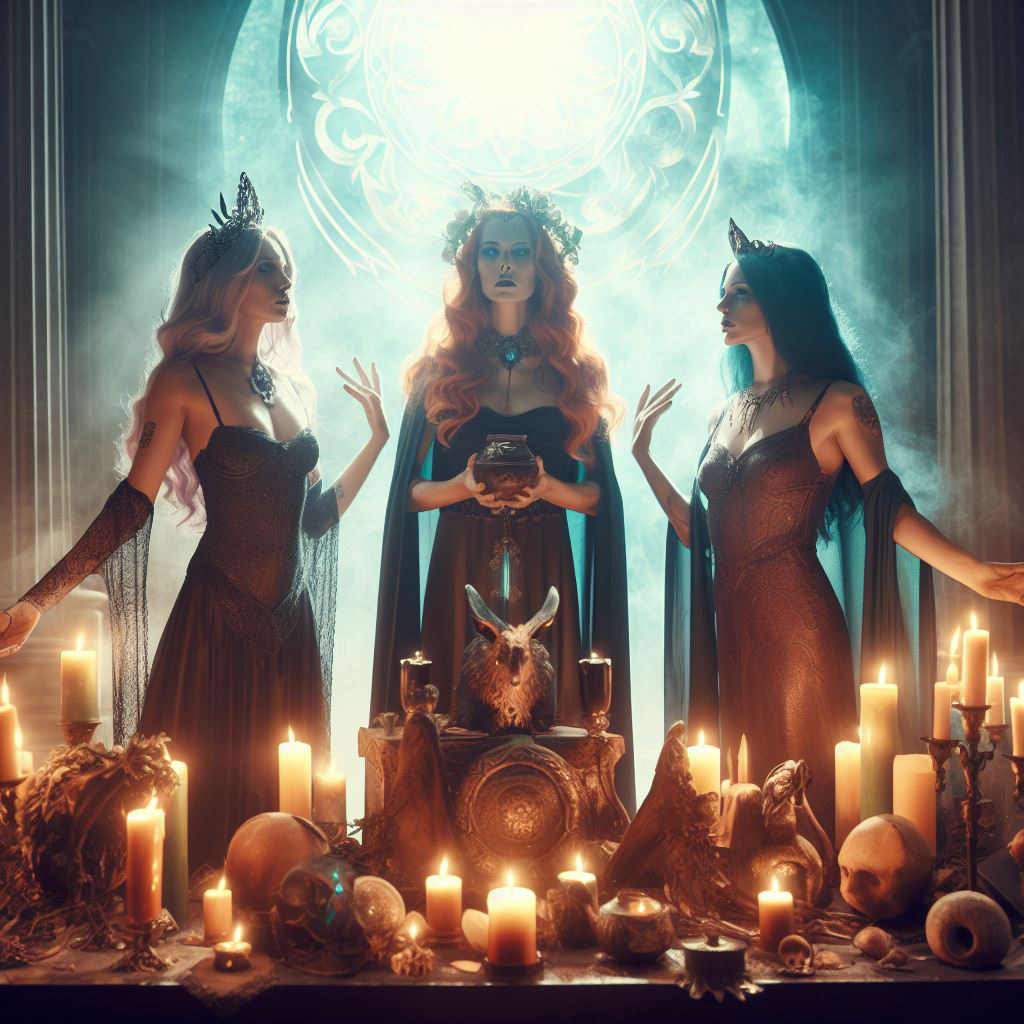
In the mystical realms of modern witchcraft and pagan traditions, the eve of August 13th marks a momentous occasion, a festival that resonates with the cosmic energies of Hecate, the ancient goddess of the moon, magic, and the unseen. Hecate’s Night, celebrated with fervor and reverence, unfolds as a tapestry of rituals, offerings, and the kindling of torches or candles at crossroads—an embodiment of Hecate’s sacred domains. This special night becomes a communal celebration, a collective expression of gratitude, seeking Hecate’s blessings, and acknowledging her timeless influence over the realms of magic and the unseen.

Crafting the Ritual Tapestry

A Preparation of Devotion

As the eve of August 13th draws near, practitioners eagerly step into a phase of meticulous preparation, a sacred dance of anticipation that heralds the arrival of Hecate’s Night. This momentous occasion invites devotees to immerse themselves in the art of crafting intricate rituals that mirror the multifaceted nature of the goddess. The air becomes charged with an otherworldly energy, and devotees embark on a journey of spiritual preparation, weaving a tapestry of devotion to Hecate that resonates with the ancient rhythms of magic.

In the days leading up to Hecate’s Night, practitioners engage in a delicate dance of symbolism, carefully selecting elements that capture the essence of Hecate’s multifaceted attributes. The preparation involves a deep dive into the rich tapestry of Hecate’s mythology and symbolism, extracting threads of wisdom, magic, and transformation to infuse into the forthcoming rituals.

Offerings, meticulously chosen to symbolize devotion and respect, play a pivotal role in the preparatory phase. Devotees select items that resonate with Hecate’s sacred domains, such as keys, herbs, or symbolic representations of the triple goddess. Each offering becomes a token of connection, a physical manifestation of the devotee’s reverence and commitment to the goddess.

Ritual tools, whether athames, candles, or symbolic objects, undergo a process of empowerment during the preparatory phase. Devotees take the time to inscribe these tools with symbols, runes, or words that carry the intention of the rituals to come. This act becomes a sacred infusion of energy, aligning the tools with the devotee’s purpose and inviting Hecate’s presence to amplify their magical efficacy.

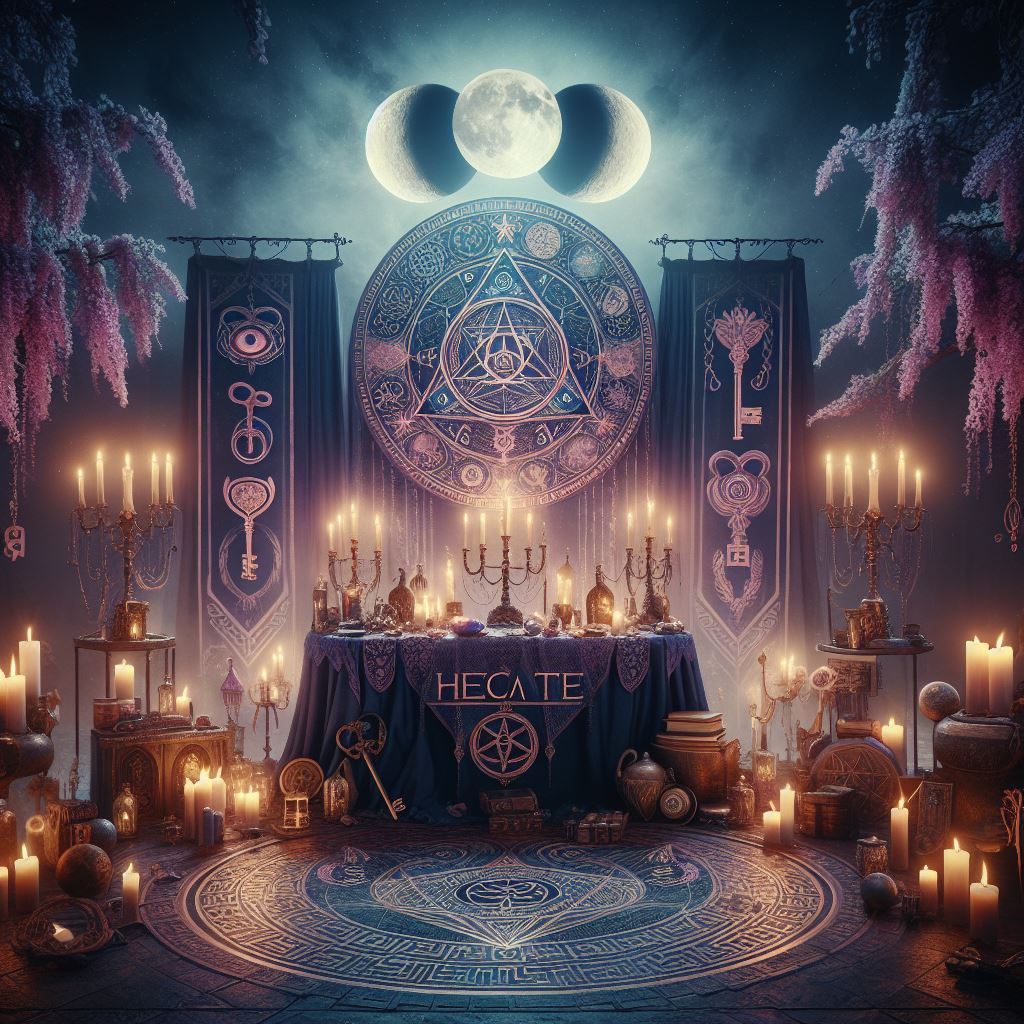
Devotees turn their attention to the creation of sacred spaces where the rituals will unfold. Altars are adorned with symbols of Hecate—crossroads, keys, lunar imagery—and offerings are carefully arranged. The act of setting up these sacred spaces becomes a ritual, a meditative process that attunes the physical and spiritual realms, inviting Hecate’s presence to permeate the ritual space.

As devotees immerse themselves in the preparatory phase, there is a conscious effort to commune with the ancients, tapping into the timeless wisdom of Hecate. This may involve meditation, divination, or simply quiet contemplation, allowing practitioners to attune themselves to the subtle currents of Hecate’s energy and seek guidance for the rituals ahead.

The meticulous preparation for Hecate’s Night culminates in a crescendo of anticipation. The air is thick with the fragrance of offerings, the energy of intention, and the subtle hum of magical currents. Devotees, now fully immersed in the sacred art of crafting intricate rituals, stand at the threshold of a night where the veils between worlds thin, inviting Hecate to join in the symphony of devotion and magic.

The preparation for Hecate’s Night becomes a profound and transformative journey. Devotees, guided by the wisdom of the ancients and fueled by a deep well of devotion, stand ready to weave a tapestry of magic that honors the goddess in all her multifaceted glory. As the eve of August 13th unfolds, practitioners’ step into the sacred dance, embracing the mystical energy of Hecate’s Night with open hearts and a profound sense of connection to the goddess and the ancient traditions that have echoed through time.

Offerings as Symbols of Devotion and Respect

A Gesture of Sacred Exchange

In the intricate preparations for Hecate’s Night, the selection of offerings emerges as a profound and symbolic aspect, where devotees engage in a deliberate dance of meaning and intention. This ritualistic act transcends the material realm, transforming into a sacred exchange that seeks to create a harmonious connection between the mortal and the divine, invoking Hecate’s transformative energy in the process.

Devotees embark on a thoughtful journey to select offerings that encapsulate the essence of their devotion and respect for Hecate. Each item chosen becomes a symbol, a representation of the devotee’s understanding of the goddess’s multifaceted nature. Keys, which symbolize access to the mysteries and the unlocking of hidden knowledge, may find a place on the altar. Herbs associated with Hecate, such as mugwort or mandrake, might be chosen for their magical properties and connections to the spirit world.

Before being presented to the goddess, each offering undergoes a process of intentional charging. Devotees infuse the items with their personal intentions, desires, and the energy of their devotion. This act transforms the offerings from mere physical representations into vessels of spiritual significance. A key, for example, may carry the intention of unlocking personal growth or accessing spiritual insights, while herbs may be charged to invoke protection or enhance divination.

The act of offering transcends the physical act of presenting an item; it becomes a symbolic bridge between the mortal realm and Hecate’s divine essence. Devotees understand that their offerings are not merely material tokens but conduits through which a sacred exchange occurs. The symbolism embedded in each offering becomes a language, a form of communication that resonates with the energies of the goddess.

As devotees place their offerings on the altar, the gesture transforms into a sacred exchange—an intricate dance of giving and receiving that transcends the boundaries of the material and spiritual worlds. The act of offering becomes a gesture of respect, humility, and recognition of Hecate’s presence. In this exchange, devotees seek not only to give physical items but to open themselves to receiving the blessings, guidance, and transformative energy that Hecate offers in return.

The offerings, charged with intention and presented with reverence, serve as vessels for invoking Hecate’s transformative energy. Devotees understand that the symbolic exchange is a form of ritualistic alchemy, where the mundane is transformed into the magical. The offerings act as keys that unlock the gates to the unseen, inviting the goddess’s presence to permeate the ritual space and infuse it with her wisdom, protection, and guidance.

The meticulous selection and charging of offerings for Hecate’s Night transcend the realm of material gifts; they become a sacred language of devotion, a symbolic bridge that connects the devotee with the divine. This act of offering is woven into the fabric of the ritual, creating a harmonious exchange that resonates with the transformative energies of Hecate, enriching the spiritual journey of those who seek her embrace.

Crossroads Illumination

Symbolic Beacons at the Thresholds

A pivotal and profound act that defines the essence of Hecate’s Night is the ceremonial lighting of torches or candles at crossroads. This ritualistic practice transcends the physical act of kindling flames; it becomes a symbolic and spiritual gesture that transforms these liminal spaces into portals for profound connection with the goddess Hecate. The flickering flames, dancing at the crossroads, symbolize more than mere illumination—they become symbolic beacons, drawing Hecate’s attention, and beckoning her to join the revelry of shared devotion among her dedicated followers.

Crossroads, both in the physical and metaphysical sense, hold significant symbolism in various cultures and mystical traditions. They represent points of choice, decision, and the convergence of divergent paths. In the realm of Hecate’s Night, these crossroads transcend the mundane—they become thresholds where the boundaries between the physical and spiritual realms blur, creating spaces where the goddess’s influence is believed to be particularly potent.

As torches are lit at these symbolic intersections, practitioners acknowledge the crossroads as more than mere meeting points of roads. They become liminal spaces, where the veils between worlds become thin, and mystical encounters are possible. The illumination from the torches serves not only to dispel physical darkness but also to pierce through the spiritual veil, creating pathways for communion with the goddess. The crossroads, once ordinary intersections, transform into gateways, inviting Hecate to traverse between worlds and bless the gathering with her presence.

The flickering flames of torches and candles become symbolic beacons that draw the attention of Hecate, the goddess of crossroads and liminality. In the dance of fire, practitioners believe they are sending signals to the divine, inviting Hecate to join the sacred ritual. The flames not only illuminate the physical space but also act as ethereal signals, guiding the goddess’s attention to the crossroads where her devotees stand in anticipation.

The lighting of torches at crossroads is not a solitary act; it is a communal ritual that binds practitioners together in shared devotion. As the flames flicker in unison, they symbolize the collective energy of the gathering, a harmonious symphony of devotees reaching out to Hecate. The ritual becomes a shared endeavor, where the mystical energy at the crossroads is amplified by the collective intent, drawing the goddess into the heart of the ritual and into the shared experiences of her devotees.

The lighting of torches at crossroads during Hecate’s Night is a profound act that transcends the physical realm. It symbolizes the convergence of choice, spirituality, and shared devotion. The flickering flames, dancing at the intersections, serve as beacons guiding Hecate’s attention, inviting the goddess to join in the revelry and infuse the gathering with her transformative energy. As the torchlight illuminates the crossroads, it becomes a beacon of shared devotion, drawing the goddess into the mystical space where choices, both mundane and magical, are made and embraced with the guidance of Hecate’s enduring presence.

The Profound Significance of Crossroads Illumination

Guiding Through Thresholds

The ceremonial act of crossroads illumination during Hecate’s Night carries profound significance, transcending the mere physical act of lighting torches or candles. This ritual becomes a symbolic and spiritual gesture that encapsulates the essence of Hecate’s influence, symbolizing the crossing of thresholds—both literal and spiritual—where practitioners invite the goddess to guide them through the intricate intersections of life’s journey. The flickering flames at these mystical crossroads evolve into more than mere sources of light; they become conduits for spiritual communion, invoking the transformative power of Hecate to illuminate the paths of those who seek her guidance.

Crossing thresholds is an archetypal symbol found in myths, folklore, and spiritual traditions across the world. It signifies transitions, transformations, and the navigation of pivotal points in one’s journey. In the context of Hecate’s Night, the crossing of thresholds takes on a multifaceted meaning. Practitioners acknowledge both the literal crossroads where they stand, as well as the metaphorical intersections in their lives where choices and decisions shape their destinies.

The act of crossroads illumination becomes a deliberate invocation, a call to Hecate to stand as a guide at the crossroads of practitioners’ lives. As the flames flicker in unison, practitioners seek the presence of Hecate to provide clarity, wisdom, and guidance in navigating the complexities of their earthly and spiritual journeys. The literal act of lighting the crossroads symbolizes the desire to illuminate the obscured paths and make informed decisions under the watchful gaze of the goddess.

The flickering flames at the mystical crossroads act as conduits for spiritual communion. They signify the ethereal bridges connecting the mortal realm with the divine. Practitioners believe that the dance of flames represents the goddess’s response, a subtle acknowledgment of the invitation extended by her devotees. The illuminated crossroads become a meeting point between the material and spiritual, a sacred space where the goddess’s transformative energies can flow freely.

The transformative power of Hecate is invoked through the illumination of crossroads. The goddess, associated with magic, wisdom, and liminality, is believed to infuse the paths of those who seek her guidance with clarity and purpose. The torchlight becomes a metaphorical key, unlocking the mysteries of one’s journey and revealing the hidden truths that may be obscured in the shadows. Through the act of crossroads illumination, practitioners open themselves to the transformative energies of Hecate, allowing her light to guide them through life’s intricate web of choices and transitions.

The act of crossroads illumination during Hecate’s Night holds profound spiritual significance. It represents a deliberate invitation for the goddess to guide practitioners through the thresholds of their lives. The flickering flames become more than a visual spectacle; they become symbolic beacons, illuminating the spiritual paths with the transformative power of Hecate. As practitioners stand at the mystical crossroads, they embrace the goddess’s guidance, acknowledging her as a timeless guide through life’s intersections and gratefully welcoming her transformative light into their earthly and spiritual journeys.

Communal Celebration

A Harmonious Symphony of Devotion

Hecate’s Night stands as a distinctive celebration that transcends the typically solitary nature of many magical practices. Instead, it evolves into a vibrant communal festival, where devotees gather to weave a harmonious symphony of devotion. This shared celebration transforms the atmosphere into a sacred space, where practitioners come together, creating a powerful vortex of magic that resonates with the very essence of the goddess Hecate.

Unlike individual magical practices, Hecate’s Night becomes a collective endeavor, a communal alchemy where the energies of many intertwine to create a potent tapestry of magic. Devotees, drawn by a shared reverence for Hecate, converge to collectively express gratitude, seek blessings, and invoke the transformative energy of the goddess. The air becomes charged with the vibrancy of shared devotion, fostering a sense of unity that elevates the ritual into a profound communal experience.

Within the festival, devotees participate in shared rituals and offerings that amplify the magic of Hecate’s Night. Altars are adorned with symbols representing the goddess’s multifaceted nature, and offerings are carefully arranged, each devotee contributing to the collective energy. The shared symphony of devotion echoes through the air, creating a harmonious resonance that invokes the goddess to join in the collective celebration.

As practitioners collectively express their gratitude and seek Hecate’s blessings, the very air becomes charged with the energy of shared reverence. The convergence of individual intentions and the collective desire to honor the goddess creates a magical vortex—an energetic whirlpool that amplifies the potency of the rituals. This vortex serves as a conduit, drawing Hecate’s attention and inviting her transformative energy to infuse the festival with its profound magic.

Hecate’s Night not only serves as a moment to connect with the goddess but also fosters a sense of camaraderie and unity among practitioners. The shared experience of the festival builds a spiritual community where devotees feel a deep connection with one another. Through the shared celebration, bonds are strengthened, and a supportive network of like-minded individuals emerges, reinforcing the sense of collective purpose and shared devotion.

Hecate’s Night transforms into a communal tapestry where individual threads of devotion interlace to create a vibrant and interconnected whole. The festival becomes a shared space, where practitioners collectively express gratitude, seek blessings, and invoke the goddess’s transformative energy. As the harmonious symphony of devotion echoes through the air, devotees embrace the essence of Hecate, building a spiritual community that extends beyond the festival, creating lasting connections forged in the crucible of shared magic and reverence.

Acknowledging Hecate’s Timeless Influence

A Connection Beyond Time and Space

As the flickering torchlight and candle glow illuminate the crossroads during Hecate’s Night, practitioners collectively acknowledge the goddess’s timeless influence over the realms of magic and the unseen. The crossroads, bathed in the warm embrace of the goddess’s energy, becomes a symbolic meeting point where the ancient and the modern converge. In this liminal space, practitioners recognize Hecate as a guardian of mystic realms, and her palpable presence infuses the shared rituals with a profound sense of magic.

The torches and candles at the crossroads serve as more than sources of light; they become symbols of enlightenment and guidance. The dance of light and shadows mirrors the intricate dance of Hecate herself, weaving through the veils that separate the seen and the unseen. Practitioners, standing at this intersection of paths, acknowledge the symbolic illumination as a manifestation of Hecate’s enduring influence, guiding them through the mysteries of magic and the choices presented in both the mundane and mystical realms.

Hecate’s timeless influence becomes palpable as devotees engage in shared rituals, creating a collective outpouring of gratitude and reverence. The goddess’s essence is woven into the fabric of the celebration, and her presence is felt in the whispers of incantations, the rhythmic beats of drums, and the aroma of offerings wafting through the air. The shared experience becomes a communion with the ancient spirit of Hecate, bridging the gap between the devotees’ modern practices and the ageless wisdom of the goddess.

Hecate’s Night becomes a moment where time bends and folds upon itself. The ancient influence of the goddess intertwines seamlessly with the modern celebration, creating a bridge between the past and the present. In the glow of torchlight, practitioners sense a temporal shift, feeling the echoes of ancient rituals resonating through the crossroads. The celebration becomes a sacred continuum, where the timeless essence of Hecate permeates every ritual act, transcending the constraints of linear time.

Amid shared devotion, the practitioners stand at the crossroads, not only physically but also metaphorically, connecting with the timeless spirit of Hecate. The ancient goddess becomes a guiding force, offering wisdom and insight to those who seek her presence. The bridge between the past and the present becomes a conduit for the goddess’s influence to flow through, creating a tapestry of connection that spans across ages, reminding practitioners that they are part of an unbroken chain of devotion to Hecate’s enduring mysteries.

As torches and candles cast their glow at the crossroads during Hecate’s Night, practitioners recognize and honor the goddess’s timeless influence. The celebration becomes a moment where time bends, allowing Hecate’s ancient presence to intertwine with the modern practices, creating a bridge between the past and the present that fosters a profound connection with the enduring spirit of the goddess.

Hecate’s Night Ritual
Embracing the Wisdom of the Crossroads

  • A black candle
  • A key (symbolic or real)
  • A bowl of dark soil or earth
  • Mugwort or vervain for purification
  • Offerings: garlic (honey, or pomegranate seeds)
  • A piece of parchment and a pen

Preparation

  1. Begin by selecting a quiet and dimly lit space, preferably outdoors. This ritual is most potent when performed during the dark phase of the moon or on a moonless night.
  2. Set up your altar with the black candle at its center. Surround it with the bowl of dark soil, the key, and the purification herbs.
  3. Light the black candle, symbolizing the presence of Hecate, the goddess of the crossroads and keeper of the mysteries.

The Ritual

  1. Cleansing and Purification – Take a few moments to ground yourself. Inhale deeply, absorbing the energy of the night around you. Light the mugwort or vervain, allowing the smoke to purify the space and yourself. Stand at the altar, visualize any negativity or obstacles dissolving in the smoke. Feel the energy of the space becoming clear and charged.

  2. Invocation – Speak aloud an invocation to Hecate, acknowledging her as the guide of the crossroads and the keeper of ancient wisdom. You can create your own or use traditional invocations, expressing your reverence and inviting her presence.
  3. Offerings – Place offerings of garlic, honey, or pomegranate seeds at the base of the black candle. These are symbols of protection, sweetness, and the mysteries of life. Express your intentions and desires for guidance, transformation, or protection to Hecate. Speak from the heart, knowing that she understands the language of sincerity.
  4. Crossroads Meditation – Hold the key in your hands, symbolizing your access to the mysteries. Close your eyes and meditate on the concept of the crossroads—where paths converge, and choices are made. Feel the energy of possibilities surrounding you.
  5. Divination – Using the parchment and pen, pose a question or seek guidance from Hecate. Enter a meditative state and allow your intuition to guide your writing. You may use a divination method like tarot or runes for additional insights.
  6. Closing – Thank Hecate for her presence and guidance. Blow out the black candle, signifying the end of the ritual. Keep the key in a sacred space, as a symbol of your connection to the mysteries of the crossroads. This Hecate’s Night ritual is a personal and potent way to connect with the
Hecate
General Magic
Rituals

Conclusion

In essence, Hecate’s Night is a sacred and transformative festival, where devotees craft a tapestry of devotion, invoke the goddess’s presence through offerings and crossroads illumination, and join in a communal celebration that transcends the boundaries of time and space. It is a moment where the ancient and the modern converge, and the cosmic energies of Hecate infuse the ritual space with magic, wisdom, and the transformative power that has echoed through the ages.
Posted on Leave a comment

Honoring the Green Man – Libations

Honoring the Green Man

Introduction

Offering Libations to the God of the Forest

The forest is more than a collection of trees. It is a living, breathing, and sacred entity that holds the secrets and mysteries of the natural world. It is a realm where magic and wonder abound, where the spirits of the land dwell, and where the ancient and primal forces of nature manifest. And among these forces, there is one that stands out as the most elusive and enigmatic: the Green Man.

The Green Man is the god of the forest, the lord of the wild, and the protector of all living things. He is the embodiment of the life force that flows through the greenery, the face that peers out from the foliage, and the voice that whispers in the wind. He is the guardian of the cycles of nature, the master of growth and decay, and the patron of fertility and abundance. He is revered and honored by many cultures and traditions, and he is a source of inspiration and guidance for many witches and pagans.

But who is the Green Man, and how can we connect with him? How can we honor his presence and his power, and show our respect and gratitude for his gifts? One of the most ancient and sacred ways to do so is by offering libations to the trees, the living symbols of his essence and his domain. In this article, we will explore the history and meaning of this practice, and how you can perform it in your own way.

Offering Libations to the God of the Forest

Deep within the heart of the forest, a realm where time seems to slow and the very essence of nature’s majesty becomes palpable, there resides a divine presence known as the Green Man. This enigmatic deity, often revered as the Lord of the Wild, serves as a living embodiment of the spirit of untamed beauty and vitality that flows through the woodlands. With each ancient tree standing sentinel and every rustling leaf whispering its secrets, the Green Man’s essence resonates through the very soil that breathes with life.

The Green Man is not merely a symbol or a figure from folklore; he is a living embodiment of the wilderness’s soul. To honor him is to pay tribute to the essence of the forest itself, acknowledging the profound interconnectedness between humanity and the natural world. This ritual act is an expression of reverence for the cycles of life and the ever-turning wheel of seasons, mirroring the ceaseless renewal and transformation that characterizes the forest’s ecosystems.

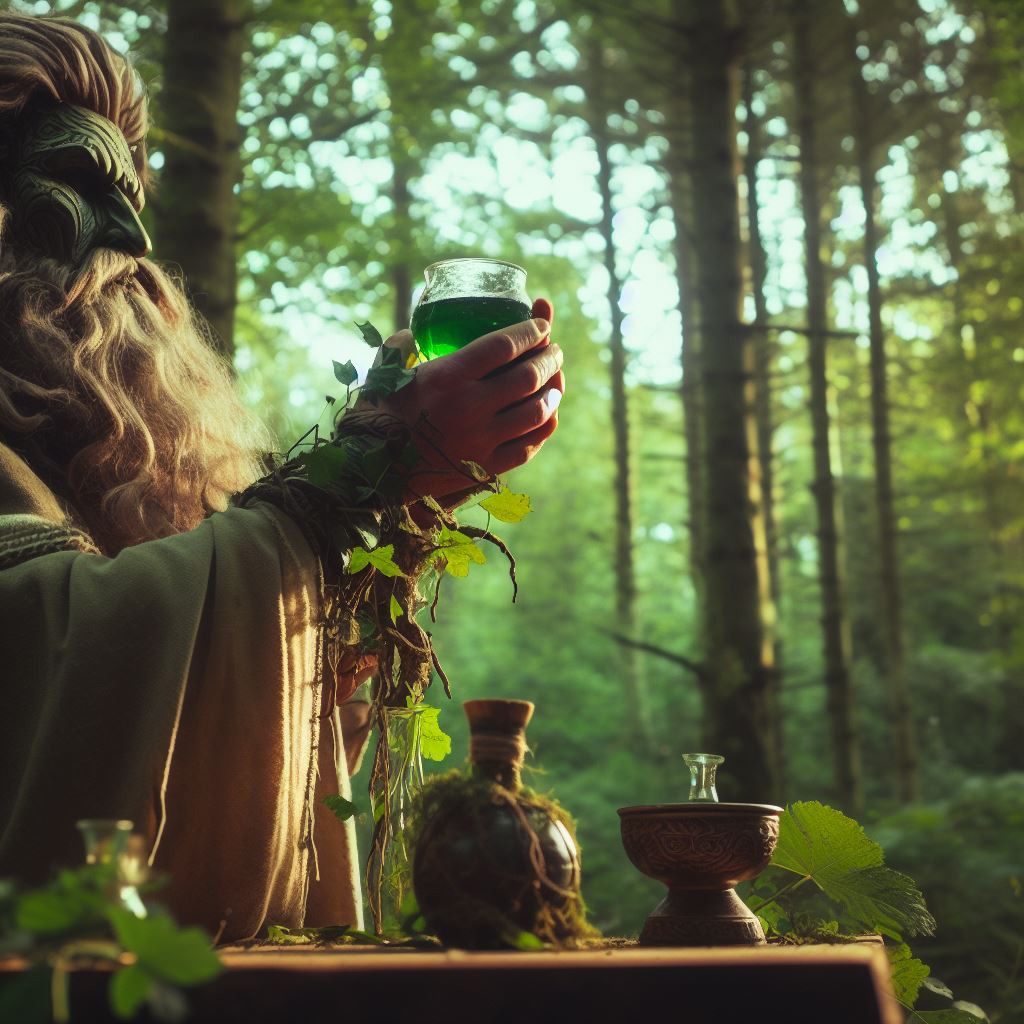
One of the most profound ways to forge this connection and show gratitude to the Green Man is through the age-old ritual of offering libations to the trees. This sacred act involves the offering of nourishing and life-giving substances, such as water, honey, or herbal brews, to the ancient trees that have borne witness to countless seasons. As the libations are poured, they symbolize the reciprocity between human beings and the forest, a reminder that we are not separate from nature but an integral part of it. In this act of giving, we acknowledge the gifts bestowed upon us by the forest and the vital role it plays in sustaining life on Earth.

As the libations trickle down the gnarled bark and merge with the fertile earth at the tree’s base, a sense of communion with the Green Man and the forest’s energy is established. It is a moment of profound connection, where the boundaries between the human and natural worlds blur, and the ancient wisdom of the woodlands imparts its insights. This sacred exchange of offerings serves as a testament to the enduring bond between humanity and the wilderness, a bond that calls upon us to be stewards of the land and protectors of the wild places that cradle the Green Man’s spirit.

The Green Man: A Deity of the Wild

The Green Man, a potent symbol of rebirth, growth, and the eternal cycle of life, possesses a history as diverse and intricate as the lush ecosystems he symbolizes. Across various cultures worldwide, this enigmatic figure emerges, known by different names but embodying a singular essence—a celebration of the untamed vitality of the natural world.

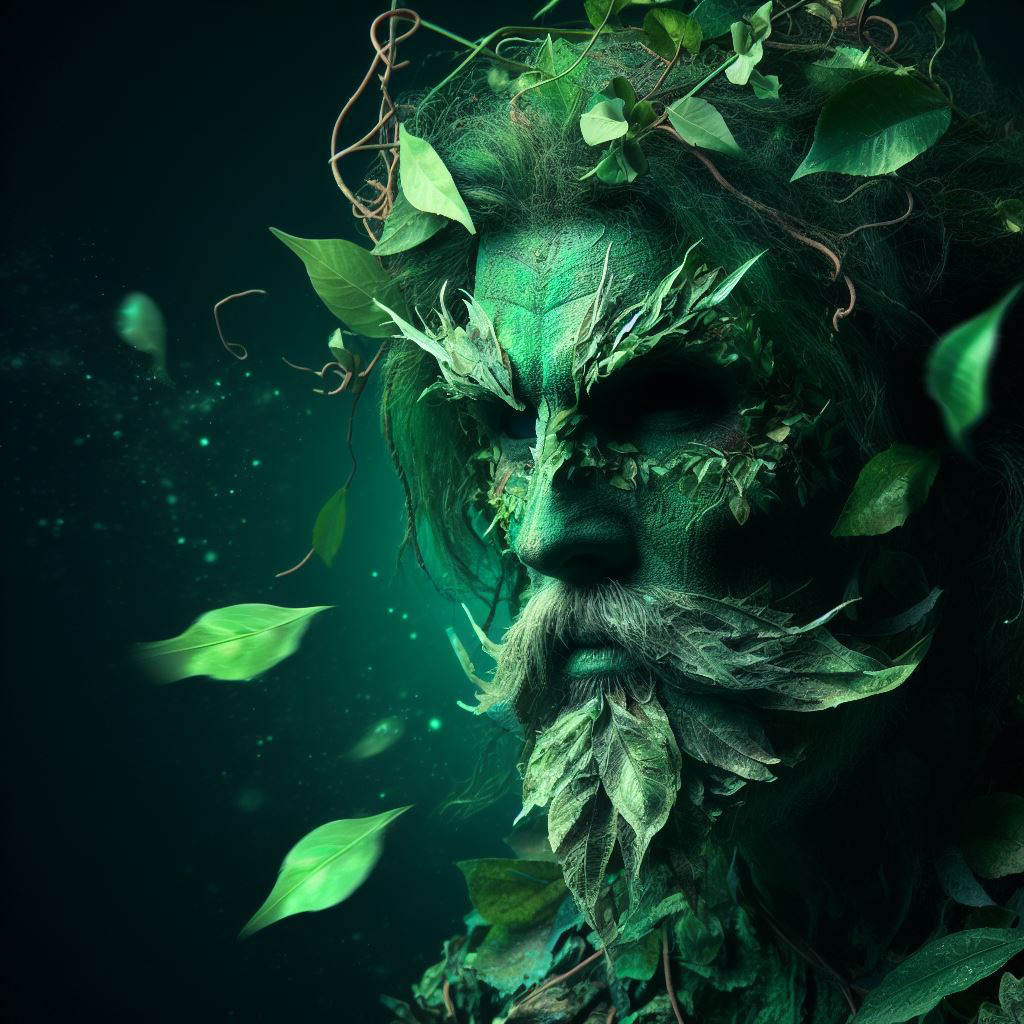
Most frequently portrayed as a visage enveloped by luxuriant foliage, leaves, or winding vines, the Green Man is the very spirit of the verdant Earth. He stands as a testament to the enduring force of life’s renewal, as cycles shift and seasons turn, marking the perpetual dance of existence.

In the rich tapestry of Celtic traditions, the Green Man finds kinship with Cernunnos, the horned god of the forest. Here, he takes on the mantle of guardian of the wilderness, watching over the woodlands and the creatures that dwell within. As Cernunnos, he is revered as the embodiment of wildness, an entity who harmonizes with the rhythms of nature.

However, the Green Man’s influence extends beyond the Celtic lands. In the vast landscape of Hinduism, analogous deities such as Pashupati and Rudra bear striking similarities to his untamed and fertile attributes. These counterparts, like the Green Man, are revered for their connections to the wild and represent the potent life force that animates all living beings.

Throughout these diverse cultures and beyond, the Green Man’s essence transcends boundaries, weaving a common thread that links humanity to the natural world. His visage adorns ancient cathedrals and modern eco-spiritual practices alike, serving as a poignant reminder of our intrinsic connection to the Earth. The Green Man is more than a symbol; he is a living testament to the enduring power of nature’s vitality and an invitation to embrace the wild spirit that resides within us all.

Offering Libations: An Ancient Tradition

The ancient tradition of offering libations, a ritual act of presenting liquids like water, wine, milk, or other sacred fluids, holds a profound place within the annals of human history. This timeless practice transcends cultural boundaries, spanning civilizations and epochs, and remains a potent symbol of reverence, gratitude, and an earnest longing for communion with the divine.

In the context of the Green Man, the act of offering libations to the trees becomes a poignant means to bridge the gap between humanity and the spirit of the forest. These venerable trees, like sentinels of the ages, stand as living embodiments of the natural world’s enduring vitality and wisdom. To pour libations at their roots is an act of recognition—an affirmation that the majestic trees, with their gnarled bark and leafy crowns, are vessels of life-giving energy, guardians of the woodland’s secrets, and vessels of the Green Man’s spirit.

Through this sacred act, we not only acknowledge the life force that courses through the veins of the forest but also express our profound gratitude for the gifts it bestows upon us. The water, representing the essence of life, flows down the tree’s trunk and mingles with the earth, much like the intricate web of connections that bind all living beings. It symbolizes a deepening relationship with the natural world, a willingness to engage in a dialogue with the ancient spirits of the woods, and an understanding that we are custodians of the land, tasked with preserving its wild beauty for generations to come.

As we offer libations to the trees, we become part of an unbroken chain of reverence that stretches back through time. It is an act of reciprocity, a gesture that affirms our role as stewards of the Earth and emphasizes our interconnectedness with the larger web of life. Through this simple yet profound ritual, we honor the Green Man and his enduring presence in the forests, forging a deeper connection with the wilderness, and nurturing our own spirits in the process.

How to Offer Libations to Trees in Honor of the Green Man

  • Select a Sacred Grove: Choose a serene and sacred spot within the forest, preferably near a venerable old tree. Oaks, maples, and other ancient species are often revered in Green Man traditions.
  • Gather Your Offering: Traditionally, libations can be simple, such as pure water or a natural beverage like cider. You may also choose to make an herbal infusion, which can be especially meaningful if you use herbs associated with the Green Man, such as oak leaves or pine needles.
  • Approach with Reverence: As you approach the chosen tree, do so with a sense of reverence and humility. Recognize that you are entering the realm of the Green Man.
  • Pour the Libation: Pour the libation at the base of the tree, allowing the liquid to flow gently onto the roots. You can say a prayer or offer words of gratitude as you do so. Feel the connection between yourself, the tree, and the forest deepening.
  • Meditate and Connect: After the offering, take a moment to sit or stand in quiet meditation. Feel the energy of the tree and the forest enveloping you. Listen to the sounds of the natural world around you. You may even sense a response from the Green Man.
  • Express Gratitude: Before leaving, offer thanks to the Green Man and the tree for their presence and blessings. Leave the forest with a sense of renewed connection to nature.

The Spiritual Benefits of Tree Libations

Offering libations to trees in honor of the Green Man is not just a symbolic act; it’s a deeply spiritual practice that can yield profound benefits:

  • Connection: It fosters a sense of oneness with nature and the divine, promoting a deeper connection to the natural world.
  • Gratitude: It encourages an attitude of gratitude for the Earth’s abundance and the vital role that trees play in sustaining life.
  • Balance: It reminds us of the delicate balance between humanity and the natural world, highlighting the importance of respecting and protecting our environment.
  • Renewal: It symbolizes renewal and the cyclical nature of life, drawing inspiration from the Green Man’s eternal spirit.

Conclusion

In the sacred act of offering libations to the trees, we partake in a timeless ritual that not only honors the enigmatic Green Man but also breathes life into the very soul of the forest. This ancient practice serves as a profound invitation, urging us to rekindle our intimate connection with the natural world that cradles our existence. It beckons us to express heartfelt gratitude for the Earth’s boundless bounty, reminding us of the profound gifts that nature graciously bestows upon us.

Yet, it is more than a mere ritual. It is a testament to the enduring presence of the Green Man, the guardian of the wild and the embodiment of nature’s untamed spirit. As we offer our libations, we acknowledge his eternal watchfulness over the woodlands, his whispered secrets among the rustling leaves, and his wild heart beating in every creature that calls the forest home.

Through this sacred gesture, we become not only stewards of the land but also custodians of our own spiritual connection to the natural world that sustains us all. In the gentle flow of water down the tree’s bark, we find the echo of our interconnectedness with all living beings, a reminder of our role in preserving the wild beauty that is the Green Man’s legacy. In honoring the Lord of the Forest, we deepen our bonds with the Earth, rekindle the ancient fires of reverence, and emerge from the woods with hearts and spirits alight with the vitality of the wild.

Posted on Leave a comment

Hecate – An Introduction

Hecate
Hecate

Introduction

Hecate – An Introduction

In the realm of ancient mythology and modern witchcraft, few deities possess the mystique and power of Hecate. This enigmatic goddess, with her multifaceted nature, has captured the imagination of seekers, witches, and scholars alike.

In this article, we will embark on a journey to explore the depths of Hecate’s mythology, symbolism, and her enduring significance in the world of witchcraft and paganism.

Deeper Knowledge

The Mythology of Hecate

Delving into the rich tapestry of Greek mythology, the figure of Hecate emerges as a captivating and multifaceted goddess, weaving her presence through the realms of the moon, magic, witchcraft, and the ethereal spirit world. Her lineage traces back to the Titans Perses and Asteria, establishing her as a divine figure steeped in the antiquity of ancient Greek cosmology.

Hecate’s association with the moon infuses her character with an enigmatic allure. Often depicted in the moonlit shadows, she becomes a celestial force, embodying the waxing and waning lunar phases. This lunar connection ties her intimately to the rhythms of the night sky and underscores her role as a mistress of magic and witchcraft. In the soft glow of moonlight, Hecate’s influence becomes a guiding beacon for those seeking the arcane mysteries and mystical arts.

At the crossroads of mythology, Hecate assumes a dual role that reflects her profound connection to both the living and the dead. Her most renowned mythological role unfolds as she aids Demeter in the fervent search for her abducted daughter, Persephone. The tale weaves a narrative where Hecate’s guidance extends beyond the mortal realm, transcending the boundaries between life and death. It’s within the depths of the underworld that Hecate takes on the mantle of a chthonic goddess, a guardian who navigates the shadowy realms and stands at the crossroads where destinies intertwine.

The myth unfolds as Hecate accompanies Persephone into the depths of Hades, serving as a steadfast companion in the underworld. This journey signifies Hecate’s unique position as a guide between worlds, her influence reaching across the veil that separates the realms of the living and the dead. In this dual role, Hecate becomes a bridge between the mysteries of mortality and the unseen realms, a key figure in the intricate dance between life’s vibrancy and the profound mysteries of the afterlife.

The dual facets of Hecate’s character, as a chthonic goddess and guardian of crossroads, embody a cosmic mediator who navigates the intricate threads of existence. Her chthonic nature brings her close to the earth’s depths, aligning her with the mysteries of the underworld. Simultaneously, her guardianship of crossroads signifies her role as a divine arbiter, overseeing the convergence of paths and choices that shape mortal destinies.

In the grand tapestry of Greek mythology, Hecate’s origins unveil a goddess of complexity, magic, and cosmic influence. Her moonlit mystique, magical mastery, and chthonic connection make her a deity whose influence extends beyond the pantheon, resonating with seekers of wisdom, magic, and the profound mysteries that bind the living and the dead.

Symbolism and Attributes

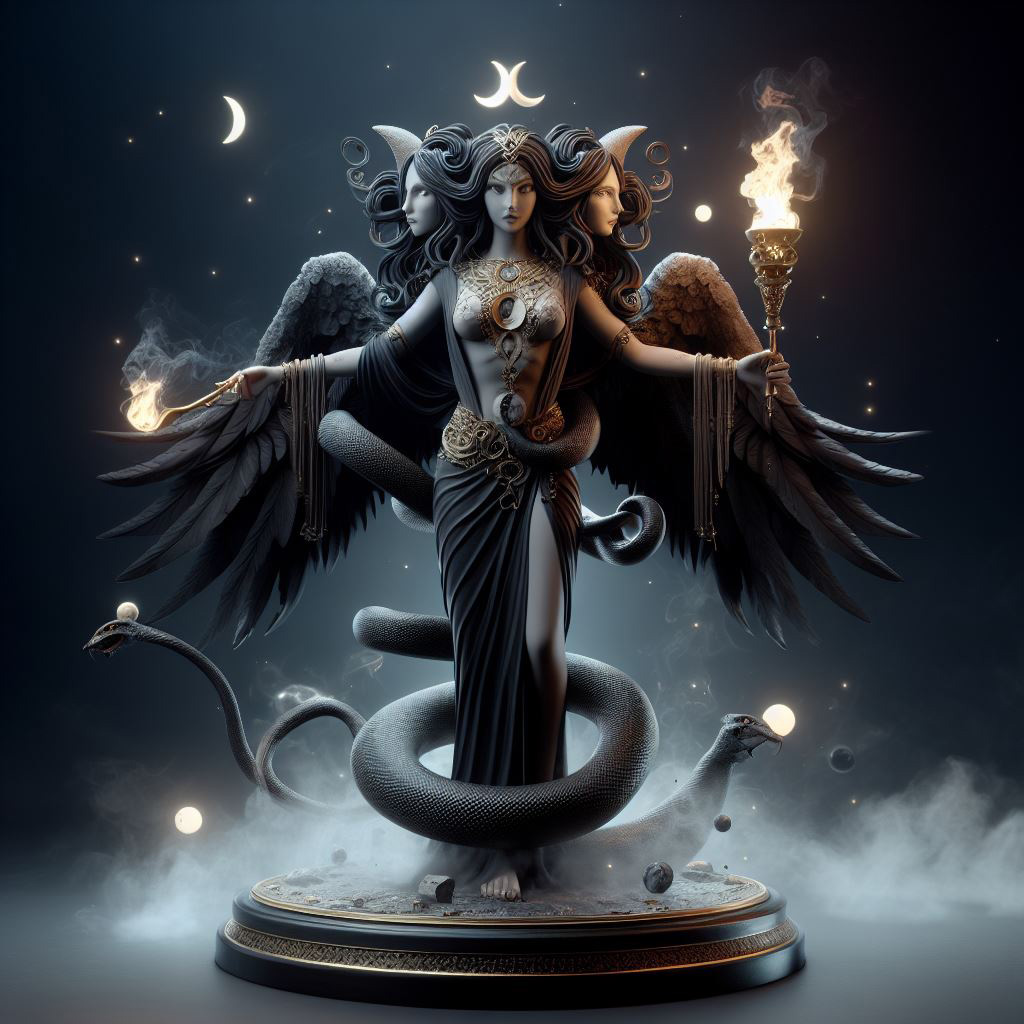
Within the intricate tapestry of her imagery, Hecate emerges as a goddess of triple majesty, a three-headed deity whose symbolic presence speaks volumes about her dominion over the vast expanse of time and space. This portrayal reflects her mastery over the past, present, and future, encapsulating the eternal dance of cosmic cycles.

Hecate’s three-headed visage symbolizes her tripartite sovereignty, each head gazing with watchful eyes upon the realms she governs. The past, cradled in one head, reflects the echoes of history that shape the present. The present, held in another, embodies the unfolding moment, while the third head, focused on the future, casts its gaze towards the mysteries yet to be unveiled. This triadic representation showcases Hecate’s timeless awareness and her ability to navigate the continuum of existence.

Her threefold form not only signifies temporal dominion but also encompasses her mastery over the elemental realms—earth, sea, and sky—enveloping the entirety of the cosmos. Hecate, in her triune aspect, becomes a cosmic force, intricately linked to the natural elements that weave the fabric of the universe.

In one hand, Hecate cradles a torch, its flickering flame illuminating the path through the darkness. This symbolic beacon not only guides lost souls but also serves as a metaphor for Hecate’s role as a guiding light in the shadows of the unknown. On the other hand, she wields a key, a potent symbol of her power to unlock the gates between worlds. This key grants her access to hidden realms and esoteric knowledge, solidifying her position as a guardian of mystical thresholds and unseen dimensions.

Entwined around her arm, a serpent weaves its sinuous form, symbolizing Hecate’s connection to the life force and the transformative power of change. The serpent, an ancient symbol of renewal and regeneration, reflects Hecate’s role as a catalyst for transformation. Through this coiled companion, she channels the potent energies of the life force, invoking the serpent’s wisdom to guide those who seek renewal and evolution.

In the intricate symbolism of Hecate’s portrayal, each element speaks to her multifaceted nature, weaving a narrative of cosmic governance, illumination in the darkness, access to hidden realms, and the transformative power inherent in the cycles of life. The triune majesty of Hecate’s iconography becomes a visual hymn to the complexity and depth of her divine essence.

Hecate in Witchcraft and Pagan Practices

In the sacred circles of modern witchcraft and pagan traditions, Hecate stands as a revered and multifaceted deity, her presence intricately woven into the fabric of magical practices and the exploration of unseen realms. The complexities of magic find resonance in Hecate’s multifaceted nature, making her a guiding force for witches and practitioners seeking profound insights and esoteric wisdom.

Hecate Worship

Hecate’s multifaceted nature aligns seamlessly with the intricate tapestry of magic, offering practitioners a multifaceted guide through the mysteries of the unseen. Witches invoke her not only for her symbolic representation of the moon, magic, and the spirit world but also for her unique ability to traverse liminal spaces, particularly the potent crossroads. In these in-between realms, where the veil between worlds is believed to be thin, Hecate becomes a spiritual guide, aiding seekers in their magical endeavors.

Practitioners turn to Hecate for guidance and protection, especially when navigating the threshold spaces of crossroads. These liminal points are seen as conduits between realms, where magical energies converge. Hecate, as a guardian of crossroads, is invoked to assist in safely navigating these mystical junctures, ensuring a harmonious connection with the energies that lie beyond the mundane.

Hecate is a central figure in rituals designed for transformation, where her symbolism of change and rebirth becomes a potent catalyst. Witches and practitioners call upon her during moments of transition, embracing her association with the power of change as they seek to shed old patterns and embrace new beginnings. In these rituals, Hecate becomes a beacon of transformative energy, guiding individuals through the cycles of growth and renewal.

Practitioners turn to Hecate for guidance and protection, especially when navigating the threshold spaces of crossroads. These liminal points are seen as conduits between realms, where magical energies converge. Hecate, as a guardian of crossroads, is invoked to assist in safely navigating these mystical junctures, ensuring a harmonious connection with the energies that lie beyond the mundane.

Hecate is a central figure in rituals designed for transformation, where her symbolism of change and rebirth becomes a potent catalyst. Witches and practitioners call upon her during moments of transition, embracing her association with the power of change as they seek to shed old patterns and embrace new beginnings. In these rituals, Hecate becomes a beacon of transformative energy, guiding individuals through the cycles of growth and renewal.

Her torch, held aloft, becomes a metaphorical beacon that illuminates the shadows within. In rituals for self-discovery and personal growth, Hecate’s torch guides individuals through the depths of their inner landscapes. The flickering flame not only reveals hidden aspects of the self but also symbolizes the illuminating power of knowledge and insight. As seekers journey through the inner realms, Hecate’s torch becomes a steady light, casting light upon the paths of self-discovery.

In modern witchcraft, Hecate’s reverence goes beyond mere ritualistic gestures. She becomes a dynamic presence, a wise guide, and a powerful ally for those who navigate the intricate terrain of magic, seeking wisdom, protection, and transformation along their mystical journeys.

Celebrating Hecate

The devotion to Hecate transcends the constraints of a single day, weaving seamlessly throughout the phases of the lunar calendar. Among the lunar cycles, the dark moon, synonymous with the new moon, emerges as an especially auspicious time for practitioners to pay homage to Hecate. As the moon retreats into shadow, devotees find a sacred space to connect with the goddess, offering tokens of significance and engaging in rituals that seek her guidance, protection, or aid in their magical endeavors.

During the dark moon, devotees craft offerings infused with intention, such as garlic, honey, or eggs, symbolic representations that hold special significance in Hecate’s realm. These offerings become vessels of connection, symbolic gestures that convey the devotee’s reverence and seek to align with the energies of the dark moon. Rituals during this time often focus on invoking Hecate’s presence, drawing on her wisdom, and creating a sacred space where seekers can commune with her across the veils that separate the mundane and the mystical.

Hecate’s Night, celebrated on the eve of August 13th, stands as a festival dedicated to honoring the goddess in a collective outpouring of reverence. This special night unfolds as a tapestry of rituals, offerings, and the kindling of torches or candles at crossroads—an embodiment of Hecate’s sacred domains. Devotees come together to create a harmonious symphony of devotion, inviting Hecate to bless their endeavors, protect their paths, and infuse their lives with her transformative energy.

As the eve of August 13th approaches, practitioners prepare for Hecate’s Night by crafting intricate rituals that reflect the goddess’s multifaceted nature. Offerings are carefully selected to symbolize devotion and respect, and the lighting of torches or candles at crossroads becomes a symbolic act to invoke Hecate’s presence at these mystical intersections. The festival becomes a communal celebration, a collective expression of gratitude, seeking Hecate’s blessings, and acknowledging her timeless influence over the realms of magic and the unseen.

The act of lighting torches or candles at crossroads holds profound significance during Hecate’s Night. Crossroads, representing liminal spaces and choices, become portals for connecting with the goddess. The flickering flames become beacons that draw Hecate’s attention, inviting her to join the revelry and partake in the shared devotion of her devotees. This act of crossroads illumination symbolizes the crossing of thresholds, both literal and spiritual, as practitioners invite Hecate to guide them through the intersections of life’s journey.

In essence, the worship of Hecate unfolds like a celestial dance, moving in synchrony with the lunar phases and culminating in the radiant celebration of Hecate’s Night. Devotees, guided by the moon’s cycles and the goddess’s timeless influence, weave a tapestry of devotion that honors Hecate’s multifaceted nature and seeks her blessings throughout the ever-changing cosmic rhythms.

Conclusion

Hecate, the multifaceted goddess of crossroads and transformation, continues to enchant and inspire those who seek her wisdom and guidance. Her rich mythology, complex symbolism, and enduring significance in witchcraft and pagan practices make her a beloved and powerful figure in the world of spirituality and magic. As we traverse the crossroads of our own lives, Hecate stands as a torchbearer, offering illumination and transformation on our spiritual journeys.

Posted on Leave a comment

Exploring the Enigmatic Green Man

Exploring the Enigmatic Green Man

Introduction

Exploring the Enigmatic Green Man

A Symbol of Nature’s Resilience and Renewal

In the intricate tapestry of pagan and nature-based spirituality, there exists a realm of symbolism where few icons strike a chord as profound as the enigmatic Green Man. This mysterious figure, whose origins can be traced back through the annals of history, has succeeded in weaving its tendrils of fascination deep into the very essence of the spiritual practices of witches, Wiccans, and pagans alike. With each passing generation, the Green Man’s allure has not waned; instead, it has grown stronger, beckoning seekers of ancient wisdom and guardians of the natural world.

In the following passages, we shall embark on an illuminating journey, delving into the shadows and light to uncover the veiled mysteries and profound significance encapsulated within this timeless and revered icon. Join us as we peel back the layers of time and foliage to reveal the heart of the Green Man’s enigma.

Origins of the Green Man

The Green Man, with its profound symbolism and enduring presence, stands as a symbol that transcends the boundaries of both cultures and time itself. Its roots delve deep into the annals of history, stretching across an intricate tapestry of ancient civilizations, from the Celts to the Romans, and beyond. In the rich tapestry of Celtic mythology, the Green Man finds a hallowed place, often interwoven with the lore of Cernunnos, the horned god of the forest and fertility. Within the Celtic pantheon, Cernunnos embodies the untamed spirit of the woodlands, resonating with the vitality and generative forces of the natural world.

He we journey further back in time, we encounter the echoes of the Green Man in Roman culture, where he finds a connection with the deity Pan. In Roman times, Pan was revered as a wild and mischievous god of nature, roaming the wilderness with his piping music. It is in the playful yet primal essence of Pan that we see the Green Man’s enduring presence, for both figures encapsulate the untamed aspects of the natural world. This timeless connection to both Celtic and Roman mythologies underscore the universality of the Green Man, demonstrating its ability to bridge cultures and epochs, a testament to its enduring significance in the realm of the occult and spirituality.

Symbolism and Imagery

The Green Man, when visualized, assumes a distinctive form that has become iconic in the realms of pagan and nature-based spirituality. This iconic representation often portrays a face, predominantly male, emerging mysteriously from an intricate tangle of foliage. His visage is intricately adorned with a lush tapestry of leaves, vines, and sometimes even the bountiful fruits of the Earth. This imagery serves as a potent symbol, resonating with profound meaning and encapsulating a timeless connection between humanity and the natural world.

Within this symbolic representation, the Green Man becomes a living testament to the deep, symbiotic relationship between humankind and the environment. His visage, entwined with the verdant bounty of the forest, carries a message of unity and interdependence, reminding us that we are an integral part of the greater ecosystem. He stands as the guardian of the woods, the embodiment of nature’s enduring resilience in the face of adversity.

The Green Man serves as a poignant symbol of the cycle of life, death, and rebirth that permeates the natural world. As the seasons unfurl their respective tapestries, he transforms in tandem. In spring, he manifests as the youthful and vibrant representation of new life and beginnings. In summer, he reaches his zenith, radiating strength and vitality amidst the lush foliage. As autumn approaches, he assumes the role of a wise elder, his leaves perhaps withering and falling, mirroring the cycle of aging and eventual decline. Finally, in winter, he enters a state of dormancy, mirroring the quietude and rest that nature experiences during this period.

The Green Man’s portrayal, bedecked in leaves, vines, and fruits, encapsulates a profound message about our interconnectedness with the natural world, the enduring spirit of nature’s resilience, and the eternal cycle of life, death, and rebirth that defines our existence on this planet. This symbolic figure invites us to reflect on our place within the grand tapestry of life, encouraging us to cultivate a deeper reverence for the world that surrounds us.

Seasonal Significance

One of the most intriguing aspects of the Green Man is his association with the changing seasons. In pagan and Wiccan traditions, he is often linked to the Green Man’s face, and its various stages reflect the seasons of the year:

  • Spring: The Young Green Man – In spring, the Green Man emerges as a youthful figure, representing the awakening of nature after the long winter. This phase is a celebration of growth, fertility, and new beginnings.
  • Summer: The King of the Forest – As summer arrives, the Green Man matures into a regal and powerful figure. He embodies the fullness of life, with lush foliage and vitality at its peak.
  • Autumn: The Wise Old Man – With the arrival of autumn, the Green Man takes on the role of a wise elder. His leaves may begin to wither and fall, symbolizing the cycle of life and death.
  • Winter: The Dormant Spirit – In winter, the Green Man enters a period of dormancy, much like the natural world around us. His face may disappear entirely amidst the bare branches, only to reemerge in the spring.

The Green Man in Witchcraft and Pagan Practices

Within the vibrant tapestry of witchcraft and pagan practices, the Green Man occupies a sacred and cherished space, playing a pivotal role in rituals and ceremonies that resonate with the rhythms of nature. His presence is invoked not merely as a symbol, but as a living embodiment of the Earth’s vitality and wisdom. In the heart of these practices, the Green Man becomes a conduit through which practitioners seek a profound connection with the natural world and its enduring cycles of life, death, and rebirth.

One of the most potent ways in which the Green Man is woven into the spiritual fabric of witchcraft and paganism is through the art of invocation. When practitioners call upon the Green Man, they are beckoning the spirit of the forest to infuse their rituals with vitality and vitality. It is believed that his presence can bring about a deepening of one’s connection with the Earth, fostering a sense of harmony and balance with the natural forces that govern our world.

But the Green Man offers more than just a connection to the Earth’s vitality; he is also revered as a source of wisdom. Within the cycles of nature, there lie profound lessons about growth, transformation, and the inevitability of change. Practitioners turn to the Green Man to seek insights from these ancient rhythms, using his symbolism as a mirror to reflect upon their own life journeys. In doing so, they gain a deeper understanding of the cyclical nature of existence and find guidance in navigating life’s challenges and transformations.

Incorporating the Green Man into one’s spiritual practice goes beyond mere invocation; it extends to the creation of sacred spaces. Many practitioners include representations of the Green Man in their altar setups, where he stands as a sentinel of the forest, overseeing their spiritual work. His presence in these sacred spaces serves as a constant reminder of the interconnectedness between humanity and the natural world.

Moreover, the Green Man features prominently in meditative practices. During these moments of reflection, individuals turn their attention to this iconic figure, delving into his symbolism to find inner peace and rejuvenation. Through meditation, they tap into the Green Man’s vitality, channeling it to restore their own sense of balance and harmony.

Lastly, the Green Man is an integral part of seasonal celebrations within pagan and witchcraft traditions. As the seasons change, so does the Green Man’s role in these festivities. Whether it is the joyous celebration of new life in spring, the zenith of vitality in summer, the introspection of autumn, or the quiet contemplation of winter, the Green Man is a constant companion, guiding practitioners through the ever-turning wheel of the year.

The Green Man is not merely an abstract symbol but a living presence within the hearts and practices of witches and pagans. He is the bridge that connects them to the vitality and wisdom of the Earth, a guardian of the forest, and a source of inspiration for their spiritual journeys. As they continue to honor and invoke the Green Man, they forge a deeper and more profound bond with the natural world and the ancient rhythms that underlie all of existence.

Conclusion

In the intricate tapestry of witchcraft, paganism, and nature-based spirituality, the Green Man stands not only as a symbol but as a timeless and revered guide. His significance is profound, a living testament to the enduring bond between humanity and the natural world. As the seasons unfurl their eternal dance of life and death, the Green Man emerges as a steadfast reminder of our deep-rooted connection to the Earth and the enduring spirit of renewal that flows through all of existence.

Whether you have walked the path of a seasoned practitioner for years or are a curious seeker just beginning your journey, the Green Man extends an invitation—a call to embrace the mysteries of the forest and the ever-turning wheel of life. He beckons us to stand as stewards of the Earth, to honor the wisdom found in the cycles of nature, and to rekindle the ancient bond that links our spirits to the resplendent tapestry of creation. In the embrace of the Green Man’s symbolism, we find not only a symbol but a profound teacher, guiding us toward a deeper understanding of ourselves, the natural world, and the eternal mysteries that await our exploration.

Posted on Leave a comment

Deities

Deities
Deities

Introduction

Welcome to the Deities category, where you will find fascinating and inspiring information on the various gods and goddesses that are worshipped or invoked by witches and pagans. Deities are the manifestations of the divine spirit that pervades the universe, and they reflect the diverse aspects and attributes of this spirit. Deities can help us understand and connect with the divine, as well as empower and guide us in our magical and spiritual journeys.

In this category, you will learn about the history, mythology, and symbolism of different deities from various cultures and traditions, such as Celtic, Greek, Egyptian, Norse, and more. You will also discover how to work with deities in your witchcraft, such as how to choose a patron deity, how to honor and communicate with them, how to incorporate them into your rituals and spells, and how to respect their individual personalities and preferences.

We hope you enjoy exploring this category and learning more about the deities that resonate with you and your practice. Remember, deities are not only powerful and wise beings, but also compassionate and supportive allies. So be respectful, curious, and open-minded. Happy learning and blessed be!

All Deities Posts