 Reading Time: 18 minutes
Introduction
Goddess of War, Death, and Fate in Samhain’s Mystical Realm
As the ancient festival of Samhain draws near, the veil between the living and the dead thins, allowing spirits and energies from the Otherworld to intermingle with our own. One of the most powerful mythological figures who presides over this liminal time is The Morrigan, the Irish goddess of war, death, and fate. Known for her fearsome presence on the battlefield, The Morrigan also reigns over transformation and the cycles of life and death, making her deeply connected to the themes of Samhain.

The Morrigan’s Role as a Shapeshifter and Death Goddess
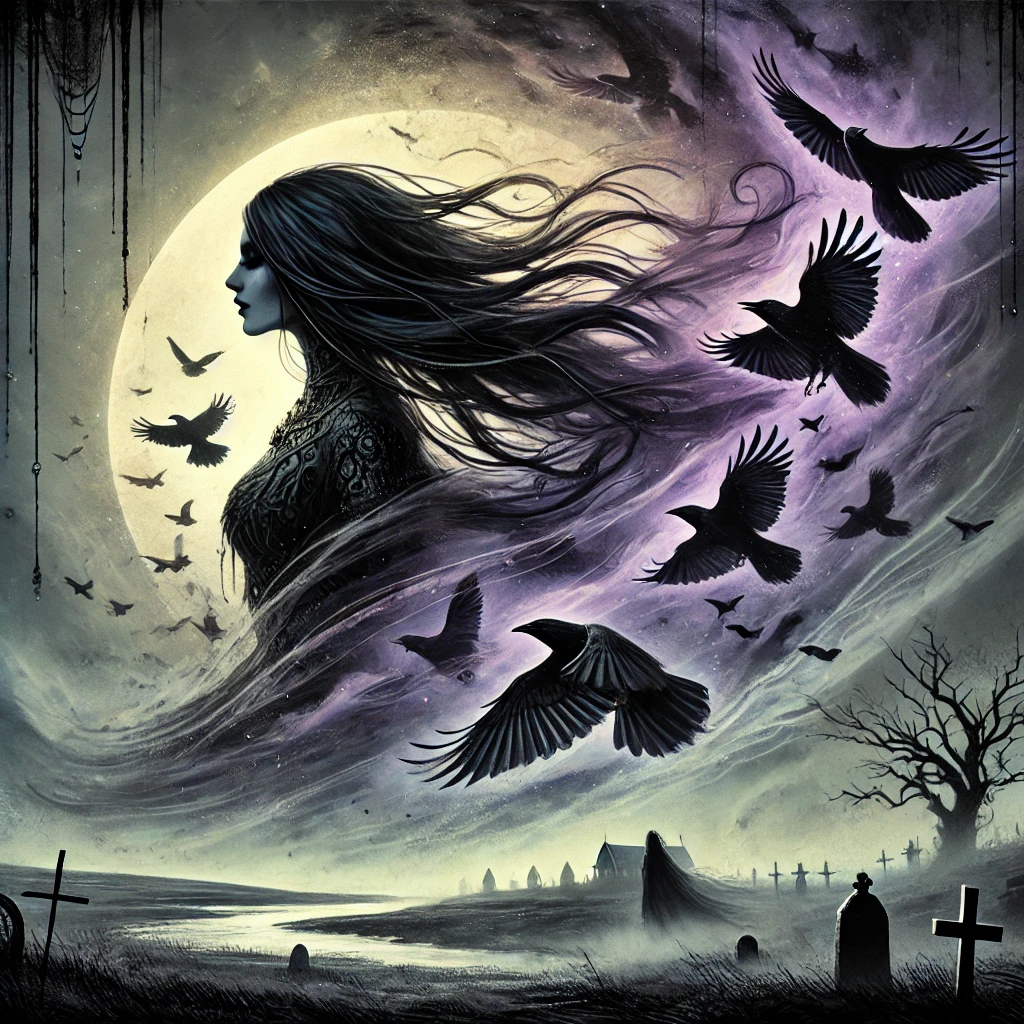
The Morrigan, one of the most formidable deities in Irish mythology, is often portrayed as a shapeshifter, with her most common form being that of a crow or raven. These dark, foreboding birds have long been associated with death and battle, and in The Morrigan’s case, they serve as manifestations of her presence on the battlefield. As these ominous creatures circle overhead, they represent The Morrigan’s omnipotent gaze, surveying the fates of warriors as she decides who will live and who will perish. The sight of crows or ravens above a battlefield was not just a common occurrence but a symbolic reminder of The Morrigan’s influence over the cycle of life, death, and fate.
The Morrigan’s ability to shapeshift underscores her fluid, ever-changing nature, much like the cyclical forces of life, death, and rebirth that she governs. Her form is not static; she moves effortlessly between worlds, adopting the shape most suited to her purpose—whether to guide souls, deliver warnings, or sow fear in the hearts of mortals. This ability to transform highlights her dominion over the liminal spaces where the boundaries between the known and the unknown, the living and the dead, become blurred. The Morrigan’s fluidity reflects the essence of transformation itself, where endings give way to new beginnings and where the veil between worlds thins.
As a goddess of death and transformation, The Morrigan represents the dark, mysterious energies that come into play during Samhain. This sacred festival marks the time of year when the boundary between the living and the dead is at its most permeable, allowing for a deeper connection with spirits and the Otherworld. The Morrigan’s presence during Samhain is a powerful reminder that death is not the final end but a necessary transition—a passage into the unknown that is crucial to the cycle of existence. In her role as a goddess of death, she ensures that death is treated as an essential phase of life, not as something to be feared but as something to be embraced as part of nature’s order.
Just as Samhain signals the end of the harvest and the quiet onset of winter’s descent, The Morrigan stands as a guardian at the threshold of change, guiding souls into the Otherworld. Her role is not one of destruction for its own sake but of transformation. She leads the dead through the process of dying, ensuring that this journey into the afterlife is not chaotic but part of a cosmic rhythm. In this way, she mirrors the natural cycles of death and rebirth, showing that life continually renews itself even in the midst of endings.
Through her shapeshifting, The Morrigan embodies the unpredictability and inevitability of change, emphasizing that just as life moves through stages, so too does the soul move through different states of existence. Her ability to cross between forms—raven, wolf, maiden, or crone—illustrates her mastery over transformation and her intimate connection with the mysteries of life and death. Each form she takes serves a purpose in fulfilling her role as both a destroyer and a creator, reminding us that transformation often requires the death of old ways before new growth can occur.
Her appearance during Samhain is particularly potent because this time of year is associated with endings, whether the literal end of the harvest season or the metaphorical end of the old self. The Morrigan’s energy during Samhain offers a path forward for those willing to confront the darker aspects of life and embrace the transformative power that comes with facing death, both in the physical sense and in the sense of letting go of old patterns, fears, or identities. She shows that within every death—whether of the body, the ego, or an outdated way of thinking—there is a promise of renewal and rebirth, echoing the cycles of the earth itself.
In this way, The Morrigan serves not only as a goddess of war and death but also as a guide through the darker, transitional periods in life. She leads the souls of the dead into the Otherworld while simultaneously helping those still living to navigate their own transformations. Just as the world grows quieter with the onset of winter, The Morrigan’s influence during Samhain teaches us that it is within this stillness, this liminal space between the old and the new, where true change occurs.
The Morrigan’s role as a shapeshifter and goddess of death underscores her profound connection to the mysteries of transformation, making her one of the most potent and revered figures during Samhain. As the cycle of life continues to turn, The Morrigan stands at the threshold of change, guiding souls through death and transformation and ensuring that the seeds of renewal are planted even in the darkest times. Her presence reminds us that no matter how final death may seem, it is always the precursor to something new, a reminder that endings are not the cessation of life but the foundation upon which new growth emerges.
The Morrigan’s Connection to Samhain
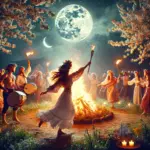
The Morrigan’s connection to Samhain is both profound and symbolic, embodying the dark, transformative energy that defines this ancient festival. Samhain, which marks the end of the harvest and the beginning of winter, is a time when the veil between the living and the dead is at its thinnest, allowing for the communion between both realms. As a festival that honors death, transformation, and the cycle of life, Samhain is the time of year when The Morrigan’s presence is most keenly felt in rituals and mythological narratives. As a goddess of death, fate, and transformation, The Morrigan holds a powerful role during this sacred time, guiding practitioners through the mysteries of life, death, and rebirth.
Often depicted as presiding over death, The Morrigan is more than a bringer of physical death. Her role encompasses the death of old ways, outdated habits, and aspects of the self that must be shed for personal growth and renewal. This symbolic aspect of her connection to death is crucial during Samhain, as the festival is not just a time to honor those who have passed into the Otherworld, but also a moment to reflect on one’s own internal cycles of transformation. The Morrigan, in this way, becomes an essential figure for those seeking personal evolution, helping them let go of the past and embrace the potential for rebirth that lies beyond.
During Samhain, The Morrigan’s presence in rituals reminds practitioners that death, in all its forms, is a natural and necessary part of life’s cycle. The death she oversees is not an end, but rather a gateway to transformation. Her energy guides individuals through the darkness of endings, helping them confront their fears, release what no longer serves them, and prepare for the new possibilities that will emerge. Just as the leaves fall and the earth grows quiet in winter’s approach, The Morrigan’s influence at Samhain encourages a deep introspection, urging individuals to examine the parts of their lives that must be surrendered to allow new growth to take root.
The Morrigan’s association with Samhain reflects the deeper truths woven into the fabric of the festival: that life and death are intimately connected, and that within every ending lies the potential for new beginnings. The Morrigan stands as a guardian of these cycles, reminding us that transformation is often born out of darkness and that the decay of one phase of life is necessary to fertilize the soil for the next. Her role in Samhain rituals encourages practitioners to embrace this natural flow and to trust in the regenerative power of letting go.
In many mythological narratives, The Morrigan’s power over fate and transformation is intricately tied to Samhain’s themes. She is often depicted overseeing the transition between life and death, whether through her presence on battlefields or her role in guiding souls into the Otherworld. This symbolism becomes even more potent during Samhain, when the dead are honored, and the mysteries of mortality are faced with reverence. The Morrigan, as both a warrior goddess and a guide through the unknown, embodies the courage needed to face death—whether it is the death of the physical body or the metaphorical death of the self.
For those practicing modern witchcraft or Pagan traditions, The Morrigan’s energy during Samhain becomes an anchor for personal rituals centered on transformation. Whether through meditation, divination, or ceremonial offerings, practitioners invoke her power to aid in releasing old patterns, inviting renewal, and deepening their understanding of life’s cyclical nature. She encourages those who call upon her to confront their fears of death and change and to recognize that what is feared often holds the key to greater strength and wisdom.
The Morrigan’s shapeshifting abilities further align her with the transformative power of Samhain. As a figure who can move between forms, shifting from maiden to crone, from woman to crow, she embodies the fluidity and changeability inherent in the cycles of life and death. Her transformations remind us that just as she can shift between states, so too can we transform ourselves. This makes her an especially potent deity to invoke when seeking to release old identities and embrace new possibilities during the liminal time of Samhain.
At its core, Samhain is a time of surrender and reflection—a moment to pause before the winter’s descent, to honor the ancestors, and to confront the mysteries of the Otherworld. The Morrigan’s connection to this sacred festival serves as a reminder that death is not an ending to be feared, but a transformation to be embraced. Her presence during Samhain rituals provides a sense of comfort for those seeking to confront their own mortality and the changes they must undergo to grow.
Ultimately, The Morrigan’s deep ties to Samhain mirror the festival’s themes of death, transformation, and renewal. She stands as a guide through the darkness, a powerful figure who shows that within the mysteries of death lies the potential for new life. By embodying the energies of endings and rebirth, The Morrigan reminds us that within the darkest moments of the year, there is always the seed of something new waiting to grow. Her energy, at its most potent during Samhain, helps practitioners move through the cycles of their own lives, accepting death as a natural part of existence and preparing for the inevitable renewal that follows.
The Morrigan and the Legend of Cúchulainn
One of the most captivating and well-known tales involving The Morrigan is her complex relationship with the legendary Irish hero, Cúchulainn. In this myth, The Morrigan’s role as a goddess of fate, death, and transformation is powerfully illustrated through her interactions with the great warrior, revealing both her fierce nature and her undeniable influence over the cycles of life and death.
As the story unfolds, The Morrigan appears to Cúchulainn just before his final, fateful battle. In this critical moment, she offers him her favor in the form of seduction, a gesture that could be interpreted as both a test of his character and a symbolic offering of protection. By aligning herself with the hero, The Morrigan offers Cúchulainn a chance to alter the course of his fate, potentially securing victory and survival in battle. However, Cúchulainn, fiercely independent and determined to rely on his own strength, rejects her advances. This rejection is not merely a dismissal of The Morrigan’s offer—it is a refusal to accept her role in his destiny. In rejecting the goddess, Cúchulainn also defies the forces of fate that she embodies.
Angered by Cúchulainn’s rejection, The Morrigan curses him, setting the stage for his ultimate downfall. Her curse is not simply an act of vengeance but a powerful reminder that no mortal, no matter how strong or heroic, can escape the grasp of fate. The Morrigan, as the weaver of destiny, ensures that Cúchulainn’s defiance comes with consequences. Her curse foreshadows his doom, signaling that his final battle will end not in triumph, but in death.
The story of Cúchulainn and The Morrigan reaches its tragic climax as the battle unfolds. True to her prophetic curse, Cúchulainn meets his fate on the battlefield, struck down in his final moments. As he lies dying, The Morrigan appears once more, this time in the form of a crow—one of her most iconic shapeshifted forms. Perched on his shoulder, she watches over him as he takes his last breath, a silent yet powerful witness to his demise.
The image of The Morrigan as a crow watching over Cúchulainn’s death is steeped in symbolism. Crows and ravens, often associated with death and the battlefield, are The Morrigan’s favored forms, and their presence serves as a reminder of her dominion over both life and death. By taking the shape of a crow, The Morrigan asserts her authority over the cycle of mortality and reinforces the idea that death, like fate, is inescapable. No matter how heroic or mighty a warrior may be, they cannot evade their destiny.
The legend of Cúchulainn and The Morrigan is a powerful illustration of the goddess’s control over fate and her connection to the inevitable end that awaits all mortals. In her rejection and curse of Cúchulainn, The Morrigan demonstrates that fate is not something that can be negotiated or avoided—it is an inescapable force that governs the lives of both heroes and ordinary mortals alike. Cúchulainn’s attempt to defy The Morrigan, and by extension fate, is ultimately futile, as he learns that even the greatest warriors cannot escape their destined end.
Furthermore, The Morrigan’s presence at Cúchulainn’s death, in the form of the crow, highlights her role as a guide through the transition from life to death. She is not merely a distant observer of death, but an active participant in the process of crossing from the mortal world into the Otherworld. In her role as a death goddess, The Morrigan is both a harbinger of death and a guardian who oversees the passage of souls into the afterlife. Her appearance at the moment of Cúchulainn’s death underscores her dominion over the cycles of existence, ensuring that death, while inevitable, is part of the natural order that she oversees.
The myth of The Morrigan and Cúchulainn also speaks to a deeper understanding of fate and mortality in Celtic mythology. The Morrigan’s role is not one of cruelty or vengeance, but of enforcing the natural balance between life and death. In rejecting her, Cúchulainn rejects the acceptance of this balance, but The Morrigan ensures that he ultimately meets his fate, as all mortals must. Her curse is a reminder that while mortals may strive for greatness, they are still bound by the inescapable cycles of life and death, which The Morrigan herself governs.
By appearing in her crow form to witness Cúchulainn’s death, The Morrigan further reinforces her role as a deity who oversees not only the physical deaths of mortals but also the spiritual passage into the afterlife. Her presence signifies that death is not merely an ending, but a transition—a crossing over into a new realm, guided by the hands of a goddess who understands both the darkness of death and the potential for rebirth that lies within it.
In this tale, The Morrigan serves as a powerful figure, embodying the themes of fate, mortality, and transformation that are central to her identity as a goddess. The legend of Cúchulainn reminds us that, while we may strive to control our own destinies, there are forces beyond our understanding that ultimately shape our lives and determine our fates. The Morrigan stands as the embodiment of these forces, a goddess who, through her interactions with Cúchulainn, asserts her dominion over life and death, reminding us that fate is a force we cannot escape, and that within every death, there is the potential for transformation and rebirth.
The Morrigan’s Invocation in Samhain Rituals
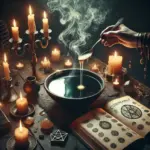
During Samhain, a time when the veil between the living and the dead is at its thinnest, The Morrigan’s dark and transformative energies are invoked in powerful rituals that focus on themes of personal transformation, release, and the mysteries of death. As the goddess of war, fate, and death, The Morrigan embodies the liminal space between life and the afterlife, guiding individuals through both physical and spiritual transitions. Her presence in Samhain rituals allows practitioners to confront the darker aspects of life, encouraging them to embrace the necessary process of letting go and shedding what no longer serves them, while preparing for the renewal that lies ahead.
Samhain is a festival intimately connected to death, not just in the literal sense, but also symbolically—the end of the harvest, the waning of the year, and the natural conclusion of cycles. It is a time for deep introspection, and The Morrigan’s energy is perfectly suited to help guide individuals through this process. Rituals invoking her often center on personal growth and the release of old habits, fears, and patterns, which mirrors the death of the old self in preparation for transformation and rebirth.
Rituals of Letting Go and Personal Transformation
One of the key themes in Samhain rituals invoking The Morrigan is the act of letting go. Just as The Morrigan watches over the battlefield, deciding the fates of warriors, she stands at the threshold of our own personal battles, helping us confront the aspects of our lives that must be relinquished. These rituals often involve symbolic acts of release—such as writing down fears, regrets, or old patterns on slips of paper and burning them as an offering to the goddess. By releasing these symbols of the past, practitioners honor The Morrigan’s transformative power and create space for new growth.
In addition to acts of release, The Morrigan is often invoked to guide individuals through the process of confronting personal fears and uncertainties about death and change. This can be done through meditation, where practitioners visualize The Morrigan’s presence, perhaps in the form of a crow, guiding them through the darkness of their inner landscape. During this introspective practice, The Morrigan’s energy helps them face what they may have been avoiding—whether that is emotional wounds, unresolved conflicts, or fears of the unknown.
Ceremonial Offerings and Connection with The Morrigan
Ceremonial offerings play a vital role in connecting with The Morrigan during Samhain. Practitioners may leave offerings such as black feathers, stones, wine, or food at an altar dedicated to the goddess, often outdoors where the natural elements can carry the offering to her. Crows and ravens are frequently viewed as messengers of The Morrigan, so leaving food for these birds as part of the ritual can be a direct offering to her, inviting her presence and guidance.
In return, practitioners seek The Morrigan’s wisdom, asking her to guide them through transitions, whether they are dealing with literal death or metaphorical endings in their lives. Her presence is invoked as a protector and a source of strength, as she helps them navigate the unknown and face the challenges that come with transformation. These offerings serve not only to honor the goddess but also to invite her into the practitioner’s life, allowing her transformative power to work on both the internal and external aspects of their existence.
Embracing Darkness and the Promise of Rebirth
The Morrigan’s role in Samhain rituals also highlights the importance of embracing the darkness rather than fearing it. In these rituals, darkness is not seen as something to be avoided but as a source of wisdom and growth. The Morrigan, who reigns over the battlefield and guides souls into the Otherworld, teaches that within darkness lies the potential for healing and rebirth. She encourages practitioners to move through the dark night of the soul, knowing that this journey is necessary for personal evolution.
As a guide through these transitions, The Morrigan helps practitioners recognize that every ending is a precursor to a new beginning. Just as the earth enters a period of dormancy during winter, awaiting the rebirth of spring, so too does The Morrigan guide us through the personal “winters” in our lives, reminding us that even in the darkest moments, there is always the promise of renewal. Her presence ensures that within the process of letting go, there is wisdom to be gained, and within every ending, the seeds of something new are already beginning to grow.
Facing the Mysteries of Death with The Morrigan
One of the most profound aspects of The Morrigan’s role in Samhain rituals is her guidance in confronting the mysteries of death. In many traditions, Samhain is a time to honor the dead, and The Morrigan, as a goddess deeply connected to death and the Otherworld, is often invoked to help facilitate this connection. Through rituals, practitioners may seek her guidance in communicating with ancestors or honoring the dead, trusting in her ability to navigate the liminal space between life and death.
In confronting the mysteries of death, The Morrigan offers reassurance that death is not an ending but a transformation. This understanding of death as part of the larger cycle of life is central to her energy. As practitioners invoke her during Samhain, they are reminded that death—whether it is the death of a loved one, a phase of life, or an aspect of the self—is a natural part of the greater cycle, and that there is always potential for growth and rebirth on the other side.
Her role as a psychopomp, guiding souls through death and beyond, adds to her significance during Samhain. Whether the practitioner is dealing with personal grief or existential fears of mortality, The Morrigan offers her strength and wisdom, helping them understand that death is a transition to be embraced rather than feared. By invoking The Morrigan, practitioners align themselves with the natural cycles of life and death, acknowledging that even in the face of great change, there is always a path forward.
The Morrigan as a Guide for Personal Growth
Ultimately, The Morrigan’s invocation during Samhain is about embracing transformation in all its forms. Whether through rituals of release, offerings, or meditative introspection, practitioners call upon The Morrigan to help them shed the past and prepare for what lies ahead. She stands as both a witness to their personal struggles and a guide through the process of change, offering her fierce strength as they navigate the darkness.
In invoking The Morrigan, practitioners accept the cyclical nature of life and the inevitability of endings, but also the infinite potential for rebirth that follows. Just as she watches over the battlefield, determining the fates of warriors, she watches over the personal battles we all face, offering her wisdom and protection as we move through our own transitions. Her energy, dark and transformative, reminds us that within every challenge, there is the possibility for growth, and within every ending, there is the promise of new life.
The Morrigan: A Goddess of Transformation and Power
The Morrigan, the formidable Irish goddess of war, death, and fate, holds a profound connection to the festival of Samhain—one as deep as the mysteries of death itself. As the goddess who oversees the passage from life to death, she stands as a guardian of transformation, guiding souls into the Otherworld and helping those who remain confront their own fears of change. Her presence during Samhain serves as a powerful reminder that endings are not something to fear but rather to embrace, for they are an integral part of the great cycles of existence that govern both the spiritual and physical realms.
Samhain, marking the end of the harvest and the approach of winter, is a liminal time—a threshold where the boundaries between the worlds of the living and the dead grow thin. In this moment of transition, The Morrigan’s energy is especially potent, reminding practitioners of the inevitability of change and the importance of embracing it. As the goddess of death and transformation, she oversees not only physical death but also the metaphorical deaths we experience throughout life—the end of relationships, phases, beliefs, and identities. Her presence at Samhain emphasizes that these endings are necessary steps in the journey of growth and renewal, just as death is a necessary part of the eternal cycle of life.
Through the invocation of The Morrigan during Samhain, practitioners tap into the ancient and potent energy of fate, death, and transformation. The Morrigan embodies the very essence of change, acting as both a catalyst and a guide through life’s most challenging transitions. Her ability to shapeshift, often taking the form of a crow or raven, mirrors the constant changes that individuals must endure throughout life—whether these changes are external or internal. Her symbolism as a shapeshifter underscores the fluidity of existence, reminding us that we, too, must be adaptable and open to transformation.
The Morrigan’s role as a goddess of battle further emphasizes her connection to personal transformation. Battles, whether fought on physical battlefields or within the confines of the self, are moments of intense challenge and change. They force us to confront what we fear and what we are attached to, often leading to profound transformation. In this sense, The Morrigan is not just a goddess who oversees war in the literal sense, but also a deity who guides individuals through the inner battles that accompany growth and change. Through her influence, we are encouraged to face our personal struggles with courage, knowing that these battles are a necessary part of the transformative process.
In the context of Samhain, The Morrigan’s dark, transformative power becomes even more significant. Samhain is a time to honor the dead, and The Morrigan, as the goddess who guides souls to the Otherworld, plays a crucial role in this process. Her presence helps practitioners come to terms with death, not as an ending, but as a transition into a new state of being. She reminds us that death, whether literal or metaphorical, is a doorway to new possibilities. Within every ending, there is the seed of a new beginning waiting to be awakened.
For those seeking guidance on matters of life and death during Samhain, The Morrigan offers her wisdom and protection. Her power is not only in her ability to oversee the passage into death but also in her role as a catalyst for inner transformation. Whether practitioners are honoring ancestors, releasing old patterns, or seeking clarity about their own future, The Morrigan stands as a timeless figure who holds the wisdom of life’s cycles. She helps individuals confront their fears of change and mortality, illuminating the path forward even in the darkest of times.
The Morrigan’s presence during Samhain also serves as a reminder that transformation is rarely comfortable or easy. As the goddess of war, she represents the chaos and upheaval that often accompany significant change. However, her energy teaches that through this chaos, there is the potential for growth, healing, and renewal. Just as the earth enters a period of rest and renewal during winter, so too must we embrace periods of stillness and darkness in our own lives, trusting that these moments of quiet transformation will eventually give way to new life.
In many ways, The Morrigan embodies the spirit of Samhain itself. This festival, which honors both the living and the dead, is a time when the veil between worlds is thin and the mysteries of life and death are most accessible. Through The Morrigan, we are reminded that death is not an end, but a transformation—one that is essential for the continuation of the cycles of existence. Her dark, transformative power teaches us that within the stillness of death, there is potential for new life, and within every ending, there is a seed of rebirth waiting to be awakened.
By invoking The Morrigan during Samhain, practitioners align themselves with the natural cycles of life and death, embracing the inevitability of change. The goddess stands as a guide through these transitions, offering her strength and wisdom to those who seek it. Her energy is a reminder that transformation is a necessary part of life’s journey, and that even in the face of darkness, there is always the promise of new beginnings.
Ultimately, The Morrigan’s connection to Samhain is a powerful symbol of the cycles of death and rebirth that govern all existence. She stands at the threshold of these cycles, guiding both the living and the dead through the transitions that define life. Her presence reminds us that within the darkest moments of the year, there is always the potential for transformation, and that within every ending, the seeds of renewal and rebirth are already beginning to take root.
Conclusion: The Morrigan, Guardian of Transformation and Fate
In the mystical embrace of Samhain, The Morrigan emerges as a formidable force, embodying the cycles of life, death, and rebirth. Her presence as a goddess of war, death, and fate serves as both a guide and a reminder that transformation is an inescapable part of existence. As the veil between worlds thins during Samhain, The Morrigan leads the way through the darkness, urging us to confront our fears, release what no longer serves us, and embrace the changes that lie ahead.
Her shapeshifting nature reflects the constant ebb and flow of life’s challenges and transformations, while her role as a guardian of death teaches that endings are not final—they are the fertile ground from which new beginnings emerge. Whether overseeing the battlefields of warriors or the inner struggles of individuals, The Morrigan holds the power to guide us through the most profound transitions, reminding us that even in moments of chaos and loss, there is always the potential for healing, renewal, and rebirth.
As a goddess deeply connected to Samhain, The Morrigan’s energy invites practitioners to align with the natural cycles of death and transformation, offering her wisdom to those willing to face the unknown. In invoking her during Samhain, we honor not only the dead but also the continual process of transformation that shapes our lives. Through The Morrigan, we are reminded that within every ending lies the seed of a new beginning, waiting for the darkness to give way to light.