Posted on Leave a comment

Myths & Lore: The Goddess and the Horned God

The Goddess and the Horned GodReading Time: 16 minutes
The Goddess and the Horned God

Introduction

The Eternal Dance of Death and Rebirth

In Wiccan and neo-Pagan traditions, the festival of Samhain holds profound significance, marking the end of the harvest season and the beginning of winter’s dark descent. It is a time when the veil between the worlds of the living and the dead is at its thinnest, making it an ideal occasion to honor the cycles of life, death, and rebirth. Central to these traditions is the myth of the Goddess and the Horned God—a sacred story that reflects the natural rhythms of the earth and the eternal dance between death and renewal. During Samhain, this myth serves as a powerful reminder that death is not the end but a necessary part of existence, making way for rebirth and new beginnings.

The Death of the Horned God

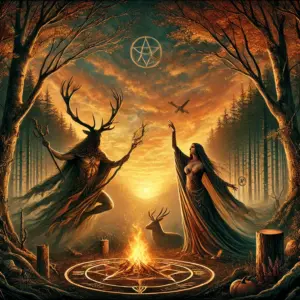
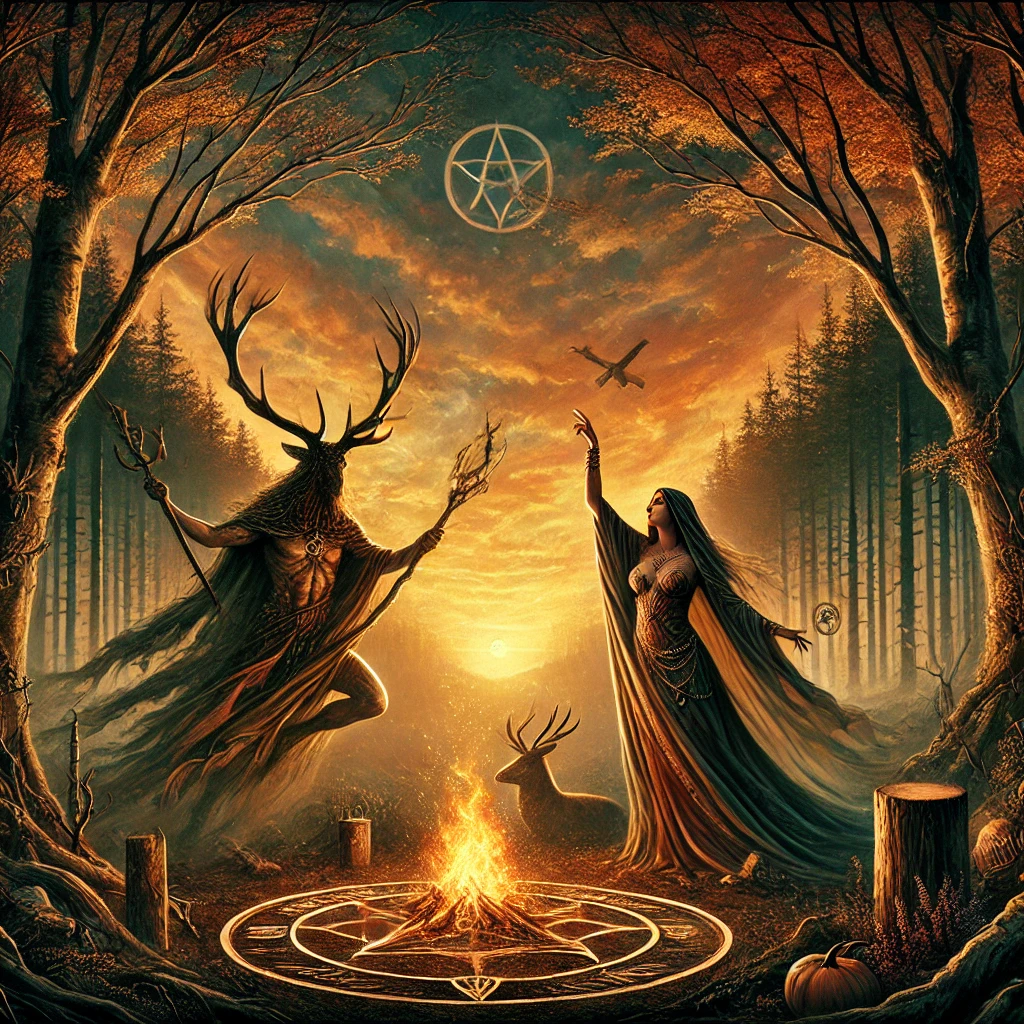
As the festival of Samhain approaches, the cycle of the year draws to a close, and the Horned God—the embodiment of nature’s life force and wild vitality—prepares for his sacred sacrifice. The Horned God holds a central role in Wiccan and neo-Pagan traditions, where he represents the ever-changing seasons, the wildness of nature, and the energy that drives growth and fertility in the natural world. Throughout the year, in his role as the Green Man and the God of the Harvest, the Horned God has presided over the abundance of the earth, nurturing the fields, forests, and all living beings with his strength and energy. Under his care, the land has flourished, yielding crops, supporting the creatures of the wild, and sustaining the rhythm of life through the spring and summer.

Yet, as the wheel of the year turns toward Samhain, a shift begins. The vibrancy of the natural world fades as the season of harvest draws to a close. The leaves fall from the trees, the crops are gathered, and the animals retreat, storing food and conserving energy to survive the barren winter ahead. The warmth of summer gives way to the cold, and the Horned God, having fulfilled his role as the life-giver, prepares to die. His time as the provider has come to an end, and now he must relinquish his life, allowing the earth to enter its resting phase.

In Wiccan tradition, the death of the Horned God is not a tragedy or a loss to be mourned; rather, it is an act of profound purpose and sacrifice. The Horned God’s death is a necessary part of the cycle of life, death, and rebirth. Just as the crops must be harvested and the fields cleared to prepare for the next growing season, so too must the Horned God offer himself, giving his life force back to the earth so that life can flourish once again in the future. His death is not a final end, but part of the eternal cycle that sustains the natural world. As the God of the Wild and the Harvest, he understands that sacrifice is required to maintain balance, and he willingly offers himself, knowing that from his death will come the promise of renewal.

The Horned God’s death occurs at Samhain, the most liminal time of the year, when the veil between the worlds of the living and the dead is at its thinnest. His descent into the underworld marks the transition into the dark half of the year, when the earth lies dormant, and life slows to a near standstill. Yet, his death also holds the seed of his rebirth. Much like the sun, which sets each night only to rise again in the morning, the Horned God will not remain in the underworld forever. His spirit will rest, gathering strength, and at Yule—the Winter Solstice—he will rise once more. The Winter Solstice marks the rebirth of the sun, when the longest night gives way to the return of light. On this sacred night, the Horned God will be reborn, and his energy will return to the earth, preparing it for the eventual renewal of spring.

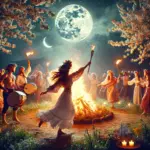
The symbolism of the Horned God’s death is central to Samhain rituals, where his sacrifice is honored and celebrated. Often, this is represented through the lighting of fires or candles—flames that symbolize both the extinguishing of life and the spark of new beginnings. As the fires burn, they remind practitioners that death is not an end but a necessary part of the cycle of existence. Through the act of lighting a fire, participants reflect on the transformative power of endings and the importance of sacrifice in making way for the new. The Horned God’s death becomes a metaphor for the changes we all face in our lives—the letting go of what is no longer needed, the acceptance of transition, and the trust that from these endings, something new and vital will emerge.

Samhain is a time to confront the personal sacrifices we have made throughout the year. Practitioners may use this time to reflect on the challenges, losses, or transitions they have experienced, acknowledging the necessity of releasing what no longer serves them. This might include letting go of old habits, emotional burdens, or aspects of their lives that have run their course. The Horned God’s death becomes a powerful symbol of this process, reminding us that while endings can be difficult, they are also the gateway to renewal and transformation.

In many Samhain rituals, practitioners will symbolically honor the Horned God’s sacrifice by offering personal items or written reflections into the fire. These offerings represent what they are willing to release, allowing the flames to carry away the old and make space for the new. Just as the Horned God gives his life to ensure the continued vitality of the earth, participants offer up their own sacrifices, trusting that the cycle of life will bring them new growth and opportunities in time.

This deep connection between the Horned God’s death and the turning of the seasons reflects a profound spiritual truth that resonates throughout Wiccan and Pagan traditions: life, death, and rebirth are not separate events but interwoven stages of an eternal cycle. The Horned God’s journey through death and rebirth serves as a reminder that nothing is ever truly lost. As the earth enters its period of dormancy, we are called to honor the rhythms of nature, trusting that even in the darkest moments, the light of renewal is always on the horizon.

The Goddess as the Crone

As the Horned God descends into the underworld at Samhain, the Goddess shifts into her most ancient and powerful aspect—that of the Crone. In Wiccan tradition, the Goddess is the eternal force that embodies all stages of life: she is the Maiden, symbolizing youth and new beginnings; the Mother, representing fertility, growth, and nurturing; and the Crone, the wise and knowing figure who presides over death, endings, and transformation. At Samhain, the Goddess fully embraces her Crone aspect, embodying the deep wisdom that comes with age and the acceptance of life’s natural cycles.

In her role as the Crone, the Goddess is not diminished or weakened by the passage of time; rather, she is at the height of her spiritual and mystical power. She carries within her the accumulated knowledge of all her past experiences as Maiden and Mother, and she understands the sacred dance of life, death, and rebirth. Samhain is the time when her wisdom is most needed, as it marks the turning point between the seasons of growth and the long, dark descent into winter. As the Crone, the Goddess offers her profound understanding of the cycles of nature, and she helps to guide her followers through the inevitable transitions they must face in their own lives.

At Samhain, the Crone mourns the passing of the Horned God, recognizing the depth of his sacrifice as he relinquishes his life force to the earth. Yet her mourning is not one of grief or despair; rather, it is a quiet, reverent acknowledgment of the necessary role that death plays in the continuation of life. She mourns with wisdom, knowing that the Horned God’s death is part of the sacred cycle that ensures the earth will be reborn in time. Through her connection to the natural world, the Crone sees the broader picture—she knows that death is not the end, but a transition, an essential part of the eternal dance of life. This acceptance of death as part of life is a central theme of Samhain, and the Crone’s wisdom helps practitioners navigate their own understanding of loss, change, and renewal.

As the goddess of both life and death, the Crone oversees this sacred transition, guiding souls through the underworld and preparing the earth for the eventual rebirth that will occur at Yule, when the sun returns and the Horned God is reborn. She is the guardian of those who pass into the next life, holding the mysteries of the afterlife within her, and she helps facilitate the transformation that follows death. This dual role—overseeing both death and rebirth—gives the Crone her power and makes her an essential figure during Samhain. She is the keeper of ancient wisdom, the one who understands that without death, there can be no new life, and that endings always carry the seed of a new beginning.

The Crone’s wisdom is not just theoretical; it is deeply practical and applicable to the lives of those who honor her. She teaches that life is a series of cycles, each with its own rhythm, and that resisting change is to resist the very flow of existence. The Crone’s lessons are about embracing transformation, even when it is difficult or painful. She reminds us that death—whether it be the literal death of a loved one, the end of a relationship, or the closure of a chapter in our lives—is not something to be feared, but something to be faced with courage and acceptance. Her guidance is invaluable as we confront our own personal transformations, helping us to release what no longer serves us and prepare for the rebirth that will inevitably come.

In Samhain rituals, the Goddess as the Crone is honored for her role as the bringer of wisdom and the guardian of the dead. Practitioners may invoke her presence to help them navigate their own personal transitions, asking for her strength as they confront the challenges of letting go. These rituals often involve offerings made to the Crone—small gifts such as food, herbs, or written reflections—placed on altars or left in nature to honor her wisdom and her connection to the cycles of life. Some may also offer prayers or meditations, seeking her guidance in embracing the changes they are facing and finding the wisdom to move forward with grace.

The Crone’s energy during Samhain is particularly powerful for those who are undergoing periods of transformation or who are mourning a loss. She offers the strength to face the darkness, knowing that within that darkness lies the potential for new growth. Her presence reassures practitioners that while endings are inevitable, they are not to be feared, for they are always followed by renewal. She encourages us to trust in the cycle of life and to embrace the changes we must undergo in order to grow.

In Wiccan tradition, the Crone is not merely a symbol of old age or death; she is the embodiment of the deeper wisdom that can only come through experience. She teaches that all things must come to an end, but that each ending is part of a larger, continuous cycle. Her power lies in her ability to hold space for both life and death, for both joy and sorrow, and to help us navigate the spaces in between. As the keeper of secrets and the guide through the mysteries of life and death, the Crone reminds us that nothing in this world is permanent, but that through embracing change, we can find strength, wisdom, and peace.

Through her role at Samhain, the Crone teaches us the most fundamental lessons of life: that death is not to be feared, that endings are natural, and that from the darkness of winter, the light of renewal will always emerge. The Goddess, in her Crone aspect, stands as a reminder that we too are part of this eternal cycle, and that by accepting our place within it, we can find the wisdom to navigate the challenges of life with grace and understanding. Her presence during Samhain encourages us to honor the past, release what no longer serves us, and trust in the promise of rebirth, just as she oversees the passage of the Horned God and the turning of the wheel of the year.

The Eternal Dance of Death and Rebirth

In Wiccan and neo-Pagan traditions, the relationship between the Goddess and the Horned God encapsulates the cyclical nature of existence—the eternal dance of life, death, and rebirth. They are not separate forces but complementary aspects of the same universal process, bound together in an unbreakable unity. Together, they embody the rhythms that govern not only the natural world but also the spiritual journey of every individual. This dance is at the heart of Samhain, when the Horned God dies, only to be reborn at Yule, and the Goddess, in her aspect as the Crone, ensures that this cycle is upheld, guiding the transition with wisdom and reverence.

The Horned God’s death at Samhain is not a final goodbye but rather a passage into the underworld, where his spirit rests and regenerates, gathering strength for his inevitable rebirth at Yule, the Winter Solstice. His journey mirrors the seasonal changes that we witness each year—the earth’s retreat into stillness during winter, only to emerge full of life with the arrival of spring. The Goddess, embodying both life and death, watches over this process, ensuring that the balance between these forces is maintained. As the crone, she knows that death is an essential part of the cycle, a phase that nourishes the ground for new life to take root and flourish.

This eternal dance between the Goddess and the Horned God is reflected everywhere in nature. The seasons follow a predictable yet awe-inspiring cycle of growth, decay, and renewal. The vibrant bloom of summer gives way to autumn’s quiet surrender, as trees shed their leaves and the landscape retreats into itself. The earth, once bursting with life, now rests beneath the cold of winter, seemingly barren. Yet, within this stillness, life is simply waiting, gathering strength in the same way that the Horned God’s spirit regenerates in the underworld. Just as the Horned God will rise again at Yule, so too will the sun return after the longest night of the year, slowly warming the land and awakening new growth. This rhythm reminds us that death is not the end, but a transition—a necessary passage that gives way to new beginnings.

In Wiccan belief, this truth is reflected in every corner of the natural world. The decaying leaves of autumn, which return to the soil, nourish the earth, creating fertile ground for the rebirth of life in the spring. The hibernating animals, who retreat into sleep during the harsh winter months, emerge renewed and energized when the warmer days return. Even the ebb and flow of the tides, the phases of the moon, and the growth cycles of plants follow this same pattern of death and renewal. Nature’s inherent cycles are constant reminders that death is not to be feared but embraced as a part of life’s larger journey.

Samhain, as the festival marking the end of the harvest and the beginning of winter, is the sacred time when this eternal dance is most apparent. It is a moment to honor the death of the Horned God and reflect on the cycles of nature and our own lives. In Samhain rituals, this dance between death and rebirth is often enacted through symbolic acts of release and renewal. Practitioners may write down old habits, relationships, or patterns that no longer serve them and symbolically release them through fire, water, or other ritual acts. This mirrors the Horned God’s sacrifice, allowing the practitioner to let go of what is no longer needed, clearing the way for personal transformation and new growth. These rituals are not merely acts of mourning or loss but are filled with the promise of renewal, just as the Horned God’s death nourishes the earth for the next cycle of life.

In these rituals, the energy of the Horned God’s death is not mournful; it is celebratory, filled with understanding that his passing is necessary for life to continue. The fire that symbolizes his death is also the spark of his eventual return. Practitioners embrace this cycle, recognizing that their own lives reflect the same rhythm. Just as nature must shed what is no longer useful—be it leaves, old growth, or dying energy—so too must we release the things that weigh us down. Whether it is a limiting belief, an outdated way of living, or even a relationship that has run its course, these personal sacrifices are made in the understanding that they pave the way for renewal, growth, and greater clarity in the future.

The Goddess, in her Crone aspect, is an integral part of these rituals. She oversees this period of transformation, guiding the Horned God’s passage into the underworld and tending to the cycles of life and death. Her wisdom reminds us that even in the darkest times, when all seems lost, the potential for new life is always present. She holds the knowledge that from every ending comes a new beginning, and she offers her guidance to those who seek to embrace the changes in their own lives. Practitioners often call upon her to provide the strength and wisdom needed to let go of the past and prepare for the rebirth that is to come.

In this way, the rituals of Samhain are both deeply personal and cosmic. They reflect the individual’s journey through transformation—the release of old patterns, the mourning of losses, and the acceptance of change—but they also mirror the larger, universal cycles of existence. The Horned God and the Goddess show us that life, death, and rebirth are not isolated events but part of a continuous process that sustains the natural world. Through their sacred dance, we are reminded that change is inevitable, that death is not the end, and that every moment of darkness carries within it the seed of new beginnings.

Ultimately, the eternal dance of the Goddess and the Horned God offers a powerful spiritual lesson: that the cycles of life and death are not something to be feared, but to be embraced with reverence and understanding. Their story teaches us that, just as the seasons turn, so too must we let go of the old in order to make room for the new. The Horned God’s death and eventual rebirth at Yule are reflections of the constant renewal that takes place within and around us, and the Goddess, in her infinite wisdom, ensures that this cycle continues unbroken. Through their eternal dance, we learn to trust in the rhythms of life, death, and rebirth, knowing that each ending is simply the beginning of something new.

Embracing the Cycle

The myth of the Goddess and the Horned God offers a profound spiritual lesson that challenges modern society’s often fearful view of death. In many contemporary cultures, death is perceived as the ultimate end—something to be delayed, feared, or avoided. It is shrouded in mystery and grief, with little recognition of the larger cycle it belongs to. However, in Wiccan and neo-Pagan traditions, death is not an ending but a necessary part of life’s continual flow. The death of the Horned God at Samhain serves as a reminder that endings, while inevitable, are not final. They are merely transitions, essential steps within the greater process of rebirth and renewal.

The Horned God’s sacrifice, in which he willingly gives his life for the good of the earth and the continued vitality of the natural world, embodies this spiritual truth. His death is not an act of despair, but of deep purpose and understanding. He knows that by giving himself to the earth, he is nourishing the land, ensuring the return of life in the future. The Goddess, in her Crone aspect, mourns him with reverence, but she does so with the wisdom that this is how the cycle must unfold. The Horned God’s death is not the end of his story—he will rise again at Yule, reborn with the returning light of the sun, just as spring will eventually come to the cold, dark earth. His journey reflects the eternal truth that life and death are intimately connected, two parts of the same natural cycle.

This understanding of death as a gateway to rebirth is central to Wiccan belief and practice. Samhain, as the festival that marks the end of the harvest season and the beginning of winter, provides a time to confront this truth directly. It is a time for honoring those who have passed and reflecting on the sacrifices that have been made—both in the natural world and in our own lives. Just as the Horned God gives his life for the earth, we too experience cycles of letting go, of death in its many forms. Whether it’s the loss of loved ones, the end of relationships, or the closing of personal chapters, Samhain invites us to embrace these endings, knowing that they are part of the process that leads to new beginnings.

In Wiccan rituals, death is honored not as something to be feared, but as something to be understood and accepted. The act of releasing what no longer serves—be it emotional baggage, unhealthy habits, or outdated ways of thinking—mirrors the Horned God’s sacrifice. These acts of release prepare the way for personal transformation, just as his death prepares the earth for its eventual rebirth. Practitioners often use divination, meditation, and ritual to gain insight into the transitions they are facing, seeking guidance from the Goddess and the spirits of the dead. They align themselves with the natural cycles of life, death, and rebirth, trusting in the wisdom of the universe to carry them through periods of darkness and uncertainty.

Divination practices during Samhain, such as scrying, tarot readings, or rune casting, are often used to gain clarity about the path ahead. Just as the veil between the worlds is thin, making it easier to connect with ancestors and spirit guides, this time also allows for deep introspection. Practitioners look to the symbols and messages they receive during Samhain for guidance on how to navigate their own transformations. What do they need to release? What lessons have they learned from the past year, and how can they use that wisdom to move forward? By confronting the truths that arise during Samhain, they prepare for the rebirth that awaits them as the Wheel of the Year turns toward Yule and beyond.

In this way, the Goddess and the Horned God serve as guides through the cycles of life. The Goddess, ever eternal, oversees the transitions between birth, death, and rebirth. She is there in her aspect as the Maiden when new life begins, in her aspect as the Mother when life is nurtured and grown, and in her aspect as the Crone when it is time to let go. At Samhain, the Crone offers her wisdom and protection, helping those who celebrate to navigate their own transformations with grace and understanding. She reminds us that while death is a necessary part of life, it is not the end of the story. The Horned God, even in death, is a symbol of hope, for his rebirth at Yule promises that new life is always on the horizon.

As the Wheel of the Year turns once more, Samhain invites us to reflect on these cycles and what they mean for our own lives. The myth of the Goddess and the Horned God reminds us that life and death are not opposites—they are two sides of the same coin, inseparable from one another. The same energy that drives the vitality of life also governs the process of death and renewal. Every ending carries within it the seed of a new beginning, and every death is part of the cycle that brings about rebirth.

This eternal dance between life, death, and rebirth is not limited to the natural world; it is a metaphor for our own experiences as well. We too go through periods of growth, decay, and renewal, shedding old identities and ways of being so that new ones can take their place. Samhain is the perfect time to honor these personal transitions, to reflect on the cycles we have moved through and prepare for the ones that lie ahead. It is a time to release what no longer serves, to mourn what has passed, and to trust that, like the Horned God, we will rise again with renewed strength and clarity.

Ultimately, the myth of the Goddess and the Horned God offers a timeless message: that death is not an ending, but a transition. It is part of the greater cycle of life, a necessary step in the process of rebirth. By embracing this cycle, we free ourselves from the fear of loss and change. Instead, we learn to see death as a gateway, a passage through which new life emerges. As we honor the Goddess and the Horned God at Samhain, we align ourselves with the natural rhythms of the earth, trusting in the eternal cycle of life, death, and rebirth that governs all existence.

Conclusion: The Eternal Wisdom of the Goddess and the Horned God

The myth of the Goddess and the Horned God offers a powerful reflection on the cycles of life, death, and rebirth that govern not only the natural world but our personal journeys as well. In Wiccan and neo-Pagan traditions, Samhain stands as a sacred moment to confront these cycles, honoring the Horned God’s willing sacrifice and the Goddess’s eternal wisdom. Their story reminds us that death is not to be feared—it is a passage, a necessary end that gives rise to new beginnings. As the Horned God dies at Samhain and the Goddess takes on her Crone aspect, we are invited to release what no longer serves us, to let go of the old, and to trust in the rebirth that awaits at Yule.

In this eternal dance, the Goddess and the Horned God reveal that life’s transitions are not solitary events but part of a greater cosmic rhythm. The darkness of winter is not an end but a time of rest and regeneration, preparing the way for spring’s renewal. As the Wheel of the Year turns, we are reminded that endings are never truly final, for within every death lies the seed of rebirth. This profound truth offers not only comfort but empowerment, helping us embrace change with grace, knowing that the Goddess will always guide us through, and the Horned God will rise again.

Through their sacred myth, we are reminded that life and death, creation and destruction, are not opposing forces but are interwoven aspects of the same divine cycle. By honoring their story at Samhain, we align ourselves with the ancient rhythms of the universe, trusting in the balance of life and the promise of renewal that follows every dark night. In the end, the Goddess and the Horned God teach us that the cycle of existence is eternal, and within that cycle, we can always find hope, transformation, and rebirth.
Posted on Leave a comment

Myths & Lore: The Morrigan

The MorriganReading Time: 18 minutes
The Morrigan

Introduction

Goddess of War, Death, and Fate in Samhain’s Mystical Realm

As the ancient festival of Samhain draws near, the veil between the living and the dead thins, allowing spirits and energies from the Otherworld to intermingle with our own. One of the most powerful mythological figures who presides over this liminal time is The Morrigan, the Irish goddess of war, death, and fate. Known for her fearsome presence on the battlefield, The Morrigan also reigns over transformation and the cycles of life and death, making her deeply connected to the themes of Samhain.

The Morrigan’s Role as a Shapeshifter and Death Goddess

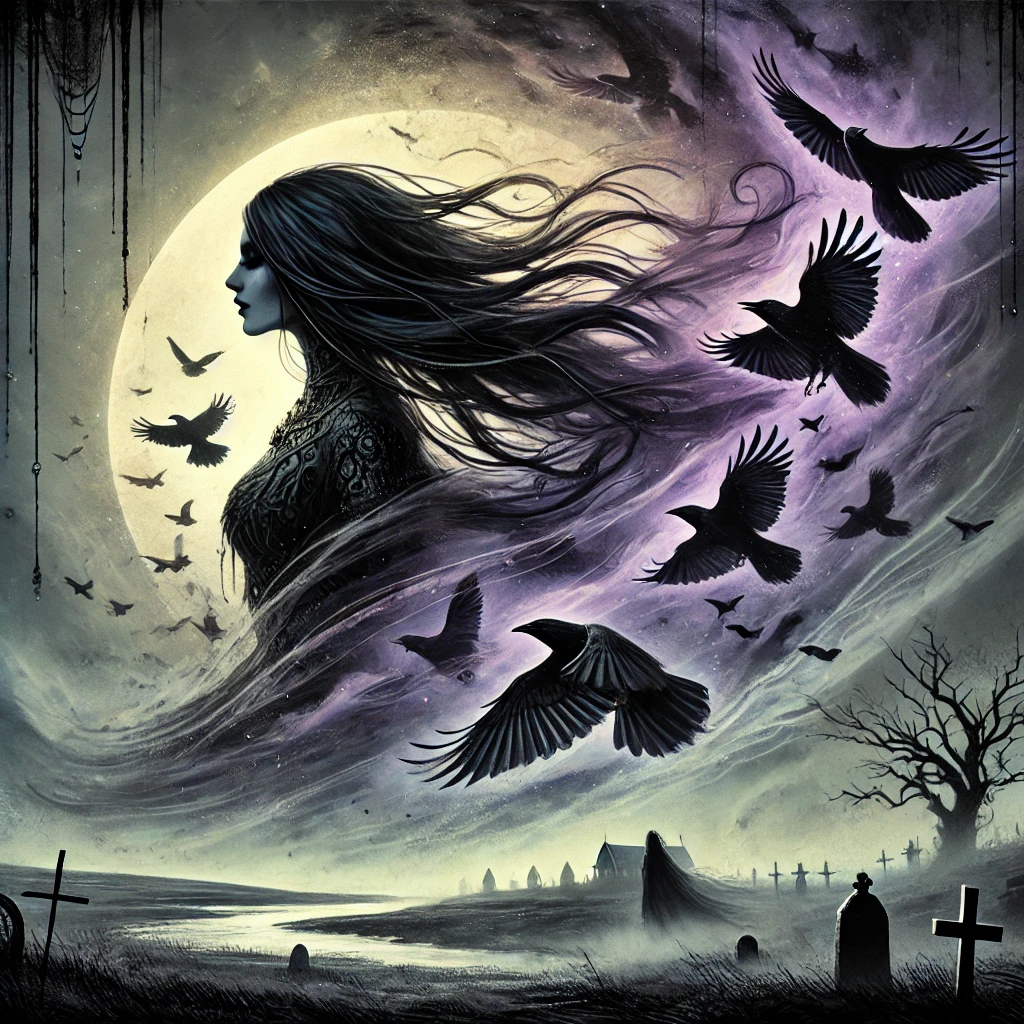
The Morrigan, one of the most formidable deities in Irish mythology, is often portrayed as a shapeshifter, with her most common form being that of a crow or raven. These dark, foreboding birds have long been associated with death and battle, and in The Morrigan’s case, they serve as manifestations of her presence on the battlefield. As these ominous creatures circle overhead, they represent The Morrigan’s omnipotent gaze, surveying the fates of warriors as she decides who will live and who will perish. The sight of crows or ravens above a battlefield was not just a common occurrence but a symbolic reminder of The Morrigan’s influence over the cycle of life, death, and fate.

The Morrigan’s ability to shapeshift underscores her fluid, ever-changing nature, much like the cyclical forces of life, death, and rebirth that she governs. Her form is not static; she moves effortlessly between worlds, adopting the shape most suited to her purpose—whether to guide souls, deliver warnings, or sow fear in the hearts of mortals. This ability to transform highlights her dominion over the liminal spaces where the boundaries between the known and the unknown, the living and the dead, become blurred. The Morrigan’s fluidity reflects the essence of transformation itself, where endings give way to new beginnings and where the veil between worlds thins.

As a goddess of death and transformation, The Morrigan represents the dark, mysterious energies that come into play during Samhain. This sacred festival marks the time of year when the boundary between the living and the dead is at its most permeable, allowing for a deeper connection with spirits and the Otherworld. The Morrigan’s presence during Samhain is a powerful reminder that death is not the final end but a necessary transition—a passage into the unknown that is crucial to the cycle of existence. In her role as a goddess of death, she ensures that death is treated as an essential phase of life, not as something to be feared but as something to be embraced as part of nature’s order.

Just as Samhain signals the end of the harvest and the quiet onset of winter’s descent, The Morrigan stands as a guardian at the threshold of change, guiding souls into the Otherworld. Her role is not one of destruction for its own sake but of transformation. She leads the dead through the process of dying, ensuring that this journey into the afterlife is not chaotic but part of a cosmic rhythm. In this way, she mirrors the natural cycles of death and rebirth, showing that life continually renews itself even in the midst of endings.

Through her shapeshifting, The Morrigan embodies the unpredictability and inevitability of change, emphasizing that just as life moves through stages, so too does the soul move through different states of existence. Her ability to cross between forms—raven, wolf, maiden, or crone—illustrates her mastery over transformation and her intimate connection with the mysteries of life and death. Each form she takes serves a purpose in fulfilling her role as both a destroyer and a creator, reminding us that transformation often requires the death of old ways before new growth can occur.

Her appearance during Samhain is particularly potent because this time of year is associated with endings, whether the literal end of the harvest season or the metaphorical end of the old self. The Morrigan’s energy during Samhain offers a path forward for those willing to confront the darker aspects of life and embrace the transformative power that comes with facing death, both in the physical sense and in the sense of letting go of old patterns, fears, or identities. She shows that within every death—whether of the body, the ego, or an outdated way of thinking—there is a promise of renewal and rebirth, echoing the cycles of the earth itself.

In this way, The Morrigan serves not only as a goddess of war and death but also as a guide through the darker, transitional periods in life. She leads the souls of the dead into the Otherworld while simultaneously helping those still living to navigate their own transformations. Just as the world grows quieter with the onset of winter, The Morrigan’s influence during Samhain teaches us that it is within this stillness, this liminal space between the old and the new, where true change occurs.

The Morrigan’s role as a shapeshifter and goddess of death underscores her profound connection to the mysteries of transformation, making her one of the most potent and revered figures during Samhain. As the cycle of life continues to turn, The Morrigan stands at the threshold of change, guiding souls through death and transformation and ensuring that the seeds of renewal are planted even in the darkest times. Her presence reminds us that no matter how final death may seem, it is always the precursor to something new, a reminder that endings are not the cessation of life but the foundation upon which new growth emerges.

The Morrigan’s Connection to Samhain

The Morrigan’s connection to Samhain is both profound and symbolic, embodying the dark, transformative energy that defines this ancient festival. Samhain, which marks the end of the harvest and the beginning of winter, is a time when the veil between the living and the dead is at its thinnest, allowing for the communion between both realms. As a festival that honors death, transformation, and the cycle of life, Samhain is the time of year when The Morrigan’s presence is most keenly felt in rituals and mythological narratives. As a goddess of death, fate, and transformation, The Morrigan holds a powerful role during this sacred time, guiding practitioners through the mysteries of life, death, and rebirth.

Often depicted as presiding over death, The Morrigan is more than a bringer of physical death. Her role encompasses the death of old ways, outdated habits, and aspects of the self that must be shed for personal growth and renewal. This symbolic aspect of her connection to death is crucial during Samhain, as the festival is not just a time to honor those who have passed into the Otherworld, but also a moment to reflect on one’s own internal cycles of transformation. The Morrigan, in this way, becomes an essential figure for those seeking personal evolution, helping them let go of the past and embrace the potential for rebirth that lies beyond.

During Samhain, The Morrigan’s presence in rituals reminds practitioners that death, in all its forms, is a natural and necessary part of life’s cycle. The death she oversees is not an end, but rather a gateway to transformation. Her energy guides individuals through the darkness of endings, helping them confront their fears, release what no longer serves them, and prepare for the new possibilities that will emerge. Just as the leaves fall and the earth grows quiet in winter’s approach, The Morrigan’s influence at Samhain encourages a deep introspection, urging individuals to examine the parts of their lives that must be surrendered to allow new growth to take root.

The Morrigan’s association with Samhain reflects the deeper truths woven into the fabric of the festival: that life and death are intimately connected, and that within every ending lies the potential for new beginnings. The Morrigan stands as a guardian of these cycles, reminding us that transformation is often born out of darkness and that the decay of one phase of life is necessary to fertilize the soil for the next. Her role in Samhain rituals encourages practitioners to embrace this natural flow and to trust in the regenerative power of letting go.

In many mythological narratives, The Morrigan’s power over fate and transformation is intricately tied to Samhain’s themes. She is often depicted overseeing the transition between life and death, whether through her presence on battlefields or her role in guiding souls into the Otherworld. This symbolism becomes even more potent during Samhain, when the dead are honored, and the mysteries of mortality are faced with reverence. The Morrigan, as both a warrior goddess and a guide through the unknown, embodies the courage needed to face death—whether it is the death of the physical body or the metaphorical death of the self.

For those practicing modern witchcraft or Pagan traditions, The Morrigan’s energy during Samhain becomes an anchor for personal rituals centered on transformation. Whether through meditation, divination, or ceremonial offerings, practitioners invoke her power to aid in releasing old patterns, inviting renewal, and deepening their understanding of life’s cyclical nature. She encourages those who call upon her to confront their fears of death and change and to recognize that what is feared often holds the key to greater strength and wisdom.

The Morrigan’s shapeshifting abilities further align her with the transformative power of Samhain. As a figure who can move between forms, shifting from maiden to crone, from woman to crow, she embodies the fluidity and changeability inherent in the cycles of life and death. Her transformations remind us that just as she can shift between states, so too can we transform ourselves. This makes her an especially potent deity to invoke when seeking to release old identities and embrace new possibilities during the liminal time of Samhain.

At its core, Samhain is a time of surrender and reflection—a moment to pause before the winter’s descent, to honor the ancestors, and to confront the mysteries of the Otherworld. The Morrigan’s connection to this sacred festival serves as a reminder that death is not an ending to be feared, but a transformation to be embraced. Her presence during Samhain rituals provides a sense of comfort for those seeking to confront their own mortality and the changes they must undergo to grow.

Ultimately, The Morrigan’s deep ties to Samhain mirror the festival’s themes of death, transformation, and renewal. She stands as a guide through the darkness, a powerful figure who shows that within the mysteries of death lies the potential for new life. By embodying the energies of endings and rebirth, The Morrigan reminds us that within the darkest moments of the year, there is always the seed of something new waiting to grow. Her energy, at its most potent during Samhain, helps practitioners move through the cycles of their own lives, accepting death as a natural part of existence and preparing for the inevitable renewal that follows.

The Morrigan and the Legend of Cúchulainn

One of the most captivating and well-known tales involving The Morrigan is her complex relationship with the legendary Irish hero, Cúchulainn. In this myth, The Morrigan’s role as a goddess of fate, death, and transformation is powerfully illustrated through her interactions with the great warrior, revealing both her fierce nature and her undeniable influence over the cycles of life and death.

As the story unfolds, The Morrigan appears to Cúchulainn just before his final, fateful battle. In this critical moment, she offers him her favor in the form of seduction, a gesture that could be interpreted as both a test of his character and a symbolic offering of protection. By aligning herself with the hero, The Morrigan offers Cúchulainn a chance to alter the course of his fate, potentially securing victory and survival in battle. However, Cúchulainn, fiercely independent and determined to rely on his own strength, rejects her advances. This rejection is not merely a dismissal of The Morrigan’s offer—it is a refusal to accept her role in his destiny. In rejecting the goddess, Cúchulainn also defies the forces of fate that she embodies.

Angered by Cúchulainn’s rejection, The Morrigan curses him, setting the stage for his ultimate downfall. Her curse is not simply an act of vengeance but a powerful reminder that no mortal, no matter how strong or heroic, can escape the grasp of fate. The Morrigan, as the weaver of destiny, ensures that Cúchulainn’s defiance comes with consequences. Her curse foreshadows his doom, signaling that his final battle will end not in triumph, but in death.

The story of Cúchulainn and The Morrigan reaches its tragic climax as the battle unfolds. True to her prophetic curse, Cúchulainn meets his fate on the battlefield, struck down in his final moments. As he lies dying, The Morrigan appears once more, this time in the form of a crow—one of her most iconic shapeshifted forms. Perched on his shoulder, she watches over him as he takes his last breath, a silent yet powerful witness to his demise.

The image of The Morrigan as a crow watching over Cúchulainn’s death is steeped in symbolism. Crows and ravens, often associated with death and the battlefield, are The Morrigan’s favored forms, and their presence serves as a reminder of her dominion over both life and death. By taking the shape of a crow, The Morrigan asserts her authority over the cycle of mortality and reinforces the idea that death, like fate, is inescapable. No matter how heroic or mighty a warrior may be, they cannot evade their destiny.

The legend of Cúchulainn and The Morrigan is a powerful illustration of the goddess’s control over fate and her connection to the inevitable end that awaits all mortals. In her rejection and curse of Cúchulainn, The Morrigan demonstrates that fate is not something that can be negotiated or avoided—it is an inescapable force that governs the lives of both heroes and ordinary mortals alike. Cúchulainn’s attempt to defy The Morrigan, and by extension fate, is ultimately futile, as he learns that even the greatest warriors cannot escape their destined end.

Furthermore, The Morrigan’s presence at Cúchulainn’s death, in the form of the crow, highlights her role as a guide through the transition from life to death. She is not merely a distant observer of death, but an active participant in the process of crossing from the mortal world into the Otherworld. In her role as a death goddess, The Morrigan is both a harbinger of death and a guardian who oversees the passage of souls into the afterlife. Her appearance at the moment of Cúchulainn’s death underscores her dominion over the cycles of existence, ensuring that death, while inevitable, is part of the natural order that she oversees.

The myth of The Morrigan and Cúchulainn also speaks to a deeper understanding of fate and mortality in Celtic mythology. The Morrigan’s role is not one of cruelty or vengeance, but of enforcing the natural balance between life and death. In rejecting her, Cúchulainn rejects the acceptance of this balance, but The Morrigan ensures that he ultimately meets his fate, as all mortals must. Her curse is a reminder that while mortals may strive for greatness, they are still bound by the inescapable cycles of life and death, which The Morrigan herself governs.

By appearing in her crow form to witness Cúchulainn’s death, The Morrigan further reinforces her role as a deity who oversees not only the physical deaths of mortals but also the spiritual passage into the afterlife. Her presence signifies that death is not merely an ending, but a transition—a crossing over into a new realm, guided by the hands of a goddess who understands both the darkness of death and the potential for rebirth that lies within it.

In this tale, The Morrigan serves as a powerful figure, embodying the themes of fate, mortality, and transformation that are central to her identity as a goddess. The legend of Cúchulainn reminds us that, while we may strive to control our own destinies, there are forces beyond our understanding that ultimately shape our lives and determine our fates. The Morrigan stands as the embodiment of these forces, a goddess who, through her interactions with Cúchulainn, asserts her dominion over life and death, reminding us that fate is a force we cannot escape, and that within every death, there is the potential for transformation and rebirth.

The Morrigan’s Invocation in Samhain Rituals

During Samhain, a time when the veil between the living and the dead is at its thinnest, The Morrigan’s dark and transformative energies are invoked in powerful rituals that focus on themes of personal transformation, release, and the mysteries of death. As the goddess of war, fate, and death, The Morrigan embodies the liminal space between life and the afterlife, guiding individuals through both physical and spiritual transitions. Her presence in Samhain rituals allows practitioners to confront the darker aspects of life, encouraging them to embrace the necessary process of letting go and shedding what no longer serves them, while preparing for the renewal that lies ahead.

Samhain is a festival intimately connected to death, not just in the literal sense, but also symbolically—the end of the harvest, the waning of the year, and the natural conclusion of cycles. It is a time for deep introspection, and The Morrigan’s energy is perfectly suited to help guide individuals through this process. Rituals invoking her often center on personal growth and the release of old habits, fears, and patterns, which mirrors the death of the old self in preparation for transformation and rebirth.

Rituals of Letting Go and Personal Transformation

One of the key themes in Samhain rituals invoking The Morrigan is the act of letting go. Just as The Morrigan watches over the battlefield, deciding the fates of warriors, she stands at the threshold of our own personal battles, helping us confront the aspects of our lives that must be relinquished. These rituals often involve symbolic acts of release—such as writing down fears, regrets, or old patterns on slips of paper and burning them as an offering to the goddess. By releasing these symbols of the past, practitioners honor The Morrigan’s transformative power and create space for new growth.

In addition to acts of release, The Morrigan is often invoked to guide individuals through the process of confronting personal fears and uncertainties about death and change. This can be done through meditation, where practitioners visualize The Morrigan’s presence, perhaps in the form of a crow, guiding them through the darkness of their inner landscape. During this introspective practice, The Morrigan’s energy helps them face what they may have been avoiding—whether that is emotional wounds, unresolved conflicts, or fears of the unknown.

Ceremonial Offerings and Connection with The Morrigan

Ceremonial offerings play a vital role in connecting with The Morrigan during Samhain. Practitioners may leave offerings such as black feathers, stones, wine, or food at an altar dedicated to the goddess, often outdoors where the natural elements can carry the offering to her. Crows and ravens are frequently viewed as messengers of The Morrigan, so leaving food for these birds as part of the ritual can be a direct offering to her, inviting her presence and guidance.

In return, practitioners seek The Morrigan’s wisdom, asking her to guide them through transitions, whether they are dealing with literal death or metaphorical endings in their lives. Her presence is invoked as a protector and a source of strength, as she helps them navigate the unknown and face the challenges that come with transformation. These offerings serve not only to honor the goddess but also to invite her into the practitioner’s life, allowing her transformative power to work on both the internal and external aspects of their existence.

Embracing Darkness and the Promise of Rebirth

The Morrigan’s role in Samhain rituals also highlights the importance of embracing the darkness rather than fearing it. In these rituals, darkness is not seen as something to be avoided but as a source of wisdom and growth. The Morrigan, who reigns over the battlefield and guides souls into the Otherworld, teaches that within darkness lies the potential for healing and rebirth. She encourages practitioners to move through the dark night of the soul, knowing that this journey is necessary for personal evolution.

As a guide through these transitions, The Morrigan helps practitioners recognize that every ending is a precursor to a new beginning. Just as the earth enters a period of dormancy during winter, awaiting the rebirth of spring, so too does The Morrigan guide us through the personal “winters” in our lives, reminding us that even in the darkest moments, there is always the promise of renewal. Her presence ensures that within the process of letting go, there is wisdom to be gained, and within every ending, the seeds of something new are already beginning to grow.

Facing the Mysteries of Death with The Morrigan

One of the most profound aspects of The Morrigan’s role in Samhain rituals is her guidance in confronting the mysteries of death. In many traditions, Samhain is a time to honor the dead, and The Morrigan, as a goddess deeply connected to death and the Otherworld, is often invoked to help facilitate this connection. Through rituals, practitioners may seek her guidance in communicating with ancestors or honoring the dead, trusting in her ability to navigate the liminal space between life and death.

In confronting the mysteries of death, The Morrigan offers reassurance that death is not an ending but a transformation. This understanding of death as part of the larger cycle of life is central to her energy. As practitioners invoke her during Samhain, they are reminded that death—whether it is the death of a loved one, a phase of life, or an aspect of the self—is a natural part of the greater cycle, and that there is always potential for growth and rebirth on the other side.

Her role as a psychopomp, guiding souls through death and beyond, adds to her significance during Samhain. Whether the practitioner is dealing with personal grief or existential fears of mortality, The Morrigan offers her strength and wisdom, helping them understand that death is a transition to be embraced rather than feared. By invoking The Morrigan, practitioners align themselves with the natural cycles of life and death, acknowledging that even in the face of great change, there is always a path forward.

The Morrigan as a Guide for Personal Growth

Ultimately, The Morrigan’s invocation during Samhain is about embracing transformation in all its forms. Whether through rituals of release, offerings, or meditative introspection, practitioners call upon The Morrigan to help them shed the past and prepare for what lies ahead. She stands as both a witness to their personal struggles and a guide through the process of change, offering her fierce strength as they navigate the darkness.

In invoking The Morrigan, practitioners accept the cyclical nature of life and the inevitability of endings, but also the infinite potential for rebirth that follows. Just as she watches over the battlefield, determining the fates of warriors, she watches over the personal battles we all face, offering her wisdom and protection as we move through our own transitions. Her energy, dark and transformative, reminds us that within every challenge, there is the possibility for growth, and within every ending, there is the promise of new life.

The Morrigan: A Goddess of Transformation and Power

The Morrigan, the formidable Irish goddess of war, death, and fate, holds a profound connection to the festival of Samhain—one as deep as the mysteries of death itself. As the goddess who oversees the passage from life to death, she stands as a guardian of transformation, guiding souls into the Otherworld and helping those who remain confront their own fears of change. Her presence during Samhain serves as a powerful reminder that endings are not something to fear but rather to embrace, for they are an integral part of the great cycles of existence that govern both the spiritual and physical realms.

Samhain, marking the end of the harvest and the approach of winter, is a liminal time—a threshold where the boundaries between the worlds of the living and the dead grow thin. In this moment of transition, The Morrigan’s energy is especially potent, reminding practitioners of the inevitability of change and the importance of embracing it. As the goddess of death and transformation, she oversees not only physical death but also the metaphorical deaths we experience throughout life—the end of relationships, phases, beliefs, and identities. Her presence at Samhain emphasizes that these endings are necessary steps in the journey of growth and renewal, just as death is a necessary part of the eternal cycle of life.

Through the invocation of The Morrigan during Samhain, practitioners tap into the ancient and potent energy of fate, death, and transformation. The Morrigan embodies the very essence of change, acting as both a catalyst and a guide through life’s most challenging transitions. Her ability to shapeshift, often taking the form of a crow or raven, mirrors the constant changes that individuals must endure throughout life—whether these changes are external or internal. Her symbolism as a shapeshifter underscores the fluidity of existence, reminding us that we, too, must be adaptable and open to transformation.

The Morrigan’s role as a goddess of battle further emphasizes her connection to personal transformation. Battles, whether fought on physical battlefields or within the confines of the self, are moments of intense challenge and change. They force us to confront what we fear and what we are attached to, often leading to profound transformation. In this sense, The Morrigan is not just a goddess who oversees war in the literal sense, but also a deity who guides individuals through the inner battles that accompany growth and change. Through her influence, we are encouraged to face our personal struggles with courage, knowing that these battles are a necessary part of the transformative process.

In the context of Samhain, The Morrigan’s dark, transformative power becomes even more significant. Samhain is a time to honor the dead, and The Morrigan, as the goddess who guides souls to the Otherworld, plays a crucial role in this process. Her presence helps practitioners come to terms with death, not as an ending, but as a transition into a new state of being. She reminds us that death, whether literal or metaphorical, is a doorway to new possibilities. Within every ending, there is the seed of a new beginning waiting to be awakened.

For those seeking guidance on matters of life and death during Samhain, The Morrigan offers her wisdom and protection. Her power is not only in her ability to oversee the passage into death but also in her role as a catalyst for inner transformation. Whether practitioners are honoring ancestors, releasing old patterns, or seeking clarity about their own future, The Morrigan stands as a timeless figure who holds the wisdom of life’s cycles. She helps individuals confront their fears of change and mortality, illuminating the path forward even in the darkest of times.

The Morrigan’s presence during Samhain also serves as a reminder that transformation is rarely comfortable or easy. As the goddess of war, she represents the chaos and upheaval that often accompany significant change. However, her energy teaches that through this chaos, there is the potential for growth, healing, and renewal. Just as the earth enters a period of rest and renewal during winter, so too must we embrace periods of stillness and darkness in our own lives, trusting that these moments of quiet transformation will eventually give way to new life.

In many ways, The Morrigan embodies the spirit of Samhain itself. This festival, which honors both the living and the dead, is a time when the veil between worlds is thin and the mysteries of life and death are most accessible. Through The Morrigan, we are reminded that death is not an end, but a transformation—one that is essential for the continuation of the cycles of existence. Her dark, transformative power teaches us that within the stillness of death, there is potential for new life, and within every ending, there is a seed of rebirth waiting to be awakened.

By invoking The Morrigan during Samhain, practitioners align themselves with the natural cycles of life and death, embracing the inevitability of change. The goddess stands as a guide through these transitions, offering her strength and wisdom to those who seek it. Her energy is a reminder that transformation is a necessary part of life’s journey, and that even in the face of darkness, there is always the promise of new beginnings.

Ultimately, The Morrigan’s connection to Samhain is a powerful symbol of the cycles of death and rebirth that govern all existence. She stands at the threshold of these cycles, guiding both the living and the dead through the transitions that define life. Her presence reminds us that within the darkest moments of the year, there is always the potential for transformation, and that within every ending, the seeds of renewal and rebirth are already beginning to take root.

Conclusion: The Morrigan, Guardian of Transformation and Fate

In the mystical embrace of Samhain, The Morrigan emerges as a formidable force, embodying the cycles of life, death, and rebirth. Her presence as a goddess of war, death, and fate serves as both a guide and a reminder that transformation is an inescapable part of existence. As the veil between worlds thins during Samhain, The Morrigan leads the way through the darkness, urging us to confront our fears, release what no longer serves us, and embrace the changes that lie ahead.

Her shapeshifting nature reflects the constant ebb and flow of life’s challenges and transformations, while her role as a guardian of death teaches that endings are not final—they are the fertile ground from which new beginnings emerge. Whether overseeing the battlefields of warriors or the inner struggles of individuals, The Morrigan holds the power to guide us through the most profound transitions, reminding us that even in moments of chaos and loss, there is always the potential for healing, renewal, and rebirth.

As a goddess deeply connected to Samhain, The Morrigan’s energy invites practitioners to align with the natural cycles of death and transformation, offering her wisdom to those willing to face the unknown. In invoking her during Samhain, we honor not only the dead but also the continual process of transformation that shapes our lives. Through The Morrigan, we are reminded that within every ending lies the seed of a new beginning, waiting for the darkness to give way to light.

Posted on Leave a comment

Persephone

PersephoneReading Time: 8 minutes
Persephone

Introduction

Queen of the Underworld and Goddess of Rebirth

Persephone, a central figure in the rich tapestry of Greek mythology, emerges as a captivating embodiment of the perpetual cycle encompassing life, death, and rebirth. Born of the divine union between Zeus, the mighty ruler of the gods, and Demeter, the goddess of harvest and fertility, Persephone’s narrative unfolds with a nuanced complexity that resonates with the eternal rhythms mirrored in the interplay of the changing seasons and the enigmatic depths of the underworld. Her story is a tapestry woven with threads of divine lineage, intricate relationships, and a profound connection to the cosmic forces that govern the intricate dance of existence.

Persephone’s Origins: A Divine Lineage

Persephone’s origins trace back to a divine lineage that situates her among the esteemed Olympian gods. As the daughter of Zeus, the supreme ruler of the Greek pantheon, and Demeter, the goddess presiding over harvest, fertility, and the abundance of the earth, Persephone inherits a legacy steeped in both celestial majesty and earthly fertility. Her birth heralds a union of mighty forces, marking her as a luminary figure within the intricate web of familial relationships that define the Olympian hierarchy. This divine heritage sets the stage for Persephone’s journey, one that unfolds against the backdrop of cosmic significance and the interplay between the mortal and divine realms.

The Abduction and Descent: A Fateful Encounter

The saga of Persephone takes a dramatic turn in the poignant episode of her abduction by Hades, the formidable lord of the underworld. In the idyllic setting of a sun-kissed meadow, Persephone, enraptured by the vibrant blooms and the beauty of nature, becomes an unwitting protagonist in a fateful encounter. The earth itself seems to respond to the unfolding drama as it cleaves open, revealing the formidable figure of Hades. In an act of both mythic passion and divine coercion, Hades seizes Persephone and descends with her into the shadowed depths of the underworld.

This abduction, often considered a symbol of the inexorable cycle of life, death, and rebirth, serves as a profound allegory for the changing seasons. As Persephone descends into the subterranean realm, the earth mourns her absence, and Demeter, the grieving mother, unleashes her sorrow upon the world. The barrenness of winter becomes a tangible manifestation of Demeter’s grief, and the natural world reflects the divine drama that unfolds within the mythic realms. This compelling narrative weaves together themes of loss, transformation, and the enduring connection between the mortal and immortal realms.

Persephone in the Underworld: A Queen’s Domain

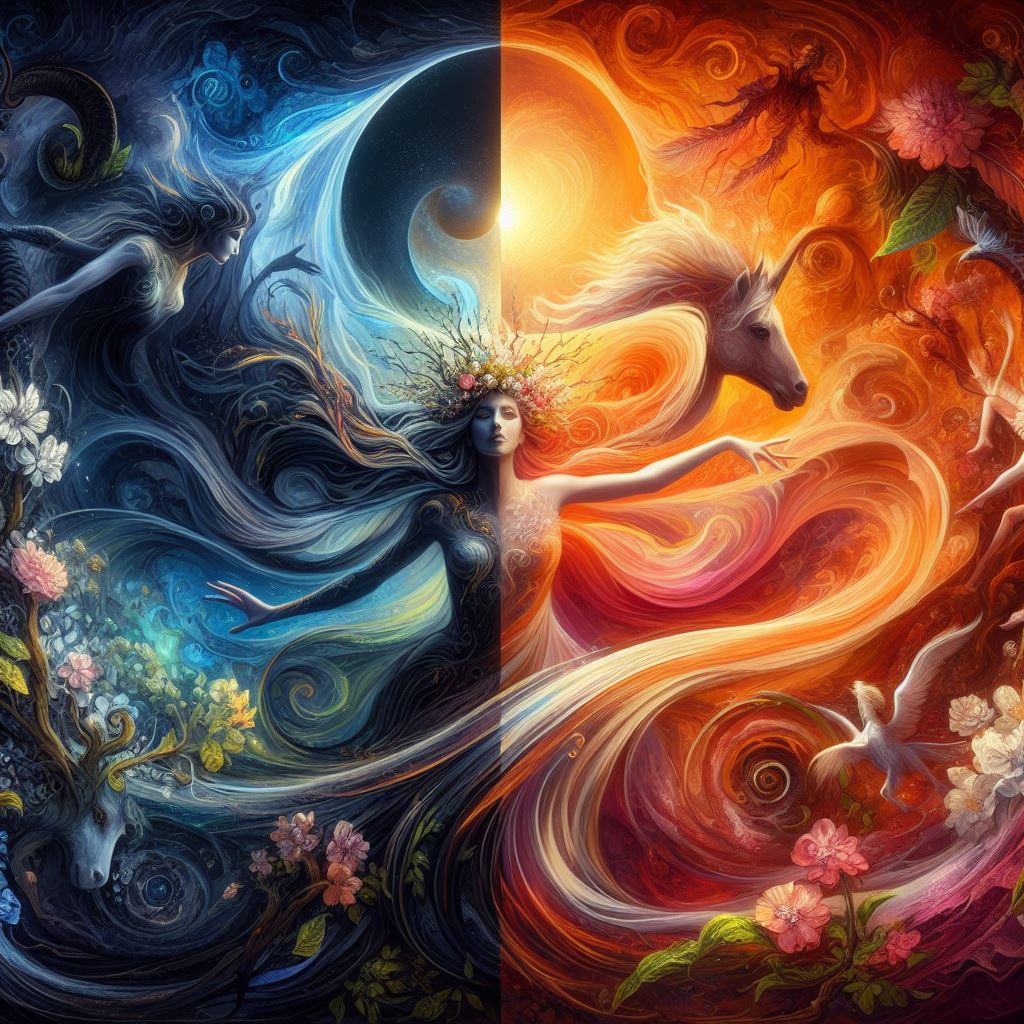
As Persephone descends into the shadowy depths of the underworld, she undergoes a profound transformation from maiden to queen. In Hades’ realm, she assumes a dual identity that mirrors the intricate dance between life and death. Persephone, once the embodiment of youthful vitality and the bloom of spring, now ascends to a position of regal authority as the queen of the dead.

In her newfound role, Persephone governs the underworld with a blend of grace and power. The duality inherent in her nature allows her to navigate the complexities of both the mortal and immortal realms. As the queen, she presides over the spirits of the departed, bringing order to the afterlife with a presence that commands both respect and reverence.

This transition from maiden to queen underscores Persephone’s resilience and adaptability. She not only embraces her responsibilities in the underworld but also retains the essence of the vibrant maiden who frolicked in meadows. This dual identity serves as a testament to the goddess’s ability to harmonize contrasting aspects of existence, embodying the cyclical nature of life, death, and rebirth.

Demeter’s Grief and the Bargain Struck

Demeter’s anguish over the abduction of Persephone plunged the mortal realm into a profound and unrelenting winter. The barren landscapes reflected the goddess’s sorrow, as the earth lay dormant in the absence of Persephone’s nurturing touch. In response to the escalating crisis, Zeus, the king of the gods, intervened to negotiate with Hades, the lord of the underworld, to bring about a resolution.

The bargain struck between Zeus and Hades laid the foundation for the cyclical nature of the seasons. Although a compromise was reached for Persephone’s release, the circumstances of her time in the underworld were intricately tied to her consumption of pomegranate seeds. This seemingly innocuous act bound Persephone to the underworld for a portion of each year, setting in motion the perpetual rhythm of her descent and ascent.

As a result of this negotiated agreement, the changing seasons became a poignant reflection of the divine drama that unfolded between the realms. Persephone’s return to the surface heralded the triumphant arrival of spring, with nature awakening from its wintry slumber. However, the inevitability of her periodic return to the underworld initiated the onset of winter, a season characterized by the dormancy of the earth and the retreat of life into the shadows. The enduring impact of this bargain echoes through the eons, weaving a narrative of sorrow, renewal, and the eternal cycle of life.

Persephone’s Symbolism: Life, Death, and Renewal

Persephone’s symbolism extends far beyond the confines of her mythological narrative, reaching into the very essence of life’s cyclical journey. At the heart of her story lies a profound allegory for the eternal dance between life, death, and renewal—a theme that transcends the boundaries of myth and echoes through the natural world.

The time Persephone spends in the underworld mirrors the hushed dormancy of winter, a period when the earth, like a slumbering giant, rests beneath a blanket of snow. The barren landscapes and cold winds reflect the goddess’s absence, and in this stillness, the world seems to mourn her descent into the shadows. However, as the seasons turn, so does the narrative of Persephone’s journey.

Her return to the surface heralds the awakening of life, an explosion of color and vitality that mirrors the joyous arrival of spring. The blooming of flowers, the emergence of leaves, and the vibrant renewal of the natural world all mirror Persephone’s ascent from the underworld. As the goddess of vegetation and fertility, her influence becomes palpable in the bursting of buds and the fertility of the land.

Persephone’s symbolism, therefore, encapsulates the resilience of life and the enduring capacity for transformation. Her story reflects the inevitability of change, the acceptance of cycles, and the understanding that from every period of dormancy, a season of renewal will inevitably follow. In this way, Persephone becomes a timeless emblem of the interconnectedness of life and death, an eternal muse whose myth resonates through the changing landscapes of the mortal realm.

Persephone’s Worship and Influence

Persephone’s worship in ancient Greece held a place of profound significance, particularly within the sacred rites of the Eleusinian Mysteries. These mysterious and revered ceremonies were conducted annually in honor of both Demeter and Persephone, forming a sacred tapestry woven with the threads of life, death, and rebirth.

The Eleusinian Mysteries were not merely religious festivals; they were transformative experiences that promised participants insights into the mysteries of existence and the afterlife. The rituals were held in the city of Eleusis, and their exact details were closely guarded secrets. Initiates, those who sought a deeper understanding of the divine and the cosmos, underwent a series of rites that were believed to impart profound wisdom and ensure a blessed journey in the afterlife.

Persephone played a central role in these mysteries, her myth serving as a foundational narrative for the rituals. The participants believed that by partaking in the ceremonies, they aligned themselves with the cyclical nature of Persephone’s journey—descending into the depths of the unknown, experiencing moments of darkness, and emerging into the light of understanding and enlightenment.

The influence of Persephone’s worship extended beyond the confines of the Eleusinian Mysteries. Devotees venerated her as a goddess intimately connected to the mysteries of life and the inevitability of death. Farmers and those reliant on the fertility of the land sought her favor for bountiful harvests, recognizing her dual role as a queen of the underworld and a bringer of life to the surface.

In temples and sanctuaries dedicated to Persephone, offerings were made, prayers were uttered, and rituals were performed to honor the goddess and seek her blessings. Her worship was not only a means of appeasing a deity but a profound acknowledgment of the interconnectedness of life’s cycles and the mysteries that permeate the fabric of existence. Persephone’s influence in ancient Greece, expressed through her worship, became a testament to the enduring fascination and reverence for the complex interplay of life and death in the human experience.

Persephone in Contemporary Interpretations

In contemporary interpretations, Persephone’s timeless tale transcends the boundaries of ancient myth, resonating with individuals seeking deeper connections to themes of personal growth, resilience, and the acceptance of life’s inherent cycles. Artists, writers, and enthusiasts of Greek mythology find inspiration in Persephone’s journey, exploring the multifaceted layers of her story and applying its relevance to the complexities of the modern human experience.

Persephone’s symbolic descent into the underworld, marked by her abduction by Hades, is often seen as a metaphor for facing personal challenges or navigating periods of darkness in one’s life. Many interpret her time in the underworld as a transformative journey, a passage through the metaphorical shadows that leads to self-discovery and eventual rebirth. Her story becomes a poignant reminder that even in the depths of adversity, there exists the potential for renewal and personal evolution.

The theme of resilience is particularly highlighted in contemporary interpretations of Persephone. Her ability to navigate the underworld and return to the surface mirrors the human capacity to endure hardships, learn from experiences, and emerge stronger. This aspect of her story resonates with individuals grappling with their own trials, serving as a source of inspiration and encouragement to persevere in the face of adversity.

Moreover, Persephone’s tale reflects the cyclical nature of life, a concept that holds relevance in the modern understanding of personal growth and the evolving seasons of life. The inevitability of change, the acceptance of transitions, and the recognition that life is a series of cycles are themes that find echoes in the contemporary interpretations of Persephone’s myth.

Artists and writers often explore these themes through various mediums, crafting works that reimagine Persephone’s story in the context of modern struggles and triumphs. Whether through visual arts, literature, or other creative expressions, Persephone becomes a muse for those who seek to delve into the intricate dance between light and shadow within the human psyche.

In essence, Persephone’s myth endures not as a relic of antiquity but as a living narrative that continues to evolve, offering insights and inspiration to those who engage with its timeless themes in the context of contemporary human experience.

Conclusion: Persephone’s Everlasting Legacy

Persephone, in her dual role as the queen of the underworld and the bringer of spring, stands as a timeless symbol of the intricate interconnectedness of life and death. Her myth serves as a profound narrative that invites contemplation on the transformative power inherent in facing adversity, the cyclical rhythms that govern existence, and the eternal dance between light and darkness within the intricate weave of the human experience.

The enduring legacy of Persephone is not confined to the pages of ancient myths but continues to resonate in the modern world, offering profound insights and guidance to those who seek to understand the complexities of the human journey. Her story becomes a mirror reflecting the universal themes of struggle, resilience, and the perpetual cycles of growth and renewal that define our lives.

Persephone’s journey, from the sunlit realms to the depths of the underworld and back again, speaks to the profound resilience embedded in the human spirit. It encourages individuals to confront their personal shadows, navigate through challenges, and emerge stronger on the other side. In a world marked by constant change and inevitable transitions, Persephone’s myth becomes a timeless guide, reminding us of the transformative potential that lies within the crucible of our own experiences.

The cyclical nature of Persephone’s tale aligns with the cyclical nature of existence itself. Life is a series of interconnected chapters, each flowing seamlessly into the next, echoing the eternal dance between creation and dissolution. Through Persephone’s myth, humanity is prompted to embrace the inevitability of change, acknowledging that every descent into darkness carries the promise of a subsequent ascent into the light.