 Reading Time: 17 minutes
Introduction
Tracing the roots of a modern tradition to ancient seasonal wisdom.
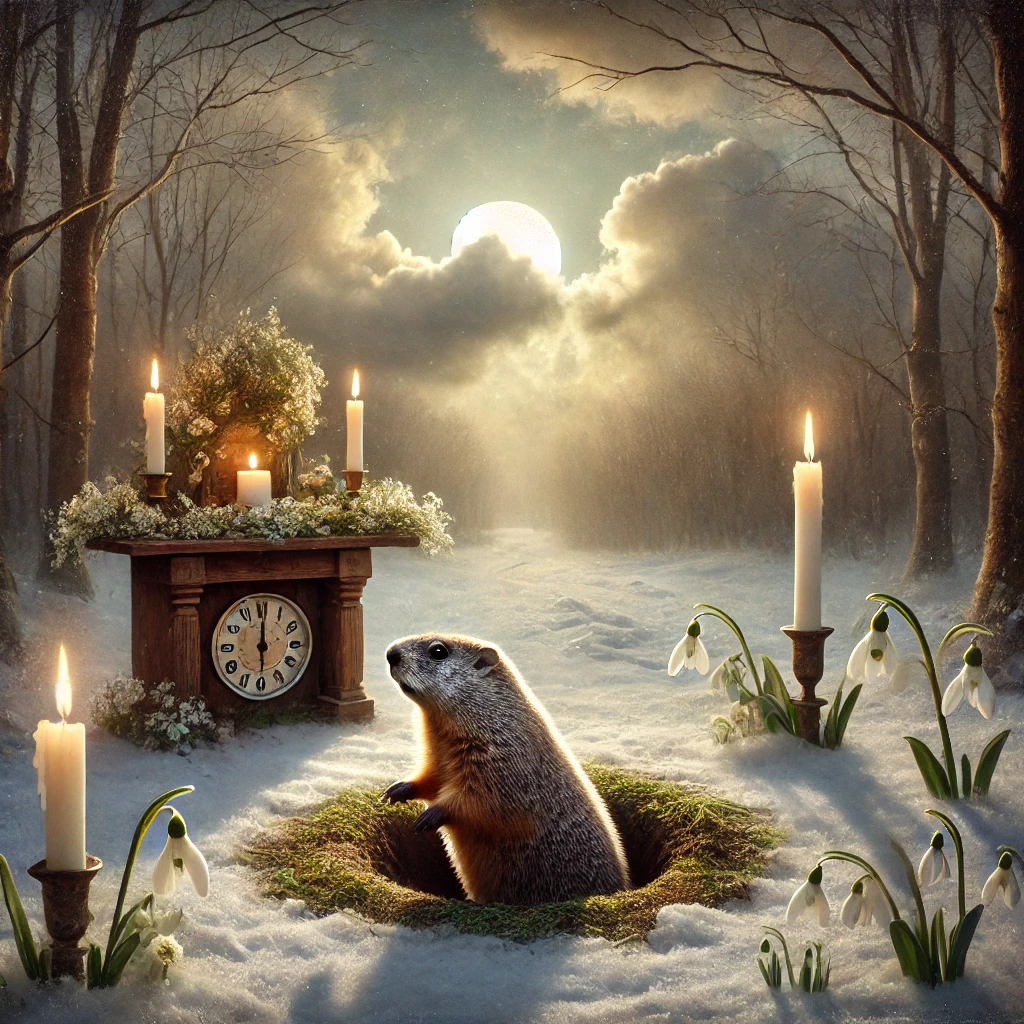
Every February 2nd, Americans and Canadians turn their attention to the groundhog, waiting to see if it will see its shadow—a whimsical tradition that determines whether winter will persist or spring will arrive early. While this practice is now associated with the playful spectacle of Groundhog Day, its origins lie in the ancient weather divination practices of Candlemas, a holiday steeped in spiritual significance and seasonal wisdom. From sacred light to shadow-casting folklore, the journey of Candlemas weather lore to Groundhog Day reveals humanity’s enduring fascination with nature’s rhythms and its desire to predict the future.

The Weather Lore of Candlemas
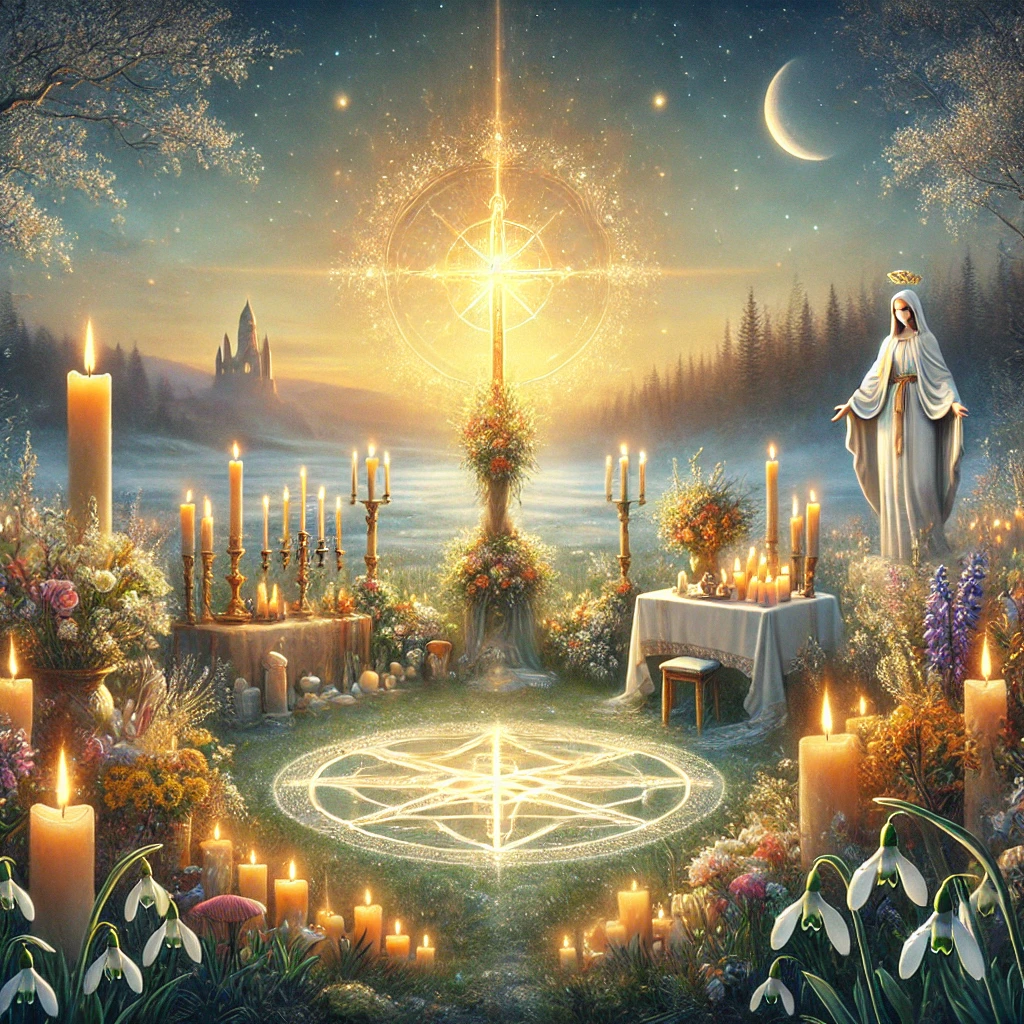
Candlemas, celebrated annually on February 2nd, holds a unique place in the seasonal calendar as it marks the midpoint between the winter solstice and the spring equinox. This liminal period, where the dark grip of winter begins to loosen and the promise of spring slowly awakens, has long been a time for reflection and observation. Rooted in both Christian and pagan traditions, Candlemas is a day that celebrates light, purification, and the changing seasons. It also gave rise to a fascinating body of weather lore that blends practical observation with symbolic storytelling.
Seasonal Significance and Agricultural Roots
In agricultural societies, predicting the length of winter was not merely an exercise in curiosity but a vital necessity. Knowing when to prepare fields, plant crops, or expect the thaw was crucial for survival. Candlemas weather lore served as an accessible and culturally embedded form of divination, helping communities anticipate and adapt to the rhythms of the seasons.
The day itself was seen as a turning point, a moment to assess whether the harshness of winter would persist or if warmer, gentler days were near. This seasonal forecasting often involved observing the weather on February 2nd and interpreting its conditions as a sign of what was to come.
The Rhymes and Proverbs of Candlemas
The beliefs surrounding Candlemas weather predictions were often encapsulated in rhymes and proverbs that varied across cultures but shared common themes. An old English verse succinctly conveys the essence of this practice:
“If Candlemas Day be fair and bright,
Winter will have another flight;
If Candlemas Day be cloud and rain,
Winter is gone and will not come again.”
This rhyme highlights the relationship between weather conditions on Candlemas and the duration of winter. A clear, sunny day—though pleasant in the moment—was considered a bad omen, suggesting that winter would persist for another six weeks. Conversely, a rainy or overcast day indicated an early end to winter, signaling the arrival of spring.
Parallel Beliefs in European Traditions
Weather lore connected to Candlemas extended beyond England, finding resonance across Europe. While each culture had its variations, the core idea—that the weather on this day could predict the remaining length of winter—was remarkably consistent:
- France: The French had a similar proverb:
“If Candlemas is clear and mild, winter will be wild.”
This saying reinforced the belief that fair weather on February 2nd portended a lingering, possibly harsher, winter. - Germany: German folklore included the idea of animals as weather prognosticators, particularly the badger. A German proverb states:
“The badger peeks out of his hole on Candlemas Day, and if he sees his shadow, he returns to his hole for six more weeks of sleep.”
This tradition links the concepts of light, shadow, and seasonal cycles, using the behavior of animals as a mirror for natural patterns.
These sayings reflect the universal human desire to find meaning in the natural world and to use its signs as guides for planning and decision-making.
Symbolism of Light and Shadow
Central to Candlemas weather lore is the interplay of light and shadow, a powerful symbolic duality. Light, represented by the blessing of candles in Christian tradition, signifies hope, renewal, and the return of life’s vitality. Shadow, in contrast, reflects lingering darkness and the need for patience as winter continues to hold sway. This dynamic mirrors the seasonal cycles themselves, where light gradually overtakes shadow as spring approaches.
The observation of light and shadow on Candlemas Day was a practical way to assess the transition between winter and spring. In Christian communities, the light of blessed candles was believed to bring protection and illumination, while in pagan traditions, the growing strength of the sun was a sacred sign of renewal.
A Practical Guide for Agricultural Communities
For pre-industrial societies, Candlemas weather lore offered more than symbolic meaning; it provided a practical framework for understanding nature’s rhythms. Farmers, herders, and rural communities relied on these predictions to make decisions about planting, tending livestock, and preparing for the growing season. The ability to anticipate the seasons based on observable signs was an invaluable tool, blending observation with centuries of cultural wisdom.
The weather on Candlemas Day served as a guidepost for these decisions:
- A sunny day often meant colder weather persisted, delaying agricultural activities. This interpretation may have been tied to the belief that clear skies in winter often bring colder temperatures due to radiative cooling.
- A cloudy or rainy day suggested milder conditions and an earlier thaw, offering hope for an earlier planting season.
A Legacy of Seasonal Wisdom
Candlemas weather lore continues to captivate modern audiences, even as its agricultural significance has waned. Its legacy lives on in traditions like Groundhog Day, where the behavior of a groundhog serves as a playful echo of ancient practices. The enduring appeal of these beliefs lies in their ability to connect us to the cycles of nature and remind us of the rhythms that guide life on Earth.
Today, observing Candlemas weather lore can serve as a way to honor the wisdom of the past while engaging with the present. Whether through personal reflection, ritual, or simple mindfulness of the day’s conditions, Candlemas invites us to tune in to the natural world and find meaning in its subtle messages.
Candlemas weather lore reminds us of the beauty and necessity of aligning with the cycles of light and darkness, offering both practical guidance and symbolic insight as we navigate the seasons of our lives.
German Influence and the Evolution to Groundhog Day
The modern tradition of Groundhog Day owes much of its origins to the weather lore of Candlemas, brought to life through German traditions and adapted to the New World. In Germany, the hedgehog was the original animal of choice for weather predictions, with its emergence from hibernation on Candlemas Day considered a sign of nature’s intentions for the coming weeks. If the hedgehog saw its shadow on this day, it would retreat to its burrow, signaling six more weeks of winter. If no shadow appeared, spring’s arrival was believed to be imminent.
The Symbolism of the Hedgehog in German Lore
In Germanic cultures, animals were often seen as intermediaries between the human and natural worlds, embodying wisdom and serving as omens of seasonal and spiritual shifts. The hedgehog, a creature of the forest, was associated with intuition, self-preservation, and the cycles of nature. Its behavior on Candlemas was thought to reflect nature’s deeper rhythms, connecting the physical world to divine forces.
This tradition also illustrates the blending of pagan and Christian customs. For pagans, the hedgehog’s role in weather prediction aligned with a broader reverence for animals as sacred beings that mirrored the will of the gods or the earth. As Christianity spread, these older beliefs were often woven into Christian observances, allowing communities to maintain their seasonal customs under a new spiritual framework.
The Journey to America: From Hedgehog to Groundhog
When German immigrants settled in North America during the 18th and 19th centuries, they brought their Candlemas traditions with them, including the belief in an animal’s role in predicting weather. However, the hedgehog, native to Europe, was not found in the Americas. Instead, the groundhog—also known as a woodchuck—was chosen to fill this role. The groundhog, a burrowing rodent common in the northeastern United States and Canada, shared some of the hedgehog’s characteristics, particularly its hibernation patterns, making it a natural substitute.
The tradition adapted seamlessly to its new environment, with the groundhog emerging as the focal point of weather prediction. Like its European predecessor, the groundhog’s shadow became a symbol of lingering winter or an early spring, reflecting the light-and-shadow dynamic central to Candlemas lore.
The Birth of Modern Groundhog Day
The first official Groundhog Day celebration took place on February 2, 1887, in Punxsutawney, Pennsylvania. Organized by a group of local groundhog enthusiasts, the event was inspired by the German tradition but took on its own distinctly American flavor. At the heart of the celebration was Punxsutawney Phil, the community’s designated weather-predicting groundhog, who quickly gained fame for his supposed forecasting abilities.
The event grew in popularity over the years, evolving from a simple local custom into a cultural phenomenon. Today, Groundhog Day is celebrated with elaborate pageantry, including:
- A Ceremonial Awakening: Each February 2nd, Punxsutawney Phil is ceremoniously awakened from his burrow by a group of men dressed in tuxedos and top hats, known as the Inner Circle. Phil’s behavior—whether he sees his shadow or not—is then interpreted as the official forecast for the remainder of winter.
- Community Gatherings: The event draws thousands of visitors to Punxsutawney, where festivities include parades, music, and speeches. The celebration has become a key part of the town’s identity, attracting national and international attention.
- Media Coverage: Groundhog Day’s quirky charm has made it a favorite topic for media outlets, and its popularity was further boosted by the 1993 film Groundhog Day, which immortalized the tradition in popular culture.
The Transformation of Tradition
The transformation of Candlemas weather lore into Groundhog Day highlights the adaptability of cultural traditions. What began as a sacred observance tied to nature’s rhythms and seasonal cycles evolved into a lighthearted, communal celebration. Despite its modern trappings, the core of the tradition remains rooted in a shared human fascination with nature’s patterns and the symbolic interplay of light and shadow.
Groundhog Day continues to embody the spirit of its Candlemas origins by celebrating the turning of the seasons and humanity’s enduring curiosity about the future. Whether through the flicker of a blessed candle or the playful antics of a groundhog, the tradition reflects a universal need to find meaning in the cycles of the natural world.
Groundhog Day as a Cultural Legacy
Groundhog Day’s evolution from German folklore to a uniquely American celebration speaks to the enduring appeal of seasonal rituals. The event’s blend of humor, community spirit, and a connection to nature has made it a beloved holiday that transcends its humble beginnings. Yet, at its heart, Groundhog Day remains a reflection of the Candlemas weather lore that inspired it, honoring a timeless connection between humans and the changing seasons.
Light, Shadows, and Seasonal Symbolism
Both Candlemas and Groundhog Day are steeped in the powerful imagery of light and shadow, two elemental forces that have long served as metaphors for life’s cycles, transitions, and mysteries. These traditions tap into humanity’s universal connection to nature and its rhythms, using the interplay of light and shadow to mark the passage of time and the promise of renewal.
The Symbolism of Light: Hope, Renewal, and the Growing Sun
At Candlemas, light is a central theme, celebrated through the blessing and lighting of candles. This act is more than a religious or cultural custom—it is a symbolic invocation of hope and renewal.
- The Growing Strength of the Sun: Candlemas falls near the midpoint between the winter solstice and the spring equinox, a time when the days are noticeably lengthening. The lighting of candles symbolizes the return of the sun’s strength, heralding the eventual arrival of spring and the renewal of life. This reflects humanity’s ancient reverence for light as a life-giving force, critical for warmth, growth, and sustenance.
- Sacred and Protective Light: In Christian traditions, the blessed candles of Candlemas are imbued with divine symbolism. They represent Christ as the “light of the world,” a guiding and protective presence that dispels spiritual darkness. These candles are often kept in homes and used throughout the year as talismans against storms, illness, or evil.
- The Continuity of Hope: For pagans and other spiritual practitioners, the focus on light during Candlemas ties into seasonal cycles and the promise of renewal. It is a time to honor the sun’s gradual return and to kindle inner light—renewing personal intentions and nurturing the seeds of change planted in the stillness of winter.
The Meaning of Shadows: Delay, Reflection, and Transition
While light symbolizes progress and renewal, shadows introduce the idea of delay and introspection. In both Candlemas and Groundhog Day traditions, shadows serve as omens, reflecting the interplay of darkness and light in seasonal transitions.
- Shadows as Omens of Winter’s Persistence: The shadow of the groundhog in Groundhog Day mirrors ancient beliefs tied to Candlemas weather lore, where a bright, sunny day—and the shadows it creates—signifies that winter’s hold will linger. This belief underscores the idea that darkness, whether literal or metaphorical, is a necessary part of life’s cycles, requiring patience and endurance before the promise of spring is fulfilled.
- The Absence of Shadows as Renewal: Conversely, the absence of a shadow signals the retreat of winter and the imminent arrival of spring. This reflects the hopeful anticipation of light triumphing over darkness, a universal metaphor for overcoming challenges and moving into a period of growth and renewal.
- Shadows as Reflection: Beyond seasonal predictions, shadows can be seen as a metaphor for self-reflection. Just as shadows are shaped by light, personal growth often arises from moments of introspection and the willingness to confront the less illuminated parts of life. Candlemas and Groundhog Day offer symbolic reminders to embrace both the light and the shadow as complementary forces in the journey toward renewal.
The Shared Narrative of Light and Shadow
The interplay of light and shadow in these traditions reflects a shared human desire to find meaning in nature’s patterns, linking the physical world with spiritual and cultural narratives. Both elements hold significant roles:
- Light and Optimism: Light represents life, renewal, and the guiding force that leads out of darkness. Its presence at Candlemas and its growing strength in late winter act as symbols of hope, inspiring communities to look forward to brighter days ahead.
- Shadow and Caution: Shadows remind us that transitions take time. The persistence of winter or the challenges of a prolonged metaphorical darkness are not obstacles to be feared but parts of a natural cycle that must run their course before renewal can fully bloom.
Seasonal and Cultural Connections
The themes of light and shadow resonate across cultures and traditions, revealing a universal understanding of life’s cycles:
- Seasonal Transitions: Candlemas and Groundhog Day both occur during a time of transition, when winter begins to loosen its grip but the promise of spring is not yet fully realized. The balance of light and shadow reflects this in-between state, where change is on the horizon but not yet complete.
- Cultural Narratives: Whether through the Christian blessing of candles or the playful forecasting of a groundhog’s shadow, these traditions provide a way to connect with the natural world and its cycles, offering reassurance that light will ultimately prevail over darkness.
Finding Meaning in Light and Shadow Today
For modern practitioners, the themes of light and shadow in Candlemas and Groundhog Day offer valuable lessons:
- Embrace the Duality: Recognize that both light and shadow are essential parts of life’s cycles. Light brings clarity and growth, while shadows encourage reflection and patience.
- Create Your Own Rituals: Light a candle to honor the growing strength of the sun and reflect on what shadows in your life may need attention or resolution. Use the interplay of light and shadow as a metaphor for setting intentions and releasing what no longer serves you.
- Celebrate the Seasons: Whether you observe Candlemas, Groundhog Day, or both, take time to connect with the season’s energy. Reflect on the lessons of winter and the anticipation of spring, finding inspiration in the balance of light and shadow.
Through the symbolism of light and shadow, Candlemas and Groundhog Day remind us of the eternal rhythms of nature and the wisdom to be found in observing them. Both traditions teach us to honor transitions, celebrate hope, and embrace the interplay of opposing forces that shape the cycles of life.
Candlemas Weather Lore in Modern Practice
While Candlemas may not hold the widespread prominence it once did, its weather lore continues to captivate those who appreciate the connection between seasonal transitions and human traditions. The practice of weather divination, rooted in ancient wisdom, remains a meaningful way to honor the cycles of nature and reflect on personal and collective journeys. Whether celebrated as a spiritual holiday, a cultural observance, or simply an opportunity for mindfulness, Candlemas offers rich possibilities for modern practitioners.
Observing Nature: Finding Guidance in the Elements
For those who observe Candlemas, paying attention to the day’s weather is a powerful way to connect with nature and its patterns. This act of mindful observation goes beyond mere curiosity, inviting reflection on how the external environment mirrors internal states or upcoming challenges.
- Symbolic Reflection: A sunny Candlemas day might encourage patience and preparation, serving as a reminder that transitions often take time and require resilience. In contrast, a cloudy or rainy day can inspire optimism, symbolizing the imminent arrival of renewal and new beginnings.
- Seasonal Awareness: Observing nature on Candlemas strengthens one’s attunement to the seasons, fostering a deeper appreciation for the cycles of light and darkness. Journaling about the day’s weather and any intuitive impressions it evokes can add layers of meaning to this practice.
- Practical Applications: For those engaged in gardening or farming, Candlemas weather lore can provide a lens for planning seasonal activities. While not a substitute for modern meteorology, the symbolic insights gained from observing Candlemas weather can inspire an alignment with natural rhythms.
Ritual Connection: Bringing Weather Lore into Practice
Weather observation can become a meaningful ritual when incorporated into Candlemas celebrations, blending ancient customs with personal intention. By combining physical elements like candles and meditative practices, practitioners can create a sacred space to honor the day’s significance.
- The Candle Ritual: Light a candle at sunrise and observe how the flame interacts with the environment. Is the flame steady and bright, or does it flicker as if mirroring unsettled energy? Reflect on how this might relate to your current state of mind or upcoming challenges.
- Meditation with Light and Shadow: Place a lit candle in a dimly lit room and focus on the interplay of light and shadow it creates. Meditate on the balance between these forces in your life, considering what needs to be illuminated and what shadows might hold lessons or wisdom.
- Weather as a Mirror: Stand outside in the morning and take a moment to fully immerse yourself in the day’s weather, whether it’s sunny, cloudy, or rainy. Close your eyes and ask yourself: What does this weather symbolize for me? Use your answer as a focal point for a journaling or visualization exercise.
- Seasonal Altars: Incorporate representations of the day’s weather into your Candlemas altar. For example, place bright, sunny colors to honor clear skies, or include water elements such as bowls or shells for rainy weather. These symbolic additions can deepen your connection to the season.
Community and Heritage: Honoring Shared Traditions
Candlemas weather lore is more than a solitary practice; it is part of a shared cultural and historical legacy. Recognizing the connections between ancient traditions and modern customs, like Groundhog Day, can foster a sense of community and continuity across time.
- Storytelling and Discussion: Share stories about Candlemas weather lore with friends or family, exploring its origins and how it has influenced contemporary practices. Discuss the symbolism of light, shadow, and seasonal change, and reflect on how these themes resonate in today’s world.
- Cultural Heritage: For those with German or European ancestry, observing Candlemas weather lore can be a way to honor and preserve cultural traditions. Reflecting on how ancestors interpreted nature’s signs can provide a sense of connection and gratitude for their wisdom.
- Community Celebrations: Some communities host Candlemas or Groundhog Day gatherings, blending weather lore with shared rituals. Participating in these events can be an opportunity to connect with others, celebrate the changing season, and learn new interpretations of ancient customs.
Expanding Weather Lore Beyond the Seasons
Incorporating Candlemas weather lore into modern practice doesn’t have to be limited to forecasting seasonal transitions; it can also serve as a metaphor for personal growth and transformation.
- Inner Weather: Reflect on your internal “weather” on Candlemas Day. Are you feeling clear and focused, or are you navigating an emotional storm? Consider how the external weather aligns with or contrasts your inner state, using this as a starting point for personal insights.
- Life Cycles and Transitions: Use the weather as a symbolic guide for the broader transitions in your life. For example, a sunny day might suggest that a period of challenge will persist a bit longer, encouraging you to gather strength. A cloudy or rainy day could signify that you are approaching the end of a difficult phase and stepping into renewal.
Reviving Ancient Wisdom for Modern Times
While Candlemas weather lore may have originated in agricultural societies, its underlying themes of light, shadow, and transformation remain universally relevant. By engaging with these traditions in a mindful, intentional way, modern practitioners can rediscover the wisdom embedded in the rhythms of nature.
- A Personal Connection to the Seasons: Observing Candlemas fosters a deeper awareness of the interplay between light and darkness, not just in nature but in life itself. It invites us to pause and appreciate the subtle shifts that shape our world.
- Bridging the Past and Present: Whether through ritual, storytelling, or quiet observation, Candlemas weather lore provides a meaningful way to honor the legacy of those who looked to the sky for guidance and celebrated the sacred connection between humans and the natural world.
By keeping these practices alive, Candlemas becomes not just a historical curiosity but a living, evolving tradition that inspires reflection, growth, and connection in modern times.
Groundhog Day as a Modern Legacy
Groundhog Day, celebrated annually on February 2nd, has become a whimsical and beloved tradition in North America, blending folklore with community festivities and humor. Centered around the weather prediction of a groundhog—most famously Punxsutawney Phil in Pennsylvania—the event is often viewed as lighthearted fun. Yet beneath its playful exterior lies a deeper legacy rooted in ancient wisdom, one that connects us to humanity’s enduring relationship with nature, time, and seasonal cycles.
The Evolution of Groundhog Day
Groundhog Day traces its origins back to the weather lore of Candlemas, a holiday that marked the midpoint between winter and spring and included traditions of light, shadow, and weather prediction. German immigrants brought these customs to America, adapting them to local conditions and replacing the European hedgehog with the native groundhog as the weather prognosticator.
Over time, the tradition transformed into a community event, first officially celebrated in Punxsutawney, Pennsylvania, in 1887. Today, it is a spectacle of pageantry, complete with media coverage, ceremonial rituals, and the involvement of the “Inner Circle,” a group of local dignitaries responsible for caring for and interpreting Punxsutawney Phil’s predictions.
While the focus may seem to have shifted toward entertainment, the core of Groundhog Day remains tied to the themes of seasonal transition, observation of nature, and the hope for renewal.
The Symbolism of the Groundhog
The groundhog’s role in weather prediction mirrors the symbolic power of light and shadow found in Candlemas traditions. Much like the flicker of a candle flame in Candlemas rituals, the groundhog’s shadow represents the interplay of darkness and light, winter’s persistence and spring’s promise. These dualities speak to deeper spiritual and cultural themes:
- Light and Renewal: The absence of the groundhog’s shadow signals an early spring, symbolizing progress, renewal, and the growing light that marks the transition from winter to spring. This reflects humanity’s innate optimism and readiness for change as the seasons shift.
- Shadow and Patience: When the groundhog sees its shadow, winter is expected to linger, emphasizing themes of patience, endurance, and the understanding that growth often requires time. Shadows remind us that the cycles of nature—and life—cannot be rushed.
The groundhog, much like the blessed candles of Candlemas, acts as a symbol of humanity’s connection to the natural world and the rhythms that govern it. Both traditions invite us to reflect on the transitions in our own lives and the need to balance hope with acceptance.
Community and Celebration
Groundhog Day has evolved into a community-oriented celebration, blending tradition with modern festivity. Events like the annual gathering in Punxsutawney bring people together to share in the joy of storytelling, nature appreciation, and humor. This communal spirit highlights the enduring human desire to mark time through shared rituals and to find meaning in even the smallest signs of seasonal change.
- The Role of Punxsutawney Phil: Phil has become a cultural icon, representing not just the day’s weather forecast but also the enduring charm of folklore. His ceremonial emergence is a reminder of the power of storytelling to connect communities and keep traditions alive.
- Humor and Playfulness: The humor and whimsy of Groundhog Day, from Phil’s “official” proclamations to the playful rivalry between different forecasting groundhogs, underscore the importance of joy in sustaining cultural practices. It’s a reminder that rituals can be both meaningful and lighthearted.
The Deeper Legacy of Groundhog Day
While the festivities and humor of Groundhog Day dominate its modern iteration, its deeper significance lies in its connection to ancient traditions like Candlemas. Both celebrations reflect humanity’s instinct to find meaning in nature’s patterns, to mark the passage of time, and to prepare for the future.
- Marking Seasonal Transitions: Groundhog Day continues the legacy of observing February 2nd as a turning point in the seasonal calendar, a moment to assess the balance of light and darkness, winter and spring. This observance ties us to the agricultural and spiritual rhythms that have shaped human life for centuries.
- Connection to Nature: The reliance on the groundhog’s behavior as a predictor of weather, though playful, echoes the profound respect ancient cultures had for animals and their role as messengers of nature’s cycles. It reminds us to pause and observe the natural world for guidance and inspiration.
- Symbolism of Renewal: Both Candlemas and Groundhog Day are centered on the promise of change and the hope that renewal is always on the horizon. Whether through the light of a blessed candle or the groundhog’s shadow, these traditions encourage reflection on the cycles of life and the opportunities that come with each transition.
A Modern Reflection
Groundhog Day serves as a testament to the enduring appeal of traditions that blend observation, symbolism, and celebration. Its lighthearted nature does not diminish its deeper significance but rather enhances it, allowing people of all ages and backgrounds to engage with the rhythms of the seasons in a meaningful way.
For those who look beyond the festivities, Groundhog Day offers a chance to reconnect with the wisdom of the past, honoring the lessons of patience, hope, and the inevitability of change. Whether through the humor of Phil’s forecast or the quiet symbolism of light and shadow, the day reminds us to pause, observe, and honor the cycles that shape both nature and our lives.
In the playful antics of a groundhog and the flicker of a candle flame, the legacy of Groundhog Day endures, bridging ancient wisdom with modern joy, and inviting us to celebrate the ever-turning wheel of the year.
Conclusion
Groundhog Day, with its playful festivities and lighthearted charm, is far more than a quirky tradition—it is a living legacy of ancient wisdom rooted in the weather lore of Candlemas. At its core, it reflects humanity’s enduring connection to nature’s rhythms and our desire to find meaning in the interplay of light and shadow, transition and renewal. The groundhog, much like the blessed candles of Candlemas, symbolizes the promise of change and the cycles of life, reminding us to embrace both patience and hope as we navigate the seasons of our lives. Through its transformation from hedgehogs in Germany to groundhogs in North America, the tradition has evolved into a celebration of community, storytelling, and cultural heritage. It invites us to pause and reflect on the balance between light and darkness, the persistence of winter, and the inevitable arrival of spring. Whether through the sight of a shadow, the flicker of a candle, or the playful pageantry of Punxsutawney Phil, Groundhog Day serves as a joyful yet profound reminder of the timeless wisdom found in nature’s patterns and the unchanging cycles that guide us all.