 Reading Time: 11 minutes
Introduction – Embracing the Threshold
The Culmination of Yule
As the year gracefully bows out on the twelfth day of Yule, a profound celebration unfolds, dedicated to Thor and Sif, the stalwart deities of protection and familial harmony. This final day becomes a sacred canvas upon which we paint rituals of spiritual and physical cleansing, seeking the benevolent aid of Thor and Sif to drive out the last lingering spirits of the Yule season.

Thor: Guardian of the Cosmos and Protector of Mankind
In the grand tapestry of Norse mythology, Thor emerges as a formidable deity, his presence marked by the resounding crackle of thunder and the dazzling display of lightning. This hammer-wielding god commands the forces of storms, sacred groves, and trees, creating a symphony of nature’s might. Associated with strength, hallowing, and fertility, Thor stands not only as a guardian of the cosmos but also as a staunch protector of humanity.
Wielding the legendary hammer, Mjolnir, Thor harnesses the power of thunderstorms, symbolizing both the awe-inspiring beauty and the potential destructive force of nature. Sacred groves and trees bow in recognition of his might, underscoring his connection to the earth and the sanctity of natural spaces.
Thor’s benevolence extends beyond the elemental forces, encompassing the well-being of mankind. In times of peril, his protective mantle is cast over those who seek refuge, and his strength becomes a shield against adversity. The fertility of the land is also under his guardianship, ensuring bountiful harvests and the flourishing of life.
As the twelfth day of Yule unfolds, the honor bestowed upon Thor becomes a heartfelt acknowledgment of his multifaceted role. Tonight, in the act of honoring Thor and his golden-haired consort Sif, the ceremonial blessing of the house commences. Together, they stand as sentinels, driving out the last vestiges of Yule spirits that linger between realms. This ritual, known as “chasing the Yule out,” is a venerable tradition that marks the conclusion of the Yule festivities, ensuring that the home is cleansed and fortified for the year’s end.
On this sacred night, as we pay homage to Thor, let the echoes of thunder resound in our hearts, a reminder of his protective embrace and the enduring strength that guides us through the thresholds of time.Top of Form
Sif: Weaver of Harmony and Matron of Familial Bonds
In the pantheon of Norse goddesses, Sif emerges as a beacon of familial and social harmony, her presence weaving a delicate tapestry of peace and unity. Associated with earth, wheat, fertility, and family, Sif stands as a steadfast ally for those who navigate the intricate dynamics of human relationships.
In matters of kinship and social cohesion, Sif takes on the role of a mediator, a gentle force fostering peace between disputing parties. As an agent of frith, the ancient Norse concept of peace and stability, she lends her influence to the delicate art of maintaining equilibrium within families and communities. Her blessings extend to the sacred bonds of marriage and oaths, weaving threads of commitment that bind together families and peoples.
The golden-haired goddess embodies a gentle demeanor, her presence radiating warmth and understanding. However, it is crucial not to mistake this gentleness for weakness, for Sif is no stranger to the complexities that arise within familial and social spheres. As the bride of thunder, the consort of the mighty Thor, she possesses a resilience that can weather storms and a strength that can guide even the most intricate relationships through turbulent times.
In the honoring of Sif on the twelfth day of Yule, we recognize her role as a stabilizing force within the intricate web of human connections. As we seek her guidance, let us appreciate the nuanced art of fostering peace, understanding that sometimes a strongly worded conversation or a firm guiding hand is necessary to keep the threads of relationships running smoothly. In the sanctuary of Sif’s presence, may the bonds of family and community find strength and enduring harmony.
Recipes

Honoring Thor and Sif: Guardians of Hearth and Harmony
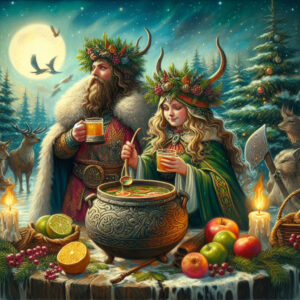
Thor, the mighty god of thunder and storms, stands as the guardian of mankind, wielding his hammer Mjolnir with protective might. Beside him is Sif, the golden-haired goddess of earth and family, whose gentle demeanor masks an underlying strength. Together, they become custodians of the home, offering blessings of protection as we bid farewell to the Yule Spirits.
To honor Thor, an array of offerings can be presented on the altar, ranging from prayers and libations to symbolic items like Thor’s hammer figures, model goats, weapons, shields, and elements associated with his realm. Sif, a goddess fostering peace and familial bonds, appreciates frithful actions and the commitment to discernment. Striving to bring one’s best self to her worship becomes a meaningful tribute.
Honoring Thor: A Thunderous Tribute
In the realm of Norse deities, honoring Thor is an act of acknowledging the thunderous power and protective might that he extends to the realms of mankind. As a hammer-wielding god associated with lightning, thunder, storms, sacred groves and trees, strength, the protection of mankind, hallowing, and fertility, Thor commands reverence and admiration.
To create a fitting tribute on the twelfth day of Yule, an array of offerings can be presented on the altar, each symbolizing an aspect of Thor’s expansive dominion. The following items are commonly included:
- Prayers and Libations: Simple yet profound, prayers and libations express gratitude and seek the favor of the thunder god. Pouring a libation, perhaps of mead or another beverage, symbolizes an offering to Thor.
- Symbolic Items: Thor’s hammer, Mjölnir, stands as an iconic symbol of his power. Figures or representations of this mighty weapon, crafted with reverence, find a place on the altar. Additionally, model goats, often depicted as pulling Thor’s chariot, represent his connection to these powerful animals.
- Weapons and Shields: Items associated with warfare, such as miniature weapons and shields, honor Thor’s role as a protector. These offerings acknowledge his commitment to safeguarding the realms from threats and challenges.
- Elements of Thor’s Realm: Rainwater, garlic, leek, onion, hawthorn, houseleek, and tormentil are items linked to Thor’s sphere. These elements, carefully arranged on the altar, pay homage to the natural associations of the thunder god.
- Thor’s Sacred Oak: In some traditions, planting an oak tree is considered a sacred act to honor Thor. The oak, a symbol of strength and endurance, becomes a living tribute to the god of thunder.
As the twelfth day of Yule unfolds, the act of honoring Thor becomes a profound expression of gratitude and acknowledgment of his protective influence. Through these offerings, a sacred space is created where the thunder god’s essence can be invoked, fostering a connection between the mortal realm and the divine strength of Thor.
Honoring Sif: Cultivating Frith and Discernment
In the tapestry of Norse deities, Sif, the golden-haired goddess, weaves threads of peace, fertility, and familial bonds. As an ally in matters of familial and social harmony, Sif’s benevolent influence extends to those who seek to foster peace between disputing parties. Honoring Sif on the twelfth day of Yule involves embracing frithful actions and cultivating discernment in the intricate relationships within families and communities.
- Frithful Actions: Sif finds appreciation in acts that contribute to peace, hospitality, and the strengthening of familial bonds. Simple gestures of kindness, mediation in conflicts, and fostering a spirit of unity align with Sif’s essence as an agent of frith (‘peace’). These actions serve as offerings to a goddess who values the well-being and harmony of those connected through familial and social ties.
- Striving for Discernment: Sif’s gentle demeanor should not be mistaken for weakness, for she is the bride of thunder, Thor. In her role as a goddess associated with earth, wheat, fertility, and family, Sif encourages worshippers to strive for discernment. Discernment involves the ability to perceive and comprehend situations with clarity, making choices that contribute to the greater good. Offering Sif the commitment to discernment becomes a valuable tribute, acknowledging her role in guiding the often-complicated relationships within families and groups.
- Best Self to Her Worship: The most cherished offering to Sif is the dedication to bringing one’s best self to her worship. This involves embodying qualities of kindness, understanding, and a commitment to fostering positive connections. Rumormongering and slander, in contrast, are discouraged, as they disrupt the peace that Sif represents.
As the twelfth day of Yule unfolds, honoring Sif transcends mere ritual; it becomes a commitment to embodying the principles of frith and discernment. In fostering a spirit of peace and understanding, worshippers engage in a meaningful exchange with Sif, drawing upon her wisdom to navigate the intricacies of familial and social relationships.
Spiritual and Physical Cleansing: Purifying the Home
With Thor and Sif invoked, the twelfth day is marked by a dual cleansing—spiritual and physical. The house, a haven between realms, is fumigated with the aromatic essence of herbs like Mugwort and Juniper, believed to drive away malevolent energies. This ritual begins at the back of the house and progresses to the front, symbolizing the expulsion of negativity. Fire and iron, symbols of purification, are carried through the house, their presence reinforced with prayers for Thor’s protective assistance.
The ashes from the Yule log, a reservoir of the season’s warmth, are scattered across doorways, forming a protective barrier. This final act of purification ensures that the home is fortified against any lingering influences, creating a sacred space for the year’s closure.
Spiritual Cleansing of the Home: A Yuletide Purification Ritual
In the sacred tapestry of Yule, the twelfth day marks a profound moment for spiritual cleansing—a ritual that transcends the physical realm to purify the very essence of the home. This ceremonial act is not merely a removal of dust and cobwebs; it is a deliberate endeavor to cleanse the spiritual residue accumulated throughout the departing year.
- Setting the Intention: As the wheel of the year turns towards its final day, practitioners embark on a journey of intention-setting. Before the ritual begins, a quiet moment of reflection is embraced, contemplating the energies that have traversed the thresholds of the home. This introspection establishes the foundation for the cleansing, providing clarity on what needs release and what energies are welcomed.
- Sacred Herbs and Incense: At the heart of spiritual cleansing lies the aromatic dance of sacred herbs and incense. Mugwort, Juniper, Sage, or Cedar—these herbs carry ancient purifying energies, believed to dispel negativity and invite in positive forces. As the smoke billows through the rooms, each wafting tendril carries prayers and intentions, weaving a cloak of spiritual purity.
- Invoking Divine Assistance: In the spiritual realm, assistance is sought from deities or spirits known for their protective and purifying attributes. Thor, with his mighty hammer, or Hestia, the goddess of the hearth, might be invoked to lend their divine energies to the cleansing process. Through prayers and invocations, a connection is forged between the earthly and the divine, amplifying the potency of the ritual.
- Symbolic Actions: Symbolism plays a crucial role in spiritual cleansing. A ritualistic walk through the home, carrying a lit candle or a representation of fire, signifies the illumination of dark corners and the banishment of lingering shadows. Anointing doorways and windows with consecrated oils or waters symbolizes the creation of barriers against unwanted energies, creating a sanctuary within the walls.
- Sound and Vibration: Sound, with its vibrational resonance, becomes a powerful tool in spiritual cleansing. Bells, chimes, or even the rhythmic beat of a drum are employed to break stagnant energy patterns and invite a harmonious flow. The vibrational frequencies produced serve as a beacon, guiding benevolent forces and dispelling any lingering discord.
As the spiritual cleansing ritual concludes, a sense of renewal settles within the cleansed space. The home, once imbued with the echoes of the past, now resonates with a harmonious energy—a blank canvas ready to absorb the brushstrokes of the approaching year. In this sacred act, the home becomes a sanctuary, a vessel for positive energies, and a beacon of light as one year wanes and another eagerly awaits its dawn.
Physical Cleansing of the Home: Renewing the Material Realm
Amidst the Yuletide festivities, the twelfth day unfolds as a canvas for physical cleansing—a meticulous renewal of the material spaces that cradle the essence of daily life. This tangible endeavor goes beyond the mundane act of sweeping and dusting; it is a ceremonial expression of bidding farewell to the old and ushering in the new.
- Decluttering and Simplifying: As the year draws its final breaths, the home is treated to a decluttering ritual. Unnecessary items, remnants of the past that have lost their relevance, are gently released. Closets are combed through, shelves are cleared, and surfaces are laid bare. This act of decluttering symbolizes the release of stagnant energies, making room for the fresh vitality of the approaching year.
- Sweeping Away the Old: Armed with brooms and brushes, practitioners embark on a symbolic journey of sweeping away the remnants of the old year. Dust and debris, both literal and metaphorical, are whisked away, leaving behind a clean slate. The rhythmic act of sweeping becomes a meditation—a physical manifestation of releasing attachments to the past.
- Symbolic Cleansing Agents: In the spirit of Yule, the cleansing agents employed transcend their mundane functions. Water, carrying the essence of purification, is infused with intention as it washes over surfaces. Adding a few drops of consecrated oils or herbs to cleaning solutions transforms the act of wiping down counters and tables into a ritualistic offering to the home.
- Anointing with Blessings: The physical act of cleansing becomes an opportunity for anointing the home with blessings. Whether through the application of holy water, consecrated salt, or specially crafted oils, each touch becomes a benediction—a gesture that consecrates the home and imbues it with protective energies.
- Opening Windows for Renewal: As dust is swept away and surfaces gleam, windows are opened wide, inviting in the crisp, rejuvenating air of the season. This symbolic gesture not only facilitates the physical circulation of air but also signifies the release of stagnation and the entry of new opportunities.
- Cleansing Tools as Ritual Objects: Brooms, brushes, and cleaning cloths, typically mundane tools, become symbolic instruments in this Yuletide ritual. Each stroke and swipe is imbued with purpose, carrying the practitioner’s intentions of renewal, cleanliness, and the banishment of lingering energies from the old year.
The physical cleansing of the home during Yule concludes with a profound sense of revitalization. The abode, now free from the residues of the past, stands as a testament to the cyclical nature of life—a space ready to embrace the joys, challenges, and discoveries that the new year holds. As the physical cleansing ritual concludes, the home becomes a sanctuary of freshness, eagerly awaiting the dawn of a new chapter in the ever-unfolding tapestry of time.
Divination Spread of the New Year: Unveiling the Tapestry of Fate
On the twelfth day of Yule, as the year bows out with grace, the ancient art of divination emerges as a beacon of insight, inviting practitioners to unveil the tapestry of fate that stretches before them. This ritualistic practice transcends mere fortune-telling; it is an intimate conversation with the unseen forces that weave the fabric of our lives.
- Choosing the Divination Method: The diversity of divination methods mirrors the varied paths of seekers. Traditional runes, with their runic symbols pregnant with ancient wisdom, offer concise and profound messages. Tarot cards, adorned with archetypal images, provide a rich and nuanced narrative. Crystal ball gazing, scrying mirrors, or even tea leaf reading beckon those who seek revelations through unconventional means. The choice of method is a deeply personal one, guided by intuition and resonance.
- Setting the Sacred Space: Before the divination commences, the practitioner sets a sacred space—a realm where the energies of the unseen can manifest. Candles flicker, casting a gentle glow upon the divination tools. Crystals, charged with intent, stand sentinel, amplifying the connection between the material and spiritual realms. Incense wafts through the air, carrying with it the ethereal notes of sacred herbs.
- A Grand Spread for the New Year: The divination spread for the New Year is not a mere reading; it is a grand tableau that unfolds the narrative of the months to come. The layout, whether it follows the traditional Celtic Cross, the Wheel of the Year, or a bespoke arrangement, becomes a sacred map. Each card, rune, or symbol laid is a doorway to hidden realms, offering glimpses into the challenges, triumphs, and transformative moments that await.
- Interpreting the Symbols: As symbols emerge in the divination spread, the practitioner becomes an interpreter of the cosmic language. A single card or rune is not an isolated omen; it is a note in the symphony of destiny. The arrangement and interaction of symbols carry nuanced meanings, offering a kaleidoscopic view of the intricate dance between free will and predestined threads.
- Seeking Guidance from Deities: In this sacred act of divination, seekers may call upon deities associated with wisdom and foresight to guide the process. Thorr, with his thunderous presence, or Odin, the All-Father, revered for his insatiable quest for knowledge, are apt patrons for this divinatory dance. Sif, with her discerning gaze, may be invoked to bring clarity to the messages unveiled.
- Recording the Revelations: A divination spread for the New Year is not merely a momentary glimpse; it is a narrative to be revisited and reflected upon throughout the unfolding months. Practitioners often record their interpretations, creating a chronicle that evolves alongside the journey. This documentation serves as a compass, offering guidance when the seas of life grow turbulent.
- Embracing the Unknown: As the divination spread unfolds, practitioners are reminded that fate is not a fixed script but a living, breathing tapestry that responds to the choices made along the way. The cards drawn or runes cast are not immutable destinies but whispers from the cosmos—a conversation between the seeker and the vast, mysterious universe.
As the divination spread concludes, a profound sense of insight settles over the sacred space. The tapestry of fate, though veiled in mystery, reveals threads of opportunity, challenge, and growth. Armed with this foresight, practitioners’ step into the threshold of the New Year, ready to navigate the labyrinth of life with courage, wisdom, and an open heart.Top of Form
Embracing the New Year’s Dawn: A Tapestry Woven with Fate
In the final moments of the twelfth day, as the echoes of divination linger in the air and the house stands purified and protected, we stand at the threshold of the new year. The mighty protection of Thor and the harmonious influence of Sif envelop us, their divine energies intertwining with the insights unveiled in the sacred act of divination. Like threads in a grand tapestry woven with fate, we embark on this journey into the promises and possibilities that the fresh beginning holds. May the coming year be a canvas upon which we paint our aspirations, guided by the wisdom of the unseen forces and the resilient spirit of Yule’s enduring magic.