Posted on Leave a comment

Recipe: Savory Winter Tartlets

Savory Winter Tartlets

Introduction

An Appetizer Honoring Loki’s Mischief and Sigyn’s Steadfastness

For Yule’s Silly Feast, Savory Winter Tartlets with Sweet Appearances playfully disguise their hearty, savory fillings as delicate sweet treats. Featuring flaky pastry shells filled with creamy mashed sweet potatoes, goat cheese, and spiced cranberries, these tartlets look like mini desserts but deliver a warm and satisfying savory bite. This dish captures Loki’s penchant for mischief and Sigyn’s grounding presence, making it a perfect starter for the feast.

The Magic of Savory Winter Tartlets

This dish embodies the spirit of the Silly Feast by flipping expectations. The tartlets look like confections, complete with a garnish that mimics whipped cream and cherries, but their earthy and savory flavors speak to Sigyn’s steadfast nature. The balance of mischief and nourishment reflects the interconnected roles of chaos and order, reminding us to embrace both in celebration.

By engaging the senses in a playful way, this dish sets the tone for the feast, inviting laughter, joy, and a sense of the extraordinary.

Spell for Mischief and Balance

As you prepare these tartlets, use this spell to invoke joy, playfulness, and harmony for your feast.

  1. Light a purple or green candle to symbolize Loki’s chaos and Sigyn’s balance.
  2. As you pipe the filling and garnish the tartlets, imagine their playful energy bringing laughter and connection to the feast.
  3. While assembling, softly chant:

“Savory heart, sweet disguise,
Loki laughs, Sigyn’s wise.
Playful trick and steadfast art,
Joyful magic in each tart.”

  1. Serve with delight, sharing the tartlets as a symbol of balance and revelry.

Magical Properties of Savory Winter Tartlets

Pastry Shells: Represent the balance of structure and creativity, housing the dish’s mischief and warmth.

Sweet Potatoes: Represent grounding, abundance, and nourishment, embodying Sigyn’s steadfast nature.

Goat Cheese: Symbolizes unity, nurturing, and creativity, adding richness to the dish.

Cranberries: Bring protection, celebration, and renewal, reflecting Yule’s themes of gratitude and transformation.

Thyme and Rosemary: Offer clarity and strength, grounding the dish in winter’s energy.

Savory Winter Tartlets with Sweet Appearances

Flaky pastry shells filled with savory sweet potato, goat cheese, and spiced cranberries, playfully disguised as mini desserts for the Silly Feast.

  • Muffin tin or tartlet pan
  • Piping bag or zip-top bag
  • Mixing bowl

For the Tartlet Shells:

  • 1 sheet puff pastry (thawed if frozen)
  • 1 tbsp flour (for dusting)

For the Filling:

  • 2 cups mashed sweet potatoes (cooked and cooled)
  • ½ cup goat cheese (softened)
  • 2 tbsp honey
  • 1 tsp fresh thyme (chopped)
  • ½ tsp ground cinnamon
  • Salt and pepper to taste

For the Cranberry Topping:

  • ½ cup fresh or frozen cranberries
  • 2 tbsp honey or maple syrup
  • ¼ tsp ground cloves

For Garnish:

  • Fresh rosemary sprigs (optional)

Prepare the Tartlet Shells:

  1. Preheat oven to 375°F (190°C). Dust a surface with flour and roll out the puff pastry.

  2. Cut into 12 circles using a cookie cutter and press them into a muffin tin or tartlet pan. Prick the bottoms with a fork.

  3. Bake for 12-15 minutes or until golden brown. Let cool completely before filling.

Make the Sweet Potato Filling:

  1. In a mixing bowl, combine mashed sweet potatoes, goat cheese, honey, thyme, cinnamon, salt, and pepper. Mix until smooth.

  2. Transfer to a piping bag for easy assembly.

Prepare the Cranberry Topping:

  1. In a small saucepan, combine cranberries, honey or maple syrup, and cloves.

  2. Cook over medium heat, stirring, until the cranberries burst and form a thick sauce. Let cool.

Assemble the Tartlets:

  1. Pipe the sweet potato mixture into the cooled tartlet shells, filling them generously.

  2. Add a dollop of cranberry topping on each tartlet, mimicking a sweet garnish.

Garnish and Serve:

  1. Top each tartlet with a small sprig of fresh rosemary for a festive touch.

  2. Serve immediately or at room temperature.

To heighten the playful appearance, you can garnish the tartlets with a swirl of sour cream or whipped goat cheese to mimic frosting. For added crunch, sprinkle with crushed pecans or walnuts.

Appetizer
Silly Feast, Yule
Feast, Recipe

Conclusion

Savory Winter Tartlets with Sweet Appearances are a whimsical and symbolic appetizer for Yule’s Silly Feast. Their playful disguise honors Loki’s mischief, while their hearty and grounding flavors celebrate Sigyn’s steadfast devotion. May these tartlets bring joy, laughter, and a touch of magical revelry to your feast, reminding all to embrace the extraordinary.

Posted on Leave a comment

Recipe: Trickster’s Tomato Soup

Trickster's Tomato Soup

Introduction

A Mischievous Soup Honoring Loki’s Playfulness and Sigyn’s Steadfast Devotion

For Yule’s Silly Feast, Trickster’s Tomato Soup with Creamy White Beans delivers a surprising twist that embodies the playful chaos of Loki and the loyal grounding of Sigyn. At first glance, it looks like a classic creamy tomato soup, but with its heartiness from white beans and a subtle touch of warming spices, the dish playfully defies expectations. Each spoonful balances the mischief of the unexpected with the steadfast comfort of a winter soup, honoring the dual energies celebrated in the feast.

The Magic of Trickster’s Tomato Soup

This soup reflects Loki’s tendency to overturn the mundane and replace it with whimsy. Its vibrant orange-red color hints at a tangy tomato base, but the creamy texture and earthy flavor from the white beans create a delightful mismatch. Sigyn’s strength is mirrored in the nourishing, grounding ingredients, reminding us that even in the midst of chaos, there is comfort and unity.

The soup celebrates the Silly Feast’s theme of transformation, inviting participants to laugh, enjoy, and marvel at how the ordinary can become extraordinary.

Spell for Transformation and Unity

As you prepare this soup, use this spell to invoke playfulness, nourishment, and connection into your feast.

  1. Light a red or gold candle to symbolize the vibrant energy of Loki and the enduring loyalty of Sigyn.
  2. As you stir the soup, imagine the ingredients blending together in harmonious transformation, creating a dish that surprises and delights.
  3. While simmering the soup, softly chant:

“Red as flame, white as snow,
Playful mischief in each glow.
Sigyn grounds, Loki transforms,
Unity blooms as the hearth warms.”

  1. Serve with joy, inviting laughter and connection to fill the room.ny you wish to cultivate in your life.

Magical Properties of Trickster’s Tomato Soup

Cream or Coconut Milk: Symbolizes nurturing and unity, bringing harmony to the dish.

Tomatoes: Represent love, passion, and vitality, adding bold energy to the dish.

White Beans: Symbolize grounding, stability, and protection, mirroring Sigyn’s loyal nature.

Carrots: Evoke warmth, abundance, and grounding, connecting the soup to the season’s earthiness.

Garlic: Provides protection and strength, enhancing the dish’s steadfast energy.

Cinnamon and Nutmeg: Add warmth, transformation, and a touch of unexpected spice, embodying Loki’s playful nature.

Trickster’s Tomato Soup with Creamy White Beans

A hearty, creamy tomato soup with the unexpected depth of white beans and warming winter spices, celebrating the playful mischief of Loki and the steadfast devotion of Sigyn.

  • Large saucepan or soup pot
  • Blender or immersion blender
  • Wooden spoon
  • 2 tbsp olive oil
  • 1 medium onion (diced)
  • 2 garlic cloves (minced)
  • 2 medium carrots (peeled and chopped)
  • 1 can 28 oz crushed tomatoes
  • 1 can 15 oz – white beans ((such as cannellini) drained and rinsed)
  • 3 cups vegetable broth
  • ½ cup heavy cream or coconut milk
  • ½ tsp ground cinnamon
  • ¼ tsp ground nutmeg
  • Salt and pepper to taste

For Garnish:

  • A drizzle of cream or coconut milk
  • Fresh thyme sprigs
  • A sprinkle of paprika

Sauté the Base:

  1. In a large saucepan or soup pot, heat olive oil over medium heat. Add the diced onion, minced garlic, and chopped carrots. Sauté for 5-7 minutes until the vegetables are soft and fragrant.

Add the Tomatoes and Beans:

  1. Stir in the crushed tomatoes, white beans, and vegetable broth. Bring to a simmer and let cook for 15 minutes, allowing the flavors to meld.

Blend for Creaminess:

  1. Using an immersion blender, blend the soup until smooth. If using a regular blender, work in batches, being careful with the hot liquid.

Add the Spices and Cream:

  1. Return the soup to the pot over low heat. Stir in the heavy cream or coconut milk, cinnamon, and nutmeg. Season with salt and pepper to taste. Simmer for 5 minutes to let the spices infuse.

Garnish and Serve:

  1. Ladle the soup into bowls and drizzle with cream or coconut milk. Garnish with fresh thyme and a sprinkle of paprika for a festive touch. Serve warm.

For an extra layer of mischief, serve the soup in mismatched bowls or top it with croutons that resemble marshmallows for a playful visual twist. Pair with crusty bread or crackers for added heartiness.

Soup
Silly Feast, Yule
Feast, Recipe

Conclusion

Trickster’s Tomato Soup with Creamy White Beans is a whimsical and nourishing addition to Yule’s Silly Feast. Its unexpected flavors and hearty base honor Loki’s playful chaos and Sigyn’s grounding presence, inviting participants to revel in the magic of transformation and connection. May this dish bring laughter, warmth, and unity to your celebration, embodying the extraordinary spirit of the Silly Feast.

Posted on Leave a comment

Recipe: Deceptive Winter Parfait

Deceptive Winter Parfait

Introduction

A Playful Amuse Bouche Honoring Loki’s Mischief and Sigyn’s Steadfastness

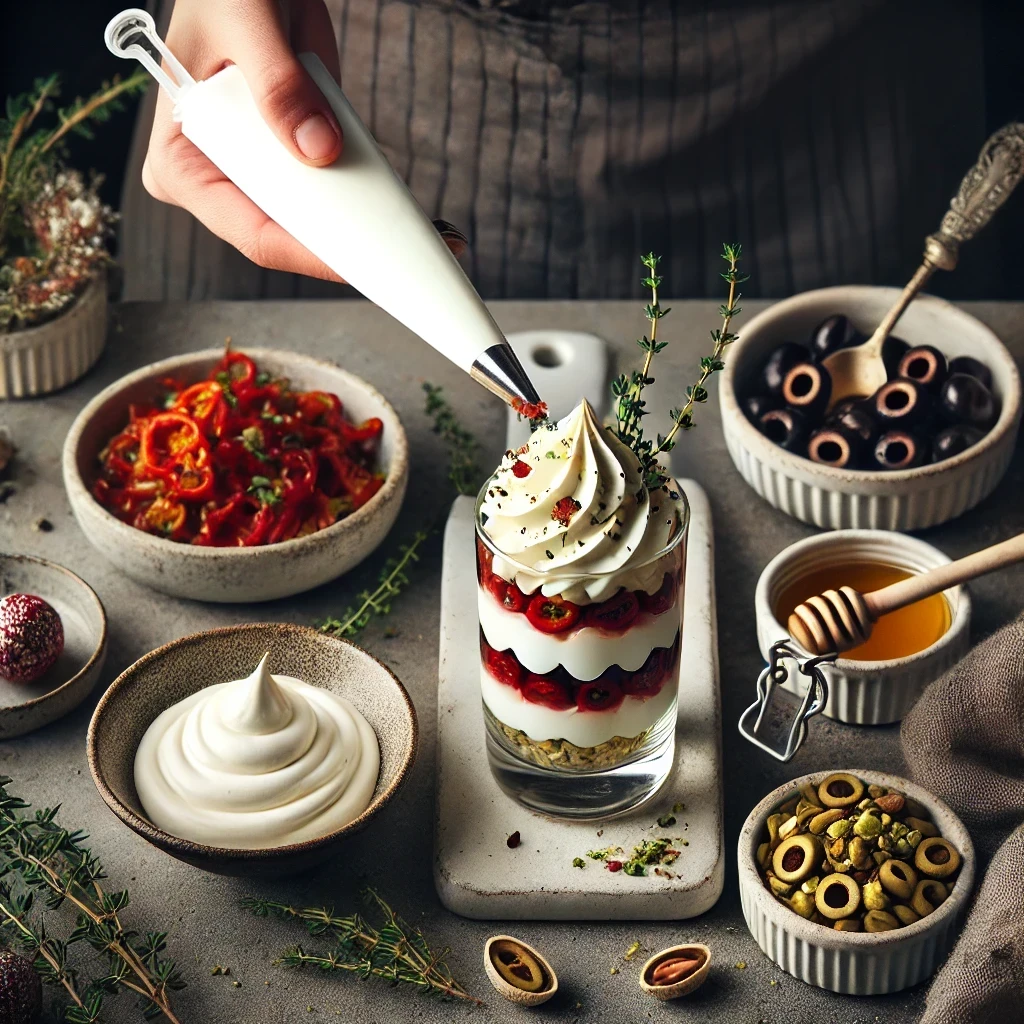
For Yule’s Silly Feast, the Deceptive Winter Parfait is a dish that surprises the senses, embodying the playful chaos of Loki and the unwavering devotion of Sigyn. On the surface, it looks like a sweet parfait—layers of whipped cream, berries, and chocolate—but the flavor tells a different story. The “cream” is actually savory whipped goat cheese, the “berries” are roasted red peppers, and the “chocolate” is a layer of black olive tapenade. This amusing combination invites guests to set aside expectations and embrace the revelry of the unexpected.

The Magic of Deceptive Winter Parfait

Loki’s mischievous nature is celebrated in this dish’s ability to upend assumptions, while Sigyn’s strength and devotion are reflected in the earthy and steadfast ingredients. The winter elements—roasted peppers, goat cheese, and olives—ground the dish in the season, connecting it to the energy of Yule. This amuse bouche sets the stage for a feast where the ordinary transforms into the extraordinary, reminding us to embrace humor, adaptability, and connection.

The parfait is symbolic of the Silly Feast’s celebration of chaos and loyalty, where roles are reversed, and revelry reigns. Its unexpected flavors invite participants to laugh, savor, and toast to the spirit of Loki and Sigyn.

Spell for Laughter and Unity

As you prepare this dish, use this spell to invite laughter, lightheartedness, and connection into your Silly Feast.

  1. Light a purple or gold candle to symbolize the energy of mischief and devotion.
  2. As you layer the parfait, focus on the harmony between chaos and steadfastness in the ingredients.
  3. While assembling the dish, softly chant:

“Mirth and love in layers lie,
A taste of earth, a trick for the eye.
Loki’s laughter, Sigyn’s grace,
Unity fills this festive space.”

  1. Serve with joy, inviting laughter and camaraderie to flow through the gathering.

Magical Properties of Deceptive Winter Parfait

Honey: Adds sweetness and unity, fostering harmony and connection.

Goat Cheese: Represents grounding and nurturing, connecting the dish to the earth’s energies and Sigyn’s steadfast nature.

Roasted Red Peppers: Symbolize vitality, courage, and warmth, reflecting Loki’s fiery energy and passion.

Black Olives: Bring grounding, protection, and depth, embodying Sigyn’s enduring support and loyalty.

Thyme: Offers clarity, protection, and strength, enhancing the dish’s grounding qualities.

Deceptive Winter Parfait

A savory parfait disguised as a sweet treat, honoring the playful mischief of Loki and the steadfast devotion of Sigyn.

  • Baking sheet
  • Blender or food processor
  • Small glasses or ramekins
  • Piping bag

For the Parfait:

  • ½ cup goat cheese (softened)
  • 2 tbsp heavy cream
  • 1 tsp honey
  • 1 cup roasted red peppers (peeled and chopped)
  • ½ cup black olives (pitted)
  • 1 tsp olive oil
  • ½ tsp fresh thyme leaves

For Garnish:

  • A sprinkle of crushed pistachios or walnuts
  • Fresh thyme sprigs

Roast the Peppers:

  1. Preheat oven to 400°F (200°C). Place the red peppers on a baking sheet and roast for 15 minutes, turning once, until charred. Let cool, then peel and chop.

Prepare the Goat Cheese Layer:

  1. In a bowl, whip the goat cheese with heavy cream and honey until smooth. Transfer to a piping bag for easy layering.

Make the Olive Tapenade:

  1. In a blender or food processor, combine black olives, olive oil, and thyme. Blend until smooth and set aside.

Assemble the Parfaits:

  1. Spoon or pipe a layer of whipped goat cheese into the bottom of each glass or ramekin.
  2. Add a layer of roasted red peppers, spreading them evenly.
  3. Top with a layer of black olive tapenade.
  4. Repeat the layers if the glass allows, ending with a final dollop of goat cheese.

Garnish and Serve:

  1. Sprinkle crushed pistachios or walnuts on top and garnish with a sprig of thyme. Serve chilled or at room

These parfaits can be prepared a few hours in advance and stored in the refrigerator until ready to serve. For added humor, you can serve them in dessert glasses with small dessert spoons, fully committing to their sweet disguise.

Amuse Bouche
Silly Feast, Yule
Feast, Recipe

Conclusion

Deceptive Winter Parfait is a playful and symbolic dish that sets the tone for Yule’s Silly Feast. Its unexpected flavors honor Loki’s mischief, while its grounding ingredients pay homage to Sigyn’s steadfast devotion. May this dish bring laughter, connection, and a touch of chaos to your celebration, reminding all to embrace the magic of revelry and the strength of loyalty.

Posted on Leave a comment

Ritual: Yuletide Animal Masks

Yuletide Animal Masks

Introduction

A Celebration of Personal Aspiration and Sacred Animal Energy

As the Yuletide season unfolds, it offers an opportunity for self-reflection, growth, and the setting of intentions for the coming year. One vibrant and meaningful ritual to embrace during this time is the creation of symbolic animal masks, inspired by the traits and energies of sacred animals. These masks, adorned with intention and creativity, become a personalized expression of the qualities one seeks to cultivate. By stepping into the spirit of an animal ally, we honor its attributes and invite its guidance into our lives.

Ritual Basics

Before beginning any ritual, it is important to prepare yourself mentally and physically. You may want to take a cleansing bath, or shower, and meditate or perform some grounding exercises to center yourself. Gather any materials you will need, such as candles, incense, and offerings for the forest spirits.

You can read a more detailed Ritual Preparation guide here.

Full List of Animals

The Fuller list of Animals and their meanings can be found: HERE.

About the Ritual

The practice of crafting animal masks is rooted in ancient traditions where animals served as spiritual guides and archetypes for human aspirations. Each animal carries unique qualities—strength, adaptability, wisdom, or magic—that resonate deeply with personal and communal growth.

Performed during the Yuletide season, this ritual aligns with the themes of transformation, renewal, and connection to nature. By donning the mask of a chosen animal, participants symbolically embody the traits they wish to nurture and bring forth as the new year unfolds.

Yuletide Animal Attributes and Symbolic Masks

Crafting and wearing animal masks to embody personal aspirations for the coming year.

  • Table or workspace
  • Mirror
  • Comfortable chair or cushion
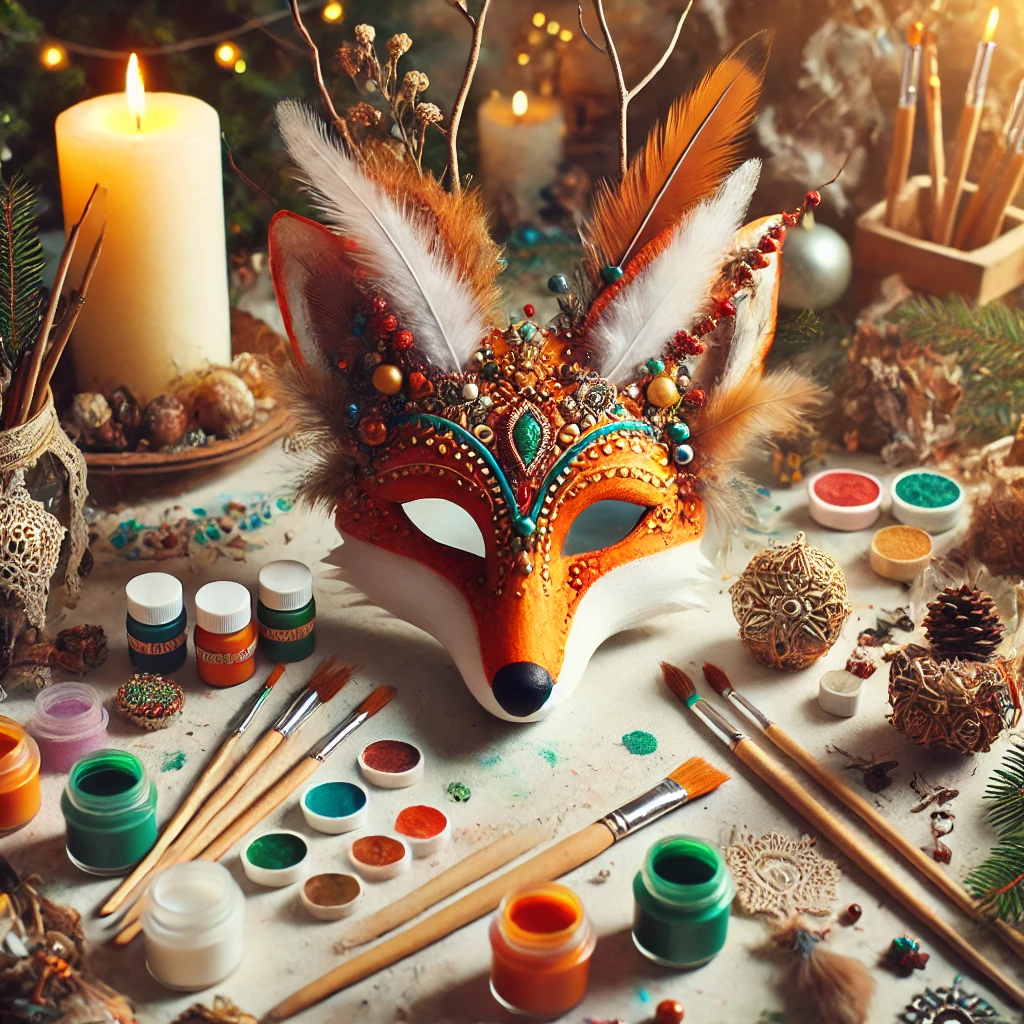
  • 1 Blank mask base (Paper, cardboard, or a pre-made mask.)
  • 1 Set Paints or markers (For coloring and personalizing the mask.)
  • 1 Collection Decorative elements (Feathers, fabric scraps, beads, or natural items like leaves and twigs.)
  • 1 Adhesive (Glue or tape for attaching decorations.)
  • 1 Length Ribbon or elastic (To secure the mask for wearing.)

Choosing Your Animal Ally

  1. Reflect on the qualities you wish to embody in the coming year. Consider the animal archetypes and their attributes:
  2. – Bear for strength and grounding.
  3. – Wolf for collaboration and loyalty.
  4. – Fox for cunning and adaptability.
  5. – (Refer to the full list of animals and their symbolic meanings.)

  6. Once you’ve chosen your animal, take a moment to connect with its energy. Meditate or journal about what draws you to this animal and how its traits resonate with your aspirations.

Crafting the Mask

  1. Begin with a blank mask base. Choose a shape that feels fitting for your chosen animal (e.g., elongated for a fox, rounder for a bear).
  2. Paint or color the mask to reflect your animal’s essence. Use hues and patterns inspired by the animal’s natural form or symbolic energies.
  3. Attach decorative elements to enhance your mask:
  4. – Feathers for a bird’s elegance.
  5. – Twigs or bark for grounding earth animals.
  6. – Beads and fabric for a mystical or magical animal.
  7. Secure a ribbon or elastic band to the mask, ensuring it fits comfortably for wearing.

Invoking the Spirit of the Animal

  1. Set up a small altar or sacred space. Include a candle, symbols of your chosen animal (a figurine, drawing, or photo), and any natural elements that resonate with its energy.
  2. Light the candle and take a few deep breaths to center yourself.
  3. Hold the mask in your hands and speak aloud your intentions:

    “I call upon the spirit of [animal]. May your [qualities] guide me through the coming year. May I embody your strength, wisdom, and magic as I move forward in my journey.”

Wearing the Mask and Ritual Movement

  1. Put on your mask and take a moment to feel its energy envelop you. Imagine the animal’s spirit merging with your own, infusing you with its traits.
  2. Engage in a ritual movement to embody the animal:
  3. – Walk with the strength of a bear.
  4. – Move gracefully like a fox.
  5. – Stretch your arms like the wings of a bird.
  6. Let the movements flow intuitively, deepening your connection to the animal’s essence.

Reflection and Gratitude

  1. Remove the mask and place it on your altar as a symbol of your intentions.
  2. Reflect on the experience and journal about how the animal’s energy feels within you.
  3. Offer gratitude to the spirit of the animal for its guidance and presence. Extinguish the candle to close the ritual.

Masks can be displayed on your altar throughout the year as a reminder of your intentions.

Consider revisiting this ritual during other seasonal transitions to realign with your chosen animal’s energy or to invite a new animal guide.

If performed in a group setting, participants can share their chosen animals and aspirations, fostering community connection and support.

Yule
Rituals

Conclusion

The Yuletide ritual of crafting symbolic animal masks is a profound and creative way to set intentions and connect with the archetypal energies of the animal kingdom. By embracing the attributes of your chosen animal, you step into a journey of self-discovery and transformation, guided by the wisdom of nature’s creatures. As the year unfolds, let the spirit of your animal ally inspire you to cultivate strength, adaptability, and magic in all that you do, weaving its energy into the fabric of your life.

Posted on Leave a comment

Ritual: The Yule Tree

The Yule Tree
The Yule Tree

Introduction

A Celebration of Shared Memories and Blessings

Amid the glowing celebrations of Yuletide, the tradition of the Yule Tree emerges as a cherished ritual, blending beauty, symbolism, and gratitude. Far beyond a decorative centerpiece, the Yule Tree transforms into a living tapestry, honoring the blessings of the year gone by and fostering a connection to the cycles of life, death, and rebirth. Rooted in ancient Pagan traditions and adapted over time, the Yule Tree remains a vibrant emblem of nature’s vitality and the enduring spirit of the season.

Ritual Basics

Before beginning any ritual, it is important to prepare yourself mentally and physically. You may want to take a cleansing bath, or shower, and meditate or perform some grounding exercises to center yourself. Gather any materials you will need, such as candles, incense, and offerings for the forest spirits.

You can read a more detailed Ritual Preparation guide here.

About the Ritual

The Yule Tree traces its origins to ancient practices of adorning living trees with candles and offerings to honor the earth and the divine. This tradition brought nature into the heart of Yuletide celebrations, symbolizing the Tree of Life and the interconnectedness of all things. Today, the Yule Tree serves as a focal point for reflection, gratitude, and shared joy. Decorating the tree becomes a meaningful ritual where each ornament, light, and ribbon tells a story of blessings, memories, and aspirations.

This ritual offers an opportunity to pause amidst the season’s festivities and engage in a sacred act of gratitude and connection, infusing the holiday with intention and warmth.

The Yule Tree: A Living Tapestry of Gratitude

A communal ritual of decorating the Yule Tree with gratitude, reflection, and shared blessings.

  • Tree
  • String of lights
  • Tree topper
  • 1 Set Ornaments (Representing memories, blessings, and shared moments.)
  • 1 Ribbon or garlands (Symbolizing the threads of connection and unity.)
  • 1 Set Reflective ornaments (Mirroring gratitude and abundance.)
  • 1 Bowl Blessings (optional – Small notes of gratitude written by participants.)

Preparing the Sacred Space

  1. Choose a space in your home or gathering area where the Yule Tree will take center stage.
  2. Cleanse the space by smudging with sage, juniper, or pine incense to clear any stagnant energy.
  3. Place the tree in its stand and ensure it is secure. If using a live tree, take a moment to honor its connection to the earth and thank it for its presence.

Reflecting on Gratitude

  1. Gather family members, friends, or other participants around the tree.
  2. Provide each person with a small piece of paper and pen. Invite them to write down a blessing, cherished memory, or gratitude from the past year.
  3. Place the notes in a decorative bowl or directly onto the tree as ornaments.

Decorating the Tree

  1. Begin with the lights, wrapping them gently around the tree. As you do, reflect on the light returning after the longest night and the guidance of celestial bodies.
  2. Add ribbons or garlands, visualizing them as the threads of connection weaving through your lives.
  3. Take turns placing ornaments on the tree, sharing the story or memory behind each one. If some ornaments are new, dedicate them to future hopes or intentions.
  4. Add reflective ornaments to amplify the tree’s radiance, symbolizing the abundance of the year’s blessings.

Placing the Tree Topper

  1. Together, select a tree topper that resonates with your celebration:
  2. – A star to represent celestial guidance.
  3. – A sun to symbolize rebirth and vitality.
  4. – A personal symbol of family, community, or tradition.
  5. Place the topper with intention, completing the tree as a beacon of light and gratitude.

Honoring the Yule Tree

  1. Gather around the tree and light the string of lights. Take a moment to admire the tree as a collective creation.
  2. Speak a blessing together, such as:

    “We honor this tree as a symbol of life, connection, and gratitude. May its light guide us, its presence inspire us, and its beauty remind us of the blessings we share.”

  3. Conclude with a song, a moment of silence, or a communal cheer, sealing the ritual with joy and unity.

Consider creating a new ornament each year as a family tradition. These ornaments can commemorate special moments or intentions.

If you celebrate with children, involve them by having them craft simple ornaments or write their own blessings.

To deepen the ritual, leave a small offering at the base of the tree, such as a bowl of water or a handful of dried herbs, as a gift to the spirits of nature.

Yule
Rituals

Conclusion

The Yule Tree is more than a festive decoration—it is a living altar to gratitude, connection, and the enduring cycles of life. Each light, ornament, and ribbon transform it into a tapestry of shared blessings and intentions, reminding us of the beauty and abundance in our lives. By engaging in this meaningful ritual, we infuse the Yuletide season with reflection, love, and light, standing together as witnesses to the profound magic of the turning year. May the Yule Tree inspire warmth, unity, and gratitude as its radiance brightens your home and spirit.

Posted on Leave a comment

Ritual: Sigyn’s Steadfast Devotion

Sigyn’s Steadfast Devotion

Introduction

A Yuletide Celebration of Stability and Perseverance

As the Yuletide season unfolds, the swirling energies of transformation and revelry are balanced by the quiet, steadfast presence of Sigyn, the Norse goddess of loyalty and devotion. Known as the unwavering partner of Loki, Sigyn embodies resilience, love, and the power of commitment in the face of chaos. Honoring Sigyn during Yuletide allows us to connect with the strength found in devotion, the courage to endure life’s challenges, and the grace to offer steadfast support to those we love.

This ritual invites practitioners to create a sacred space to honor Sigyn’s enduring spirit, reflect on the strength within stability, and find comfort in the steadfast devotion that weaves through the Yuletide season.

Ritual Basics

Before beginning any ritual, it is important to prepare yourself mentally and physically. You may want to take a cleansing bath, or shower, and meditate or perform some grounding exercises to center yourself. Gather any materials you will need, such as candles, incense, and offerings for the forest spirits.

You can read a more detailed Ritual Preparation guide here.

About the Ritual

Sigyn’s narrative is one of loyalty and perseverance. While Loki’s unpredictable nature symbolizes change, Sigyn represents the steadying force that endures through trials. Her name, meaning “Victory Woman,” highlights her triumph over adversity, making her an emblem of unwavering love and resilience.

Honoring Sigyn during Yuletide, a season steeped in themes of light returning after darkness, reminds us of the value of consistency, loyalty, and quiet strength. This ritual is perfect for those seeking grounding energy during the bustling season or a deeper connection to the qualities of patience and love.

Sigyn’s Steadfast Devotion

A ritual to honor Sigyn, the Norse goddess of devotion, resilience, and love, during the Yuletide season.

  • Altar or sacred space
  • Candle (white or silver)
  • Offering plate
  • Comfortable cushion or chair
  • 1 Piece Parchment and pen (For writing reflections or affirmations.)
  • 1 Small bowl Water or a polished stone (Representing Sigyn’s grounding energy.)
  • 1 Offering (e.g., bread, honey, or a flower, Symbolizing gratitude and reverence.)
  • 1 Bundle Herbs or incense (optional – Lavender or chamomile for calm and stability.)

Preparing the Sacred Space

  1. Select a quiet space where you can reflect and meditate undisturbed.
  2. Cleanse the space with your chosen herbs or incense to create a peaceful ambiance.
  3. Decorate the altar with natural elements, such as stones, evergreen branches, or Sigyn’s symbolic colors. Place the white or silver candle at the center and the bowl of water or polished stone nearby.

Invoking Sigyn

  1. Light the candle and say:

    "Sigyn, steadfast guardian of love and devotion,

    Anchor in chaos, bringer of quiet strength,

    I call upon your enduring presence tonight.

    Guide me with your grace, steady my steps,

    And show me the power within resilience and love."

  2. Place your hands over the bowl of water or the polished stone, allowing its grounding energy to flow through you.

Reflection and Gratitude

  1. Take the parchment and pen, and write down a reflection on moments in your life where resilience and devotion have carried you through challenges.
  2. Alternatively, write affirmations celebrating the qualities of patience, love, and stability you wish to nurture.
  3. Place the parchment on the altar as a symbolic offering to Sigyn.

Making an Offering

  1. Present your offering (bread, honey, or a flower) to Sigyn by placing it on the offering plate. Say:

    "Sigyn, I offer this token of my gratitude,

    For the strength you embody and the love you inspire.

    May your steadfast presence guide my heart

    And ground me through the changing tides of life."

Meditation and Connection

  1. Sit comfortably before the altar and focus on the flame of the candle.
  2. Visualize Sigyn’s calming energy enveloping you like a gentle embrace, steadying your thoughts and grounding your spirit.
  3. Reflect on the balance she brings to life’s chaos, and allow her presence to inspire patience and love in your own life.

Closing the Ritual

  1. Extinguish the candle, knowing that Sigyn’s energy continues to resonate within you.
  2. Say:

    "Sigyn, I honor your strength and devotion.

    Thank you for your presence and guidance.

    May your steadfast spirit remain with me,

    A beacon of love and resilience in all I do."

This ritual can be adapted to include loved ones, allowing each participant to reflect on the qualities of resilience and devotion in their lives.

Consider creating a small Sigyn-inspired charm or keepsake, such as a polished stone or piece of jewelry, to carry her energy with you throughout the year.

Maintain your connection to Sigyn by periodically lighting the white or silver candle and reflecting on the lessons learned during the ritual.

Yule
Rituals

Conclusion

Sigyn’s Steadfast Devotion ritual is a gentle yet profound way to honor the enduring power of love and resilience during the Yuletide season. Through the quiet moments of reflection and offerings of gratitude, we connect with Sigyn’s unwavering spirit, finding strength in her example of devotion and patience. This ritual reminds us that even in life’s most chaotic moments, there is stability to be found in the steadfast presence of love and commitment. May Sigyn’s energy guide you through Yuletide and beyond, inspiring a grounded and enduring strength within.

Posted on Leave a comment

Ritual: Loki’s Mischievous Alchemy

Loki’s Mischievous Alchemy

Introduction

A Yuletide Celebration of Transformation and Renewal

During the Yuletide season, amidst the warmth of tradition and the light of celebration, there is room to honor the unpredictability and transformative magic of Loki. Known as the Norse trickster god, Loki’s cunning and chaos hold deeper wisdom—reminding us that growth often springs from upheaval and that change, though unsettling, can forge new paths and possibilities. This ritual invites participants to embrace Loki’s alchemical energy, honoring his role in challenging the status quo and sparking transformation during the darkest days of the year.

Ritual Basics

Before beginning any ritual, it is important to prepare yourself mentally and physically. You may want to take a cleansing bath, or shower, and meditate or perform some grounding exercises to center yourself. Gather any materials you will need, such as candles, incense, and offerings for the forest spirits.

You can read a more detailed Ritual Preparation guide here.

About the Ritual

Loki’s role as a trickster is not merely one of disruption but of creative destruction and renewal. He represents the energy needed to break stagnation, encouraging adaptability, cleverness, and a willingness to embrace the unknown. During Yuletide, Loki’s mischievous spirit can be honored as a catalyst for personal transformation and as a guide through the unexpected twists and turns of life. This ritual incorporates elements of playful creativity, reflection, and intentional renewal.

The ritual is best performed on a day of Yuletide when you feel ready to confront and release limiting beliefs, embrace humor, or invite change into your life.

Loki’s Mischievous Alchemy

A playful yet profound ritual to honor Loki as a force of change and transformation during the Yuletide season.

  • Altar or sacred space
  • Candle (red or orange)
  • Cauldron or fireproof bowl
  • Offering plate
  • 1 Small amount of cinnamon or chili powder (Symbolizing Loki’s fiery mischief.)
  • 1 Small piece of paper and pen (For writing down limiting beliefs or habits.)
  • 1 Festive drink or treat (To share in Loki’s honor.)
  • 1 Bundle Herbs or incense (optional, Frankincense, myrrh, or cedar for cleansing.)

Preparing the Sacred Space

  1. Select a quiet, undisturbed area for your ritual and cleanse it using your chosen herbs or incense.
  2. Decorate your altar or sacred space with items symbolic of Loki’s energy: fiery colors, a small serpent figurine, or other trickster-inspired symbols.
  3. Place the red or orange candle at the center of the altar, with the cauldron or fireproof bowl beside it.

Invoking Loki

  1. Light the candle and say:

    "Loki, shapeshifter and spark of change,

    Trickster who dances in chaos’ embrace,

    I call upon your clever wisdom tonight.

    Teach me to laugh in the face of fear,

    To adapt and transform as the fire burns bright."

  2. Offer a small pinch of cinnamon or chili powder into the flame or into the cauldron, acknowledging Loki’s fiery essence.

Reflecting and Releasing

  1. Take the piece of paper and pen, and write down habits, beliefs, or fears you wish to release—anything that has kept you stagnant or resistant to change.
  2. Hold the paper and reflect on how these limitations have impacted you. Acknowledge their presence, but prepare to let them go.
  3. Say:

    "Loki, guide me as I release these chains,

    Burn away what no longer serves,

    So from the ashes, transformation remains."

  4. Safely burn the paper in the cauldron or fireproof bowl.

Embracing Mischievous Renewal

  1. As the paper burns, take a moment to reflect on what you wish to invite into your life—adaptability, humor, or boldness in the face of challenges.
  2. Speak your intentions aloud or silently, imagining Loki’s energy infusing you with courage and creativity.
  3. Sip your festive drink or enjoy your treat as an offering to Loki, acknowledging the joy and unpredictability he brings.

Closing the Ritual

  1. Thank Loki for his presence and guidance, saying:

    "Loki, I honor your alchemy of change,

    Your laughter echoes in the heart of the storm.

    As the candle’s flame flickers, your wisdom remains."

  2. Extinguish the candle, allowing its smoke to carry your intentions into the universe.

This ritual can be adapted for group settings by inviting participants to share stories of personal transformation or moments where humor and adaptability helped them overcome challenges.

If you feel a mischievous streak, consider incorporating playful elements, such as riddles, games, or small pranks, to honor Loki’s trickster spirit.

Ensure your intentions are clear and sincere, as Loki’s energy is transformative but can also amplify chaos if approached without focus.

Yule
Rituals

Conclusion

Loki’s Mischievous Alchemy is a ritual that invites humor, adaptability, and profound transformation into your Yuletide celebrations. By honoring Loki’s chaotic yet wise essence, we open ourselves to growth and renewal, finding strength and creativity in the unexpected twists of life. As the flames of the ritual burn away the old, they ignite a spark of possibility, carrying Loki’s playful and transformative energy into the season ahead. May his alchemy guide you in embracing change with laughter and courage, lighting your path through the mysteries of Yuletide.

Posted on Leave a comment

The 4th Day of Yule – Loki, Sigyn, and the Silly Feast

4th day of yule
4th day of yule

Introduction

Loki, Sigyn, and the Silly Feast

The fourth day of Yule ushers in a celebration of the year’s blessings, an occasion to honor the dynamic duo of Norse mythology—Loki, the mischievous trickster, and his steadfast consort, Sigyn. Together, they bring laughter, adaptability, and victory over life’s battles. In the spirit of revelry, a Silly Feast takes center stage, a merry gathering where participants don animal disguises embodying attributes they seek in the coming year. As the Yule Tree graces the space with its presence, adorned with Wish Ornaments and symbols of gratitude, this day becomes a tapestry woven with joy, reminiscence, and a whimsical nod to the Lord of Misrule and his Loyal Queen.

Loki and Sigyn: A Mythic Harmony Unveiled

Within the intricate threads of Norse mythology, the enigmatic duo of Loki, the shape-shifting trickster, and his steadfast wife, Sigyn, unfurls a tale of mythic harmony. Before Loki’s mischievous antics took center stage, Sigyn held her own domain, a deity adorned with victories and devotion. Together, they create a dance of contrasts, a balance of chaos and order, laughter and steadfastness, echoing the intricate rhythm of life itself.

Loki’s Mischievous Alchemy

Loki, with his ever-changing forms and clever machinations, brings an alchemy of mischief to the mythic stage. His ability to challenge norms and turn the world upside down adds a dynamic unpredictability to the cosmos. In this, we find not just chaos but the potent seeds of transformation and renewal, a reminder that sometimes it takes a trickster to spark change.

Sigyn’s Steadfast Devotion

On the other side of this cosmic equation stands Sigyn, a beacon of stability and devotion. In the midst of Loki’s capricious escapades, Sigyn remains a symbol of steadfastness, offering a counterpoint to the swirling energies of change. Her devotion becomes a source of strength, a reminder that even in the face of chaos, there exists a steady anchor.

The Dance of Laughter and Victory

Together, Loki and Sigyn engage in a dance that weaves laughter and victory into the very fabric of existence. Loki’s laughter echoes through the mythic realms, challenging conventions and inviting joy into the cosmic tapestry. Meanwhile, Sigyn, with her quiet victories over life’s smaller battles, adds a layer of resilience and purpose to the narrative.

On this auspicious day, we gather to pay homage to the unique partnership of Loki and Sigyn. It’s a celebration that transcends the boundaries of mischief and devotion, embracing the harmonious interplay of contrasting forces. Loki’s chaotic laughter becomes the counterpoint to Sigyn’s steadfast victories, creating a mythic symphony that resonates through the ages.

As we honor Loki and Sigyn, we recognize the inherent balance they bring to the mythic cosmos. Loki’s chaotic dance challenges stagnation, encouraging growth and evolution. Simultaneously, Sigyn’s steadfast presence provides the necessary grounding to navigate the twists and turns of existence. In their mythic harmony, we find not just a story but a reflection of the intricate dance of life itself—a dance that invites us to embrace both the chaos and the stability, the laughter and the victories that define our journey.

Honoring Loki and Sigyn: Silly Feast and Revelry

In the radiant glow of Yule’s fourth day, a whimsical transformation unfolds—a mirthful inversion of social norms known as the Silly Feast. This festive occasion is a celebration where the ordinary gives way to the extraordinary, and the mundane is cast aside for a moment of lighthearted revelry.

At the heart of the Silly Feast lies a delightful spectacle—the gathering of friends and family bedecked in animal-themed disguises. Laughter cascades through the air as the boundaries between species blur, and the spirit of the animal kingdom mingles with the human realm. It’s a joyous expression of the extraordinary within the ordinary, a celebration where the wild and whimsical converge.

As the Silly Feast ensues, the air becomes tinged with excitement and anticipation. Gifts are exchanged, each one wrapped in the spirit of surprise and delight. Yet, the revelry doesn’t stop there. In a charming twist, two individuals are chosen to embody the roles of the Lord of Misrule and the Loyal Queen. This playful role reversal adds an extra layer of merriment, creating a dynamic where the expected becomes the unexpected, and joy reigns supreme.

Against the backdrop of animal disguises and festive roles, the Silly Feast unfolds with a symphony of laughter. It’s laughter that transcends the ordinary, echoing through the spaces between the disguised revelers. The air is charged with the energy of shared joy and camaraderie, creating an atmosphere where memories are not just made but etched into the collective tapestry of the gathering.

As the Silly Feast draws to a close, what remains are not just the echoes of laughter but cherished moments that will be carried forward into the coming year. The inversion of norms, the joyous disguises, and the playful role reversals become threads woven into the fabric of shared memories. These moments of lighthearted revelry serve as a reminder that, during life’s seriousness, there exists a space for unbridled joy and delightful surprises.

In the Silly Feast, the ordinary becomes extraordinary, and the expected takes a delightful detour into the realm of the unexpected. It’s a celebration that transcends the boundaries of everyday life, inviting all participants to revel in the joyous liberation of laughter, gift-giving, and the whimsical dance of role reversals. As the festivities unfold, the Silly Feast becomes a testament to the transformative power of joy—a joy that lingers, creating a radiant tapestry of memories for the year that lies ahead.

Animal Attributes and Symbolic Masks: A Tapestry of Meaningful Choices

In the vibrant tapestry of the Silly Feast, the creation of animal masks or ornaments becomes a profound and personalized expression of aspirations for the coming year. Each animal is chosen for its symbolic attributes, weaving a narrative of qualities one wishes to cultivate. The choices are not just vast; they are laden with meaning and intention, creating a rich and meaningful tableau:

Bear: Strength, Power, Connection to the Earth

The bear, a symbol of strength and power, embodies a profound connection to the earth. Choosing the bear signifies a quest for inner strength, resilience, and a grounded connection to the world.

Wolf: Fierceness, Loyalty, Collaboration

Wolves, known for their fierce nature and unwavering loyalty to the pack, are chosen to signify a commitment to fearlessness, loyalty in relationships, and collaboration with others.

Fox: Cunning, Trickster, Problem-Solving

The fox, a cunning and clever creature, represents the art of strategic thinking, adaptability, and the ability to navigate challenges with a touch of playful trickery.

Mink: Playfulness, Adaptability, Quick Thinking

Minks, with their playful demeanor and adaptability, symbolize the importance of embracing playfulness, adapting to change, and thinking on one’s feet.

Seal: Mystery, Joy, Feminine Magic

Seals, creatures of mystery and joy, carry the essence of feminine magic. Choosing the seal signifies an embrace of the mysteries of life, finding joy in the unknown, and connecting with feminine energy.

Boar: Power, Wealth, War

The boar, sacred to Freyja and Freyr, represents power, wealth, and the spirit of war. Choosing the boar signifies a desire for personal strength, prosperity, and the courage to face life’s battles.

Horse: Cooperation, Adventure, Support

Horses, known for their cooperative nature and sense of adventure, symbolize a commitment to collaboration, a spirit of adventure, and the importance of providing and receiving support.

Rabbit: Caution, Fertility, Abundance

Rabbits, with their cautious nature and associations with fertility, signify a desire for careful planning, the abundance of life’s blessings, and the fertility of creative endeavors.

Cat: Independence, Silence, Ferocity

Cats, symbols of independence and silent observation, represent a quest for self-reliance, the power of silence, and the ferocity needed to protect what matters.

Snake/Dragon: Transformation, Secret Knowledge

Snakes and dragons, with their transformative symbolism and association with secret knowledge, represent a commitment to personal transformation and the pursuit of hidden wisdom.

Deer: Authority, Self-Sacrifice

Deer, embodying authority, and the spirit of self-sacrifice, signify a dedication to responsible leadership and the willingness to make sacrifices for the greater good.

Raven: Magic, Communication, Perception

Ravens, messengers in mythology, symbolize magic, effective communication, and heightened perception. Choosing the raven signifies a desire for magical moments, clear communication, and keen awareness.

Falcon: Spiritual Messenger, Travel

Falcons, as spiritual messengers and symbols of travel, represent a connection to the spiritual realms and a desire for meaningful journeys, both physical and spiritual.

Goat: Hearty, Persistent, Ambitious, Lusty

Goats, known for their hearty nature, persistence, ambition, and a touch of lustiness, signify a pursuit of robust health, determined ambition, and a zest for passionate living.

In the artistry of selecting and crafting these symbolic masks or ornaments, individuals embark on a personal journey of self-discovery and intentional living, weaving the desires of the heart into the fabric of the year to come. The Silly Feast, adorned with these representations, becomes not just a celebration but a profound expression of individual and collective aspirations.

The Yule Tree: A Living Tapestry of Gratitude

Amidst the merriment of the fourth day of Yule, a cherished tradition takes center stage—the setting up of the Yule Tree. In this festive ritual, the Yule Tree becomes not just a symbol of seasonal cheer but a living tapestry of gratitude, weaving together the threads of blessings and shared moments from the year gone by.

Rooted in ancient Pagan traditions, the Yule Tree has traversed the corridors of time, maintained its significance and evolved into a central emblem of Yuletide celebrations. Once an outdoor live tree adorned with candles, it has now found a place within our homes, bringing nature’s vitality into the heart of our festivities.

As the Yule Tree takes its place of honor, it transcends mere decoration; it becomes the symbolic Tree of Life. Each branch, a testament to the interconnectedness of all things, and each needle, a reminder of the evergreen spirit that persists even in the coldest of winters. It stands as a living metaphor, mirroring the cycles of life, death, and rebirth that dance through the seasons.

The act of decorating the Yule Tree is no mere task; it’s a communal endeavor steeped in meaning. Strings of lights, reminiscent of the celestial bodies that have guided humanity through the ages, replace the traditional candles, ensuring safety while preserving the symbolism. As ornaments are delicately placed, each one becomes a vessel carrying a cherished moment, a blessing, or a shared joy from the passing year.

In the soft glow of Yuletide lights, take a moment to reflect on the blessings that have graced your life. The Yule Tree becomes a mirror reflecting the abundance of moments that have shaped the year. It’s a visual journey through the tapestry of experiences—some grand, others subtle—each contributing to the mosaic of gratitude.

The Yule Tree, now adorned with the collective reflections of those who partake in its decoration, transforms into a visual expression of thanks. It’s not merely a festive ornament but a radiant testament to the richness of shared experiences. As you stand in the presence of this arboreal masterpiece, you stand amidst a forest of memories, each bauble and light a marker of moments that have defined the passage of time.

In the glow of Yuletide, the Yule Tree stands not just as a beacon of festive brilliance but as a living embodiment of gratitude. The blessings of the year, woven into every bough and hanging ornament, create a radiant spectacle—a testament to the enduring spirit of thankfulness that transcends seasons and binds us in the warmth of shared memories.

Counting the Blessings: Wish Ornaments

As the revelry of the fourth day of Yule reaches its zenith, a poignant tradition takes center stage—the crafting of “Wish Ornaments.” Beyond being mere decorative elements, these ornaments crafted from salt dough or other materials carry the profound weight of aspirations, hopes, and dreams for the coming year.

Homemade Artistry

The crafting process is an artistry of its own. Whether shaped from salt dough, sculpted from clay, or fashioned from other materials, each ornament is a testament to the creativity and intention infused into its form. The tactile act of creation becomes a ceremonial expression, setting the stage for the wishes that will soon adorn these small, tangible canvases.

Please see our Wish Ornaments Article, for a salt dough recipe and tips.

Symbols of Hope and Dreams

Upon each ornament, symbols are carefully etched or molded symbols that encapsulate the collective desires of those gathered. These could range from simple yet powerful icons representing hope, resilience, and growth to intricate designs weaving in personal aspirations and shared dreams. Each stroke and curve on these small creations carries the weight of collective intention.

The magic of the Wish Ornaments lies not just in their visual appeal but in the spoken wishes that accompany their creation. As each ornament takes shape, wishes for prosperity, joy, love, and personal growth are spoken aloud, infusing the very essence of the ornaments with the energy of aspirations. These spoken words echo through time, creating a resonance that lingers in the air long after the crafting is complete.

Adorning the Yule Tree

The culmination of this heartfelt crafting process comes as the Wish Ornaments find their place among the branches of the Yule Tree. It’s not a mere act of decoration but a deliberate placement, a conscious integration of hopes into the tapestry of Yuletide celebrations. The Yule Tree, now adorned with these tangible wishes, becomes a living testament to the collective vision of a brighter, more fulfilling future.

As the festivities unfold, and the Yule Tree becomes a beacon of light, the Wish Ornaments stand out as beacons of hope. Each time the soft glow of Yuletide lights catches on the surface of these ornaments, it serves as a gentle reminder of the shared dreams, goals, and aspirations that bind those present. These tangible tokens become more than ornaments; they become symbols of a community’s collective vision for the days and months to come.

The moment of hanging the Wish Ornaments is not just a decorative act but a symbolic unveiling of shared desires. It’s a ceremonial gesture, marking the fusion of individual aspirations into a cohesive narrative of hope. The Yule Tree, now aglow with these tangible representations of dreams, stands as a beacon, radiating the collective energy of a community counting its blessings and looking forward to the promises of the future.

Conclusion

As the Silly Feast draws to a close, and the Yule Tree stands adorned with Wish Ornaments, the fourth day of Yule becomes a testament to the joyous spirit of the season. In honoring Loki and Sigyn, the Lord of Misrule and his Loyal Queen, we partake in a mythic harmony that mirrors the dance of chaos and order. The laughter that echoes in the air during the Silly Feast becomes a symphony, harmonizing with the animal-themed disguises and the joyous exchange of gifts. The Yule Tree, now a symbol of gratitude, stands as a visual expression of collective blessings, each Wish Ornament a tangible representation of shared dreams and aspirations. As we count our blessings and weave them into the fabric of this joyous season, we embrace the promise of a new year, illuminated by the glow of Yuletide lights and the shared hope encapsulated in every crafted ornament. In this tapestry of laughter, dreams, and shared festivities, we find not just the conclusion of a day but the continuation of a timeless celebration that resonates through the hearts of those who gather in the warmth of Yule’s embrace.Top of Form


Posted on Leave a comment

Saturnalia

Saturnalia
Saturnalia

Introduction

The Ancient Roman Festival That Influenced Christmas Traditions

Saturnalia, one of the most popular and joyous festivals of ancient Rome, was celebrated in mid-December in honor of Saturn, the god of agriculture and time. The festivities, which initially lasted a single day but eventually extended to a week, marked the end of the autumn planting season and the approach of the winter solstice. The riotous nature of the festival, its themes of equality, and the suspension of social order made it the most anticipated holiday on the Roman calendar. Its customs of gift-giving, feasting, and merrymaking have left an indelible mark on many of the modern winter celebrations, including Christmas.

Origins of Saturnalia: A Celebration of Agriculture and Time

Saturnalia finds its origins deeply embedded in ancient Roman agricultural practices and the midwinter sowing season. The festival was dedicated to Saturn, the Roman god of agriculture, time, and wealth, who was believed to have once ruled over a golden age of abundance and peace. As the protector of seeds and sowing, Saturn’s association with the bounty of the earth made him a central figure in the Roman agricultural calendar, particularly during the winter months when farmers looked to ensure the fertility of the soil for the coming growing seasons. This reverence for Saturn was evident in the festival’s timing—December 17th—when the winter solstice was approaching, marking the year’s shortest day and the gradual return of sunlight and longer days.

In the early days of Saturnalia, the festival was celebrated for just one day, but as Roman society evolved, so too did the festival’s significance and length. By the late Republic (133-31 B.C.), the festivities expanded into a weeklong celebration, with public and private ceremonies beginning on December 17th and stretching through December 23rd. This gradual extension of the festival reflected the growing importance of Saturnalia in Roman life and the desire to fully immerse oneself in its joyful, chaotic, and symbolic nature.

At the heart of Saturnalia was the celebration of the end of the harvest and sowing season. For the Romans, this festival was a time to give thanks for the agricultural abundance that sustained their civilization throughout the year, while also looking forward to the promise of a prosperous year ahead. As the harvest was safely gathered, it was an opportunity to rest, revel, and perform sacred rites to honor the divine powers that governed the cycles of life and death, time, and nature.

Saturnalia’s timing near the winter solstice, the darkest day of the year, also held deep symbolic meaning. The solstice represented the turning point when the sun, though at its weakest, began its journey toward greater strength. This rebirth of the sun was a hopeful promise that the cold, dark days of winter would eventually give way to spring and renewal. As such, Saturnalia was a festival of light in the darkest part of the year. The Romans would decorate their homes with wreaths, garlands, and greenery, reminiscent of the life and growth they anticipated in the coming year. Additionally, they lit candles and oil lamps to symbolize the gradual return of the sun’s warmth and life-giving power.

Saturn’s role as both a god of time and agriculture also underscored the Roman understanding of the cycles of life and nature. Just as fields lay fallow in winter to be reborn with the spring planting, so too did Saturnalia symbolize a period of rest and renewal. It was a chance to pause, look back at the past year’s labors, and contemplate the cycles of death and rebirth that governed both the natural world and human existence.

The festival not only celebrated the sun’s return but also reflected the cyclical nature of Roman life. Saturnalia’s core symbolism revolved around the idea that, like the seasons, societal roles and hierarchies could be upended temporarily to reflect the interconnectedness of all members of society. In this sense, the festival was both a release from daily norms and a reminder of the greater, natural order that governed life.

The practice of gift-giving during Saturnalia, particularly gifts of wax candles (cerei) and small clay figurines (sigillaria), is tied to these themes of light, renewal, and abundance. The wax candles symbolized the return of sunlight after the winter solstice, while the figurines may have been echoes of older rituals involving human sacrifice, now replaced with symbolic offerings that celebrated life and the divine.

Overall, Saturnalia’s origins as a celebration of agriculture and time marked a significant moment in the Roman calendar—a time of rest, joy, and reflection on the cycles of nature, society, and the cosmos. It was a festival that captured both the tangible, agricultural roots of Roman life and the deep philosophical and spiritual understandings that the Romans had of the world around them.

How the Romans Celebrated Saturnalia

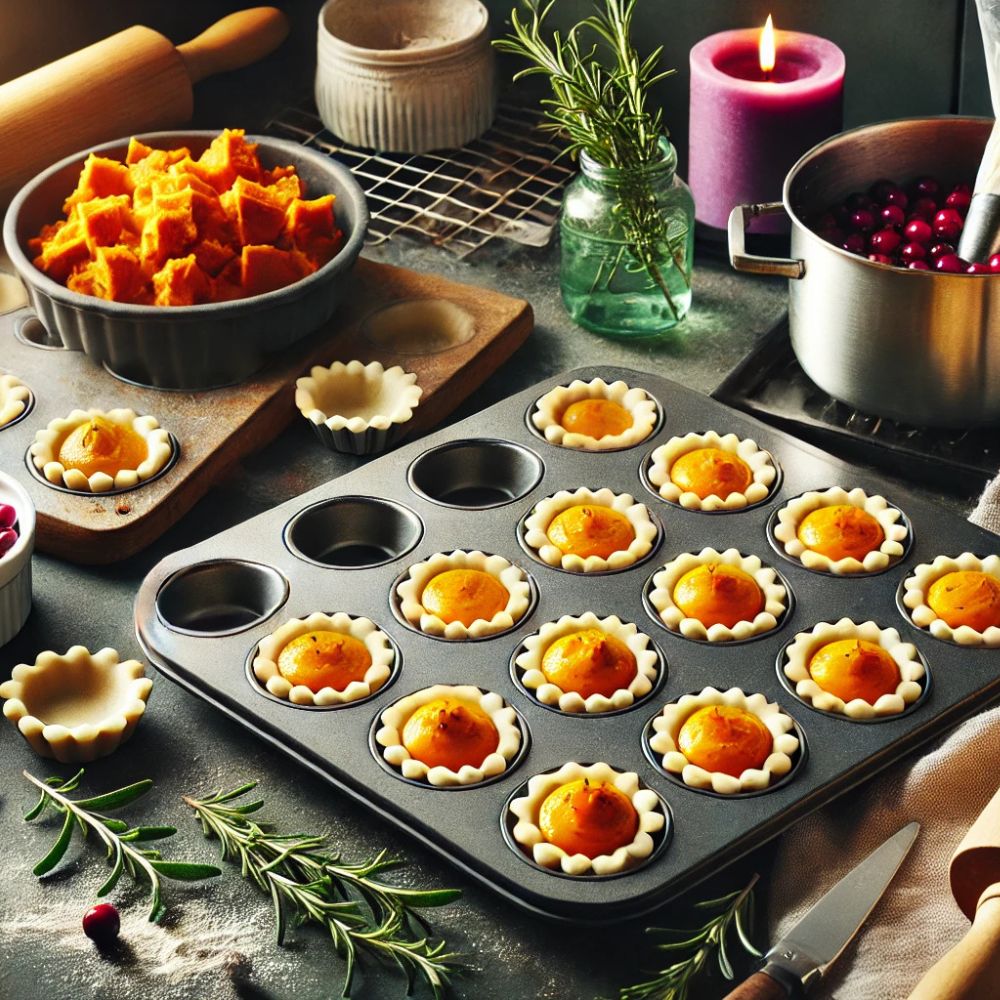
During Saturnalia, normal life in Rome came to a joyous halt. Businesses, courts, and schools were closed, allowing everyone—rich or poor, enslaved or free—to take part in the festival’s revelry. The usual social structure, so strictly observed in Roman daily life, was relaxed or even overturned, reflecting the mythical Golden Age of Saturn, where all lived in harmony, without the constraints of social hierarchies. This sense of freedom and equality was one of the most defining characteristics of Saturnalia, making it one of the most anticipated and beloved holidays in the Roman calendar.

Roman homes were adorned with greenery, wreaths, and garlands, symbolic of life and renewal even in the cold, dark days of winter. Citizens set aside their traditional Roman attire—such as the stately toga—in favor of more colorful and informal garments known as the synthesis. These brightly hued robes added to the air of festivity and further highlighted the temporary relaxation of social norms.

A particularly remarkable aspect of Saturnalia was the temporary inversion of the social hierarchy. Enslaved people, who were typically expected to serve their masters in every aspect of life, were allowed a rare form of freedom. During the festival, they were invited to join the household’s feasts, sit at the head of the table, and be served by their masters. This symbolic role reversal highlighted the egalitarian ideals that the Romans associated with the reign of Saturn. According to Roman myth, Saturn’s Golden Age was a time when social distinctions did not exist, and all lived in peace, prosperity, and equality. Though this temporary reversal didn’t change the systemic inequalities of Roman society, it served as a powerful and symbolic nod to these idealized times.

Feasting was central to Saturnalia. Tables overflowed with rich food and drink, and families and friends gathered to share in the bounty. Romans indulged in all manner of dishes, from roasted meats to sweet cakes, as a way of celebrating the end of the harvest and the abundance of the year’s agricultural efforts. The atmosphere was one of excess and indulgence, not restraint. Gambling, typically frowned upon or restricted in Roman society, became a festive activity during Saturnalia. People of all classes—patricians, plebeians, and even enslaved individuals—participated in dice games and wagering, which added to the spirit of freedom and lack of inhibition.

Gift-giving was another crucial part of the festival. One of the most popular gifts exchanged during Saturnalia was wax candles, known as cerei. These candles held symbolic meaning, representing the return of light after the solstice and the hope for longer days to come. The giving of light during the darkest part of the year was a profound reminder that the sun, and the prosperity it brought, would return.

On the final day of Saturnalia, known as Sigillaria, Romans exchanged small, terracotta figurines called sigillaria. These clay figures often depicted gods, animals, or everyday people and were given to friends and family as tokens of good fortune and well wishes for the future. Some scholars suggest that this practice may have been a remnant of an older tradition of human sacrifice, where the figurines symbolized sacrificial victims. Over time, however, this grisly custom was replaced by the more symbolic and benign act of giving these miniature representations as offerings to Saturn or as gifts to loved ones.

One of the most distinctive and entertaining elements of Saturnalia was the selection of the Saturnalicius princeps, or “Lord of Misrule.” This mock king, typically chosen from among the household’s lower-ranking members or enslaved individuals, was granted temporary rule over the festivities. The Lord of Misrule was encouraged to behave outrageously, making light of everything that was normally taken seriously. He might wear ridiculous clothing, make absurd demands, or playfully insult other guests. The chosen leader’s task was to create as much chaos as possible, upending the ordinary, strict Roman social order. This tradition reflected Saturnalia’s central theme of inversion, where the world was, for a brief time, turned upside down.

The spirit of Saturnalia was one of joyous chaos, merriment, and equality—albeit temporary. Romans embraced the festival as a time to forget their usual worries, cast aside the societal constraints of daily life, and revel in celebration. The streets and homes were filled with laughter, music, and the sound of dice rolling across tables. The atmosphere of unrestrained fun was described by Roman poets such as Catullus, who famously called Saturnalia “the best of times.” Even the most conservative Roman statesmen, like the writer and naturalist Pliny the Elder, couldn’t escape the raucous celebrations, as Pliny reportedly built himself a soundproof room in his villa so that he could continue working undisturbed while the festivities echoed through the streets outside.

Though Saturnalia may have only lasted for a week, its effects lingered, as it strengthened social bonds and reminded Romans of the cyclical nature of time, death, and renewal. It was a chance for all members of society to come together in joy, and for a brief moment, live out the ideals of the Golden Age, when there was no war, no work, and no strife. The lightheartedness and exuberance of Saturnalia left its mark on many of the modern traditions we now associate with the holiday season, making it one of the most beloved and enduring festivals of the ancient world.

Saturnalia and the Temple of Saturn

At the heart of the Saturnalia festivities was the Temple of Saturn, located in the bustling Roman Forum. This grand temple was not just an architectural marvel; it was the ceremonial epicenter of the festival, where both the public and religious elements of Saturnalia converged. The temple housed a statue of Saturn, the god of agriculture, wealth, and time, who was revered for bringing abundance and prosperity to Rome. For most of the year, the statue of Saturn was bound in woolen cloth, symbolizing the god’s restrained power and the orderly nature of the Roman world. However, during Saturnalia, these bindings were ritually loosened in a symbolic act of liberation, marking the beginning of the festivities.

This unbinding of Saturn’s statue was significant—it represented the release of the god’s energy and influence, and by extension, the loosening of societal rules and norms. This gesture set the tone for Saturnalia, a time when the social order was temporarily overturned and the constraints of daily life were lifted. It was as if Saturn himself, once freed, granted permission for chaos and joy to reign. The moment of unbinding embodied the festival’s central themes of release, freedom, and a return to the mythological Golden Age, where all people lived in harmony, free from the burdens of social hierarchy and labor.

On the first day of Saturnalia, a pig, typically a young one, would often be sacrificed at the temple as an offering to Saturn. This ritual sacrifice, known as suovetaurilia, was a common agricultural rite in Roman religious practice, reflecting Saturn’s role as the god of sowing and the harvest. By sacrificing a pig, Romans were not only offering thanks for the year’s bountiful harvest but also seeking blessings for the future. The act of sacrifice was an important communal ritual that reaffirmed the connection between the Roman people, their gods, and the earth that sustained them.

The opening ceremonies at the Temple of Saturn marked the official start of the Saturnalia festivities, but what followed was far from the solemnity of religious rites. The unbinding of Saturn set the stage for a week of revelry that spilled into the streets, homes, and every corner of Roman society. The joy and exuberance of Saturnalia were so overwhelming that even Rome’s most serious and dedicated citizens found it difficult to escape its influence. The Roman author and statesman Pliny the Younger famously built a soundproof room in his house to continue working in peace during the boisterous celebrations. This humorous anecdote highlights how the festive atmosphere permeated every aspect of Roman life, with laughter, music, and raucous noise filling the air.

Throughout the city, the sounds of Saturnalia could be heard day and night—laughter from street performers, the clattering of dice games, and the joyful shouts of friends and family celebrating together. This riotous celebration was not confined to the lower classes; even the Roman elite embraced the spirit of the festival, participating in its feasts, gift-giving, and temporary role reversals. The Temple of Saturn remained a focal point, drawing people from all walks of life who came to pay homage to the god and partake in the communal festivities that united Rome during this most beloved holiday.

The temple itself, constructed and renovated several times over the centuries, stood as a testament to Saturn’s enduring importance in Roman religious life. Originally built around 497 B.C. and later reconstructed in 42 B.C. after a fire, the Temple of Saturn was one of the oldest temples in the Roman Forum. Its towering columns and grand staircase symbolized not only the architectural prowess of the Romans but also their deep reverence for Saturn and his role in shaping the prosperity of their civilization. During Saturnalia, this grand space was transformed into a place of celebration, where Romans gathered to express gratitude for the past year’s harvest and to revel in the joy of the festival.

The festival of Saturnalia was more than just a week of feasting and games; it was a time when the very foundations of Roman society were symbolically undone, only to be restored once the festivities had ended. The unbinding of Saturn’s statue, the sacrifices, and the revelry all served as a reminder of the delicate balance between order and chaos, work and play, and life and death. As the festival drew to a close, the statue of Saturn would be re-bound in its woolen ties, symbolizing the return of the normal order, with the promise that Saturn would watch over the city and its people until the next Saturnalia arrived.

Saturnalia and Its Influence on Christmas

Saturnalia has left an indelible mark on many of the winter celebrations that we continue to observe today, especially the Christian holiday of Christmas. As the Roman Empire expanded its borders across Europe, it carried its customs and festivals along with it, influencing the cultural practices of the Celtic, Germanic, and other European peoples it encountered. One of the most notable legacies of Saturnalia is the way its traditions seamlessly merged with Christmas celebrations. Though Christmas is celebrated as the birth of Christ, the holiday owes much of its structure, symbolism, and festivity to the ancient Roman Saturnalia.

By the fourth century A.D., Christianity had become the dominant religion within the Roman Empire, but converting the population to the new faith was no easy task. The Roman Church, recognizing the deep attachment people had to their traditional celebrations, sought to ease this transition by absorbing popular pagan holidays into the Christian calendar. This process allowed pagan converts to keep many of their beloved traditions, but with new Christian meanings. Saturnalia, with its joyful feasting, gift-giving, and celebration of light during the darkest time of the year, was an ideal candidate for this process.

December 25th was officially chosen as the day to celebrate the birth of Jesus Christ, even though the exact date of his birth was unknown. This decision was not arbitrary; it was deeply strategic. In the Julian calendar, December 25th was the date of the winter solstice, a time when many cultures celebrated the return of the sun and the triumph of light over darkness. Saturnalia and other solstice celebrations revolved around these themes of light and rebirth, making it an appropriate time for early Christians to honor the birth of Christ, who was seen as the “Light of the World.”

Many of Saturnalia’s most popular customs were adopted into the Christmas celebrations. The tradition of giving gifts, for instance, was a hallmark of Saturnalia. Romans exchanged small tokens of goodwill, such as candles, wax figures, and pottery, to symbolize light and blessings during the dark winter months. This tradition of gift-giving easily transferred to Christmas, where it now commemorates the gifts of the Magi to the infant Jesus.

Feasting, too, was an essential aspect of Saturnalia and continues to be central to Christmas celebrations. During Saturnalia, Roman families and communities would gather to enjoy lavish meals, with plentiful food and drink symbolizing abundance and prosperity. This spirit of indulgence carried over into the Christian celebration, and to this day, Christmas feasts bring families and communities together in joyous gatherings.

Another tradition borrowed from Saturnalia was the use of evergreens, wreaths, and candles to decorate homes and public spaces. During Saturnalia, Romans would adorn their homes with greenery and hang wreaths as symbols of eternal life and protection. Similarly, candles and wax tapers (cerei) were given as gifts to symbolize the return of the sun after the winter solstice. This practice of decorating with evergreens and lighting candles was easily absorbed into Christmas customs, where they became symbolic of the eternal life promised by Christ and the light of hope in the midst of winter’s darkness.

In addition to Saturnalia, other Roman celebrations also contributed to the development of Christmas. Juvenalia, a Roman festival honoring the children of Rome, celebrated in December, may have influenced the child-centered aspects of Christmas. Additionally, Mithraism, a popular mystery religion in the Roman Empire, also held its own midwinter festival. The birthday of Mithra, the god of the unconquerable sun, was celebrated on December 25th, which was considered one of the holiest days of the year for Mithra’s followers. As Mithra was associated with light and truth, his birthday became an important celebration in the Roman calendar, and some scholars believe this festival may have contributed to early Christian symbolism around Christmas.

The incorporation of these customs into Christmas was not just about practical adaptation; it also served as a political and religious tool. By blending pagan traditions with Christian themes, the early Church made the new religion more palatable to the people. This approach allowed for a smoother transition and encouraged wider acceptance of Christianity without completely erasing the old ways. Over time, these pagan customs became fully integrated into Christmas celebrations, and their original associations with Saturnalia and other Roman festivals faded into the background.

Today, when we celebrate Christmas by giving gifts, feasting, lighting candles, and decorating our homes with greenery, we are participating in traditions that have roots far deeper than the Christian era. The echoes of Saturnalia can still be felt in our modern holiday celebrations, reminding us that many of our most cherished customs have evolved through centuries of cultural exchange and adaptation. Even as Christmas has taken on its own unique identity, the spirit of Saturnalia—the joy, warmth, and celebration of light in the darkest time of the year—continues to shine through

Saturnalia’s Lasting Legacy

Although the Roman Empire is long gone, many of Saturnalia’s customs remain familiar to us today. The joy, laughter, and community spirit of Saturnalia live on in the way we celebrate the winter holidays—whether through feasting, exchanging gifts, or simply enjoying the company of friends and family. The festival’s themes of equality, the turning of the seasons, and the return of the sun remind us of the power of light and warmth during the darkest time of the year.

In modern Pagan traditions, Saturnalia continues to inspire celebrations of the winter solstice and the cycles of nature. As we decorate our homes, exchange gifts, and gather together to feast and reflect, we are participating in a tradition that stretches back millennia—one that honors the turning of the seasons and the joy of community, just as the Romans did long ago.

Whether in ancient Rome or in modern times, Saturnalia stands as a celebration of life, abundance, and the hope that light and warmth will always return after the darkest days of winter.

Posted on Leave a comment

Recipe: Juniper Berry Braised Pork Shoulder

Juniper Berry Braised Pork Shoulder

Introduction

A Savory Winter Dish Infused with Woodland Magic

Juniper berries, with their bold, resinous flavor and grounding qualities, are a perfect addition to a rich, winter braise. Juniper Berry Braised Pork Shoulder combines the savory depth of slow-cooked pork with the aromatic, piney notes of juniper, creating a warming, comforting dish that captures the essence of winter. This dish is ideal for your Yule or Winter Solstice feasts, offering both nourishment and a connection to the earth’s resilience through its deep, earthy flavors.

The Magic of Juniper Berry Braised Pork Shoulder

Juniper berries have long been cherished in magical traditions for their protective, purifying, and grounding qualities. In Wicca and Paganism, juniper is known to ward off negative energies and promote clarity and resilience. By incorporating juniper berries into this braised pork dish, we invite these energies to the table, grounding ourselves in the wisdom of the winter season and the endurance of nature.

The slow braise of the pork shoulder, with the infusion of juniper berries, garlic, and aromatic herbs, mirrors the patience and perseverance of winter. The rich, earthy flavors bring comfort and warmth during the coldest months, while the juniper berries add an enchanting layer of flavor that symbolizes nature’s protective magic and the stillness of the season.

Spell for Protection and Grounding

While preparing this dish, use this spell to invite grounding, protection, and resilience into your Yule celebration.

  1. Light a black or green candle to represent protection, grounding, and the enduring energy of winter.
  2. As you prepare the pork shoulder and infuse the dish with juniper berries, visualize yourself grounded and protected by the energies of nature.
  3. While braising the pork, chant softly:

“Juniper bold, pork so tender,
Ground us deep, hearts grow stronger.
Protection strong, resilience bright,
Winter’s wisdom in every bite.”

Serve the dish with love and gratitude, sharing its grounding and protective energies with your loved ones.

Magical Properties of Juniper Berry Braised Pork Shoulder

Thyme and Rosemary: Known for their protection and healing properties, these herbs enhance the braise and connect the dish to the earth.

Juniper Berries: Known for their protective, purifying, and grounding qualities, they bring clarity, resilience, and strength to the dish.

Pork Shoulder: Symbolizes abundance, prosperity, and nourishment, providing sustenance and comfort during the winter months.

Garlic: Represents protection and cleansing, adding warmth and depth to the dish.

Onions: Provide grounding energy and represent stability and strength in magical practices.

Juniper Berry Braised Pork Shoulder

Slow-braised pork shoulder infused with the deep, earthy flavors of juniper berries, garlic, and herbs—a perfect winter dish for nourishment and protection.

  • Dutch oven or large oven-safe pot
  • Knife
  • Cutting board
  • Spoon
  • Meat thermometer (optional)
  • 4-5 lbs bone-in pork shoulder
  • 1 ½ tbsp juniper berries (crushed)
  • 1 medium onion (roughly chopped)
  • 4 cloves garlic (smashed)
  • 2 sprigs fresh rosemary
  • 2 sprigs fresh thyme
  • 2 tbsp olive oil
  • 1 cup dry white wine
  • 2 cups chicken or vegetable broth
  • 1 tbsp balsamic vinegar
  • 1 tsp salt
  • ½ tsp black pepper

Prepare the Pork:

  1. Preheat oven to 300°F (150°C).
  2. Season the pork shoulder with salt and pepper. Use a spoon to crush the juniper berries and sprinkle them evenly over the pork, pressing gently to coat.

Sear the Pork:

  1. Heat olive oil in a Dutch oven over medium-high heat. Once hot, add the pork shoulder and sear on all sides until golden brown, about 4-5 minutes per side. Remove the pork from the pot and set aside.

Sauté the Aromatics:

  1. In the same pot, add the chopped onion and garlic. Sauté for 3-4 minutes, or until softened and fragrant.
  2. Add the white wine to deglaze the pot, scraping up any browned bits from the bottom of the pot with a spoon.

Braise the Pork:

  1. Return the pork shoulder to the pot, placing it on top of the onions and garlic.
  2. Add the rosemary, thyme, and broth, ensuring the liquid covers about half of the pork. Stir in the balsamic vinegar. Bring to a simmer.

Cook in the Oven:

  1. Cover the Dutch oven with a lid or foil and place it in the preheated oven.
  2. Braise the pork for 3-4 hours, or until it’s tender and easily pulls apart with a fork. Check the internal temperature (it should reach at least 190°F for tender, fall-apart meat).

Rest and Serve:

  1. Remove the pork from the oven and let it rest for 10 minutes before shredding or slicing.
  2. Serve the braised pork with the aromatic sauce and vegetables of your choice, ensuring you scoop up the flavorful bits from the braise.

This dish can be served with mashed potatoes, roasted root vegetables, or a light salad to balance out the richness of the braised pork. For extra flavor, consider using juniper berries to season your side vegetables or drizzle a bit of the braising liquid over the mashed potatoes.

Main Course
Winter, Yule
Recipe

Conclusion

Juniper Berry Braised Pork Shoulder is the perfect dish to embody the magic of winter—grounding, protective, and nourishing. Infused with the essence of juniper, garlic, and earthy herbs, this pork shoulder offers both flavor and spiritual resonance, connecting you to the resilience and strength of the winter season. Whether you’re celebrating Yule or simply enjoying the heartwarming comfort of winter’s flavors, this dish will bring abundance, protection, and warmth to your table.