Posted on Leave a comment

Dec 23rd – The 4th Day of Yule

Silly Feast
Silly Feast

Introduction

Embracing the Blessings – Loki, Sigyn, and the Silly Feast

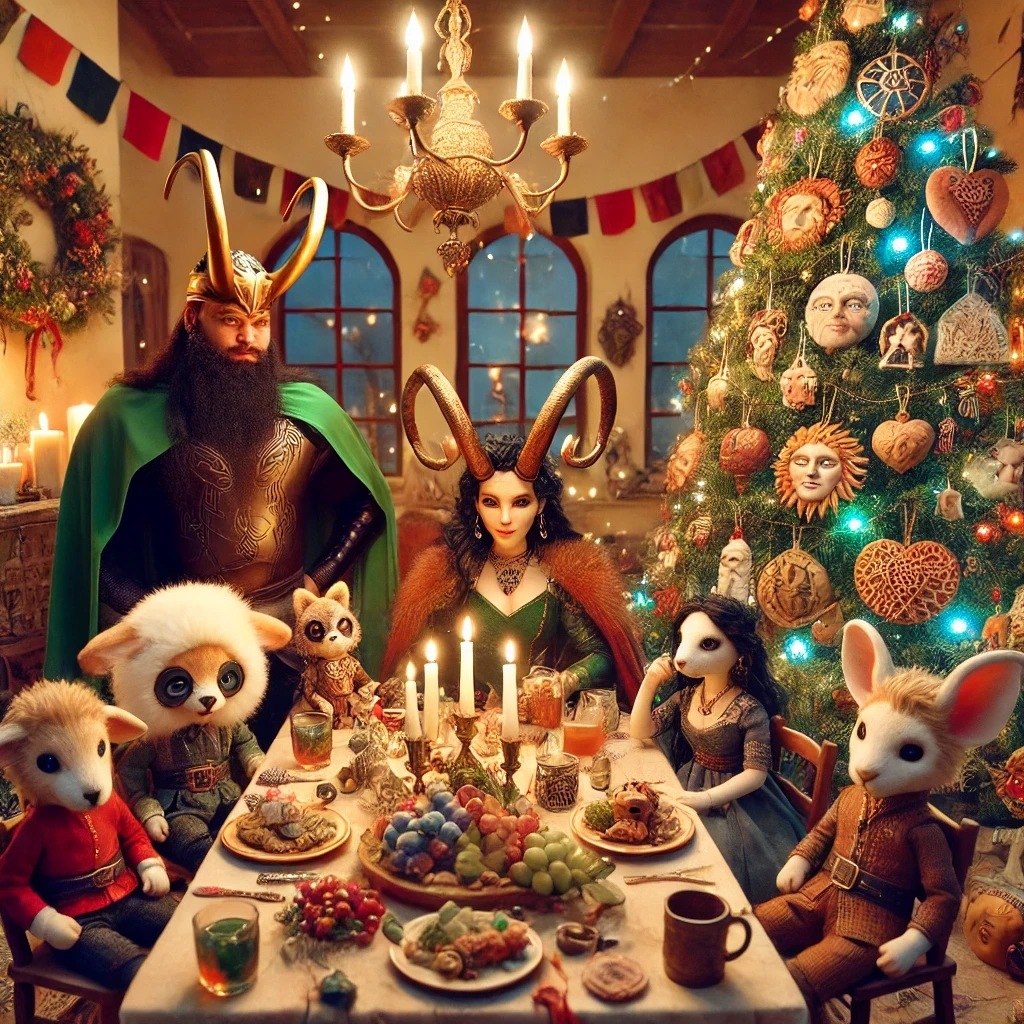
On the fourth day of Yule, the celebration takes a whimsical turn with a joyous homage to Loki, the mischievous trickster, and his steadfast partner, Sigyn. Together, they symbolize the balance of chaos and devotion, laughter and resilience, which mirrors the dynamic rhythm of life itself. This day invites us to embrace our blessings, honor adaptability, and celebrate the victories of the past year with the lighthearted traditions of the Silly Feast and the sacred presence of the Yule Tree.

The Silly Feast becomes the heart of this day—a time for laughter, revelry, and role reversals where participants don animal disguises embodying qualities they aspire to cultivate in the coming year. Loki’s playful mischief intertwines with Sigyn’s unwavering loyalty, creating an atmosphere where joy reigns supreme. Meanwhile, the Yule Tree, adorned with Wish Ornaments and tokens of gratitude, transforms into a living tapestry of shared blessings and hopes for the year ahead.

Whether you’re learning about the myths of Loki and Sigyn, preparing for the Silly Feast, or creating your own Wish Ornaments, this page offers the resources and inspiration you need to honor this lighthearted and meaningful day of Yule. Celebrate the blessings, laughter, and shared hope that define this timeless tradition, and carry its magic forward into the year ahead!

Dec 23rd – The 4th Day of Yule Resources

Deeper Knowledge

Recipes

Posted on 2 Comments

The 3rd Day of Yule – Father’s Night

Introduction

Father’s Night Revelry

The third day of Yule unfolds as Father’s Night, a sacred juncture where the male spirits, both ancestral and divine, are honored with reverence. Embracing the spirit of this day involves paying homage to the Alfar, powerful male ancestors, and nature spirits, as well as venerating Freyr, the Norse god associated with fertility, prosperity, and virility, alongside his loyal boar, Gullinborsti. In this enchanted celebration, we delve into the rich tapestry of Yuletide, where oaths are made and honored, and the cozy embrace of Hygge invites us to rest and revel in the warmth of familial connections amidst the winter landscape.

Father’s Night: A Tribute to Male Guardianship

Father’s Night is a dedicated occasion to honor the male spirits that serve as protectors in our lives. This transcends the conventional definition of fatherhood, encompassing all males who guide, support, and care for us. Much like Mother’s Night, this evening invites us to create altars adorned with pictures of male ancestors and influential figures, forging a connection between the realms of the living and the departed.

In the gentle glow of candlelight, we pay homage to these male guardians, recognizing the diverse roles they play in shaping our journey. The term “father” extends beyond biological ties, embracing mentors, friends, and any male presence that has offered guidance and protection. The ritual of crafting altars becomes a poignant act of remembrance and gratitude, a gesture that bridges the earthly and spiritual realms. Through this sacred space, we acknowledge the continuum of male guardianship, weaving a tapestry of connection that transcends the boundaries of time and mortality.

The Alfar: Ancestral Spirits in Nature’s Embrace

The Alfar, revered as male ancestors and potent nature spirits, find their moment of acknowledgment on Father’s Night. Creating a space on altars for the Alfar or extending the existing altar from Mother’s Night serves as a symbolic bridge between male and female ancestors. This act of remembrance and veneration strengthens the bond with ancestral energies, fostering a connection to the wisdom of the past.

As we arrange tokens of reverence on the altar — perhaps photographs, mementos, or symbols associated with the Alfar — we engage in a ritual that transcends the boundaries of time. The Alfar, as guardians of ancestral wisdom, offer their guidance and protection. The altar becomes a locus where the ethereal and earthly meet, a conduit through which the energies of the Alfar can intertwine with the living. This symbolic bridge not only honors the male ancestors but also reinforces the continuum of spiritual guidance passed down through generations, enriching our connection to the natural world and the unseen forces that shape our existence.

Crafting an Alfar Altar: Bridging Realms of Ancestral Wisdom

Creating an altar dedicated to the Alfar, revered male ancestors and potent nature spirits, is a sacred act that bridges the gap between the living and the departed. Follow this guide to set up an Alfar altar that becomes a focal point for remembrance, connection, and the channeling of ancestral wisdom.

  • Choose a Sacred Space – Select a quiet and undisturbed space for your altar. It could be a corner of a room, a small table, or a shelf. Ensure it’s a space where you can spend moments in reflection and communion.
  • Altar Cloth – Cover the surface of your chosen space with a fabric that holds significance for you. Earthy tones or colors that resonate with ancestral connections, such as deep greens or browns, can enhance the sacred ambiance.
  • Pictures and Mementos – Gather pictures of your male ancestors and influential male figures in your life. Place these on the altar, arranging them in a way that feels harmonious. Add mementos like personal items, jewelry, or tokens that carry the energy of those you wish to honor.
  • Symbols of Nature – As nature spirits, the Alfar are deeply connected to the natural world. Incorporate elements such as pinecones, leaves, or small branches to symbolize this connection. These items not only honor the Alfar but also act as conduits for their potent energy.
  • Candle Magic – Light candles on your altar to symbolize the eternal flame of remembrance. White or green candles are often used to invoke the energies of the Alfar. You may also choose colors that personally resonate with you or have significance in your cultural or spiritual practice.
  • Offering Bowl – Place an offering bowl on your altar. This can be a vessel for offerings such as water, herbs, or grains. As you connect with the Alfar, consider leaving small offerings periodically, expressing your gratitude and reverence.
  • Crystals and Gemstones – Select crystals or gemstones known for their connection to ancestral energies. Common choices include moonstone, labradorite, or clear quartz. Arrange them aesthetically or based on your intuition.
  • Incense and Scents – Infuse the space with the fragrance of incense or essential oils. Frankincense, myrrh, or juniper are choices that resonate with ancestral energies. The aroma serves as a conduit, enhancing your connection with the Alfar.
  • Reflection and Meditation – Designate a space on your altar for reflection and meditation. This can be a small cushion, a meditation stone, or any item that signifies a space for quiet contemplation. Use this area to commune with the energies of the Alfar and receive their guidance.
  • Personalization – Finally, infuse the altar with your personal touch. Add elements that resonate with your heritage, traditions, or specific aspects of the male spirits you are honoring. Trust your intuition and allow the altar to evolve as your connection with the Alfar deepens.
  • Maintenance – Regularly cleanse and energize your altar. This can be done through rituals, such as smudging with sage or using consecrated water. Keep the space free from clutter, and periodically renew the offerings to maintain the vibrancy of the connection.

Remember, your Alfar altar is a living representation of the connection between the realms, a sacred space where you can honor, remember, and receive guidance from the male ancestors and nature spirits who continue to weave their wisdom through the tapestry of your life.

Freyr and Gullinborsti: Guardians of Oaths

In the cosmic tapestry of Father’s Night, Freyr, a deity of Norse mythology, emerges as a central figure, bathed in the glow of veneration. Linked to sacral kingship, fertility, peace, and prosperity, Freyr’s essence permeates the evening, and his presence is amplified by the steadfast companion at his side — Gullinborsti, the sacred boar.

Freyr, master of sworn oaths, presides over a feast of swine, a ritualistic celebration where oaths are made and solemnized under his vigilant observation. The ancient tradition of swearing oaths on the bristles of Gullinborsti weaves a profound connection between the divine and mortal realms. The bristles, symbolic of strength and resilience, serve as the binding force for these sacred promises, echoing through time as a tradition that contributes to the very fabric of New Year’s resolutions.

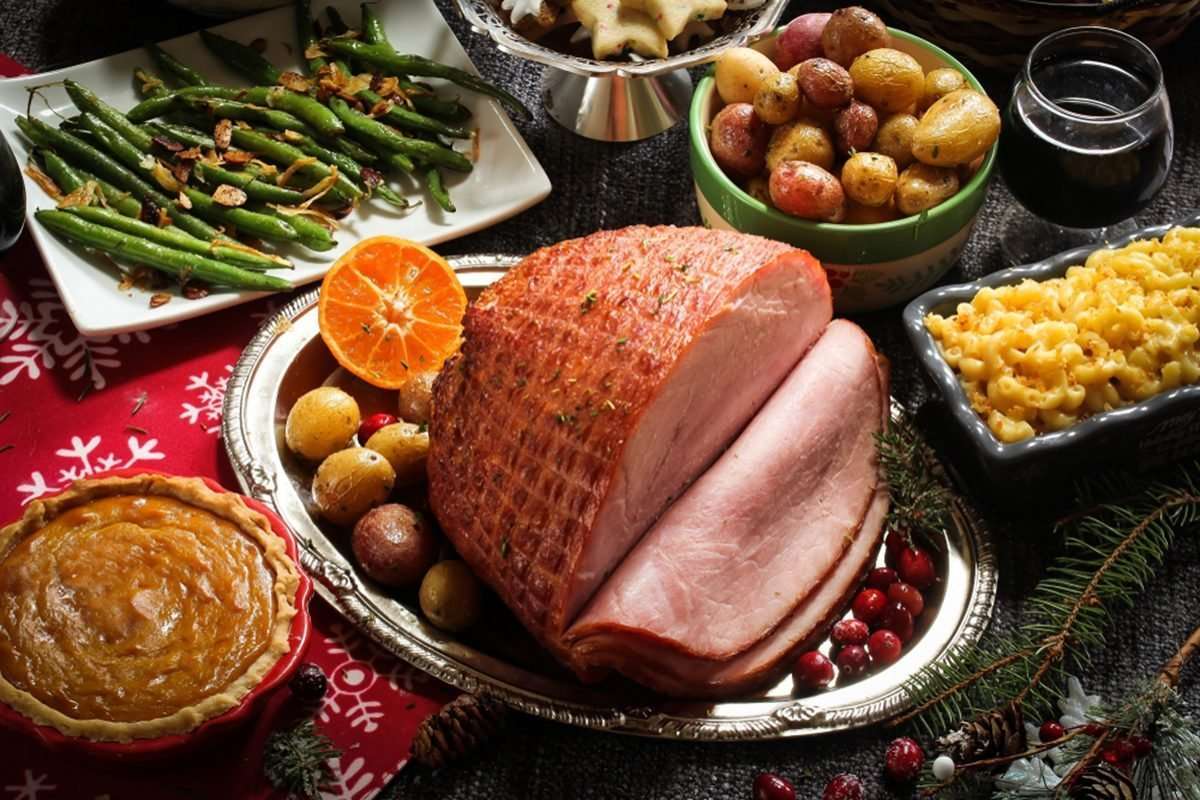
As the feast unfolds, the air is filled with the sizzling aroma of a ham dinner, a culinary homage to Freyr and his revered companion. Each bite becomes a testament to the interconnectedness of tradition and the divine, a communion with the energies that govern both the celestial and earthly domains. The feast becomes a symphony of flavors, a chorus of gratitude for the protection and prosperity bestowed by Freyr and his celestial kin.

Forging Oaths: A Sacred Bonding Guide

Forming and bonding an oath with Freyr, the Norse god of fertility and prosperity, and his loyal boar Gullinborsti is a profound and sacred undertaking. The following guide offers steps to create a meaningful and lasting oath, strengthening your connection with these divine beings.

  • Preparation – Begin by finding a quiet and sacred space where you won’t be disturbed. Consider performing this ritual during Father’s Night or at a time when you feel spiritually attuned.
  • Setting the Intention – Clarify the purpose and intention of your oath. What commitment are you making to yourself, to others, or to the divine? Be specific and sincere in your intention, as this forms the foundation of your oath.
  • Altar Setup – Create an altar dedicated to Freyr and Gullinborsti. Include symbols associated with Freyr, such as a depiction of the god and representations of a boar. Light candles and use colors like green and gold to invoke the energies of prosperity and fertility.
  • Invocation – Invoke Freyr and Gullinborsti through prayer or meditation. Express your intention and invite their presence into your ritual space. Speak from your heart, acknowledging their attributes and the qualities you seek to embody through the oath.
  • Offering – Present an offering to Freyr and Gullinborsti. This can be mead, cider, or another beverage associated with celebrations. Place the offering on the altar as a gesture of gratitude and as a symbol of the reciprocity inherent in divine connections.
  • Crafting the Oath – Carefully articulate your oath. Be precise in your words and genuine in your commitment. Consider the traditional method of speaking the oath on the bristles of Gullinborsti. If possible, create a representation of the boar’s bristles or use a symbolic item to physically embody the oath.
  • Speaking the Oath – Stand before the altar and, with sincerity and conviction, speak your oath aloud. Address Freyr and Gullinborsti directly, sharing your intentions, promises, and the significance of the oath in your life. Speak clearly and from the depths of your being.
  • Symbolic Act – Perform a symbolic act to seal the oath. This could involve holding the representation of Gullinborsti, lighting a candle, or any action that signifies the initiation of your commitment. Envision the divine energies of Freyr and the boar infusing your oath with their strength and blessings.
  • Closing the Ritual – Express gratitude to Freyr and Gullinborsti for their presence and the sacred exchange. Close the ritual with a heartfelt thanksgiving, knowing that your oath has been heard and acknowledged.
  • Upholding the Oath – An oath is a sacred commitment, and upholding it requires dedication and integrity. Regularly revisit the terms of your oath, assess your progress, and make any necessary adjustments. Consider performing periodic rituals to reaffirm your connection with Freyr and Gullinborsti.

Remember, forming an oath with Freyr and Gullinborsti is a profound spiritual endeavor. Approach it with reverence, sincerity, and a genuine desire to align your actions with the divine energies they represent. May your oath be a source of strength, growth, and blessings on your journey.

Feast of Swine: A Culinary Tribute

As the cloak of night envelops the realms, the Feast of Swine takes center stage on Father’s Night, a ceremonial ode to Freyr and his steadfast companion, Gullinborsti. The focal point of this ritualistic gathering is a ham dinner, a feast that transcends mere sustenance to become a symbolic act of homage to the revered boar upon whose bristle’s oaths were once solemnized.

The dinner table becomes an altar of sorts, adorned with the rich and savory offerings reminiscent of the earthy bonds between the divine and mortal realms. The sizzling aroma of the ham, with its succulent flavors, wafts through the air, carrying with it the essence of tradition and reverence. Each morsel consumed becomes a ritual act, a communion with the energies of protection, prosperity, and the sacred vows that echo through the ages.

Amidst the clinking of glasses and the warmth of shared moments, the Feast of Swine transforms into more than a culinary experience. It becomes a poignant occasion to toast to victories, both past and those yet to unfold. It is a collective raising of glasses, a celebration of achievements, and a sharing of aspirations. As the feast progresses, the bonds of support among those gathered are fortified, weaving a tapestry of camaraderie and shared dreams under the watchful gaze of Freyr and Gullinborsti.

Hygge: Embracing Winter Comfort

After days steeped in reverence and spirited activities, Father’s Night extends an invitation to partake in the art of Hygge, a Danish tradition that elevates the simple joys of coziness and comfort. It’s a time when families gather like a tightly knit embrace, seeking solace in the shared warmth of each other’s company. As the flickering candles cast a soft glow, the ambiance is infused with the essence of familial bonds and the spirit of the season.

In the sanctuary of Hygge, the ordinary transforms into the extraordinary. The air is filled with the harmonious melodies of holiday tunes, creating a symphony that resonates with the festive spirit. The soft glow of twinkling lights adds a touch of enchantment, turning the space into a haven of tranquility.

Amidst the snug blankets and the aroma of seasonal treats, activities abound. Families huddle together to watch heartwarming holiday movies, the screen flickering with tales of joy and celebration. The air is filled with laughter and shared stories, creating a timeless atmosphere of connection.

For those seeking moments of repose, the call of rejuvenating naps becomes irresistible. In the gentle embrace of a cozy blanket, individuals find respite, recharging their spirits for the festivities yet to unfold. As the day unfolds, creative energies are unleashed in the form of crafts, adding a personal touch to the holiday celebrations. And, of course, no Hygge experience is complete without an array of delectable snacks. From homemade treats to seasonal delights, the table is adorned with an assortment of favorites that tickle the taste buds and nourish the soul.

In these moments of shared simplicity, Hygge becomes a ritual—a celebration of the profound beauty found in the ordinary. Father’s Night, wrapped in the embrace of Hygge, becomes a sanctuary where the warmth of familial connections outshines all else, creating lasting memories to be cherished throughout the Yuletide season.

Conclusion

As the third day of Yule unfolds, Father’s Night becomes a tapestry woven with threads of ancestral reverence, divine acknowledgment, culinary homage, and the serene joy of shared comfort—a celebration of the male guardians who shape our spiritual and earthly journeys. As Father’s Night draws to a close, the tapestry of Yule continues to weave its intricate threads, each day a celebration of profound significance. In honoring the male spirits, from revered ancestors to the divine presence of Freyr and his boar, Gullinborsti, we forge connections across realms, embracing the wisdom of the past and the magic of the present. The altars adorned with pictures, the symbolic bridge between male and female ancestors, stand as a testament to the enduring bond that transcends time. The Feast of Swine, with its ritualistic ham dinner, becomes a communal space for toasts, not only to past victories but also to the aspirations that unite us in the journey ahead.

Father’s Night, with its blend of tradition and modernity, culminates in the practice of Hygge—a Danish concept that transforms familial spaces into sanctuaries of coziness and comfort. Amidst the soft glow of lights and the echoes of laughter, families share in the simple joys of holiday movies, festive music, rejuvenating naps, crafts, and the delightful flavors of seasonal snacks. In the sanctuary of Hygge, Yule becomes not just a series of days but a timeless celebration of familial connection and shared warmth. As we embrace these moments of repose and revelry, the spirit of Father’s Night echoes through the corridors of our memories, leaving behind a legacy of love, laughter, and the magic of the Yuletide season.

Posted on 2 Comments

Dec 21st – The 2nd Day of Yule

Winter Solstice
Winter Solstice

Introduction

The Winter Solstice and the Cosmic Dance

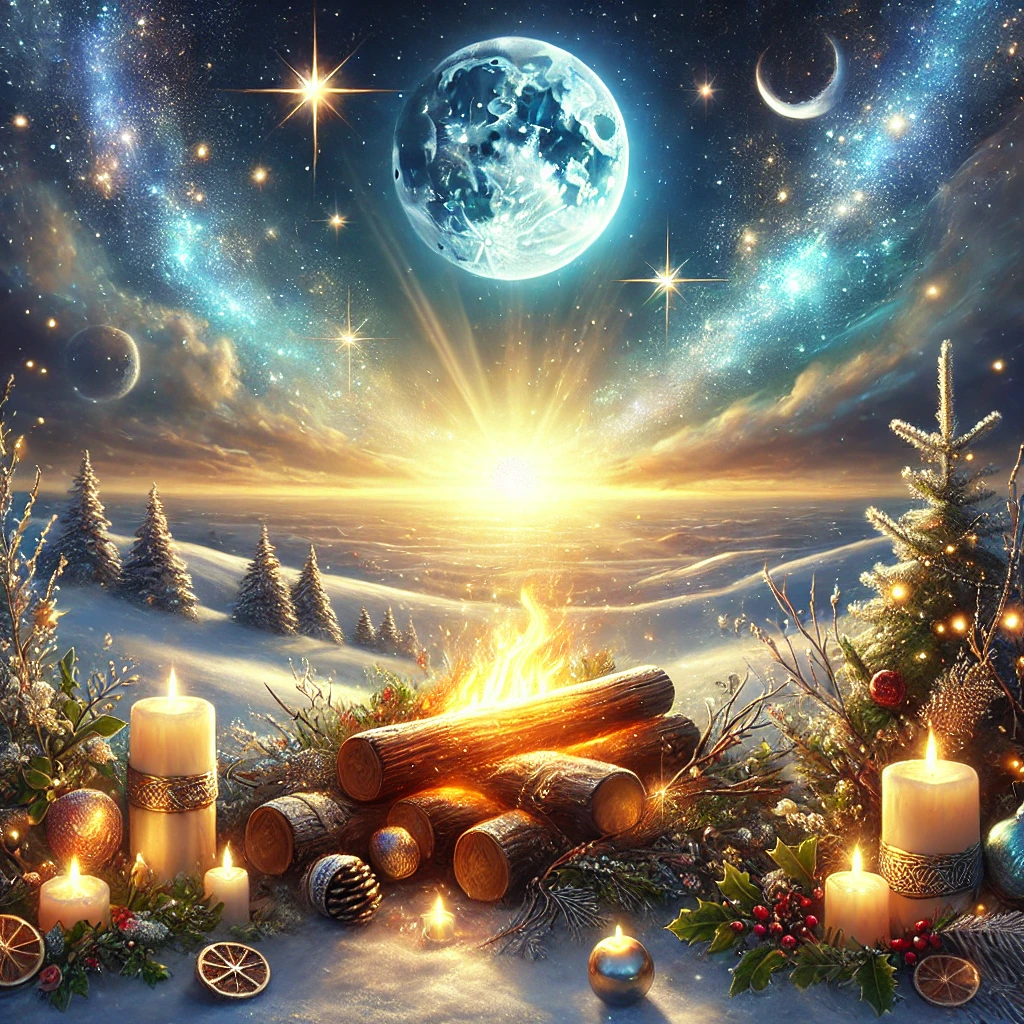
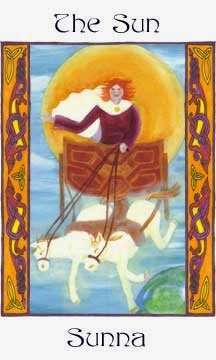
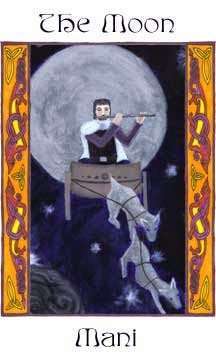
On December 21st, the second day of Yule, the Winter Solstice graces the Earth, marking the year’s longest night and the turning point toward light. This celestial event invites practitioners to honor the death of the Old Sun and the birth of the New Year’s Sun, bridging the cycles of life, death, and rebirth. At the heart of this celebration lies the enchanting tale of Sunna and Mani, the radiant siblings whose eternal cosmic ballet paints the heavens with day and night. Their story, interwoven with the playful chase of Fenrir’s pups, becomes a profound metaphor for the passage of time and the cosmic balance of light and shadow.

From crafting Yule logs and enjoying symbolic Yule Log Cakes to offering heartfelt rituals of light and hope, the Winter Solstice is a celebration of renewal, resilience, and gratitude for the return of the sun. In honoring Sunna’s radiant rise at dawn and Mani’s serene guidance under the moon, we connect with the timeless rhythms of the cosmos, finding ourselves participants in the sacred dance of the celestial siblings.

Dec 21st – The 2nd Day of Yule Resources

Deeper Knowledge

Recipes

Posted on 5 Comments

Dec 20th – The 1st Day of Yule

20th of December
20th of December

Introduction

A Prelude to Yuletide Magic

Mother’s Night, celebrated on December 20th as the eve of Yule, is a mystical and transformative celebration where the realms of the spiritual and physical align. As the frost-kissed winds whisper ancient tales, practitioners honor the sacred feminine energies that cradle life, the ancestral guardians of fate and fertility, and the divine wisdom embodied by deities like Frigg. With altars adorned in love, feasts prepared in gratitude, and rituals steeped in intention, Mother’s Night becomes the gateway to the 12 days of Yule.

On this page, you’ll discover a collection of articles that delve into the captivating practices and ancient wisdom of Mother’s Night. Uncover the role of the Disir as guardians of fate and fertility, and learn how to honor Frigg, the goddess of motherhood and prophecy. Find guidance on setting up and using a Disir altar, and explore rituals and divinations specifically for Mother’s Night. Dive into the mysteries of Frigg’s twelve handmaidens and their connection to the 12 days of Yule. And so much more!!!

Each article enriches your understanding of Mother’s Night and its significance in the Yule celebrations, offering insights into the divine feminine and the seasonal magic. Let these resources inspire your Yule festivities with their deep spiritual and cultural heritage.

Dec 20th – The 1st Day of Yule Resources

Deeper Knowledge

Recipes

Posted on Leave a comment

Sunna and Mani

Introduction

SUNNA & MANI

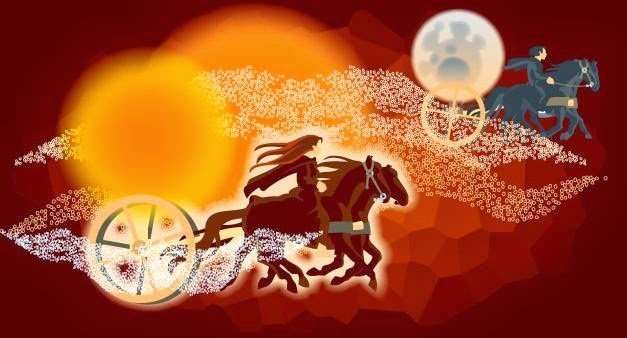
The story of Sunna and Mani is one of siblings born of the gods to mortals. Sister Sunna and brother Mani become the Sun and Moon, riding chariots across the sky. Mani forever chasing his sister, Sunna. The pups of Fenrir and his mate end up chasing the chariots when the passing of the Sun makes the day too hot to play, and the passing of the Moon makes the night impossible to hunt. The wolves cause the siblings to speed up and slow down as the chase continues forever, creating our length of days and nights.

Once upon a time in a small village there lived a mother and father who had two beautiful children.  A girl who was blonde of hair with golden curls that looked like rays of sunshine.  A boy with raven black hair and silvery eyes who seemed to prefer the night, the girl was always pleasant and kind as was her brother and they played contently as children.

One day they decided to take them to the village elder so that they might find fitting names for them.  They entered the hut of the elder, who after looking at the children thought a few moments and said: “the runes say these two are not just your children, but that of Sol the Goddess of the sun sent to us for a short time”.
The parents just looked at one another and asked the elder, “What shall we do if they are the decedents of the Gods?”

The elder looked grimly at the parents “it will be for them to decide” and with that she sprinkled sacred herbs over the fire and called the name of Frigg and Odin “come great mother and father and tell us what to do”.

Sparks flew from the fire and a voice appeared from now where: “Children of the sun and moon we give you the gift of two names…Sunna of the sun and Mani of the moon, when these two reach their eighteenth birthday they must come to this hut once more and leave their earthly home for a life among the Gods”.

The parents were saddened by this, but they had no choice.  They raised them well and the village revered and love the Goddess children.  Sunna like the ‘sun’ was always kind and generous to her people brining light wherever she went.  Her brother Mani lit the way for the hunters at night illuminating the forest with his silvery eyes.

When they were eighteen, they again entered the hut of the elder.

“You have returned children of the sky”, she said.  This time the fire burned brighter and out of the flames walked Frigg.

“Children it is time”, she said reaching out her hand.  And with that Sunna and Mani were taken to the world of the Gods.  There in the largest hall of the Gods they were brought by Frigg to receive their ‘duties’.

There in the hall they met the Goddess Sol, their mother who looked at the children with pride and love.

Sol smiled and said: “Sunna here is your shield, may it keep the rays of sun from the Earth as you ride.  Take this with your chariot and steed.  For ever after this day shall you ride across the sky and to Mani, here is your shield, may it shine forever across the sky as a reminder to the Earth of the nightly journey in which travels the Moon.  For ever after this day, you shall chase your sister across the sky”.

At this she shed a single tear and held them both saying, “For never shall you see one another again, for as one rises, one sets, as one travels across the sky the other hides in the underworld, never again shall you see each other except for times when the moon and sun rest together in the sky.”

And so, with sadness Mani and Sunna boarded their chariots and rode off in the sky together for a short while until they departed forever.

But this was not the end…. for deep in the dark forests of Ironwood, there among the wolves there sleeps two little cubs whose father was Fenris the great wolf, the bane of Odin.

The wolf cubs woke to a bright light moving across the sky.  “What is that light mother?”, they asked.

“I am unsure my cubs we shall go and ask your father” she replied.

But they could not go outside of the cave for the light was so bright it illuminated their fur, making it hot and uncomfortable to walk.  It was so hot in fact the cubs could barely stand longer than a second in its bright rays and so their mother tucked them back into the cave until nightfall.

However, that changed nothing, that night when the mother wolf went out to hunt, she found the light of the moon shone so brightly she could not hide and thus all in the wood were able to flee from her hungry jaws.

This angered the wolves!  No longer able to walk out in the day to roll in the long grass, no longer able to hunt they were trapped like rats in the cave.

The mother wolf finally decided to do something about this and so one night she stuck her head out of the cave and howled the loudest howl she could manage, so loud it was that several miles away the great father of the cubs Fenris stirred and woke.

Fenris then made the journey despite the heat and the light toward the cave.  Fenris looked at his wife and said” It seems my dear we have need to act, although it angers me to have to do this now, but what choice do we have, this constant light is enough to drive one mad”.

“It is true Fenris we must do something, but what.” she replied.

The cubs came out and looked deep into their father’s eyes.  “Send us father” they said, “for we are strong and no one in the nine worlds has seen us yet, they won’t be looking for us”.

“We shall go” they said, “chase the sun and her brother the moon and catch them in the sky as the move, thus ending the light in the woods and enabling us to sleep once more.”

Fenris and his wife agreed.  The two wolves would be sent into the sky.  The little cubs were kissed and cuddled and leapt strongly into the sky.

As soon as they saw the chariots in the sky, they gave chase.  Sunna rode her chariot faster as the wolves grew closer but still, they ran, still they followed.  No matter how fast she ran they were there nipping at her wheel, they tried to run between her and her brother but the two could not keep up with the chariots and seemed just one tooth away from each chariot.

However occasionally the wolves would catch the sun or the moon, but Sunna and Mani would struggle and pinch them until the set them free and so each time you see the sun black, or the moon red know that the sun and moon are within the jaws of the wolves and thus it is our duty to raise our voices and convince those rogues to release them, so with your loudest voice yell out:

Hail Sunna, Goddess of the Sun!!

Hail, Hail, Hail!

Hail Mani, God of the moon!!

Posted on 23 Comments

12 Days of Yule

Introduction

Unraveling the Twelve Days of Yule

In the quiet hush of winter’s embrace, as the world settles into a celestial stillness, a sacred journey unfolds – the Twelve Days of Yule. Rooted in ancient pagan traditions and embraced by modern practitioners, Yule, a festival spanning from December 20th (Mother’s Night) to January 1st (Yule Night), marks a profound passage through the solstice, the rebirth of the Sun, and the intricate dance of divine energies. These twelve days, each carrying a unique resonance, invite us to step into the mystical spiral of Yuletide – a tapestry woven with threads of ancient myths, celestial alignments, and timeless traditions. As we embark on this journey, we traverse the realms of myth and magic, honoring deities, ancestors, and the ever-turning Wheel of the Year. Join us on this sacred pilgrimage through the Twelve Days of Yule, where the old and the new converge in celebration that transcends time.

Looking for the full posts on each of the 12 days of Yule?

Look at the bottom of this article of click here: 12 Days Posts

A Resonance from Ancient Corridors to the Modern Hearth

In the quiet depths of winter, where the air sparkles with frost and the world cradles itself in a blanket of snow, there emerges a festival that transcends time—the sacred Yuletide. As we tread through the hallowed echoes of ancient tongues, the Old English words ġēol or ġēohol whisper through the corridors of history, bringing with them the profound significance of Yule.

A Tapestry Woven in Time

Yule, with roots shrouded in the mists of antiquity, stands as a testament to the enduring spirit of celebration. The very utterance of ġēol or ġēohol evokes a resonance that travels across the ages, a linguistic bridge connecting us to the festivities of yore. This timeless festival unfolds like a delicate dance, spanning approximately 12 days and carrying within its embrace the sacred journey through the winter solstice.

Winter’s Solace, Sun’s Rebirth

In the heart of Yule, a celestial ballet unfolds, choreographed by the cosmos itself. At the nexus of this sacred festival lies the enchanting winter solstice, a celestial event that paints the world in the hues of mystery and renewal. As the Earth tilts towards its furthest point from the sun, plunging into the depths of winter’s embrace, Yuletide emerges as a luminous thread, delicately weaving through the longest night.

The Old English words, ġēol or ġēohol, resonate with the whispers of our ancestors, those wise souls who dwelled in the hush of winter’s solace. In the stillness of this season, they found solace not in the darkness itself but in the promiseit held—the promise of the Sun’s rebirth. Yule, as a festival, is a ceremonial acknowledgment of this celestial turning point, marking the moment when darkness begins its graceful retreat, yielding to the gradual return of the light.

Imagine the scene: the world enveloped in a wintry stillness, the night stretching its inky fingers across the landscape. In this cosmic theater, Yule takes center stage. The longest night, bathed in the soft glow of moonlight and starshine, becomes a canvas for the age-old drama of light and shadow. Yuletide, like a skilled conductor, orchestrates the dance of the celestial bodies, inviting us to witness the rebirth of the Sun.

As the solstice dawns, the darkness that had claimed its temporary dominion begins to recede. Yule, with its roots embedded in the ancient fabric of time, becomes a beacon of hope. The turning of the cosmic wheel is palpable—a moment when the pendulum swings, and the balance shifts. The Sun, having reached its nadir, now heralds its triumphant return, promising longer days, the thawing of winter’s chill, and the awakening of the dormant earth.

Yule, therefore, is more than a festival; it is a profound acknowledgment of the cyclical nature of existence. It’s a recognition that in the ebb and flow of light and dark, life and death, we find the rhythm of our own journey. The Old English words, resonating across the ages, remind us that our ancestors, too, stood on the cusp of winter, gazing towards the heavens with reverence, celebrating the cosmic spectacle that marked the turning of the year.

So, in the heart of Yule, let us embrace the celestial ballet, where the world pirouettes from darkness to light. In this sacred dance, Yuletide becomes a luminous thread stitching together the tapestry of seasons, a testament to the eternal cycles that bind us to the cosmos.

A Dance with the Divine

Yule, with its ethereal charm, extends an invitation not merely to a temporal celebration but to a profound dance with the divine. Picture the scene: the flickering glow of hearth fires casting a warm embrace, candles shimmering like stars in the velvety darkness. In this enchanted ambiance, Yule transcends the boundaries of a mere festival; it becomes a sacred choreography, a dance with the divine that echoes through the ages.

In the hallowed halls of Yule, ancient practitioners found themselves immersed in a sacred communion with the divine. Unlike a distant, aloof force, the divine manifested itself in the very fabric of nature’s intricate cycles. It was immanent in the rhythmic dance of the seasons, the celestial bodies tracing their arcs across the night sky, and in the pulsating heartbeat of life itself.

The hearth, aglow with the warmth of Yule fires, became an altar where the mundane met the sacred. As practitioners gathered in the circle of firelight, they weren’t merely celebrating the turning of the year; they were participating in a cosmic ballet. Each flame, a microcosm of the sun’s rebirth, carried the essence of the divine into the hearts of those who bore witness.

Candles, strategically placed to illuminate the shadows, were not mere sources of light; they were symbols of the eternal flame that resides within every being. The shimmering glow reflected not just the dance of fire but the dance of life, a dance intimately entwined with the divine energies that flowed through the universe.

The cycles of nature, revered during Yule, were seen as a divine tapestry woven by unseen hands. The waxing and waning of the moon, the ever-turning wheel of the seasons, and the cosmic ballet of planets and stars—all were recognized as celestial signatures of a divine presence. Yule, therefore, was a time when practitioners acknowledged their place within this grand choreography, becoming active participants in the divine play.

In this dance with the divine, Yule spoke a language older than words, a language understood not through intellect alone but through the beating of hearts attuned to the cosmic rhythms. It was a celebration where the mundane and the sacred intermingled, where the hearth became an altar, and the flickering flames whispered secrets of the divine mysteries.

As we embrace Yule today, let us step into this sacred dance with reverence. Let the flicker of candles and the warmth of hearth fires remind us that, like our ancestors, we are woven into the cosmic fabric. In the dance of Yule, the divine is not a distant concept but a pulsating reality, and as we twirl through the sacred steps, we echo the eternal rhythm of the divine dance.

The Twelve-Day Journey

Embarking on a mystical odyssey that spans approximately 12 days, Yuletide unfurls like a sacred scroll, each day etching its own mark upon the cosmic tapestry. This journey through time and tradition, from Mother’s Night to the crescendo of Yule Night, is a profound exploration of the interconnectedness between the earthly and the divine.

  • Mother’s Night (Dec 20th): The pilgrimage commences with Mother’s Night, a sacred homage to protective female spirits and the ancestral feminine energy that weaves through the lineage of time. As candles flicker in reverence, practitioners honor the Disir, those ethereal guardians of fate and fertility. In this gentle dance of gratitude, the spirits of female ancestors are invoked, and the circle of feminine power is acknowledged as the foundation upon which the Yuletide celebration stands.
  • Winter Solstice (Dec 21st): At the heart of this celestial journey lies the Winter Solstice, a day that aligns with the cosmic turning point. The world, veiled in the darkest embrace of winter, witnesses the rebirth of the Sun. As practitioners gather in the glow of Yule fires, they honor Sunna and Mani, weaving their energies into the luminous fabric of the returning light. The longest night is met with a celebration of hope, marking the promise of lengthening days and the triumph of light over darkness.
  • Father’s Night (Dec 22nd): The odyssey then turns to Father’s Night, a sacred eve dedicated to honoring the male spirits that guard and guide. The Alfar, embodiments of male ancestors and nature’s potent forces, are recognized and venerated. Like a silent forest breeze, the energies of Freyr and his boar permeate the night, and practitioners stand in the shadow of masculine protection.
  • Count the Blessings (Dec 23rd): As the tapestry unfolds, the third day beckons practitioners to count their blessings. Loki and Sigyn, symbolic of unconventional celebrations and the turning of social norms, preside over this day. Gifts are exchanged, disguises worn, and the Yule Tree is erected, adorned with symbols of gratitude and joy.
  • The Wild Hunt (Dec 24th): On the fourth day, the ethereal Wild Hunt takes center stage. Led by Odin and Frau Holda, this ghostly parade of spirits rides through the night, capturing the essence of ancestral rites. The Wild Hunt symbolizes the untamed forces of nature and the cyclical dance between life and death, marking a moment of reflection on the eternal cycle.
  • Protecting the Home (Dec 25th): December 25th arrives, heralding a day to protect the home. Balder and Nanna, embodiments of light and hope, guide the festivities. Homes are adorned with candles, ribbons, and the Yule Tree. Mistletoe, blessed for protection, hangs in doorways, invoking blessings for the coming year. This day marks a symbolic letting in of light and hope, a gesture of resilience in the face of the winter’s chill.
  • Hospitality and Greeting the Depth of Winter (Dec 26th): As the cosmic journey progresses, the sixth day is dedicated to hospitality and greeting the depth of winter. Kari and his kin, symbolic of the chilling winds, preside over this gathering. It’s a day for feasts, particularly lamb stew and leaf bread, as kin gather to share warmth and nourishment before the winter’s grip tightens.
  • Protecting Outside the Home (Dec 27th): Turning attention beyond the hearth, December 27th becomes a day of protection outside the home. Skadi and Ullr, guardians of the wild and the wintry depths, oversee offerings to the spirits of the woods, wild birds, and animals. This day is also marked by the creation of protective wards for the coming winter, ensuring a shield against unseen forces.
  • Begin Tiding Up for the New Year (Dec 28th): The eighth day beckons practitioners to begin tidying up for the new year. Njordr and Nerthus, embodiments of prosperity and fertile lands, guide this day. It’s a time to conclude tasks left undone, a moment of closure and preparation for the impending new cycle. As the year draws to a close, plum pudding becomes a culinary symbol of completion.
  • Looking into the New Year, Enjoying Nature (Dec 29th): Approaching the year’s end, the penultimate day invites a gaze into the future and an appreciation of nature’s wonders. Freyja, the embodiment of love and beauty, presides over this contemplative day. Practitioners create open spaces for relaxation, meditate on the year to come, and engage with preferred divination tools, seeking insights for the unfolding future.
  • Good Luck into the Coming Year (Dec 30th): As the twelfth day draws near, the focus turns to ushering good luck into the coming year. Idunn and Bragi, symbols of rejuvenation and inspiration, guide this day. Wassail is made, and songs are sung to bless a chosen fruit tree for fertility and good fortune in the impending year.
  • Spiritually and Physically Cleanse the House (Dec 31st): The grand finale, the last day of Yule and the year, is dedicated to spiritual and physical cleansing. Porr and Sif, embodiments of strength and familial bonds, preside over this day. Homes are blessed for protection, and the last vestiges of wandering Yule spirits are ushered out. It’s a time for divination spreads, casting light upon the path that lies ahead as the old year concludes and the new one dawns.

As the cosmic tapestry of Yuletide unfolds, practitioners traverse the realms of ancestral homage, celestial rebirth, and the harmonious dance of masculine and feminine energies. Each day, a unique chord in the celestial symphony resonates with the profound interconnectedness of the earthly and the divine. In this sacred journey, Yuletide becomes not merely a festival but a living, breathing testament to the eternal dance between the mundane and the sacred, the seen and the unseen.

Traditions Entwined with Time

As we step into the enchanting embrace of Yule, we find ourselves ensconced in traditions that are intricately entwined with the passage of time. These ageless customs, echoing through the corridors of history, form a rich tapestry that tells tales of hearth, kinship, and the celestial dance of the winter solstice. The Yuletide traditions, crackling like the log in hearths, exchanging gifts during Count the Blessings, and riding alongside the ghostly Wild Hunt led by Odin, are not mere rituals—they are threads that weave us into the fabric of our ancestral legacy.

  • The Yule Log’s Warm Embrace At the heart of Yule’s warmth is the crackling Yule log, a tradition that transcends generations. Lit in hearths across homes, its flames symbolize not only the physical warmth against winter’s chill but also the spiritual and communal warmth shared among family and friends. As the log burns, it carries with it the echoes of countless Yule celebrations, a tangible connection to the hearths of our forebears who, in the flickering glow, found solace and unity.
  • Count the Blessings – An Exchange of Joy: The tradition of Count the Blessings, celebrated on the third day of Yule, is a symphony of joy and gratitude. In a time when social norms are turned upside down, gifts are exchanged, and disguises are worn, the essence of this day mirrors the age-old practice of expressing love and appreciation. This custom, steeped in the spirit of giving, transcends the material, becoming a poignant reminder that the act of sharing joy is a timeless practice, echoing across generations.
  • The Ghostly Wild Hunt Led by Odin: On the eve of December 24th, the ethereal Wild Hunt takes flight, guided by the All-Father, Odin. This ghostly parade of spirits, riding wildly through the night, is a spectacle that embodies the untamed forces of nature. As Odin, the seeker of wisdom, leads this spectral cavalcade, practitioners are reminded of the cyclical nature of life and the ever-present dance between the seen and the unseen. This tradition, rooted in Norse mythology, becomes a living narrative that connects us with the spiritual quests and mysteries pursued by our ancestors.
  • Ancestral Wisdom in the Evergreen Boughs: The adorning of homes with evergreen boughs, ribbons, and the Yule Tree is a tradition that weaves nature’s resilience into the fabric of Yuletide. Symbolizing hope and continuity in the face of winter’s dormancy, these green emblems connect us with the wisdom of our forebears. The practice of bringing nature indoors during Yule is a gesture that transcends time, echoing the ancient recognition of the sacred in the natural world.
  • The Echo of Wassail and Songs: As the days of Yule unfold, the tradition of Wassail and singing permeates the air. Wassail, a spiced beverage shared in good company, becomes a vessel for spreading warmth and cheer. The songs sung in praise of fertility, luck, and the changing seasons echo the melodies sung by generations before us. In these festive tunes, we find the resonance of communal joy that has echoed through the ages.
  • Culmination in the Cleansing Fires: The culmination of Yule arrives with the cleansing fires on December 31st. Porr and Sif, embodiments of strength and familial bonds, guide this day of spiritual and physical purification. Homes are cleansed and blessed, marking the end of the old year and the initiation of a new cycle. The act of spiritually and physically preparing for the coming year becomes a tradition that bridges the past and the future, reminding us that in every ending, there is the seed of a new beginning.

As we delve into Yule’s embrace, we find that these traditions are not stagnant rituals; they are living expressions of our shared human experience. The Yule log crackles not just with fire but with the laughter and conversations of those who came before us. The exchange of gifts during Count the Blessings is a timeless expression of love and connection. The ghostly Wild Hunt, led by Odin, is a testament to the enduring quest for wisdom and the mysteries of existence. In the evergreen boughs, we see the resilience of nature mirrored in our ancestral practices. The echoes of Wassail and songs remind us that joy transcends time, and the cleansing fires on New Year’s Eve become a ritual of renewal that spans the ages.

In these traditions, we discover not just customs but a bridge—a bridge that connects us to the wisdom, joys, and challenges of those who celebrated Yule in ages past. As we partake in these practices, we become threads in the tapestry of time, weaving our stories into the rich fabric of Yuletide lore.

A Modern Hearth, Ancient Echoes

In the contemporary glow of hearth fires, as we gather with loved ones during the Yuletide season, we find ourselves immersed in a celebration that transcends the boundaries of time. The Old English words ġēol or ġēohol may have evolved in pronunciation, yet the essence of Yuletide remains a resonant echo from ages past—a recognition of the eternal dance between light and dark, life and rebirth.

  • Kindling Modern Hearth Fires: In our modern homes, the hearth has transformed from the center of survival to a symbol of warmth, comfort, and shared moments. As we kindle our modern hearth fires during Yule, the act becomes a continuation of a practice that predates recorded history. The flames that dance in our fireplaces carry the same primal energy that our ancestors revered, and the warmth they provide echoes the communal spirit that has always characterized Yuletide.
  • Gathering with Loved Ones: The essence of Yuletide lies not just in the flicker of flames but in the shared warmth of companionship. In the modern era, as we gather with loved ones during this sacred season, we continue a tradition that predates organized calendars. The bonds forged around the Yuletide table echo the kinship celebrated by generations before us. Whether sharing a festive meal or exchanging laughter by the hearth, the act becomes a bridge that connects us to the timeless essence of human connection.
  • Evolution of Old English Words: While the Old English words may have evolved into the contemporary term “Yule,” the semantic evolution is a testament to the living nature of language. In every pronunciation and iteration, the essence remains—an acknowledgment of the deep-rooted connection between humanity and the cycles of nature. The evolution of language becomes a dynamic reflection of the ever-changing, yet perennial, nature of Yuletide.
  • A Celebration Beyond Time: Yule in the modern era is not merely a reenactment of ancient rites but a continuation of a celebration that exists beyond the confines of time. The act of adorning our homes with evergreen boughs, exchanging gifts, and partaking in festive feasts links us to a legacy that spans centuries. In these rituals, we find a shared language that communicates with the spirits of our ancestors, whispering through the ages in the language of tradition.
  • Eternal Dance Between Light and Dark: At the core of Yuletide lies the profound acknowledgment of the eternal dance between light and dark. In our modern celebrations, whether adorned with electric lights or the glow of candles, we mirror the cosmic ballet observed by our forebears. Yule becomes a poignant reminder that, regardless of the era, the turning of the celestial wheel is a universal truth—an enduring symbol of hope, rebirth, and the cyclical nature of existence.
  • Life and Rebirth in Modern Yule: In the modern Yuletide celebration, we embrace not only the cycles of nature but also the cycles of our own lives. The Yule log crackles, not just with firewood but with the stories and laughter of our present. The exchange of gifts becomes a tangible expression of love that transcends time. As we partake in modern Yuletide rituals, we contribute to a continuum—a living narrative that extends from ancient times to the present, with the promise of future celebrations yet to come.

In kindling our modern hearth fires and gathering with loved ones during Yule, we become custodians of ancient echoes. The Old English words may have transformed, but the essence of Yuletide endures—a celebration that speaks to the timeless spirit of humanity, its connection to the natural world, and the eternal dance between light and dark, life and rebirth.

As we embark on the Yuletide journey, let us heed the echoes from ancient corridors, where the Old English words ġēol or ġēohol whispered across the ages. In the luminous glow of Yule, may we find solace, celebration, and a profound connection to the cosmic rhythms that have guided humanity through countless winters and rebirths.

The Twelve Days Unveiled

Commencing on Mother’s Night, Yule’s Eve on December 20th, the Twelve Days of Yule unfold in a mystical dance. It is a celebration that honors the Triple Goddess and welcomes the rebirth of the God in the form of the Sun. Each day carries its own significance, a symphony of lore and practice that resonates with the natural cycles of the Earth and the cosmos.

Dec 20th – Mother’s Night, the Disir, Yule’s Eve: Frigg and her Handmaidens – A celebration of the Disir, protective female spirits of Fate and Fertility. An evening to honor female ancestors and the goddesses of motherhood.

Dec 21st – Winter Solstice: Sunna and Mani – Celebrating the longest night and the return of the sun, heralding the lengthening of days and the promise of spring.

Dec 22nd – Father’s Night, the Alfar: Freyr and his boar – A night to honor male spirits, the Alfar—male ancestors and powerful nature spirits.

Dec 23rd – Count the Blessings: Loki and Sigyn – A time for exchanged gifts, turned social rules, and the setting up of the Yule Tree.

Dec 24th – The Wild Hunt: Odin and Frau Holda – A ghostly parade of spirits riding wildly through the night, marking a time of mystical energy.

Dec 25th – Protecting the Home, letting light and hope in: Balder and Nanna – Lighting candles, decorating with ribbons and garlands, and hanging mistletoe for protection in the coming year.

Dec 26th – Hospitality and Greeting the Depth of Winter: Kari and his kin – A day for gatherings and feasts, enjoying warmth before the deepening winter.

Dec 27th – Protecting outside the Home, offerings to flora and fauna: Skadi and Ullr – Making offerings to wildlife and spirits of the woods, preparing for the coming winter.

Dec 28th – Begin Tiding up for the New Year: Njordr and Nerthus – Completing tasks, preparing plum pudding, and tidying up for the close of the year.

Dec 29th – Looking into the New Year, Enjoying Nature: Freyja – Creating open spaces, relaxing, and meditating on the coming year, a day for divination.

Dec 30th – Good luck into the coming Year: Idunn and Bragi – Making wassail, singing for the fertility of fruit trees, and seeking good luck in the coming year.

Dec 31st – Spiritually and physically cleanse the house: Porr and Sif – Blessing the house for protection, driving out wandering Yule spirits, and engaging in New Year divination.

As each day unfolds, we embark on a journey through the veiled realms of tradition, magic, and reverence. Join us in the enchantment of the Twelve Days of Yule, where each dawn reveals a new facet of the ancient tapestry, resonating with the echoes of Yuletides long past.

The 12 Days of Yule Posts

Posted on Leave a comment

Styles & Types of Divination

Introduction

There are many different styles of divination.

It’s always good to try out several styles, to see what you would be most interested in practicing. Some people resonate better with one style over another.  The more common styles of divination are cartomancy, symbols on materials, tea leaves, pendulums, scrying through crystals or water, numerology, and personal psychic abilities. In this introduction, we’ll cover a brief breakdown of the more common styles.

Divination through Cartomancy

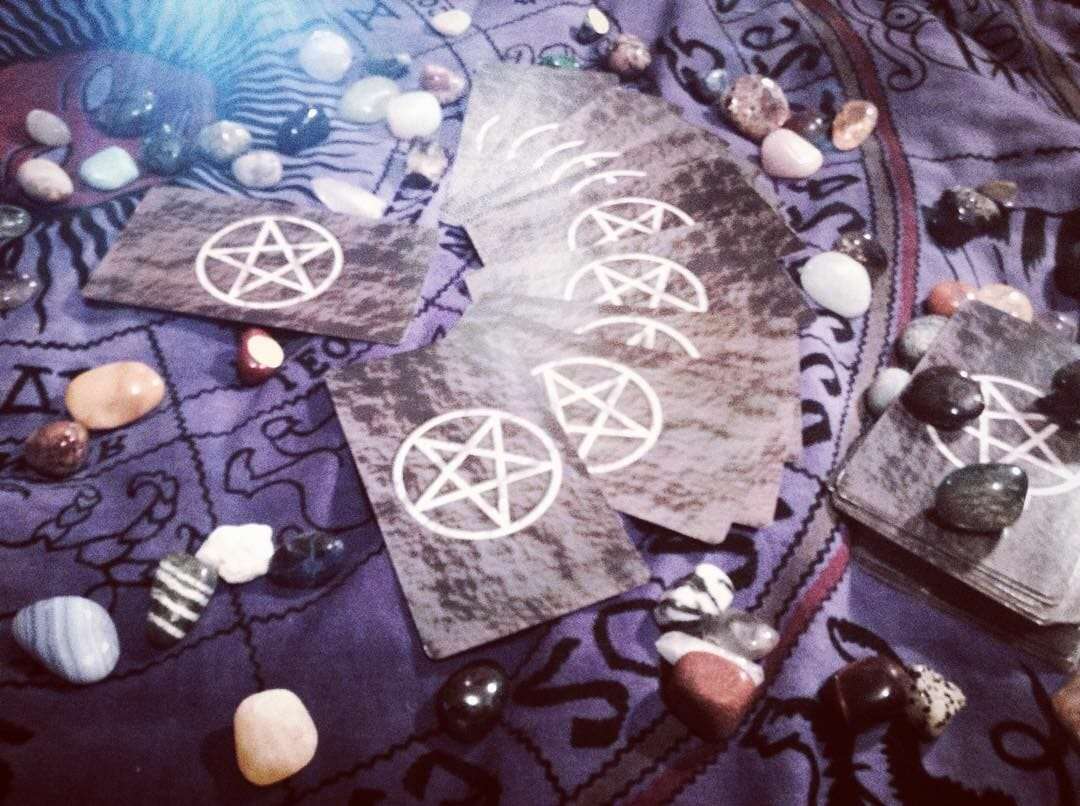
Cartomancy is divination through the use of cards or a deck. The most recognized deck styles are Tarot cards, Lenormand cards, and Oracle cards. The most used tarot deck is the Rider-Waite deck.

  • Tarot card decks consist of 78 cards, 22 Major Arcana cards and 56 Minor Arcana cards.
  • Lenormand card decks consist of 32 cards, each one unique in its imagery and meaning.
  • Oracle card decks come in many varieties, the amount and style of cards will be different from deck to deck.

The main difference in use is how structured the responses will be. There’s a spectrum of response definition and clarity. Tarot decks would be on the more defined and clear side, while Lenormand decks would be in the middle with some wiggle room for interpretation, and Oracle decks would be on the end of open interpretation.

Symbols on Materials

Throughout history, many cultures developed their own methods of divination. One of the most common styles was symbols carved, burned, or emblazed on a material that’s common for the culture. Such as Scandinavian Runes, which are symbols carved onto bones, stones, precious gemstones, etc. Jiaobei is a common Chinese divination, using red or black blocks shaped like crescents made of wood, bamboo, or most recently plastic.

Tea Leaves

Tea leaf reading (AKA. Tasseomancy) is one of the most commonly accessible forms of divination as it requires no special tools or training – just an awareness of one’s own intuition which can be achieved through the act of enjoying the tea itself. Tasseomancy is largely dependent on psychic intuition. Tea is poured into a cup without the use of a strainer. After the tea is finished, the reader can look over the leaves in the bottom of the cup or flip the cup on the saucer and read the leaves from there.

Pendulums

A pendulum can be made up of many different materials, generally speaking, it is a length of cord with a weighted item on the end, so as the name suggests, the whole piece can swing. This style of divination can be done with a reading mat or not. It’s a method that uses your intuition to focus the energy around you and channel it into the pendulum. The swing of the pendulum answers the question you ask.

Scrying through water or crystals

Scrying is defined as foretelling by using a polished crystal or other reflective object or surface. It’s an ancient art of divination for the purpose of receiving information. This method is completed by gazing, into or upon, a crystal, or reflective surface then allowing the physical eyes to relax and letting the inner psychic eye open to receive desired visions and information.

Numerology

This style of divination is one of the methods that do not require any psychic abilities. There are different ways to calculate out forecasted information. Numerology has a few different ciphers for letters connected to numbers. Normally the letters calculated are from the person’s full name. Repeating numbers in a person’s life can have special meaning too.

Moving Forward

This section will expand on each style and some styles we haven’t started to cover here. Divination can be more than tools, sometimes it’s personal abilities. Additionally, we’ll cover natural clairvoyance and other such abilities.

As I post articles feel free to ask questions, email me or leave a comment!

Posted on Leave a comment

How to Use: Spell Bottles

Introduction

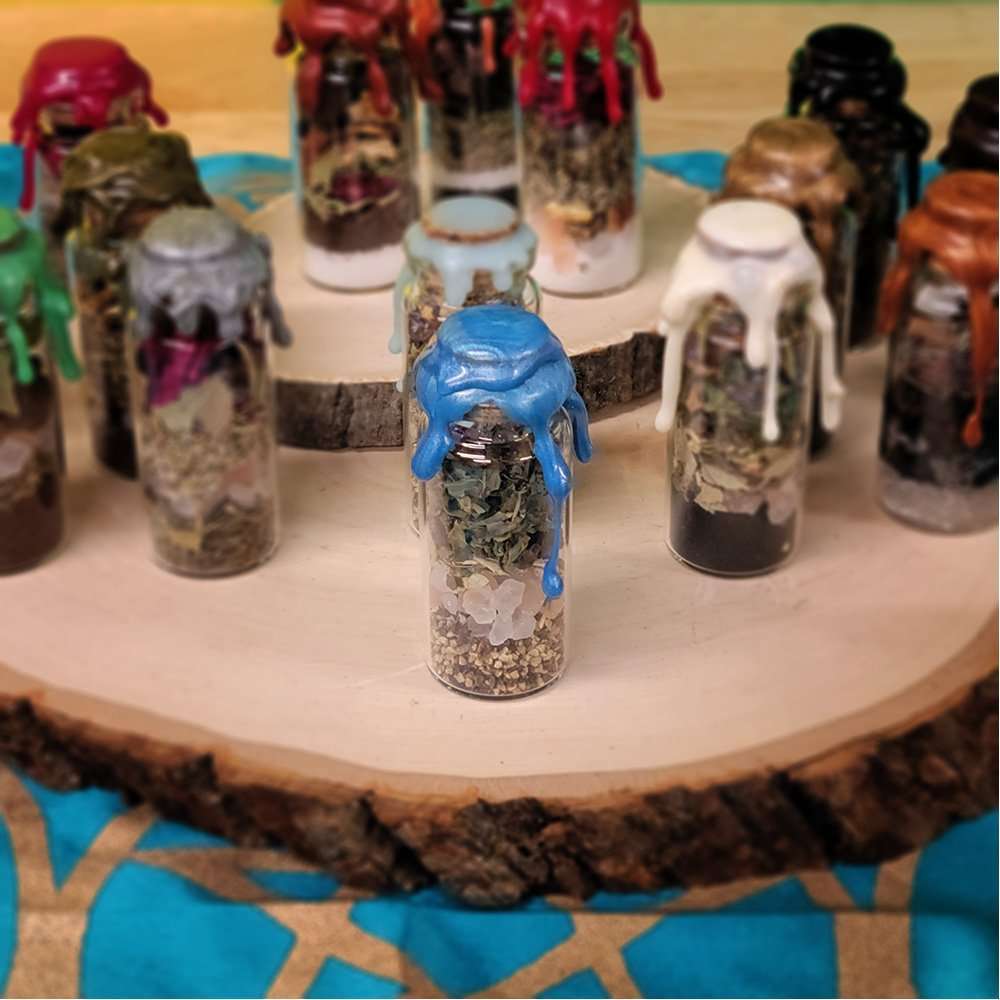
All of the spell bottles sold in the Shoppe are made by me, Theo. Many spell bottles may look alike, as most practitioners are using the same basic understanding of magic. However, never assume that all spells are the same from different crafters.

Each crafter has a slightly different tradition that they are taught that affects not only the creation of, but also the actual use, of a spell bottle. I make no comment on which way is best, if there is indeed such a measurement, I only wish to explain my spells to you.

So without further ado In this post, I will illustrate what sets mine apart from others and how to best utilize them.

Intentions and Potential

An intention is a statement or image that clearly defines your wants and desires. It needs to be achievable, with a defined cycle or timely end. In general, you do not want to leave spells open-ended. This invites grievance into your space. A spell left open to wander becomes attractive to things in the world you may not be ready to deal with. The best practice is to write out your intention so you can visualize it before committing to it.

Intention is a specific reaction, while charged protentional is an open invocation in a specific direction. Although a spell bottle can be used without intention, it isn’t much without potential. All my spell bottles come charged with potential, otherwise, they would just be pretty bottles full of random items. 

To charge my spell bottles with protentional I combine herbs, spices, and stone together that share specific magical properties to create the base of the spellwork. Those ingredients are chosen to direct specific magical energies. We strive to have enough options for each spell bottle type to invoke a specific intention.

For example, the Love Spell Bottle is charged with the protentional of Love. This charged protentional is open to all Love. As it says in the product’s description: “In this bottle are several herbs and minerals that promote positive love energies. The addition of a charged stone will focus the energies. This spell is a great starter, it can be charged with direct intentions.” It’s simple to invoke an intention on one of my charged spell bottles, the energy is waiting for you to focus it. Each spell type has a unique need for focusing intention, but the method is the same.

The Spell bottle is kind of like a car, right? You have a car (The Bottle), but if you don’t put in the right fuel (The Correct magical components ie. the Potential) it won’t go anywhere but even after you have a car with a full tank of gas you still need to know your destination (The Intention). So Theo’s spells are a car with a full tank of specialized gas designed to go exactly where you want, all you need to do is add the destination.

-Phil

How to Use a Spell Bottle

Now that you know a bit more about what is in one of my spell bottles it’s time to see how to actually use them.

Calm your mind, clear your head. You need to fill yourself with what you want the spell bottle to do for you. Focus on your intention, if you’ve written it out have it with you and the spell bottle. Hold both the spell bottle and the written intention comfortably, focusing on the intention. Allow the energy to fill you up and pass it into the spell bottle. You will feel the bottle grow spiritually, some people feel it as the bottle becomes brighter, or heavier, maybe warmer.

Depending on the spell type the sensation of the intention taking hold can feel different. The Love Spells may feel warmer, full. The Protection Spell may feel heavier, under pressure. The Wealth Spells may feel lighter, buzzing. The Health Spells may feel cooler, empty. The Motivation Spell may feel energetic, brighter. Sometimes strong imagery bounces back to the holder. A protection spell may show off a visual representation of its job, like a brick wall.

Once a spell bottle is charged how you want it, it’s important to place it in the most effective area for usage. If the spell and your intentions are personal, or the desire is for the person most affected is you. You need to have the bottle with you. We have bottle pouches for sale in the Shoppe for wearing your spell. If the intention is a goal that will happen around you, leave your bottle on your altar or in a safe place in your home that sees a lot of your energy travel through it. Do not leave the bottles in continuous direct sunlight, glass can magnify the rays and be dangerous.

Posted on Leave a comment

Divination

Introduction

Here we’ll travel down the long road of fortune telling, soothsaying, prophesying. We’ll discuss the many methods people have used to divine the future, seek answers, and gather insight.

Divination is the practice of asking questions and receiving answers. Many cultures have their own unique styles of divination, which have evolved over time as the world modernizes. Most styles have tools crafted from materials specific to the culture the style is from.

Word of Caution

Always look into the divination style before practicing, some styles are closed culture practice. That means the style of divination is special to a culture and should only be practiced by people of that culture.

All Divination Posts

Posted on Leave a comment

Lughnasadh

Lughnasadh
Lughnasadh

Introduction

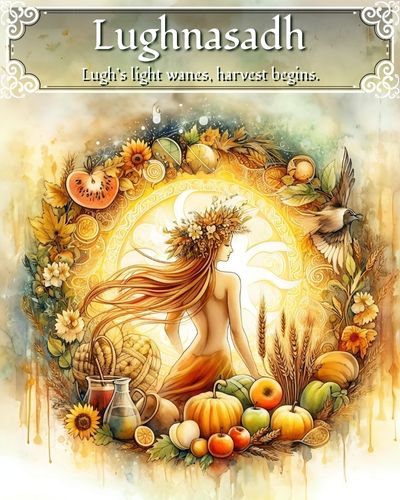
Lughnasadh (LOO-nus-uh), also called Lammas, is known as one of the Greater Sabbats, it marks the beginning of the fall harvest. This is the festival of Lugh, a Celtic God of Light, Fire, and God of crafts and skills. As fall approaches and the hours of sunlight begin to shrink, the God begins to lose his strength. At this time the Goddess is already pregnant with the God, who will be reborn again at Yule.

In Lughnasadh, we celebrate the fruits of the Sun Gods and Mother Earth’s bounty. Their labours are everywhere, in the vegetables, plums, onions, garlic, and especially herbs which now will be at their most potent and which will be used in our magical practices.

Lughnasadh is also known as the Feast of Bread because baking is traditional on this day. The name Lammas comes from an old English festival, the loaf mass, which was held on this date. Wiccans often hold feasts in honour of the holiday because everything is so plentiful at this time of the year.

It is a time not only to think about the fruits of the Sun God and Mother Earth but also about our own personal harvest. A time when we think about what has happened in our lives and let go of anger, injustice, hates, and past regrets, enabling us to move forward to plant our own new seeds.

Lughnasadh Activities

  • Bake a loaf of bread.
  • Place an ash leaf under your pillow for prophetic dreams.
  • Decorate sheaves of grain with flowers or ribbons.
  • Leave offerings of bread to the Fairy Folk.
  • Leave offerings of bread or wine for the pregnant goddess, and the Sun God.
  • Share a feast with family or coven members.
  • Eat a meal of fruits and vegetables of the season.
  • Private Meditation on the meanings of the season.
  • If you have a spring or well in your area, bless it and decorate it with flowers.
  • Float flowers at a local creek or pond
  • Plant the seeds from the fruits consumed during the feast.
  • Celebrate the first harvest by eating a meal with foods of the season, such as grain and corn.
  • Bless your garden, vegetables, fruits, and grains.
  • Gather the tools of your trade and bless them in order to bring a richer harvest next year.
  • Sacrifice bad habits and unwanted things from your life by throwing symbols of them into the Sabbat fire.
  • Harvest fruits from your garden
  • Play a game such as rhibo (a Welsh game) which is traditionally played at Lammas. Three pairs of people face each other and hold hands. A person is then laid across the hands and tossed into the air in much the same way grain is winnowed. For little ones use a blanket with two adults holding the corners. Be sure to be careful not to “toss” anyone too high!!!
  • Begin gathering and drying herbs, flowers, grains, or seeds for spellworking in the next year.

Deity’s Portfolio

  • Division: Major Sabbat
  • Other Names: Lammas, Lughnasad, Lugnassad, Lunasa, Lughnasa, Festival of Green Corn, First Harvest, Ceresalia, August Eve, Elembiuos, Feast of Cardenas
  • Southern Hemisphere Date: Feb 2
  • Northern Hemisphere Date: August 1
  • Associated Holiday: First Harvest
  • Associated Deities: Ceres, Demeter, the Corn Mother, Lugh, the Green Man
  • Associated Herbs: All herbs and grains
  • Associated Stones: Carnelian, Yellow Diamonds, Aventurine, Peridot, Citrine, and Sardonyx, golden topaz, opal, citrine, and ametrine.
  • Symbols of Lughnasadh: Sickles and scythes, Weapons, Armors, Corn dolls, Grapes, and Wine
  • Foods of Lughnasadh: Corn, Potatoes, homemade bread, nuts, rice, apples, berry pies, barley cakes, roasted lamb, Grains, acorns, oats, crab apples, squash, turnips, and Berries.
  • Drinks of Lughnasadh: Elderberry Wine, Mead, Ale, Meadowsweet Tea, and Cider
  • Incense of Lughnasadh: Aloes, Rose, Sandalwood.
  • Ritual Oils: Eucalyptus, Corn, Safflower
  • Colors: of Lughnasadh: Red, orange, gold, and yellow. Also green, citrine, and gray.
  • Taboos: Not Sharing Food
  • Plants: Corn, Rice, Wheat, Ginseng, Rye
  • Element: Fire
  • Activities: Share a feast with family or coven members, plant seeds, and bake bread
  • Animals: Roosters, Calves, and Pigs (sows in particular)
  • Mythical Creatures: Griffins, Basilisks, Centaurs, and Phoenix
  • Celebration of: A Festival of not only life and bounty but of harvest and death, the complete cycle of life. A Feast dedicated to Earth Mother. Give thanks for what you have.

Recipes

Deeper Knowledge