Posted on Leave a comment

Hecate’s Night

Hecates Night
Hecates Night

Introduction

A Sacred Tapestry of Devotion and Transformation

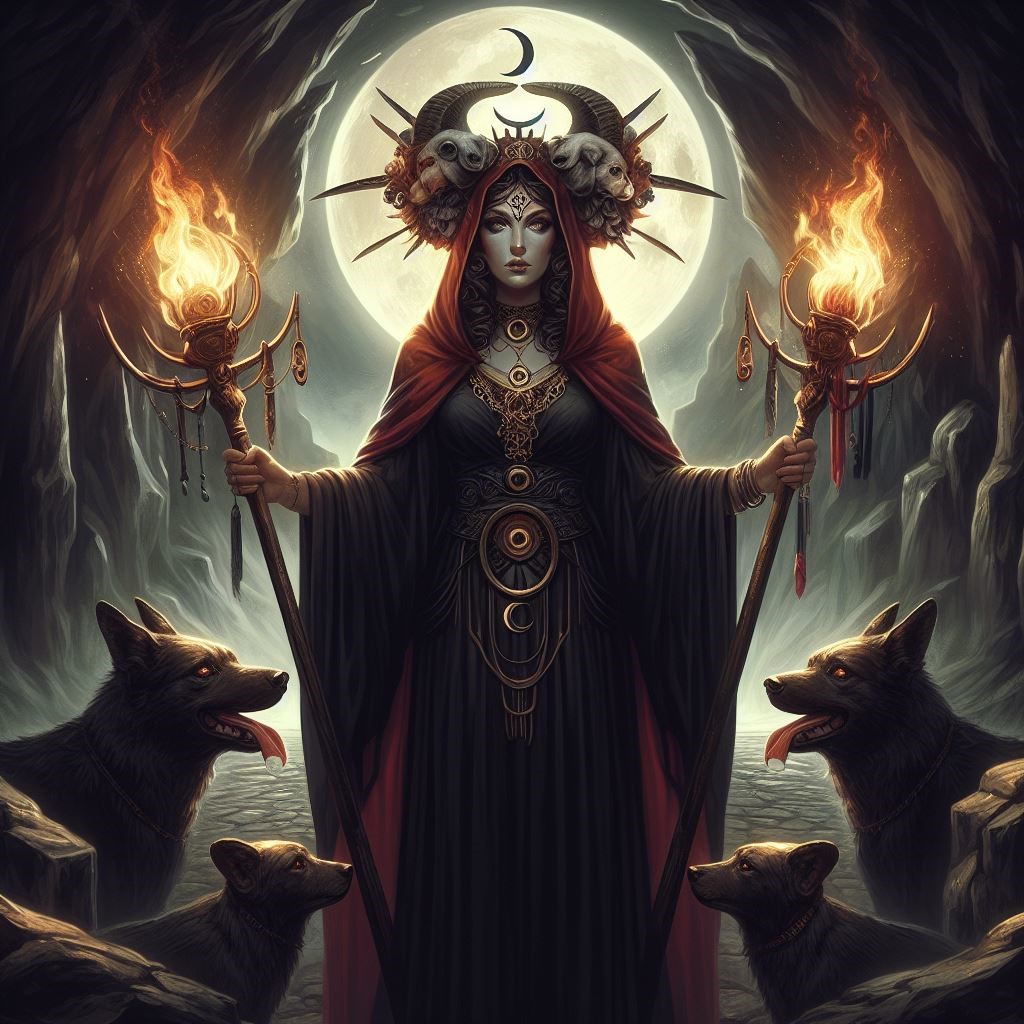
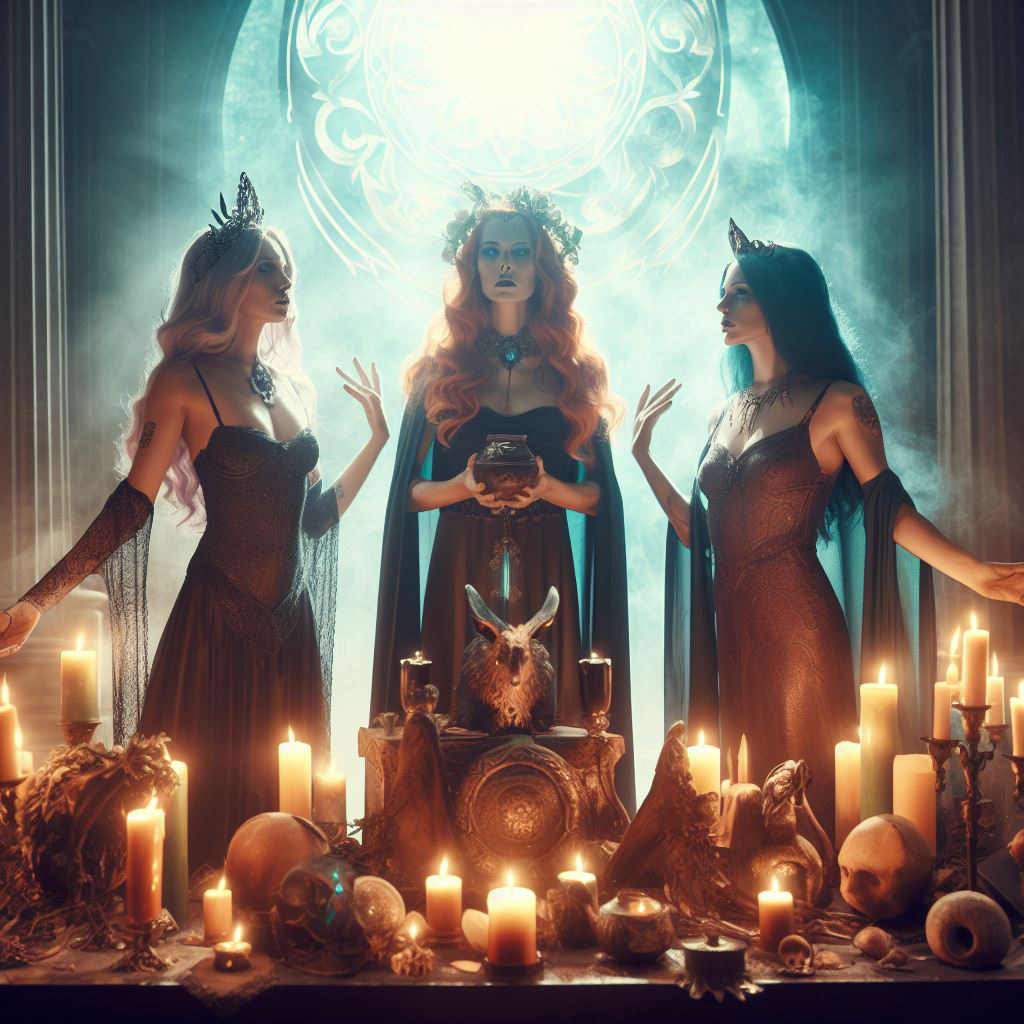
In the mystical realms of modern witchcraft and pagan traditions, the eve of August 13th marks a momentous occasion, a festival that resonates with the cosmic energies of Hecate, the ancient goddess of the moon, magic, and the unseen. Hecate’s Night, celebrated with fervor and reverence, unfolds as a tapestry of rituals, offerings, and the kindling of torches or candles at crossroads—an embodiment of Hecate’s sacred domains. This special night becomes a communal celebration, a collective expression of gratitude, seeking Hecate’s blessings, and acknowledging her timeless influence over the realms of magic and the unseen.

Crafting the Ritual Tapestry

A Preparation of Devotion

As the eve of August 13th draws near, practitioners eagerly step into a phase of meticulous preparation, a sacred dance of anticipation that heralds the arrival of Hecate’s Night. This momentous occasion invites devotees to immerse themselves in the art of crafting intricate rituals that mirror the multifaceted nature of the goddess. The air becomes charged with an otherworldly energy, and devotees embark on a journey of spiritual preparation, weaving a tapestry of devotion to Hecate that resonates with the ancient rhythms of magic.

In the days leading up to Hecate’s Night, practitioners engage in a delicate dance of symbolism, carefully selecting elements that capture the essence of Hecate’s multifaceted attributes. The preparation involves a deep dive into the rich tapestry of Hecate’s mythology and symbolism, extracting threads of wisdom, magic, and transformation to infuse into the forthcoming rituals.

Offerings, meticulously chosen to symbolize devotion and respect, play a pivotal role in the preparatory phase. Devotees select items that resonate with Hecate’s sacred domains, such as keys, herbs, or symbolic representations of the triple goddess. Each offering becomes a token of connection, a physical manifestation of the devotee’s reverence and commitment to the goddess.

Ritual tools, whether athames, candles, or symbolic objects, undergo a process of empowerment during the preparatory phase. Devotees take the time to inscribe these tools with symbols, runes, or words that carry the intention of the rituals to come. This act becomes a sacred infusion of energy, aligning the tools with the devotee’s purpose and inviting Hecate’s presence to amplify their magical efficacy.

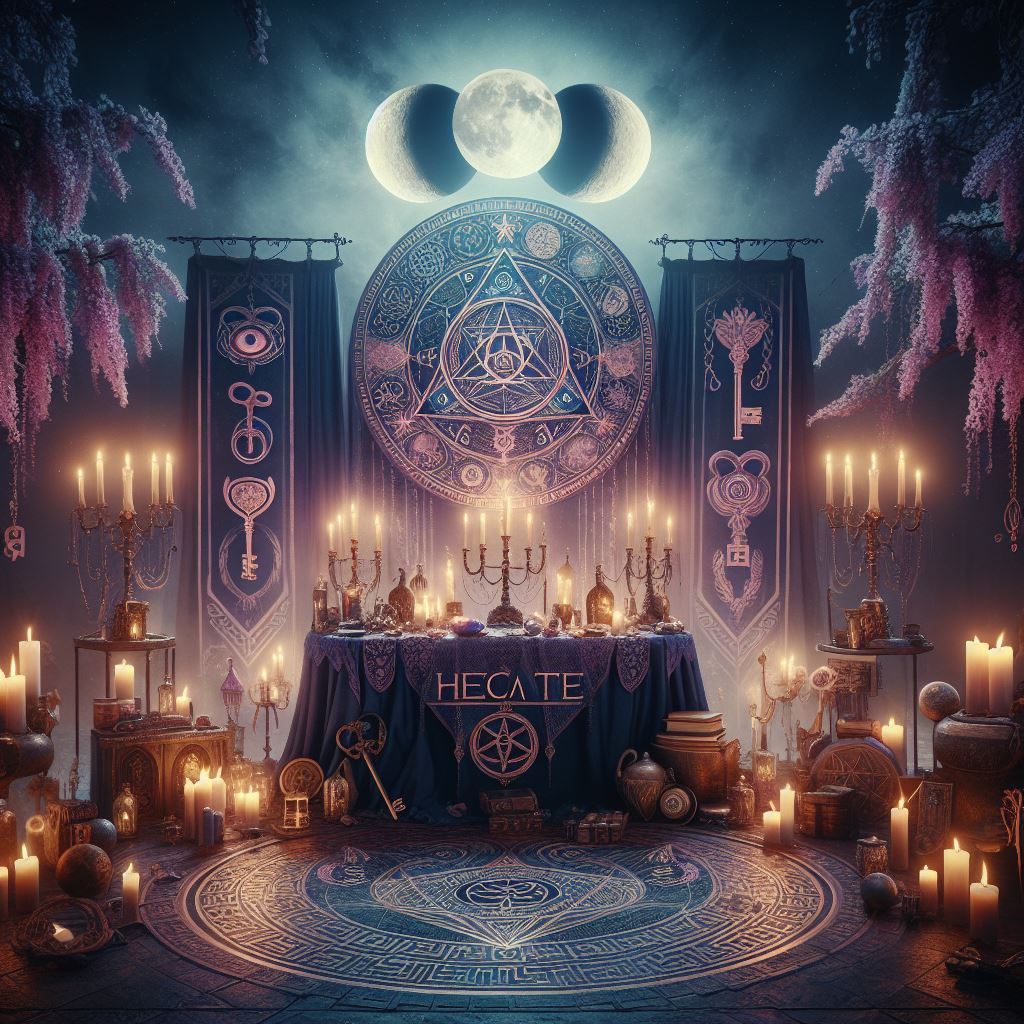
Devotees turn their attention to the creation of sacred spaces where the rituals will unfold. Altars are adorned with symbols of Hecate—crossroads, keys, lunar imagery—and offerings are carefully arranged. The act of setting up these sacred spaces becomes a ritual, a meditative process that attunes the physical and spiritual realms, inviting Hecate’s presence to permeate the ritual space.

As devotees immerse themselves in the preparatory phase, there is a conscious effort to commune with the ancients, tapping into the timeless wisdom of Hecate. This may involve meditation, divination, or simply quiet contemplation, allowing practitioners to attune themselves to the subtle currents of Hecate’s energy and seek guidance for the rituals ahead.

The meticulous preparation for Hecate’s Night culminates in a crescendo of anticipation. The air is thick with the fragrance of offerings, the energy of intention, and the subtle hum of magical currents. Devotees, now fully immersed in the sacred art of crafting intricate rituals, stand at the threshold of a night where the veils between worlds thin, inviting Hecate to join in the symphony of devotion and magic.

The preparation for Hecate’s Night becomes a profound and transformative journey. Devotees, guided by the wisdom of the ancients and fueled by a deep well of devotion, stand ready to weave a tapestry of magic that honors the goddess in all her multifaceted glory. As the eve of August 13th unfolds, practitioners’ step into the sacred dance, embracing the mystical energy of Hecate’s Night with open hearts and a profound sense of connection to the goddess and the ancient traditions that have echoed through time.

Offerings as Symbols of Devotion and Respect

A Gesture of Sacred Exchange

In the intricate preparations for Hecate’s Night, the selection of offerings emerges as a profound and symbolic aspect, where devotees engage in a deliberate dance of meaning and intention. This ritualistic act transcends the material realm, transforming into a sacred exchange that seeks to create a harmonious connection between the mortal and the divine, invoking Hecate’s transformative energy in the process.

Devotees embark on a thoughtful journey to select offerings that encapsulate the essence of their devotion and respect for Hecate. Each item chosen becomes a symbol, a representation of the devotee’s understanding of the goddess’s multifaceted nature. Keys, which symbolize access to the mysteries and the unlocking of hidden knowledge, may find a place on the altar. Herbs associated with Hecate, such as mugwort or mandrake, might be chosen for their magical properties and connections to the spirit world.

Before being presented to the goddess, each offering undergoes a process of intentional charging. Devotees infuse the items with their personal intentions, desires, and the energy of their devotion. This act transforms the offerings from mere physical representations into vessels of spiritual significance. A key, for example, may carry the intention of unlocking personal growth or accessing spiritual insights, while herbs may be charged to invoke protection or enhance divination.

The act of offering transcends the physical act of presenting an item; it becomes a symbolic bridge between the mortal realm and Hecate’s divine essence. Devotees understand that their offerings are not merely material tokens but conduits through which a sacred exchange occurs. The symbolism embedded in each offering becomes a language, a form of communication that resonates with the energies of the goddess.

As devotees place their offerings on the altar, the gesture transforms into a sacred exchange—an intricate dance of giving and receiving that transcends the boundaries of the material and spiritual worlds. The act of offering becomes a gesture of respect, humility, and recognition of Hecate’s presence. In this exchange, devotees seek not only to give physical items but to open themselves to receiving the blessings, guidance, and transformative energy that Hecate offers in return.

The offerings, charged with intention and presented with reverence, serve as vessels for invoking Hecate’s transformative energy. Devotees understand that the symbolic exchange is a form of ritualistic alchemy, where the mundane is transformed into the magical. The offerings act as keys that unlock the gates to the unseen, inviting the goddess’s presence to permeate the ritual space and infuse it with her wisdom, protection, and guidance.

The meticulous selection and charging of offerings for Hecate’s Night transcend the realm of material gifts; they become a sacred language of devotion, a symbolic bridge that connects the devotee with the divine. This act of offering is woven into the fabric of the ritual, creating a harmonious exchange that resonates with the transformative energies of Hecate, enriching the spiritual journey of those who seek her embrace.

Crossroads Illumination

Symbolic Beacons at the Thresholds

A pivotal and profound act that defines the essence of Hecate’s Night is the ceremonial lighting of torches or candles at crossroads. This ritualistic practice transcends the physical act of kindling flames; it becomes a symbolic and spiritual gesture that transforms these liminal spaces into portals for profound connection with the goddess Hecate. The flickering flames, dancing at the crossroads, symbolize more than mere illumination—they become symbolic beacons, drawing Hecate’s attention, and beckoning her to join the revelry of shared devotion among her dedicated followers.

Crossroads, both in the physical and metaphysical sense, hold significant symbolism in various cultures and mystical traditions. They represent points of choice, decision, and the convergence of divergent paths. In the realm of Hecate’s Night, these crossroads transcend the mundane—they become thresholds where the boundaries between the physical and spiritual realms blur, creating spaces where the goddess’s influence is believed to be particularly potent.

As torches are lit at these symbolic intersections, practitioners acknowledge the crossroads as more than mere meeting points of roads. They become liminal spaces, where the veils between worlds become thin, and mystical encounters are possible. The illumination from the torches serves not only to dispel physical darkness but also to pierce through the spiritual veil, creating pathways for communion with the goddess. The crossroads, once ordinary intersections, transform into gateways, inviting Hecate to traverse between worlds and bless the gathering with her presence.

The flickering flames of torches and candles become symbolic beacons that draw the attention of Hecate, the goddess of crossroads and liminality. In the dance of fire, practitioners believe they are sending signals to the divine, inviting Hecate to join the sacred ritual. The flames not only illuminate the physical space but also act as ethereal signals, guiding the goddess’s attention to the crossroads where her devotees stand in anticipation.

The lighting of torches at crossroads is not a solitary act; it is a communal ritual that binds practitioners together in shared devotion. As the flames flicker in unison, they symbolize the collective energy of the gathering, a harmonious symphony of devotees reaching out to Hecate. The ritual becomes a shared endeavor, where the mystical energy at the crossroads is amplified by the collective intent, drawing the goddess into the heart of the ritual and into the shared experiences of her devotees.

The lighting of torches at crossroads during Hecate’s Night is a profound act that transcends the physical realm. It symbolizes the convergence of choice, spirituality, and shared devotion. The flickering flames, dancing at the intersections, serve as beacons guiding Hecate’s attention, inviting the goddess to join in the revelry and infuse the gathering with her transformative energy. As the torchlight illuminates the crossroads, it becomes a beacon of shared devotion, drawing the goddess into the mystical space where choices, both mundane and magical, are made and embraced with the guidance of Hecate’s enduring presence.

The Profound Significance of Crossroads Illumination

Guiding Through Thresholds

The ceremonial act of crossroads illumination during Hecate’s Night carries profound significance, transcending the mere physical act of lighting torches or candles. This ritual becomes a symbolic and spiritual gesture that encapsulates the essence of Hecate’s influence, symbolizing the crossing of thresholds—both literal and spiritual—where practitioners invite the goddess to guide them through the intricate intersections of life’s journey. The flickering flames at these mystical crossroads evolve into more than mere sources of light; they become conduits for spiritual communion, invoking the transformative power of Hecate to illuminate the paths of those who seek her guidance.

Crossing thresholds is an archetypal symbol found in myths, folklore, and spiritual traditions across the world. It signifies transitions, transformations, and the navigation of pivotal points in one’s journey. In the context of Hecate’s Night, the crossing of thresholds takes on a multifaceted meaning. Practitioners acknowledge both the literal crossroads where they stand, as well as the metaphorical intersections in their lives where choices and decisions shape their destinies.

The act of crossroads illumination becomes a deliberate invocation, a call to Hecate to stand as a guide at the crossroads of practitioners’ lives. As the flames flicker in unison, practitioners seek the presence of Hecate to provide clarity, wisdom, and guidance in navigating the complexities of their earthly and spiritual journeys. The literal act of lighting the crossroads symbolizes the desire to illuminate the obscured paths and make informed decisions under the watchful gaze of the goddess.

The flickering flames at the mystical crossroads act as conduits for spiritual communion. They signify the ethereal bridges connecting the mortal realm with the divine. Practitioners believe that the dance of flames represents the goddess’s response, a subtle acknowledgment of the invitation extended by her devotees. The illuminated crossroads become a meeting point between the material and spiritual, a sacred space where the goddess’s transformative energies can flow freely.

The transformative power of Hecate is invoked through the illumination of crossroads. The goddess, associated with magic, wisdom, and liminality, is believed to infuse the paths of those who seek her guidance with clarity and purpose. The torchlight becomes a metaphorical key, unlocking the mysteries of one’s journey and revealing the hidden truths that may be obscured in the shadows. Through the act of crossroads illumination, practitioners open themselves to the transformative energies of Hecate, allowing her light to guide them through life’s intricate web of choices and transitions.

The act of crossroads illumination during Hecate’s Night holds profound spiritual significance. It represents a deliberate invitation for the goddess to guide practitioners through the thresholds of their lives. The flickering flames become more than a visual spectacle; they become symbolic beacons, illuminating the spiritual paths with the transformative power of Hecate. As practitioners stand at the mystical crossroads, they embrace the goddess’s guidance, acknowledging her as a timeless guide through life’s intersections and gratefully welcoming her transformative light into their earthly and spiritual journeys.

Communal Celebration

A Harmonious Symphony of Devotion

Hecate’s Night stands as a distinctive celebration that transcends the typically solitary nature of many magical practices. Instead, it evolves into a vibrant communal festival, where devotees gather to weave a harmonious symphony of devotion. This shared celebration transforms the atmosphere into a sacred space, where practitioners come together, creating a powerful vortex of magic that resonates with the very essence of the goddess Hecate.

Unlike individual magical practices, Hecate’s Night becomes a collective endeavor, a communal alchemy where the energies of many intertwine to create a potent tapestry of magic. Devotees, drawn by a shared reverence for Hecate, converge to collectively express gratitude, seek blessings, and invoke the transformative energy of the goddess. The air becomes charged with the vibrancy of shared devotion, fostering a sense of unity that elevates the ritual into a profound communal experience.

Within the festival, devotees participate in shared rituals and offerings that amplify the magic of Hecate’s Night. Altars are adorned with symbols representing the goddess’s multifaceted nature, and offerings are carefully arranged, each devotee contributing to the collective energy. The shared symphony of devotion echoes through the air, creating a harmonious resonance that invokes the goddess to join in the collective celebration.

As practitioners collectively express their gratitude and seek Hecate’s blessings, the very air becomes charged with the energy of shared reverence. The convergence of individual intentions and the collective desire to honor the goddess creates a magical vortex—an energetic whirlpool that amplifies the potency of the rituals. This vortex serves as a conduit, drawing Hecate’s attention and inviting her transformative energy to infuse the festival with its profound magic.

Hecate’s Night not only serves as a moment to connect with the goddess but also fosters a sense of camaraderie and unity among practitioners. The shared experience of the festival builds a spiritual community where devotees feel a deep connection with one another. Through the shared celebration, bonds are strengthened, and a supportive network of like-minded individuals emerges, reinforcing the sense of collective purpose and shared devotion.

Hecate’s Night transforms into a communal tapestry where individual threads of devotion interlace to create a vibrant and interconnected whole. The festival becomes a shared space, where practitioners collectively express gratitude, seek blessings, and invoke the goddess’s transformative energy. As the harmonious symphony of devotion echoes through the air, devotees embrace the essence of Hecate, building a spiritual community that extends beyond the festival, creating lasting connections forged in the crucible of shared magic and reverence.

Acknowledging Hecate’s Timeless Influence

A Connection Beyond Time and Space

As the flickering torchlight and candle glow illuminate the crossroads during Hecate’s Night, practitioners collectively acknowledge the goddess’s timeless influence over the realms of magic and the unseen. The crossroads, bathed in the warm embrace of the goddess’s energy, becomes a symbolic meeting point where the ancient and the modern converge. In this liminal space, practitioners recognize Hecate as a guardian of mystic realms, and her palpable presence infuses the shared rituals with a profound sense of magic.

The torches and candles at the crossroads serve as more than sources of light; they become symbols of enlightenment and guidance. The dance of light and shadows mirrors the intricate dance of Hecate herself, weaving through the veils that separate the seen and the unseen. Practitioners, standing at this intersection of paths, acknowledge the symbolic illumination as a manifestation of Hecate’s enduring influence, guiding them through the mysteries of magic and the choices presented in both the mundane and mystical realms.

Hecate’s timeless influence becomes palpable as devotees engage in shared rituals, creating a collective outpouring of gratitude and reverence. The goddess’s essence is woven into the fabric of the celebration, and her presence is felt in the whispers of incantations, the rhythmic beats of drums, and the aroma of offerings wafting through the air. The shared experience becomes a communion with the ancient spirit of Hecate, bridging the gap between the devotees’ modern practices and the ageless wisdom of the goddess.

Hecate’s Night becomes a moment where time bends and folds upon itself. The ancient influence of the goddess intertwines seamlessly with the modern celebration, creating a bridge between the past and the present. In the glow of torchlight, practitioners sense a temporal shift, feeling the echoes of ancient rituals resonating through the crossroads. The celebration becomes a sacred continuum, where the timeless essence of Hecate permeates every ritual act, transcending the constraints of linear time.

Amid shared devotion, the practitioners stand at the crossroads, not only physically but also metaphorically, connecting with the timeless spirit of Hecate. The ancient goddess becomes a guiding force, offering wisdom and insight to those who seek her presence. The bridge between the past and the present becomes a conduit for the goddess’s influence to flow through, creating a tapestry of connection that spans across ages, reminding practitioners that they are part of an unbroken chain of devotion to Hecate’s enduring mysteries.

As torches and candles cast their glow at the crossroads during Hecate’s Night, practitioners recognize and honor the goddess’s timeless influence. The celebration becomes a moment where time bends, allowing Hecate’s ancient presence to intertwine with the modern practices, creating a bridge between the past and the present that fosters a profound connection with the enduring spirit of the goddess.

Hecate’s Night Ritual

Embracing the Wisdom of the Crossroads

  • A black candle
  • A key (symbolic or real)
  • A bowl of dark soil or earth
  • Mugwort or vervain for purification
  • Offerings: garlic (honey, or pomegranate seeds)
  • A piece of parchment and a pen

Preparation

  1. Begin by selecting a quiet and dimly lit space, preferably outdoors. This ritual is most potent when performed during the dark phase of the moon or on a moonless night.
  2. Set up your altar with the black candle at its center. Surround it with the bowl of dark soil, the key, and the purification herbs.
  3. Light the black candle, symbolizing the presence of Hecate, the goddess of the crossroads and keeper of the mysteries.

The Ritual

  1. Cleansing and Purification – Take a few moments to ground yourself. Inhale deeply, absorbing the energy of the night around you. Light the mugwort or vervain, allowing the smoke to purify the space and yourself. Stand at the altar, visualize any negativity or obstacles dissolving in the smoke. Feel the energy of the space becoming clear and charged.

  2. Invocation – Speak aloud an invocation to Hecate, acknowledging her as the guide of the crossroads and the keeper of ancient wisdom. You can create your own or use traditional invocations, expressing your reverence and inviting her presence.
  3. Offerings – Place offerings of garlic, honey, or pomegranate seeds at the base of the black candle. These are symbols of protection, sweetness, and the mysteries of life. Express your intentions and desires for guidance, transformation, or protection to Hecate. Speak from the heart, knowing that she understands the language of sincerity.
  4. Crossroads Meditation – Hold the key in your hands, symbolizing your access to the mysteries. Close your eyes and meditate on the concept of the crossroads—where paths converge, and choices are made. Feel the energy of possibilities surrounding you.
  5. Divination – Using the parchment and pen, pose a question or seek guidance from Hecate. Enter a meditative state and allow your intuition to guide your writing. You may use a divination method like tarot or runes for additional insights.
  6. Closing – Thank Hecate for her presence and guidance. Blow out the black candle, signifying the end of the ritual. Keep the key in a sacred space, as a symbol of your connection to the mysteries of the crossroads. This Hecate’s Night ritual is a personal and potent way to connect with the
Hecate
General Magic
Rituals

Conclusion

In essence, Hecate’s Night is a sacred and transformative festival, where devotees craft a tapestry of devotion, invoke the goddess’s presence through offerings and crossroads illumination, and join in a communal celebration that transcends the boundaries of time and space. It is a moment where the ancient and the modern converge, and the cosmic energies of Hecate infuse the ritual space with magic, wisdom, and the transformative power that has echoed through the ages.
Posted on Leave a comment

Ritual: Hecate’s Lunar Cycle

Hecate Lunar Cycle Ritual

Introduction

Navigating the Phases of Transformation

Embark on a sacred journey through the mystical realms of Hecate’s Lunar Cycle Ritual, a profound exploration of the phases of transformation guided by the goddess of the crossroads. Rooted in ancient wisdom and lunar magic, this ritual offers a sacred space to navigate the ebbs and flows of the moon’s cycles, inviting profound insights, healing, and empowerment into your life. As you gather your ingredients and prepare your sacred space, envision yourself stepping into a realm where the veil between worlds is thin, and the energies of Hecate flow freely, guiding you on a journey of self-discovery and growth.

Ritual Basics

Before beginning any ritual, it is important to prepare yourself mentally and physically. You may want to take a cleansing bath, or shower, and meditate or perform some grounding exercises to center yourself. Gather any materials you will need, such as candles, incense, and offerings for the forest spirits.

You can read a more detailed Ritual Preparation guide here.

Hecate’s Lunar Cycle Ritual

Embark on a sacred journey through the mystical realms of Hecate’s Lunar Cycle Ritual, a profound exploration of the phases of transformation guided by the goddess of the crossroads. Rooted in ancient wisdom and lunar magic, this ritual offers a sacred space to navigate the ebbs and flows of the moon’s cycles, inviting profound insights, healing, and empowerment into your life. As you gather your ingredients and prepare your sacred space, envision yourself stepping into a realm where the veil between worlds is thin, and the energies of Hecate flow freely, guiding you on a journey of self-discovery and growth.

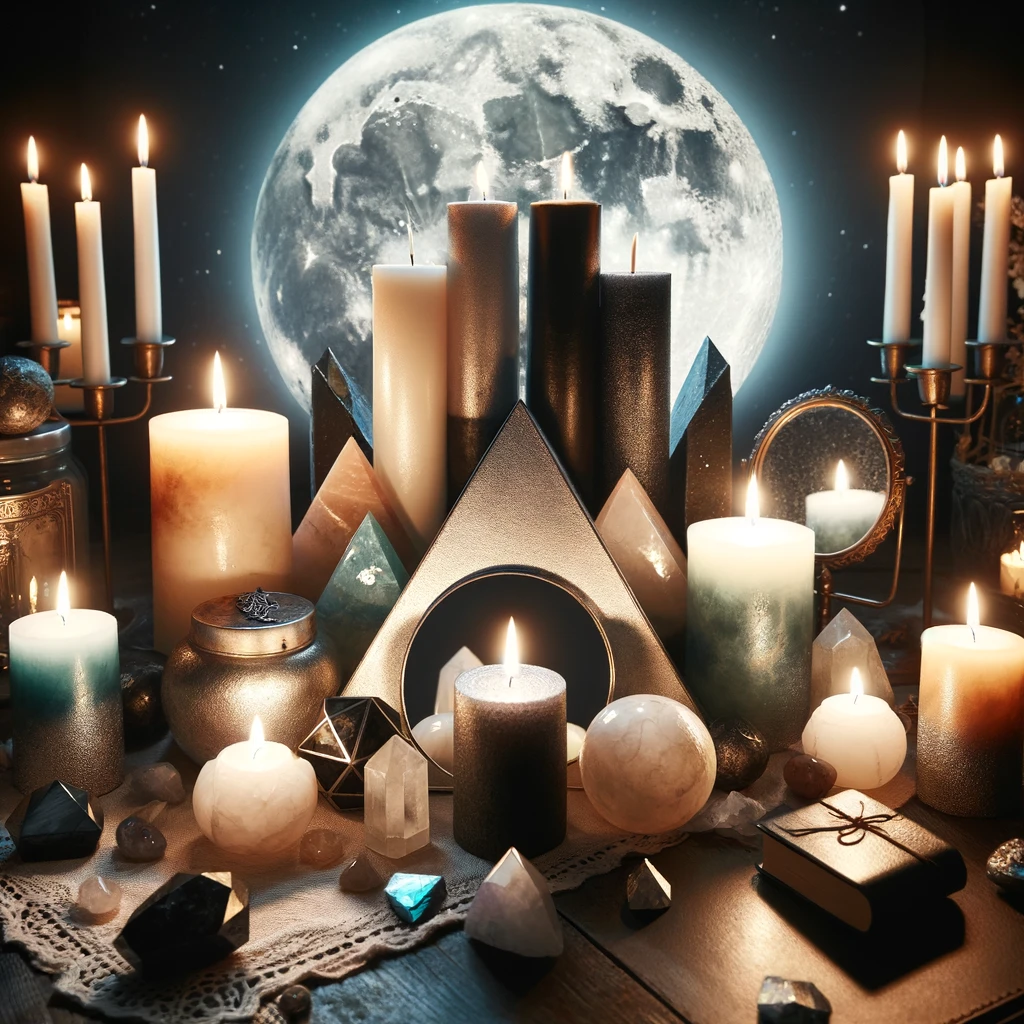
  • A set of three candles (black, white, and silver)
  • A small mirror or reflective surface
  • Moonstone or labradorite crystal
  • A journal or parchment and pen
  • Mugwort or vervain for purification (for purification)
  • Offerings: (dark chocolate, lavender, or myrrh incense)

Preparation

  1. Choose a quiet and comfortable space where you can see the moon or feel its energy. Ideally, perform this ritual outdoors, but if that’s not possible, position yourself near a window with a view of the moon.
  2. Arrange the three candles in a triangle formation on your altar, placing the black candle at the bottom, the white candle to the right, and the silver candle to the left.
  3. Set the mirror or reflective surface at the center of the triangle. Place the moonstone or labradorite on the mirror.

Cleansing and Purification

  1. Light the mugwort or vervain for purification, allowing the smoke to cleanse your space. Pass the crystals and candles through the smoke, consecrating them with lunar energy.

Invocation

  1. Begin the ritual by invoking Hecate, acknowledging her as the guardian of the lunar cycles and the mistress of transformation. Express your respect and invite her presence into your sacred space.

Candle Lighting

  1. Light the black candle, representing the waning moon and the phase of release. As you light it, reflect on what you need to let go of during this lunar cycle. Place any burdens or challenges at Hecate’s feet.
  2. Light the white candle, symbolizing the waxing moon and the phase of manifestation. Focus on what you wish to attract and manifest during this lunar cycle. Imagine your desires coming to fruition.
  3. Light the silver candle, signifying the full moon and the phase of illumination. As the silver flame dances, seek clarity and insight. Ask Hecate to reveal hidden truths and guide you on your journey.

Reflective Meditation

  1. Gaze into the mirror, allowing the moonstone or labradorite to reflect the moon’s energy. Enter a meditative state, seeking guidance and insights from Hecate. Pay attention to any symbols, visions, or messages that come to you.

Offerings

  1. Place offerings of dark chocolate, lavender, or myrrh incense at the center of the triangle. These are gifts symbolizing your appreciation for Hecate’s guidance and presence.

Journaling

  1. Open your journal or parchment and pen down any insights, messages, or emotions that arose during the ritual. This is a sacred record of your connection with Hecate’s lunar cycle.

Closing

  1. Thank Hecate for her guidance and energy. Blow out the candles, starting with silver, then white, and finally black. Carry the moonstone or labradorite with you as a talisman throughout the lunar cycle, symbolizing your connection with Hecate’s transformative energies. This Hecate’s Lunar Cycle Ritual is a personal journey through the phases of the moon, allowing you to align with the goddess’s wisdom and harness the transformative energies of each lunar phase in your life.
Hecate
Hecate, Moon Magic
Rituals

Conclusion

As the candles flicker and the moon’s gentle glow illuminates your sacred space, take a moment to reflect on the profound journey you’ve embarked upon through Hecate’s Lunar Cycle Ritual. With each phase of the moon, you’ve delved deeper into the depths of your soul, shedding light on hidden truths, releasing what no longer serves you, and manifesting your deepest desires. As you bid farewell to this sacred space, carry with you the wisdom and insights gained, knowing that Hecate’s guiding presence is always with you, guiding you through the cycles of transformation and empowering you to embrace the fullness of your being. Blessed be.

Posted on Leave a comment

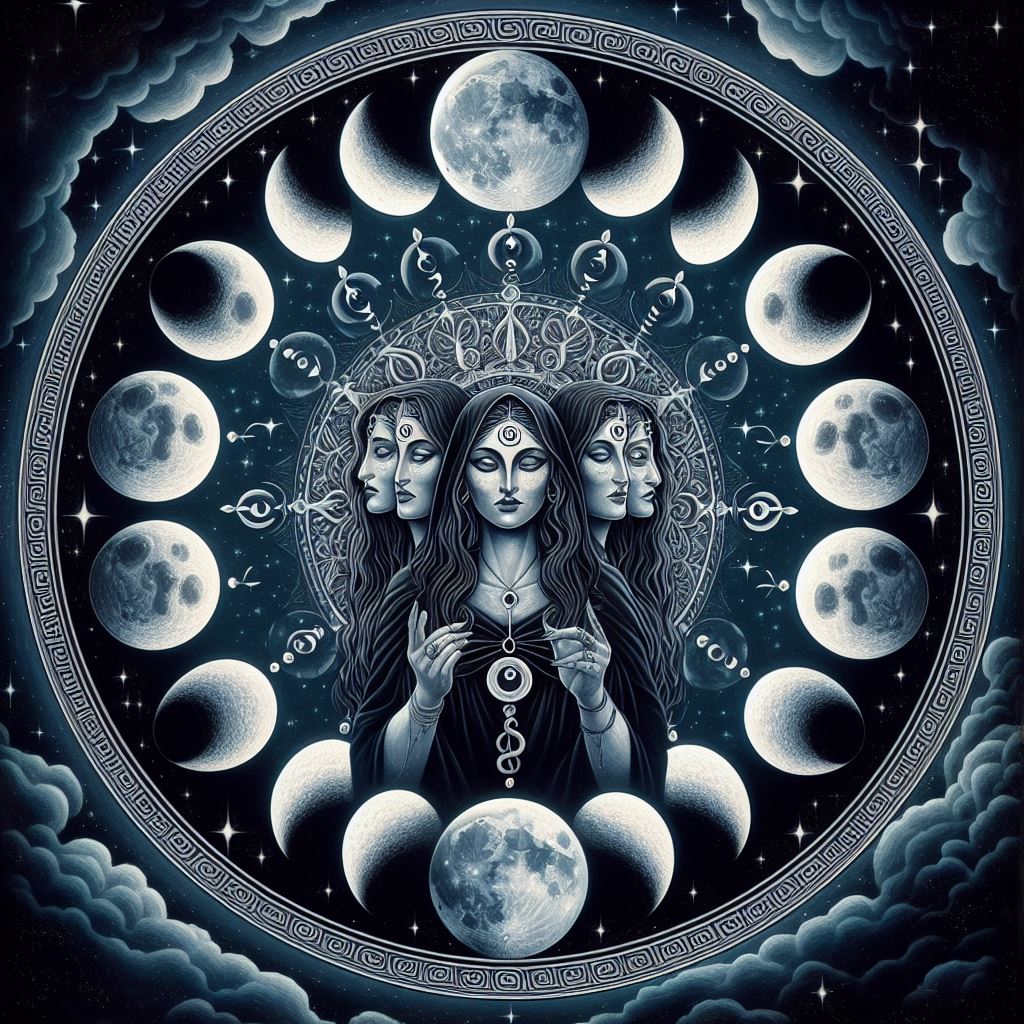
Hecate Across the Lunar Phases

Hecate Lunar Cycle
Hecate Lunar Cycle

A Journey through the Dark Moon Celebrations

The mystical dance with Hecate, the venerable goddess of the moon, magic, and the unseen realms, unfolds as a journey that gracefully transcends the confines of a mere day, seamlessly weaving itself into the intricate tapestry of the lunar calendar. Within the cosmic rhythm dictated by the celestial bodies, the dark moon, synonymous with the enigmatic new moon, emerges as a particularly auspicious phase for devotees to immerse themselves in the sacred communion with the ancient goddess.

Hecate’s lunar dance is an intricate and cosmic ballet, a choreography that extends beyond the mundane constraints of time. As the moon waxes and wanes, devotees align their mystical practices with the ebb and flow of Hecate’s ethereal presence. The lunar calendar, a celestial tapestry woven with the threads of the moon’s phases, becomes the backdrop for the devotees’ sacred journey with the ancient goddess.

In the rhythmic ballet of Hecate’s lunar dance, the dark moon, akin to the elusive new moon, assumes a heightened significance. This phase, characterized by the moon’s retreat into shadow, becomes a portal for devotees to embark on a profound exploration of the mystical realms. It is during this cosmic darkness that practitioners feel the pull of Hecate’s energies, drawing them into a sacred communion that transcends the boundaries of the visible and ventures into the unseen.

As the moon embraces its shadowy cloak, practitioners, attuned to the cosmic dance, engage in acts of reverence. Tokens of significance, carefully chosen and charged with intention, become vessels of connection between the mortal realm and the ethereal domain of Hecate. These offerings, ranging from symbolic objects to meaningful rituals, serve as expressions of devotion and invitations for the goddess’s guidance, protection, and assistance in their magical pursuits.

Within the embrace of the dark moon, devotees craft intricate rituals that act as beacons, calling upon Hecate’s wisdom and power. The rituals, diverse in form and purpose, seek the goddess’s guidance, protection, and aid in their magical endeavors. Through meditation, spellwork, and sacred invocations, practitioners open themselves to the currents of Hecate’s transformative energy, forging a profound connection that transcends the boundaries between the visible and the hidden.

The mystical dance with Hecate during the dark moon becomes a profound exploration, a sacred journey that delves into the otherworldly realms she governs. Devotees, guided by the subtle glow of their inner lights, navigate the cosmic mysteries under the veiled canopy of the new moon’s shadow. It is within this cosmic tapestry that the devotees find themselves in the intimate company of Hecate, traversing the liminal spaces where magic is potent, and the unseen becomes palpable.

The mystical dance with Hecate unfolds as a timeless journey, intricately woven into the lunar calendar’s cosmic tapestry. The dark moon, with its allure and enigma, stands as a beacon, inviting devotees to immerse themselves in the sacred communion with the ancient goddess, offering tokens of significance and engaging in rituals that beckon Hecate’s guidance, protection, and aid in their magical pursuits. This cosmic ballet transcends the boundaries of a single day, inviting practitioners to dance with the eternal energies of the moon and the enduring wisdom of Hecate.

The Dark Moon’s Call: A Sacred Space for Connection

In the hushed moments when the moon shrouds itself in the velvety cloak of darkness, devotees of Hecate are beckoned by the ethereal call to craft a sacred space, a haven for connection with the ancient goddess. The dark moon, with its enigmatic presence, transforms into a cosmic mirror, a reflective surface that mirrors the profound mysteries of the unseen realms. In this lunar sanctuary, seekers find themselves drawn into the depths of Hecate’s embrace, navigating the delicate dance between the visible and the hidden.

The dark moon phase becomes a potent time when practitioners stand at the threshold of the mystical, gazing into the liminal spaces where the veil separating the mundane from the magical is at its thinnest. It is within this sacred interval that devotees feel the subtle whispers of Hecate’s energies, resonating through the celestial silence and guiding them into the heart of the arcane.

As the dark moon’s shadow unfurls across the celestial canvas, practitioners undertake the art of crafting a sacred space attuned to Hecate’s presence. The atmosphere is infused with a mystical alchemy, blending intention and reverence. Candles flicker, casting shadows that dance in rhythm with the unseen forces. Crystals, chosen for their vibrational resonance, are strategically placed, forming a crystalline web that captures and amplifies the energies of the dark moon.

The devotees, mindful of the cosmic ballet unfolding above, arrange symbolic offerings with care. These tokens, ranging from fragrant herbs to sacred symbols, become conduits for connection, bridging the realms of the material and the ethereal. In this sacred space, time seems to stretch, creating a pocket of existence where the devotees commune with the timeless wisdom of Hecate.

The dark moon serves as a cosmic mirror, reflecting the mysteries of the unseen realms back to those who seek Hecate’s guidance. It is in this reflective abyss that practitioners confront their own shadows and navigate the uncharted territories of the spiritual landscape. The lunar darkness becomes a transformative portal, inviting devotees to peer beyond the surface of the mundane and gaze into the infinite depths of Hecate’s wisdom.

Standing at the threshold of the mystical, practitioners feel the thinning of the veil that separates the mundane from the magical. The dark moon phase acts as a cosmic doorway, swinging open to reveal the hidden realms that Hecate governs. It is in this moment, suspended between the ordinary and the extraordinary, that devotee’s step into the ephemeral embrace of the goddess, ready to explore the mysteries that lie beyond the veil.

The dark moon phase unfolds as a sacred interval where devotees of Hecate create a mystical space to commune with the ancient goddess. The cosmic mirror of the dark moon reflects the mysteries of the unseen, and within this lunar sanctuary, practitioners stand at the threshold of the mystical, where the veil between the mundane and the magical is delicately drawn aside. It is in this sacred space that the timeless dance with Hecate begins, inviting seekers to explore the depths of the unseen realms and embrace the transformative power of the dark moon’s embrace.

Crafting Offerings Infused with Intention: A Symbolic Dance

As the dark moon unveils its silhouetted beauty against the night canvas, devotees’ step into the mystical choreography of crafting offerings, weaving an intricate tapestry of intention to connect with Hecate. Within this delicate dance, three sacred elements—garlic, honey, and eggs—take center stage, each chosen with precision for their profound symbolic significance in the ethereal realms governed by the ancient goddess.

In the dim glow of the dark moon, garlic emerges as a powerful symbol, carefully selected to embody protection and the act of warding off negativity. Devotees, acutely aware of the herb’s historical and spiritual significance, infuse garlic with intention. The pungent aroma becomes more than a sensory experience; it transforms into a metaphysical shield, aligning with the devotee’s heartfelt desire for Hecate’s guardianship. In this offering, the devotee seeks a protective mantle, inviting Hecate to stand as a steadfast guardian against malevolent forces, allowing for a secure and guided journey through the spiritual realms.

Amidst the moonlit shadows, honey emerges as a symbol of sweetness and the transformative power inherent in nature. The golden elixir, revered for its natural alchemy, becomes a vessel of connection. Devotees, engaged in the sacred art of crafting offerings, infuse honey with intentions of sweetening their communion with Hecate. This viscous nectar embodies not only the sweetness of the divine connection but also the transformative essence of the goddess. As it drips with intention, honey seeks to merge the devotee’s energies with the profound transformative power that Hecate embodies, fostering a connection that transcends the ordinary and resonates with the essence of the divine.

In the muted glow of the dark moon, eggs take on a profound role, chosen as symbols of fertility, renewal, and the cyclical nature of life. Devotees, with mindful intention, select eggs as potent symbols that echo the eternal dance of birth, death, and rebirth. These delicate orbs become sacred talismans, charged with the desire for renewal in the spiritual journey. In their offering, the devotees seek Hecate’s blessings for growth and regeneration, aligning with the cyclical rhythms of the goddess’s transformative energies. The eggs, symbols of the infinite potential within the cosmic tapestry, become offerings that resonate with the essence of Hecate’s ancient wisdom.

Carefully selected and charged with intention, these offerings metamorphose into vessels of connection, symbolic gestures that convey the devotee’s deep reverence. Each item, an offering of significance, becomes a thread in the tapestry of devotion, weaving a narrative that seeks to establish a harmonious link with Hecate’s divine essence. In this sacred act of crafting, devotees transcend the material, entering a realm where their intentions dance with the unseen forces, creating a cosmic resonance that draws them closer to the timeless wisdom and transformative power of Hecate under the enchanting gaze of the dark moon.

Rituals of Invocation: A Dance of Wisdom and Magic

Within the mystic embrace of the dark moon’s celestial dance, practitioners’ step into an enchanted circle, where rituals unfurl like delicate petals to invoke the presence of Hecate. This sacred space becomes a metaphysical theater, a stage set for the practitioner to commune with the ancient goddess, bridging the realms that separate the mundane from the mystical.

As the practitioner stands in the hallowed circle, the focal point becomes a conduit for invoking Hecate’s wisdom, guidance, and the transformative energies she embodies. The enchantment is woven with intention, as the seeker seeks to draw the goddess closer, seeking insight from the mistress of the unseen. The dark moon, a celestial anchor, sets the stage for a communion that transcends the ordinary, inviting the practitioner to immerse themselves in the mysteries of Hecate’s cosmic domain.

Guided by the subtle rhythms of the dark moon, rituals unfold like a carefully orchestrated symphony, harmonizing with Hecate’s themes of change, transformation, and protection. The practitioner, attuned to the lunar pulse, may engage in meditation, allowing the mind to become a receptive vessel for Hecate’s insights. Incantations, woven with the sacred language of symbols, become whispers that traverse the veils, inviting the goddess’s presence into the sacred circle. Spellwork, choreographed with precision, aligns with the cyclical dance of the dark moon, seeking to harness the potent energies of change and transformation that Hecate governs.

Within the enchanted circle, seekers embark on a profound journey, delving into the mysteries of the unseen under the watchful gaze of the dark moon. The practitioner, guided by the subtle nudges of intuition and the cosmic currents, seeks insight and guidance from Hecate, the orchestrator of the cosmic dance between light and shadow. It is a dance of revelation, where seekers navigate the liminal spaces, exploring the depths of their own spiritual realms, and seeking the wisdom that Hecate, as the mistress of the unseen, holds within the folds of her timeless cloak.

As the rituals unfold within the enchanted circle of the dark moon, practitioners become pilgrims in the cosmic dance, their intentions weaving seamlessly with the celestial energies. Communion with Hecate, guided by the lunar rhythms, becomes a tapestry of profound connection, a sacred dialogue between the seeker and the ancient goddess who governs the transformative currents of the unseen.

A Sacred Space Between Worlds: Communing Across the Veils

Within the sanctity of the dark moon’s hushed embrace, the devotees find themselves standing within a sacred space, crafted with intention and whispered incantations. Here, the veils between worlds transform into gossamer threads, delicately parting to grant passage into the liminal realms, where communion with Hecate becomes an ethereal dance. In this transcendent space, seekers may encounter moments of profound connection, where the unseen and the mortal intertwine, and the energy of the dark moon serves as a conduit for divine communion.

As the devotee stands within this sacred enclosure, the veils between worlds become more than mere barriers; they transform into threads of gossamer delicacy. Guided by the subtle currents of the dark moon’s energy, these threads’ part and reveal glimpses of the mystical realms beyond. In this liminal dance, the practitioner treads upon the boundary between the known and the unknown, where the tangible and the ethereal converge. It is a space where mortal and divine energies harmonize, and the devotee becomes a participant in the cosmic ballet of veils and threads, seeking the presence of Hecate.

Within this liminal space, seekers open themselves to moments of profound connection. Here, the dark moon serves as a celestial lantern, illuminating the path for devotees to receive insights, guidance, or a palpable sense of Hecate’s enveloping presence. The energy of the dark moon becomes a celestial conduit, a bridge forged by the ancient goddess herself, facilitating the exchange between the mortal realm and the divine. In these moments, the devotee becomes a vessel for Hecate’s transformative power, allowing the threads of connection to weave a tapestry of communion between the practitioner and the mistress of the unseen.

Guided by the wisdom and transformative power bestowed by Hecate, practitioners navigate this sacred space with reverence and intention. The liminal dance continues, and the energy of the dark moon becomes the compass for seekers on their spiritual journey. As the veils delicately part, the devotee experiences the divine embrace of Hecate, allowing the ancient goddess to impart her insights and blessings upon those who seek her presence. In this exchange between mortal and divine, the sacred space becomes a sanctuary for communion, a place where seekers may glimpse the mysteries that Hecate guards within the folds of her timeless cloak.

A Tapestry Woven in Moonlit Shadows

In the tender cradle of the dark moon’s gentle embrace, devotees of Hecate embark on a celestial journey, their steps guided by the rhythmic dance of the lunar phases. Through meticulously crafted rituals, heartfelt offerings, and whispered invocations, a tapestry of devotion unfurls, weaving a sacred connection with Hecate—the ancient goddess of the moon, magic, and the unseen realms.

As the moon waxes and wanes, so too does the practitioner’s journey with Hecate persist—an eternal dance that mirrors the cosmic ebb and flow of energies bridging the material and mystical realms. In this sacred communion, the devotee seeks not only the wisdom and protection bestowed by Hecate but also the transformative energy that emanates from the heart of the lunar goddess.

The rituals conducted under the dark moon’s canopy become a testament to the enduring connection forged between mortal and divine. As the practitioner navigates the liminal spaces, threading the gossamer veils that separate the known from the unknown, the celestial dance continues, an eternal ballet that transcends the constraints of time and space.

In the sacred space crafted under the dark moon’s watchful gaze, devotees find solace, guidance, and the transformative embrace of Hecate. The cosmic energies, akin to the eternal dance of the celestial bodies, bind the practitioner to the ancient goddess, creating a sacred bond that transcends the ephemeral nature of earthly existence.

Thus, the mystical journey with Hecate unfolds—a journey perpetuated by the waxing and waning of the moon, an eternal reminder that the sacred dance with the unseen forces is a timeless endeavor. As devotees step out of the enchanted circle, they carry with them the essence of Hecate’s wisdom, protection, and transformative energy—a celestial legacy that continues to resonate in the tapestry of their spiritual existence.

Conclusion

In the mystical journey through the lunar phases, devotees of Hecate traverse a sacred path that transcends the boundaries of time and space. Guided by the rhythmic dance of the moon, they craft rituals, offerings, and invocations that weave a tapestry of devotion to the ancient goddess of the moon, magic, and the unseen realms. From the delicate choreography of the dark moon’s rituals to the sacred communion across the veils between worlds, practitioners find solace, guidance, and transformation in the tender embrace of Hecate. As they step out of the enchanted circle, they carry with them the essence of Hecate’s wisdom, protection, and transformative energy—a celestial legacy that continues to resonate in the tapestry of their spiritual existence, perpetuating the eternal dance with the unseen forces that bind the material and mystical realms together.

Posted on Leave a comment

The Modern Understanding of the Triple Moon Goddess

Hecate Modern Understanding

Introduction

Modern Interpretation of Hecate

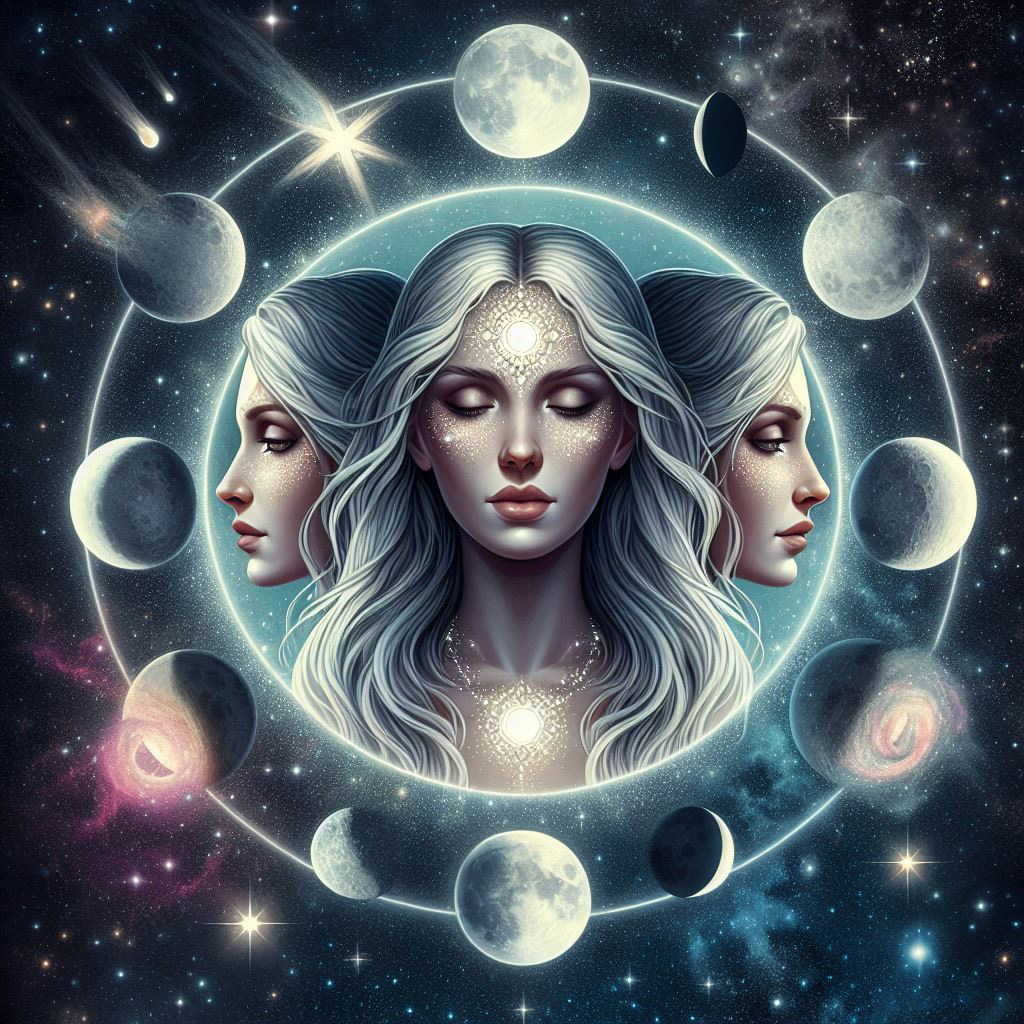
In the contemporary landscape of spirituality and modern witchcraft, Hecate has undergone a remarkable transformation from her ancient roots. Beyond the traditional association with magic and crossroads, Hecate has been embraced in a new light as the Triple Moon Goddess—the maiden, the mother, and the crone. In this exploration, we delve into the modern understanding of Hecate, tracing her evolution into a symbol of feminine power, wisdom, and the cyclical nature of life.

The Triple Moon Goddess Archetype

Hecate’s contemporary persona as the Triple Moon Goddess draws inspiration from the maiden, mother, and crone archetypes. Each phase represents a distinct aspect of a woman’s life and symbolizes the cycles of growth, creation, and wisdom.

The Maiden: In her maiden aspect, Hecate embodies the energy of youthful vitality, new beginnings, and the waxing moon. This phase is associated with innocence, curiosity, and the potential for new ventures. The maiden represents the budding aspects of femininity and the start of life’s journey.

The Mother: As the mother, Hecate transitions into the fullness of life, fertility, and nurturing energy, symbolized by the full moon. This aspect reflects the creative and nurturing forces inherent in womanhood, representing the peak of life’s productivity, both in terms of physical and metaphorical fertility.

The Crone: The crone aspect of Hecate is associated with wisdom, maturity, and the waning moon. This phase represents the culmination of life experiences, the harvest of knowledge, and the acceptance of the cyclical nature of existence. The crone is a symbol of inner strength, intuition, and the embracing of one’s own power.

The Maiden

Blossoming Energies of Youthful Vitality and New Beginnings

In the realm of Hecate’s triple moon archetype, the Maiden phase is a radiant expression of youthful vitality, symbolized by the waxing moon and resonating with the limitless potential for new beginnings. As the embodiment of this energy, Hecate in her maiden form stands as a beacon of innocence, curiosity, and the untamed enthusiasm that characterizes the initiation of life’s journey.

This phase of Hecate is akin to the first buds of spring, where nature bursts forth with vibrant colors and fragrances. In the Maiden, Hecate invites individuals to explore the uncharted territories of their lives, encouraging them to embrace the thrill of discovery and the exhilaration that accompanies fresh experiences. The maiden aspect serves as a reminder that within each of us lies the spark of curiosity and the capacity for boundless growth.

Curiosity and Exploration:

In this phase, Hecate encourages a sense of curiosity that propels individuals to question, learn, and seek new horizons. The maiden embodies the spirit of the eternal student, eager to absorb knowledge and experience with wide-eyed wonder. It is a time to explore interests, forge new connections, and lay the foundations for the unfolding chapters of life.

Innocence and Unbridled Potential:

The innocence associated with the maiden is not a naivety to be outgrown but a wellspring of untarnished potential. Hecate, in her maiden aspect, urges individuals to retain a sense of wonder, embracing the world with open hearts and minds. It is a phase of unbridled potential where the possibilities seem boundless, mirroring the waxing moon’s increasing illumination of the night sky.

Initiation of Life’s Journey:

The maiden aspect marks the commencement of life’s journey, symbolizing the first steps taken on a path yet to be fully revealed. Hecate, as the maiden, guides and empowers individuals to embark on this journey with courage and optimism. It is a time to lay the groundwork for personal growth, self-discovery, and the pursuit of dreams, much like the way the moon gradually unveils its luminous beauty during its waxing phase.

In essence, Hecate’s maiden aspect becomes a muse for those navigating the exciting junctures of youth, encouraging them to embrace the unfolding adventure, savor the beauty of new beginnings, and dance under the waxing moonlight of potential. As the journey unfolds, the maiden’s influence remains a timeless reminder that within every ending, there is a fresh start waiting to be embraced with the same exuberance and vitality that marks the maiden’s phase in the eternal cycle of Hecate’s triple moon.

The Mother

Embodied Fullness, Fertility, and Nurturing Energy under the Full Moon

In the expansive journey through Hecate’s triple moon archetype, the Mother phase unfolds as a resplendent expression of life’s fullness, marked by fertility and a nurturing embrace, symbolized by the radiant full moon. Here, Hecate gracefully transitions into a manifestation of the creative and nurturing forces intrinsic to womanhood, signifying the zenith of life’s productivity on both physical and metaphorical planes.

Fertility and Abundance:

The Mother aspect of Hecate radiates with the energy of fertility, mirroring the abundant glow of the full moon. This is a phase where the creative potential within individuals burgeons, whether it be in the literal sense of conceiving new life or in the metaphorical sense of birthing ideas, projects, and relationships. Hecate, as the Mother, encourages the cultivation of seeds sown during the maiden phase, fostering an environment ripe for growth, abundance, and the realization of aspirations.

Nurturing Energy:

Central to the Mother aspect is the embodiment of nurturing energy. Hecate, in this phase, becomes the archetype of the caring and protective force that sustains life. Much like the moon’s gentle illumination of the night sky, the Mother aspect of Hecate illuminates the path with a nurturing presence, providing guidance, support, and a sense of security. It is a time for individuals to nurture their creations, relationships, and themselves, drawing strength from the deep wellspring of maternal energy within.

Peak of Productivity:

Representing the zenith of life’s productivity, the Mother phase encapsulates a time of thriving and accomplishment. Hecate, as the Mother, guides individuals to channel their creative energies into the realization of goals and the nurturing of personal and professional endeavors. This is a season of reaping the rewards of hard work, fostering a sense of fulfillment, and celebrating the richness that life has to offer.

Symbolism of the Full Moon:

The full moon, symbolic of completion and illumination, mirrors the peak of the Mother’s influence. It represents a time of clarity, where intentions and endeavors come to fruition. Under the full moon’s glow, Hecate guides individuals to reflect on their achievements, acknowledging the cycles of life and the interconnectedness of creation and completion.

In essence, the Mother aspect of Hecate stands as a testament to the multifaceted journey of womanhood, symbolizing the peak of life’s productivity and the embodiment of nurturing energies. As individuals traverse this phase, Hecate’s guidance invites them to embrace the fullness of their potential, celebrate their accomplishments, and nurture the creations that have come to fruition in the radiant light of the full moon. The Mother phase, bathed in the luminosity of Hecate’s nurturing spirit, becomes a timeless expression of life’s richness and the cyclical nature of creation and fulfillment within the triple moon archetype.

The Crone

Embodiment of Wisdom, Maturity, and the Waning Moon

In the profound narrative of Hecate’s triple moon archetype, the Crone phase unfolds as a majestic expression of wisdom, maturity, and the subtle glow of the waning moon. Hecate, in her crone aspect, symbolizes the culmination of life experiences, the harvest of knowledge, and an intimate acceptance of the cyclical nature of existence. This phase is a profound symbol of inner strength, intuition, and the profound embrace of one’s own power.

Wisdom Forged through Experience:

The Crone, as embodied by Hecate, becomes a living repository of wisdom, forged through the crucible of countless life experiences. This is a time when individuals draw upon the lessons of their journey, cultivating a profound understanding of themselves, others, and the intricate tapestry of life. Hecate guides those in the crone phase to reflect on the richness of their experiences, extracting pearls of wisdom that shimmer with the iridescence of hard-earned knowledge.

Maturity and Acceptance:

As the waning moon gracefully presides over the night sky, the Crone phase signifies a period of maturity and acceptance. Hecate, in her crone aspect, encourages individuals to embrace the inevitability of life’s cycles, acknowledging that each phase is integral to the grand tapestry of existence. This is a season of gracefully letting go of what no longer serves, allowing for inner transformation, and finding beauty in the ebb and flow of life’s perpetual dance.

Harvest of Knowledge:

The Crone is the guardian of the harvest of knowledge, a season when individuals reap the bounty of their intellectual and spiritual pursuits. Hecate guides those traversing this phase to take stock of their accumulated wisdom, celebrating the depth and breadth of their understanding. The crone aspect encourages individuals to share their insights, becoming mentors and beacons of guidance for those on the earlier stages of their journeys.

Symbol of Inner Strength and Intuition:

Hecate, as the Crone, emerges as an enduring symbol of inner strength and intuition. This phase calls upon individuals to tap into the wellspring of resilience within, navigating challenges with a deep understanding of their own power. The Crone’s intuitive abilities become a guiding force, offering insights that transcend the limitations of mere logic and connect individuals with the profound currents of their own inner knowing.

Embracing Personal Power:

Above all, the Crone phase is a celebration of personal power. Hecate, in her crone aspect, beckons individuals to embrace the fullness of their strength, acknowledging the transformative journey that has brought them to this point. The Crone is a symbol of empowerment, a reminder that inner fortitude, resilience, and the wisdom gained through the cycles of life form the bedrock of true personal power.

In essence, the Crone aspect of Hecate encapsulates a profound season of life where wisdom, maturity, and self-empowerment converge. Under the gentle light of the waning moon, Hecate’s crone aspect becomes a guiding force for those navigating the intricate passages of life’s later chapters. It is a time to revel in the richness of accumulated experiences, to gracefully accept life’s cycles, and to stand in awe of the enduring strength that resides within the embrace of the Crone’s archetype in the eternal cycle of Hecate’s triple moon.

Hecate and Feminine Empowerment

In the ever-evolving landscape of modern interpretations, Hecate’s role as the Triple Moon Goddess transcends the boundaries of mythology, emerging as a potent symbol of feminine empowerment and a catalyst for transformative change. The embrace of all three aspects—the Maiden, the Mother, and the Crone—stands as a revolutionary act, challenging societal norms that have often confined women to narrow definitions of femininity.

Hecate, in her Triple Moon Goddess archetype, becomes a rallying point for dismantling limiting norms that have historically constrained the multifaceted nature of womanhood. Embracing the Maiden aspect acknowledges the vivaciousness of youth and the potential for boundless exploration, counteracting societal pressures that often dictate rigid standards of beauty and behavior. The Mother aspect challenges the notion that a woman’s worth is solely tied to motherhood, recognizing the fullness of her creative and nurturing capacities beyond traditional roles. The Crone aspect disrupts ageist paradigms, celebrating the wisdom and power that women gain as they traverse the later stages of life.

At its core, Hecate’s Triple Moon Goddess archetype fosters a sense of unity and support among women. By acknowledging and celebrating the diverse stages of life, women are encouraged to forge connections that transcend age, experiences, and backgrounds. Hecate becomes a unifying force, weaving a tapestry of shared experiences and wisdom that strengthens the collective bonds of womanhood.

Hecate’s invitation to embrace unique strengths at every stage of life stands as a revolutionary affirmation. Women are encouraged to recognize the inherent power within each aspect—the exuberance of the Maiden, the nurturing abilities of the Mother, and the wisdom of the Crone. This recognition becomes a source of empowerment, allowing women to navigate their individual journeys with authenticity and resilience.

The Triple Moon Goddess archetype, when embraced, becomes a vehicle for transformative empowerment. It propels women to reclaim their narratives, reject societal expectations that seek to confine them, and redefine their identities on their own terms. Hecate’s influence encourages a shift from a perspective of limitation to one of boundless potential, inspiring women to embrace the full spectrum of their existence.

Hecate in Contemporary Witchcraft

In the dynamic realm of contemporary interpretations, Hecate’s Triple Moon Goddess archetype emerges not only as a personal catalyst for transformation but as a potent force reshaping the very foundations of societal norms. Empowered women, inspired by the wisdom inherent in Hecate’s triune form, are not content to merely challenge restrictive norms on an individual level; they become agents of systemic change within their communities. The transformative energy harnessed from the Triple Moon Goddess archetype propels these women into leadership roles, where they actively dismantle entrenched biases and advocate for inclusivity. Hecate’s influence, thus, permeates the collective consciousness, sparking conversations and actions that challenge, redefine, and ultimately contribute to the creation of a more equitable and empowering societal framework.

Modern witchcraft, with its fluid and inclusive practices, warmly embraces Hecate into its sacred folds. Within the covens and solitary practices of contemporary witches, Hecate is revered not only for her traditional attributes as the guardian of crossroads and the mistress of magic but also as a profound representation of the divine feminine in its entirety. Practitioners invoke Hecate to forge a connection with the phases of the moon, tapping into the celestial rhythms that mirror the cyclical nature of life. As a symbol of feminine strength, diversity, and empowerment, Hecate becomes a guiding force for modern witches seeking to align their craft with a holistic understanding of the divine feminine.

In the rituals and spellwork of modern witchcraft, Hecate is invoked not just as a deity but as a living embodiment of the divine feminine’s complexity. She encapsulates the maiden’s vibrancy, the mother’s nurturing embrace, and the crone’s wisdom. Hecate’s presence in witchcraft serves as a reminder that the divine feminine is multifaceted, transcending societal expectations and inviting practitioners to explore the richness of their own femininity. Through the invocation of Hecate, modern witches weave a tapestry of spirituality that honors diversity, empowers the practitioner, and contributes to the broader movement of reshaping cultural narratives surrounding the feminine experience.

Embracing Complexity and Transformation

Hecate, in her revered role as the Triple Moon Goddess, stands as a luminescent guide for individuals navigating the labyrinthine passages of life’s journey. Within the contours of her triune form lies an exquisite embodiment of complexity and transformation. Her modern understanding serves as a poignant reminder that life, like the phases of the moon, is a cyclical dance of change, growth, and renewal. Embracing the wisdom inherent in Hecate’s archetype becomes a source of strength for those traversing life’s intricate paths, urging them to welcome transformation as an ally, not a foe.

Hecate’s influence encourages individuals to embrace change as an ever-present companion on the journey of self-discovery. Much like the waxing and waning of the moon, life unfolds in cycles of beginnings, peaks, and graceful conclusions. The Triple Moon Goddess archetype serves as a navigational tool, allowing individuals to move through these cycles with a deep understanding that each phase contributes to the beauty of the whole. Hecate beckons them to let go of resistance, to dance with the rhythms of change, and to find solace in the knowledge that transformation is an integral part of the human experience.

In the sacred embrace of Hecate’s archetype, individuals are encouraged to cherish the wisdom gained through the alchemy of experience. Each aspect—the Maiden, the Mother, and the Crone—holds its unique reservoir of insights, lessons, and revelations. Hecate’s modern understanding inspires a reverence for the tapestry of personal history, guiding individuals to find empowerment in the threads of their own narratives. It is a call to acknowledge the significance of every chapter, be it marked by exuberant beginnings, nurturing maturation, or the profound insights that come with the passage of time.

Hecate’s wisdom invites individuals to recognize the cyclical nature of their own existence. Life, much like the moon’s journey across the night sky, unfolds in continuous loops of birth, growth, and rebirth. In understanding this cyclical dance, individuals discover a profound sense of connection to the broader rhythms of the cosmos. Hecate’s modern understanding becomes a celestial compass, guiding them to navigate the ever-shifting tides of their own lives with grace, resilience, and an openness to the transformative potential within every cycle.

Conclusion

In the modern tapestry of spirituality and witchcraft, Hecate has evolved into a multifaceted symbol, transcending her ancient origins. As the Triple Moon Goddess, she weaves together the threads of the maiden, the mother, and the crone, offering a narrative of feminine empowerment, growth, and wisdom. Embraced by contemporary practitioners and spiritual seekers alike, Hecate continues to guide those who journey through the diverse phases of life, reminding us that within the cycles of the moon and the stages of womanhood, there lies a profound and timeless wisdom waiting to be discovered.

Posted on Leave a comment

Hecate: Greek Understanding

Hecate Greek
Hecate Greek

Introduction

The Enigmatic Goddess  – The Crossroads and Beyond in Greek Mythology

In the intricate tapestry of Greek mythology, few deities embody the complexity and mystique quite like Hecate. As a goddess of multifaceted nature, her influence stretches across domains as diverse as the moon, magic, witchcraft, and the spirit world. In this article, we embark on a journey to unveil the origins, roles, and symbolism of Hecate, a divine figure from antiquity who continues to captivate hearts and minds.

Hecate’s Divine Heritage

To truly appreciate the profound significance of Hecate in Greek mythology and her enduring presence in the pantheon of deities, we must delve into the rich tapestry of her divine heritage. Her origins can be traced back to the very dawn of the cosmos, where the Titans Perses and Asteria, two titanic figures of immense primordial power, gave birth to this enigmatic goddess.

The Titans were primordial beings who existed before the Olympian gods. They were embodiments of elemental and cosmic forces, shaping the very fabric of the universe. In this illustrious lineage, Hecate inherited an intrinsic connection to the fundamental forces of creation and existence.

Hecate’s mother, Asteria, was a Titaness associated with the night sky. Her name itself suggests her celestial nature, as “Asteria” means “starry” or “of the stars.” As a symbol of the night, she embodied the mystical and otherworldly aspects of the cosmos. It is from this celestial lineage that Hecate derives her connection to the moon and the mystical realms that exist beyond the mortal plane.

On the other side of her divine parentage, Hecate’s father, Perses, held the essence of destruction and chaos. His name, meaning “to destroy” or “to lay waste,” hints at his formidable power. Through him, Hecate inherited the transformative and regenerative aspects of existence, as destruction often paves the way for rebirth and renewal.

As the offspring of these two powerful Titans, Hecate’s emergence as a goddess is a testament to her significance in the spiritual hierarchy. She embodies the harmonious convergence of celestial and chaotic forces, making her a bridge between the orderly Olympian gods and the primal Titans. Her divine lineage positions her as a goddess of great complexity and depth, with dominion over realms that transcend mortal comprehension.

In the grand tapestry of Greek mythology, Hecate stands as a living testament to the ancient and primordial forces that govern the cosmos. Her divine heritage, drawing from the celestial and chaotic, underscores her multifaceted nature and her enduring role as a goddess of the moon, magic, witchcraft, and the spirit world. As we explore her multifaceted attributes and mythological roles, we gain a deeper understanding of the intricate web of forces that shape the Greek pantheon and the profound significance of Hecate herself within this divine hierarchy.

Hecate, the Triple Goddess

Hecate’s essence is best understood through her multifaceted attributes, which have garnered her a reputation as the triple goddess. This trinity of aspects signifies her dominion over various realms and timeframes:

The Lunar Goddess: Hecate’s association with the moon links her to its ever-changing phases. She is often depicted holding the torch of lunar illumination, guiding travelers through the darkest of nights. As the moon waxes and wanes, Hecate embodies the cyclical nature of life, death, and rebirth.

The Enchantress of Magic: In the realm of magic and sorcery, Hecate reigns supreme. She is the mistress of incantations, spells, and mystical rituals. Witches and magicians invoke her to access the hidden depths of arcane knowledge and to harness the forces of the supernatural. Her cauldron symbolizes transformation and the brewing of potent elixirs of change.

Guardian of the Spirit World: Hecate’s connection to the spirit world is one of her most enigmatic facets. She presides over liminal spaces and crossroads, acting as a guide between the realms of the living and the dead. As such, she becomes a key figure in the mythological narrative of the afterlife.

Hecate’s Role in Greek Mythology

Among the illustrious pantheon of Greek gods and goddesses, Hecate’s presence shines brightly through her multifaceted roles, each bearing testament to her enigmatic nature and her significance in the tapestry of ancient myth. One of her most renowned mythological roles, and perhaps the one that most vividly illustrates her unique duality, revolves around her pivotal assistance to the grieving goddess Demeter in the harrowing quest to rescue her beloved daughter, Persephone, from the clutches of Hades, the formidable lord of the underworld.

The myth unfolds with the abduction of Persephone, a radiant goddess of spring and fertility, by Hades. The earth, once teeming with life and bounty under Demeter’s loving care, withers into a desolate wasteland because of the loss of her daughter. In her inconsolable grief, Demeter roams the earth in search of Persephone, and it is during this tumultuous period that she encounters Hecate.

Hecate, a guardian of the spirit world and a deity who navigates the liminal spaces between realms, becomes a loyal and unwavering companion to Demeter in her time of despair. Her presence is a beacon of solace amidst the darkness, offering support and guidance to the distraught mother as they embark on their quest to reunite with Persephone.

What sets Hecate’s role apart in this myth is her seamless transition between two seemingly contrasting domains. On the one hand, she is the guardian of the spirit world, possessing unparalleled knowledge of the underworld’s mysteries and secrets. This aspect of her nature aligns her with the realms of death, transformation, and the unseen.

Yet, as the myth unfolds, Hecate transforms into something more profound—a compassionate advocate for the living. Her duality is epitomized in her unwavering support for Demeter’s cause. While she is intimately acquainted with the shadowy depths of the underworld, she steps into the realm of the living with grace and determination, standing as a beacon of hope for those who traverse the trials of life.

The myth of Hecate’s role in the quest for Persephone serves as a poignant reminder of the goddess’s multifaceted nature and her unique position within the Greek pantheon. As guardian of the spirit world and advocate for the living, Hecate embodies the duality of existence itself—the ever-present interplay between light and shadow, life and death, and the profound mysteries that bind them. Her role in this myth resonates through the ages, illuminating the path of transformation and the enduring power of compassion and support during life’s most trying moments. In Hecate, we find a goddess who bridges the gaps between worlds and offers solace to those who navigate the complexities of existence, a timeless testament to her enduring significance in Greek mythology and beyond.

Hecate as the Keeper of Crossroads

In the multifaceted tapestry of Hecate’s divine roles, her connection to crossroads emerges as one of her most distinctive and evocative aspects. In the ancient Greek worldview, crossroads held a profound significance, serving as liminal spaces where the boundaries between realms blurred, and where the mundane world intersected with the mystical. Within this mystical landscape, Hecate reigns supreme as the guardian and guide, symbolizing choices, transitions, and the pivotal points of decision in one’s life journey.

To comprehend the depth of Hecate’s role as the guardian of crossroads, it is crucial to appreciate the ancient Greek perspective on these junctions. Crossroads were seen as places where multiple paths converged, creating a sense of ambiguity and transition. At these intersections, the normal rules of reality seemed to bend, and the barriers between the material world and the supernatural realm appeared permeable. It was believed that, in such liminal spaces, individuals could encounter spirits, deities, or even engage in profound personal transformation.

In this context, Hecate assumes the role of a vigilant sentinel, presiding over these mystical crossroads. Her presence is both guardian and guide, offering those who stand at the crossroads a choice: a choice that may have far-reaching consequences on their life’s trajectory. As the goddess of choices and transitions, Hecate encourages individuals to reflect deeply on their decisions and their implications.

Hecate’s association with crossroads carries profound symbolism. These junctions signify the points in life where important choices must be made that may lead to transformation, personal growth, or even a change in one’s life path. The goddess’s torch illuminates these moments of decision, guiding individuals as they navigate the crossroads of their existence. She becomes a beacon of clarity in times of uncertainty, shedding light on the options available and the potential consequences of each path.

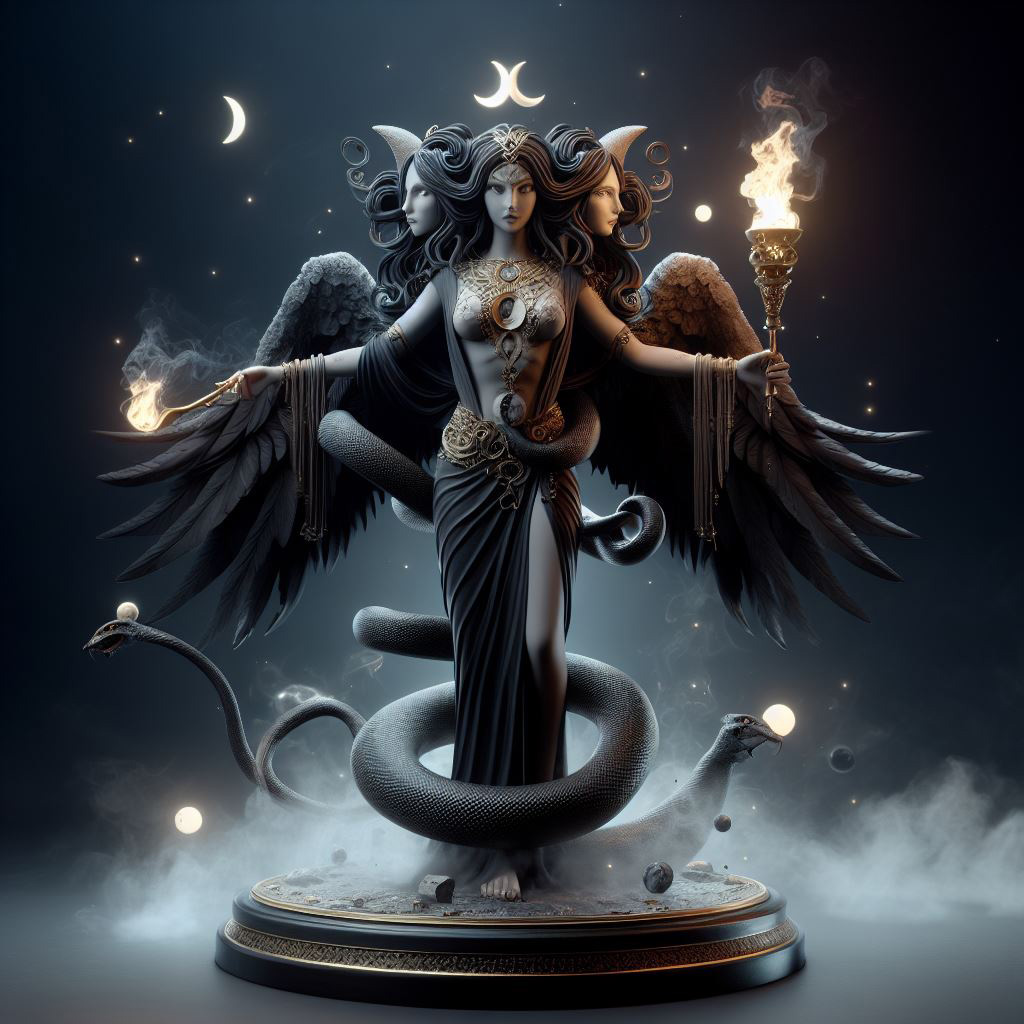
In addition to symbolizing choices, Hecate is also a guardian of personal transformation. At the crossroads, individuals may undergo profound inner changes as they confront their decisions and their consequences. Hecate’s serpent, often depicted twining around her arm, represents the transformative power inherent in these moments of decision. It reminds us that, at the crossroads, we can shed old skin, embrace change, and emerge renewed.

Hecate, as the Keeper of Crossroads, occupies a pivotal place in Greek mythology and the broader realm of spirituality. Her role symbolizes the intricate dance of choices and transitions that define human experience. In the liminal spaces of the crossroads, she beckons us to embrace our agency, to confront life’s decisions with clarity and intention, and to recognize the transformative potential that lies within each choice. As we navigate the crossroads of our own lives, Hecate stands as a timeless guide, illuminating the path to self-discovery, personal growth, and the profound mysteries that reside at the intersection of choice and destiny.

Conclusion

Hecate, the enigmatic goddess of the moon, magic, witchcraft, and the spirit world, emerges from Greek mythology as a figure of timeless intrigue. Her multifaceted nature, divine lineage, and pivotal roles in mythology make her an enduring symbol of complexity and transformation. Whether invoked for guidance in the mystical arts or revered as the guardian of crossroads, Hecate’s influence continues to permeate the realms of spirituality, magic, and the profound mysteries of life and death. In the ever-evolving narrative of human existence, Hecate remains a guiding light, illuminating the path through the enigmatic crossroads of our own lives.

BONUS

In the annals of Greek mythology and the enduring tapestry of human spirituality, Hecate stands as a luminous embodiment of complexity and transformation. As the enigmatic goddess of the moon, magic, witchcraft, and the spirit world, her multifaceted nature mirrors the intricate facets of our own lives. Her divine lineage, her pivotal roles in mythology, and her unwavering presence as the guardian of crossroads elevate her to a realm of timeless intrigue. Whether we invoke her for guidance in the mystical arts or revere her as the sentinel of choices and transitions, Hecate’s influence resonates through the ages. She remains a steadfast beacon, illuminating the path through the enigmatic crossroads of our own existence. In her essence, we find the eternal reminder that within complexity, within transformation, and within the embrace of life’s mysteries, we discover the profound essence of our own journey.

Posted on Leave a comment

Hecate – An Introduction

Hecate
Hecate

Introduction

Hecate – An Introduction

In the realm of ancient mythology and modern witchcraft, few deities possess the mystique and power of Hecate. This enigmatic goddess, with her multifaceted nature, has captured the imagination of seekers, witches, and scholars alike.

In this article, we will embark on a journey to explore the depths of Hecate’s mythology, symbolism, and her enduring significance in the world of witchcraft and paganism.

Deeper Knowledge

The Mythology of Hecate

Delving into the rich tapestry of Greek mythology, the figure of Hecate emerges as a captivating and multifaceted goddess, weaving her presence through the realms of the moon, magic, witchcraft, and the ethereal spirit world. Her lineage traces back to the Titans Perses and Asteria, establishing her as a divine figure steeped in the antiquity of ancient Greek cosmology.

Hecate’s association with the moon infuses her character with an enigmatic allure. Often depicted in the moonlit shadows, she becomes a celestial force, embodying the waxing and waning lunar phases. This lunar connection ties her intimately to the rhythms of the night sky and underscores her role as a mistress of magic and witchcraft. In the soft glow of moonlight, Hecate’s influence becomes a guiding beacon for those seeking the arcane mysteries and mystical arts.

At the crossroads of mythology, Hecate assumes a dual role that reflects her profound connection to both the living and the dead. Her most renowned mythological role unfolds as she aids Demeter in the fervent search for her abducted daughter, Persephone. The tale weaves a narrative where Hecate’s guidance extends beyond the mortal realm, transcending the boundaries between life and death. It’s within the depths of the underworld that Hecate takes on the mantle of a chthonic goddess, a guardian who navigates the shadowy realms and stands at the crossroads where destinies intertwine.

The myth unfolds as Hecate accompanies Persephone into the depths of Hades, serving as a steadfast companion in the underworld. This journey signifies Hecate’s unique position as a guide between worlds, her influence reaching across the veil that separates the realms of the living and the dead. In this dual role, Hecate becomes a bridge between the mysteries of mortality and the unseen realms, a key figure in the intricate dance between life’s vibrancy and the profound mysteries of the afterlife.

The dual facets of Hecate’s character, as a chthonic goddess and guardian of crossroads, embody a cosmic mediator who navigates the intricate threads of existence. Her chthonic nature brings her close to the earth’s depths, aligning her with the mysteries of the underworld. Simultaneously, her guardianship of crossroads signifies her role as a divine arbiter, overseeing the convergence of paths and choices that shape mortal destinies.

In the grand tapestry of Greek mythology, Hecate’s origins unveil a goddess of complexity, magic, and cosmic influence. Her moonlit mystique, magical mastery, and chthonic connection make her a deity whose influence extends beyond the pantheon, resonating with seekers of wisdom, magic, and the profound mysteries that bind the living and the dead.

Symbolism and Attributes

Within the intricate tapestry of her imagery, Hecate emerges as a goddess of triple majesty, a three-headed deity whose symbolic presence speaks volumes about her dominion over the vast expanse of time and space. This portrayal reflects her mastery over the past, present, and future, encapsulating the eternal dance of cosmic cycles.

Hecate’s three-headed visage symbolizes her tripartite sovereignty, each head gazing with watchful eyes upon the realms she governs. The past, cradled in one head, reflects the echoes of history that shape the present. The present, held in another, embodies the unfolding moment, while the third head, focused on the future, casts its gaze towards the mysteries yet to be unveiled. This triadic representation showcases Hecate’s timeless awareness and her ability to navigate the continuum of existence.

Her threefold form not only signifies temporal dominion but also encompasses her mastery over the elemental realms—earth, sea, and sky—enveloping the entirety of the cosmos. Hecate, in her triune aspect, becomes a cosmic force, intricately linked to the natural elements that weave the fabric of the universe.

In one hand, Hecate cradles a torch, its flickering flame illuminating the path through the darkness. This symbolic beacon not only guides lost souls but also serves as a metaphor for Hecate’s role as a guiding light in the shadows of the unknown. On the other hand, she wields a key, a potent symbol of her power to unlock the gates between worlds. This key grants her access to hidden realms and esoteric knowledge, solidifying her position as a guardian of mystical thresholds and unseen dimensions.

Entwined around her arm, a serpent weaves its sinuous form, symbolizing Hecate’s connection to the life force and the transformative power of change. The serpent, an ancient symbol of renewal and regeneration, reflects Hecate’s role as a catalyst for transformation. Through this coiled companion, she channels the potent energies of the life force, invoking the serpent’s wisdom to guide those who seek renewal and evolution.

In the intricate symbolism of Hecate’s portrayal, each element speaks to her multifaceted nature, weaving a narrative of cosmic governance, illumination in the darkness, access to hidden realms, and the transformative power inherent in the cycles of life. The triune majesty of Hecate’s iconography becomes a visual hymn to the complexity and depth of her divine essence.

Hecate in Witchcraft and Pagan Practices

In the sacred circles of modern witchcraft and pagan traditions, Hecate stands as a revered and multifaceted deity, her presence intricately woven into the fabric of magical practices and the exploration of unseen realms. The complexities of magic find resonance in Hecate’s multifaceted nature, making her a guiding force for witches and practitioners seeking profound insights and esoteric wisdom.

Hecate Worship

Hecate’s multifaceted nature aligns seamlessly with the intricate tapestry of magic, offering practitioners a multifaceted guide through the mysteries of the unseen. Witches invoke her not only for her symbolic representation of the moon, magic, and the spirit world but also for her unique ability to traverse liminal spaces, particularly the potent crossroads. In these in-between realms, where the veil between worlds is believed to be thin, Hecate becomes a spiritual guide, aiding seekers in their magical endeavors.

Practitioners turn to Hecate for guidance and protection, especially when navigating the threshold spaces of crossroads. These liminal points are seen as conduits between realms, where magical energies converge. Hecate, as a guardian of crossroads, is invoked to assist in safely navigating these mystical junctures, ensuring a harmonious connection with the energies that lie beyond the mundane.

Hecate is a central figure in rituals designed for transformation, where her symbolism of change and rebirth becomes a potent catalyst. Witches and practitioners call upon her during moments of transition, embracing her association with the power of change as they seek to shed old patterns and embrace new beginnings. In these rituals, Hecate becomes a beacon of transformative energy, guiding individuals through the cycles of growth and renewal.

Practitioners turn to Hecate for guidance and protection, especially when navigating the threshold spaces of crossroads. These liminal points are seen as conduits between realms, where magical energies converge. Hecate, as a guardian of crossroads, is invoked to assist in safely navigating these mystical junctures, ensuring a harmonious connection with the energies that lie beyond the mundane.

Hecate is a central figure in rituals designed for transformation, where her symbolism of change and rebirth becomes a potent catalyst. Witches and practitioners call upon her during moments of transition, embracing her association with the power of change as they seek to shed old patterns and embrace new beginnings. In these rituals, Hecate becomes a beacon of transformative energy, guiding individuals through the cycles of growth and renewal.

Her torch, held aloft, becomes a metaphorical beacon that illuminates the shadows within. In rituals for self-discovery and personal growth, Hecate’s torch guides individuals through the depths of their inner landscapes. The flickering flame not only reveals hidden aspects of the self but also symbolizes the illuminating power of knowledge and insight. As seekers journey through the inner realms, Hecate’s torch becomes a steady light, casting light upon the paths of self-discovery.

In modern witchcraft, Hecate’s reverence goes beyond mere ritualistic gestures. She becomes a dynamic presence, a wise guide, and a powerful ally for those who navigate the intricate terrain of magic, seeking wisdom, protection, and transformation along their mystical journeys.

Celebrating Hecate

The devotion to Hecate transcends the constraints of a single day, weaving seamlessly throughout the phases of the lunar calendar. Among the lunar cycles, the dark moon, synonymous with the new moon, emerges as an especially auspicious time for practitioners to pay homage to Hecate. As the moon retreats into shadow, devotees find a sacred space to connect with the goddess, offering tokens of significance and engaging in rituals that seek her guidance, protection, or aid in their magical endeavors.

During the dark moon, devotees craft offerings infused with intention, such as garlic, honey, or eggs, symbolic representations that hold special significance in Hecate’s realm. These offerings become vessels of connection, symbolic gestures that convey the devotee’s reverence and seek to align with the energies of the dark moon. Rituals during this time often focus on invoking Hecate’s presence, drawing on her wisdom, and creating a sacred space where seekers can commune with her across the veils that separate the mundane and the mystical.

Hecate’s Night, celebrated on the eve of August 13th, stands as a festival dedicated to honoring the goddess in a collective outpouring of reverence. This special night unfolds as a tapestry of rituals, offerings, and the kindling of torches or candles at crossroads—an embodiment of Hecate’s sacred domains. Devotees come together to create a harmonious symphony of devotion, inviting Hecate to bless their endeavors, protect their paths, and infuse their lives with her transformative energy.

As the eve of August 13th approaches, practitioners prepare for Hecate’s Night by crafting intricate rituals that reflect the goddess’s multifaceted nature. Offerings are carefully selected to symbolize devotion and respect, and the lighting of torches or candles at crossroads becomes a symbolic act to invoke Hecate’s presence at these mystical intersections. The festival becomes a communal celebration, a collective expression of gratitude, seeking Hecate’s blessings, and acknowledging her timeless influence over the realms of magic and the unseen.

The act of lighting torches or candles at crossroads holds profound significance during Hecate’s Night. Crossroads, representing liminal spaces and choices, become portals for connecting with the goddess. The flickering flames become beacons that draw Hecate’s attention, inviting her to join the revelry and partake in the shared devotion of her devotees. This act of crossroads illumination symbolizes the crossing of thresholds, both literal and spiritual, as practitioners invite Hecate to guide them through the intersections of life’s journey.

In essence, the worship of Hecate unfolds like a celestial dance, moving in synchrony with the lunar phases and culminating in the radiant celebration of Hecate’s Night. Devotees, guided by the moon’s cycles and the goddess’s timeless influence, weave a tapestry of devotion that honors Hecate’s multifaceted nature and seeks her blessings throughout the ever-changing cosmic rhythms.

Conclusion

Hecate, the multifaceted goddess of crossroads and transformation, continues to enchant and inspire those who seek her wisdom and guidance. Her rich mythology, complex symbolism, and enduring significance in witchcraft and pagan practices make her a beloved and powerful figure in the world of spirituality and magic. As we traverse the crossroads of our own lives, Hecate stands as a torchbearer, offering illumination and transformation on our spiritual journeys.