Posted on Leave a comment

Recipe: Nordic Winter Salad

Making Nordic Winter Salad

Introduction

Freyja’s Feast

On the tenth day of Yuletide, honor the radiant goddess Freyja with a culinary tribute—Nordic Winter Salad. This vibrant dish, adorned with winter ingredients, captures the essence of Freyja’s grace and love for nature. In this article, we’ll guide you through the ingredients, instructions, preparation and cook time, explore the magical properties associated with Yuletide, and craft a spell to honor Freyja on your December 29th celebration.

Spell to Honor Freyja

As you prepare and enjoy the Nordic Winter Salad, honor Freyja with gratitude and love. While savoring each bite, speak a spell-like:

“Freyja, radiant goddess of love and grace,

In this salad, your presence we embrace.

Winter’s bounty, nature’s delight,

In your honor, we share this feast tonight.”

May the Nordic Winter Salad be a tribute to Freyja’s love and warmth on your December 29th celebration, filling your heart with joy and appreciation for the divine feminine.

Magical Properties

Winter Greens: Symbolize Freyja’s connection to nature, embodying life and vitality.

Butternut Squash: Represents warmth and comfort, mirroring Freyja’s nurturing presence.

Pomegranate Seeds: Signify love, fertility, and the divine feminine.

Sliced Beets: Connect to the earth’s energies, symbolizing Freyja’s grounding influence.

Goat Cheese: Adds a touch of Freyja’s sweetness and unity to the magical mix.

Candied Pecans: Represent prosperity and the richness of life.

Balsamic Vinaigrette: Signifies transformation, as the flavors meld and harmonize.

Nordic Winter Salad

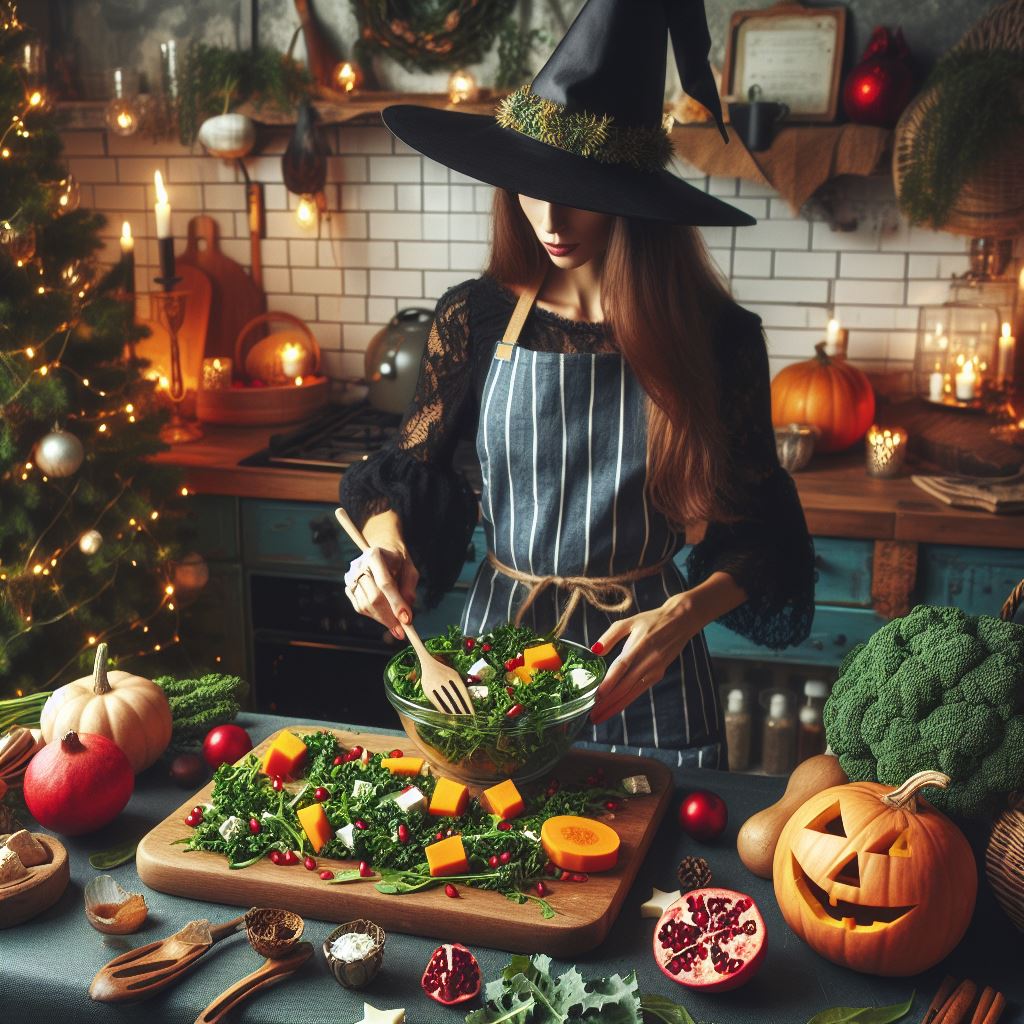
Freyja’s Feast – On the tenth day of Yuletide, honor the radiant goddess Freyja with a culinary tribute—Nordic Winter Salad. This vibrant dish, adorned with winter ingredients, captures the essence of Freyja’s grace and love for nature.

  • 4 cups mixed winter greens (kale, arugula, spinach)
  • 1 cup roasted butternut squash (cubed)
  • 1/2 cup pomegranate seeds
  • 1/2 cup sliced beets (precooked or roasted)
  • 1/4 cup crumbled goat cheese
  • 1/4 cup candied pecans
  • 2 tablespoons balsamic vinaigrette dressing
  • Salt and pepper to taste
  1. Prepare Ingredients: Roast butternut squash cubes until tender. Cook or roast beets and slice them.
  2. Assemble the Salad: In a large salad bowl, combine the mixed winter greens, roasted butternut squash, pomegranate seeds, sliced beets, crumbled goat cheese, and candied pecans.
  3. Dress the Salad: Drizzle the balsamic vinaigrette over the salad. Toss gently to coat the ingredients evenly.
  4. Season to Taste: Add salt and pepper to taste. Toss again, ensuring the flavors are well-balanced.
Salad
Winter, Yule
Recipe
Posted on Leave a comment

Recipe: Magical Bone Broth

Making Magical Bone Broth

Introduction

Yuletide Nourishment

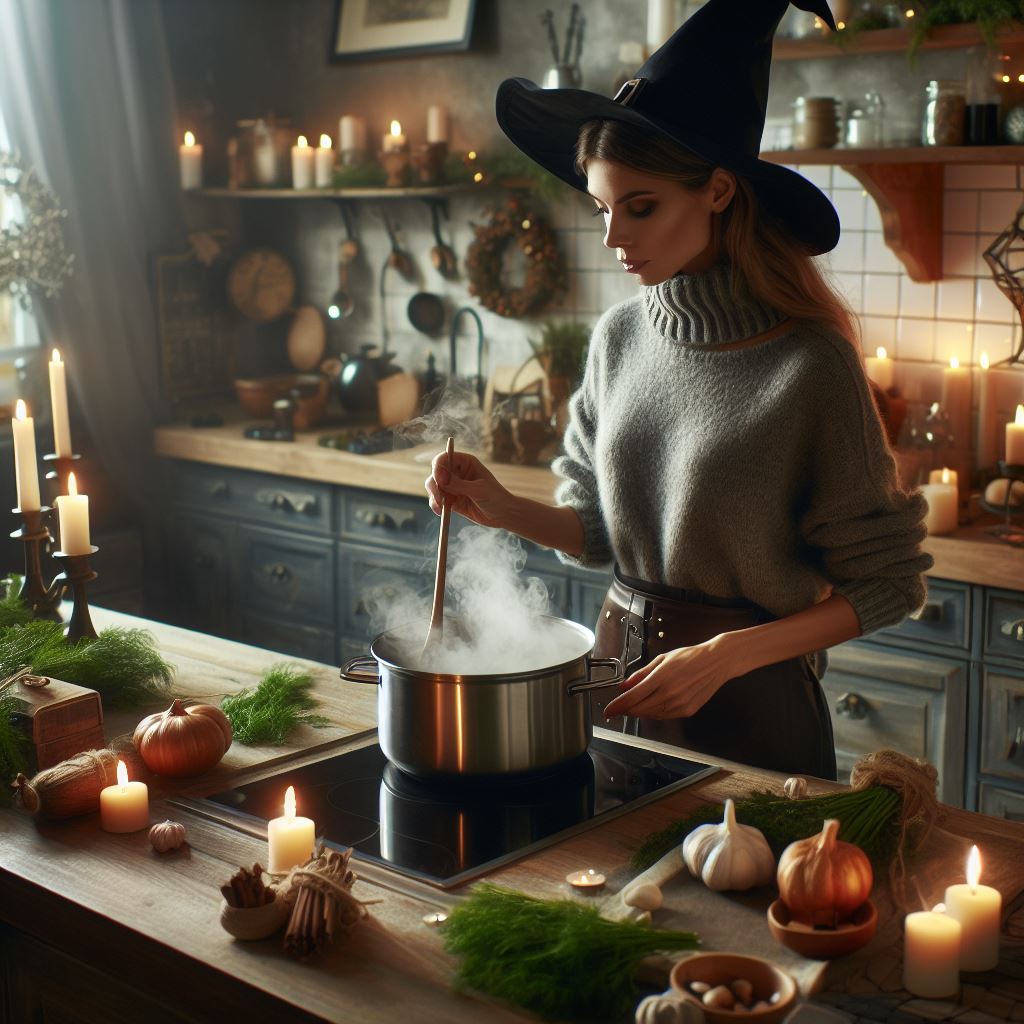
On the eighth day of Yuletide, as winter’s embrace tightens, delve into the ancient art of crafting a nourishing potion – Yuletide Bone Broth. This comforting elixir, simmered to perfection with wholesome ingredients, not only warms the body but also resonates with the enchantment of the season. In this article, we unveil the ingredients and steps to create Yuletide Bone Broth, explore the magical properties linked to Yuletide, and conjure a spell to infuse your December 27th celebration with strength, renewal, and the enduring magic of winter.

Spell for Strength and Renewal

As the Yuletide Bone Broth simmers, infuse it with intentions of strength, renewal, and enduring magic. As you sip this nourishing elixir, speak a spell like:

“In the simmering cauldron, strength takes root,

Renewal unfolds in the Yuletide’s pursuit.

Bones of resilience, herbs of might,

In this brew, find magic’s light.”

May Yuletide Bone Broth fortify your December 27th celebration with the enduring magic of winter and the nourishment needed for the journey ahead. Skål!

Magical Properties

  • Bones: Symbolize strength, stability, and the enduring spirit of winter.
  • Onion, Carrots, Celery: Represent the harvest, grounding energies, and connection to the earth.
  • Garlic: Adds protective qualities and enhances the broth’s healing properties.
  • Herbs (Rosemary, Thyme, Parsley): Contribute their unique magical properties, such as protection, strength, and purification.
  • Bay Leaves: Symbolize protection, wisdom, and a connection to divine energies.
  • Water: Represents fluidity, renewal, and the cycle of life.

Magical Bone Broth

Yuletide Nourishment – On the eighth day of Yuletide, as winter’s embrace tightens, delve into the ancient art of crafting a nourishing potion – Yuletide Bone Broth. This comforting elixir, simmered to perfection with wholesome ingredients, not only warms the body but also resonates with the enchantment of the season.

  • 2-3 lbs about 1-1.5 kg beef or chicken bones
  • 1 onion (quartered)
  • 2 carrots (roughly chopped)
  • 2 celery stalks (roughly chopped)
  • 3-4 garlic cloves (smashed)
  • 1 tablespoon apple cider vinegar
  • 1 teaspoon whole black peppercorns
  • Fresh herbs (rosemary, thyme, parsley)
  • Bay leaves
  • Water (enough to cover the bones)
  • Salt to taste
  1. Prepare Ingredients: Rinse the bones under cold water. Preheat the oven to 400°F (200°C).
  2. Roast the Bones: Place the bones on a baking sheet and roast in the oven for about 30 minutes until golden brown.
  3. Simmer the Broth: Transfer the roasted bones to a large stockpot. Add the onion, carrots, celery, garlic, apple cider vinegar, peppercorns, herbs, and bay leaves. Cover with water.
  4. Bring to a Boil: Bring the mixture to a boil, then reduce the heat to a simmer. Skim off any foam that rises to the surface.
  5. Simmer for Hours: Let the broth simmer for at least 6-8 hours, or longer for richer flavor. Add salt to taste during the last hour.
  6. Strain and Store: Strain the broth through a fine mesh strainer or cheesecloth into a large bowl. Discard the solids.
  7. Cool and Store: Allow the broth to cool, then refrigerate or freeze in portions for later use.
Stock
Winter, Yule
Recipe
Posted on Leave a comment

Winter Solstice

Winter Solstice
Winter Solstice

Introduction

Unlocking the Mysteries of the Winter Solstice

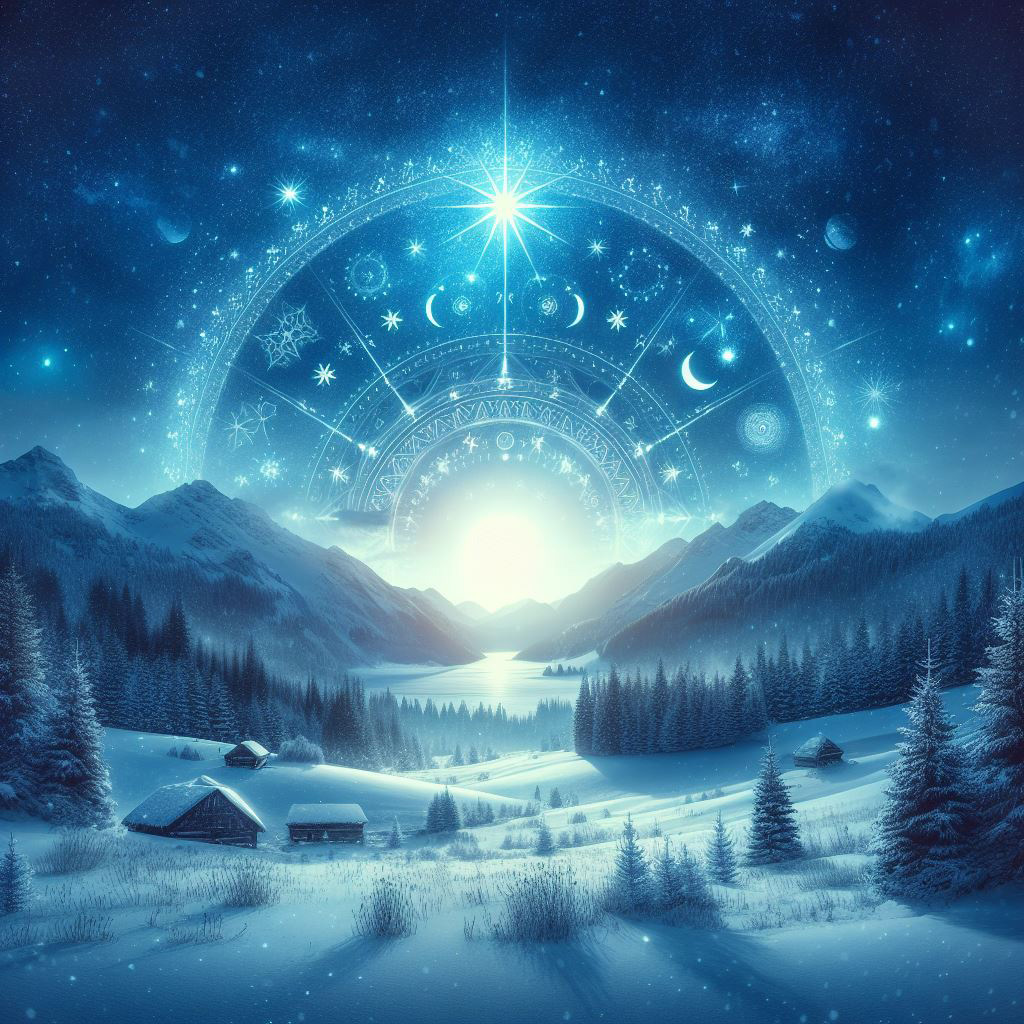
In the hushed whispers of December’s crisp winds, a celestial ballet takes center stage — the Winter Solstice, an astronomical masterpiece unveiling around December 21st. Beyond the clinical precision of its scientific definition lies a rich tapestry woven with the threads of antiquity, folklore, and an intimate connection to the pulsating rhythms of our Earth. As the night extends its shadowy embrace, the Winter Solstice emerges not just as a celestial event but as a profound intersection of science and spirituality, where ancient tales and cosmic phenomena entwine in a dance that transcends the boundaries of time. Join us on a journey into the heart of this celestial symphony, where the sky becomes a canvas painted with the echoes of centuries past, and the Earth aligns itself with the majestic rhythms of the cosmos.

Understanding the Solstice: Embracing the Cosmic Pause

The etymology of the term “solstice” unveils a linguistic ballet that gracefully describes a celestial spectacle. It emerges from the Latin roots “sol,” the radiant star that lights our days, and “sistere,” an invitation to stand still. Together, they craft a narrative of the Sun’s celestial ballet, a momentary pause in its grand journey.

As the Sun reaches the Tropic of Capricorn, this cosmic choreography unfolds. At the Winter Solstice, a mesmerizing interplay of celestial forces occurs, rendering the Sun’s noontime elevation seemingly motionless. The Sun, in its southernmost journey across the sky, hesitates, creating a pause that resonates across the fabric of the Earth’s seasons.

This cosmic stillness marks the official commencement of winter. In this ephemeral moment, the Earth lingers at the threshold of darkness, and daylight surrenders its temporal dominion to the extended reign of night. It is a delicate cosmic balance, a transition woven into the very fabric of nature’s rhythm.

This phenomenon, spanning cultures and epochs, carries profound symbolism. It is more than a mere shift in seasons; it is a promise—a celestial covenant of the Sun’s rebirth. As the Sun pauses in its southern sojourn, it whispers assurances of renewal and the eventual triumph of light over the encroaching darkness.

In this transient moment of stasis, the Winter Solstice becomes a cosmic junction, inviting contemplation and reflection. Across cultures, from ancient civilizations to contemporary societies, this celestial event is honored as a pivotal point in the dance of the cosmos. It symbolizes not only the changing seasons but also the cyclical nature of life, where even in the quiet stillness, the promise of a vibrant, sunlit future is silently held.

Journey through Shadows: Embracing the Celestial Ballet

As we stand at the threshold of the Winter Solstice, we embark on a profound journey through shadows—a celestial ballet that mirrors the ebb and flow of life’s eternal cycle. This pivotal point in the solar calendar marks a moment of celestial reckoning, where the sunlit tapestry of our days, gradually diminishing since the radiant glow of the summer solstice, begins to weave a new narrative.

Picture the cosmic stage: the sun, having completed its southern sojourn, lingers at the Tropic of Capricorn. The world, draped in shadows and the hushed whispers of the impending winter, awaits the celestial performance. In this grand spectacle, the dance of darkness and light unfolds with exquisite precision.

As we journey through the shadows of the Winter Solstice, the lengthening nights become a canvas on which nature paints its introspective masterpiece. It’s a dance where darkness yields not to an abyss but to the promise of a gentle, gradual return of the light. The world, cloaked in the quiet serenity of winter, prepares for the silent alchemy of renewal.

This celestial ballet is not merely a cosmic phenomenon but a profound reflection of life’s cyclical nature. It echoes the universal truth that every descent into darkness is a prelude to a triumphant ascent into light. The Winter Solstice becomes a celestial reminder that, even in the coldest and darkest of moments, the promise of renewal is quietly held in the cosmic embrace.

In the hush of winter’s shadowy contemplation, we find solace. It’s a time to reflect on our personal journeys, acknowledging the challenges and embracing the transformative power of resilience. The lengthening days post-solstice become a metaphorical roadmap, guiding us toward the renewal of spirit and the eventual blossoming of the world into spring.

As we traverse the cosmic dance floor, moving from the quietude of shadows to the burgeoning radiance of a sunlit future, the Winter Solstice invites us to partake in the grandeur of existence. It is a celestial proclamation that, even in the heart of winter’s embrace, the seeds of spring lie dormant, ready to awaken and usher in a new chapter in the eternal cosmic journey.

Global Celebrations and Traditions: A Tapestry of Winter’s Embrace

Venturing into the rich tapestry of global celebrations, the Winter Solstice emerges as a universal beacon, illuminating diverse cultures with its significance. Across continents and centuries, humanity has woven an intricate tale of reverence for nature, renewal, and the delicate interplay of light and shadow.

Stonehenge’s Solstice Symphony: An Ode to Earth’s Rhythms

In the heart of England, the Salisbury Plain cradles an ancient marvel — the enigmatic stones of Stonehenge. Steeped in mystery and cloaked in the mists of time, this sacred site transforms into a stage for a Druidic symphony during the Winter Solstice. As the world awaits the sun’s first light, a spectacle of profound symbolism unfolds.

As darkness clings to the night, the assembled crowd, wrapped in anticipation, witnesses a celestial alignment that transcends generations. The first rays of the newborn sun extend a golden embrace to Stonehenge’s weathered stones, casting shadows that dance in harmony with the ancient monoliths. The air is charged with a palpable energy, and amidst the whispers of history, a profound connection to the earth’s rhythms is forged.

Druidic traditions, with roots reaching back through the corridors of time, come alive in this sacred space. Each stone, weathered by centuries, becomes a sentinel bearing witness to the cyclical dance of the cosmos. The Winter Solstice is more than an astronomical event here; it is a living testament to the wisdom that the cycles of nature are the very threads weaving the fabric of our existence.

In this moment of alignment, the boundaries between past and present blur. The Druids, the ancient priestly class of the Celts, revered this celestial juncture as a sacred communion with the earth. Stonehenge, their sacred canvas, becomes a bridge across time, echoing with the footsteps of those who, in ages past, gathered to celebrate the changing seasons.

The stones, weathered yet enduring, stand as silent witnesses to countless solstices. They are not mere rocks; they are conduits of energy, resonating with the echoes of rituals performed by those who sought to understand and honor the mysteries of the cosmos. Each Winter Solstice, as the sun heralds a new cycle, Stonehenge becomes a living testament to the enduring connection between humanity and the celestial ballet above.

As the solstice sunbathes the stones in its gentle glow, a collective breath is drawn. The spectacle is more than a visual feast; it is a reminder that, in the dance of light and shadow, we find echoes of our own journey through the seasons of life. Stonehenge stands not just as an ancient monument but as a living, breathing testament to the profound harmony that exists when humanity acknowledges its place within the grand tapestry of the cosmos.

Dongzhi’s Dance of Yin and Yang: A Celestial Reunion

Embarking on an eastward journey, China unfolds its vibrant tapestry of tradition during the Dongzhi Winter Solstice Festival. As the world tilts towards the longest night, families gather not only for the warmth of shared company but to partake in a celestial dance of cosmic forces — the delicate interplay between yin and yang, darkness and light.

In the cosmic theater, Dongzhi stands as a spectacle of profound symbolism. It marks the zenith of yin forces, the moment when darkness claims its throne, shrouding the world in the quietude of winter. Yet, in this very embrace of darkness, there lies the promise of renewal, for the Winter Solstice is the tipping point where yin gracefully yields to yang — the positive, masculine energy that heralds the gradual return of light.

Families, wrapped in the warmth of tradition, gather to pay homage to this cosmic ballet. At the heart of the celebration are dumplings, not merely culinary delights but metaphors for the dance of celestial energies. Shaped like the crescent moon, these savory parcels become edible emblems of the universe’s cyclical rhythm. With each bite, families embrace the returning light, a tangible connection to the cosmic forces that govern the dance between day and night.

The significance of Dongzhi transcends the culinary, weaving into its fabric layers of cultural heritage and metaphysical understanding. It is a time for reflection, for acknowledging the ebb and flow of life’s energies, and for finding harmony within the cosmic symphony. Dongzhi, with its roots reaching deep into Chinese philosophy, invites a contemplative pause amid the hustle of modern life, urging individuals to attune themselves to the subtleties of the changing seasons.

As the dumplings steam and the fragrance of tradition wafts through homes, Dongzhi becomes more than a festival; it becomes a celestial reunion. Families, generations intertwined, savor not just the culinary craftsmanship but the essence of yin and yang, of darkness and the promise of returning light. In the tapestry of Dongzhi, China paints a portrait of cosmic harmony, inviting all to partake in the dance of celestial forces and find solace in the embrace of tradition.


Feast of Juul: A Hearth of Ancient Fires

In the heart of Scandinavia, where winter’s chill bites with particular fervor, the Feast of Juul emerges as a timeless celebration, echoing through the annals of history with the crackling warmth of fires that symbolize the Sun’s life-giving properties. It is a festival that not only kindles flames in the hearths but also ignites the spirit of community and the enduring connection between humanity and the cosmos.

At the heart of this Nordic jubilation is the venerable Yule log, a tangible link to ancient rites and a bearer of profound significance. Lit in honor of the mighty Scandinavian god Thor, whose thunderous chariot traversed the celestial expanse, the Yule log becomes more than a source of warmth; it transforms into a conduit between mortal realms and the divine. In the flickering dance of flames, the Norse people saw a reflection of Thor’s mighty power, a celestial symphony echoing through the winter night.

The Yule log, carefully chosen and ceremoniously ignited, becomes a focal point for communities to gather around. As its flames reach towards the heavens, the crackling embers carry with them the hopes, dreams, and aspirations of those who partake in this ancient ritual. It symbolizes not just the warmth of hearth and home but the enduring spirit of resilience against the winter’s cold embrace.

Yet, it is not merely in the act of burning that the Yule log finds its significance. Its unburned remnants, carefully preserved, are regarded as more than mere firewood. They are tokens of good fortune, holding the promise of protection against misfortune. This belief, etched in the cultural fabric of the Norse people, has echoed through centuries, and left an indelible mark on contemporary Yuletide traditions.

In modern times, as hearths are kindled and homes adorned with festive decorations, the spirit of the Feast of Juul lives on. The Yule log, whether in physical form or as a symbol, continues to bridge the gap between ancient traditions and present-day celebrations. It stands as a testament to the enduring power of rituals that connect us to our past, illuminate our present, and light the way for generations yet to come.

Saturnalia’s Grandeur: A Tapestry of Joy Across Time

In the mosaic of ancient Rome’s grandeur, the festival of Saturnalia emerged as a radiant gem, illuminating the darkest days of winter with the effulgence of merriment and revelry. This celestial juncture, marked by the Winter Solstice, became a time when the ordinary rules of life were cast aside, and the extraordinary took center stage.

At the heart of Saturnalia was the suspension of discipline and the joyful reversal of societal norms. The rigid structures of Roman life yielded to a carnival of freedom, where grudges were forgiven, and the echoes of war faded into the background. In this topsy-turvy realm, a spirit of communal joy reigned supreme, transcending the mundane concerns of everyday life.

The festival found its zenith on December 17 and extended its jubilant embrace for seven days, creating a temporal sanctuary where the usual order of things was turned on its head. Slaves became masters, and masters served their subordinates—a temporary liberation from the societal hierarchies that defined Roman life.

The echoes of Saturnalia, with its jubilant abandon and emphasis on communal harmony, resonate through the corridors of time and find a curious reflection in contemporary celebrations surrounding Christmas and the New Year. The suspension of hostilities, the forgiveness of grievances, and the collective embrace of joy during the festive season echo the essence of Saturnalia, reminding us that the ancient traditions of Rome continue to shape and enrich our modern festivities.

In the twinkling lights of holiday decorations and the warmth of shared gatherings, we catch glimpses of the Roman revelry that once graced the streets and homes of the ancient empire. Saturnalia, with its timeless message of unity, merriment, and the celebration of life’s joys, stands as a testament to the enduring influence of ancient customs on the tapestry of our contemporary celebrations.

As we traverse the globe, it becomes evident that the Winter Solstice is not merely an astronomical event but a global phenomenon that transcends cultural boundaries. It’s a testament to humanity’s shared connection to the cosmos, a reminder that, beneath the diversity of rituals and customs, we are united in our acknowledgment of nature’s cyclical dance—a dance where shadows yield to light, and the world, in its winter slumber, prepares for the promise of spring.

Light and Dark, Great Night and Warm Day

In the enchanted embrace of the Winter Solstice, the dance between light and darkness takes on profound symbolic significance for witches, Wiccans, and pagans alike. As the sun’s radiance wanes, and the night extends its tender grip, a tapestry of ancient symbolism unfolds, weaving together threads of spiritual introspection, renewal, and the unwavering hope for the returning sun.

For practitioners of the Craft, the lengthening night is not a descent into foreboding shadows but a sacred journey into the depths of the soul. It mirrors the introspective nature of the winter season, urging witches to turn inward, exploring the hidden recesses of their being. In the cloak of darkness, secrets are whispered, and the silent stirrings of the inner self are unveiled.

Yet, within this embrace of shadows lies the promise of renewal. The Winter Solstice marks the moment when the pendulum swings, when the darkness surrenders to the waxing light. It’s a time of spiritual metamorphosis, akin to the hibernation of nature. As the Earth slumbers beneath the frost-kissed mantle, so too does the practitioner find solace in a cocoon of self-discovery.

Across diverse pagan traditions, the returning sun is hailed as a symbol of hope and rebirth. The Oak King, dormant during the reign of the Holly King, awakens with the promise of burgeoning light. This cyclical battle between the kings mirrors the eternal dance of life and death, encouraging practitioners to reflect on the cyclical nature of their own existence.

Candles, those flickering beacons of illumination, become sacred tools during this celestial juncture. Lit in rituals and ceremonies, they represent the triumphant return of the sun’s vitality. The flame, resilient in the face of encroaching darkness, embodies the indomitable spirit that seeks illumination even in the bleakest of times.

As the Winter Solstice graces the sacred wheel, witches, Wiccans, and pagans find themselves cradled in the arms of ancient symbolism. The darkness becomes a canvas for profound spiritual revelations, and the burgeoning light becomes a beacon of hope, guiding the way through the enchanted tapestry of the winter night.

Crafting Magic in the Stillness of the Longest Night

In the mystical embrace of the Winter Solstice, practitioners of magic find themselves attuned to the subtle energies of this celestial dance. The solstice offers a unique opportunity to engage in magic that aligns with the themes of introspection, rebirth, and the interplay of light and shadow. Here’s a guide to the best magic to practice during this enchanting time:

Winter Altars: As the world slumbers beneath the frost-kissed blanket, your altar becomes a sacred space for reflecting the season’s energies. Adorn it with symbols of the Winter Solstice—evergreen branches, pinecones, and candles. Incorporate images of the returning sun, and perhaps a representation of the Oak King or other deities associated with the season.

Candle Magic: Candles, with their flickering flames, hold profound significance during the Winter Solstice. Engage in candle magic to symbolize the triumph of light over darkness. Use white candles for purity and renewal, gold for the returning sun’s vitality, and blue for spiritual introspection. As you light each candle, visualize the warmth and illumination infusing your magical workings.

Divination: The extended night of the Winter Solstice provides an ideal canvas for divination. Whether through tarot cards, scrying mirrors, or runes, seek insights into the coming season. The veil between worlds is thin, enhancing your intuitive connection to unseen realms.

Herbal Magic: Explore the magic of winter herbs and plants. Incorporate juniper, pine, or cedar into your rituals for their purifying properties. Brew teas with herbs like chamomile and lavender to foster a sense of calm and introspection. These herbal allies can enhance your magical intentions during the solstice.

Sun Deities: Honor deities associated with the sun, such as Apollo, Ra, or Sol. Offer gratitude for the returning light and seek their blessings for personal renewal and growth. Consider crafting invocations or prayers to these deities, acknowledging their influence on the cosmic dance unfolding during the Winter Solstice.

Oak King Rituals: In pagan traditions, the Oak King symbolizes the burgeoning light during the waxing half of the year. Craft rituals to honor the Oak King, expressing gratitude for his awakening presence. Consider creating a representation of the Oak King on your altar or engaging in a ceremonial battle between the Oak and Holly Kings.

As you immerse yourself in the magic of the Winter Solstice, let your intentions be guided by the energy of the season. Embrace the stillness of the longest night, for within it lies the fertile ground for magical transformation and the promise of the returning sun’s radiant embrace.

Conclusion

As the Northern Hemisphere embraces the longest night of the year, the Winter Solstice invites us to step into the realm of ancient rituals and timeless traditions. It’s a moment when nature itself seems to hold its breath, and the promise of lengthening days is whispered through the shadows. From the Druids honoring the Alban Arthan to the Scandinavians kindling the Yule log, and the Romans reveling in Saturnalia, the Winter Solstice transcends time and cultural boundaries. It’s a universal pause—a cosmic interlude—where humanity, throughout history, has found solace in the darkness, celebrating the triumph of light. As you witness your lengthening noontime shadow during this season, remember that it echoes an age-old dance between Earth and Sun. The Winter Solstice is not merely an astronomical event but a profound tapestry of human connection with the cosmos, a celebration of renewal amidst the quietude of winter’s embrace.

Posted on Leave a comment

Dec 27th – The 8th Day of Yule

Introduction

Embracing the Winter’s Heart – Skadi, Ullr, and the Protection of Home

As the eighth day of Yule unfolds, a crisp embrace of winter takes center stage. On this day, we pay homage to Skadi, the goddess of bowhunting, skiing, and mountains, and Ullr, the god associated with archery, winter wilderness, and the art of combat. Together, they weave the essence of the wilds, and our offerings extend beyond the realm of deities to the flora, fauna, and spirits of the woods.

Skadi: Queen of the Frosty Realms

In the vast tapestry of Norse mythology, Skadi emerges as a formidable and independent goddess, embodying the untamed spirit of the wild, the thrill of the hunt, and the majestic allure of mountains. Her connection with Yule adds a frosty and enchanting dimension to the winter festivities.

Skadi, often hailed as the daughter of the giant Thjazi, stands out as a peerless huntress among the Norse deities. Armed with a bow and arrow, her skills in bowhunting rival those of the mightiest gods. As winter descends and nature takes on a serene hush, Skadi’s presence intensifies, guiding the spirits of the hunt through the snow-laden forests. In the stillness of Yule, one can imagine the goddess traversing the snowy landscapes, her bow drawn, ready to bring sustenance to the gods and creatures alike.

Skadi’s association with skiing sets her apart, infusing the winter season with an element of graceful movement. In the realms of Norse myth, skiing wasn’t just a sport but a practical skill for traversing the snow-covered mountains. Skadi, as the goddess of mountains, glides effortlessly over the slopes, leaving behind a trail of powdery snow. As Yule unfolds, the image of Skadi skiing down the mountainside becomes a poetic celebration of the season’s beauty and the goddess’s prowess.

Mountains, stoic and majestic, serve as Skadi’s throne. Her affinity for these towering peaks aligns with the grandeur of winter landscapes. In the heart of Yule, envision Skadi standing atop a snow-capped summit, surveying her wintry domain. The mountains, adorned in blankets of snow, become a symbol of Skadi’s regal presence and a testament to the strength and resilience evoked during the coldest season.

Skadi’s connection with Yule intertwines her with the festive spirit of the season. As the days grow shorter and the air crisps with frost, her influence becomes palpable. In the mythic realms, Yule is not merely a time of celebration but a cosmic event where gods and goddesses partake in the essence of winter. Skadi, with her bow, skis, and mountainous realm, adds a touch of wild beauty to the Yule festivities, reminding all that the frosty embrace of winter holds both challenge and enchantment. As we honor Skadi during Yule, we acknowledge the untamed forces that shape the winter landscape, and in doing so, we embrace the essence of the huntress, the skier, and the queen of the mountains.

Ullr: Guardian of Winter’s Vigor

In the intricate tapestry of Norse mythology, Ullr emerges as a deity of striking prowess, embodying the essence of archery, the untamed wilderness of winter, and the artistry of combat. As Yule unfolds, Ullr’s presence weaves through the fabric of the season, infusing it with the thrill of the hunt, the serenity of snowy landscapes, and the strength required to navigate the challenges of winter.

Ullr’s association with archery places him among the finest marksmen of the Norse pantheon. The twang of his bowstring resounds through the winter air, echoing the precision and skill required to navigate the frozen landscapes. As Yule descends, envision Ullr drawing his bow, his keen eyes focused on distant targets. The symbolism of archery becomes a testament to the need for precision and focus during the long, dark nights of winter.

Ullr’s dominion extends into the winter wilderness, where the landscape transforms into a pristine, snow-covered expanse. In the heart of Yule, envision Ullr traversing the frosty forests and snow-laden fields, a figure of strength and resilience against the winter’s chill. The winter wilderness, under Ullr’s guardianship, becomes a sanctuary for both the gods and mortal beings seeking the solace of nature amid the hush of winter.

Beyond the tranquility of snowy landscapes, Ullr is a god linked to the art of combat. Amid Yule, the symbolism of combat takes on a metaphorical resonance. Ullr’s martial prowess becomes a reminder that the winter season, with its challenges and hardships, requires a warrior’s spirit. The combat arts, under Ullr’s guidance, become a metaphorical preparation for facing the adversities of winter with courage and determination.

Ullr’s connection with Yule interlaces the season with a dance of strength and serenity. Amidst the winter’s challenges, Ullr stands as a guardian, embodying the vigor required to navigate the cold, the precision needed to hunt for sustenance, and the martial spirit essential for facing the trials of winter. As we honor Ullr during Yule, we acknowledge the blend of archery, wilderness, and combat arts that define the season. In doing so, we embrace the qualities that Ullr personifies—strength, precision, and the resilience needed to endure the winter’s embrace.

Recipes

Embracing the Winter Gods: Honoring Skadi and Ullr during Yule

As the eighth day of Yule unfolds, it marks a poignant moment to honor the Norse deities Skadi and Ullr, guardians of winter’s beauty, strength, and the untamed wilds. In paying homage to these gods, we engage in rituals that resonate with the crispness of the season and the power encapsulated in its icy grasp.

Begin your ritual by creating a sacred space that resonates with the energy of Skadi and Ullr. Anoint your altar with oils that evoke the scent of winter forests—cedarwood, pine, and juniper. Consider placing symbols of archery, snowflakes, and mountain imagery on the altar to invoke the essence of these deities.

Skadi and Ullr’s influence extends beyond the divine realm to the spirits of the winter woods. Craft edible garlands using popcorn, cranberries, and other wildlife-friendly edibles. Engage in this creative activity with a sense of reverence, understanding that these offerings are not only for the gods but also for the creatures that inhabit the winter landscapes.

Skadi, the goddess associated with bowhunting, skiing, and mountains, and Ullr, the god of archery and winter wilderness, share a connection with the North Wind. Pour libations of mead or a winter-inspired beverage, symbolizing the crisp and invigorating breath of the North Wind. As you do so, speak words of gratitude for the strength and resilience that winter brings.

In the spirit of safeguarding your home outwardly, prepare a mixture of protective herbs such as juniper, rosemary, and cedar. Infuse this blend with intentions of goodwill and protection. Take a walk around your property’s edge, sprinkling this mixture to create a line of safety around your home. Visualize the energy of Skadi and Ullr weaving a shield that guards against malevolent forces.

Draw protective runes under outdoor welcome mats, infusing them with the power of winter magic. Bless the wreath on your front door, symbolizing the cyclical nature of the seasons and the enduring strength of winter. Hang mistletoe and mint swags around the exterior of your house, invoking the blessings of Skadi and Ullr to permeate your home with their protective energies.

Acknowledging the practical aspects of winter, prepare remedies for possible ailments. Brew teas with herbs like elderberry, chamomile, and peppermint. Create tinctures, tonics, herbal glycerites, and syrups that can serve as allies during the cold season. Incorporate bone broth into your meals, recognizing its nourishing properties for both body and spirit.

As the day concludes, gather in the glow of candlelight. Engage in meditation or reflection, attuning yourself to the energies of Skadi and Ullr. Express gratitude for the strength they bestow upon you and the beauty they bring to the winter landscape. Conclude the night with a shared meal, savoring the flavors of winter and the enchantment that lingers in the air.

In honoring Skadi and Ullr during Yule, we not only acknowledge the gods of winter but also celebrate the interconnectedness of the divine, the natural world, and our own lives. Through rituals, offerings, and mindful reflections, we weave ourselves into the fabric of winter’s magic, embracing its challenges and reveling in its unique beauty.

Offerings to Flora & Fauna: A Symphony for Nature

In the tapestry of winter, where the stillness of the woods meets the crisp breath of the North Wind, honoring Skadi and Ullr becomes a symphony for nature itself. Engaging in activities that extend your reverence to the untamed beauty of the forest is not only a ritual but a celebration of the interconnectedness of all living beings.

  • Crafting Edible Garlands: An Act of Generosity Crafting edible garlands becomes a gesture of generosity to the unseen dwellers of the woods. Using simple ingredients like popcorn, cranberries, and other wildlife-friendly edibles, you embark on a creative endeavor that transcends the boundaries between human and creature. Each piece strung together is a note in the melody of winter, an offering of sustenance to those who navigate the cold terrain.
  • Peanut Butter Pinecone Ornaments: A Delight for All In the spirit of sharing the bounty of winter, the creation of peanut butter pinecone ornaments becomes a delightful craft. Spreading peanut butter on pinecones and coating them with birdseed transforms simple materials into edible ornaments. These not only please the palate of the winged inhabitants of the woods but also stand as tokens of goodwill. Hang these ornaments in your backyard, creating a feast that extends beyond the boundaries of your immediate surroundings.
  • Adorning a Yule Tree in Nature: Communion with the Wild Spirits Venturing into winter’s landscape, seek out a Yule Tree standing proud in its natural habitat. This living symbol of the season becomes a canvas for your crafted garlands and ornaments. As you adorn the branches, you partake in a communion with the wild spirits that call the forest home. Your offerings become a harmonious blend of human creativity and the inherent beauty of the natural world.
  • Creating a Harmonious Offering: Nature’s Blessings As you engage in these activities, envision a harmonious offering to the wild spirits, a symphony of nature’s blessings. The rustle of creatures in the underbrush, the soft padding of paws on snow, and the gentle sway of branches in the winter breeze—all become part of this sacred composition. In crafting these offerings, you not only honor Skadi and Ullr but also become a steward of the delicate balance between the human realm and the wild mysteries of the forest.

In this symphony for nature, every act of creation is a note, and every offering is a melody that resonates through the winter woods. As you stand amidst the beauty you’ve contributed too, know that your gestures ripple through the intricate web of life, fostering a sense of unity with the wild spirits that inhabit the winter landscape.

Protecting the Home (Outside): A Winterized Fortress

As the frosty fingers of winter reach into every corner, transforming the world into a glistening tableau, it’s crucial to fortify the external defenses of your home. This act not only aligns with practical considerations but also serves as a symbolic gesture of respect to Skadi and Ullr, the guardians of winter’s wild domain.

  • Creating a Protective Mixture: Infusing Goodwill and Security Begin the ritual of fortification by crafting a protective mixture infused with the essence of winter herbs and sacred ash. These elements, charged with the blessings of goodwill and security, become the alchemical blend that forms a shield against the biting winds of the season. In this act of creation, you harmonize with the natural energies that Skadi and Ullr embody.
  • Sacred Perimeter Walk: Drawing a Line of Safety Armed with your protective mixture, embark on a sacred journey along the perimeter of your property. As you walk, sprinkle the concoction, drawing a line of safety that demarcates the boundary between the mundane and the mystical. This ritual is not only a practical measure but a symbolic act that invites the watchful eyes of Skadi and Ullr to stand guard over your dwelling.
  • Runes of Protection: Enchanting Outdoor Welcome Mats Extend the protective charm by drawing runes under your outdoor welcome mats. Each symbol becomes a sigil of defense, etched into the very threshold that separates the outer world from the inner sanctum of your home. As guests step over these runes, they unknowingly traverse a boundary imbued with the energies of safeguarding and hospitality.
  • Blessing the Wreath: A Gateway of Goodwill The wreath on your front door becomes more than a decorative ornament—it transforms into a gateway of goodwill. Before winter’s breath rustles its boughs, bestow upon it the blessings of Skadi and Ullr. This act infuses the wreath with protective energies, creating a symbol that greets all who enter with a touch of the sacred.
  • Mistletoe and Mint Swags: Nature’s Embrace Hang mistletoe and mint swags around the exterior of your home, weaving a tapestry of nature’s embrace. Mistletoe, with its ancient associations of protection, and mint, with its purifying properties, become guardians adorning the outer walls. These botanical sentinels stand vigilant, inviting the spirits of Skadi and Ullr to join their watch.

In this winterized fortress, every action is a prayer, and every protective gesture is an invitation. As you complete these rituals, know that you’ve not only secured your dwelling against winter’s harshness but have also opened a channel for the benevolent presence of Skadi and Ullr to grace your living space.

Warding for Winter: Herbal Shield Against Ailments

As the winter frost settles in, ushering in a season of icy winds and crystalline landscapes, it’s essential to fortify not only against the external chill but also the internal vulnerabilities that come with the cold embrace of winter. In a dance with the spirits of Skadi and Ullr, consider weaving a herbal shield against ailments, a tapestry of nature’s remedies to safeguard your well-being.

The Herbal Arsenal: Teas, Tinctures, Tonics, and More

While acknowledging that herbal remedies are not a replacement for professional medical advice, they can be valuable allies in the quest for winter wellness. Craft a repertoire of teas, tinctures, tonics, herbal glycerites, and syrups, each concocted from immune-boosting herbs. Echinacea, elderberry, ginger, and peppermint are among the herbal guardians known for their protective properties.

  • Teas: Infusing Warmth and Healing A hot cup of herbal tea becomes a ritual of comfort and healing during the winter months. Infuse dried crushed leaves of immune-boosting herbs in boiling water, creating a concoction that not only warms your body but also imparts the healing essence of nature. Let each sip be a communion with the plant spirits, a gentle reminder of the interconnectedness between humans and the botanical realm.
  • Tinctures: Concentrated Elixirs of Defense Crafting tinctures involves extracting the active constituents of herbs in alcohol, creating potent elixirs of defense. These concentrated remedies, when taken in moderation, can serve as a powerful supplement to support your immune system. Store them in amber glass bottles, preserving the vitality of the herbs within and ensuring their readiness when needed.
  • Tonics: Invigorating Potions of Well-Being A tonic, with its invigorating properties, becomes a medicinal substance that bestows a feeling of vigor and well-being. Create a concoction with herbs like astragalus, known for its immune-boosting capabilities, and sip it as a daily elixir. Let the tonic be a toast to your health, a gesture of self-care that resonates with the protective energies of Skadi and Ullr.
  • Herbal  Glycerites and Syrups: Sweet Remedies of Nature Glycerites, herbal mixtures using vegetable glycerin, and syrups, sweet concoctions infused with the essence of herbs, provide alternative avenues for winter wellness. These sweet remedies make herbal supplementation a delightful experience, offering not only immune support but also a touch of sweetness to uplift the spirits.
  • Bone Broth: Nourishment for Body and Soul In the vast tapestry of winter wellness, bone broth emerges as a time-honored elixir. Boiled down from animal bones and connective tissue, this liquid gold not only offers nutritional benefits but also aids in hydration, weight management, and improved sleep. Whether sipped as a comforting tea or incorporated into hearty soups, bone broth becomes a cornerstone of your winter health routine.

As you embrace this herbal shield against winter ailments, let each remedy be a prayer, a nod to the wisdom of the earth and the protective spirits that oversee the season. In these herbal offerings, find a sanctuary of well-being, a space where the healing energies of nature and the benevolence of Skadi and Ullr converge.

Embracing Winter’s Resilience

As we tread into the folds of winter, paying homage to the ancient spirits of Skadi and Ullr, we unfurl a tapestry woven with threads of protection and well-being. The symphony of nature’s melodies, the fortified bastion of home, and the herbal remedies form an intricate dance, crafting a sanctuary resilient against winter’s chill. In the embrace of this eighth day of Yule, let our celebration echo the harmonious spirit of the wild, the enduring strength of the home, and the healing touch of nature, a triumphant ode to the resilience that winter bestows upon both the earth and our souls.