Posted on Leave a comment

Ritual: Ancestor Altar for Samhain

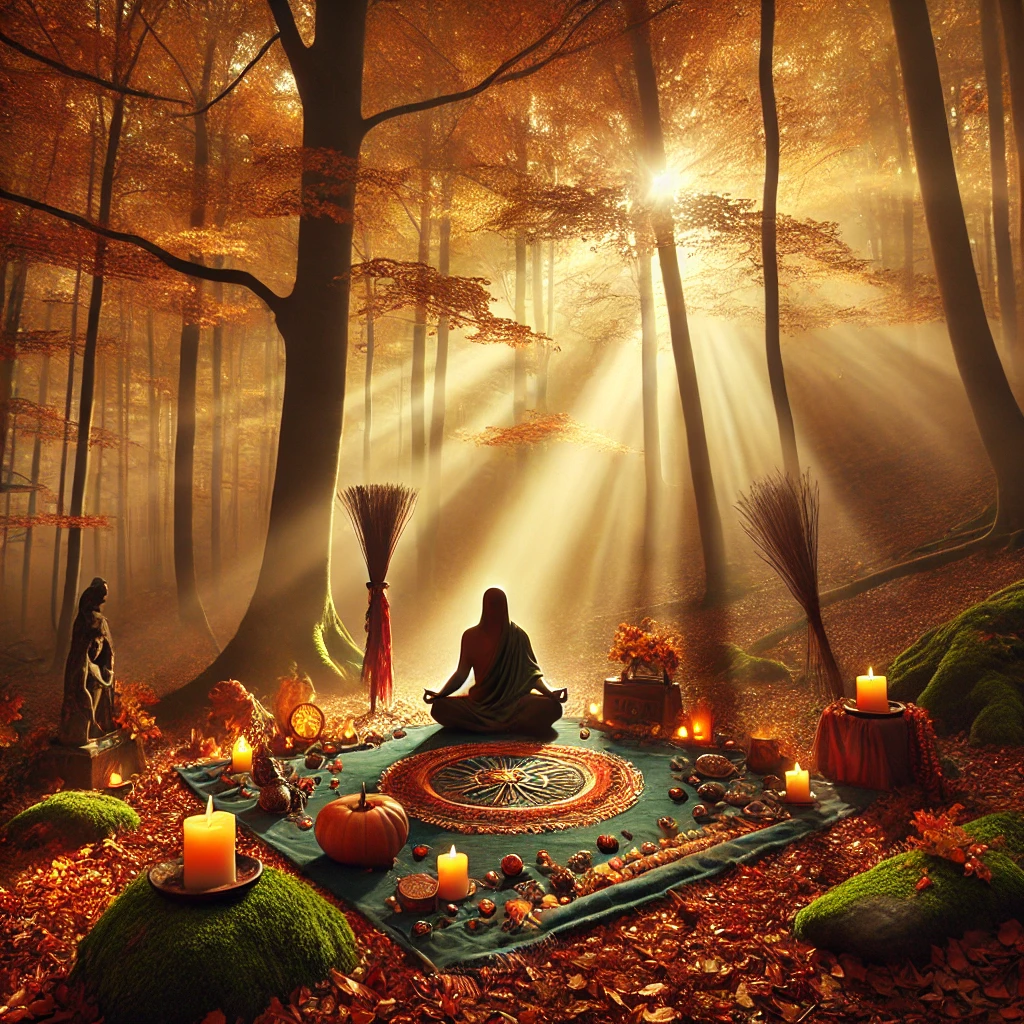
Ritual Samhain Ancestor Altar

Introduction

Honoring Our Roots: Creating an Ancestor Altar for Samhain

Samhain, often referred to as Halloween or the Witches’ New Year, is a time of powerful connection between the living and the dead. Traditionally celebrated by Pagans and Wiccans, Samhain marks the thinning of the veil between the physical world and the spirit world, making it an ideal time to honor our ancestors and loved ones who have passed on. One of the most cherished rituals of this season is the creation of an ancestor altar, where offerings and memories come together to create a sacred space for reflection, remembrance, and communication with the spirits of those who came before us.

Ritual Basics

Before beginning any ritual, it is important to prepare yourself mentally and physically. You may want to take a cleansing bath, or shower, and meditate or perform some grounding exercises to center yourself. Gather any materials you will need, such as candles, incense, and offerings for the forest spirits.

You can read a more detailed Ritual Preparation guide here.

The Significance of the Ancestor Altar

An ancestor altar is more than a decorative display; it is a symbolic connection to your familial and spiritual roots. At Samhain, this altar serves as a beacon, inviting the spirits of your ancestors to join you in celebration and honoring their legacy. The items placed on the altar hold personal significance, acting as a bridge between the past and present. Whether performed indoors or outdoors, this ritual creates a sacred space for reflection, gratitude, and the honoring of lives lived and memories cherished. Traditionally, Samhain falls on October 31st, but this ritual can be performed anytime during the thinning of the veil, from late October to early November.

Crafting an Ancestor Altar for Samhain

This ritual involves creating an altar dedicated to your ancestors, adorning it with personal and meaningful items, and offering it as a space of respect and gratitude during Samhain.

  • Surface
  • Cloth
  • Candles
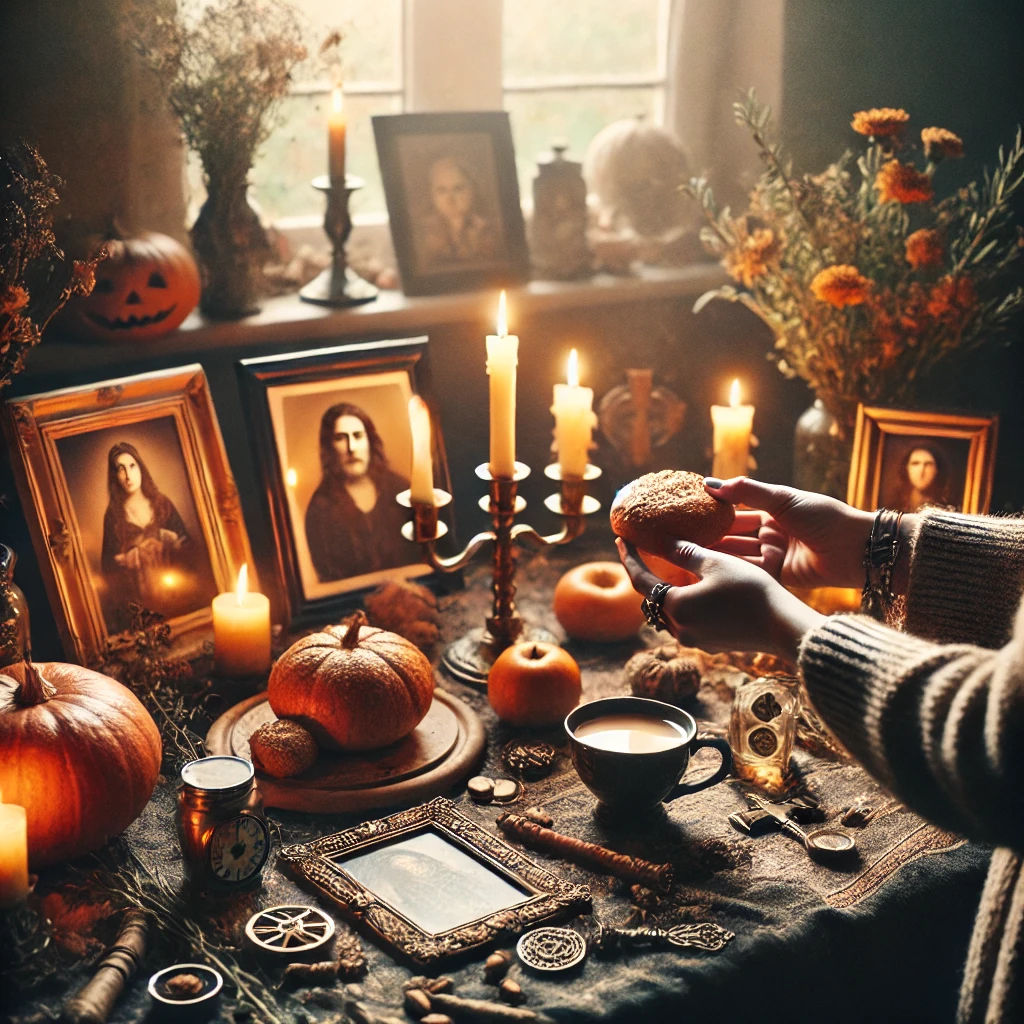
  • 1 – Photos or heirlooms of ancestors (to represent those being honored)
  • 1 – Offering dish (for food or drink offerings)
  • 1 – Handful of seasonal flowers or herbs (such as marigolds, rosemary, or chrysanthemums)
  • 1 – Cup Apple cider or wine (symbolizing offerings to your ancestors)
  • 1 – Plate – Small serving of food (such as nuts, fruit, or bread)

Selecting the Altar Surface:

  1. Choose a surface that feels sacred to you, whether it is a table, a shelf, or something connected to nature, like a tree stump or rock. Outdoor altars can provide a direct connection with the Earth, but indoor altars may feel more private. Place this altar in a space that feels quiet, personal, and sacred for you.

Covering the Altar:

  1. Once you have selected the surface, cover it with a cloth. Colors like black or deep purple are traditional for Samhain, symbolizing the connection with the spirit world. However, choose a color that resonates with your intention. Each color holds its own symbolic meaning:
  2. Black or Purple – Associated with Samhain and the spirit realm
  3. White – Symbolizing purity and remembrance
  4. Green – Representing life and growth, perfect for ancestral healing

Arranging the Items:

  1. Now, begin to arrange items that honor your ancestors:
  2. Photographs and Heirlooms: Place photos, mementos, or heirlooms of your ancestors in a prominent position. These items serve as a focal point for the altar.
  3. Candles: Light two candles, one on each side of the altar. White candles are often used to symbolize the spirits of loved ones, while black candles can be used to honor the cycle of life, death, and rebirth.
  4. Offerings: Prepare offerings of seasonal fruits, nuts, or a small plate of bread and place them in front of the photos or heirlooms. Pour a cup of apple cider or wine as a symbolic gesture of gratitude.
  5. Flowers or Herbs: Add fresh flowers or dried herbs to enhance the natural beauty of the altar. Rosemary is traditionally used for remembrance, while marigolds or chrysanthemums symbolize the connection to the spirit world.

Blessing and Invocation:

  1. Once your altar is arranged, take a moment to sit quietly in front of it. Reflect on the lives of your ancestors, what they have passed down to you, and the legacy they left behind. Light the candles and say:
  2. "Spirits of my ancestors, I honor you on this sacred night.

    As the veil between worlds thins, I welcome your presence in my life.

    Through this altar, may you feel my love, respect, and gratitude.

    Guide me with your wisdom, protect me with your love,

    And bless me with the strength of our lineage.

    Blessed be."

Offering to the Ancestors:

  1. Take a small piece of bread or fruit, and lift the offering up, saying:
  2. "I offer this gift to you,

    To nourish your spirit as you have nourished mine.

    With this food and drink, I honor your presence.

    Blessed be."

  3. Leave the offerings on the altar overnight or until the next morning as a sign of respect.

Reflection and Meditation:

  1. After your offering, sit quietly and meditate on the connection with your ancestors. Allow any thoughts, feelings, or memories to surface, and feel the warmth of their presence. Write down any insights or messages that come to you in a journal or notebook.
  • Always ensure candles are safely placed on the altar, away from any flammable materials. If leaving the altar overnight, extinguish candles after your ritual for safety.
  • Children can be involved in the process by helping gather items, arranging them, or even creating drawings of ancestors to place on the altar.
  • The offerings left on the altar can be returned to nature the next day. Pour the drink into the soil and leave food offerings in a garden or forest area as a way of giving back to the Earth.
Samhain
Rituals

Conclusion

Setting up an Ancestor Altar during Samhain is a beautiful way to honor and connect with the spirits of your loved ones. This ritual strengthens the bond between you and your ancestors, offering a space for remembrance, reflection, and gratitude. By dedicating this sacred space, you open a portal for wisdom, love, and guidance from beyond the veil. As the flames flicker and the offerings are made, may your heart be filled with warmth, and may the presence of your ancestors bring peace and blessings to your life. Blessed Be.

Posted on Leave a comment

Samhain Explained

Samhain
Samhain

Introduction

A Journey into the Roots and Modern Celebrations of the Festival of the Dead

As the wheel of the year turns toward the darker half, Samhain (pronounced “sow-en”) emerges as one of the most significant festivals in the Pagan calendar. Celebrated on the night of October 31st through November 1st, Samhain is not only the Pagan New Year but also a time when the veil between the worlds of the living and the dead is at its thinnest. It is a liminal time, filled with magic, mystery, and the ancient tradition of honoring ancestors and embracing transformation. In this detailed article, we will delve into the origins, history, modern interpretations, customs, and the symbols that make Samhain a beloved and sacred festival for Pagans and Wiccans today.

The Origins of Samhain

The name “Samhain” is derived from the Old Irish words meaning “summer’s end,” signaling the close of the warm, fertile months and the onset of the cold, dark half of the year. It marks the final harvest and a significant transition from the season of light to the season of darkness, a change deeply woven into the fabric of ancient Celtic culture. Samhain is not merely a celebration of the harvest, but a profound moment of change, when the natural world retreats into dormancy, and the boundaries between the physical and spiritual realms grow thin.

Samhain’s roots lie deep in ancient Celtic traditions, dating back over 2,000 years to a time when communities across Ireland, Scotland, and other parts of the Celtic world held festivals to honor the cyclical nature of life and death. This period marked the end of the harvest season and the preparation for the cold, dark winter months ahead. The Celts believed that during Samhain, the wheel of the year turned toward the darker half, symbolizing both an ending and a new beginning.

In ancient Ireland, Samhain was one of the four most important fire festivals, alongside Imbolc, Beltane, and Lughnasadh. These festivals served as pivotal markers of the changing seasons and the cycles of nature. Samhain stood as a time when the last of the crops were gathered, and the community prepared for winter. It was also when the livestock, which had grazed in the summer pastures, were brought down to more protected areas for the winter months. As the agricultural cycle came to a close, Samhain represented both the literal and symbolic harvesting of the land’s bounty, as well as the harvesting of wisdom, reflection, and spiritual insight.

One of the defining features of Samhain was the lighting of great bonfires, a tradition that was both practical and spiritual. These bonfires, often lit on hilltops, symbolized light and protection during the dark winter months. The flames were believed to hold protective powers, warding off malevolent spirits and guiding the community through the challenges of the season. Bonfires were also seen as purifying and cleansing, helping to protect livestock and homes from harm during this liminal time when the veil between the worlds was thin. Families would often extinguish the hearth fires in their homes and relight them from the communal bonfire, symbolizing unity, purification, and the collective strength of the community.

A Liminal Time Between Worlds

Samhain is regarded as a liminal time, a moment when the boundaries between the human world and the Otherworld—the realm of spirits, ancestors, and the fae—were at their most permeable. The ancient Celts believed that during Samhain, the veil separating the living and the dead thinned, allowing spirits, both benevolent and mischievous, to cross into the mortal world. It was a time of heightened spiritual energy, where communication with the dead and the spirit realm was not only possible but actively sought. The Celts welcomed the spirits of deceased loved ones, setting places at the table and offering food to honor and nourish them on their journey.

While the spirits of ancestors were honored and welcomed, Samhain was also a time of caution. It was believed that not all spirits were benevolent, and mischievous or malevolent beings, such as the Aos Sí (the fairy folk), might wander the earth, causing harm or playing tricks on the living. To protect themselves from these wandering spirits, the Celts would dress in costumes and masks, disguising themselves as spirits or creatures to avoid being recognized or harmed. This practice is one of the early roots of modern Halloween traditions.

Samhain was not only a time to honor the dead but also a season of divination and prophecy. The Druids, who were the spiritual leaders, priests, and wise ones of the Celtic people, played a central role in conducting rituals and ceremonies during Samhain. They believed that the liminal nature of the festival made it the ideal time to gain insight into the future and seek guidance for the coming months. Methods of divination, such as scrying, using runes, or reading animal bones, were employed to foretell important events, such as the outcome of battles, weather patterns, or the success of crops in the next growing season.

Additionally, fire was central to the divinatory rituals performed by the Druids during Samhain. The Celts believed that the sacred bonfires held the power to reveal omens and portents for the future. Participants in the Samhain festivities would often carry a burning ember from the communal bonfire back to their homes, using it to rekindle their hearth fires. This act was not only symbolic of protection and unity but also a way to carry the spiritual blessings of the Samhain fires into their personal spaces.

For the Celts, Samhain was a time of profound reflection—a moment to acknowledge the death of the old year and the inevitable approach of winter. It was a time of endings, when the sun’s warmth faded, and nature itself withdrew into the quiet of the dark months. But, as with all things in Celtic belief, death was never an ending but a passage to rebirth. Just as the land would sleep through the winter and awaken in spring, so too did the Celts believe that the souls of the dead would rest and eventually be reborn.

Samhain marks a powerful moment of transition, both in the natural world and the spiritual realm. It is a festival that celebrates the end of the harvest, the coming of winter, and the thinning of the veil between life and death. Samhain’s origins are deeply intertwined with the rhythms of the earth and the cycles of life, death, and rebirth, making it one of the most spiritually significant festivals of the Celtic year.

The History of Samhain

The celebration of Samhain dates back over 2,000 years and was primarily observed by the ancient Celts of Ireland, Scotland, and parts of Wales. As one of the most important and solemn festivals in the Celtic calendar, Samhain signified the end of the harvest and the beginning of the long, dark winter. It was a time to gather the last crops, prepare for the cold months ahead, and offer thanks for the bounty that sustained life through the year. However, more than just a harvest festival, Samhain was a liminal time—a moment when the boundaries between the living and the dead blurred, allowing communication between the two realms.

Samhain’s connection to the Celtic understanding of life and death is profound. The Celts believed that time was cyclical rather than linear, and just as the seasons turned, so too did the journey of the soul. Death was not viewed as an ending but a transition to another phase of existence. The belief in the Otherworld, where the dead resided, was a central part of Celtic spirituality. During Samhain, the veil between the worlds of the living and the dead was at its thinnest, making it easier for spirits to cross over and interact with the living. This spiritual aspect of Samhain made it a time to honor the dead and ancestors, offer hospitality to visiting spirits, and seek guidance from the Otherworld through divination and rituals.

As a pre-Christian festival, Samhain was deeply rooted in the cycles of nature and the spiritual connection between life and death. Ancient Celts recognized that the natural world was a reflection of these cycles, with the sun’s waning light and the earth’s retreat into dormancy mirroring the inevitability of death. Yet, this death was not feared—it was a natural part of the cycle that would give way to rebirth in the spring. Samhain, therefore, became a time of reflection on mortality, the passage of time, and the mysteries of the afterlife.

The Christianization of Samhain

When Christianity spread throughout Europe in the early medieval period, it sought to assimilate and adapt many of the existing pagan festivals rather than completely eradicate them. Samhain was no exception. As Christian missionaries encountered the Celts, they recognized the importance of Samhain in Celtic culture and incorporated elements of the festival into Christian observances. This led to the establishment of All Saints’ Day (November 1st) and All Souls’ Day (November 2nd), two Christian holidays that honored saints and prayed for the souls of the dead. These new Christian holidays overlapped with many of the customs and themes of Samhain, particularly the remembrance of the dead and prayers for the departed, helping to facilitate the transition from paganism to Christianity in Celtic regions.

However, while Samhain customs were integrated into these Christian celebrations, many of the older, pre-Christian traditions endured. Bonfires, which were originally lit to protect the community and ward off evil spirits during Samhain, continued to be part of the observance of All Hallows’ Eve (October 31st), the night before All Saints’ Day. In addition, the belief that the dead could return to the world of the living persisted in folk traditions, especially in rural areas, where feasts for the dead, lighting candles for spirits, and rituals of protection continued to be practiced by the people.

Many of the superstitions surrounding ghosts, spirits, and supernatural beings that were part of Samhain were transformed into Halloween customs. For example, the practice of dressing in costumes or masks to avoid being recognized by malevolent spirits during Samhain evolved into the modern-day Halloween tradition of children wearing costumes to ward off evil or to “trick” spirits. Similarly, the practice of offering food to spirits—either to honor deceased ancestors or placate mischievous spirits—became the foundation for trick-or-treating.

Samhain’s Revival in Neo-Paganism

By the late 19th and early 20th centuries, as Neo-Paganism and Wicca began to emerge as spiritual movements, there was a renewed interest in reviving the old Celtic festivals in their original form. As part of this spiritual revival, Samhain became one of the most widely celebrated festivals among Wiccans, Druids, and other Neo-Pagans. These groups sought to reclaim the ancient pagan heritage, rejecting the Christianization of the festival and returning to the original themes of honoring the dead, celebrating the harvest, and preparing for the dark winter months.

For many modern Pagans, Samhain is seen as the most important of the eight festivals in the Wheel of the Year—the calendar of annual festivals that mark the changing of the seasons. Samhain is often regarded as the Pagan New Year, as it symbolizes both an ending and a beginning. It marks the end of the agricultural cycle and the completion of the harvest, but it also represents the beginning of a new cycle of growth and rebirth. It is a time for introspection, for looking back on the past year and letting go of what no longer serves, and for setting intentions for the year ahead.

Modern practices of Samhain among Neo-Pagans often include ancestral rites, where practitioners create altars or shrines to their ancestors, leaving offerings of food, drink, and candles to honor the dead. Rituals are performed to communicate with spirits, often through scrying, tarot readings, or other forms of divination, to gain insight into the future or receive guidance from the Otherworld. Some Pagans also light bonfires or candles, continuing the ancient tradition of using fire as a protective and purifying force during this spiritually potent time.

The history of Samhain is a rich tapestry of ancient Celtic traditions, Christian adaptations, and modern Pagan revivals. Despite its transformation over the centuries, the core elements of Samhain—honoring the dead, celebrating the harvest, and recognizing the cycles of death and rebirth—have endured. Today, Samhain is a time for reflection, spiritual connection, and renewal, continuing to offer profound meaning to those who observe it.

Modern Interpretations of Samhain

While Samhain has its roots in ancient Celtic traditions, it has evolved and been adapted to suit modern Pagan and Wiccan practices. For contemporary practitioners, Samhain is not only a time to honor the final harvest but also a significant spiritual event that marks the end of one cycle and the beginning of another. In many Pagan and Wiccan traditions, Samhain is considered the beginning of the spiritual new year—a time to reflect on the past, release old patterns, and embrace personal transformation. This time of year, is seen as an opportunity to commune with ancestors, explore the mysteries of death and rebirth, and engage in deep introspection as the season transitions into the colder, darker months.

Samhain remains a powerful time of transition, much like it was in ancient times. The festival’s themes of death and rebirth have resonated through the ages and continue to inspire modern practitioners. Reflecting on the past year is central to Samhain rituals today, as practitioners use this period to assess their accomplishments, challenges, and personal growth. This reflection allows them to release what no longer serves them—whether it’s old habits, relationships, or emotional patterns—so they can move forward unburdened into the next phase of their lives. In this way, Samhain is a time for letting go and for renewal, echoing the ancient practice of completing the harvest and preparing for the winter ahead.

A significant aspect of Samhain in modern practice is the honoring of the dead. This is often done through the creation of altars dedicated to ancestors and departed loved ones. These altars may be adorned with photographs, mementos, candles, and offerings of food or drink that the ancestors enjoyed in life. Practitioners might light candles for deceased family members and friends to guide their spirits and show respect. Many also believe that during Samhain, the veil between the worlds of the living and the dead is at its thinnest, making it an ideal time to communicate with the spirit world. Practitioners often engage in rituals aimed at connecting with the dead, whether through divination, mediumship, or scrying. This connection with the spirit realm offers an opportunity to gain insight, receive guidance, or simply commune with those who have passed.

Divination is a key aspect of modern Samhain practices. Since the veil between the worlds is believed to be thinner during this time, practitioners use tools such as tarot cards, runes, pendulums, or scrying mirrors to access spiritual messages and insights into the future. Many believe that this enhanced spiritual energy aids in receiving clearer guidance from the beyond, making it an ideal time for seeking wisdom from the Otherworld. Practitioners may use this time to ask questions about the coming year, seek clarity on personal matters, or connect with spirit guides for wisdom and support.

Samhain is also a time of celebration—a final nod to the harvest season before winter fully takes hold. In modern Pagan and Wiccan traditions, offerings of apples, pumpkins, grains, and other seasonal produce are made to deities and spirits. These offerings serve as symbols of gratitude for the bounty of the earth and as a farewell to the growing season. Feasts are often held in honor of the season, with meals that incorporate harvest foods like root vegetables, squash, and apples. Some traditions may include ritual toasts, where wine, cider, or mead is shared in honor of the ancestors, spirits, and gods who have blessed the harvest.

Bonfires remain a prominent feature in many modern Samhain celebrations, much like they did in ancient times. These fires represent protection, purification, and transformation, helping participants let go of the old and make space for the new. Many Pagans also perform candle magic, lighting candles in the colors of the season—orange, black, and white—to represent the balance of light and darkness, the life-death cycle, and the guidance of the spirit world. Participants may write down intentions or things they wish to release and burn them in the fire, symbolizing the transmutation of energy and personal renewal.

In addition to rituals of release, introspective meditation plays an important role during Samhain. Practitioners often take time to reflect on their spiritual journey, contemplate the darker aspects of life, and embrace the mystery of death and transformation. This meditation allows for deep personal insight and emotional healing, as participants confront their fears and uncertainties and learn to find peace within the cyclical nature of life and death.

In modern Paganism, Samhain is more than just a time to remember the dead or celebrate the harvest; it is a time to explore the mysteries of life and death, to find balance within oneself, and to harness the energies of transformation that are present in the natural world. Whether through ancestral veneration, divination, or harvest celebrations, Samhain invites us to connect with the cycles of life, death, and rebirth, reminding us that change is constant and that, like the seasons, we too are always in flux. As modern practitioners embrace these ancient customs and give them new meaning, Samhain continues to be a powerful time of spiritual reflection and renewal.

Traditions and Customs of Samhain

Samhain is a festival rich with ancient traditions, many of which have been passed down through the centuries and continue to be celebrated in both old and modern forms. These customs reflect Samhain’s deep connection to the cycles of life and death, as well as the transition between the world of the living and the spirit world. Here are some of the most prominent Samhain traditions that remain integral to modern-day celebrations:

Bonfires

In ancient Celtic societies, bonfires were a central feature of Samhain celebrations. These great fires were believed to hold protective power, warding off evil spirits that were thought to roam the earth during this liminal time. Bonfires were also a communal event, gathering people together to provide warmth and protection as the colder months approached. The act of lighting a fire was symbolic, representing light in the darkness and the community’s strength as they prepared for the winter ahead.

Today, modern Pagans continue this tradition by lighting bonfires or gathering around candles during their Samhain rituals. Fire represents purification, transformation, and the connection to the otherworld. Many people cast offerings of herbs or written intentions into the fire, asking for protection, clarity, or blessings as they prepare for the new year. In both its ancient and modern forms, the Samhain bonfire is a powerful symbol of communal strength, protection, and transformation.

Feasts and Offerings

Feasts have long been an important part of Samhain traditions. As Samhain marks the final harvest, the feast is a celebration of the season’s abundance, featuring foods that represent the end of the agricultural cycle. Seasonal ingredients, such as apples, nuts, root vegetables, grains, and freshly baked bread, take center stage on the Samhain table. These foods embody the harvest’s bounty, nourishing the body and soul during the darker, colder months ahead.

A particularly poignant custom during Samhain feasts is the setting of a place at the table for deceased ancestors. This practice is a way to honor and invite the spirits of loved ones to join in the celebration, maintaining the connection between the living and the dead. Many Pagans and Wiccans also prepare offerings for the dead, which are placed on altars or left outside as gifts for wandering spirits. These offerings may include food, drink, or symbolic tokens that represent the love and respect still held for those who have passed on.

Ancestor Altars

During Samhain, many Pagans and Wiccans create ancestor altars to pay homage to their deceased loved ones. These altars often feature photographs, personal items, and mementos that hold memories of those who have passed. Candles, incense, and offerings are placed on the altar as symbols of reverence and to help guide spirits during this liminal time when the veil between worlds is at its thinnest.

Ancestor altars are a focal point for reflection and connection. Practitioners may sit in meditation at the altar, offering prayers of gratitude or asking for guidance from their ancestors. This practice reminds us of the cyclical nature of life and death and helps maintain an ongoing relationship with those who have crossed over into the spirit world. The altar becomes a sacred space for honoring lineage, expressing gratitude, and keeping memories alive.

Costumes and Masks

The tradition of wearing costumes and masks during Samhain has its origins in ancient Celtic customs. The Celts believed that during Samhain, the veil between the living and the spirit world was at its thinnest, allowing spirits—both benevolent and malevolent—to roam freely. To protect themselves from harm, people would don disguises that mimicked the spirits, thus confusing or warding off any malevolent beings that might cross their path.

This practice of wearing costumes to avoid detection by wandering spirits is the origin of modern Halloween costumes. Today, both Pagans and non-Pagans alike continue the tradition of dressing up during Samhain, albeit for different reasons. For modern Pagans, wearing ritual masks or costumes may still symbolize a connection to the spirit world or the act of stepping into a different role or identity as part of their Samhain rituals. In this way, the tradition of dressing up retains its mystical origins and continues to be a vital part of Samhain celebrations.

Divination and Scrying

Divination is an integral part of Samhain, as the thinning veil is believed to enhance one’s ability to connect with the spirit world and gain insight into the future. In ancient times, Druids and wise folk would perform rituals to foresee the coming winter and predict important events.

Today, many modern Pagans and Wiccans use tools such as tarot cards, runes, pendulums, and scrying mirrors during their Samhain rituals. Scrying—gazing into a reflective surface such as a mirror, water, or crystal ball—allows the practitioner to receive visions or messages from the spirit world. Divination during Samhain is often focused on seeking guidance from ancestors or spirit guides or gaining insight into the coming year. Whether through traditional methods or modern tools, divination remains a central part of Samhain’s mystical energy.

Carved Turnips and Pumpkins

The tradition of carving turnips or pumpkins into Jack-o’-lanterns originates with Samhain. In ancient Celtic tradition, turnips were hollowed out and carved with grotesque faces to scare away malevolent spirits that might wander the earth during Samhain night. The flickering light inside these lanterns represented a guiding flame to protect homes and individuals from harm.

When Irish and Scottish immigrants brought this tradition to North America, they began carving pumpkins, which were more readily available and easier to carve than turnips. Thus, the modern-day Jack-o’-lantern was born. Today, carving pumpkins remains a central custom of Samhain and Halloween alike, serving as a symbol of protection and as a celebration of creativity and harvest.

Trick-or-Treating

Although it is more commonly associated with modern Halloween, the practice of trick-or-treating has its roots in ancient Samhain traditions. People would leave out food and offerings to appease wandering spirits and prevent them from causing mischief or harm. This practice evolved into the medieval tradition of “souling,” where children and the poor would go door-to-door offering prayers for the dead in exchange for soul cakes—a precursor to the treats given out today. While trick-or-treating has become largely secular, its origins remain tied to the ancient customs of Samhain and the interaction between the living and the spirit world.

These traditions and customs—some ancient, some evolved—make Samhain a festival of profound spiritual depth, communal connection, and introspection. Whether honoring ancestors, performing rituals of divination, or gathering around a fire, these customs keep alive the magic and mystery of Samhain in the modern world.

Modern Practices and Celebrations of Samhain

Samhain, while rooted in ancient Celtic traditions, has continued to evolve, gaining popularity both within and outside Pagan and Wiccan communities. Its association with Halloween has introduced elements of Samhain to mainstream culture, but for those following a Pagan path, Samhain remains a deeply spiritual and introspective celebration. Modern Samhain practices reflect a blend of ancient customs and contemporary rituals, focusing on honoring the cycles of nature, connecting with the spirit world, and commemorating the memories of ancestors. Below are some of the most common modern practices associated with Samhain:

Ritual Circles

For many Pagans and Wiccans, ritual circles are a central part of Samhain celebrations. Groups—whether covens or informal gatherings of practitioners—come together to create a sacred space in which to perform rituals. The participants often begin by casting a circle, a protective barrier that serves as a designated space for magical work. This act of creating a circle of protection symbolizes a boundary between the physical world and the spiritual realm, providing a secure environment for ritual work.

During these rituals, the four quarters (also known as the four cardinal directions) are invoked, representing the elements of earth, air, fire, and water. These elements are called upon for guidance, protection, and energy. Rituals may include lighting candles, chanting, reciting prayers, or making offerings to ancestors and deities. At Samhain, the focus is often on transformation, renewal, and honoring the dead. Participants might meditate, visualize, or engage in symbolic acts, such as burning paper inscribed with old habits they wish to release or lighting candles to symbolize new beginnings.

The ritual circle during Samhain is often somber and introspective, reflecting the themes of death, rebirth, and transformation. Participants honor their ancestors, seek spiritual guidance, and prepare for the coming winter. In many ways, these circles echo the ancient bonfires of Samhain’s past, creating a sacred space for community, reflection, and the acknowledgment of the changing seasons.

Samhain Sabbat

Within Wiccan traditions, Samhain is considered one of the most important Sabbats of the year, marking the final harvest and the beginning of the spiritual new year. Wiccans celebrate the Samhain Sabbat by honoring the God and Goddess in their respective aspects of death and rebirth. At this time of year, the God, who was sacrificed during Lammas (Lughnasadh), is journeying through the underworld, preparing to be reborn at Yule, the Winter Solstice. The Goddess, in her role as the Crone, embodies wisdom and transformation, guiding the soul through the mysteries of life and death.

The Samhain Sabbat often includes rituals that acknowledge the cycle of life and death. Offerings are made to the God and Goddess, prayers are spoken to honor the dead, and rituals may be performed to release old patterns and embrace new growth. This is a time for quiet introspection, where participants reflect on the year that has passed, the lessons they have learned, and the personal transformations they hope to undergo in the coming year. The Sabbats allow Wiccans to align their personal spiritual journey with the natural cycles of the earth, reinforcing the themes of balance, continuity, and renewal.

Quiet Reflection

While group rituals are a central part of Samhain for many practitioners, quiet reflection plays an equally important role, especially for those who celebrate in solitude. Samhain’s connection to death and rebirth encourages personal contemplation of one’s own life, ancestors, and spiritual path.

Many Pagans use this time for journaling, writing down their thoughts, emotions, and intentions. This might involve reflecting on the past year, identifying what needs to be released, and setting intentions for the future. Meditation is also a common practice during Samhain, allowing practitioners to still their minds and listen for guidance from the spirit world or their inner selves.

Spending time in nature is another powerful way to connect with the energy of Samhain. A walk through the woods, a visit to a cemetery, or simply sitting in a quiet outdoor space can provide a deeper connection to the cycles of life and death unfolding in the natural world. The falling leaves, the crisp air, and the shortening days all serve as reminders of the impermanence of life and the eternal cycle of decay and renewal.

Storytelling

Storytelling has long been a tradition associated with Samhain. In ancient times, oral traditions were used to pass down the wisdom of ancestors, legends of gods and goddesses, and folklore that connected communities with the spiritual world. This custom continues in modern Pagan practices, where storytelling takes on a central role during Samhain celebrations.

Many Pagans gather with friends, family, or their spiritual community to share myths and legends that honor the gods and goddesses associated with death, rebirth, and the cycles of nature. Myths of the Morrigan, Persephone, and Hades are particularly popular during Samhain, as they reflect the themes of transformation, underworld journeys, and the cyclical nature of life. These stories not only entertain but also provide a sense of continuity with the past, reinforcing the deep spiritual lessons Samhain offers.

Storytelling is also a way to honor the ancestors, keeping their memory alive by sharing tales of their lives and experiences. By recounting family stories, personal memories, or even ancestral history, modern practitioners connect with their lineage and reinforce the ancestral bonds that are so central to Samhain. For many, storytelling during Samhain is both a spiritual practice and a way to strengthen community ties.

These modern practices and celebrations of Samhain reflect a blend of ancient traditions and contemporary interpretations. Whether participating in group rituals, solitary reflection, or honoring ancestors through storytelling, Samhain serves as a sacred time for acknowledging the cycles of life, death, and rebirth. It allows practitioners to connect with the mysteries of the spirit world, embrace the wisdom of the ancestors, and align themselves with the natural rhythms of the earth. Through these rituals and celebrations, the magic of Samhain continues to thrive, bridging the gap between the ancient past and the modern world.

The Magic of Samhain’s Symbols

Samhain is rich with symbolism, with each object representing different aspects of the festival’s core themes: death, rebirth, and transformation. These symbols serve as powerful tools in rituals and spellwork, helping practitioners connect to the spiritual energies of the season. Below are some of the most commonly used symbols in Samhain rituals, along with their significance:

Pumpkins and Gourds: The Harvest’s Final Gift

Pumpkins and gourds are iconic symbols of Samhain, representing the final harvest and the abundance of the Earth as autumn gives way to winter. Their round shape and vibrant colors remind us of the fertility of the land and the bounty that has been gathered before the darker months settle in.

Traditionally, pumpkins are carved into Jack-o’-lanterns to protect homes from wandering spirits. The practice of carving faces into pumpkins originates from an old Celtic custom where turnips were hollowed out and carved to scare away malevolent entities. As pumpkins became more common in North America, they replaced turnips due to their size and ease of carving. Today, these carved pumpkins are placed in doorways and windows as a protective symbol, helping ward off evil spirits during the thinning of the veil between the living and the dead.

In modern Samhain rituals, pumpkins and gourds are often used to decorate altars or create offerings to deities and spirits, symbolizing the cycle of growth, harvest, and decay. They serve as reminders that while the Earth now enters a period of rest, it will once again provide sustenance in the future.

Candles: Guiding Lights for the Spirits

Candles hold significant symbolic value during Samhain. In many traditions, candles—especially black, white, or orange—are used to honor the dead, invite spirits, and provide a spiritual light during the darker months. Black candles represent protection, banishing negative energy, and marking the end of a cycle, while white candles signify purity, remembrance, and connection to higher spiritual realms.

The flickering flame of a candle is believed to attract souls of the dead and the energies of the spirit realm, guiding them to the light. Lighting candles during Samhain creates a bridge between the living and the dead, allowing practitioners to communicate with ancestors and spirits. In some traditions, a candle is left burning in a window or at an altar to guide wandering souls safely through the night and back to the otherworld. This ritual symbolizes a deep respect for the dead and reinforces the idea that death is not the end, but a transformation in the cycle of life.

Skeletons and Skulls: Reminders of Mortality

Skeletons and skulls are powerful symbols of mortality, representing both the ancestors and the inevitability of death. Their presence during Samhain serves as a stark reminder of the natural cycles of life, death, and rebirth. The use of skulls or skeletal imagery in rituals helps practitioners confront their own mortality and honor the wisdom of those who have passed before them.

In some traditions, skulls are placed on ancestor altars to represent the deceased, and offerings are made in their honor. These symbols can also be used as focal points during meditation on death and transformation, helping practitioners accept the fleeting nature of life while acknowledging the continuous cycle of existence.

Skulls also carry protection symbolism, warding off negative entities and offering a reminder of the resilience of the soul beyond physical death. During Samhain, they represent the idea that although the body may perish, the spirit endures, transitioning into a new phase of existence.

Apples: The Fruit of Life and Immortality

Apples have long been associated with life, immortality, and divination. In Celtic mythology, the apple tree is known as the Tree of Knowledge and the Tree of the Otherworld, often symbolizing the entrance to the spiritual realm. Apples are a symbol of fertility and eternal life, making them a central figure in Samhain rituals.

One of the most well-known Samhain traditions is apple divination, which involves bobbing for apples or slicing apples to reveal hidden symbols or messages. For example, slicing an apple horizontally reveals a five-pointed star at its core, symbolizing protection, and the interconnectedness of the elements. Practitioners often use apples in offerings to spirits, leaving them on altars or graves to honor deceased loved ones.

As a symbol of renewal and eternal life, apples embody the core theme of rebirth that is central to Samhain. Whether eaten, offered, or used in divination, apples remind us that life continues beyond death, cycling back into existence in new and ever-changing forms.

Crows and Ravens: Messengers of the Otherworld

Crows and ravens, often associated with death, transformation, and the mysteries of the underworld, are frequently seen as symbols of Samhain. In Celtic mythology, the Morrigan, a goddess of battle and fate, is often depicted in the form of a crow or raven, making these birds powerful symbols of both destruction and renewal.

Crows and ravens are believed to be messengers between the physical and spiritual worlds, carrying the wisdom of the dead and the divine to those who remain in the living world. Their dark plumage and haunting calls invoke the mysteries of death and the unknown, making them ideal companions for rituals that involve spirit communication or ancestor work.

Seeing a crow or raven during Samhain can be interpreted as a sign that spirits or deities are near, watching over the living and offering guidance. Practitioners may also use imagery or feathers from these birds in rituals of protection, transformation, and divination. In particular, the raven’s association with prophecy makes it a powerful symbol in Samhain scrying or tarot readings.

Section Wrap Up

Each of these symbols—pumpkins, candles, skeletons, apples, crows, and ravens—offers a unique representation of Samhain’s profound themes of death, rebirth, and transformation. Incorporating these symbols into Samhain rituals allows practitioners to tap into the magical energies of the season, honoring the ancestors, connecting with spirits, and embracing the mystery of life’s cycles. These sacred symbols not only hold historical significance but also invite a deeper understanding of the interwoven forces of nature and spirituality that Samhain brings to light.

Mythological Tales Associated with Samhain

Samhain’s themes of death, rebirth, and the veil between worlds are reflected in several ancient mythological tales, which have been passed down through generations of Celtic storytelling. These stories not only capture the supernatural aspects of the festival but also serve as allegories for the cycles of nature and life, themes that are central to the Samhain celebration.

The Morrigan: Goddess of War, Death, and Fate

One of the most prominent mythological figures associated with Samhain is The Morrigan, the Irish goddess of war, fate, and death. She is often depicted as a shapeshifter who appears as a crow or raven, surveying battlefields and deciding the fate of warriors. As a goddess of death and transformation, The Morrigan embodies the dark, liminal energies that come into play during Samhain, when the veil between the living and the dead is thinnest.

The Morrigan’s connection to Samhain is deeply symbolic. She is often depicted as presiding over death and the afterlife, guiding souls who have passed into the Otherworld. Her presence at Samhain reminds practitioners that death is not the end, but rather a transformation—a passage into the unknown and a precursor to rebirth.

In some tales, The Morrigan is linked with Cúchulainn, the great Irish hero. One story tells of how she attempted to seduce the warrior before his final battle. When he rejected her advances, she cursed him, appearing as a crow to watch over his eventual demise. The Morrigan’s role in this myth underscores her authority over fate and mortality, and her connection to the cycles of life and death that are honored during Samhain.

At Samhain, The Morrigan’s dark and transformative energies are invoked in rituals, particularly those that deal with personal transformation, letting go of the past, and confronting the mysteries of death. She serves as a reminder that within darkness, there is potential for growth, healing, and rebirth.

The Wild Hunt: A Procession of Spirits

Another myth associated with Samhain is the tale of the Wild Hunt, a spectral procession of ghosts, spirits, and faeries that rides through the sky during the darkest nights of the year. The Wild Hunt is a common motif in European folklore, but its appearance in Celtic mythology is particularly tied to the liminal energies of Samhain.

The Wild Hunt is often depicted as a terrifying cavalcade, led by a powerful deity or spirit, such as Cernunnos, the Horned God of the Celts, or the King of the Fairies. This otherworldly host is believed to roam the skies during Samhain, when the boundaries between the living and the dead are thinnest. In some versions of the myth, the Wild Hunt is composed of the souls of the dead, faeries, or other supernatural beings that have been unleashed into the mortal realm.

It is said that to witness the Wild Hunt can bring misfortune, death, or a curse, as those caught in the Hunt’s path are swept away into the Otherworld, never to return. Some legends warn that seeing the Wild Hunt is a bad omen, foretelling impending disaster or death within the community. To protect themselves from the Hunt, people would stay indoors, light fires, and offer prayers to ward off the malevolent forces during Samhain night.

Despite the fearsome nature of the Wild Hunt, the myth also reflects the cyclical nature of life and death, much like Samhain itself. The spirits that ride out during the Hunt remind us that the Otherworld is never far away, and that during Samhain, the living must coexist with these unseen forces.

In modern Pagan rituals, the Wild Hunt is sometimes invoked to represent the cycle of death and rebirth, or as a metaphor for confronting inner demons and facing one’s fears. Some practitioners use this myth as a way to honor their ancestors, or to release old patterns as they prepare for the darkness of winter and the promise of renewal that follows.

The Myth of Fionn Mac Cumhaill and the Salmon of Knowledge

Another significant myth tied to Samhain involves the legendary Irish hero Fionn Mac Cumhaill (also known as Finn McCool) and the Salmon of Knowledge. According to this tale, Fionn was a member of the Fianna, a band of warriors in Irish mythology. As a young boy, he was entrusted with watching over the salmon that swam in the sacred river Boyne, a creature said to possess all the wisdom of the world.

During Samhain, the story goes, Fionn accidentally tasted the salmon’s flesh, thereby gaining its wisdom. This knowledge allowed him to become a great leader and a master of prophecy and divination. Fionn’s transformation from a youth into a wise warrior and leader is a key theme of the myth, symbolizing the transformation that comes with knowledge, experience, and rebirth—all themes that resonate deeply during Samhain.

The myth of Fionn and the Salmon of Knowledge emphasizes the importance of seeking wisdom during the darker half of the year. Samhain is traditionally a time for divination, when the veil between worlds is thin, and practitioners seek guidance from the spirits or ancestral wisdom to help navigate the challenges ahead. Like Fionn, those who celebrate Samhain hope to gain insight and clarity for the coming year, trusting in the wisdom that emerges from their rituals, meditations, and divinatory practices.

The Goddess and the Horned God: The Eternal Dance of Death and Rebirth

In Wiccan and neo-Pagan traditions, Samhain is often framed as the time when the Horned God dies, only to be reborn again at Yule. The Goddess, in her aspect as the Crone, mourns his passing, yet she also understands that death is a part of the eternal cycle of life, death, and rebirth. Together, the Goddess and the Horned God embody the natural cycles that are honored during Samhain—the end of one cycle and the promise of renewal in the next.

This myth is enacted in Samhain rituals as a way to honor the sacrifices made during the harvest, as well as to confront personal transitions or endings. It serves as a reminder that death is not something to be feared, but rather, it is a necessary part of the cycle of existence. The Horned God will rise again, just as the sun returns after the longest night at Yule, and the Goddess, ever eternal, will continue to oversee the cycles of life.

Section Wrap Up

Mythological tales associated with Samhain, such as those of The Morrigan, the Wild Hunt, Fionn Mac Cumhaill, and the Horned God and Goddess, offer powerful narratives that echo the themes of death, rebirth, and transformation central to this festival. These stories not only help explain the mystical significance of Samhain but also offer timeless lessons about the cyclical nature of life, the power of transformation, and the interconnectedness between the living and the dead. By engaging with these myths, practitioners of Samhain can deepen their connection to the ancient energies of the season and find guidance and inspiration in their spiritual journey.

Conclusion

Samhain is a powerful celebration of the eternal cycles of life, death, and rebirth, a festival that transcends time by weaving ancient traditions with modern practices. It serves as a profound reminder to honor our ancestors, commune with the spirit world, and acknowledge the impermanence and transformation that define our existence. Whether we engage in rituals by the flickering glow of a bonfire, light candles in remembrance of the departed, or quietly reflect on the past year, Samhain invites us to embrace the magic of change. It offers a sacred space to release old burdens, welcome new beginnings, and express gratitude for the wisdom passed down through the ages. As we stand at the threshold of the darker half of the year, Samhain becomes a time not only for remembering those who have come before us but also for finding clarity, balance, and renewal as we journey forward, guided by the flicker of ancestral light and the eternal rhythms of the Earth.

Posted on Leave a comment

Spell: Mabon Release & Renewal

Mabon Release and Renew Spell

Introduction

Weaving Magic into the Equinox

As the vibrant colors of autumn transform the landscape and the crispness of the air heralds the arrival of fall, the energies of Mabon call us to immerse ourselves in the enchanting rituals and spellwork that resonate with the season’s themes. Mabon, the autumn equinox, is a time of balance, gratitude, and transformation—a moment when we can harness the potent energies of the equinox to bring about positive change in our lives. This article guides you through a powerful spell that captures the essence of Mabon’s magic, inviting you to embrace the equinox with intention and wonder.

Spell: Mabon Release and Renewal

In this sacred time, as the daylight hours and nighttime darkness are held in perfect balance, Mabon presents the ideal moment to engage in spellwork that focuses on releasing what no longer serves you and inviting renewal into your life. The Release and Renewal Spell is a powerful ritual designed to help you let go of negative energies, habits, or situations and replace them with positive, transformative forces.

  • heat-safe container
  • 1 piece paper (or parchment)
  • 1 piece string or ribbon
  • 1 candle (white or black )

Preparation

  1. Begin by finding a quiet, sacred space where you feel safe and at peace.
  2. Light your white or black candle, allowing its flickering flame to symbolize the release of negativity and the embrace of positive change. Let the gentle glow of the candlelight illuminate your intentions.

Writing Your Intentions

  1. Take your piece of paper and your favorite pen—this paper will serve as your canvas for transformation.
  2. On the paper, write down the negative energies, habits, or situations that have been weighing on your spirit. Be honest and specific, allowing your emotions to pour onto the paper as if you’re crafting a powerful potion in your cauldron.

Burning the Paper

  1. Hold the paper in your hands, focusing on the negative energies you wish to release. Visualize these energies transferring onto the paper, much like ink soaking into parchment.
  2. When you feel ready, ignite the edge of the paper using the candle’s flame, and place it in a heat-safe container as it burns. Watch as the fire consumes your words, turning them into ashes. As the paper is reduced to ashes, imagine the negative energies dissolving and dissipating from your life, like the dispersal of dark clouds after a storm.

Inviting Transformation

  1. With the past released, turn your attention to the future. On a new piece of paper, write down the qualities, habits, or changes you wish to welcome into your life. Picture these intentions taking root within you, growing strong and resilient like seeds in fertile soil.

Creating the Talisman

  1. Carefully fold the paper containing your intentions, binding it with a piece of string or ribbon. This talisman serves as a tangible reminder of your journey toward positive change, a charm that carries your intentions with you wherever you go.

Sealing the Spell

  1. Hold your talisman close, close your eyes, and take a deep breath. Visualize yourself standing at the threshold of transformation, ready to embrace the change you’ve set in motion.
  2. As you breathe out, extinguish the candle’s flame, sealing your spell with the knowledge that you have set the wheels of transformation in motion. Feel the energy of renewal coursing through you, like a warm breeze on an autumn day.
Mabon
Spells

Conclusion

Mabon’s magic is an invitation to connect with the energies of the season and use them as catalysts for positive change. Whether you are releasing negativity through the Release and Renewal Spell or crafting other rituals to celebrate the harvest and balance, these practices align with Mabon’s themes of transformation and growth. By embracing these rituals, you infuse the equinox with your own intentions, creating a powerful synergy between your magic and the energies of the season. As you journey through Mabon, may your path be illuminated with the golden light of autumn, guiding you toward renewal, abundance, and inner harmony.

Posted on Leave a comment

Pagan and Wiccan Mabon Observations

Autumn Equinox
Autumn Equinox

Introduction

Embracing Mabon, the Autumn Equinox

As the wheel of the year turns and the sun’s journey across the sky begins to wane, the world transforms into a realm of enchanting beauty, heralding the arrival of the Autumn Equinox. In this ephemeral season, where the days grow shorter and the air becomes crisper, nature paints a tapestry of vibrant hues upon the landscape, a symphony of reds, oranges, and golds that dances in the gentle breeze. This breathtaking spectacle serves as a profound harbinger, signaling the transition from the warmth of summer to the contemplative embrace of autumn. It is during this time that many Pagans and Wiccans joyfully gather to celebrate Mabon, a sacred and time-honored tradition rooted deep in the annals of human history.

Mabon

Mabon, a name that resonates with ancient echoes, is a celebration that pays homage to the wisdom of the past while embracing the evolving tapestry of the present. This sacred time embodies the essence of gratitude, a poignant moment when hearts and spirits unite in thankfulness for the abundant blessings bestowed upon us throughout the year. As the autumnal equinox approaches, it marks a moment of perfect equilibrium, where the radiant light of day balances in harmonious counterpoint with the gentle cloak of night. This balance between light and dark, an intricate dance that plays out in both the cosmos and the deepest corners of our souls, is a central theme of Mabon.

In the heart of this mystical season, Mabon beckons us to connect with the ever-changing tapestry of the natural world. It is a call to embrace the shifting seasons, to feel the heartbeat of the Earth as it transitions from the fecundity of summer to the introspective embrace of autumn’s cool embrace. It is a reminder that, like the cycles of the moon, our lives too are woven into the fabric of these eternal rhythms. In this article, we embark on a journey to explore the profound significance of Mabon and to uncover the diverse and captivating rituals that the Pagan and Wiccan communities have lovingly preserved and practiced during this enchanting time of year.

The Equinox and Mabon: A Cosmic Dance

The Autumn Equinox, a celestial spectacle that typically graces the Northern Hemisphere between September 21st and 23rd, stands as a celestial marvel that captures the essence of equilibrium. During this momentous event, night and day harmoniously share the stage, each basking in its allotted time upon the Earth’s grand theater. This celestial pause, where the eternal cosmic dance momentarily stills, mirrors a profound equilibrium—a balance between light and darkness that extends far beyond the realms of our planet. It’s a balance not only witnessed in the heavens but also an embodiment of the inner equilibrium sought by countless spiritual seekers.

Mabon, a name that resonates with the echoes of Welsh folklore, adds a layer of myth and wonder to the equinox. Bearing the name of the Welsh god of the harvest, Mabon’s association with this sacred time paints a vivid picture of abundance and gratitude. As the steward of the harvest, Mabon’s very essence is intertwined with the themes of fertility and plenty. According to myth, he draws his life force from the Earth Mother, Modron, an intimate bond that designates Mabon as a symbol of rebirth and the cyclical nature of existence.

Mabon’s birth from the Earth Mother, Modron, is itself a testament to the eternal rhythm of life’s renewal. Just as the seeds that are sown in the fertile soil of spring flourish into the bountiful harvests of autumn, so does Mabon’s emergence embody the idea of rebirth. He symbolizes the cyclical nature of life, where endings are but preludes to new beginnings. This interconnectedness between the god of the harvest and the seasonal transitions reinforces the idea that Mabon is more than a deity; he is a living embodiment of the eternal dance of nature. In celebrating Mabon, we not only honor the turning of the seasons but also acknowledge our place within this ever-flowing river of life and the profound lessons it imparts.

Modern Mabon Celebrations

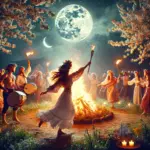
While Mabon’s roots are firmly planted in history, modern Pagans and Wiccans have undertaken a remarkable journey of adaptation and expansion upon these ancient traditions, resulting in the creation of a vibrant and diverse tapestry of contemporary celebrations. In this evolving landscape of spirituality and reverence for the natural world, Mabon has not only survived the passage of time but has thrived, evolving into a celebration that resonates with the complexities of our modern lives while retaining its profound connection to the ancient rhythms of the Earth.
The Resilience of Mabon Traditions

Modern Mabon celebrations are a testament to the resilience and adaptability of these spiritual traditions. They represent a harmonious blend of the old and the new, weaving threads of ancient wisdom into the fabric of our contemporary existence. At their core, these celebrations remain anchored in the fundamental themes of gratitude, balance, and connection to nature that have defined Mabon for generations.

Inclusivity in Modern Mabon Celebrations

One of the most notable aspects of modern Mabon celebrations is their inclusivity. In a world that increasingly values diversity and unity, Mabon has opened its arms to individuals from all walks of life. Modern Pagans and Wiccans have embraced the opportunity to welcome diverse perspectives and belief systems, enriching the tapestry of Mabon celebrations with a wide range of practices and rituals. This inclusivity has allowed Mabon to transcend cultural and geographic boundaries, creating a global community of like-minded individuals who gather to honor the changing of the seasons.

The Role of Technology in Mabon

Technology has also played a role in modern Mabon celebrations. The advent of the internet and social media has allowed practitioners to connect with one another on a scale previously unimaginable. Online forums, virtual gatherings, and digital resources have made it easier than ever for people to share their Mabon experiences, exchange ideas, and learn from one another. This digital interconnectedness has strengthened the sense of community among modern Pagans and Wiccans, fostering a sense of unity that extends far beyond physical boundaries.

Innovative Rituals and Symbolism

Innovative approaches to ritual and symbolism have also emerged in modern Mabon celebrations. While traditional practices, such as offering libations to the land, remain integral, contemporary practitioners have introduced new elements that resonate with the challenges and aspirations of the present day. These may include eco-conscious practices, such as planting trees or participating in environmental cleanup efforts, as a way of honoring the Earth and demonstrating a commitment to its well-being.

Key Aspects of Modern Mabon Observances

Gratitude for Abundance

One of the central themes of Mabon is expressing gratitude for the bounties of the year’s harvest. This often involves communal feasts where friends and family come together to share the abundance of the season. It’s a time to savor the flavors of freshly harvested foods, like apples, pumpkins, and grains. Historically, harvest festivals have been celebrated across cultures, such as the British Harvest Home and the American Thanksgiving. These gatherings not only celebrate the harvest but also foster a sense of community and shared prosperity.

Balance and Equilibrium

Mabon reminds practitioners of the delicate balance between light and dark, both in nature and in our lives. It’s a time for introspection, a moment to acknowledge the dualities within us and in the world. This balance is often symbolized by the equal lengths of day and night during the equinox. In ancient times, the equinox was a significant event, marking the transition between seasons. The concept of balance can also be seen in the yin-yang philosophy of Chinese culture, which emphasizes harmony between opposing forces.

Harvest Rituals

Many Mabon rituals involve honoring the Earth’s bounty through offerings and ceremonies. Participants might create altars adorned with seasonal fruits, vegetables, and grains. These altars serve as focal points for meditation and offerings to deities associated with harvest and abundance. For example, in ancient Greek mythology, Demeter, the goddess of the harvest, was honored with offerings of grain and fruit. Similarly, Native American tribes held ceremonies to give thanks for the harvest and ensure future fertility.

Connecting with Nature

Mabon is an opportunity to immerse oneself in the natural world. Some Pagans and Wiccans choose to go on nature walks, collect fallen leaves, or perform rituals outdoors to strengthen their connection with the Earth. This practice echoes the ancient tradition of nature worship, where people revered natural elements like trees, rivers, and mountains. Modern practitioners might also engage in activities like gardening or bird-watching to deepen their bond with nature.

Lighting Candles

As the nights grow longer, the lighting of candles becomes a significant ritual. Candles symbolize the inner light that can guide us through the approaching darkness of winter. The flickering flames also pay homage to the waning sun. Historically, fire has been a powerful symbol in many cultures, representing life, warmth, and protection. During Mabon, lighting candles can also be a way to honor the sun gods and goddesses, such as the Celtic god Lugh.

Meditation and Contemplation

Mabon is a time for introspection and meditation. Many practitioners take moments of stillness to reflect on the past year, set intentions for the coming season, and embrace personal transformation. This practice is similar to the ancient tradition of retreating to sacred spaces for contemplation and renewal. In modern times, meditation can take many forms, from silent reflection to guided visualizations. The goal is to achieve a sense of inner peace and clarity as we transition into the darker months of the year.

Conclusion

Mabon, the Autumn Equinox, is a profound moment in the Pagan and Wiccan calendar, a time to celebrate the harvest, find balance, and connect with the changing seasons. While rooted in ancient traditions, Mabon has evolved to incorporate a rich tapestry of modern practices. It’s a time for gratitude, reflection, and renewal—a reminder of the eternal dance of light and darkness that weaves through the cosmos and within our souls. Whether through communal feasts, meditative rituals, or simply by enjoying the beauty of nature, Mabon offers a chance to harmonize with the rhythms of the Earth and find magic in the turning of the seasons.

Posted on Leave a comment

Ritual: Mabon – Balanced Meditation

Meditation
Meditation

Introduction

Embrace the autumnal equinox

In the tranquil embrace of the autumnal equinox, a mystical celebration known as Mabon emerges, inviting us to explore the delicate balance between light and darkness, both in the world around us and within our own souls. Among the many enchanting rituals that grace this sacred season, Balanced Meditation stands as a beacon of serenity and self-discovery. This ancient practice guides us to a place of profound equilibrium, where the shifting hues of fall foliage mirror the interplay between the active and introspective energies of our lives. Join us on a journey into the heart of Mabon’s Balanced Meditation, where we shall explore the art of harmonizing with the season’s energies, finding stillness amid transformation, and embracing the lessons of balance that this enchanted time bestows.

Ritual Basics

Before beginning any ritual, it is important to prepare yourself mentally and physically. You may want to take a cleansing bath, or shower, and meditate or perform some grounding exercises to center yourself. Gather any materials you will need, such as candles, incense, and offerings for the forest spirits.

You can read a more detailed Ritual Preparation guide here.

Equilibrium: A Ritual for the Balance Meditation

In the waning days of summer, as the sun dips lower on the horizon and the vibrant green of the world takes on the warm, golden hues of autumn, we find ourselves at the threshold of Mabon, the autumn equinox. This season is marked by a profound transformation, as nature herself dons her cloak of change. It’s a time when the leaves begin their graceful descent to the earth, and the air takes on a crisper edge, carrying with it the whispers of coming winter.

During this transformation, we are presented with a profound lesson — the art of embracing change as a pathway to equilibrium. The Balanced Meditation, a sacred ritual of Mabon, beckons us to contemplate this very lesson. It guides us to find solace amid change, much as the trees surrender their leaves, trusting that new growth will come in their own time. This ritual reminds us that life is an eternal dance of balance, a delicate interplay between light and dark, growth and release, and it is through acceptance and understanding of this balance that we find our own equilibrium.

Mabon – Balanced Meditation

As we embark on the journey of the Balanced Meditation, we immerse ourselves in the beauty of the season, where every falling leaf is a reminder that change is not to be feared but embraced. The ritual encourages us to sit in quiet reflection, much like the trees themselves, as we release our worries, tensions, and attachments to that which no longer serves us. This act of letting go becomes a sacred dance, a harmonious step in the rhythm of the season, as we surrender to the transformative energies of Mabon.

  • A blanket and/or cushion(s).
  • A foci (this can be a crystal, a fall symbol, etc)

Preparation

  1. Find a cozy nook in your haven, it can be indoors or out. It must be a safe place for you to be.
  2. Use your blanket and/or cushion(s) to make the ritual space comfortable for you.
  3. Nestle yourself into a comfortable position, either seated or lying down, as if preparing for a restful slumber. Let the tranquility of your chosen space envelop you.
  4. Comfortably hold your foci, letting it bring you to peace.
  5. Gently close your eyes, letting the quietude and peace settle around you like a soft mist. Inhale deeply, drawing in the hushed serenity of the surrounding woods and waters, and exhale any residual thoughts that may linger.

Visualizing the Equinox

  1. As your inner canvas unfurls, paint a picture of yourself standing amidst nature’s embraces. Imagine the landscape shifting, revealing a lush forest glade, a vibrant meadow, or a serene beach along the Pacific coastline.
  2. Watch as the foliage morphs, transitioning from one season’s attire to another. Allow the play of sunlight and shadows to paint a symphony of patterns around you, much like the intricate dance of your witchcraft practice.

Focusing on Balance

  1. Shift your gaze to the balance teetering between the light and the darkness in your visualized sanctuary. Inhale, imbuing yourself with the radiant energy of the sun, its warmth filling you from within.
  2. Exhale, envisioning any concerns, burdens, or worries as mere shadows that disperse and dissolve into the earth beneath you, absorbed by the ground.

Reflecting Within

  1. Redirect your focus inward, like a seeker delving into the mysteries of the self. Contemplate the intricate scales of your life—how work finds its counterpoint in rest, joy waltzes with sorrow, and growth finds its partner in release.
  2. As you inhale and exhale in rhythm, become a conduit for equilibrium, inviting its essence to flow through you.

Embracing Equilibrium

  1. Visualize equilibrium as a gentle stream of radiant light. Imagine it coursing through your veins, each pulse resonating with the harmonious balance you seek.
  2. Feel this luminous current enveloping every corner of your being, like the embrace of an old friend who understands the nuances of your journey.

Affirming Balance

  1. Utter a mantra, seasoning your experience with affirmation: “I am in harmony with the cycles of life. I embrace both light and darkness, finding equilibrium within.”
  2. Let this declaration infuse your being with the essence of balance.

Returning to the Present

  1. Allow your awareness to trickle back into the present moment, like water finding its way back to the ocean. Inhale the freshness of the air, as if savoring the scent of newly foraged herbs.
  2. With a tender smile, exhale, and as you gently open your eyes, bask in the gentle light of your surroundings, knowing that you’ve brewed an elixir of inner harmony.
  3. Carry this sense of balance and mindfulness with you, just as you would carry a vial of your finest potion, allowing it to be a guiding star through the currents of your day.

In the acceptance of change, we find the essence of equilibrium. This ritual teaches us that true balance is not stagnant; it is a dynamic state, an ever-flowing stream of energy that courses through our lives. It is the recognition that light and darkness, joy and sorrow, growth and release are not opposing forces but interconnected aspects of the same cycle.

As we conclude the Balanced Meditation, we emerge with a profound sense of peace, knowing that change is not a disruption of our equilibrium but an integral part of it. It is through acceptance and the embrace of transformation that we find true balance, just as the autumn forest finds its equilibrium in the changing seasons.

Symbols of Autumn

Here are some physical autumn symbols that you can hold and use in your witchcraft practice:

  • Acorns: Acorns are a powerful symbol of potential and growth. Hold them in your hand during rituals or use them as part of your altar setup to represent the promise of future abundance and transformation.
  • Autumn Leaves: Collect colorful autumn leaves and hold them to connect with the changing of seasons. Use them in spells related to change, letting go, or personal transformation.
  • Pumpkins: Pumpkins are iconic symbols of autumn. Holding a small pumpkin or a pumpkin-shaped object can symbolize the harvest, protection, and abundance. Carve a protective symbol into a pumpkin and hold it during protection rituals. 
  • Candles: Holding candles in autumnal colors like orange, red, or brown can help you attune to the season’s energies. Light the candle and focus on its flame during meditation or spellwork to invoke the corresponding qualities of the color. 
  • Feathers: As birds migrate during the fall, feathers can symbolize freedom and the connection between the earthly and spiritual realms. Hold feathers to connect with your spirit guides or incorporate them into rituals for communication with the spirit world.
  • Cornucopia: The cornucopia, or horn of plenty, is a symbol of abundance and harvest. Hold a small cornucopia or use one in your altar setup to attract prosperity and bountiful blessings.
  • Apples: Apples represent wisdom, healing, and immortality. Holding an apple during meditation or rituals can help you tap into these qualities. You can also use apples as offerings to deities or spirits.
  • Pinecones: Pinecones are associated with evergreen trees and the resilience of nature. Hold a pinecone to connect with the earth’s enduring energy and use it in rituals for grounding and stability.
  • Miniature Brooms: Miniature brooms or besoms symbolize purification and sweeping away negativity. Hold one during rituals focused on cleansing and purifying your space or your life.
  • Harvest Tools: Hold small representations of harvest tools like a sickle, scythe, or a miniature basket filled with symbolic fruits and vegetables to connect with the theme of abundance and the reaping of rewards.
  • Gemstones: Carry gemstones associated with autumn, such as carnelian, citrine, or amber, in your pocket or hold them during meditation and rituals to amplify their energy and align with the season’s intentions.
  • Autumn Herbs: Bundle together or hold autumn herbs like sage, rosemary, or thyme to infuse your rituals with their earthy and purifying energies.

Remember that the power of these symbols is deeply personal, and your connection to them is what makes them meaningful in your practice. Holding and meditating upon these symbols during autumn can help you tap into the seasonal energies and bring your intentions to life in your witchcraft practice.

Mabon
Rituals

Conclusion

In the profound teachings of the Balanced Meditation, we unearth a timeless wisdom that transcends the boundaries of seasons and rituals. It is a revelation that true equilibrium is not a static state but a dynamic force that surges through the currents of our existence, much like the ever-flowing stream of time. As we draw this sacred practice to a close, we carry with us the profound understanding that light and darkness, joy and sorrow, growth and release are not adversaries in our journey, but rather intimate companions in the dance of life.

Just as the autumn forest gracefully adapts to the changing seasons, we too can embrace the transformative energies that life offers. We emerge from Balanced Meditation with a serene sense of peace, armed with the knowledge that change is not a disruption of our equilibrium but a pivotal element of it. In our acceptance of change, we find the very essence of balance—the harmonious coexistence of all facets of existence. As we journey forth into the world, we carry with us the wisdom of the autumn equinox, recognizing that equilibrium is not an end goal but a perpetual voyage, and in the embrace of transformation, we discover the true heart of balance.

Posted on Leave a comment

A Guide to the Autumn Equinox

Autumn Equinox
Autumn Equinox

Introduction

Embracing the Equinox

The Autumn Equinox, known by various names such as Mabon, the September Equinox, or the Fall Equinox, is a significant celestial event that marks the transition from summer to fall in the Northern Hemisphere. This equinox occurs when the sun crosses the celestial equator, resulting in nearly equal periods of daylight and darkness. In this article, we will explore the Autumn Equinox, its historical and modern practices, and its importance in both traditional and contemporary cultures.

Understanding the Equinox: Nature’s Balance Beam

The Autumn Equinox typically falls on or around September 21st in the Northern Hemisphere, though the exact date can vary slightly from year to year. It’s a pivotal moment in the astronomical calendar when day and night are in perfect harmony, each lasting approximately the same duration. This equilibrium symbolizes the delicate balance between light and darkness, a theme that resonates deeply in various cultures and traditions.

A Global Perspective on the Autumn Equinox

The Autumn Equinox is a celestial event that holds universal significance, resonating not only in the Northern Hemisphere but also in the Southern Hemisphere, albeit with a reversal of seasons. This equinox typically occurs on or around September 21st in the Northern Hemisphere and around March 21st in the Southern Hemisphere. However, it’s essential to note that the exact date can vary slightly from year to year due to the intricacies of Earth’s orbit.

In the Northern Hemisphere, the Autumn Equinox is a pivotal moment in the astronomical calendar. It marks the juncture when day and night are in perfect equilibrium, each lasting approximately the same duration. This exquisite balance of light and darkness is a testament to the intricate dance between the Earth and the Sun. As the Northern Hemisphere bids farewell to the warmth of summer and welcomes the cool embrace of autumn, this equilibrium symbolizes the delicate transition from one season to another. It is a theme that resonates deeply in various cultures and traditions, reflecting the universal recognition of the significance of balance in our lives and the world around us.

Conversely, in the Southern Hemisphere, the Autumn Equinox ushers in the arrival of spring. As the days grow longer, the world awakens from its winter slumber, and the Earth begins to teem with new life. The Southern Hemisphere’s Autumn Equinox mirrors its counterpart in the Northern Hemisphere, offering a moment of balance and transition between the seasons.

In both hemispheres, the Autumn Equinox serves as a reminder of the cyclical nature of our planet’s journey around the Sun. It underscores the interconnectedness of all life and the ever-shifting rhythms of the natural world. Whether it’s the Northern Hemisphere’s preparation for the harvest or the Southern Hemisphere’s embrace of new beginnings, the Autumn Equinox invites us to contemplate the delicate equilibrium that sustains our planet and to celebrate the beauty of this cosmic choreography that we are all a part of.

The Global Tapestry of Autumn Equinox Celebrations

The Autumn Equinox, a celestial event marking the transition from summer to fall, has left an indelible mark on cultures across the globe for centuries. While the specific customs and traditions vary widely, the common thread that unites these diverse celebrations is a deep reverence for the changing seasons and the symbolism of balance and abundance. Here, we embark on a journey around the world to explore how different cultures have embraced the Autumn Equinox throughout history.

  • China: The Mid-Autumn Festival: In China, the Mid-Autumn Festival, also known as the Moon Festival, is a time for families to come together, much like the American Thanksgiving. Celebrated on the 15th day of the eighth month of the lunar calendar, which usually falls close to the Autumn Equinox, it is a time to give thanks for the harvest and to appreciate the beauty of the full moon. Families gather to share mooncakes, a special pastry filled with sweet or savory fillings, under the glow of the moon.
  • Japan: Tsukimi Festival: Japan has its own version of a moon-viewing festival called Tsukimi, which occurs in September or early October, around the time of the Autumn Equinox. During Tsukimi, people celebrate the beauty of the full moon, traditionally by setting up altars adorned with offerings like rice dumplings and pampas grass. It’s a time for reflection and appreciation of the changing season.
  • Korea: Chuseok: Chuseok, the Korean Thanksgiving Day, coincides with the Autumn Equinox and is one of the most significant holidays in Korea. Families gather to honor their ancestors, share a bountiful feast featuring traditional dishes like songpyeon (rice cakes), and engage in various cultural activities. Chuseok embodies themes of gratitude and unity, much like other harvest festivals around the world.
  • India: Navaratri and Durga Puja: In India, the Autumn Equinox is marked by a multitude of celebrations. Navaratri, a nine-night festival dedicated to the goddess Durga, typically falls around this time. It’s a time of fasting, dancing, and worship, celebrating the triumph of good over evil. Durga Puja, a major Hindu festival, is celebrated with grand processions and the installation of elaborately crafted idols of the goddess.
  • Native American Harvest Festivals: Various Native American tribes across North America have celebrated harvest festivals around the Autumn Equinox for generations. These festivals often involve communal feasting, music, dance, and ceremonies to express gratitude for the earth’s bounty. The Cherokee Nation, for example, celebrates the Great New Moon Ceremony during this time to give thanks for the harvest and pray for a bountiful winter.
  • European Traditions: Michaelmas and Harvest Home: In Europe, the Autumn Equinox is marked by a range of traditions. Michaelmas, celebrated on September 29th, honors the Archangel Michael, and serves as a time to give thanks for the harvest and ask for protection throughout the coming winter. In England, the Harvest Home festival involves decorating churches with harvested fruits and vegetables, and the celebrations often include communal feasts and music.

A Global Tapestry of Gratitude

The Autumn Equinox has woven a rich tapestry of celebrations around the world, each culture adding its unique colors and threads to the fabric of human tradition. While the specifics of these celebrations may differ, they all share a fundamental reverence for the Earth’s bounty and the significance of balance, unity, and gratitude. In this shared appreciation for the changing seasons, we find a reminder of our interconnectedness with nature and with each other, regardless of geographical or cultural boundaries.

Traditional Practices and Significance of the Autumn Equinox

The Autumn Equinox, celebrated around the world under various names and traditions, holds a rich tapestry of traditional practices and deep significance. This celestial event, marked by nearly equal hours of daylight and darkness, symbolizes themes of balance, harvest, and transition. Here, we delve into some of the traditional practices and the profound significance associated with the Autumn Equinox:

  • Harvest Festivals: Across cultures, the Autumn Equinox is synonymous with the harvest season’s culmination. It’s a time when communities come together to reap the rewards of their hard work in the fields. Traditional practices often involve communal feasting, dancing, and the sharing of the year’s bounty. In the United States, Thanksgiving is a prominent example of a harvest festival celebrated around the Autumn Equinox.
  • Mythological Symbolism: Many ancient mythologies incorporate the concept of balance and transition associated with the equinox. For instance, in Greek mythology, the story of Persephone’s descent into the underworld and her return to her mother, Demeter, mirrors the changing seasons. Her return from the underworld in the spring signifies the renewal of life, while her descent into darkness during the fall equates to the earth’s waning vitality.
  • Equinox Alignments: Numerous ancient sites, such as Stonehenge in England and Chichen Itza in Mexico, were constructed with alignments that highlight the equinoxes. At these sites, the rising or setting sun aligns with specific architectural features during the equinoxes, underscoring the importance of these celestial events in ancient cultures’ calendars.
  • Nature-Based Practices: Indigenous cultures often marked the Autumn Equinox with nature-based rituals. These practices could involve observing the changing behaviors of animals and plants, acknowledging the migration of birds, or engaging in ceremonies that honored the earth’s rhythms.
  • Chinese Moon Festival: In China, the Autumn Equinox is celebrated with the Mid-Autumn Festival, also known as the Moon Festival. Families gather to appreciate the full moon’s beauty, share mooncakes, and express gratitude for the harvest. The round shape of mooncakes symbolizes completeness and unity.
  • Japanese Tsukimi Festival: Japan celebrates the Tsukimi Festival, a moon-viewing festival that coincides with the Autumn Equinox. People create altars adorned with offerings like rice dumplings and pampas grass to honor the full moon’s beauty and express gratitude for the harvest.
  • Korean Chuseok: Chuseok, the Korean Thanksgiving Day, aligns with the Autumn Equinox. It’s a time for ancestral worship, communal feasting, and cultural activities that celebrate the harvest’s abundance.
  • Spiritual and Reflective Practices: Many individuals and spiritual groups mark the Autumn Equinox with rituals and ceremonies that encourage reflection, gratitude, and intention setting. These practices often involve meditation, prayer, and connecting with the natural world.

The Autumn Equinox’s significance lies in its role as a bridge between the seasons. It represents a moment of balance in the ever-turning wheel of the year. It’s a time to express gratitude for the earth’s abundance, acknowledge the impermanence of life, and prepare for the colder months ahead. The equinox teaches us the value of balance and reminds us of our connection to the rhythms of nature.

In summary, the Autumn Equinox is a time when traditional practices and cultural significance converge to celebrate the harvest, reflect on the changing seasons, and honor the delicate equilibrium between light and darkness. Whether through communal feasts, mythological stories, or nature-based ceremonies, the Autumn Equinox continues to be a time-honored and cherished event worldwide.

Modern Interpretations and Celebrations of the Autumn Equinox

While the Autumn Equinox has deep-rooted traditional practices, it has also adapted and evolved to suit modern lifestyles and belief systems. In contemporary celebrations, people from diverse backgrounds find innovative ways to connect with the themes of balance, harvest, and transition associated with this celestial event. Here, we explore some of the modern interpretations and celebrations of the Autumn Equinox:

  • Pagan and Wiccan Observations: For many Pagans and Wiccans, the Autumn Equinox is known as Mabon. This celebration remains deeply rooted in ancient traditions but has evolved to include a variety of practices. Modern Pagans often use this time to express gratitude for the year’s blessings, acknowledge the balance between light and dark, and perform rituals that align with the changing seasons. These rituals may involve meditation, lighting candles, and connecting with nature.
  • Secular Celebrations: In secular contexts, the Autumn Equinox is celebrated as a time to embrace the beauty of the changing seasons. Many people take advantage of the pleasant weather to engage in outdoor activities like hiking, picnicking, or simply enjoying the fall foliage. It’s a time for nature walks, appreciating the colors of autumn, and taking a break from the hustle and bustle of daily life.
  • Environmental Awareness: Some modern celebrations of the Autumn Equinox focus on environmental stewardship and sustainability. People participate in activities like tree planting, park clean-ups, and discussions about climate change. These initiatives highlight the importance of preserving the Earth’s balance and resources, aligning with the equinox’s theme of harmony.
  • Artistic Expression: Many individuals channel their creativity during the Autumn Equinox by crafting seasonal decorations, painting, writing, or creating symbolic artworks that capture the essence of the season. This creative expression serves as a way to connect with the equinox’s themes and share them with others.
  • Personal Reflection: In a fast-paced world, the Autumn Equinox offers a moment for personal reflection and intention setting. People engage in meditation, journaling, or simply take a moment to consider their goals and desires for the upcoming season. It’s a time to let go of what no longer serves us and prepare for the winter months ahead.
  • Harvest Festivals: While traditional harvest festivals still exist, many have adapted to modern sensibilities. These festivals often incorporate elements of local culture, music, and cuisine, making them enjoyable events for all members of the community. Farmers’ markets and food festivals that celebrate locally sourced produce are examples of contemporary harvest celebrations.
  • Educational Initiatives: Schools and educational institutions often use the Autumn Equinox as an opportunity to teach students about astronomy, the changing seasons, and the importance of nature conservation. These initiatives foster a deeper understanding of the Earth’s rhythms and encourage environmental responsibility.
  • Family Traditions: Many families create their own unique traditions for the Autumn Equinox. These may include outdoor adventures, crafting seasonal decorations, cooking special meals, or simply spending quality time together. These personal rituals help families bond and create lasting memories.

While the traditional practices associated with the Autumn Equinox remain relevant and cherished, modern celebrations have expanded to accommodate contemporary lifestyles and beliefs. Whether through spiritual rituals, outdoor adventures, environmental initiatives, or personal reflection, people from all walks of life continue to find meaningful ways to connect with the equinox’s themes of balance, harvest, and transition.

The Autumn Equinox: A Time of Balance and Transition

The Autumn Equinox, or Mabon, is a time of profound reflection and celebration, bridging the gap between ancient traditions and modern interpretations. As we honor the delicate balance of light and darkness, we acknowledge the interconnectedness of life and our place within the cycles of nature. Whether through traditional practices rooted in various cultures or through contemporary rituals and personal reflections, the Autumn Equinox invites us to embrace the changing seasons with gratitude and mindfulness. It is a moment to celebrate the harvest, foster a deeper connection with the earth, and prepare for the introspective journey that the approaching winter months bring. In this convergence of old and new, we find a rich tapestry of meaning that continues to resonate across time, reminding us to live in harmony with the rhythms of the natural world.

Posted on Leave a comment

Ritual: Casting a Circle

Casting a circle
Casting a circle

Introduction

Creating a Sacred Space for Ritual and Magic

Casting a circle is a cornerstone practice in many pagan and Wiccan traditions. It creates a sacred space that serves as a boundary between the mundane world and the spiritual realm, providing protection and amplifying the energy raised during rituals and spellwork. This article will guide you through the steps to cast a circle, offering insights into the significance and techniques involved.

Ritual Basics

Before beginning any ritual, it is important to prepare yourself mentally and physically. You may want to take a cleansing bath, or shower, and meditate or perform some grounding exercises to center yourself. Gather any materials you will need, such as candles, incense, and offerings for the forest spirits.

You can read a more detailed Ritual Preparation guide here.

Why Cast a Circle?

Casting a circle is more than just a ritualistic step; it is a spiritual practice that enhances your connection to the divine, grounds your energy, and creates a focused environment for your magical workings. Here are some reasons why casting a circle is essential:

  • Protection: A circle acts as a barrier against negative energies and unwanted influences, ensuring that the space within remains pure and sacred.
  • Energy Amplification: By containing the energy raised during a ritual, a circle intensifies and directs it towards your intention or spell.
  • Sacred Space Creation: The circle delineates a space that is spiritually significant, allowing you to connect deeply with the elements, deities, and your inner self.
  • Focus and Intention: Casting a circle helps to center your mind, body, and spirit, aligning them with the purpose of your ritual.

Casting a Circle – Creating a Sacred Space for Ritual and Magic

Casting a circle is a cornerstone practice in many pagan and Wiccan traditions. It creates a sacred space that serves as a boundary between the mundane world and the spiritual realm, providing protection and amplifying the energy raised during rituals and spellwork. This article will guide you through the steps to cast a circle, offering insights into the significance and techniques involved.

  • Wand or athame (ritual knife)
  • Candles representing the elements (Earth, Air, Fire, Water)
  • Incense
  • Salt
  • Water
  • Any additional ritual items (e.g., crystals, altar decorations)

Preparation

  1. Choose a quiet, undisturbed area, either indoors or outdoors.
  2. Cleanse the area physically and spiritually (e.g., sweep the floor, smudge with sage).
  3. Set your intentions for the circle casting and the ritual to follow.

Steps to Cast a Circle

  1. Purify the Space
  2. Physically clean the area and spiritually cleanse it using incense or a smudging stick. Walk around the perimeter, allowing the smoke to purify the space.
  3. Ground and Center
  4. Stand or sit comfortably in the center of your chosen space. Close your eyes, take deep breaths, and visualize roots extending from your feet into the Earth, grounding you.
  5. Create Sacred Space
  6. Starting in the North (or East, depending on your tradition), walk clockwise (sunwise) around the perimeter, visualizing a circle of light forming as you go. Use your wand or athame to trace the boundary.
  7. Call the Quarters
  8. Face each cardinal direction, invoking the elements and their guardians.
  9. North (Earth): “Guardians of the North, powers of Earth, I call upon you to protect and bless this circle.”
  10. East (Air): “Guardians of the East, powers of Air, I call upon you to protect and bless this circle.”
  11. South (Fire): “Guardians of the South, powers of Fire, I call upon you to protect and bless this circle.”
  12. West (Water): “Guardians of the West, powers of Water, I call upon you to protect and bless this circle.”
  13. Raise Energy
  14. Stand in the center of the circle and raise your arms. Visualize energy building within and around you. You can chant, drum, or dance to raise this energy, filling the circle with light and power.
  15. Set the Boundary
  16. Finalize the circle by mentally or physically completing the boundary. Imagine a shimmering dome of light enclosing the space. Declare the circle cast, saying, “This circle is cast, a sacred space between the worlds.”

Working Within the Circle

  1. Once the circle is cast, you can proceed with your ritual or spellwork. Whether you are performing a seasonal celebration, invoking deities, or casting a spell, the circle serves as a container for your focused intention and energy.

Closing the Circle

  1. When your ritual is complete, it’s important to close the circle properly:
  2. Thank the Quarters
  3. Face each direction and thank the elemental guardians for their presence and assistance. For example, “Guardians of the North, powers of Earth, thank you for your protection and blessings. Depart in peace.”
  4. Release the Circle
  5. Walk counterclockwise (widdershins) around the circle, visualizing the energy dissipating. Use your wand or athame to “cut” the circle, releasing the energy back to the universe.
  6. Ground Yourself
  7. Take a moment to ground any excess energy. Eat or drink something nourishing, connect with the Earth, or simply sit quietly and breathe deeply.

May your circles be strong, your energy focused, and your rituals blessed.

Blessed Be!

General Magic
Rituals

Conclusion

Casting a circle is a deeply personal and powerful practice that enhances your spiritual and magical work. By creating a sacred space, you connect more profoundly with the elements, deities, and your inner self, fostering a sense of protection, focus, and intention. Whether you are new to this practice or an experienced practitioner, casting a circle is a valuable skill that enriches your rituals and deepens your connection to the spiritual realm.

May your circles be strong, your energy focused, and your rituals blessed. Blessed Be!

Posted on Leave a comment

Hexes: Shadows and Truths

hexes-shadows and truths

Introduction

Witchcraft: Exploring Their Nature, Intent, and Duration

In the labyrinth of witchcraft, where the ethereal glow of candlelight illuminates ancient tomes and whispers of incantations hang heavy in the air, the concept of hexes emerges as a formidable force of magical influence. Within the intricate web of spells and rituals, hexes stand as potent expressions of power, capable of shaping destinies and altering the very course of existence. Yet, amidst the swirling currents of magic, the precise nature of hexes remains shrouded in mystery, beckoning seekers to unravel its enigmatic secrets. What, then, distinguishes a hex from other forms of magical workings, such as jinxes and curses? Join us on a journey of exploration as we delve into the depths of hexes, uncovering their essence, intention, duration, and nuances that set them apart from other mystical practices.

Understanding the Nature of Hexes

At its core, a hex is a potent manifestation of magical energy, crafted with the deliberate intent to cause harm, disruption, or misfortune to its target. Unlike the whimsical mischief of jinxes, which may manifest as minor inconveniences or fleeting annoyances, hexes wield a heavier hand, inflicting more profound and enduring consequences upon those who fall under their influence.

The potency of a hex lies in its ability to penetrate the very fabric of reality, disrupting the delicate balance of energy and intention that shapes the lives of its victims. From financial ruin and health ailments to fractured relationships and personal setbacks, hexes have the power to cast a shadow of darkness upon every aspect of a person’s existence, leaving behind a trail of devastation and despair in their wake.

What sets hexes apart from other forms of magical workings is their ability to evoke a profound sense of fear and uncertainty in their targets. Unlike curses, which may be invoked with explicit malice or malevolence, hexes often operate beneath the surface, stealthily weaving their way into the lives of unsuspecting individuals, sowing seeds of doubt and discord with every twist of fate.

In essence, a hex is more than just a spell—it is a weapon of magical warfare, wielded with the intent to inflict suffering and hardship upon those who dare to cross its path. And while the effects of a hex may fade with time, its lingering presence serves as a grim reminder of the power and potency of dark magic in the hands of those who seek to wield it for their own ends.

Intent and Duration of Hexes

The intent behind a hex is a potent force, often stemming from deep-seated emotions such as anger, resentment, or a thirst for revenge. It is born from the raw energy of human emotions, fueled by the desire to wield magical abilities as a weapon to inflict suffering upon their targets. Whether driven by personal grievances or invoked in service to a greater cause, the intent behind a hex carries a weighty resonance that reverberates through the very fabric of existence.

Unlike the fleeting mischief of jinxes, which may dissipate with time or be easily dispelled, hexes possess a tenacity that can endure for extended periods. They are imbued with a dark energy that lingers in the air like a malevolent fog, casting a shadow over their victims’ lives long after the initial casting. Like a poison seeping into the soil, a hex can penetrate the deepest recesses of the soul, tainting every aspect of a person’s existence with its corrosive influence.

The duration of a hex is determined by the strength of the practitioner’s intent and the depth of their connection to the forces they invoke. Some hexes may linger for weeks, months, or even years, slowly eating away at the vitality and well-being of their victims with each passing day. Others may be so deeply ingrained in the fabric of reality that they become a permanent fixture, forever altering the course of their targets’ lives with their insidious influence.

In the realm of hexes, time is both a weapon and a curse. With each passing moment, the effects of a hex dig their claws deeper into the psyche of its victims, gnawing away at their peace of mind and sense of security. And yet, it is also a beacon of hope, for time has the power to heal wounds and dissipate even the darkest of shadows. Thus, while the duration of a hex may be long and arduous, it is not without end, and those who persevere in the face of adversity may yet find redemption and renewal on the other side.

Differences Between Hexes, Jinxes, and Curses

While hexes, jinxes, and curses all fall under the umbrella of magical influence, they differ in their severity, intent, and duration:

  1. Hexes: Hexes are characterized by their potency and intention to cause harm, disruption, or misfortune to their targets. They often carry significant consequences and can endure for extended periods, casting a shadow of darkness upon every aspect of the victim’s life.
  2. Jinxes: Jinxes, in contrast, manifest as minor annoyances or inconveniences and are often crafted with a playful or mischievous intent. While they may cause temporary setbacks, jinxes are generally short-lived in duration and carry less severe consequences than hexes.
  3. Curses: Curses represent the most severe form of magical working, characterized by their intention to cause profound harm, suffering, or destruction to their targets. Curses may involve invoking dark or malevolent forces and can persist for generations, casting a shadow of darkness that spans lifetimes.

While hexes, jinxes, and curses all harness the power of magic to influence the lives of others, they vary in their severity, intent, and duration. Hexes, with their potent and malevolent nature, cast a shadow of darkness upon those who fall victim to their influence, serving as a reminder of the profound consequences that can arise from wielding magic with malicious intent.

Example of a Hex: The Shadow’s Embrace

In the dimly lit sanctum of her secluded cottage, nestled deep within the heart of the forest, a witch known only as Elara brews a potion of potent malice. With each carefully measured ingredient and whispered incantation, she weaves the threads of her intent into a tapestry of darkness, crafting a hex of unparalleled potency.

What It Is: The hex, which Elara dubs “The Shadow’s Embrace,” is a sinister enchantment designed to ensnare its victim in a web of despair and misfortune. Infused with the essence of darkness and despair, it seeks to shroud its target in a veil of gloom, twisting their reality with its malevolent influence.

How It Works: To activate the hex, Elara calls upon the spirits of the night, invoking their aid in weaving her dark magic. With a flick of her wrist and a whispered command, she sends the shadowy tendrils of the hex snaking through the ether, seeking out its unsuspecting victim with unerring precision.

Effects: As the hex takes hold, its victim finds themselves plagued by a relentless onslaught of misfortune and despair. Their once-bright future darkens with each passing day, as opportunities slip through their fingers and dreams turn to ashes. Relationships sour, health falters, and joy becomes but a distant memory as the shadow of the hex tightens its grip.

Expectations: Elara expects that her victim will suffer greatly under the weight of the hex, their life crumbling to ruin as the darkness consumes them from within. She anticipates their cries for mercy, their pleas for release falling on deaf ears as the shadow’s embrace grows ever tighter. And when the hex has run its course, she expects nothing less than the complete and utter annihilation of her victim’s spirit, leaving behind naught but a hollow shell of their former self.

The Shadow’s Embrace serves as a chilling reminder of the power of dark magic, a testament to the depths of despair that can be wrought when malice and malevolence are given free rein. And as Elara watches from the shadows, she revels in the knowledge that her victim’s suffering is but a small price to pay for the taste of true power that the hex has afforded her.

Beware the Shadows: A Warning Against Dangerous Hexes

In the shadowed corners of the mystical realm, where the boundaries between light and darkness blur, lurk the dangers of hexes—potent spells of malevolence and malice that wield the power to wreak havoc upon their unsuspecting victims. Yet, while the allure of dark magic may beckon with promises of power and retribution, the consequences of invoking such forces can be dire indeed.

How It Happens: Dangerous hexes often arise from a place of unchecked anger, resentment, or desire for revenge, as practitioners seek to wield their magical abilities as a weapon against those they perceive as adversaries. Motivated by personal grievances or fueled by the whispers of shadowy entities, they cast their spells with callous disregard for the consequences, blindly unleashing forces they cannot control.

Not Doing It: The path of the dangerous hex is fraught with peril, leading only to darkness and despair. To engage in such practices is to court disaster, inviting karmic repercussions that reverberate through the very fabric of existence. The consequences of invoking dark magic are far-reaching and unpredictable, often resulting in suffering and devastation not only for the intended target but also for the practitioner themselves.

How to Avoid Them: Avoiding dangerous hexes requires a steadfast commitment to ethical conduct and moral integrity. Practitioners must resist the temptation to wield their magical abilities as a weapon of vengeance or retribution, instead choosing to align themselves with the principles of compassion, empathy, and respect for the free will of others.

Furthermore, practitioners should seek guidance from experienced mentors and teachers who can provide wisdom and insight into the ethical use of magic. By cultivating a deep understanding of the interconnectedness of all things and the ripple effects of our actions, practitioners can navigate the complexities of magical practice with integrity and grace, steering clear of the shadows that lurk in the depths.

While the allure of dark magic may beckon with promises of power and control, practitioners must heed the warning against dangerous hexes and embrace the path of light and love. By aligning themselves with the principles of ethical conduct and moral integrity, practitioners can navigate the magical realm with humility, compassion, and reverence for the sacred mysteries that lie within.

How to Spot a Hex

In the labyrinthine tapestry of magical practice, where intentions weave delicate threads of energy, the presence of a hex can often lurk in the shadows, casting its sinister influence upon the unsuspecting. To navigate the twists and turns of the magical realm with clarity and discernment, one must possess the keen insight to recognize the signs of a hex and the courage to confront its dark presence. Here, we unveil the subtle indicators that may signal the presence of a hex, empowering practitioners to guard against its insidious influence.

Suspecting You Are Hexed

If you find yourself ensnared in a web of misfortune and despair, it may be a sign that you have fallen victim to the influence of a hex. Pay close attention to the patterns and repetitions in your experiences, as these may offer clues to the source of the hex’s influence. Do you encounter a string of unexplained setbacks, health issues, or relationship troubles? Are you plagued by persistent feelings of unease or anxiety? These may all be indicators that a hex has been cast upon you.

Furthermore, trust your intuition and inner knowing. If you sense a subtle shift in the energy around you or feel a lingering sense of darkness or oppression, it may be a sign that you are under the influence of a hex. Listen to your instincts and heed their guidance, for they often serve as the first line of defense against unseen threats.

Suspecting an Object Is Hexed

Objects can also become conduits for hexes, harboring the lingering energies of dark magic within their depths. If you encounter an object that exudes a sense of malevolence or discomfort, it may be a sign that it is hexed. Trust your intuition and observe how you feel in the presence of the object. Do you experience a sense of heaviness or foreboding? Does the object emit an aura of negativity or hostility? These are all potential indicators that the object may be carrying a hex.

Additionally, pay attention to any unusual occurrences or disturbances associated with the object. Do you notice a pattern of misfortune or chaos when the object is nearby? Has its presence coincided with a series of unexplained events or accidents? These observations can provide valuable insights into the nature of the hex and its effects on its surroundings.

Recognizing a Hex

Recognizing a hex requires a combination of intuition, observation, and discernment. Look for subtle signs and synchronicities that may indicate the presence of magical influence. These can include unexpected coincidences, recurring patterns, or inexplicable shifts in energy. Trust your instincts and inner knowing and be open to the guidance of your intuition as you navigate the complexities of magical practice.

Additionally, seek guidance from experienced practitioners or mentors who can offer insight and support in identifying and addressing hexes. Their wisdom and expertise can provide valuable perspective and guidance as you navigate the intricacies of magical workings.

Spotting a hex requires a blend of intuition, observation, and discernment. By remaining attuned to the subtle energies at play and trusting your inner knowing, you can uncover the presence of a hex and take appropriate action to address it. With mindfulness and awareness, you can navigate the twists and turns of the magical path with clarity, grace, and empowerment.

Breaking the Chains: How to Release Yourself or Others from a Hex

Encountering a hex can be a harrowing experience, but fear not, for there are ways to break free from its malevolent grip and restore balance and harmony to your life. Whether you find yourself ensnared by the effects of a hex or seek to release another from its dark influence, the following techniques offer pathways to liberation and renewal.

Breaking the Hex: Rituals and Techniques

Breaking a hex requires courage, determination, and a willingness to confront the darkness head-on. There are various rituals and techniques that can be employed to break a hex and release oneself or others from its influence:

  • Purification Rituals: Perform purification rituals to cleanse yourself or the affected individual of the hex’s lingering energies. This may involve smudging with sage, bathing in saltwater, or visualizing a cleansing waterfall washing away the darkness.
  • Protection Spells: Cast protective spells or create amulets infused with protective energies to shield yourself or others from further hexes. Visualize a barrier of light surrounding you, repelling any negative energies or intentions directed towards you.
  • Counter-Magic: Engage in counter-magic rituals to reflect the hex back to its sender and neutralize its effects. Mirror spells, reversal spells, or banishing rituals can all be effective in breaking the hex’s hold.

Tracing the Hex Back to the Caster

Before attempting to break a hex, it is essential to identify its source and trace it back to the caster. This may require divination, intuition, or careful observation of the circumstances surrounding the hex. Once you have determined the identity of the caster, you can take appropriate steps to address the situation directly with them or through magical means.

Releasing Yourself or Others from the Hex

Releasing oneself or others from the influence of a hex requires intention, focus, and a willingness to engage in the process of healing and transformation. Here are some steps to consider:

  • Self-Reflection: Take time to reflect on the circumstances that may have led to the hex and explore any underlying emotions or beliefs that may be contributing to its persistence.
  • Empowerment: Empower yourself or the affected individual by affirming their strength and resilience in the face of adversity. Cultivate a sense of inner strength and confidence as you work to release yourself or others from the hex.
  • Forgiveness: Practice forgiveness towards yourself and others involved in the situation. Release any feelings of anger, resentment, or blame that may be keeping you or the affected individual trapped in the cycle of the hex.
  • Release Rituals: Engage in release rituals to symbolize letting go of the hex and reclaiming your freedom. This may involve burning symbolic objects, writing down intentions, or performing a ritual bath to cleanse the spirit.
  • Seeking Support: Reach out to trusted friends, family members, or spiritual advisors for support and guidance as you navigate the process of releasing yourself or others from the hex. Their presence and encouragement can offer invaluable assistance on the journey to liberation.

Breaking free from a hex requires a combination of courage, intention, and spiritual practice. By identifying the source of the hex, employing appropriate rituals and techniques, and cultivating a sense of empowerment and resilience, you can release yourself or others from its influence and reclaim your rightful place in the flow of life’s abundance and joy.

Preventing Hexes: Strengthening Your Spiritual Armor

In the ever-shifting landscape of the magical realm, where intentions hold sway and energies ebb and flow, safeguarding oneself against the malevolent influence of hexes is a vital aspect of magical practice. By proactively fortifying your spiritual armor and cultivating a shield of resilience, you can ward off the dark forces that seek to ensnare and entangle you in their web of darkness.

Cleansing and Purification: Regularly cleanse and purify your aura and surroundings to remove any lingering negative energies that may attract hexes. Utilize techniques such as smudging with sage, bathing in saltwater, or visualizing a cleansing waterfall washing away any unwanted energies.

Protective Charms and Amulets: Carry or wear protective charms and amulets imbued with protective energies, such as black tourmaline, obsidian, or hematite. These talismans act as potent shields against hexes and other negative influences, deflecting harmful energies before they can take hold.

Warding Spells and Rituals: Cast warding spells and perform rituals to create a barrier of spiritual defense around yourself and your space. Visualize a bubble of white light surrounding you, repelling any malevolent intentions or energies directed towards you.

Setting Boundaries: Establish clear boundaries and assert your sovereignty over your energy and space. Practice saying no to anything or anyone that threatens your well-being and trust your intuition to guide you in discerning what is in alignment with your highest good.

Cultivating Positive Energy: Focus on cultivating positive energy and maintaining a mindset of gratitude and abundance. Surround yourself with uplifting influences, engage in activities that bring you joy and fulfillment, and nurture your connection to the divine.

By implementing these protective measures, you can create a shield of resilience that repels hexes before they have the chance to take hold. By fortifying your spiritual armor and cultivating a mindset of empowerment, you can navigate the magical realm with confidence, knowing that you are shielded against any negative influences that may come your way.

Conclusion

In the intricate tapestry of magical practice, the phenomenon of hexes stands as a stark reminder of the dual nature of magic—a potent force that can be wielded for both creation and destruction. As we journey through the depths of mystical exploration, we must tread with caution, mindful of the power we harness and the intentions we manifest. By understanding the nature of hexes, recognizing their signs, and equipping ourselves with the tools and techniques to break free from their grip, we empower ourselves to navigate the labyrinthine paths of the magical realm with clarity, resilience, and integrity. In the end, it is not the presence of hexes that defines our journey, but rather our response to them—an unwavering commitment to growth, wisdom, and the pursuit of harmony in all things magical and mundane. As we stand at the crossroads of light and darkness, may we choose the path of love, compassion, and empowerment, knowing that within the depths of our souls lies the power to transcend even the darkest shadows and emerge into the radiant light of our true selves.

Posted on Leave a comment

Crafting Flower Crowns for Beltane

Flower Crown
Flower Crown

Introduction

Embracing Nature’s Beauty

Beltane, a celebration of fertility, growth, and the vibrant resurgence of life, is a time cherished by many for its connection to the natural world. Among the myriad of traditions that mark this sacred holiday, crafting flower crowns stands out as a joyful and symbolic activity. As the earth awakens from its slumber and bursts forth in a riot of colors, families come together to honor the season’s beauty and abundance through the art of floral craftsmanship. In this guide, we delve into the enchanting world of crafting flower crowns for Beltane, inviting you and your loved ones to embark on a journey of creativity, connection, and reverence for nature’s exquisite bounty.

Embracing Nature’s Bounty

Beltane beckons us to embrace the lush abundance of nature as it springs forth in a kaleidoscope of colors and scents. To embark on this floral adventure, gather your family and venture into the great outdoors, where nature’s treasures await. Wander through verdant meadows, wooded glens, or simply explore the offerings of your own garden. Encourage your children to immerse themselves in the sensory delights of the season, allowing them to delight in the vibrant hues and fragrant aromas of spring. As they roam amidst the blooms, let their imaginations run wild as they select an array of flowers and greenery, each one a testament to the boundless creativity of the natural world. From cheerful daisies to fragrant roses and delicate wildflowers, every blossom holds a story waiting to be told, a symbol of the season’s exuberant vitality.

Crafting Your Flower Crowns

With an abundance of blooms in hand, it’s time to channel your family’s creativity into crafting stunning flower crowns that capture the essence of Beltane’s beauty. Gather your basic materials – floral wire, floral tape, or a sturdy base like a vine wreath – and let the crafting commence.

Start by shaping the wire or wreath into a circular form that comfortably encircles the wearer’s head. This will serve as the foundation for your flower crown, providing structure and stability for the blossoms to come.

Next, it’s time to adorn the base with your chosen flowers and greenery. Encourage your little ones to express their unique style by selecting their favorite blooms from the collection you’ve gathered. Whether they’re drawn to the cheerful charm of daisies, the romantic allure of roses, or the whimsical beauty of wildflowers, there’s no wrong choice when it comes to creating a flower crown.

Using floral tape or wire, secure the selected flowers and greenery to the base, layering them strategically to achieve a lush and harmonious design. Encourage experimentation and creativity as you work together to arrange the blooms, exploring different combinations and arrangements until you’ve achieved the perfect look for each crown.

As you craft your flower crowns, take a moment to savor the beauty of the blooms and the joy of creating something magical together. Let the process unfold organically, allowing each member of the family to contribute their own unique touch to the final masterpiece. With a little creativity and a lot of love, your flower crowns will be a beautiful symbol of Beltane’s celebration of nature’s bounty and the boundless creativity it inspires.

Encouraging Creativity

As you embark on this enchanting crafting journey with your family, cultivate an environment where creativity and imagination can flourish. Encourage everyone to explore different flower combinations, experiment with various colors, and play with unique arrangements to create crowns that are as individual as they are.

Empower your children to take the lead in designing their flower crowns, offering gentle guidance and support along the way. Allow them the freedom to express themselves artistically, whether they’re drawn to bold, vibrant hues or prefer a more delicate and understated palette. This process not only nurtures their artistic talents but also instills a sense of ownership and pride in their creations.

As you craft together, take the opportunity to marvel at the beauty of the natural world and the endless possibilities it offers. Encourage outdoor exploration as you gather blooms, fostering a deeper connection with nature and an appreciation for its boundless creativity. Let the sights, scents, and textures of the flowers inspire your designs, infusing each crown with the magic of the season.

Remember that there are no limits to creativity, and each flower crown is a unique reflection of the individual who crafted it. Embrace the diversity of styles and expressions within your family, celebrating the beauty of imperfection and the joy of creative exploration. By encouraging creativity in your flower crown crafting, you’re not only creating beautiful works of art but also fostering a deeper connection with each other and with the natural world around you.

Connecting with Nature

Crafting flower crowns for Beltane is more than just a creative activity—it’s a chance for your family to forge a deeper connection with the natural world. As you gather flowers and greenery, take a moment to pause and appreciate the beauty that surrounds you. Observe the delicate petals, the vibrant colors, and the intricate patterns of each bloom, marveling at the wonders of nature’s design.

Use this time to engage in meaningful conversations with your family about the significance of Beltane and its connection to the earth’s cycles. Discuss how this ancient festival celebrates the renewal of life and the abundance of the spring season. Share stories and folklore about Beltane traditions, from dancing around the maypole to lighting bonfires to honor the sun’s warmth and vitality.

Encourage your children to ask questions and share their observations about the natural world. Use this opportunity to teach them about the importance of respecting and protecting the environment, instilling in them a sense of stewardship for the earth and all its inhabitants.

As you craft your flower crowns, let the beauty of the flowers serve as a reminder of the abundance and generosity of nature. Express gratitude for the gifts that the earth provides and reflect on the interconnectedness of all living things. By connecting with nature in this way, you deepen your appreciation for the world around you and cultivate a sense of reverence for the wonders of the natural world.

Adding Meaning to Your Celebration

After crafting your flower crowns, it’s time to infuse them with even more significance as you celebrate Beltane with your loved ones. These beautiful accessories are not just decorative; they carry the essence of the season’s blessings and abundance.

As you don your flower crowns, take a moment to reflect on the meaning behind them. Each bloom, carefully chosen and arranged, represents the vibrant energy of spring and the promise of new beginnings. The intertwining vines and leaves symbolize the interconnectedness of all living things, reminding us of our deep connection to the earth and its cycles.

Wearing your flower crowns during Beltane rituals, picnics, or gatherings around the bonfire adds a touch of whimsy and elegance to the festivities. They become a visual representation of the joy and celebration that fills the air during this sacred time. As you dance, laugh, and share stories with family and friends, let your flower crowns serve as a tangible reminder of the beauty and magic of Beltane.

Encourage your loved ones to embrace the tradition of wearing flower crowns and to share in the symbolism and significance they hold. Together, let your crowns unite you in celebration, as you honor the earth’s abundance and welcome the blessings of the season with open hearts and joyful spirits.

Conclusion

Crafting flower crowns for Beltane transcends mere artistry; it’s a heartfelt celebration of nature’s splendor and the arrival of spring’s boundless energy. In the gentle embrace of this tradition, families unite to weave strands of creativity and connection, intertwining their spirits with the Earth’s vibrant essence. As you fashion your crowns with care and joy, you’re not just adorning your heads but adorning your souls with reverence for the ever-turning wheel of life. So, as you gather your flowers and let your imagination bloom, remember that each petal placed is a testament to the beauty of the natural world and the enduring spirit of Beltane. Cherish these moments, for they are not just memories but seeds of love and wonder, destined to bloom anew with each passing spring. Happy Beltane!

Posted on Leave a comment

Embracing Ostara

Horned God & Goddess

Introduction

The Rebirth of the Horned God and the Sacred Union with the Goddess

As the earth awakens from its wintry slumber, Ostara emerges as a time of profound significance in the Wiccan and Pagan traditions. Celebrated around the vernal equinox, usually falling between March 20th and 23rd, Ostara marks the triumphant return of light, life, and fertility to the land. Central to the essence of this Sabbat is the rebirth of the Horned God and the symbolic union with the Goddess, a sacred marriage that heralds the renewal of the natural world and the eternal cycle of life.

The Rebirth of the Horned God

In Wiccan cosmology, the Horned God is a central figure symbolizing the masculine divine energy, often depicted as a powerful and virile entity adorned with antlers or horns. As the earth awakens from its wintry slumber and begins to stir with the promise of spring, the Horned God emerges from the depths of the underworld, rejuvenated, and renewed. His resurrection marks the triumphant return of light, warmth, and life, symbolizing the victory of vitality over stagnation, and growth over dormancy.

The rebirth of the Horned God is deeply intertwined with the natural cycles of the seasons. As the days lengthen and the sun’s rays grow stronger, his strength and vitality begin to surge, infusing the land with renewed energy and vitality. Each passing day brings an increase in his power, as he emerges from the darkness of the underworld to reign over the burgeoning life of the earth.

Symbolically, the rebirth of the Horned God represents the triumph of light over darkness, warmth over cold, and life over death. His emergence from the depths of the earth mirrors the return of the sun’s warmth and light, heralding the onset of spring and the promise of renewal and regeneration. With each step he takes, the land awakens from its slumber, bursting forth with new life, growth, and vitality.

As the Horned God walks the land once more, his presence infuses the earth with energy and vitality, reviving dormant seeds and stirring new growth. His resurgent power is felt in the blooming of flowers, the sprouting of leaves, and the emergence of wildlife from their winter shelters. With each passing day, his influence grows, heralding the arrival of spring and the promise of abundance, fertility, and vitality for all living beings.

In essence, the rebirth of the Horned God is a celebration of the eternal cycle of life, death, and rebirth that animates the natural world. As he emerges from the darkness of the underworld to reign once more over the land, his presence brings hope, renewal, and vitality to all who dwell upon the earth. With each passing day, his strength grows, infusing the land with the energy and vitality of spring, and guiding the way towards the promise of a new beginning.

The Sacred Union with the Goddess

At Ostara, the rebirth of the Horned God is not merely a solitary event but a deeply symbolic union with the Goddess, representing the sacred marriage or hieros gamos. As the embodiment of feminine divine energy, the Goddess eagerly anticipates the return of her consort, welcoming him with open arms as he emerges from the depths of the underworld.

Horned God & Goddess Union

The sacred union between the Horned God and the Goddess is a profound and mystical dance of cosmic harmony and balance. It reflects the eternal interplay between masculine and feminine energies, symbolizing the dynamic interconnection and interdependence of all things in the universe.

In this sacred union, the Horned God and the Goddess come together in perfect balance, each complementing the other in a harmonious embrace. Their union is a celebration of the divine partnership that sustains and nourishes all of creation, mirroring the union of the earth and sky, the sun and the moon, and the masculine and feminine principles within everyone.

As the Horned God emerges from the darkness of the underworld, the Goddess receives him with love and reverence, embodying the nurturing and life-giving aspects of the divine feminine. Together, they unite in a dance of creation and renewal, infusing the world with their combined energies and blessings.

The sacred marriage between the Horned God and the Goddess is a reminder of the interconnectedness of all things and the cyclical nature of existence. It is a potent symbol of fertility, abundance, and regeneration, embodying the promise of new beginnings and the eternal cycle of life, death, and rebirth.

As the Horned God and the Goddess come together in divine union, their love and power radiate throughout the cosmos, blessing the earth with the gifts of spring and ushering in a season of growth, renewal, and abundance for all beings.

Rituals and Ceremonies

Ostara, with its vibrant energy and themes of renewal, inspires a variety of rituals and ceremonies that honor the rebirth of the Horned God and celebrate the sacred union with the Goddess. These rituals often take place outdoors, allowing participants to connect with the natural world and harness the energies of the season.

One common Ostara ritual is the planting of seeds, symbolizing the fertility and growth that accompanies the arrival of spring. Participants may gather in gardens or other outdoor spaces to ceremonially sow seeds, infusing them with intentions for personal or collective renewal and abundance.

Another popular Ostara practice is the decoration of eggs, a tradition that dates back centuries and symbolizes fertility, rebirth, and the emergence of new life. Participants may gather to dye and decorate eggs with vibrant colors and intricate patterns, infusing each egg with their hopes and wishes for the coming season.

Fire plays a significant role in many Ostara rituals, symbolizing the returning warmth and light of the sun. Participants may light bonfires or small candles to honor the increasing daylight hours and to invoke the transformative power of fire for personal and collective renewal.

Altars are often central to Ostara rituals, serving as focal points for ceremonial observances and offerings. Altars may be adorned with symbols of fertility and rebirth, such as flowers, antlers, eggs, and representations of the sun and moon. These symbols help to evoke the energies of Ostara and create a sacred space for ritual and reflection.

Through these rituals and ceremonies, participants honor the rebirth of the Horned God and celebrate the sacred union with the Goddess, connecting with the cycles of nature and tapping into the abundant energy of the spring season. Each ritual act serves as a powerful reminder of the eternal cycle of life, death, and rebirth, and the endless potential for growth and transformation that accompanies the turning of the wheel of the year.

The Symbolism of the Horned God and the Goddess

In Wiccan cosmology, the Horned God and the Goddess symbolize the duality and interconnectedness of the divine, embodying complementary aspects of nature and life.

The Horned God, often depicted with antlers or horns, represents the masculine divine energy, and is associated with the wild, the hunt, and the greenwood. His presence evokes the vitality and strength of the natural world, symbolizing the cycle of life, death, and rebirth. As the protector of the forests and wildlife, the Horned God embodies the untamed and primal forces of nature, ensuring the balance and harmony of the natural world.

Conversely, the Goddess represents feminine divine energy and embodies the nurturing and creative energies of the earth. Often depicted as the mother of all living beings, the Goddess guides the cycles of birth, growth, and rebirth, nurturing life in all its forms. She is associated with fertility, abundance, and the changing seasons, her presence infusing the world with vitality and renewal.

Together, the Horned God and the Goddess form a sacred union that mirrors the balance and harmony found in nature. Their partnership represents the interconnectedness of all life and the cyclical rhythms of the natural world, reminding practitioners of the eternal cycle of life, death, and rebirth that permeates the universe. As symbols of divine balance and harmony, the Horned God and the Goddess inspire reverence and respect for the interconnected web of life, encouraging practitioners to cultivate a deep connection with the natural world and to honor the sacredness of all living beings.

The Power of Romantic Pacts and Family Building at Ostara

Ostara, the celebration of spring’s arrival and the rebirth of nature, holds a potent energy for forging connections and deepening bonds, both romantic and familial. As the earth bursts forth with new life and vitality, it’s a time ripe with potential for making romantic pacts and strengthening the foundations of family.

Romantic Pacts: Celebrating Love’s Renewal

As the earth awakens from its winter slumber, Ostara breathes new life into romantic relationships, infusing them with the promise of renewal and growth. Couples, inspired by the vibrant energy of the season, may feel compelled to deepen their connection through meaningful gestures and heartfelt commitments.

During Ostara, partners often choose to make romantic pacts, symbolic promises that honor their love and dedication to each other. These pacts serve as affirmations of their bond and intentions for the future, reflecting the shared dreams and aspirations that unite them as a couple.

In the spirit of Ostara, these romantic pacts carry a special significance, infused with the vitality and fertility of the season. They represent not only a commitment to each other but also a celebration of love’s eternal renewal, mirroring the cycles of nature unfolding around them.

Whether it’s a vow of love and fidelity, a pledge to support each other’s growth and aspirations, or a promise to navigate life’s challenges together, these romantic pacts hold the power to strengthen the foundation of the relationship and foster deeper intimacy and connection.

As couples exchange vows of love and devotion under the watchful gaze of the spring sun, they embrace the transformative energy of Ostara, ushering in a season of love, growth, and boundless possibilities for their shared journey ahead.

Family Building: Cultivating Bonds of Kinship

Ostara, with its vibrant energy of renewal and growth, offers a sacred space for families to come together and strengthen the bonds of kinship. As the earth awakens from its winter slumber, families embrace the opportunity to celebrate the interconnectedness of their lives and the abundance of love that flows between them.

During Ostara, families engage in a variety of activities that nurture their sense of unity and togetherness. One such tradition is the planting of seeds, a symbolic gesture that mirrors the fertile energy of the season and the potential for growth and abundance in the months ahead. By working together to tend to their gardens or nurture new life, families cultivate a shared sense of purpose and accomplishment, deepening their connection to each other and to the natural world.

In addition to gardening, families may partake in other rituals and traditions that honor the spirit of Ostara. This could include crafting colorful eggs, decorating the home with spring flowers, or gathering around a bonfire to welcome the return of the sun’s warmth and light. Through these shared experiences, families create lasting memories and traditions that bind them together across generations.

Moreover, Ostara serves as a time for reflection and gratitude, as families express appreciation for the love and support that sustains them throughout the year. Whether through heartfelt conversations, shared meals, or acts of kindness and generosity, families reaffirm their commitment to each other and the values that unite them as a family.

As the wheel of the year turns and the seasons change, Ostara reminds us of the importance of family and the enduring bonds that sustain us through life’s joys and challenges. By coming together in celebration and solidarity, families honor the sacredness of their connections and lay the foundation for a future filled with love, harmony, and abundance.

The Transformative Power of Connection: Embracing Love and Unity

Ostara, with its vibrant energy of renewal and growth, serves as a potent reminder of the transformative power of connection. During this sacred time, we are invited to deepen our bonds with our loved ones and cultivate a sense of unity and belonging that nourishes our spirits and fuels our aspirations.

At the heart of Ostara lies the opportunity to forge romantic pacts, pledging our love and commitment to our partners and setting intentions for our shared future. These romantic gestures, infused with the energy of the season, hold the potential to ignite passion, strengthen bonds, and create a foundation of trust and mutual support. Whether it’s a promise of fidelity, devotion, or shared dreams and aspirations, these pacts serve as a testament to the enduring power of love to transform and uplift our lives.

Moreover, Ostara beckons us to engage in family-building activities that foster a sense of connection and togetherness among our loved ones. As we plant seeds, tend to gardens, or gather around the hearth, we create moments of shared joy and laughter that strengthen the ties that bind us as a family. Through these rituals and traditions, we reaffirm our commitment to each other and create a legacy of love and unity that transcends time and space.

In embracing the power of connection during Ostara, we align ourselves with the natural rhythms of the earth and harness the transformative energies of the season. As we come together in love and unity, we sow the seeds of our collective dreams and aspirations, nurturing them with care and intention until they blossom into fruition. May our connections with our loved one’s blossom and flourish like the flowers of spring, filling our lives with beauty, joy, and abundance.

Embracing the Eternal Dance of Renewal

As we stand in reverence of Ostara and the sacred union of the Horned God and the Goddess, we are drawn into the eternal dance of life, death, and rebirth that permeates the natural world. In their divine embrace, we witness the timeless cycle of creation and destruction, knowing that with each passing season, the promise of renewal is ever-present.

In the union of the Horned God and the Goddess, we find not only inspiration but also guidance and solace. Their sacred dance mirrors the intricate interplay of light and darkness, masculine and feminine energies, reminding us of the inherent balance that sustains all existence. As we honor their union, we align ourselves with the rhythms of the earth, tapping into the boundless reservoir of creative potential that flows through the cosmos.

With each blossom that unfurls and each seed that takes root, we celebrate the abundant fertility that springs forth from their divine union. Through their blessing, we are granted the gift of abundance, fertility, and joy, infusing our lives with vitality and purpose. As the earth awakens to the vibrant pulse of spring, may we carry the blessings of the Horned God and the Goddess within our hearts, spreading their light and love to all beings and all realms.

In the sacred union of Ostara, we are reminded of the eternal truth that life, in all its myriad forms, is a sacred dance of love and unity. As we honor the divine masculine and feminine energies that flow through us and all of creation, may we find ourselves evermore attuned to the rhythms of the earth and the harmonies of the cosmos. Blessed be.